
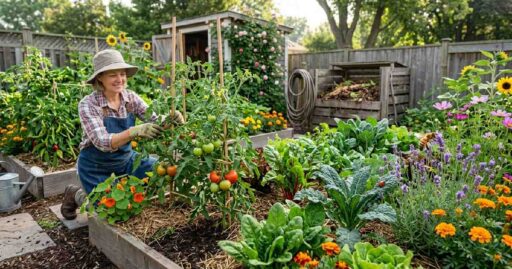
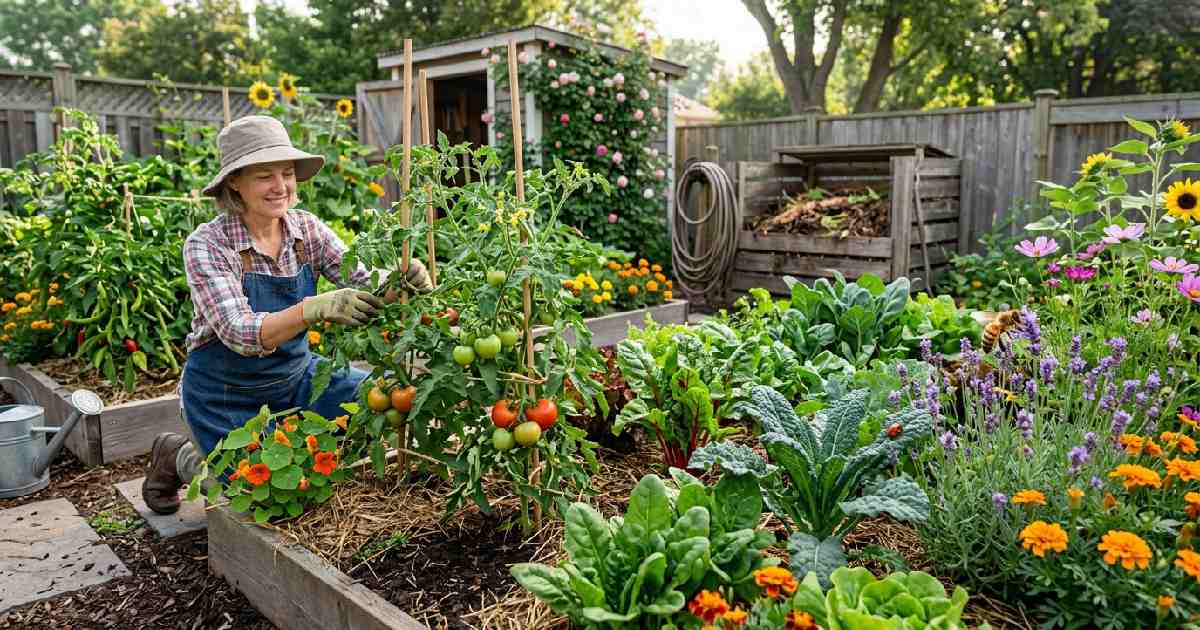

Every gardener has a moment like this one. You water, you weed, you wait, and then one morning half your tomato leaves are yellow, and something has eaten the basil down to the stems. The shop shelf has a spray for it. The label promises results in a day.
Before you reach for that bottle, it’s worth knowing that most garden problems have a slower but better answer. Organic gardening solutions aren’t magic, and they won’t fix everything overnight. What they do is deal with the reason the problem showed up, which is usually tired soil, too much water, too little airflow, or a plant sitting in the wrong place.
This guide covers what I’d want a friend to tell me before starting: how to build good soil, how to handle pests and diseases without harsh chemicals, how to keep weeds down, how to feed and water plants sensibly, and what to do if all you have is a balcony. It also covers the mistakes almost everyone makes in the first year so that you can skip a few.
What Are Organic Gardening Solutions?
Organic gardening solutions are natural ways of growing plants and dealing with problems without synthetic pesticides, herbicides, or chemical fertilizers. In practice, that means compost, mulch, crop rotation, helpful insects, and a small set of plant-based or mineral-based products for the times when prevention isn’t enough.
The idea underneath all of it is simple. Healthy soil grows healthy plants, and healthy plants cope with problems much better than stressed ones. A lot of gardeners spend money fighting aphids when the real issue is that they’ve been overfeeding their plants with nitrogen, which makes soft, juicy growth that aphids love.
Why people switch to organic methods
The reasons vary. Some people want safer food for their kids. Others have noticed fewer bees and butterflies and want to help. Plenty of people just like saving money, because a bag of compost and a mulch layer cost far less over a few years than a shelf of sprays and fertilizers.
There’s also a practical payoff that beginners don’t expect. Organic soil gets better every year. Chemical fertilizer feeds the plant for a few weeks and then it’s gone, but organic matter feeds the life in the soil, and that life keeps feeding your plants.
Is it harder than conventional gardening?
Honestly, the first season asks more of you. You have to observe more, be patient, and accept a few holes in your leaves. By the second or third year most people find they’re doing less firefighting than before, because the garden starts to balance itself. [OPTIONAL: mention what your first year was like.]
Start With Healthy Soil
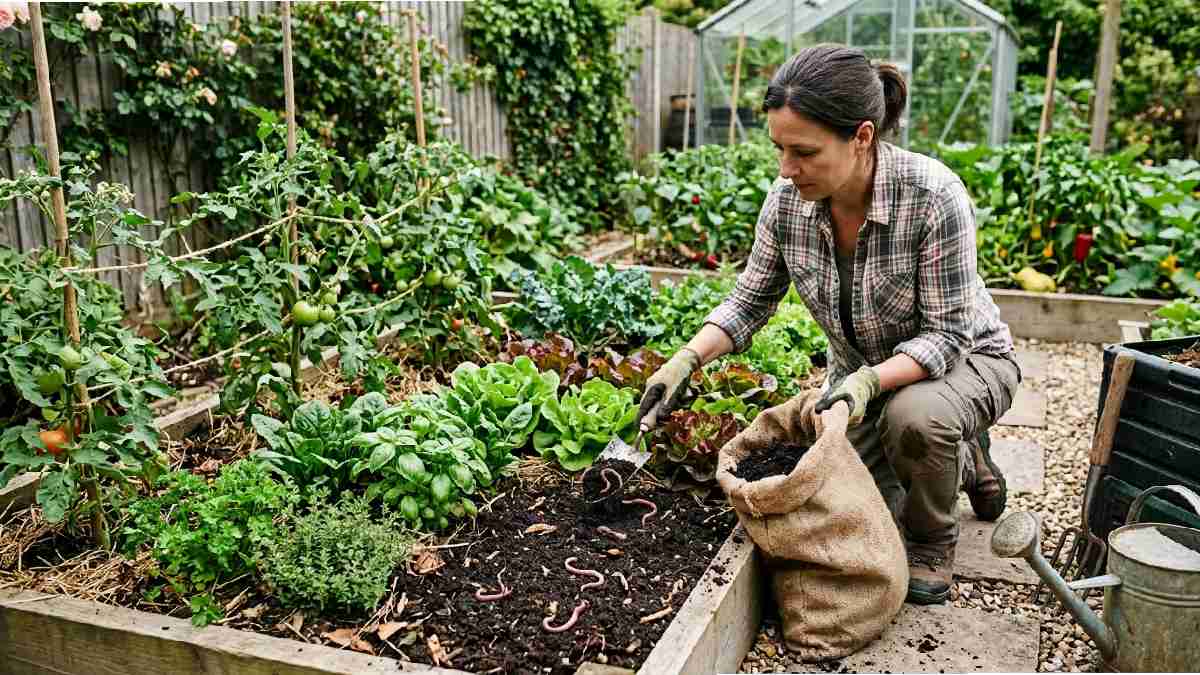
If you only follow one piece of advice in this article, make it this one. Soil isn’t just dirt that holds plants up. It’s packed with bacteria, fungi, earthworms, and tiny creatures that break down organic material and pass nutrients to roots. Look after them and your plants mostly look after themselves.
Find out what soil you actually have
You don’t need a lab to get a rough idea. Take a handful of moist soil and squeeze it. If it forms a tight, sticky ball that won’t break, you have clay. If it falls apart the second you open your hand, it’s sandy. If it holds together loosely and crumbles when you poke it, congratulations, you have loam, which is what most gardeners dream about.
Next, dig a hole roughly a foot deep and fill it with water. Let it drain, fill it again, and see how long the second fill takes. If it’s still sitting there after a few hours, your drainage is poor, and that matters more than almost anything for root health.
A cheap home test kit or a local lab test will tell you your pH and main nutrients. Most vegetables are happiest between about 6.0 and 7.0. It’s worth doing once, because guessing what your soil needs is how people end up adding lime to soil that was already alkaline.
Also look for earthworms. Dig up a spadeful after rain, and if you find several, your soil life is in good shape.
Compost is the closest thing to a cure-all
Nearly every soil problem improves with compost. Sandy soil that drains too fast holds water better. Heavy clay opens up and drains better. Poor soil gets fed slowly instead of in a rush.
Making it at home isn’t complicated. You need a pile, a bin, or even a big container in a spot with reasonable drainage. Then you mix two kinds of material. “Greens” are wet and nitrogen-rich, like kitchen scraps, fresh grass, and plant trimmings. “Browns” are dry and carbon-rich, like fallen leaves, straw, cardboard, and paper. Aim for roughly two or three parts brown to one part green. If it smells bad, you’ve added too much green. If nothing seems to be happening, it’s probably too dry or too brown.
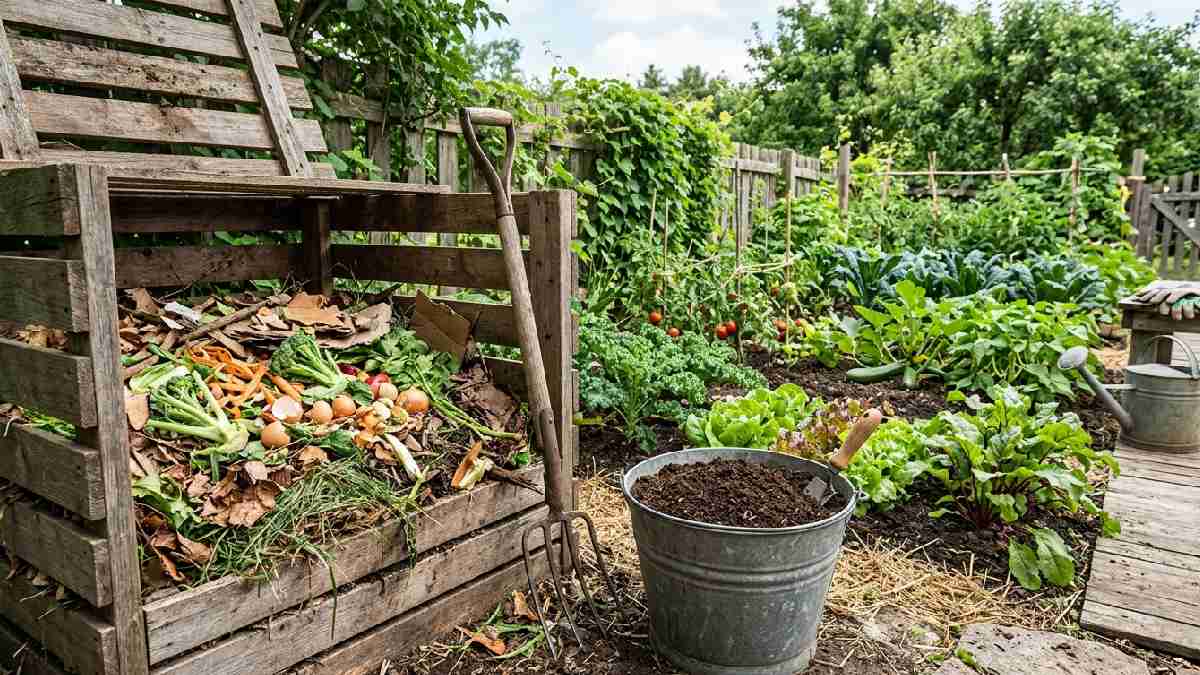
Keep it about as damp as a wrung-out sponge, and turn it every couple of weeks if you can be bothered. Depending on your climate and effort, you’ll have dark, crumbly, sweet-smelling compost in anywhere from two months to a year. Keep meat, dairy, oily food, and pet waste out of it. They attract rats and flies and can cause health problems.
Once it’s ready, spread one to two inches over your beds each season and mix a few handfuls into planting holes.
Fixing clay, sand, and truly bad soil
Clay holds nutrients well but drains slowly and compacts easily. The fix is regular compost, aged manure, and leaf mold, plus staying off wet beds. Walking on soggy clay squashes out all the air.
Sand is the opposite. Water and nutrients rush straight through, so lots of compost and a thick mulch are your best friends.
If your ground is really terrible, such as building rubble, hard pan, or heavily contaminated soil, don’t fight it. Build raised beds and fill them with a mix of compost and topsoil. You control the quality from the first day, and you can start planting sooner.
Try no-dig, or at least dig less
For years the standard advice was to dig your beds every autumn. Many organic growers now do the opposite. Digging breaks up the fungal threads and worm tunnels that make soil work well, and it brings buried weed seeds up to the light.
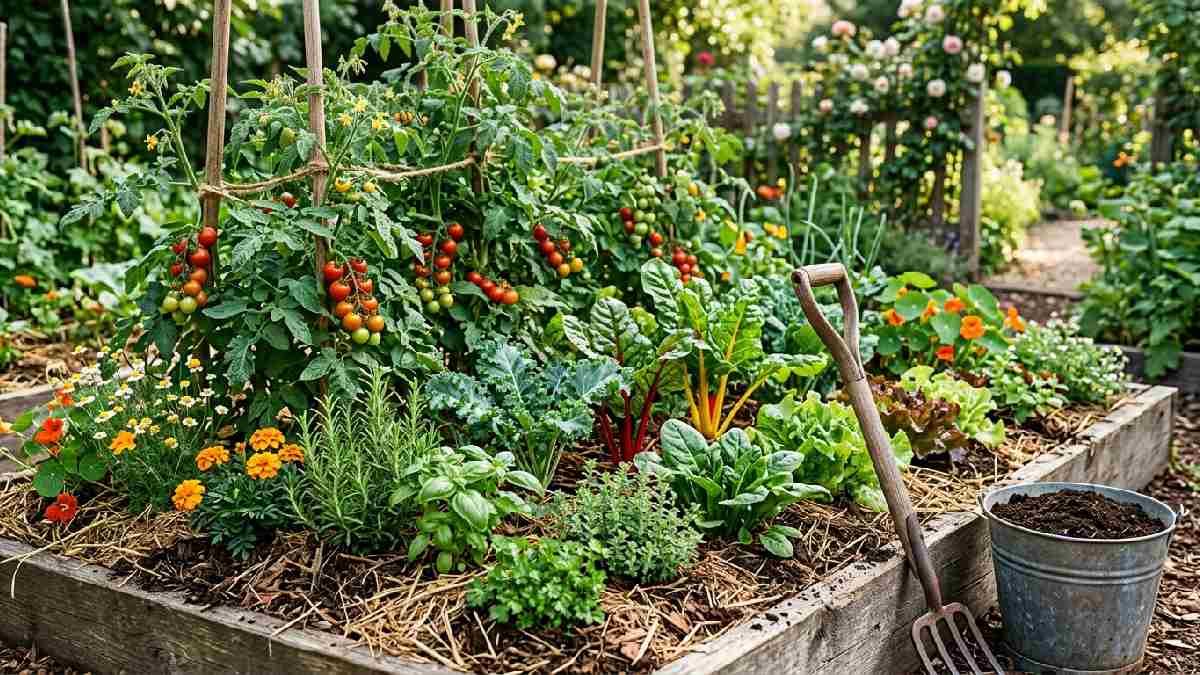
The no-dig approach is simple. Lay compost on top of the soil, cover it with mulch, and let worms do the mixing. It saves your back and cuts down on weeds. If your soil is badly compacted, loosen it once with a garden fork, then switch to top-dressing.
Cover crops between seasons
Bare soil dries out, loses nutrients, and invites weeds. In the off season, sow a cover crop such as clover, vetch, mustard, or field peas and oats in cooler areas. Legumes like clover and vetch partner with bacteria that add nitrogen to the soil. When the crop gets big, chop it down and either dig it in or leave it on the surface as mulch.
Adjusting pH
If your test says the soil is too acidic, garden lime raises the pH slowly. If it’s too alkaline, elemental sulfur or plenty of compost can bring it down over time. Change things gradually and retest after a season, because overcorrecting causes its own problems.
Natural Pest Control That Actually Works
Here’s the mindset shift that helps most. Organic pest control isn’t about killing every insect. It’s about keeping pests below the point where they do real damage, while protecting the many insects that are working for you.
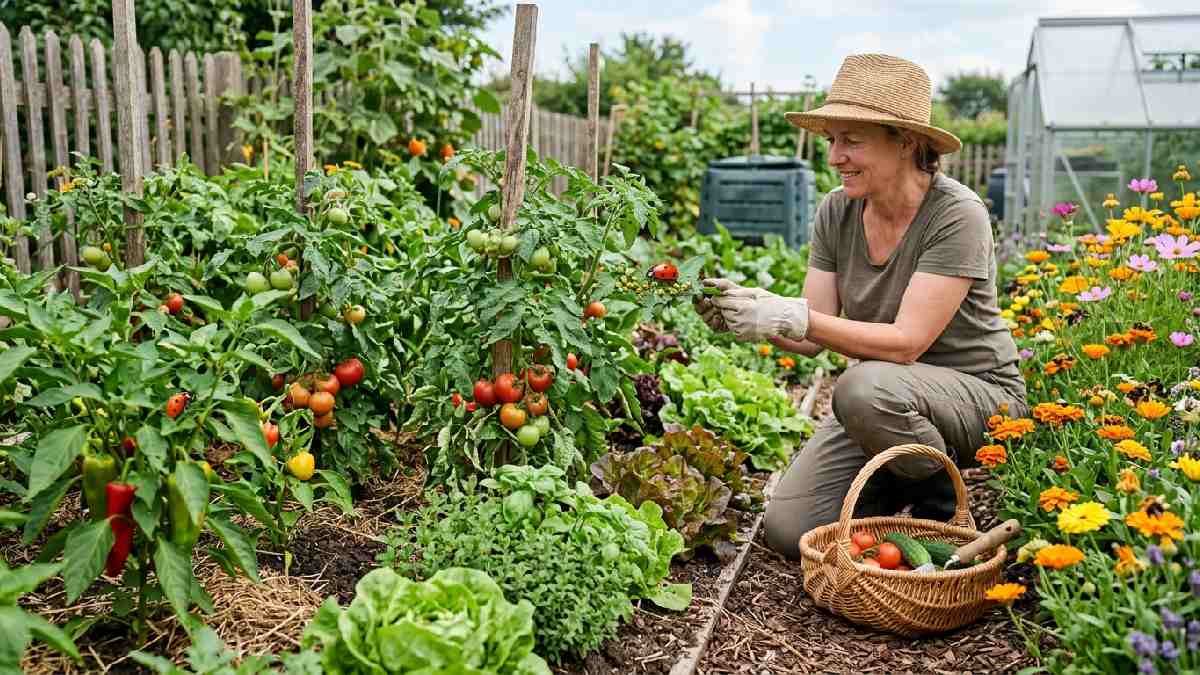
Prevention does most of the work
Strong plants in good soil put up with far more pest pressure than stressed ones. Overwatered, overfed plants with soft, sappy growth are aphid magnets. So the first line of defense is boring but effective: healthy soil, sensible spacing, and varieties suited to your climate.
Crop rotation matters too. If you grow tomatoes, potatoes, and peppers in the same bed year after year, the pests and diseases that love them build up in the soil. Moving each plant family to a new spot every year breaks those cycles. Keep beds tidy as well, since rotting fruit and dead leaves are hiding places for slugs, beetles, and fungal spores.
Physical barriers are underrated. Fine netting and row covers keep out cabbage butterflies, flea beetles, and carrot fly completely, with no spraying at all.
Look at your plants often
Spend five minutes every day or two walking around the garden. Check under leaves, around stem joints, and at new growth. A handful of aphids is easy to wipe off. A month later, it’s a colony. Catching things early is the cheapest pest control there is.
Start with your hands and the hose
For caterpillars, slugs, and beetles in a small garden, hand-picking into a bucket of soapy water works better than most people expect. Slugs are easiest to find after dark with a torch. For aphids and spider mites, a strong spray of plain water from the hose knocks a lot of them off. Do it in the morning so the leaves dry before evening.
When you do need a spray
Sometimes you do. These are the options I’d consider, roughly in order of gentleness.
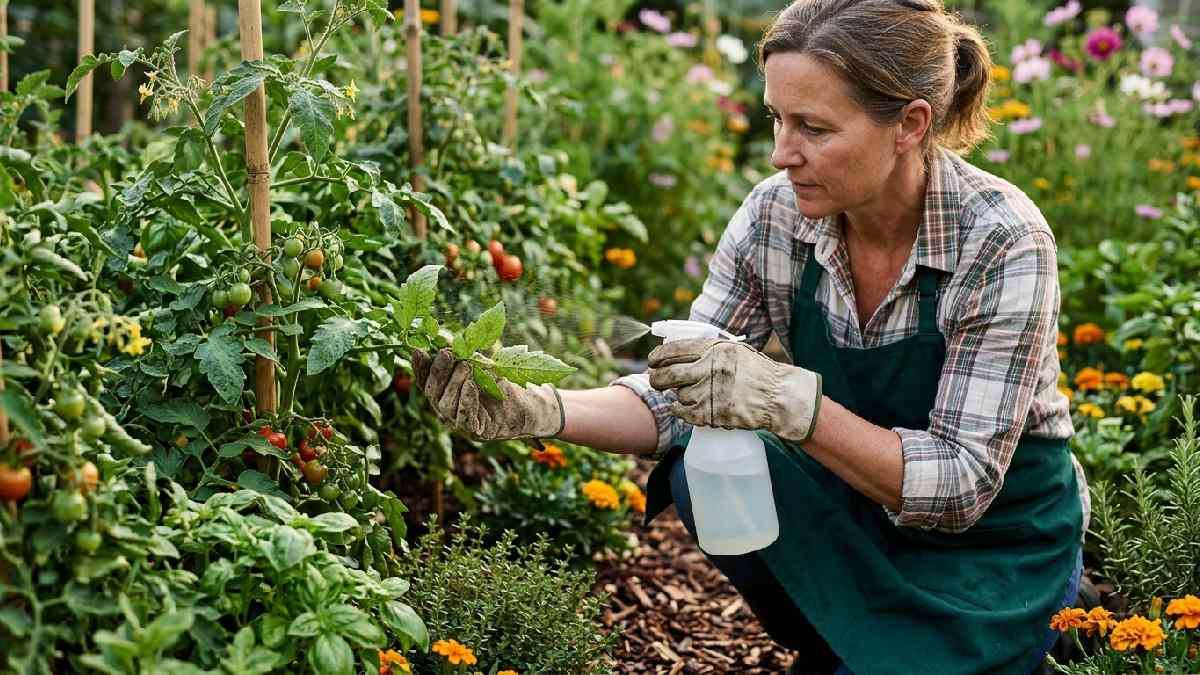
Insecticidal soap. Mix one to two teaspoons of mild liquid soap into a litre of water. Avoid anything with degreasers or bleach. Spray directly on aphids, whiteflies, and mites, and get the undersides of leaves. It only works on contact. Test a few leaves first, since some plants are sensitive, and don’t spray in hot midday sun.
Neem oil. Pressed from neem tree seeds, it disrupts feeding and growth in many soft-bodied pests and helps with some fungal problems. Follow the dilution on the label. Spray in the evening, because it can scorch leaves in strong sun and harm bees if it lands on open flowers.
Bt (Bacillus thuringiensis). This is a soil bacterium that targets caterpillars like cabbage worms and tomato hornworms when they eat treated leaves. Used as directed, it’s low risk to people and most beneficial insects.
Food-grade diatomaceous earth. A fine powder made from fossilized algae that damages the outer layer of crawling insects. It only works dry and needs reapplying after rain. Keep it off open flowers, as it can harm bees too.
Garlic or chili sprays. Lots of gardeners swear by them, and results honestly vary. I’d call them a mild deterrent, not a cure. Keep them away from your eyes.
One thing I want to be clear about: “organic” doesn’t mean harmless. Even the gentlest spray can hurt bees and other helpful insects if you use it carelessly. Read the label, spray in the evening when bees have stopped flying, and use the weakest option that does the job.
Bring in the helpers
Ladybugs, lacewings, hoverflies, and small parasitic wasps all eat garden pests, and they work for free. A single ladybug larva can get through a huge number of aphids while it grows.
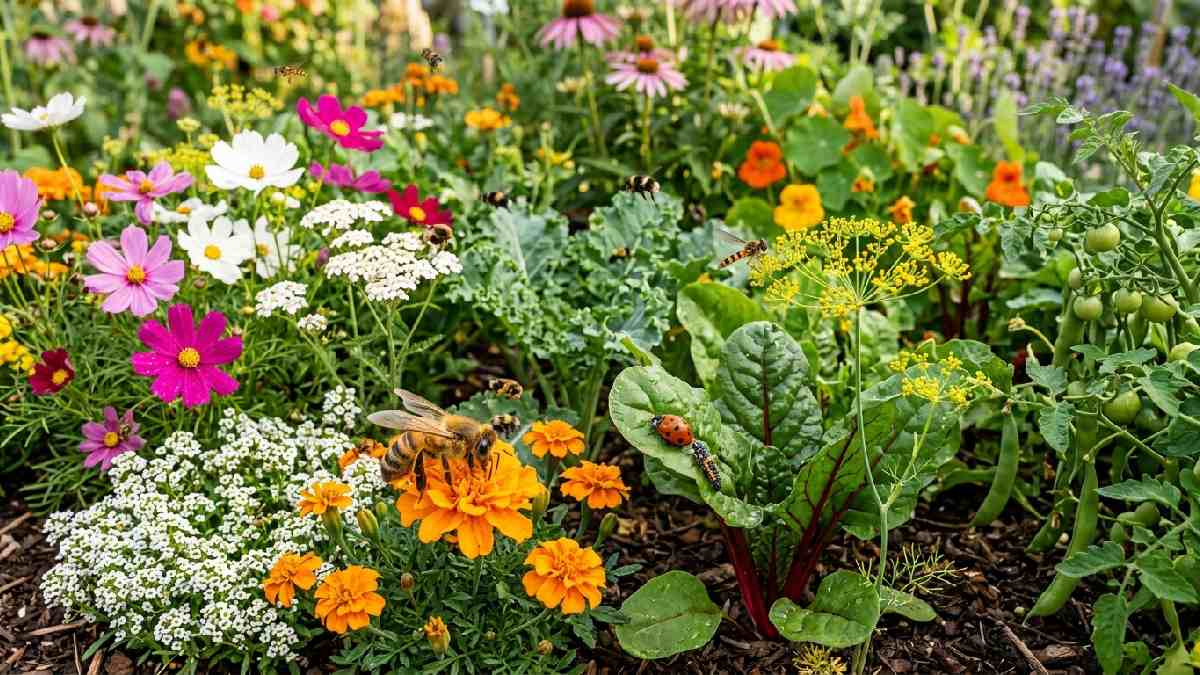
To attract them, plant flowers. Alyssum, marigolds, cosmos, dill, coriander, and yarrow give them nectar and pollen. Put out a shallow dish of water with a few pebbles so they can drink safely. Leave a small corner a bit wild, with some leaf litter and undisturbed plants for shelter. And avoid broad-spectrum sprays, which kill the helpers along with the pests.
Birds eat caterpillars and beetles, and frogs and toads deal with slugs at night. A small birdbath, a couple of shrubs for cover, and a damp shady corner will bring them in.
A quick pest reference
| Pest | What you'll notice | What to try |
|---|---|---|
| Aphids | Clusters of tiny insects, sticky leaves, curled new growth | Water spray, insecticidal soap, encourage ladybugs |
| Caterpillars | Chewed leaves, dark droppings | Hand-pick, Bt, row covers |
| Slugs and snails | Ragged holes, slime trails | Night patrols, beer traps, copper tape, remove hiding spots |
| Whiteflies | White cloud when you brush the plant | Yellow sticky traps, soap, neem oil |
| Spider mites | Fine webbing, speckled leaves in hot dry weather | Raise humidity, strong water spray, soap or neem |
| Flea beetles | Tiny shot-holes in leaves | Row covers, keep plants well watered |
Preventing Plant Diseases Naturally
Most garden diseases are fungal, and fungi love wet leaves and still air. That’s actually good news, because you can control both.
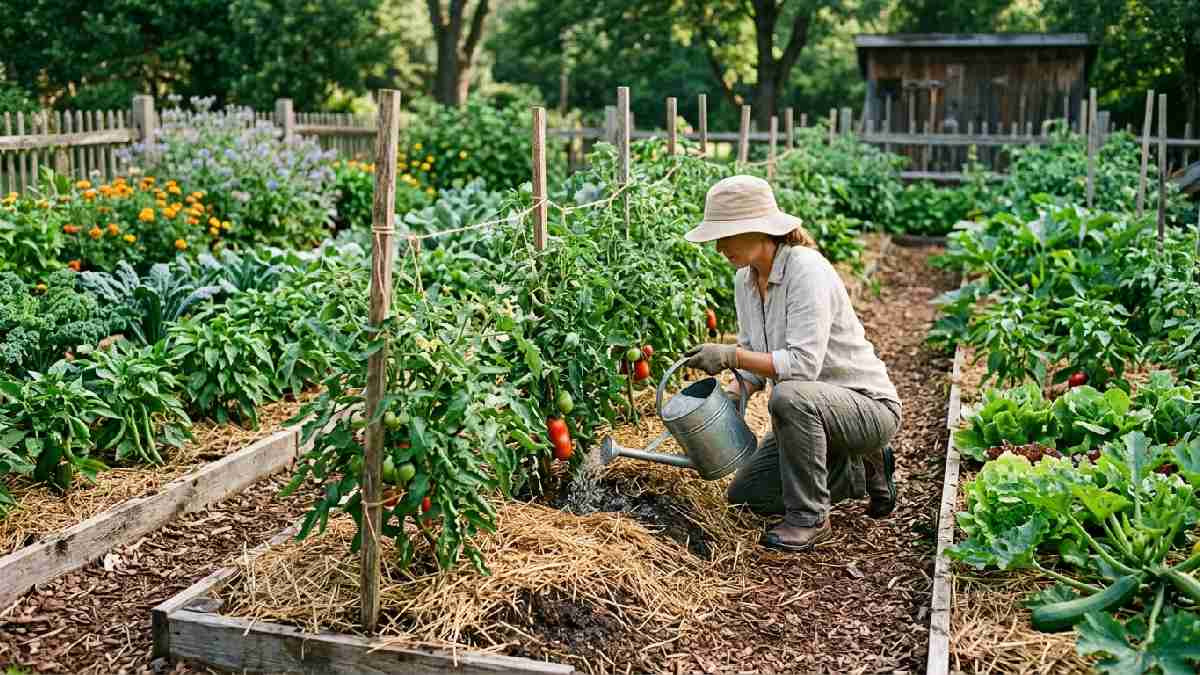
Water the soil, not the leaves, and do it in the morning so anything that splashes dries during the day. Give plants the spacing on the seed packet, even when the seedlings look tiny and it feels wasteful. Crowded plants trap humidity. Pull the lowest leaves off tomatoes so soil doesn’t splash up onto them, and thin out any dense growth.
Clean your pruners with rubbing alcohol when you move between plants, especially after cutting diseased material. Bag and bin badly infected leaves instead of adding them to the compost. And rotate crops, for the same reason as with pests.
Common problems and what helps
Powdery mildew looks like white dust on leaves, and squash, cucumbers, and roses get it a lot. Remove the worst leaves and improve airflow. A diluted milk spray, roughly one part milk to nine parts water, is a popular home remedy, and so is baking soda mixed with water. Results are mixed, so think of them as early-stage helpers. Neem oil and organic-approved sulfur products are other options.
Early blight and leaf spot cause dark spots on tomato and potato leaves. Mulching stops soil splashing onto the foliage, and removing affected leaves early slows the spread. Copper fungicides are allowed in many organic systems, but use them sparingly and exactly as labelled, because copper builds up in the soil.
Root rot comes from soil that stays waterlogged. Improve drainage, water less often, and use raised beds or containers with proper drainage holes.
Damping off kills young seedlings right at the soil line. Use clean pots and fresh seed-starting mix, water gently from below, and don’t sow too thickly.
Organic Weed Control Without Herbicides
Weeds steal water, light, and nutrients, and the best organic weed control is about stopping them before they get going.
Mulch first
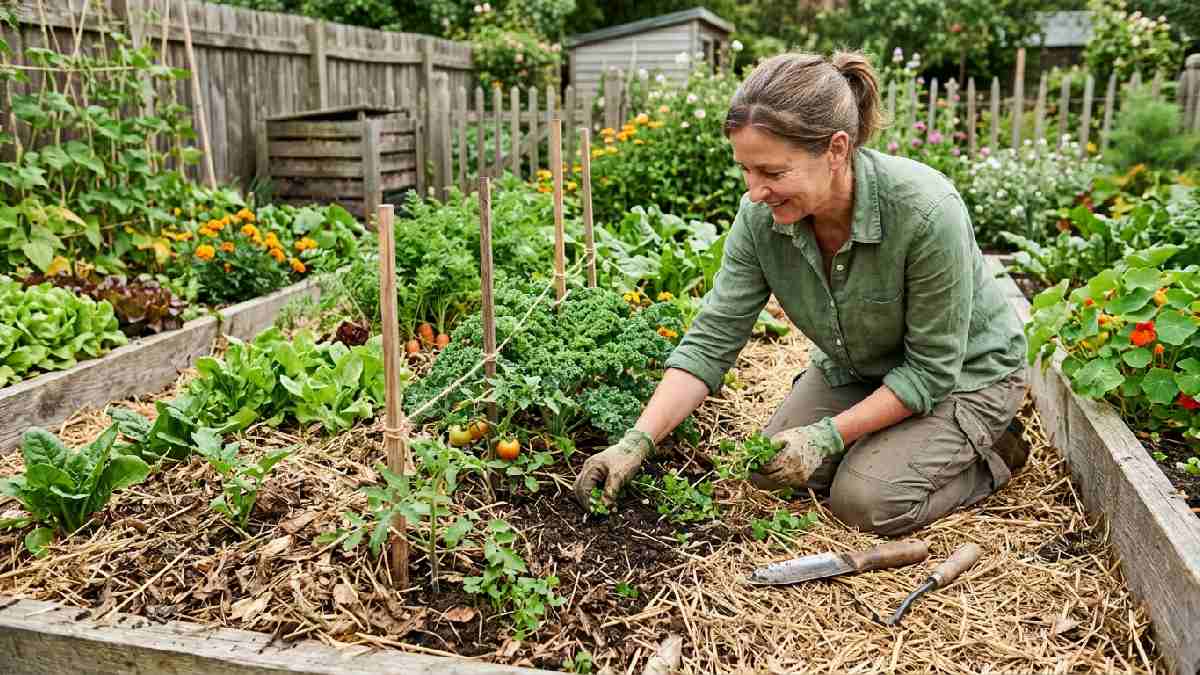
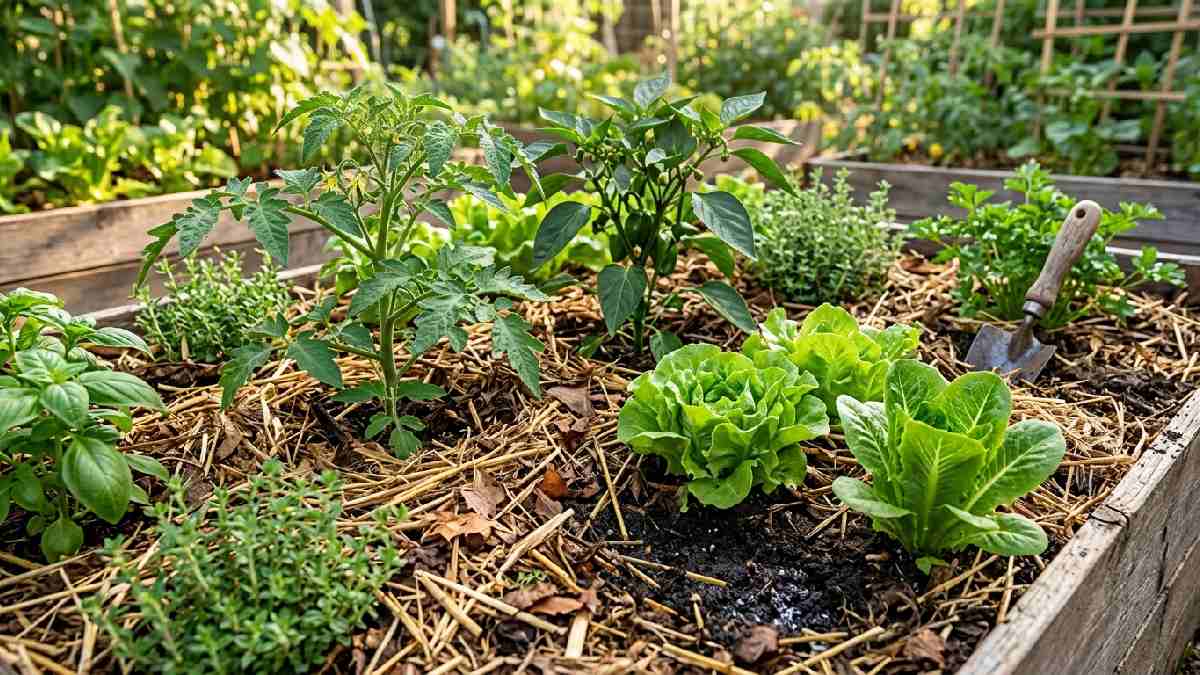
A layer of mulch blocks light so weed seeds struggle to sprout, keeps soil cooler, and holds in moisture. Straw, shredded leaves, wood chips, thin layers of grass clippings, and compost all work. Aim for two to four inches, and keep it a few inches back from plant stems so they don’t rot. For a stronger barrier, lay cardboard or newspaper under the mulch. It breaks down into the soil eventually.
Habits that make weeding easier
Weed after rain or watering, when roots come out whole. Weed little and often, because ten minutes a few times a week beats a full day of misery once a month. Don’t let weeds set seed, since one seed head can produce hundreds of new plants. A sharp hoe run just under the surface on a dry, sunny day kills young weeds fast.
Planting a bit more densely, within the recommended spacing, shades the soil and leaves less room for weeds. In very hot climates, you can also try solarization. Cover a bare bed with clear plastic during the hottest weeks of summer, and the heat cooks weed seeds in the top layer of soil.
Boiling water is fine for weeds in paving cracks, but it will harm anything you care about nearby.
What about vinegar?
Household vinegar burns the leaves of small weeds but usually doesn’t kill the roots, so they grow back. Stronger horticultural vinegar can be hazardous to handle and can hurt soil life if overused. For most gardens, mulch and steady hand-weeding are safer and more reliable.
Feeding Plants With Organic Fertilizers
Plants need three main nutrients, shown as N-P-K on fertilizer bags. Nitrogen drives leafy growth, phosphorus supports roots and flowers, and potassium builds overall strength and fruiting. Organic fertilizers release these slowly as soil life breaks them down, so you’re much less likely to burn your plants.
What to use
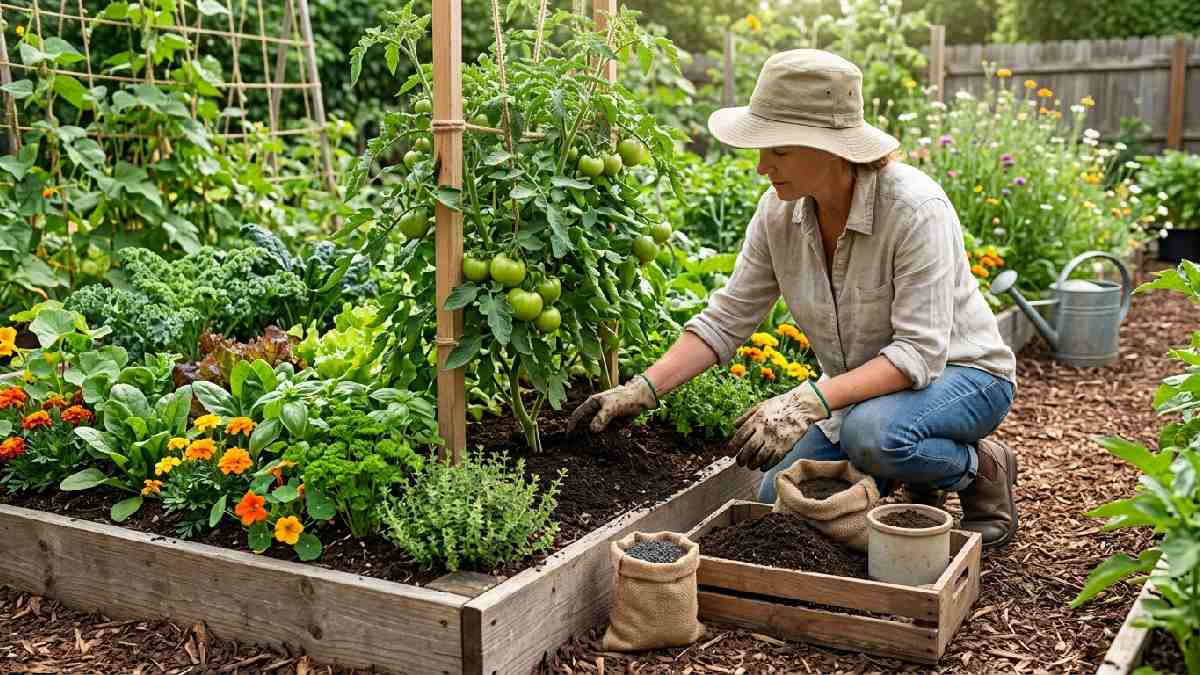
Compost is the everyday, all-purpose choice. Well-aged manure from cows, horses, chickens, or rabbits adds nutrients and organic matter, but it must be aged or composted, because fresh manure can burn roots and carry pathogens. Don’t use it on crops close to harvest.
Worm castings are rich in nutrients and gentle enough for seedlings and pots. Bone meal is a slow source of phosphorus for roots and flowers. Blood meal gives leafy crops a fast nitrogen boost, so use it lightly. Wood ash adds potassium but also raises pH, so only use small amounts and only if your soil isn’t already alkaline. Seaweed extract supplies trace minerals and helps plants cope with stress.
For a mid-season boost, a diluted liquid feed does the job. Comfrey or nettle leaves soaked in water for a couple of weeks make a strong, nutrient-rich “tea.” Be warned, it smells terrible, so dilute it well and keep the bucket away from the house.
You’ll see banana peels and eggshells recommended everywhere. They add small amounts of nutrients and are best composted first so they break down properly. Don’t expect a single peel to transform anything.
Reading the leaves
Pale, yellowing older leaves often point to low nitrogen. A purplish tinge, especially in cool soil, can mean low phosphorus. Brown, scorched edges may signal low potassium, or just salt or water stress. Yellow leaves with green veins usually suggest an iron or micronutrient problem, often tied to soil pH.
These symptoms overlap a lot, so treat them as clues, not a diagnosis. Confirm with a soil test before making big changes.
Watering Smartly and Planting Companions
Deep and less often
Deep, infrequent watering pushes roots downward, where the soil stays cooler and moister. Daily light sprinkling keeps roots near the surface and makes plants struggle in a heatwave.
Water early in the morning to cut evaporation and disease. Check first by pushing a finger two inches into the soil. If it’s dry, water. If it’s damp, wait. Drip lines and soaker hoses put water right at the roots with very little waste, and a rain barrel gives you free water that plants tend to prefer over tap water, where local rules allow it. A good mulch layer cuts how often you need to water at all.
Pots dry out much faster than beds, so check them more often in summer.
Companion planting: try it, but stay skeptical
Companion planting means growing certain plants together so they help each other, by confusing pests, attracting beneficial insects, or using space well. Some pairings have generations of gardener experience behind them, while others have thin evidence, so treat this as an experiment.
Tomatoes and basil are a popular pair. Onions or chives near carrots may help mask the smell of carrots from carrot fly. Marigolds attract beneficial insects, and some varieties may reduce certain soil nematodes. Nasturtiums work as a trap crop, since aphids often prefer them and leave your vegetables alone. And the old “three sisters” combination of corn, climbing beans, and squash has worked for centuries: the corn holds up the beans, the beans add nitrogen, and the squash leaves shade the soil.
One warning: keep fennel away from most vegetables. It tends to stunt its neighbors.
Organic Gardening in Pots, Small Spaces, and Hot Climates
You don’t need a yard. Containers work well if you follow a few rules. Use good potting mix blended with compost, never heavy garden soil, which compacts in pots. Make sure every container has drainage holes. Pick compact varieties such as cherry tomatoes, chillies, herbs, and salad greens. Feed pots with a gentle organic liquid feed every two to three weeks, because nutrients wash out with every watering. Vertical planters and hanging baskets make good use of a balcony wall.
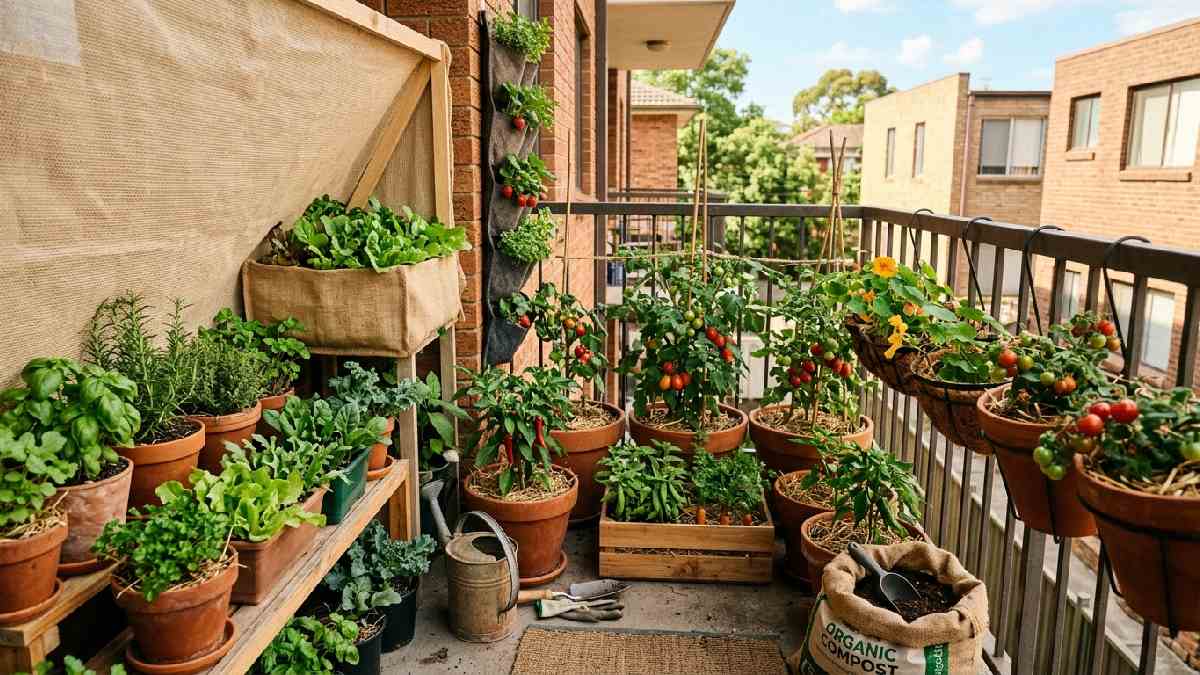
If your summers are very hot, shift your calendar. Grow leafy greens, peas, and radishes in the cooler months, and save okra, eggplant, and chillies for the heat. Mulch thickly, water early, and use shade cloth during the worst weeks to prevent sunscald.
A Simple Plan If You’re Just Starting
If this all feels like a lot, start small. Pick a sunny spot that gets six to eight hours of direct sun. A bed of one or two square metres is plenty for the first year.
Add a couple of inches of compost, plant easy crops like lettuce, radishes, beans, herbs, spinach, cherry tomatoes, or zucchini, and mulch right after planting. Water deeply, check your plants regularly, and tuck in a few flowers to invite helpful insects. Keep notes on what you planted, where, and what happened, because that record makes crop rotation and next year’s planning far easier. Start composting kitchen scraps now so next year’s soil is even better.
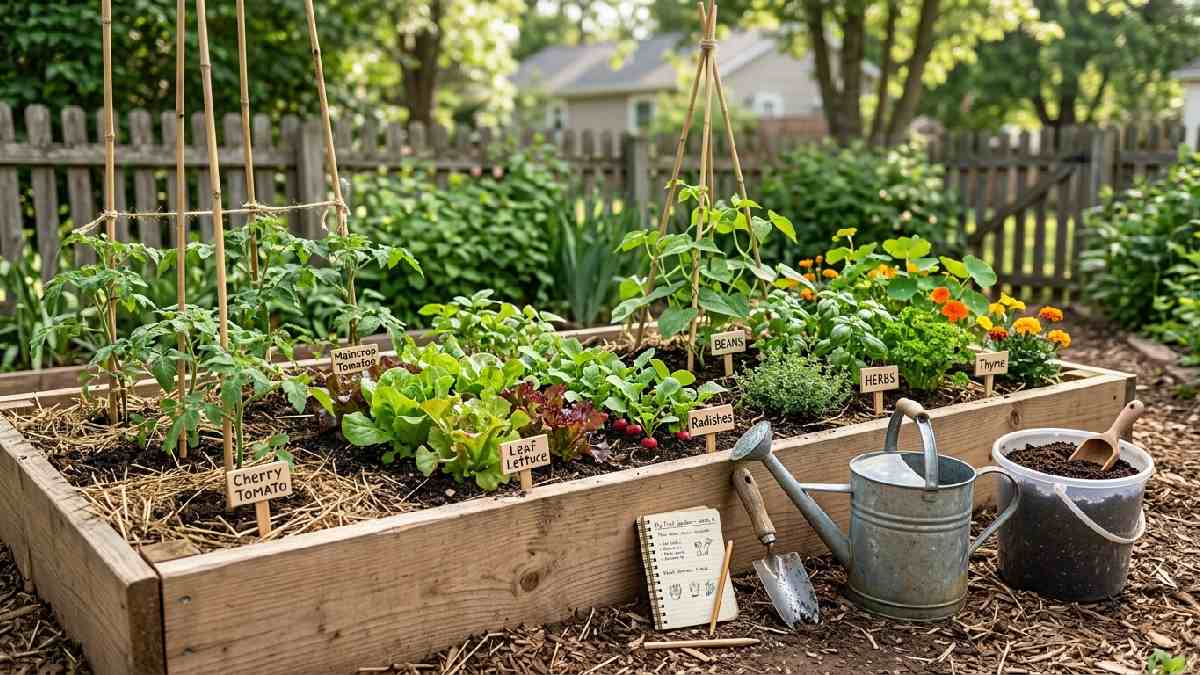
The seasons roughly go like this. In your main planting season, prepare beds and sow seeds after the frost risk passes. In summer, water deeply, mulch, weed, and watch for pests. In autumn, harvest, clear diseased material, add compost, and sow cover crops. In winter, plan next year’s layout and look after your tools.
Common Mistakes to Avoid
Expecting instant results is the big one. Organic methods build soil health over time, and the second and third seasons are usually much better than the first.
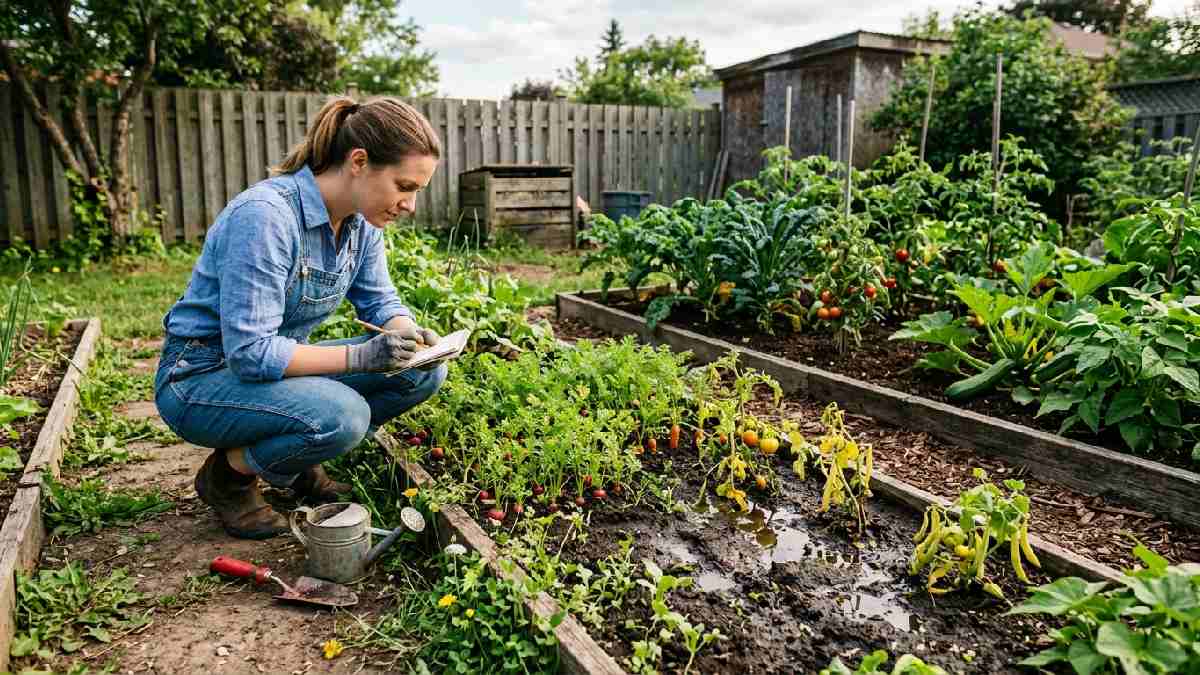
Overusing homemade sprays is another. More soap or oil doesn’t mean more pest control, it just burns leaves and harms helpful insects. Using fresh manure burns roots. Overwatering kills more plants than drought does. Crowding plants invites disease. Planting at the wrong time for your climate produces weak plants that attract pests. Skipping crop rotation lets problems build up. And panicking at the first sign of a pest is a mistake too. A few holes in a leaf is normal, so watch, identify the problem, and choose the gentlest fix.
Frequently Asked Questions
What is the best organic fertilizer for vegetables?
Well-finished compost is the best all-round choice. It feeds plants slowly and improves soil structure. Heavy feeders like tomatoes, peppers, and leafy greens also benefit from a balanced organic fertilizer or a liquid seaweed feed during the growing season.
How do I get rid of garden pests naturally?
Start with prevention: healthy soil, good spacing, crop rotation, and row covers. Then hand-pick larger pests, wash aphids off with water, and use insecticidal soap, neem oil, or Bt for stubborn problems. Planting flowers to attract beneficial insects helps over the long term.
Is organic gardening more expensive?
It can be cheaper. Making your own compost, collecting rainwater, saving seeds, and using free mulches all cut costs. You may spend a little at the start on tools, a compost bin, or raised beds, but ongoing costs are usually lower than buying chemical products.
Can I garden organically in pots or on a balcony?
Yes. Use quality potting mix with compost, containers with drainage holes, and compact varieties. Herbs, salad greens, chillies, tomatoes, and strawberries all do well in pots.
Which plants are easiest for beginners?
Radishes, lettuce, spinach, green beans, zucchini, basil, mint, and cherry tomatoes are fast, forgiving, and rewarding.
Conclusion
Organic gardening solutions aren’t a bag of tricks. They’re a way of looking after a small living system, and the payoff comes slowly. Feed the soil, water sensibly, welcome the insects that help you, and give your plants room to breathe.
You don’t need a big plot or expensive gear. One bed or a few pots, some compost, a good layer of mulch, and a habit of looking closely will take you a long way. Pick one thing from this guide, whether that’s starting a compost pile, mulching a bed, or planting a row of marigolds, and do it this week.