
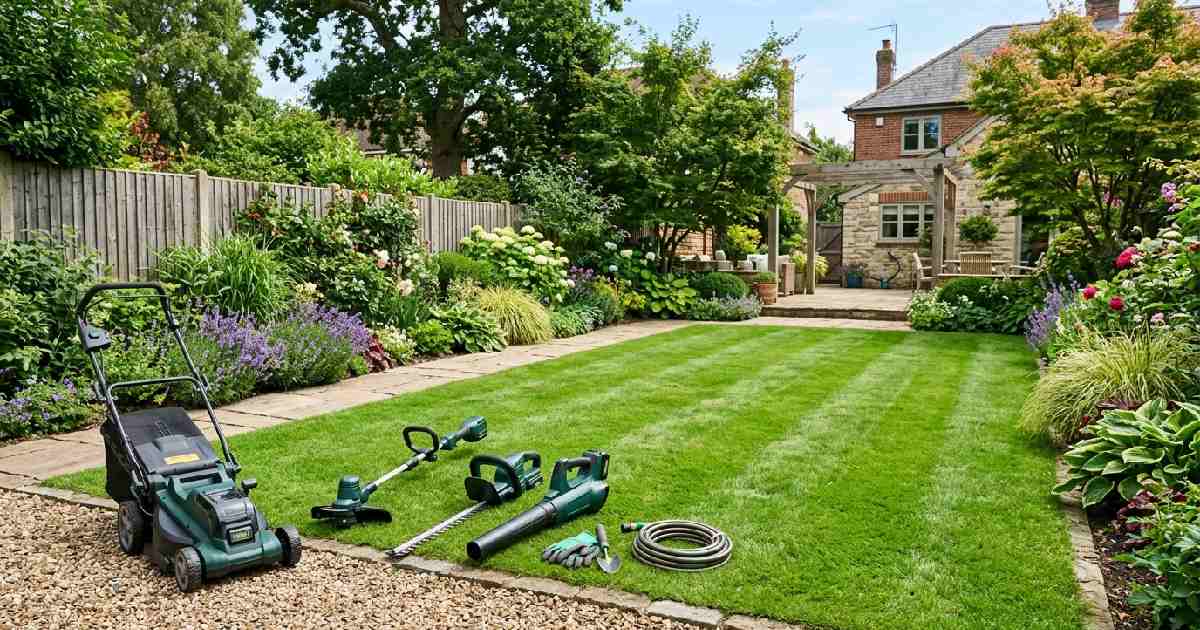

Walk into any hardware store and the gardening power tool aisle will try to sell you things you don’t need. A hedge trimmer for a garden with no hedges. A tiller for a bed the size of a dining table. It happens to almost everyone. You end up with a shed full of tools that just sit there.
Here’s the good news. Most gardens only need a few power tools to make the work faster and easier. Everything else is a nice extra, not a must-have. This guide covers the tools that are actually worth buying, what each one does well, and how corded, cordless, and petrol versions compare. That last choice matters more than people think, because it decides whether a tool gets used every week or gets forgotten in a corner.
By the end, you’ll know which tools fit a small backyard, which ones make sense for a bigger plot, and where to spend your money so the tools you buy actually get picked up and used.
Why Bother With Power Tools?
Hand tools still have their place. Plenty of gardeners enjoy the slow, quiet work of pruning shears and a hand fork. But there’s only so much your hands and arms can do in one afternoon, especially with a big lawn, a long hedge, or a bed that needs digging over before planting.
Power tools trade some of that quiet for speed. A lawn that takes forty minutes with a push mower might take ten minutes with an electric one. A hedge that would leave your arms sore after an hour of hand-shearing gets done in fifteen minutes with a trimmer. If you have a bad back, limited time, or just a lot of ground to cover, the right tool turns gardening from a chore into something you can actually manage.
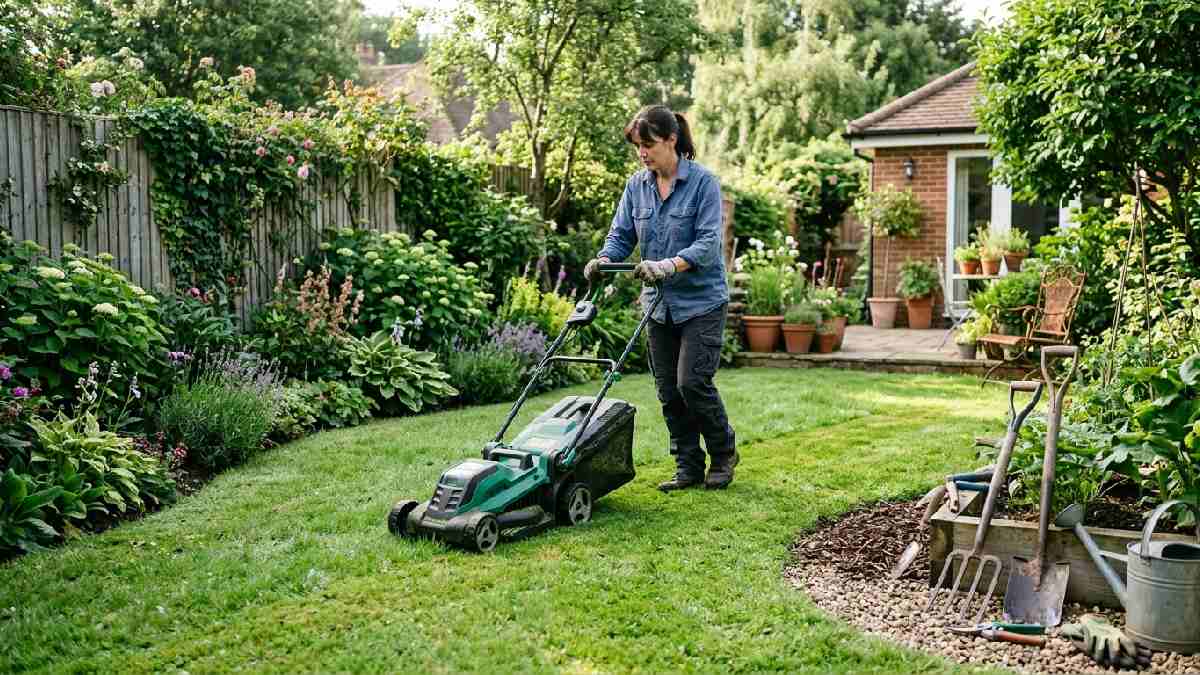
The key word is “right.” Buying the biggest, most powerful option usually means paying for power you’ll never use. It also often means a tool too heavy to hold comfortably for more than a few minutes.
Think about a typical Saturday morning routine: mowing, trimming the edges, then a quick pass with the blower to clear clippings off the path. With the right tools, that whole routine takes under an hour. With the wrong ones, whether that means underpowered gear that stalls constantly or oversized gear that wears you out, the same jobs can eat up half your day and leave you dreading the next weekend.
Corded, Cordless, or Petrol?
Before we get to specific tools, it helps to understand the three main power types. This choice affects the price, the noise level, and honestly, how often you’ll actually use the tool.
Corded electric tools are light, quiet, and need almost no upkeep. They work well in smaller gardens where you’re always close to a plug. The downside is the cord itself. It limits how far you can go, and you have to watch where you’re cutting so you don’t slice through it.
Cordless battery tools are the most popular choice these days, and for good reason. No cord to drag around, less noise than petrol, and modern batteries can usually get you through a full session in the garden. The catch is battery life on bigger jobs, plus the upfront cost, since batteries are often sold separately and aren’t cheap. It helps to stick with one brand’s battery system early on. One battery can then power your mower, trimmer, and blower instead of needing three different ones.
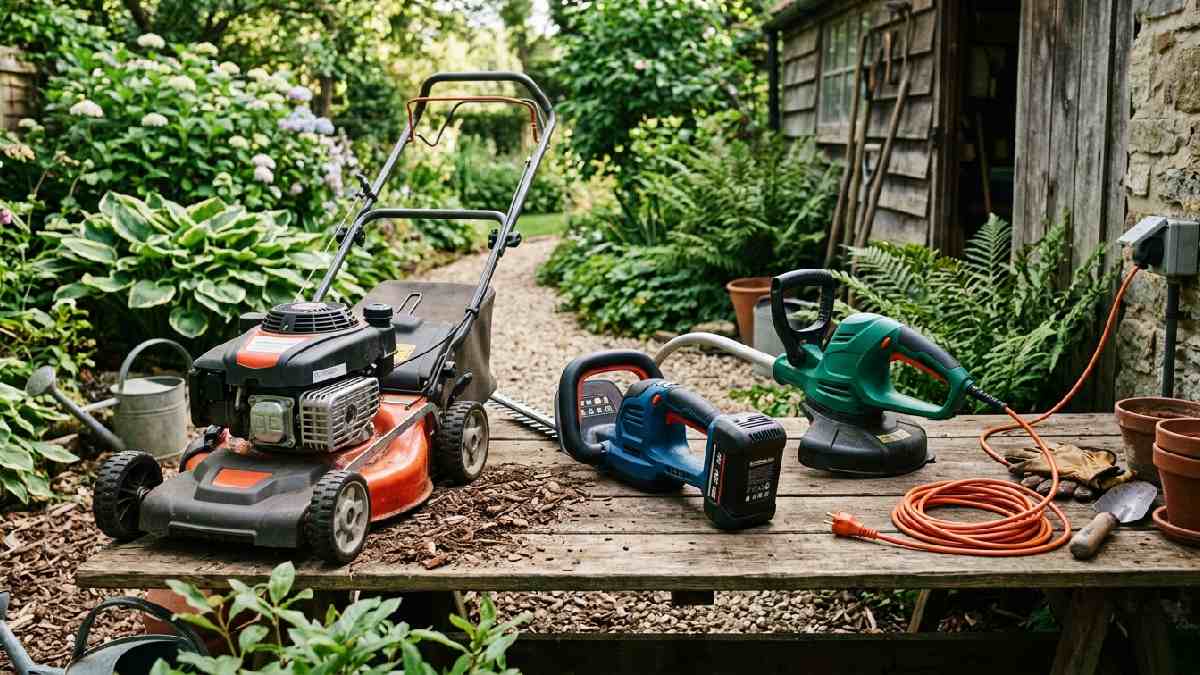
Petrol tools give you the most raw power and never need charging. That matters for large properties, thick overgrown areas, or long work days. But they’re heavier, louder, need fuel and regular maintenance, and give off fumes. That rules them out for a lot of suburban gardens. For most home gardens under an acre, petrol is more tool than you actually need.
The Core Tools Worth Owning
These are the tools that earn their place in most gardens. Not every garden needs every item here, so use the notes below to figure out which ones apply to you.
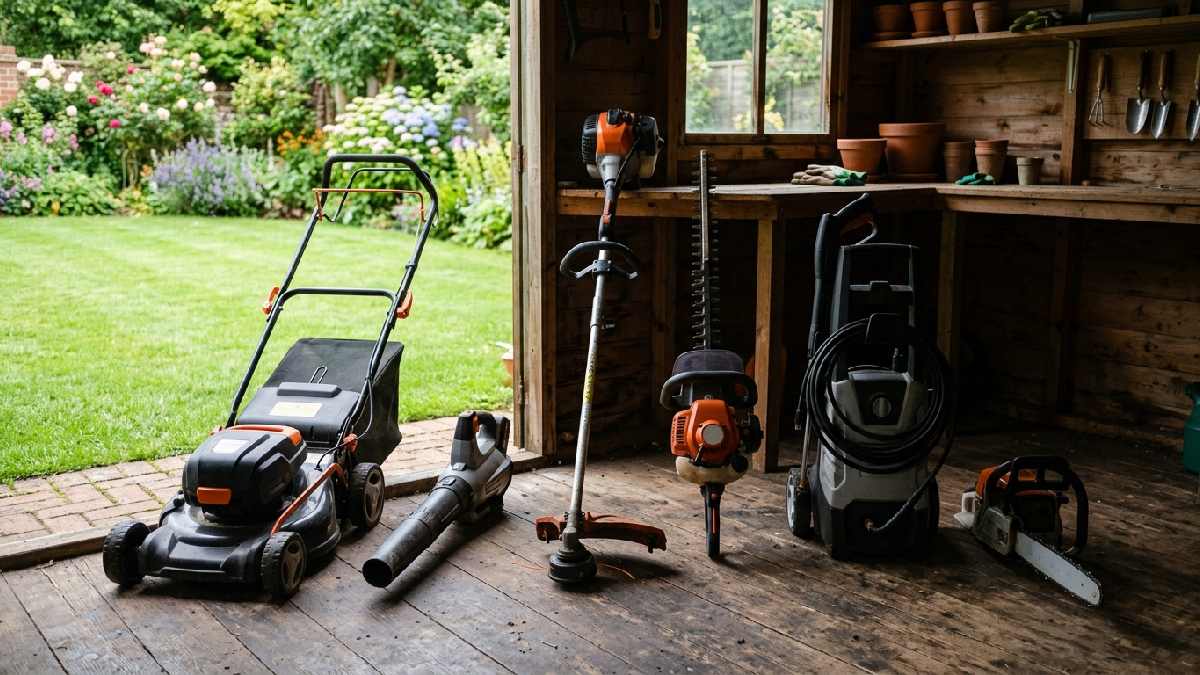
Lawn Mower
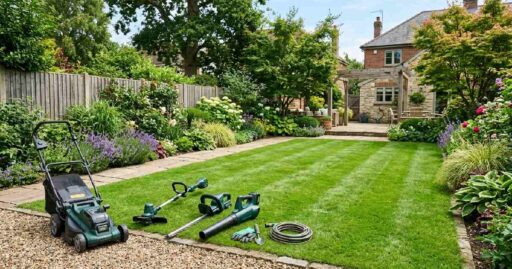
If you have grass, this is probably your first gardening power tool. For a small or medium lawn, a cordless electric mower with a good battery gets the job done without the smell of petrol hanging around afterward. Corded mowers are fine too, if your lawn is small and close to the house. Bigger lawns, especially over half an acre, usually do better with a petrol mower or a ride-on, since battery life becomes a real problem at that size.
Look at cutting width and battery life together, not separately. A wide deck cuts the lawn faster, but it also drains the battery faster. A big deck paired with a small battery can mean more stopping to recharge, not less.
String Trimmer
A string trimmer handles the edges, fence lines, and tight corners a mower can’t reach. It’s one of the most-used tools in a typical shed, because almost every garden has some edge that needs tidying up regularly.
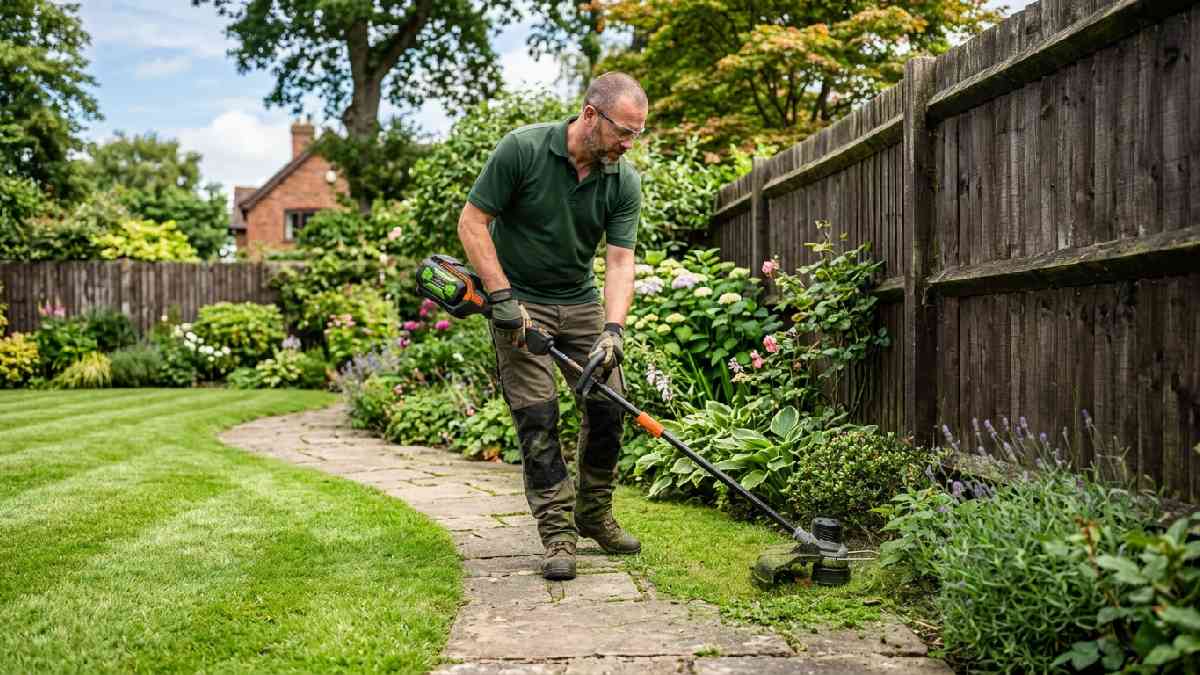
Cordless models are the usual pick now. They’re light enough to swing for twenty minutes without your arm giving out. If you’re dealing with thick weeds instead of just grass edges, look for a trimmer that takes a thicker line, or one that can fit a blade attachment. Thin line just bounces off woody stems.
Hedge Trimmer
If you have hedges, shrubs, or any topiary, a hedge trimmer turns an hour of awkward hand-shearing into a fifteen-minute job with a cleaner finish. Blade length matters here. Longer blades cut faster on big hedges, but they’re harder to control for detailed shaping. A shorter blade suits ornamental shrubs, and a longer one suits a long boundary hedge. Double-sided blades cut on both the push and the pull, which is faster for long, straight hedges. Single-sided blades give you more control for detail work. Most people end up wanting both eventually, but a double-sided blade is the smarter first buy.
Leaf Blower
A leaf blower clears paths, driveways, and lawns far faster than raking. It’s one of those tools people underestimate until they own one. Autumn is the obvious season for it, but it also earns its keep clearing grass clippings off paths and tidying up after a hedge trim.Handheld cordless blowers work fine for small to medium gardens.
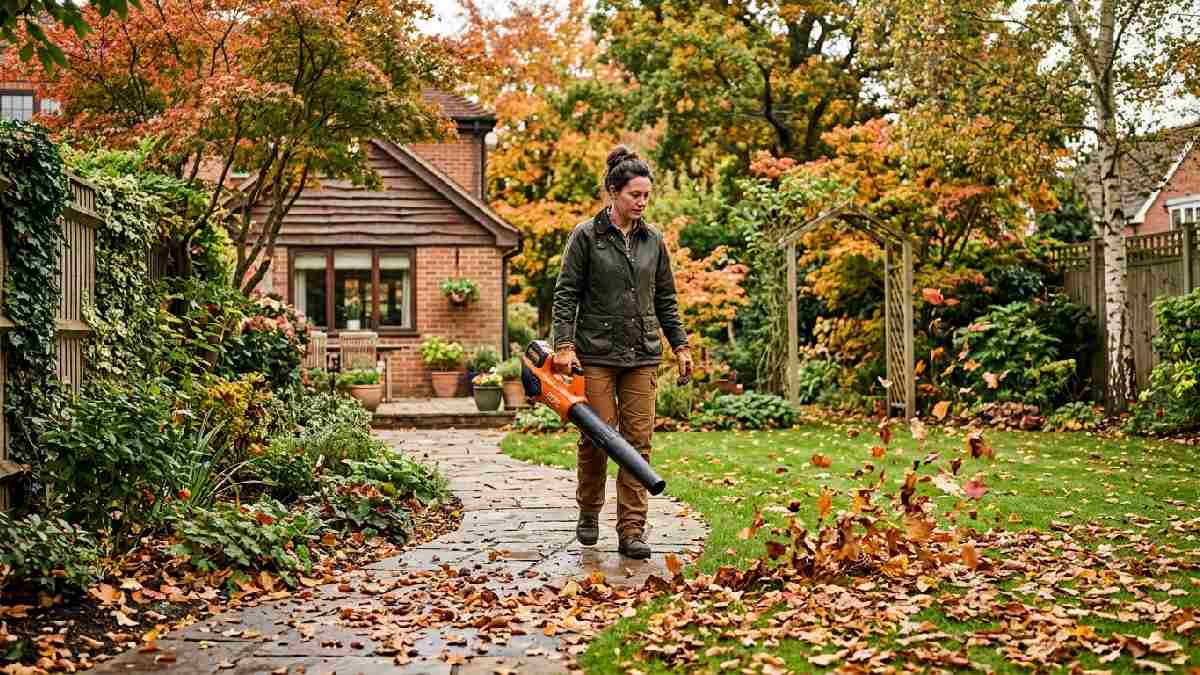
Backpack models spread the weight better, so they suit bigger properties where you’re clearing a lot of ground. Holding a handheld blower for an hour straight gets tiring fast. Some blowers double as a vacuum with a shredding feature, which is handy if you want to collect leaves for the compost pile instead of just piling them up.
Pressure Washer
This isn’t a garden tool in the plant sense, but it belongs on the list. If you have a patio, deck, fence, or garden furniture, a pressure washer is one of the most useful things you can own. Algae, moss, and grime build up fast outdoors, and a pressure washer clears it in a fraction of the time scrubbing would take.
Electric pressure washers handle most home jobs fine. Petrol versions have more power for large areas like long driveways, but that extra power also makes it easier to damage soft surfaces, like wood decking, if you get careless with the nozzle.
Chainsaw
Worth having if you’ve got trees that need pruning, or you deal with fallen branches now and then. It’s genuinely optional if your garden has little tree cover. A small cordless chainsaw with a ten- to twelve-inch bar handles pruning and small branches safely.
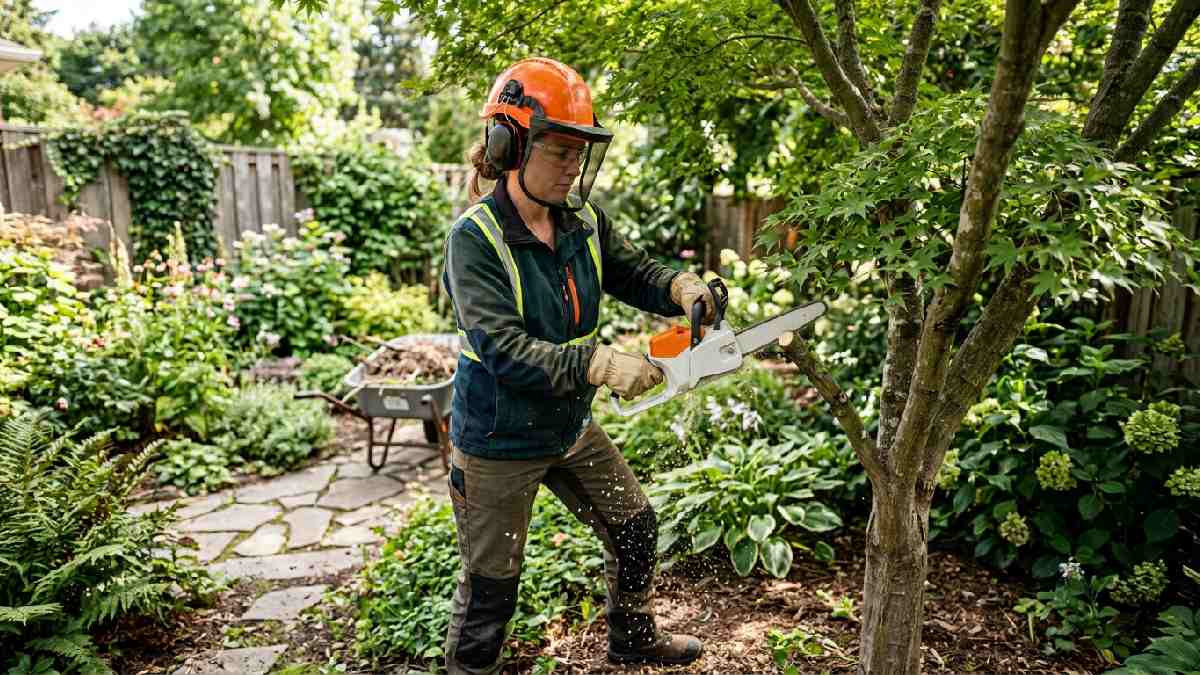
Bigger felling jobs call for a petrol chainsaw, and honestly, they often call for a professional instead of a DIY attempt. Chainsaw injuries are serious, and this is one tool where cutting corners on safety just isn’t worth it.
Cultivator or Tiller
This one is useful for breaking up soil before planting a new vegetable bed, or working compost into an existing one. A mini cultivator, sometimes called a garden claw, works well for raised beds and smaller plots. A full-size tiller makes more sense for a bigger vegetable garden, or when you’re starting a new bed from scratch. It saves a serious amount of digging.
This is one of the more occasional tools on the list. A lot of gardeners only need it once or twice a year, which makes it a good one to borrow or rent instead of buying outright.
Log Splitter
Only worth it if you burn wood regularly, whether for a fireplace, wood stove, or fire pit. You can split logs by hand, but a powered splitter turns an exhausting job into a quick one. Most gardens don’t need this tool at all, so be honest with yourself about how much wood you actually go through before spending on one.
Garden Vacuum
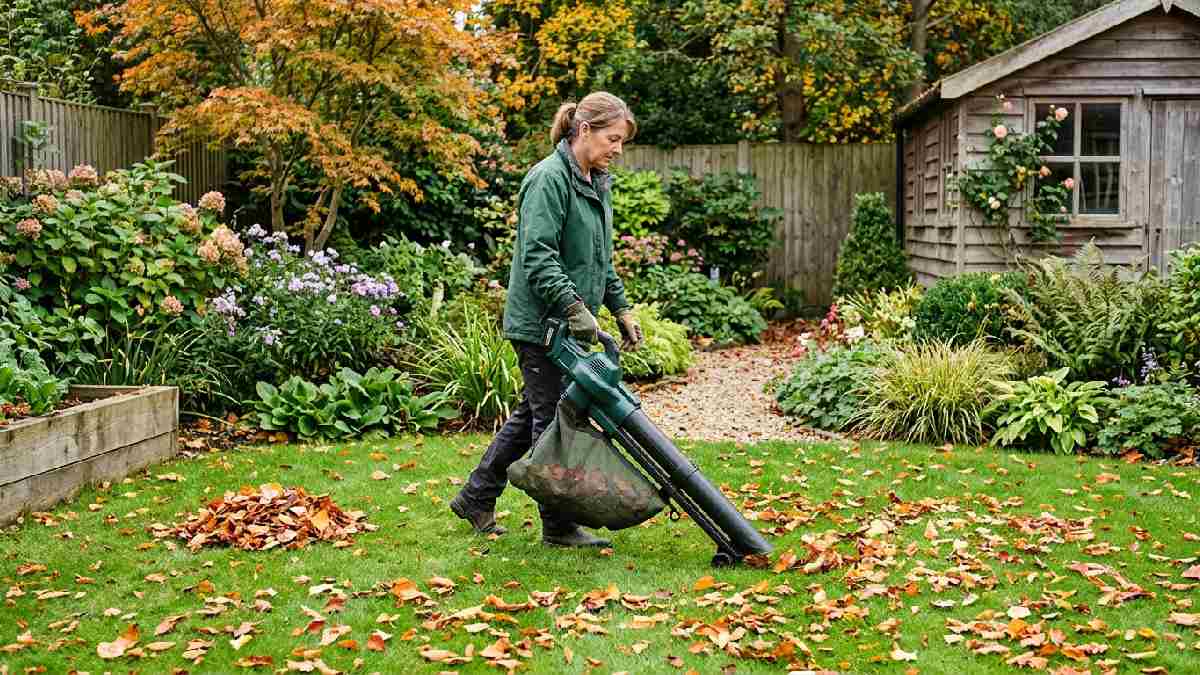
Similar to a leaf blower, but built to collect debris instead of just moving it around. It’s useful if you have a lot of leaf litter and want to compost it, since many models mulch the leaves as they collect them, which cuts down the volume a lot. If you’re happy just blowing leaves into a pile, a separate vacuum is often an unnecessary extra on top of a blower.
Quick Reference
| Tool | Best For | Skip If |
|---|---|---|
| Lawn mower | Any garden with grass | You have no lawn |
| String trimmer | Edges and tight corners | No grass edges to tidy |
| Hedge trimmer | Hedges and shrubs | No hedges to shape |
| Leaf blower | Clearing leaves and paths | Small garden, few trees |
| Pressure washer | Patios, decks, furniture | No hard outdoor surfaces |
| Chainsaw | Pruning, fallen branches | No trees on the property |
| Cultivator or tiller | Breaking up soil for new beds | You already garden in raised beds |
| Log splitter | Regular firewood use | You don't burn wood |
| Garden vacuum | Collecting and mulching leaves | A blower already covers it |
How Much Power Do You Actually Need?
It’s easy to assume more power is always better. It usually isn’t, at least not for a home garden. More voltage or wattage means more weight, more cost, and often more noise. A lot of that extra power just goes unused on an average-sized plot.
Here’s a simple rule: buy for the garden you have, not the one you might have someday. A small city garden rarely needs the same mower as a rural half-acre plot. Buying bigger “just in case” usually just means carrying around extra weight every time you use it.
Weight matters more than most buying guides admit. A trimmer that feels fine in the shop can feel very different after fifteen minutes of holding it above your shoulders. If you can, hold the floor model before you buy, especially for anything you’ll use overhead.
Battery Systems Can Save You Real Money
If you’re going cordless, and most people are these days, think about battery systems before you buy your first tool, not after you already own three that don’t match.
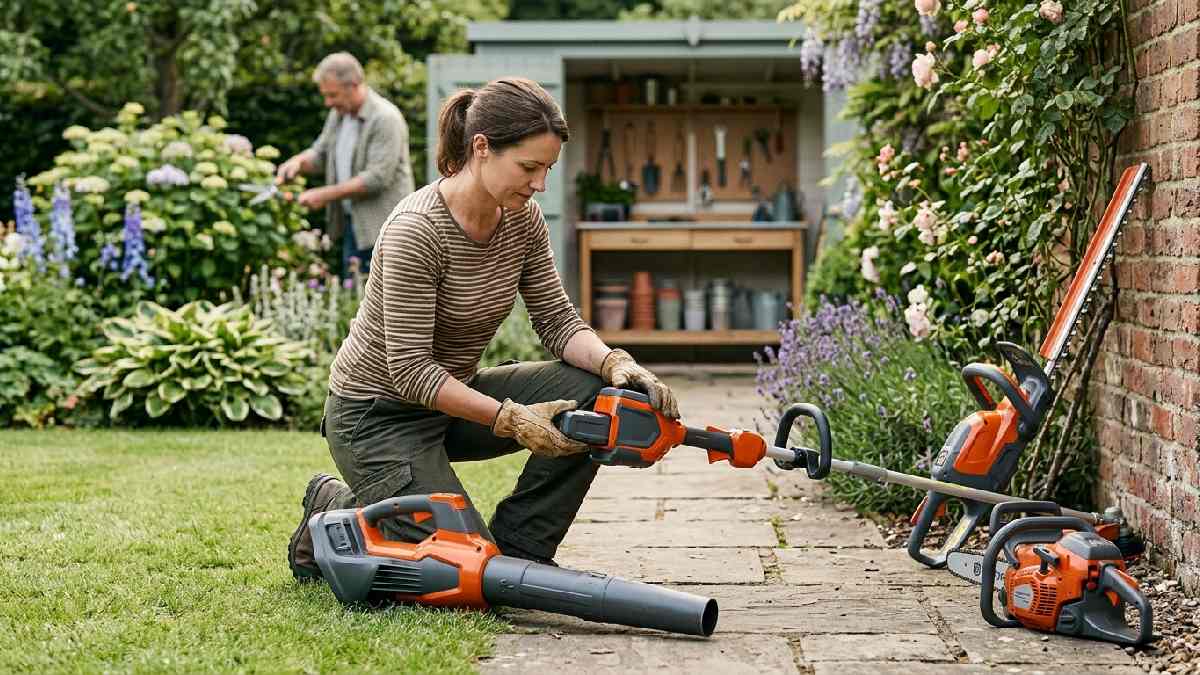
Most brands sell tools “bare,” without a battery, on the assumption you already have one from the same lineup. Once you own one battery and charger from a brand, every extra tool from that same lineup gets noticeably cheaper than buying it with its own battery. That’s really why people end up sticking with one brand across their mower, trimmer, blower, and chainsaw. It’s not brand loyalty. It’s just the cheaper path once you’ve made the first purchase.
Before you commit to a brand, check that it actually makes the range of tools you’ll likely want down the line. Switching later means either running two sets of batteries side by side, or selling off what you already own at a loss.
Safety Gear Isn’t Optional
Every tool on this list can cause a real injury. It’s worth treating safety gear as part of the tool’s price, not an extra you can skip.
Eye protection matters for anything that throws debris, which covers mowers, trimmers, and hedge cutters. Ear protection is worth it for petrol tools and for long sessions with any loud electric tool. Sturdy gloves protect your hands when you’re clearing jams or changing blades. Steel-toe boots matter for mowing and for any work near a chainsaw or tiller. If you’re using a chainsaw, get chainsaw-rated trousers or chaps. That’s not overcautious, given how serious chainsaw injuries usually are.
Keeping Your Tools Running
A bit of regular care makes a real difference to how long a tool lasts.
Clean grass, sap, and debris off blades after every use. Dried-on plant material is one of the most common reasons a mechanism jams. Sharpen or replace mower and trimmer blades at least once a season. Dull blades tear grass instead of cutting it, which stresses the lawn and looks worse right after mowing.
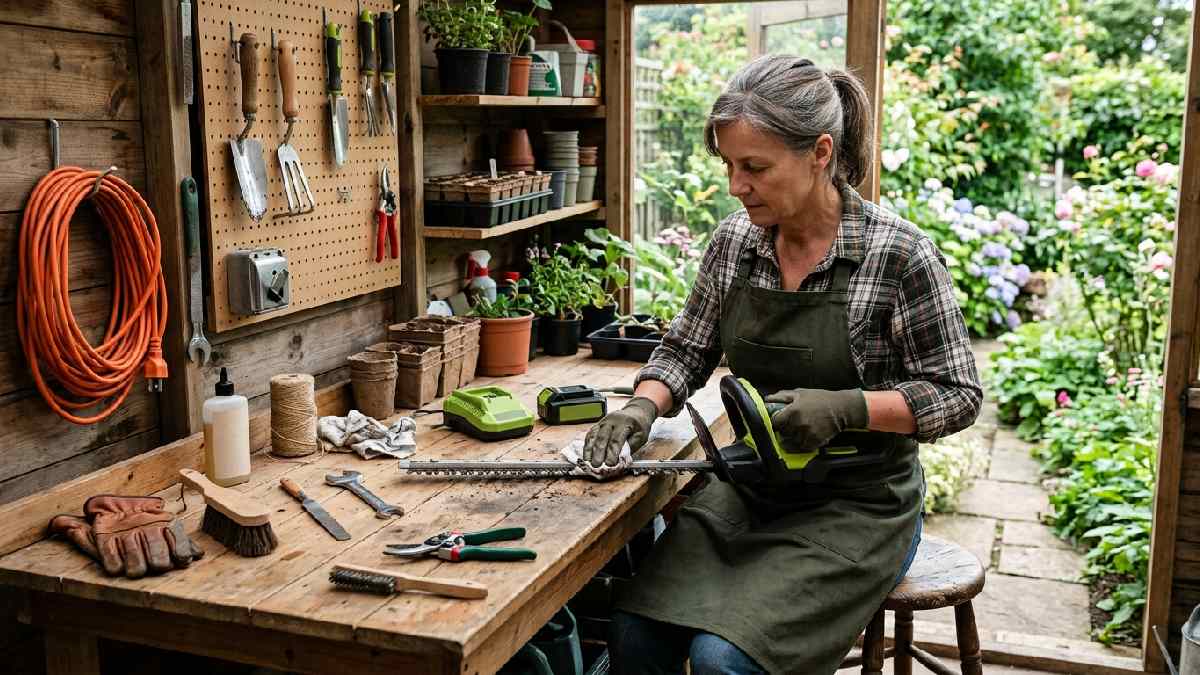
For petrol tools, use fresh fuel and either run the tank dry or add a stabilizer before storing them for a long stretch. Old fuel is one of the main reasons a petrol tool won’t start the next spring. For battery tools, don’t leave them fully charged or fully drained during long storage. Most makers suggest storing them around half charged, which noticeably extends the battery’s life compared to either extreme.
Store your tools somewhere dry. A damp shed causes rust on metal parts and can damage the electronics in cordless tools over time. It’s a slow way to ruin a decent tool.
What to Buy First
If you’re starting from scratch, buy in the order you’ll actually use things, not all at once.
A lawn mower comes first for almost any grassy garden, since it gets used weekly through the growing season. A string trimmer follows close behind, for the edges a mower misses. After that, it depends on what your garden has. A hedge trimmer makes sense if you have hedges to keep tidy. A leaf blower earns its place once autumn arrives, or if you’re constantly clearing clippings off paths.
Tools like chainsaws, tillers, and log splitters can wait until you have a specific, repeated need for them. Renting or borrowing for a one-off job usually makes more sense than buying and storing a tool you’ll only use once a year.
It also helps to think in seasons rather than buying everything on day one. Spring and summer put the mower and trimmer to work almost weekly. Autumn shifts the focus to the leaf blower. If you plan your purchases around that rhythm instead of buying the whole list at once, the cost spreads out naturally and you’re less likely to end up with a tool sitting unused for months before its season even arrives.
Mistakes People Make When Buying
Buying too much power for the job is the most common mistake. A large petrol mower for a small courtyard lawn is expensive, loud, and awkward to store, for very little real benefit over a lighter electric option.
Ignoring weight is another one. A tool that feels manageable for thirty seconds in a shop can feel very different after twenty minutes of real use, especially anything held overhead, like a hedge trimmer on a tall hedge.
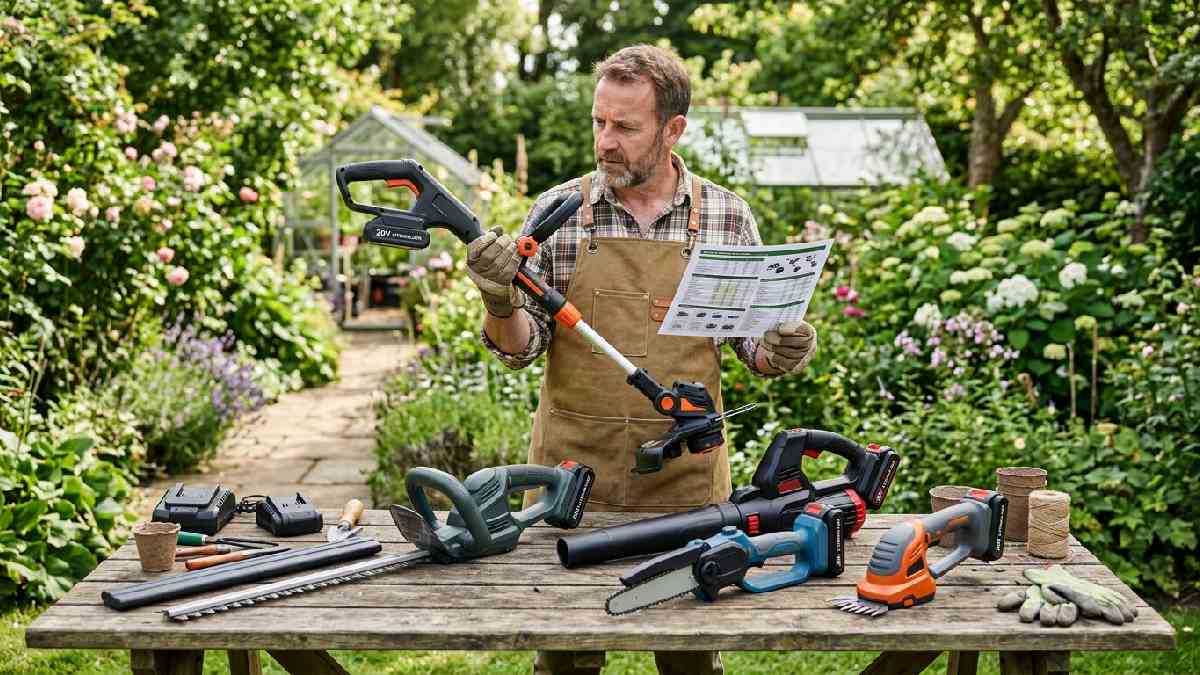
Buying across different battery brands without thinking it through means owning several chargers and batteries that don’t work with each other. That kills a lot of the cost savings cordless tools are supposed to offer.
Skipping safety gear to save a bit of money is a mistake that usually only shows itself once, and usually at the worst time. Decent eye and ear protection cost very little compared to almost anything else on this list.
And finally, buying something you’ll only use once a year, like a full-size log splitter for the occasional fire pit, when renting would cover the same need for a fraction of the price, with no storage headache for the other eleven months.
Frequently Asked Questions
What power tools does a beginner actually need?
A lawn mower and a string trimmer cover most of the regular work for a beginner. A hedge trimmer and leaf blower are good next additions if your garden has hedges or trees. Everything else on this list is situational, so add it only once you have a real, repeated need.
Are cordless tools strong enough for a full lawn?
For most home lawns, yes. Battery technology has come a long way, and a mid-range cordless mower can handle up to about half an acre on a single charge without trouble. Bigger properties, or thick and wet grass, may still do better with a petrol mower for steady power over a long session.
Should I buy all my tools from one brand?
Usually, yes, if you're going cordless. Sticking with one battery system means the same battery and charger work across your mower, trimmer, and blower. That saves money over time compared to buying separate batteries for each brand.
How much should a basic set of tools cost?
A starter set covering a mower, string trimmer, and hedge trimmer from the same cordless brand usually costs a moderate amount for the first tool with its battery included. Each extra bare tool after that costs quite a bit less. Prices vary a lot by brand, so it's worth comparing a few full ranges rather than just the price of the first tool.
Do I need petrol tools for a small garden?
Almost certainly not. Petrol tools make the most sense for large properties, heavy jobs, or all-day professional use. For a typical suburban or city garden, cordless electric tools are lighter, quieter, easier to maintain, and give you more than enough power.
Conclusion
A good gardening power tools list isn’t about owning everything on the shelf. It’s about matching a small number of well-chosen tools to the work your garden actually needs. A mower and a string trimmer cover most weekly jobs. A hedge trimmer and leaf blower handle the seasonal ones. Everything past that depends on what your garden has and how much of the work you want to do by hand versus by machine.
Start with what you’ll use every week. Pick a battery system you can build on if you’re going cordless. And don’t skip the safety gear. A small set of tools, chosen well and looked after properly, will do more for your garden than a shed full of things you only used once.