

So, store-bought lettuce costs more every year, goes limp fast, like in two days, and somehow travels for ages before you see it on your plate. That is exactly why more people are searching for how to grow lettuce at home. One packet of lettuce seeds costs almost nothing, and once you learn how to grow lettuce properly, it can turn into dozens of salads from a small patch, a balcony, or even just a window box.
The good part is lettuce is one of those beginner-friendly vegetables. It pops up quickly, doesn’t ask for a ton of space, and you can start eating baby leaves in about 3 to 4 weeks. The bad part? Lettuce is kind of dramatic. Too much heat and it turns bitter, not enough water and it gets tough, and a couple of common slip-ups can send your row straight into bolting and flowering like, “surprise”.
In this guide, I’ll explain how to grow lettuce step by step, in plain words. You’ll figure out what varieties fit your setup, when to plant, how to sow seeds, how much sun and water lettuce really wants, and how to handle pests and bitterness. Plus, I’ll show exactly how to harvest so it keeps producing, even after the first pick. Backyard garden, rooftop pots, or just a sunny kitchen window you can make it work.
Why lettuce is a great first crop
If you’re new to gardening, lettuce is an easy starting point; here’s why a lot of people begin there.
It grows quickly. Most leaf lettuce can be harvested in about 30 to 45 days from sowing, and baby leaves can show up sooner. You don’t have to wait forever for results, and that keeps new growers hooked.
It needs very little space. Lettuce has shallow roots, so it does well in raised beds, grow bags, trays, and containers that are only around 6 to 8 inches deep. A single window box can realistically feed one person a few salads a week.
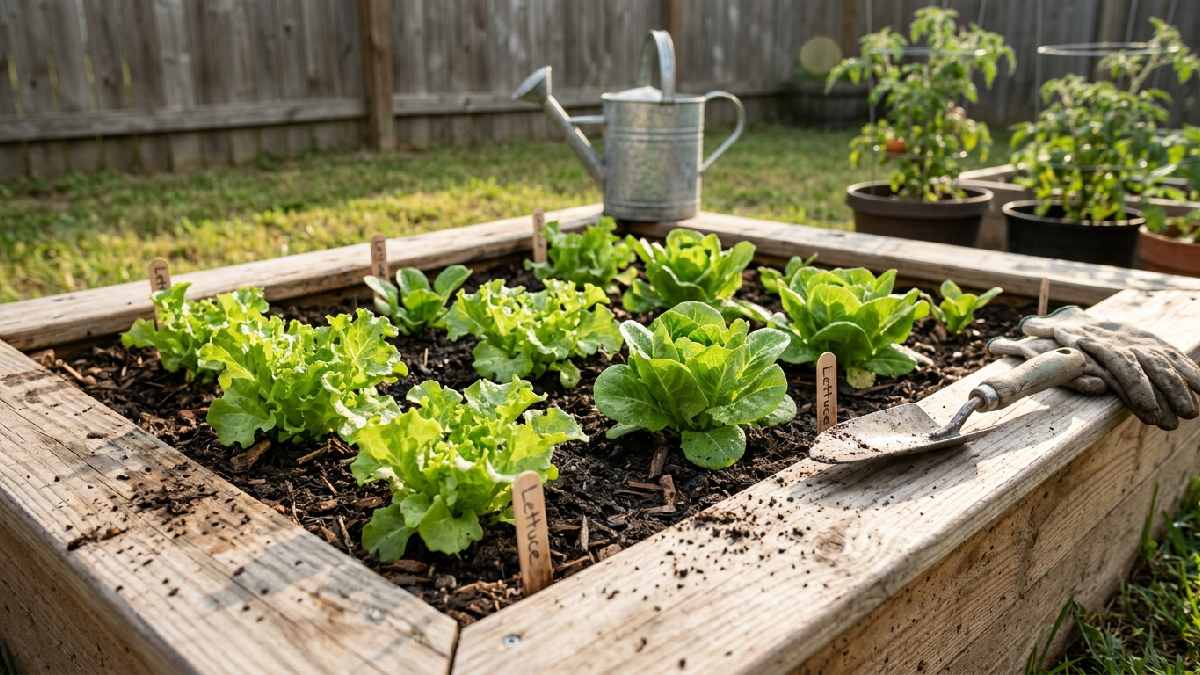
It saves money. Store-bought salad mix can cost way more than the seeds. Over time, home-grown lettuce basically pays for itself fast.
It tastes better. Lettuce gets less sweet and loses crunch quickly once cut. If you pick in the morning and eat the same day, you’ll notice leaves are crisper and usually milder too.
You control what goes on it. When you grow your own, you choose the fertilizer and pest control. That matters if kids are eating it or if you just want food with fewer “mystery” inputs.
Choose the right type of lettuce to grow
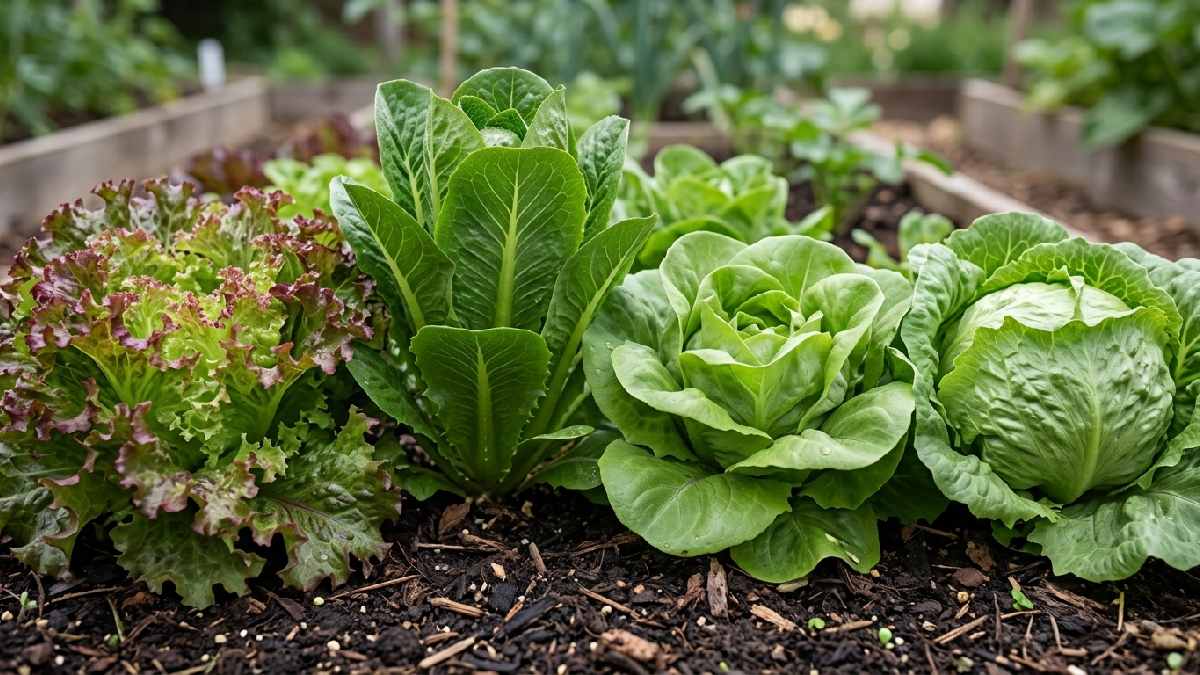
Before you sow anything, decide what lettuce type matches your climate and what you actually want to eat. Lettuce is split into four main groups, and each one acts a little differently in the garden.
Loose-Leaf lettuce
Loose-leaf lettuce doesn’t build a tight head. Instead, it grows like a rosette of tender leaves, and you harvest them one by one. This is usually the easiest option for beginners because it matures fast, tolerates mistakes, and keeps producing if you take mainly the outer leaves. Common choices are Black Seeded Simpson, Red Salad Bowl, Green Oakleaf, and Lollo Rosso.
Romaine (cos) lettuce
Romaine grows upright, with long crunchy leaves and a firmer midrib. It typically takes longer, around 55 to 70 days to reach full size, but it often handles mild heat better than many other types. Good picks: Parris Island Cos, Little Gem, and Rouge d’Hiver. Little Gem is super popular for smaller gardens because the heads stay compact.
Butterhead lettuce
Butterhead, also called Bibb or Boston lettuce, makes a loose, soft head with silky sweet leaves. It’s a little delicate, and it prefers cooler weather. Try Buttercrunch, Tom Thumb, or Bibb. Tom Thumb is small enough that you can grow it in a single pot.
Crisphead lettuce
Crisphead lettuce, which includes iceberg, makes a tight, dense head. Honestly, it’s the toughest for beginners, because it needs a longer stretch of cool weather and steady moisture. If you live somewhere hot, it’s often smarter to skip this one and go with the other three groups first.
Heat-tolerant and bolt-resistant varieties
If your summers run hot, look for seed packets labeled “slow to bolt” or “heat tolerant.” Some options like Jericho (romaine), Summer Crisp types such as Nevada, and Black Seeded Simpson tend to hold up better as temps rise. They still won’t thrive in extreme heat, but they stretch your harvest longer, especially compared to more delicate butterheads.
Quick pick: if you just want one thing to start with, choose a loose-leaf variety like Black Seeded Simpson, or a mixed “salad bowl” blend. They’re fast, reliable, and easy to harvest.
When to plant lettuce: timing is everything
Timing is basically the whole game here. Either lettuce ends up sweet and crisp, or bitter and tall, and most problems come from planting at the wrong moment.
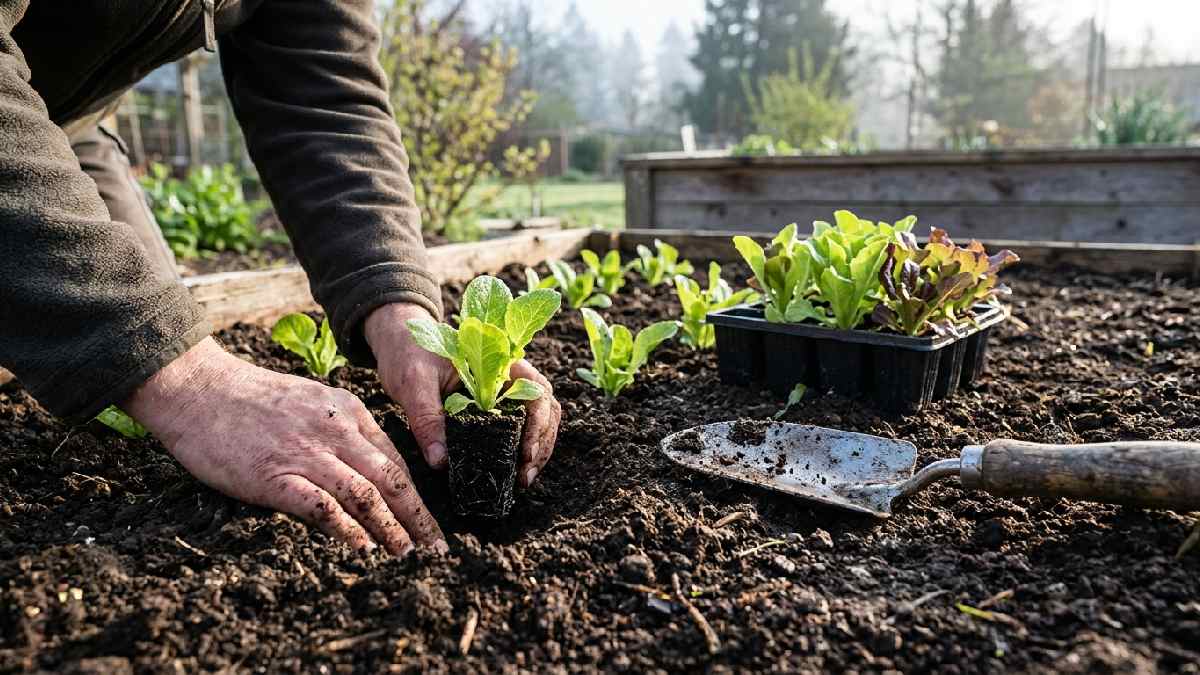
Lettuce is a cool-season crop, so when things get warm too early, it can sulk.
The best temperature for growing lettuce
Lettuce seeds germinate best when soil is between 60°F and 70°F (about 15°C to 21°C). It can still sprout in cooler soil, but above about 80°F (27°C), germination drops a lot, and wide varieties just won’t sprout. For growing plants, daytime air temps around 60°F to 75°F (15°C to 24°C) are the sweet spot. Lettuce handles light frost, though a hard freeze can damage young seedlings.
Spring and fall planting
In places with four seasons, you usually get two solid planting windows.
Spring: Sow outdoors about two to four weeks before your last expected frost, once the soil can be worked without turning into mud.
Fall: Sow about six to eight weeks before your first expected frost. Fall lettuce often tastes better than spring lettuce, because the weather is cooling down instead of climbing.
Growing Lettuce in Hot Climates
If you live where summer drags on, and it’s just really hot most days, treat lettuce like a winter vibe crop. In a lot of warm areas, like South Asia in many places, the Middle East, and the southern U.S., the smartest window to sow is the cooler stretch, think autumn through early spring. Planting smack in the middle of summer usually turns into a total fail, unless you give real shade and try to keep the soil from cooking.
Two little tricks help a lot in hot weather. First, sow seeds in the evening or tuck them into a shaded spot so the soil stays cooler while they’re germinating. Second, if your seeds seem stubborn and won’t sprout in warm soil, put them in the fridge for a day or two before sowing. It sounds simple, but it can nudge germination in those iffy, borderline conditions.
Succession Planting for a Steady Supply
Lettuce kind of comes in waves. It’s ready all at once, then suddenly it’s gone. If you dump an entire packet in one day, you end up with too much salad for like two weeks, and then nothing after that. The fix is succession planting: sow a small batch every one to two weeks. A short row, or one tray every seven to ten days, keeps fresh leaves coming as long as the weather cooperates a bit.
How to Grow Lettuce From Seed, Step by Step
Lettuce seeds are tiny, and if you start them the right way, everything after is easier. These steps work if you’re planting in the ground, a raised bed, or even a container.
Step 1: Pick a Good Spot
Pick a place that gets at least four to six hours of sun. In cooler weather, more sun tends to be better. In warmer weather, morning sun plus afternoon shade is usually the sweet spot. Also, make sure the area drains decently, because lettuce really does not want to sit in soggy soil for long.
Step 2: Prepare the Soil
Loosen the top 6 to 8 inches of soil; use a fork or hand tool. Pull out stones, roots, and weeds. Mix in a few inches of well-rotted compost or aged manure. Lettuce has shallow roots and moves fast, so it likes loose, rich soil with steady moisture. Smooth the surface with a rake; keep it fine, since little seeds struggle in lumpy places.
Step 3: Sow the Seeds
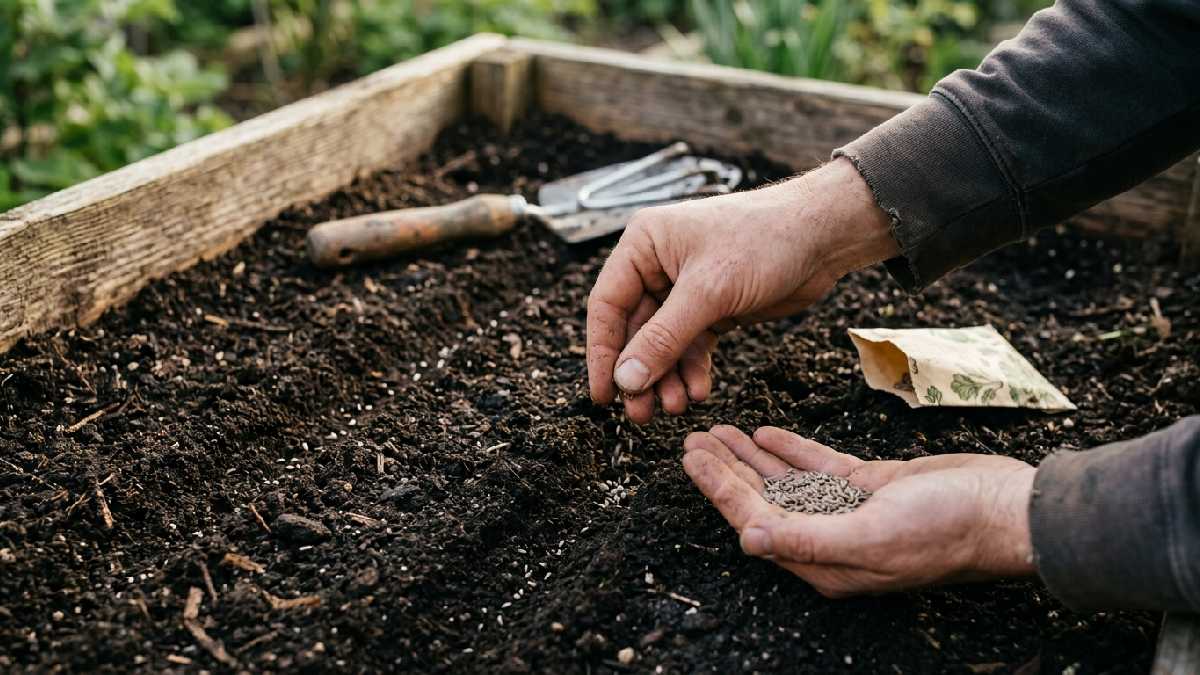
Lettuce seeds need light to germinate, so don’t bury them deep. Sprinkle thinly on top, then cover with just a quarter inch (about 6 mm) of fine soil or compost. Or press them lightly into the surface. For leaf lettuce, keep rows 8 to 12 inches apart. If you’re sowing in a wide band or container, scatter evenly instead of dropping clumps.
Step 4: Water Gently
Use a fine spray, or a watering can with a rose head, so you don’t blast seeds away. Keep the soil evenly moist, kind of like a wrung-out sponge, until seedlings show up. Usually, seeds sprout in 4 to 10 days, depending on temperature.
Step 5: Thin the Seedlings
This part surprises people, but it matters. Crowded lettuce competes for light and water, and ends up weak, stretchy, and kind of skinny. Once seedlings have two or three true leaves, thin them using the spacing below:
- Loose-leaf lettuce: 4 to 6 inches apart
- Romaine and butterhead: 8 to 10 inches apart
- Crisphead: 12 inches apart.
Don’t toss the thinnings either. Those tender babies are excellent in salads.
Starting Seeds Indoors and Transplanting
You can start lettuce indoors too, especially if the weather outside can’t make up its mind. Sow seeds in seed-starting mix, give them bright light, then move them outside once they have three to four true leaves, usually about three to four weeks after sowing. Lift and handle gently, by the leaves more than the stem, and water well after planting. Transplanting gives you an early start, plus it protects tiny seedlings from slugs and birds. Still, direct sowing is simpler, and it works fine for most home growers.
Soil, Sun, Water, and Feeding: What Lettuce Really Needs
Once lettuce is growing, four things pretty much decide how it turns out: soil, light, water, and nutrition. Nail those, and a lot of problems just never show up.
The Best Soil for Lettuce
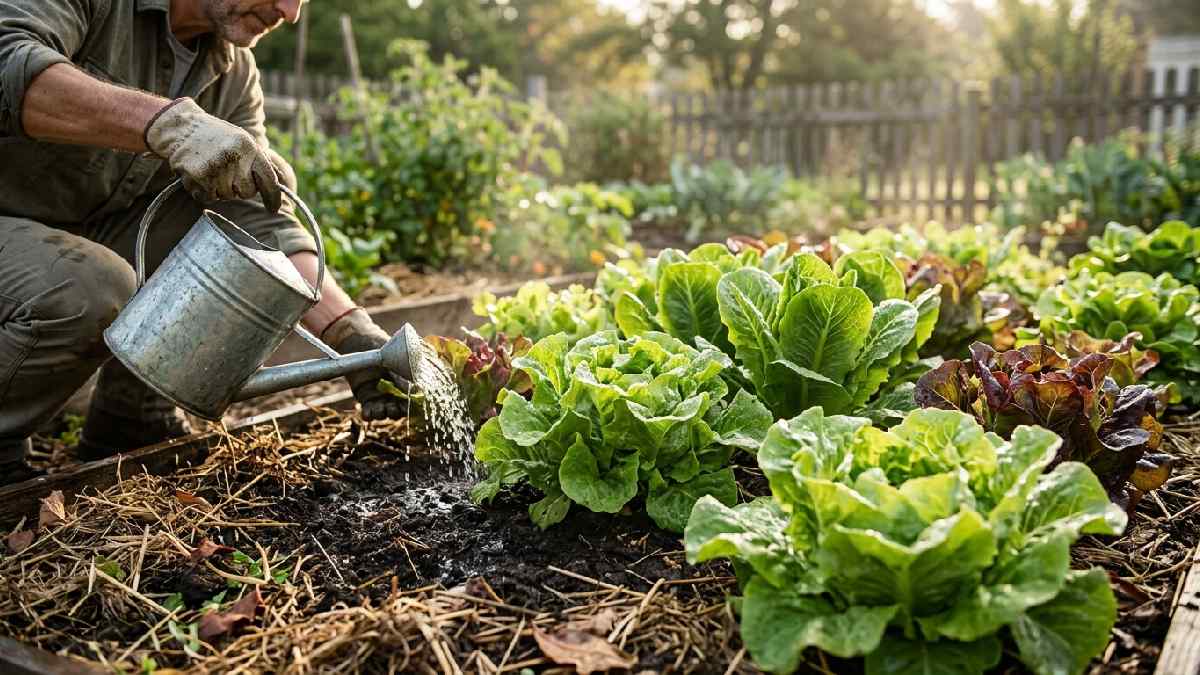
Lettuce likes loose, fertile, well-draining soil, with a slightly acidic to neutral pH. Try for around 6.0 to 7.0. Heavy clay holds water too long and slows roots. Very sandy soil dries way too fast. If your soil is clay, add plenty of compost and consider a raised bed. If it’s sandy, compost helps it hang on to moisture better. If you’re unsure, grab a simple home soil test kit for pH.
How Much Sun Does Lettuce Need?
Lettuce does best with about six hours of sun in cool weather. But when temps rise above the mid-70s Fahrenheit, too much straight sun can make leaves bitter and push plants toward bolting. In warm conditions, give afternoon shade. You can plant lettuce on the east side of taller crops like tomatoes or beans, so it gets shaded as the season warms. Shade cloth also does the job.
How Often Should You Water Lettuce?
Lettuce is roughly 95 percent water, and its roots sit near the surface, so they dry quickly. Aim for consistent moisture, about one inch of water per week, but delivered in small regular amounts, not random big soakings. In hot or windy weather, you might need water every day, or every other day. Quick check: push your finger about an inch into the soil. If it’s dry, it’s time.
Water at the plant base in the morning if you can. Wet leaves overnight invite fungal issues, and uneven watering is a common reason for bitter, tough leaves.
Do You Need to Fertilize Lettuce?
Since lettuce is a leafy crop, it responds well to nitrogen. If you mixed compost into the soil before planting, you might only need a light feed. About three weeks after sowing, side-dress with compost or use a balanced organic fertilizer. Or you can use diluted fish emulsion or liquid seaweed every two weeks. Just don’t overdo it, because overly soft growth draws pests.
Mulching to Keep Roots Cool
A thin mulch layer, like straw, dried grass clippings, or shredded leaves, helps keep soil cooler and keeps moisture in, plus it reduces weeds. Put it down once seedlings are a few inches tall, and leave a small gap around the stems to prevent rot. Mulch is especially handy as the weather heats up.
How to Grow Lettuce in Containers and Indoors (so, you can do it even without a yard)
No garden? Really not an issue. Lettuce is one of those vegetables that basically loves pots, which means it works great on balconies, rooftops, and even those small little yard spaces.
Container Growing Basics (the quick version that still matters)
Pick a container that is at least 6 to 8 inches deep, and make sure it has drainage holes. Wide, shallow pots, window boxes, and grow bags are all fine. If you have a 12-inch pot, you can grow three or four heads of romaine or butterhead, or you can do a thick little patch of loose-leaf mix for that cut-and-come-again type of harvesting.
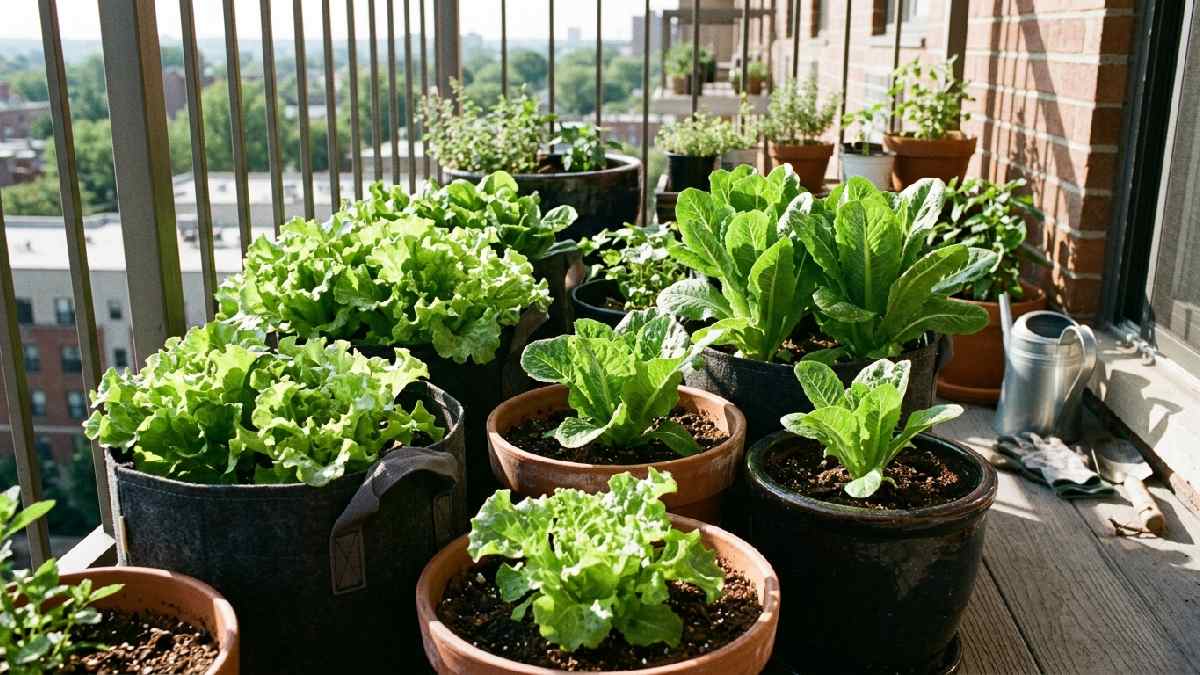
Use a good quality potting mix, not regular garden soil. Garden soil tends to get compacted in containers, and lettuce does not like that. Sow seeds the same way you would if you were planting in ground, then keep the pot where it gets morning sun and afternoon shade if the weather is warm. Pots dry out faster, so check moisture fairly often, like maybe daily, because one miss can get bitter leaves.
One nice advantage with pots is mobility. When that heat wave shows up, you can just carry the containers into a cooler, shadier corner. In winter, you can move them to a sheltered spot too, to guard from frost and unexpected cold snaps.
Growing Lettuce Indoors on a Windowsill
Yes, you can grow lettuce indoors, especially loose-leaf and baby types. Put the container on a south-facing windowsill. It should get at least four to six hours of bright light. If your home is kinda dim, a basic LED grow light helps a lot. Mount it about 6 to 12 inches above the plants, and run it 12 to 14 hours each day.
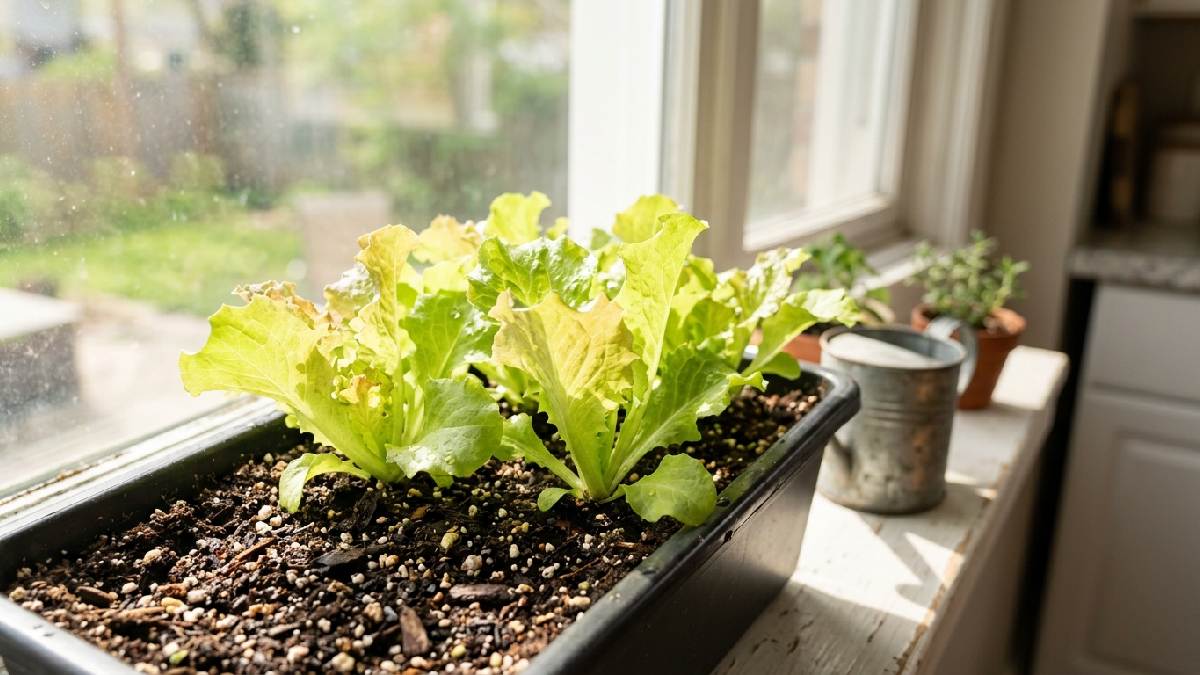
Try to keep the room on the cooler side if possible, because warm indoor air can make leaves stretch and weaken. Harvest baby leaves when they are around 3 to 4 inches tall, not too early, not too late.
A Quick Note on Hydroponic Lettuce
Lettuce is also pretty popular for hydroponics, where the plants grow in nutrient-rich water instead of soil. It can work well for year-round indoor growing, but it requires more gear and close attention to nutrient levels. If you’re still learning how to grow lettuce, starting with soil (or containers) is the easier first step, honestly.
Common Lettuce Problems and How to Fix Them
Even seasoned gardeners run into problems once in a while. These are the most common issues, and what to do when they happen.
Why Is My Lettuce Bitter?
Bitterness is usually the number one complaint. It is often caused by milky sap building up when lettuce is stressed from heat, drought, or old age. To reduce it, keep the soil evenly moist, give afternoon shade, harvest on time, and choose varieties that tolerate heat better. Picking leaves in the morning helps too, when plants are cool and full of water, and flavor stays milder.
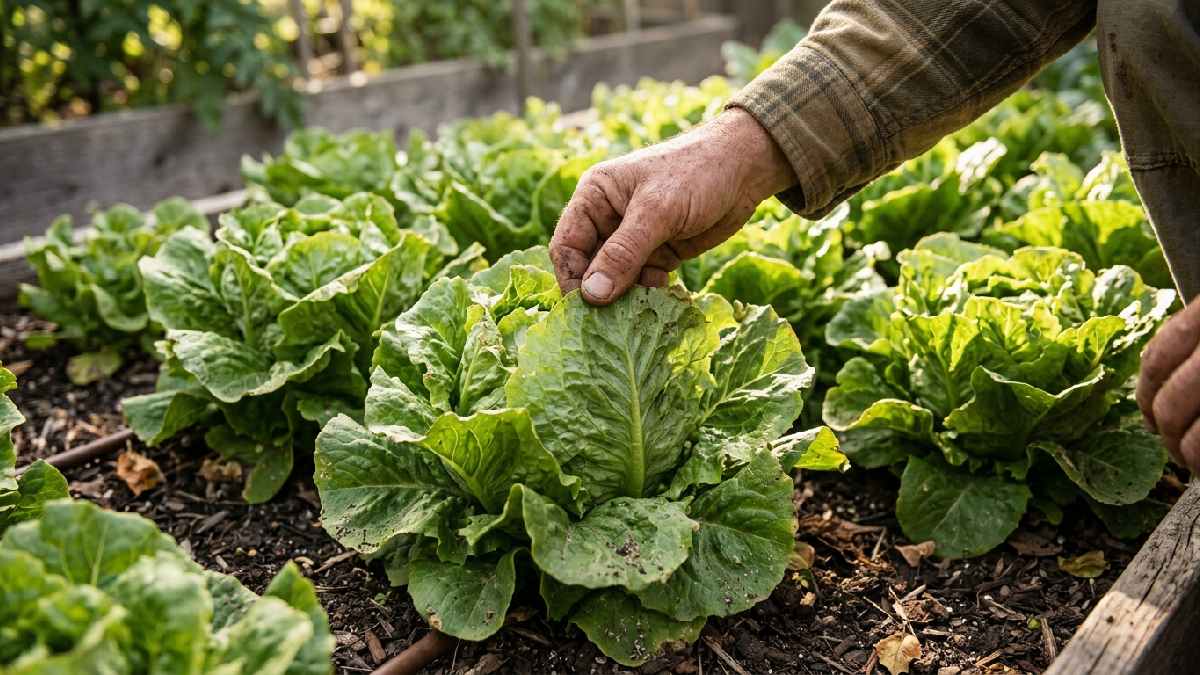
If leaves already taste bitter, soaking them in cold water for 15 to 30 minutes can soften the taste, somewhat.
Bolting: When Lettuce Shoots Up and Flowers
Bolting is when a lettuce plant sends up a tall flower stalk. Once it begins, the leaves tend to turn bitter and tough. Heat, plus longer days, can trigger it. Once bolting starts, you can’t really reverse it. But you can prevent it by planting at the right time, using slow-bolting varieties, giving shade, using mulch, and harvesting regularly.
If a plant has already bolted, pull it out and replace it with a fresh sowing. If you want to save seeds, you can let one plant flower fully and collect them later.
Slugs and Snails
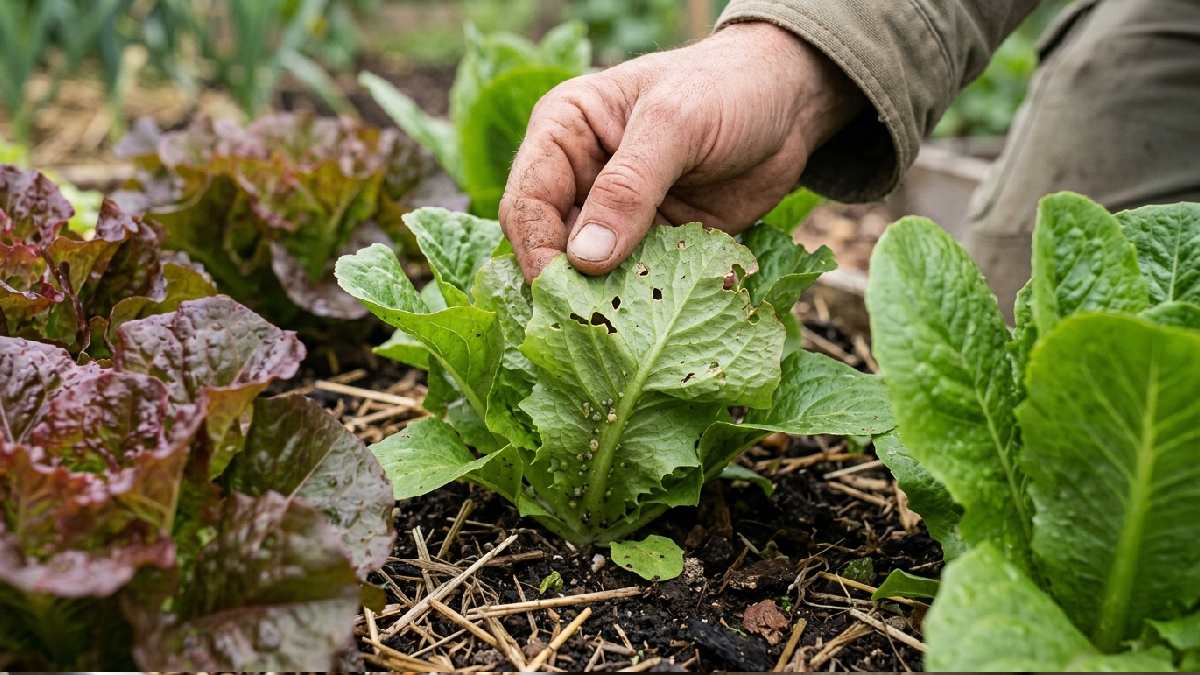
These two are basically lettuce’s enemies. They chew ragged holes in leaves, especially at night and right after rain. Hand-pick them in the evening, set shallow traps with beer, or apply copper tape around containers and garden beds. Cleaning up debris also helps, and watering in the morning rather than evening matters, because slugs love damp spots.
Aphids
Aphids are tiny, soft insects that often cluster on the underside of leaves and near the center of the plant. A strong spray of water knocks a lot of them off quickly. If it’s a heavier infestation, use insecticidal soap or a mild soapy water mixture. Also, encouraging ladybugs and lacewings can give you ongoing, free pest control.
Rabbits, Birds, and Other Hungry Visitors
If animals are nibbling seedlings, cover the bed with light netting, row cover, or a simple cloche. It also helps protect from heavy rain and light frost, so the plants stay less stressed.
Fungal Diseases: Downy Mildew and Gray Mold
Downy mildew usually looks like pale yellow patches on top of leaves, with fuzzy growth underneath. Gray mold shows up as fuzzy gray patches in crowded, damp conditions. Prevention means spacing plants properly, watering at the base, improving air movement, and rotating crops every year. Remove infected leaves and discard them rather than composting.
Tip Burn and Yellowing Leaves
Brown, crispy edges on leaves are “tip burn”, and it usually comes from uneven watering or extremely fast growth in warm weather. Yellowing leaves can mean too little nitrogen, too much water, or poor drainage. Check your watering first, then adjust feeding if you need to.
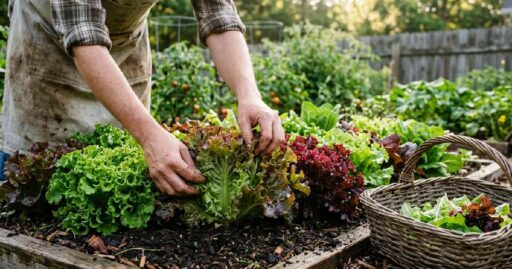
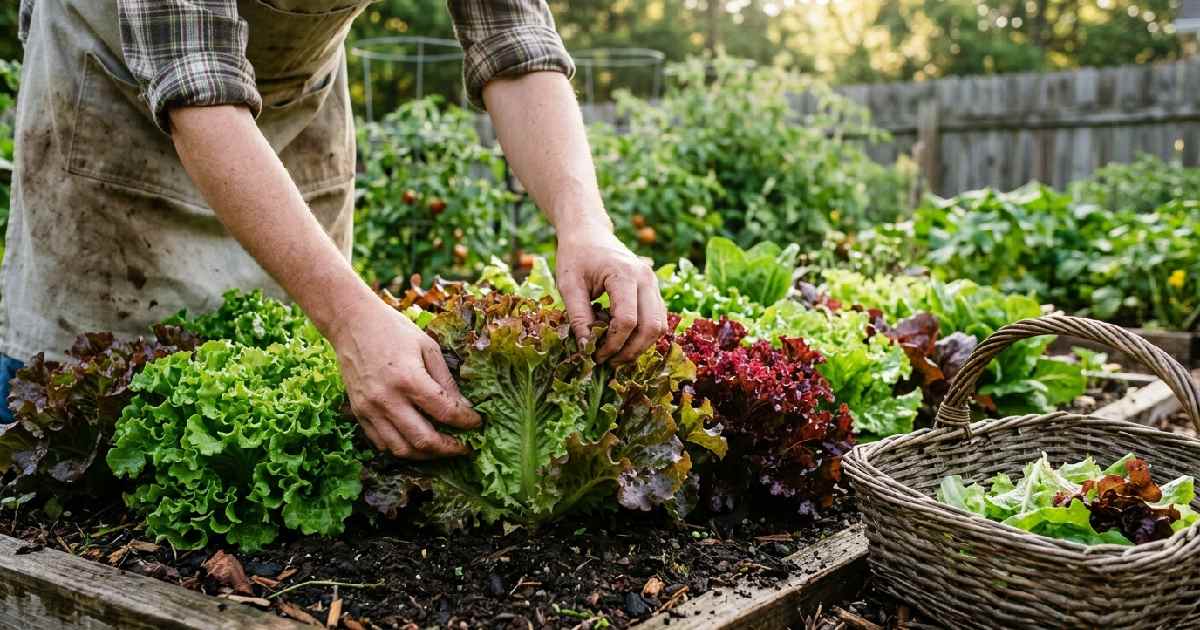
How and when you harvest lettuce, honestly, it’s the part I look forward to the most, but if you do it the right way, you can pretty much double what you get from each plant, kind of like magic, but not really.
When Is Lettuce Ready to Pick?
Baby leaf lettuce is usually ready 20 to 30 days after sowing, when the leaves are around 3 to 4 inches long. Full-size loose leaf types tend to be in the 40 to 50 day range. Romaine and butterhead heads commonly take 55 to 70 days, while crispheads can stretch out 70 to 90 days. Just peek at the seed packet and find the “days to maturity” number, and keep in mind cooler weather kinda slows everything down, while warm weather speeds it up, so timing shifts.
The Cut and Come Again Method
For loose-leaf lettuce, you do not have to yank out the entire plant, nope. Grab the outer leaves instead, and leave the center growth point alone. Or, if you want a simpler rhythm, cut the whole plant about an inch over the soil, and it should regrow for a second harvest, sometimes even a third too.
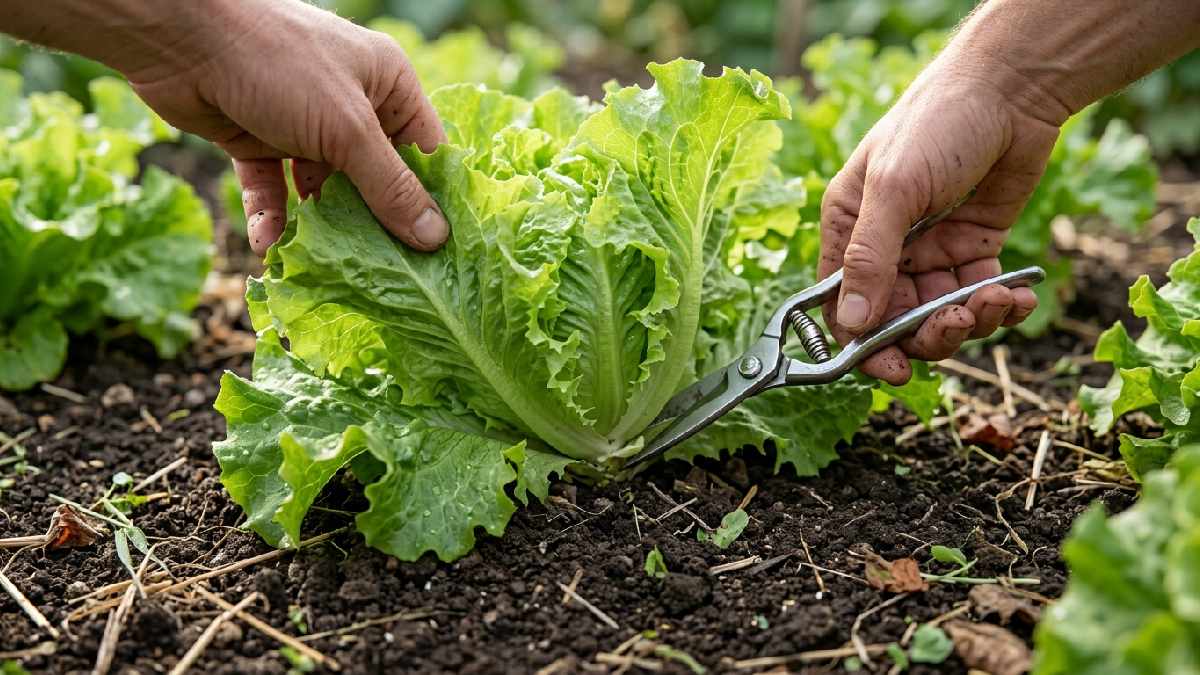
This technique is a really good way to stretch a small garden, even if you don’t have a lot of space.
Harvesting Head Lettuce
For romaine, butterhead, and crisphead, cut the whole head at the base using a clean knife, once it feels firm and looks properly sized. Try to harvest before the weather warms up more, because heads are more likely to bolt and get bitter once temperatures climb, and nobody wants that.
Best Time of Day to Harvest
The early morning is the sweet spot, when the leaves are cooler and feel crisp. Rinse gently in cold water, then shake or spin dry. After that, store it in the fridge, wrapped in a clean cloth or paper towel inside a container. Kept properly, fresh lettuce is usually good for about five to seven days.
Frequently Asked Questions About Growing Lettuce
How long does it take to grow lettuce?
Most lettuce takes 30 to 70 days from seed to harvest. Baby leaves can be picked in as little as 20 to 30 days, loose-leaf types in about 40 to 50 days, and heading types such as romaine in about 55 to 70 days.
Can you grow lettuce all year round?
In mild climates, yes. In cold areas, you can extend the season with row covers, cold frames, or indoor growing. In hot areas, grow lettuce in the cooler months and use shade in the shoulder seasons.
Does lettuce grow back after cutting?
Loose-leaf and many romaine types will regrow if you cut them about an inch above the base and leave the roots in place. You can usually get two or three harvests this way before quality drops.
How many lettuce plants should I grow per person?
For regular salads, four to six plants per person staggered over time is a good starting point. Because lettuce matures quickly, succession planting matters more than total number.
Can lettuce grow in shade?
Lettuce tolerates partial shade better than most vegetables, and in warm weather shade actually helps it stay sweet. However, it needs at least three to four hours of light to grow well, so very dark corners will lead to leggy, weak plants.
Conclusion
Learning how to grow lettuce doesn’t require special talent or expensive gear. If you remember a few simple rules, you’ll be eating homegrown salad in just a matter of weeks. Sow at the right time of year, water gently and consistently, keep the soil evenly moist, protect from heat, and harvest often.
Start with a small patch, or just one container of loose-leaf lettuce. Sow a little every week or two, watch what works in your own weather, and tweak your plan as you go. Honestly, every gardener loses a few plants to slugs or sun at some point, and that’s part of the learning. After one season or two, you’ll have a real sense of when to plant, how much water to give, and which varieties match your taste.
And once you taste a salad that was growing in your garden an hour earlier, it gets really hard to go back to the plastic bag thing from the store, like, truly.