

Grow Light for Microgreens: Complete Guide for Indoor Growing
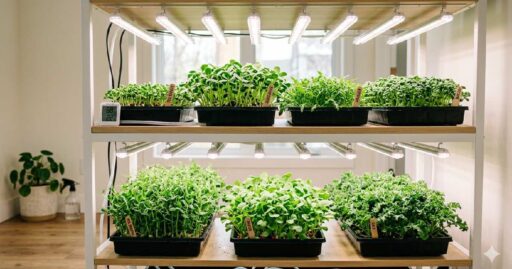
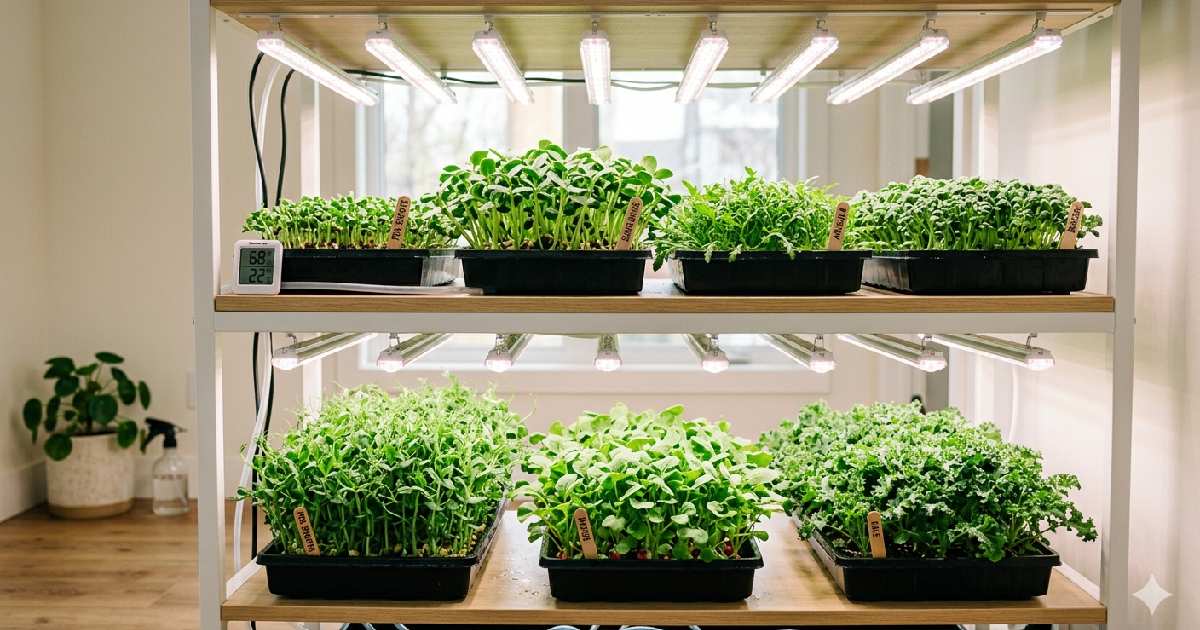
Growing microgreens indoors needs proper light; otherwise, the shoots grow weak and pale. I tried window light first, which worked okay, but not consistently. Grow lights changed everything; steady light made stems stronger and leaves greener. LED lights are most common; they use less energy and stay cool.
Keep lights a few inches above trays, not too far. Around 12to 16 hours daily works well for most varieties. I use a simple timer, which makes the routine easy. Rotate trays sometimes, to help even growth. Good lighting feels like a small step, but results improve clearly. Indoor growing becomes more reliable and satisfying.
What is a Grow Light for Microgreens
A grow light for microgreens is an artificial light source designed to provide the essential light spectrum that plants need for healthy growth indoors. Since microgreens are often grown in limited sunlight conditions, these lights help mimic natural sunlight and support proper photosynthesis.
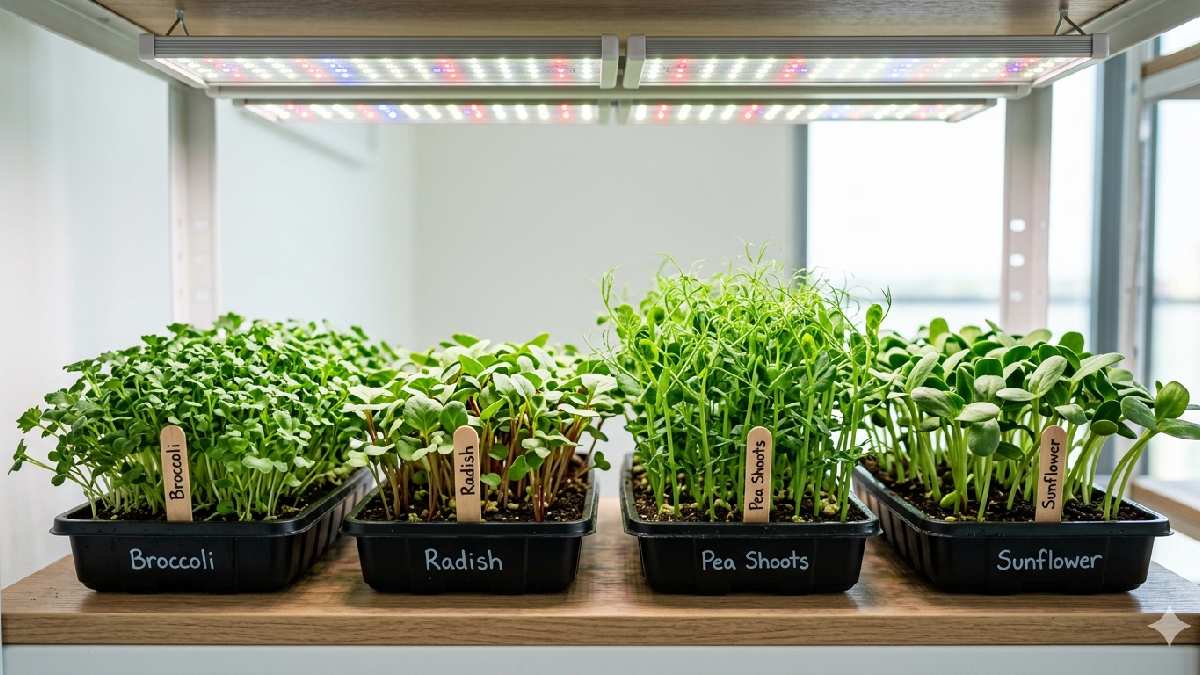
Using the right grow light for microgreens ensures strong stems, vibrant color, and faster growth cycles. Most indoor growers prefer LED grow lights because they are energy-efficient and provide full-spectrum lighting. Whether you are a beginner or an experienced gardener, a reliable grow light plays a key role in producing high-quality microgreens year-round.
Why Grow Light for Microgreens is Important
Grow lights are artificial light sources designed to help plants grow indoors. They give light similar to sunlight, helping photosynthesis happen even without natural sunlight. I first used them when the window light wasn’t enough; results improved fast. Most grow lights use LED technology; they stay cool and save energy.
They come in different colors and intensities depending on the plant’s needs. Simple idea, but very useful for indoor gardening. Microgreens especially respond well, growing faster and more evenly under controlled light.
Why Microgreens Need Grow Lights
Microgreens grow fast, but they still need proper light. Without enough light, shoots stretch weakly, and color turns pale. I noticed this when I used only window light; growth felt uneven. Grow lights fix this by giving steady brightness every day.
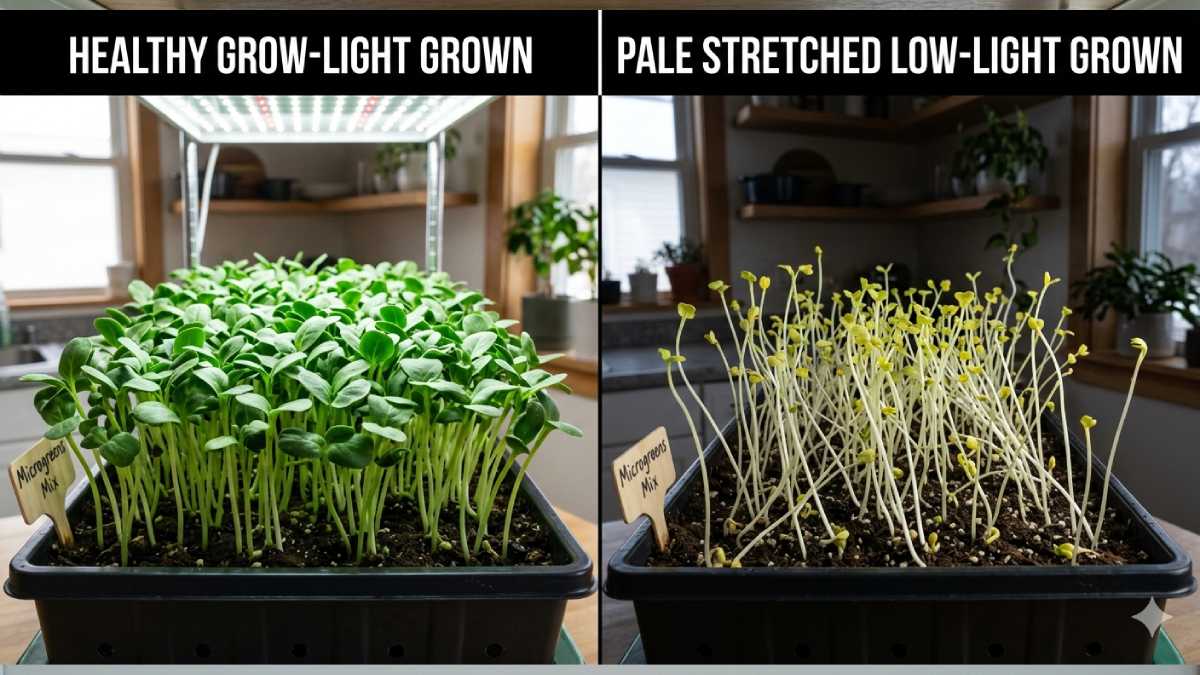
They help leaves stay green and stems firm. Indoor setups depend on it, especially in low sunlight rooms. Consistent light makes harvest quicker and healthier. Simple tool, but big difference in results.
Why Grow Light for Microgreens is Important
Grow lights matter because microgreens grow fast and react quickly to light changes. Without proper light, they become weak, stretched, and pale. I saw this myself when I relied only on a window; growth looked uneven and slow. With grow lights, everything feels more controlled.
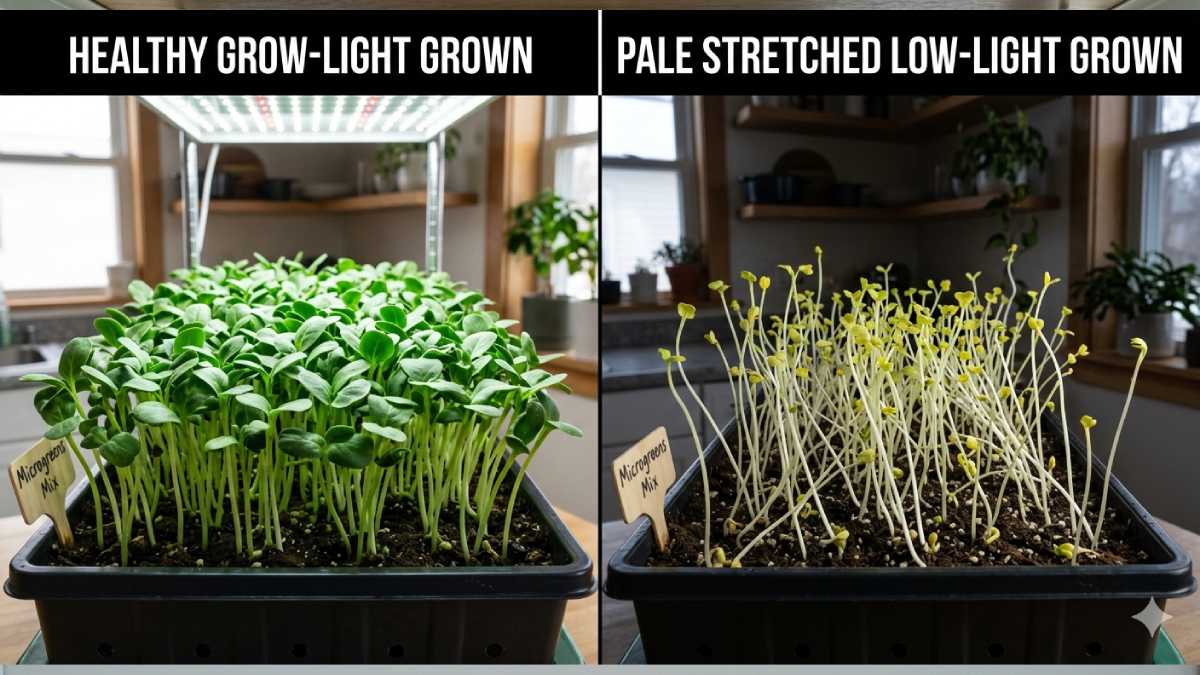
Stems stay firm, leaves stay green, and growth becomes predictable. Indoor spaces don’t always have enough sunlight, especially in small rooms. A simple LED setup fixes that gap easily. It also helps you grow year-round, no weather issues involved. Small change, but results feel noticeably better and more stable.
Role of Light in Plant Growth
Light drives plant growth, a simple but powerful thing. Microgreens use it for photosynthesis, turning light into energy. Without enough light, they stretch, become weak, and pale. I noticed this earl, trays near dim corners looked tired.
Good light keeps stems firm and leaves rich green. It also controls direction; plants lean toward the source naturally. Too much light can stress them a bit; balance matters here. Healthy growth always shows where light feels right.
Problems with Poor Lighting
Poor lighting causes weak and uneven microgreens. Stems stretch too long, trying to find light, then fall over easily. Leaves turn pale, sometimes yellowish, and are not healthy-looking. I had a tray like this once, which looked thin and tired.
Growth slows down, harvest gets delayed. Flavor also feels dull, not as fresh. Some areas grow, others stay behind; patchy results show up. Without enough light, plants just don’t develop properly. Small issue at the start, but it affects everything later.
Types of Grow Light for Microgreens
Different grow lights work for microgreens, some simple, some more advanced. LED lights are the most common now, energy-efficient, and stay cool. I use them mostly; they are easy to manage and reliable. Fluorescent lights also work, especially for beginners; they cost less but use more power.
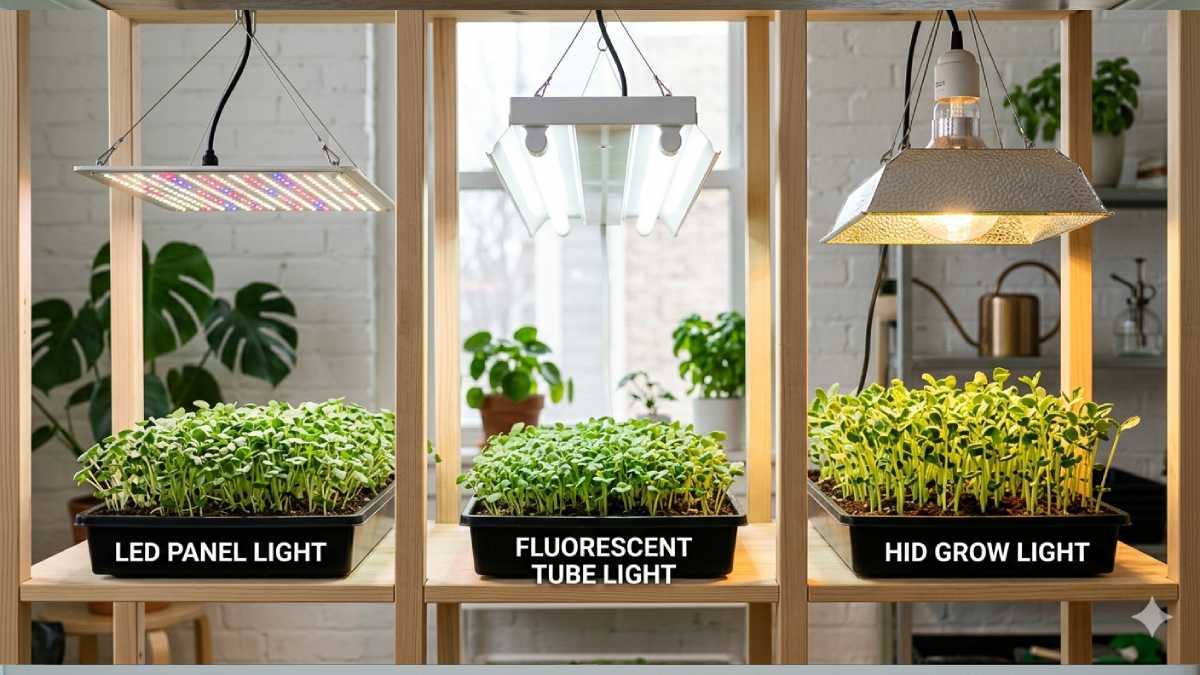
Some people still try incandescent bulbs, but they give off more heat than useful light, not ideal, really. Full-spectrum lights feel closest to sunlight, and plants respond better under them. Choice depends on budget and setup. Even a basic light can grow healthy greens if used properly.
LED Grow Lights (Best Option)
LED grow lights are the best option for microgreens because they give full-spectrum light with low heat and high efficiency. I switched to LEDs after weak results with other lights, and growth became more even and green. They support photosynthesis properly, keeping stems short and strong.
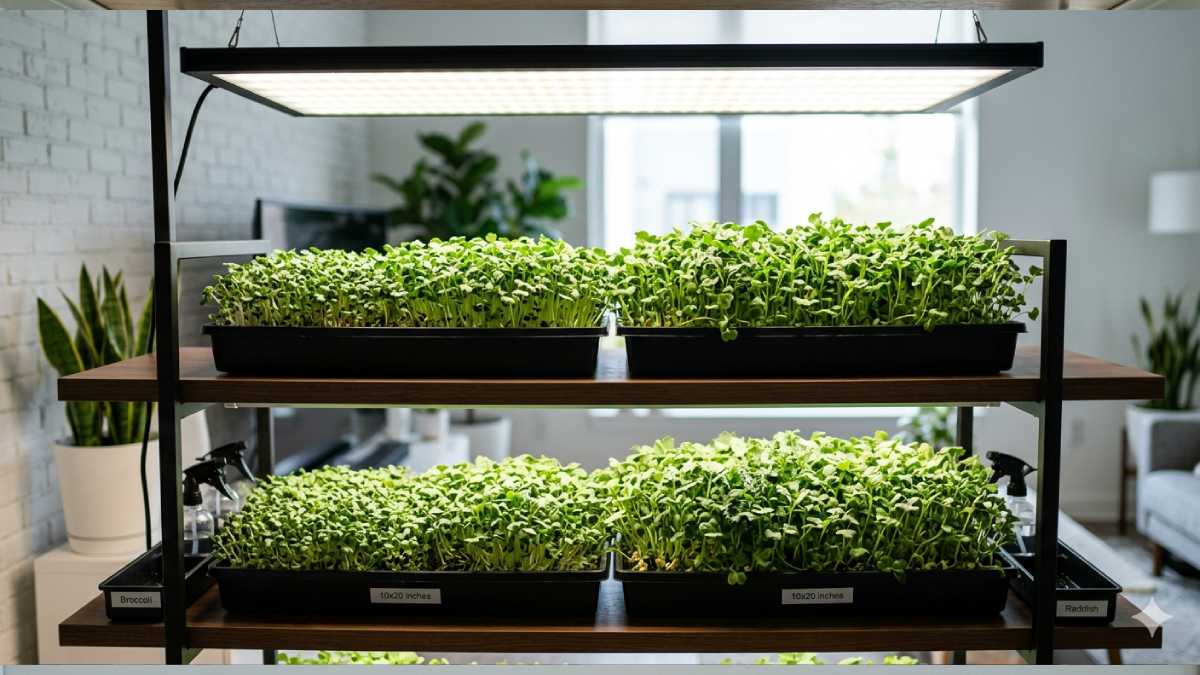
LEDs also save electricity and last longer, which makes them ideal for home setups. Most growers prefer a 5000K to 6500K range for balanced growth. Simple setup, stable light, and reliable results make LEDs the top choice for indoor microgreens.
Fluorescent Grow Lights
Fluorescent grow lights are a decent option for microgreens, especially for beginners. They are cheaper than LED and easy to find. I used them once, and the results were okay, not perfect, but still usable. They give soft light, good enough for small trays.
Tubes like T5 or T8 work better than older ones. The downside is that they use more energy and produce a bit more heat. You need to keep them close to plants for the best growth. Simple setup, but needs a little adjustment.
HID Grow Lights
HID grow lights are powerful lights used for large indoor growing setups. They produce very strong brightness, which helps plants grow fast, but they also generate a lot of heat. I feel they are too much for small microgreen trays. You need proper cooling and distance control; seedlings can dry out quickly.
They also use more electricity compared to LED or fluorescent lights. Some growers use them for bulk production, not home setups. For beginners, they are not really practical, better to stick with simpler options.
How to Choose the Best Grow Light for Microgreens
Choosing the right grow light is not about just buying the brightest one. You need a balance between spectrum, intensity, coverage, and wattage. Microgreens grow fast, so even small mistakes in light setup show results quickly.
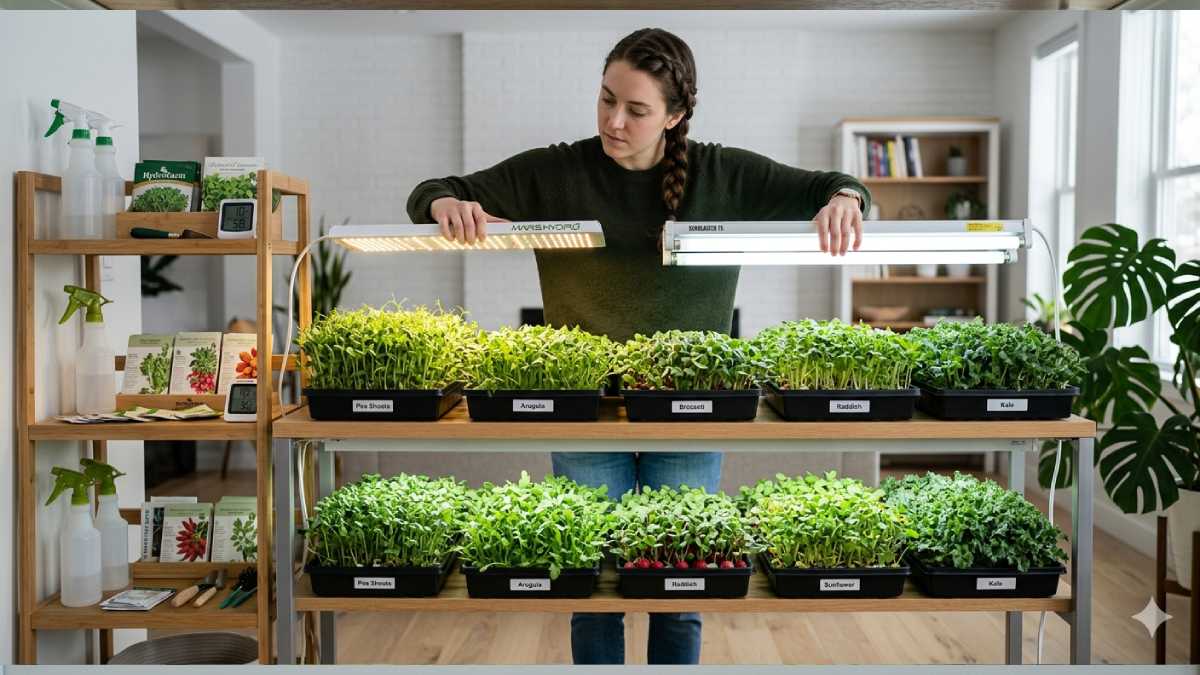
I learned that even a good LED fails if it doesn’t match the tray size or height. The goal is simple: even light, no dark spots, and steady growth every day. When these four things match, plants stay short, green, and healthy without stretching.
Light Spectrum
Light spectrum means the color range of the light. Microgreens grow best under full-spectrum light, usually white light close to daylight. Blue light helps keep stems short and strong, while red supports leaf growth.
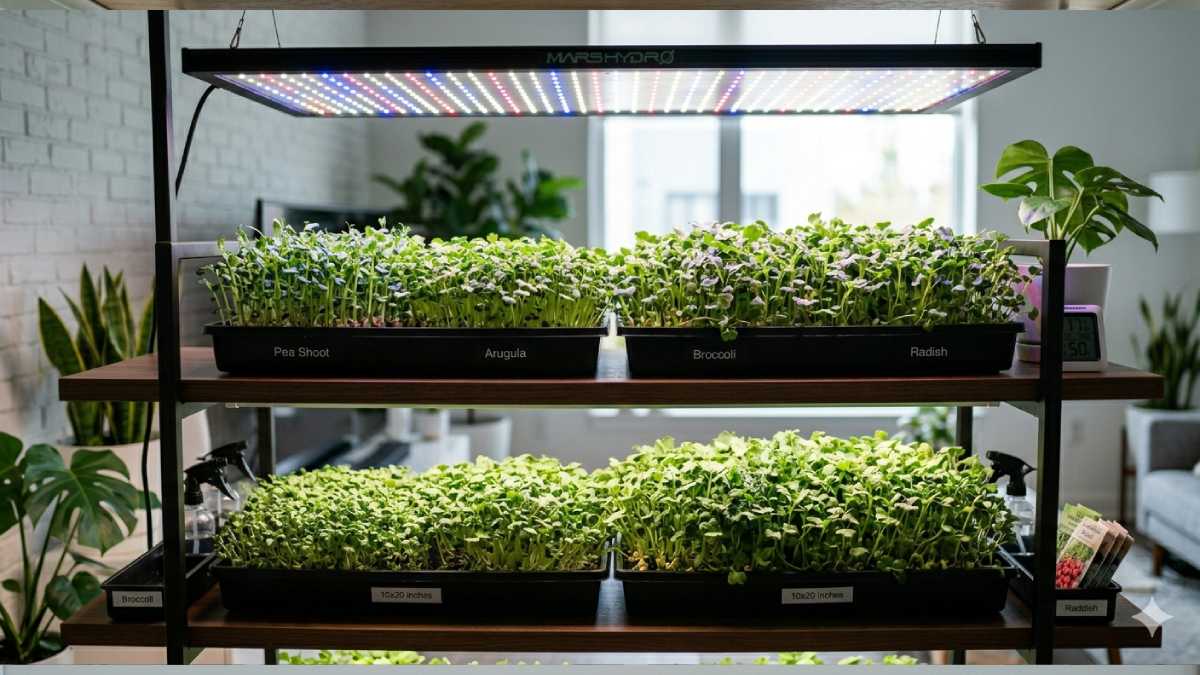
A mix of both works best for indoor trays. I prefer the 5000K to 6500K range because it feels natural and consistent. Poor spectrum lights make plants pale and weak. Good spectrum keeps growth compact and fresh-looking.
Light Intensity (PPFD)
PPFD measures how much usable light reaches the plants. For microgreens, medium intensity works best, not too low and not too strong. Too little light makes them stretch; too much can stress them.
I usually aim for balanced brightness where leaves stay flat and green. Distance also matters because closer light increases intensity quickly. Stable PPFD keeps growth even across the whole tray, not patchy or uneven.
Coverage Area
Coverage area means how much space your grow light can properly cover. Microgreens need even light across the whole tray, not just one side. I learned this when one corner grew tall, and the other stayed weak. A good light should match your tray size, or slightly bigger.
Small lights are fine for single trays, but multiple trays need wider panels. Keep height balanced so light spreads evenly. Uneven coverage causes patchy growth and poor quality harvest. Simple rule: the full tray should look equally bright.
Wattage Guide
Wattage shows how much power a grow light uses, but it doesn’t always mean brightness. For microgreens, low to medium wattage LED lights usually work best. I found 20to 40 watts good for small trays at home. Bigger setups may need more, but still not extreme power.
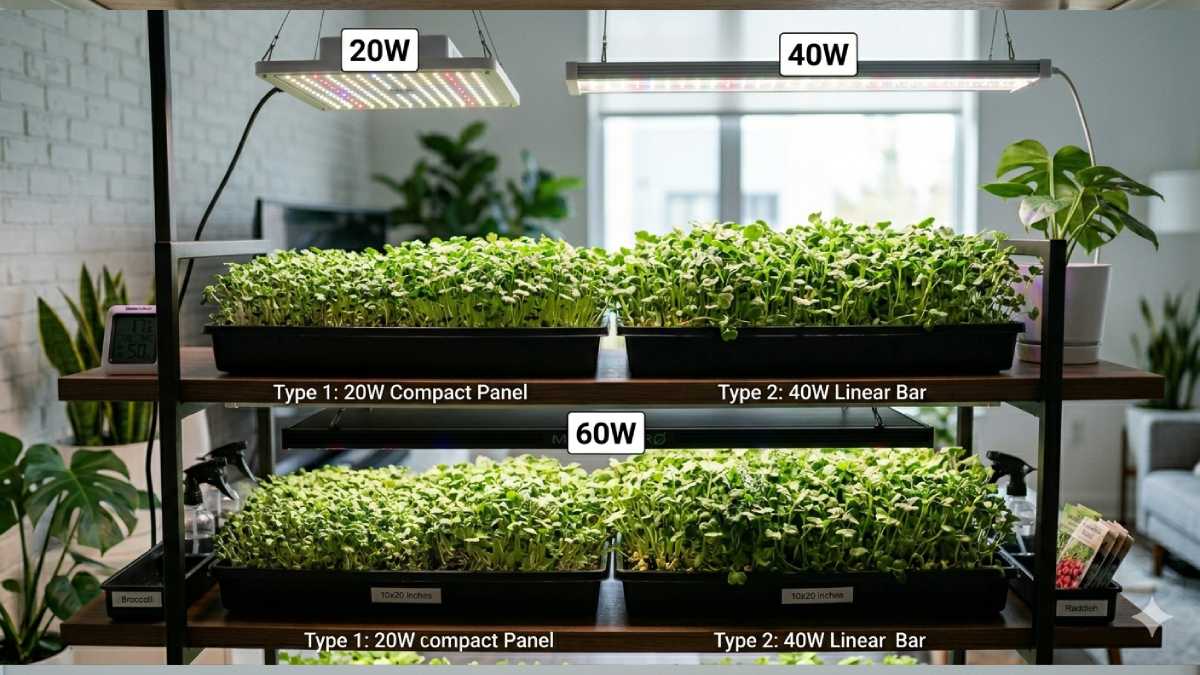
Too high wattage can waste energy and add unnecessary heat. It’s better to match wattage with tray size and distance. Simple setup, steady light, and balanced power give healthier, greener microgreens without extra cost or trouble.
Best Grow Light for Microgreens
Choosing the best grow light depends on your budget, setup size, and experience level. Microgreens don’t need very powerful systems, but they do need consistent, full-spectrum light and even coverage for healthy growth.
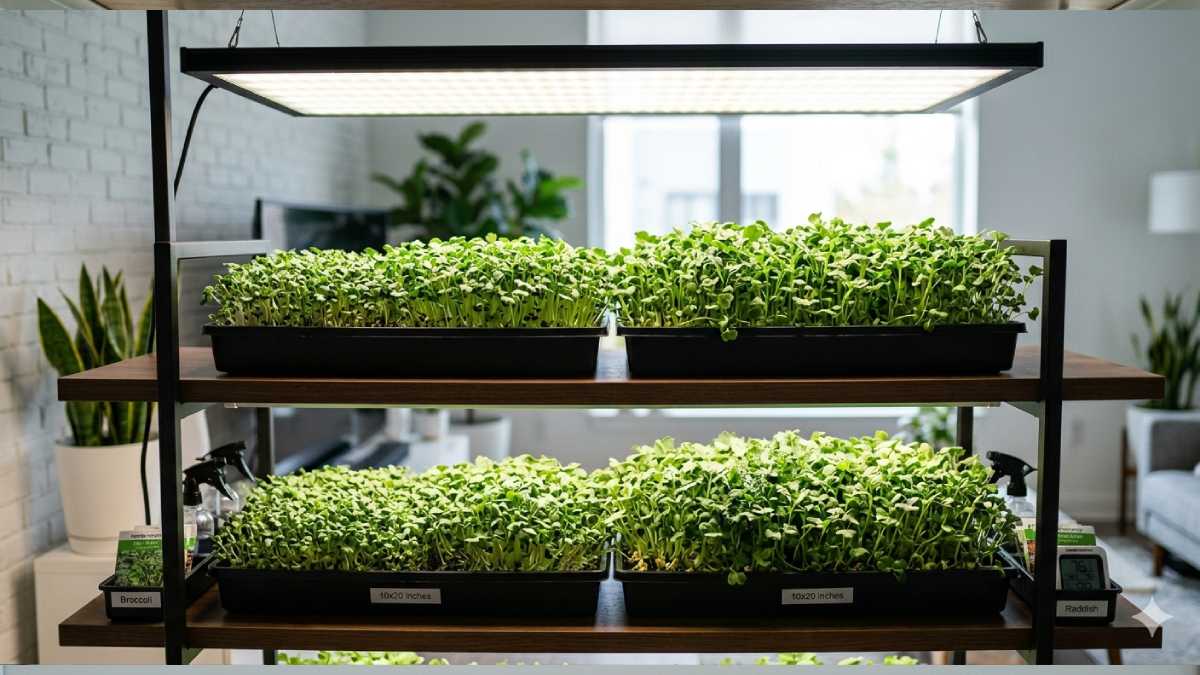
I learned that cheap lights can still work if placement and timing are right. The goal is simple: short, green, and sturdy shoots without stretching. LED lights usually perform best overall, but other options still have value depending on use.
Best Budget Option
Budget grow lights are usually simple LED or fluorescent tube lights. They are cheap, easy to install, and good for small home setups. I used a basic LED shop light at first, and the results were surprisingly decent.
They don’t give perfect intensity, but for beginners, they work fine if kept close to trays. You may need longer light hours to balance lower power. Not fancy, but enough to start growing without spending much.
Best Overall Option
The best overall choice is full-spectrum LED grow lights. They give balanced light similar to sunlight, which keeps microgreens compact and green. I switched to LED panels and saw faster, more even growth.
They use less electricity, stay cool, and last longer. Perfect for home growers who want reliable results. Keep them 6to12 inches above trays for the best effect. This option gives the best mix of performance, cost, and simplicity.
Best Professional Option
For professional setups, high-quality commercial LED systems are the top choice. These come with high PPFD output, wide coverage, and adjustable settings. They are designed for multiple trays and consistent production.
I’ve seen them used in vertical farms where every tray grows evenly. They cost more but give maximum control and yield. Ideal if you plan large-scale microgreen production or want very precise growing conditions.
How to Set Up a Grow Light for Microgreens
Setting up a grow light the right way is just as important as choosing it. Even a good LED can give poor results if placement or timing is wrong. I learned this after a few uneven trays at home. The setup is simple: keep the light centered, adjust height properly, and maintain a daily routine.
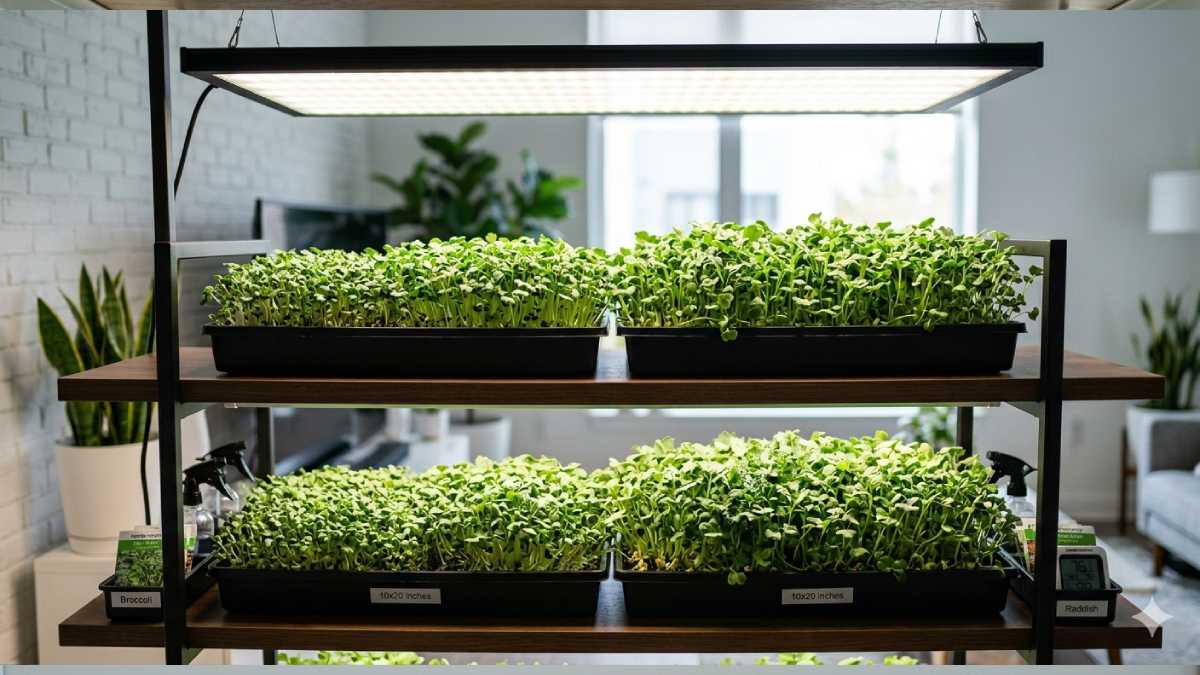
Microgreens respond fast, so small changes show quickly. A good setup gives even green growth, short stems, and healthy leaves without extra effort or confusion.
Ideal Distance from Plants
Ideal distance depends on light strength, but usually 6to 12 inches works well for LEDs. I keep mine closer for weak lights and slightly higher for strong panels.
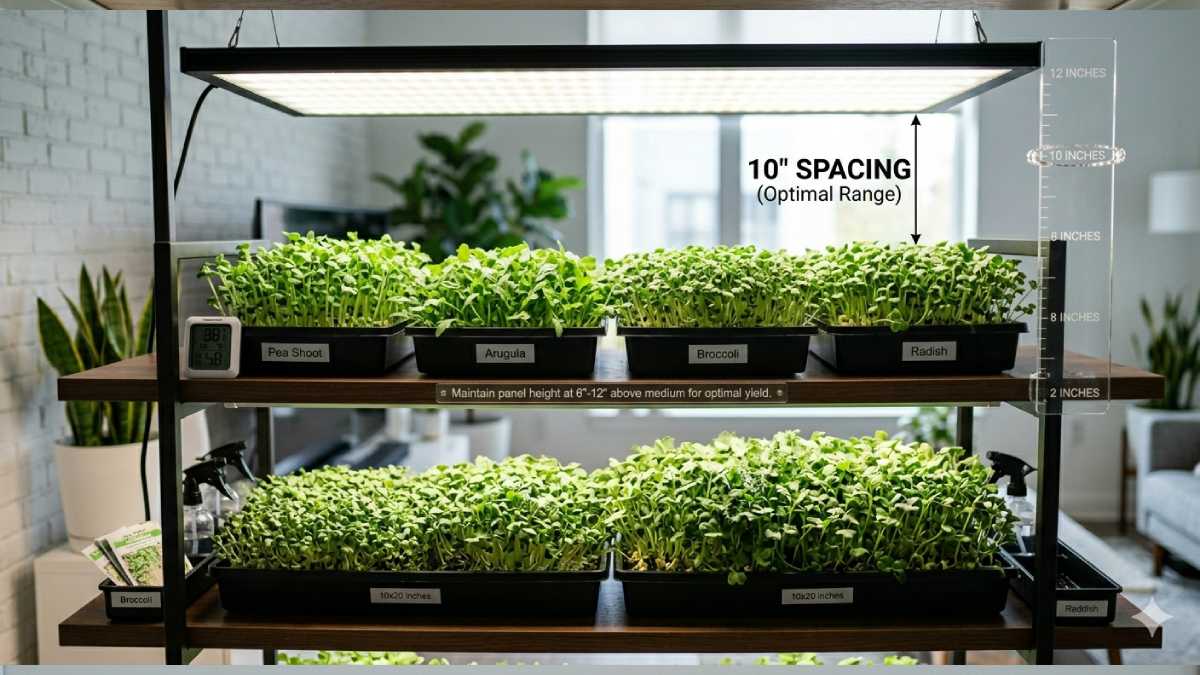
Too far makes seedlings stretch, too close can stress them. I adjust the height slowly and watch the plant respond. Microgreens show changes quickly, so balance is easy to find after a few tries.
Daily Light Duration
Microgreens need a steady daily light duration to grow properly indoors. I usually keep them under light for around 12 to 16 hours every day. Less light makes shoots weak and pale, while too much can stress growth slightly.
A fixed routine works better than random timing. I noticed trays grow more even when I follow the same schedule daily. Rest hours in darkness also help plants stay balanced and healthy. Consistency is the real key here.
Proper Light Positioning
Proper light positioning makes a big difference in microgreen growth. I keep my grow light centered above the tray so every corner gets equal brightness. If the light is off to one side, plants lean and grow unevenly.
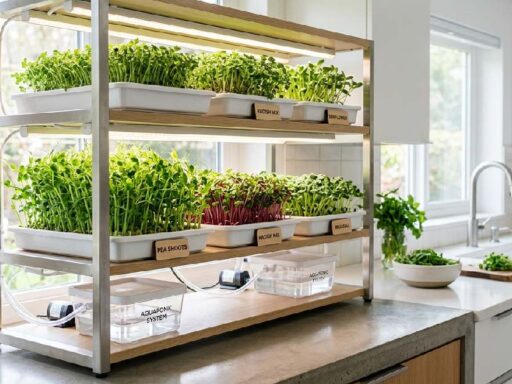
Height also matters; usually, a few inches above the canopy works best. I adjust slowly and observe changes in color and height. Even distribution keeps stems short and leaves healthy. Simple alignment gives much better and more uniform results.
Using Timers
Using timers makes the grow light setup much easier and consistent for microgreens. I used to turn lights on and off manually, but sometimes I forgot, and growth became uneven. A simple plug-in timer fixes this problem completely.
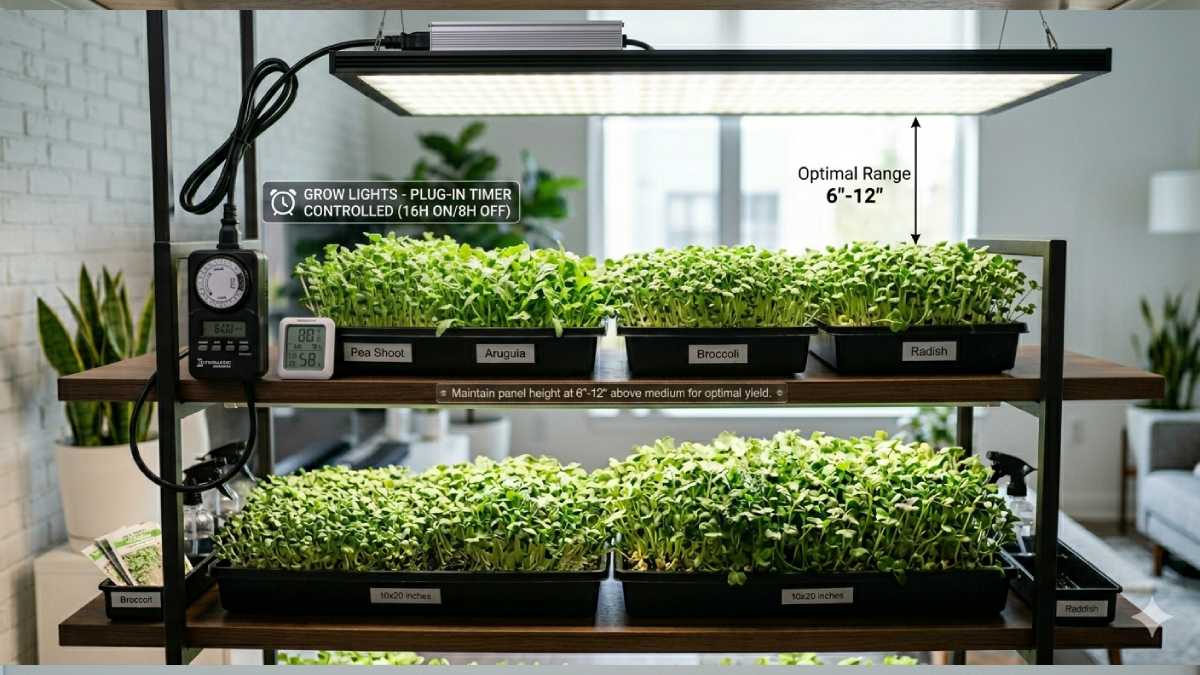
It keeps light on a fixed schedule, usually 12to 16 hours daily, without any effort. Plants get regular cycles, which helps them grow healthy and uniform. Timers also save time and reduce mistakes. Small tool, but very useful for stable indoor growing results.
Common Mistakes to Avoid
Common mistakes with grow lights can ruin microgreen growth even if everything else is right. I learned this after a few weak trays at home. The biggest issues are using poor lights, the wrong distance, no fixed timing, and too much heat.
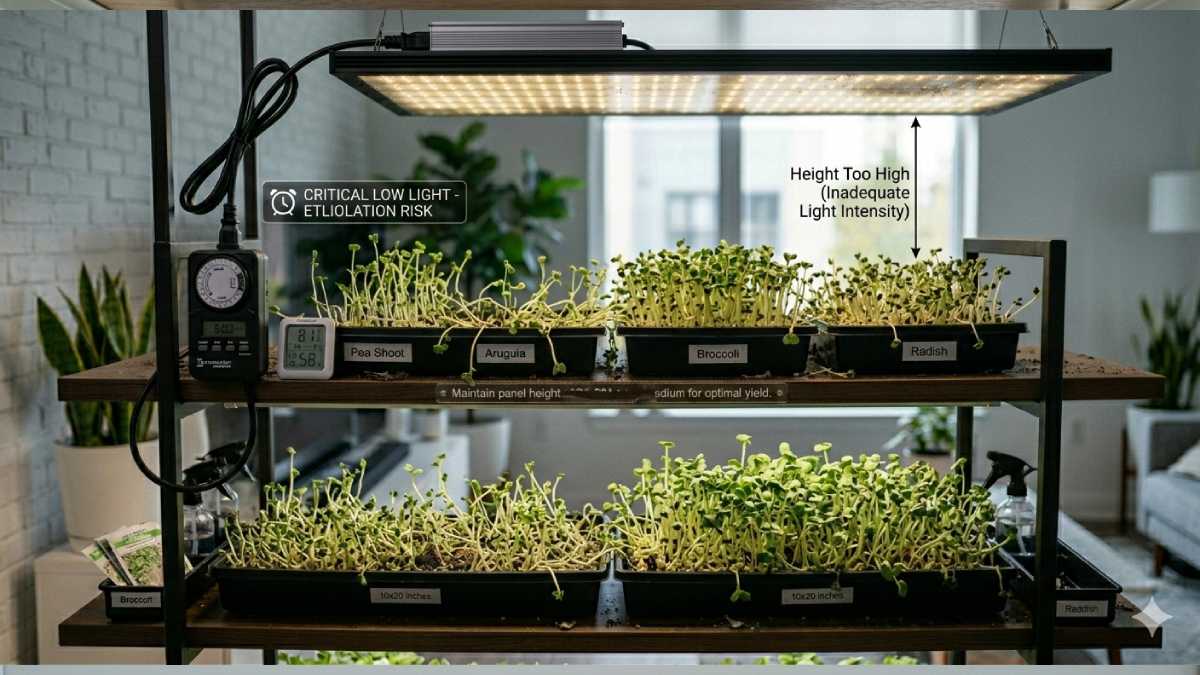
Microgreens react fast, so even small errors show quickly in color and height. When these mistakes are avoided, growth becomes more even, green, and stable. A simple setup works best; just consistency and balance matter most for healthy results.
Using Weak Lights
Weak lights are a common problem for beginners. They don’t give enough energy for proper growth, so microgreens become pale and stretched. I used a cheap bulb once, and the results were disappointing.
Plants looked thin and slow. Always choose full-spectrum LED or proper grow lights instead. Strong, balanced light keeps leaves compact, green, and healthy without extra struggle.
Placing Lights Too Far
Placing grow lights too far is a common mistake. Microgreens start stretching upward, trying to reach the light source. Stems become long, weak, and fall over easily. I saw this in my early trays, growth looked thin and uneven.
Keeping lights closer helps plants stay compact and strong. Around 6to 12 inches usually works for LEDs. Adjust slowly and watch changes. A small distance difference makes a big impact on overall quality and healthy green growth.
No Light Schedule
No light schedule creates confusion for microgreens. Sometimes they get light, sometimes they don’t, and growth becomes uneven. I used to switch lights randomly; the trays looked weak and slow. Plants need a steady routine, around 12to 16 hours daily.
Without timing, leaves turn pale and stems lose strength. Using a fixed schedule or simple timer fixes this easily. Consistency helps microgreens stay green, short, and healthy. A regular light cycle makes results stable and much more reliable.
Overheating Plants
Overheating happens when the lights are too close or too strong. Microgreens start drying at the edges, leaves curl, and growth slows down. I saw this once with an old bulb; the tray felt warm and weak. Heat stress makes plants lose freshness and color.
LED lights usually stay cool, but still, distance matters. Keep proper airflow around trays to balance temperature. Simple adjustment prevents damage. Healthy microgreens need light, not extra heat, for steady green growth.
Grow Light vs Natural Light
Both grow light and natural sunlight can support microgreens, but the results feel different in practice. Natural light is free and easy, coming straight from the sun, but it changes with weather, season, and window direction. I noticed some trays grow fine near a bright window, while others stay uneven.
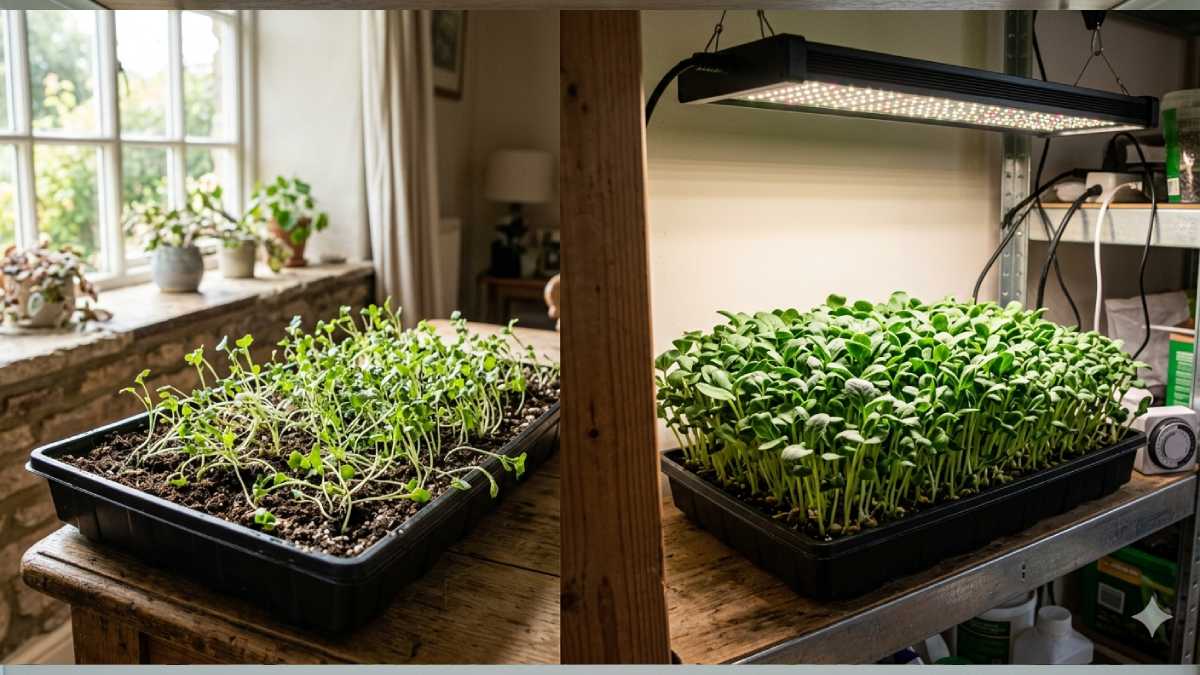
Grow lights give steady control, same brightness every day, no guessing. Indoors, this consistency matters a lot. Microgreens respond fast to light changes, so stability usually gives better and more uniform harvests overall.
Indoor vs Outdoor Growing
Indoor growing uses grow lights, a controlled environment, and no weather issues. Outdoor growing depends on sunlight, which changes daily. Indoors feels more stable, especially for small trays on shelves.
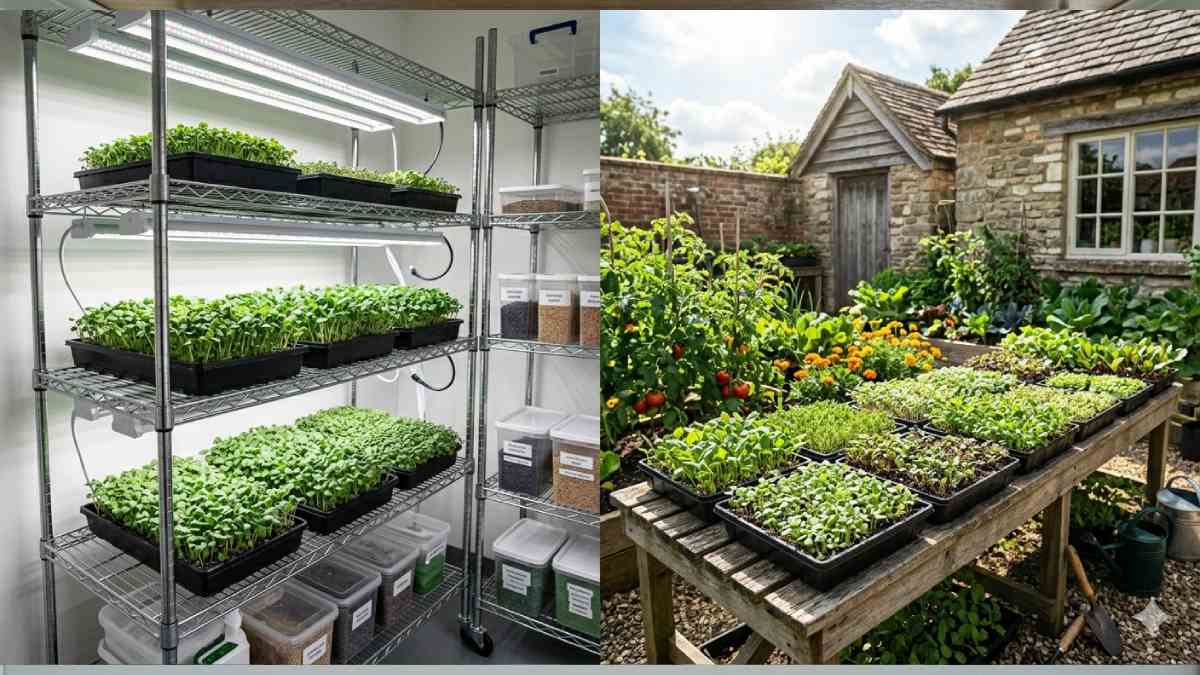
Outdoors can work well too, but rain, heat, and shade affect results. I prefer indoors because growth feels predictable and clean. Both methods work, just with different levels of control and effort.
Which is Better for Microgreens
For microgreens, grow lights are usually better because they give steady light every day. Sunlight works fine, but not always consistent in all seasons or spaces. I found that LED lights produce more uniform trays and faster growth.
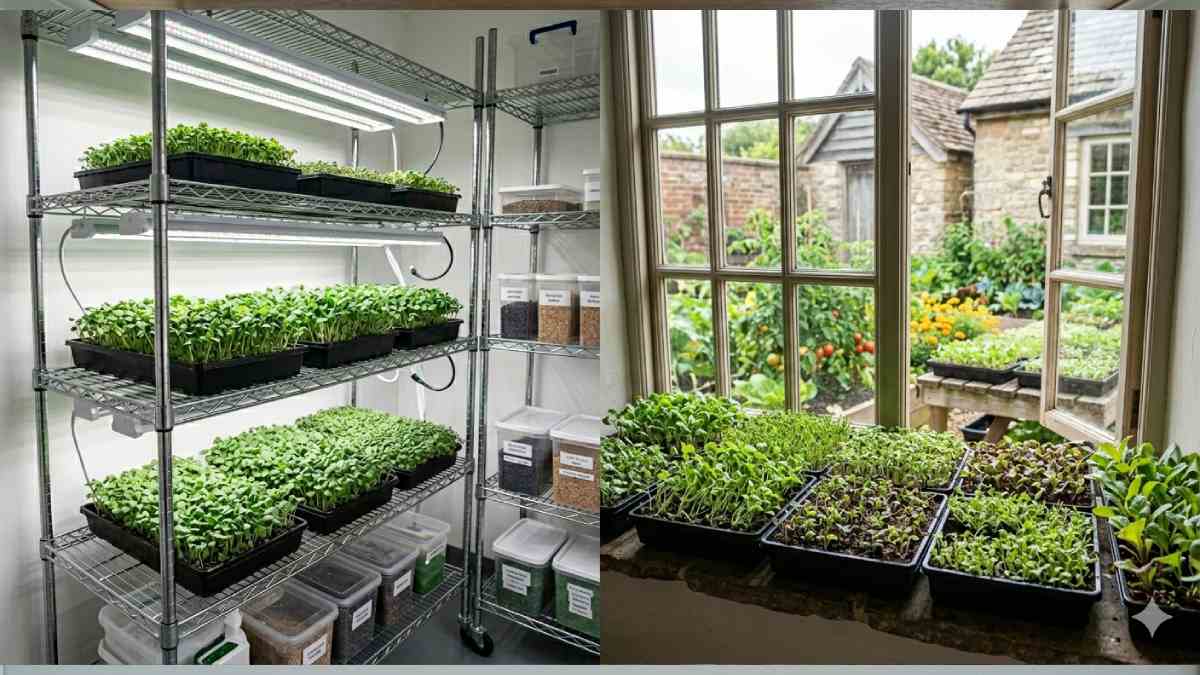
Natural light is good for beginners with windows, but indoor lights give better control. Overall, grow lights are more reliable for year-round, healthy microgreen production.
FAQs About Grow Light for Microgreens
Do microgreens need grow lights?
Yes, especially indoors. They help plants grow green, strong, and even. Without proper light, seedlings stretch weakly and pale quickly.
How many hours of light are required?
Microgreens need around 12to 16 hours of light daily. This keeps growth steady, compact, and healthy without slowing development or causing stress.
What color light is best?
Full-spectrum white light works best. It mimics sunlight and supports balanced growth, keeping leaves green and stems short and strong.
Can I use regular LED bulbs?
Yes, basic LED bulbs can work for small setups. But full-spectrum grow LEDs give better, more consistent results overall for microgreens.
Conclusion
Grow lights make indoor microgreen growing simple, stable, and predictable. I started with natural window light, results were uneven and slow. After using proper LED grow lights, everything changed; growth became green, compact, and fast. Microgreens don’t need complicated setups, just steady light, the right distance, and a simple schedule.
Small mistakes like poor placement or weak bulbs can affect results quickly. But once balanced, trays perform really well. Whether beginner or regular grower, grow lights help you harvest fresh, healthy microgreens anytime at home without depending on weather or season.