

Best Microgreens to Grow for Profit
I started looking at microgreens not just as food, but as a small income idea. Some varieties sell better, grow faster, and give more consistent harvests. I noticed radish, sunflower, and broccoli always perform well in both growth and demand. Restaurants like fresh, clean, and repeatable supply. That matters a lot.
Profit comes from speed and low-cost setup. I learned simple trays can turn into regular sales if managed properly. Indoor space works fine for this. Beginners should focus on easy, fast crops first. Once cycles become stable, selling becomes more realistic and less complicated overall.
Why Microgreens Are a Profitable Business
The microgreens business looks simple, but it has strong profit potential. I noticed this early when small trays started giving regular harvests. The growth cycle is short, so money comes back quickly. Demand stays steady in cities, especially for fresh greens. The setup does not need a large amount of land or heavy equipment.
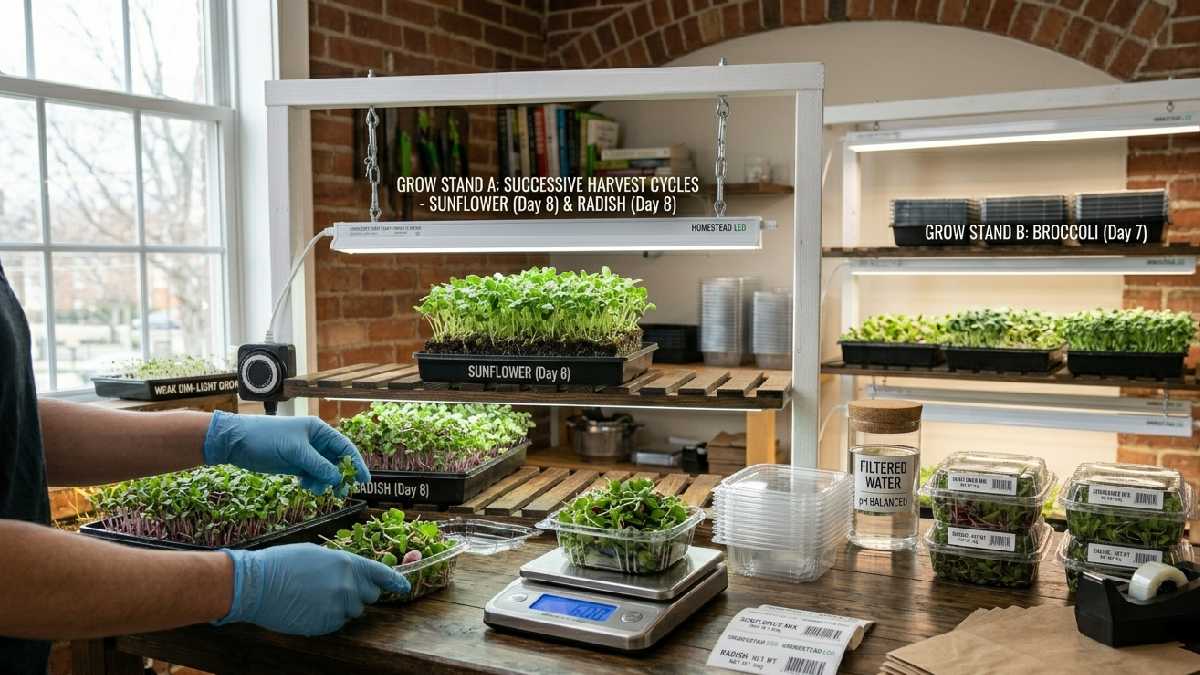
Even a small room can work fine. I tried a few batches and saw how quickly they sell if the quality is good. Profit comes from repetition, not one-time effort. Once the system is stable, it turns into a small but consistent income source with low risk and manageable effort.
Fast Growth Cycle and Quick Harvest
Microgreens grow very fast, usually in 7 to 14 days. I liked this part because returns come quickly. No long waiting like traditional crops. One tray finishes, the next one starts immediately. This cycle repeats smoothly. Fast growth means faster selling opportunities also. I noticed cash flow improves when harvest speed is high.
Even beginners can manage this easily. Short cycle reduces risk and keeps production active all the time. That speed makes microgreens attractive for small business setups and home growers looking for quick and steady output with a simple daily care routine.
High Market Demand from Restaurants and Health Buyers
Demand for microgreens is growing in many places. I saw restaurants asking for fresh, local greens regularly. Health-conscious buyers also prefer clean and chemical-free food. That creates a steady market flow. Chefs like a consistent supply and good appearance. I noticed repeat orders come when the quality stays the same every time.
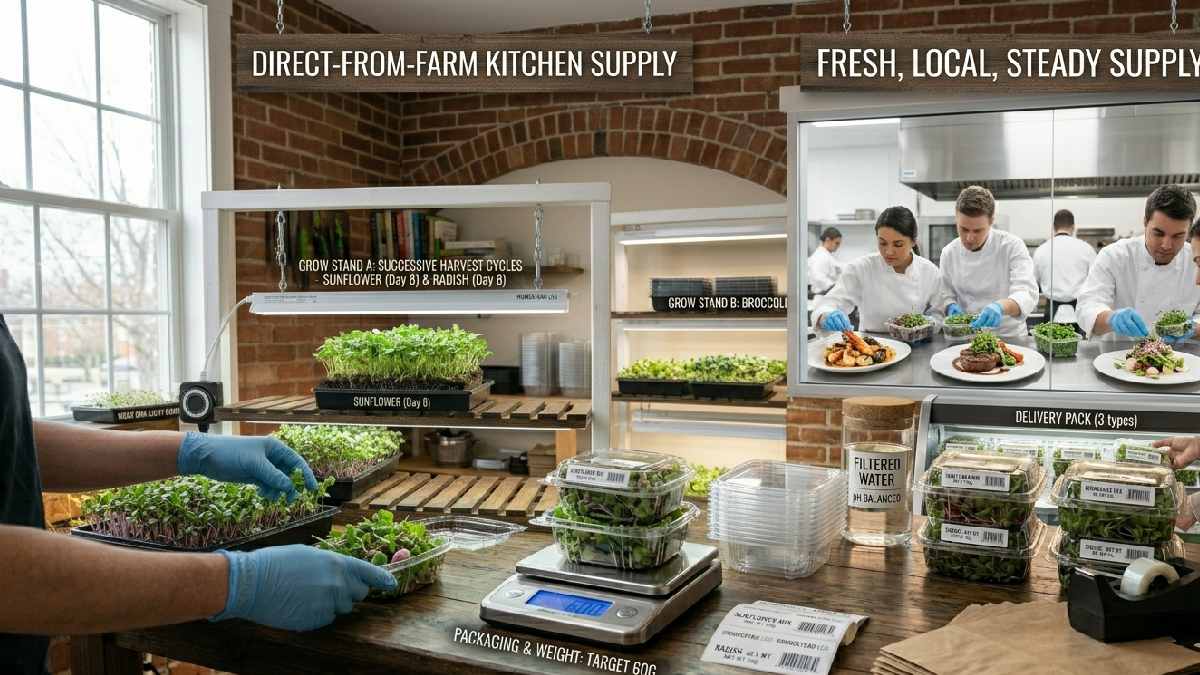
Even small growers can enter this market. Urban areas especially show strong interest. Freshness matters more than quantity here. Once trust is built, sales become regular. That demand makes microgreens a strong option for a small-scale farming business with a stable customer base and growing awareness.
Low Space and Investment Requirements
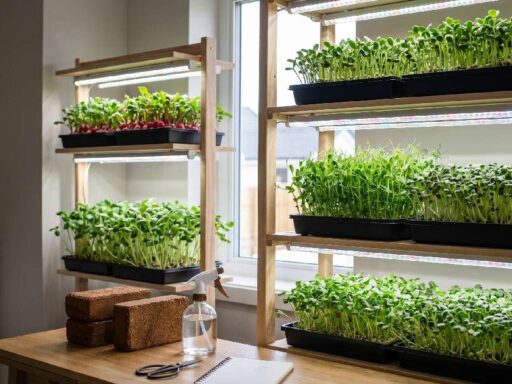
The microgreens business does not need a big space or a heavy investment. I started with a small corner and a few trays. No farm land required. Basic LED light and simple trays are enough. Cost stays low compared to other farming ideas. That makes entry easier for beginners. Even rented rooms can work fine.
I noticed setup grows slowly but steadily without major expenses. Risk is also low because each cycle is short. You can start small and expand later. This flexibility makes the microgreens business practical for people who want income without large financial pressure or complex systems.
Factors That Decide Microgreens Profitability
Profitability in microgreens is not random; it depends on a few clear factors. I noticed this while tracking my own small batches. Some trays gave better returns, others didn’t, even with the same effort. The difference came from timing, cost, demand, and storage. Once these are understood, income becomes more predictable.
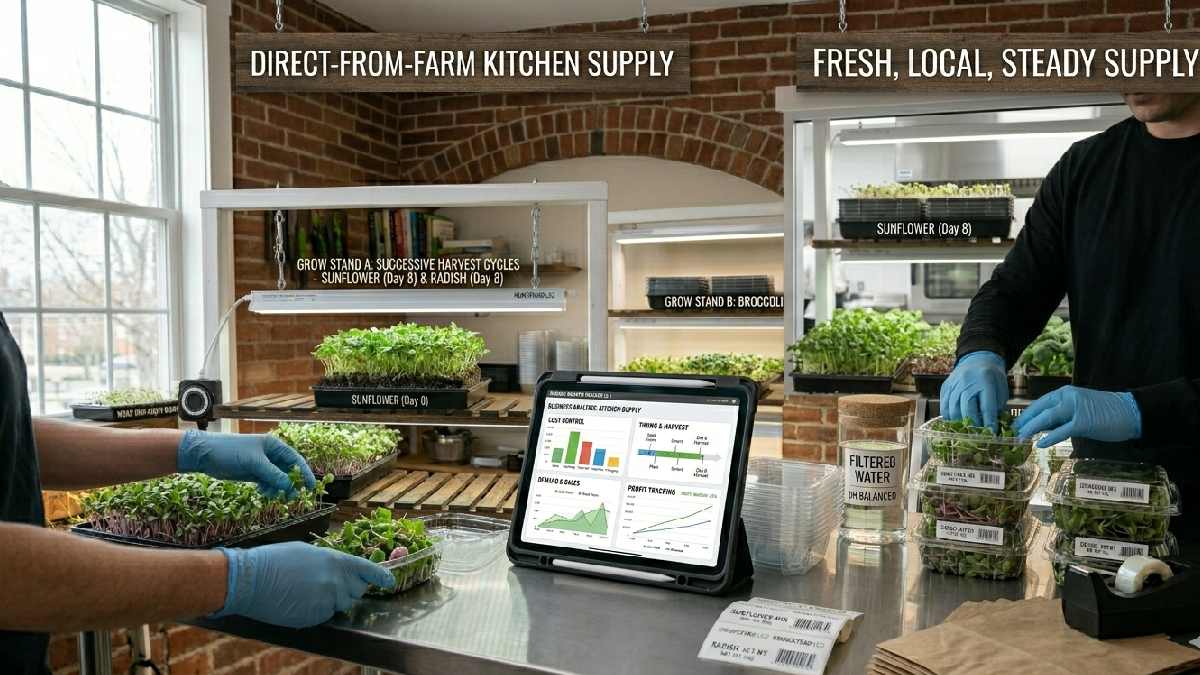
Beginners often ignore small details and then see inconsistent profits. But when the system is stable, microgreens can become a steady, small business. Everything connects together simply; speed of growth, cost control, and market behavior decide the final profit outcome in indoor or small farm setups.
Growth Speed and Harvest Time
Growth speed directly affects how fast money comes back. I noticed faster crops like radish and sunflower give quicker cycles. Short harvest time means more batches in a month. That increases the overall return from the same space. Slow crops reduce turnover and block production space longer. Timing becomes very important in planning trays.
I learned to prefer fast-growing varieties for better rotation. Beginners should focus on speed first. It creates a regular supply flow. More cycles in less time usually improve profitability without increasing setup size or complexity in indoor microgreens growing systems.
Seed Cost vs Yield Ratio
Seed cost plays a big role in profit. I compared different seeds and noticed big differences in output. Some expensive seeds give high yield, some cheap ones perform poorly. What matters is return per tray, not price alone. I calculate how much harvest I get from each gram of seed.
Sunflowers and radishes often give a good balance. If seeds are wasted or uneven, profit drops quickly. Beginners should track yield carefully. A good ratio means more output from less input, which directly improves profitability in the microgreens business over time.
Market Demand and Selling Price
Market demand decides how easily microgreens sell. I noticed restaurants prefer a fresh and consistent supply. Health-conscious buyers also pay a higher price for clean greens. If demand is strong, even small production sells quickly. Selling price changes based on quality and freshness.
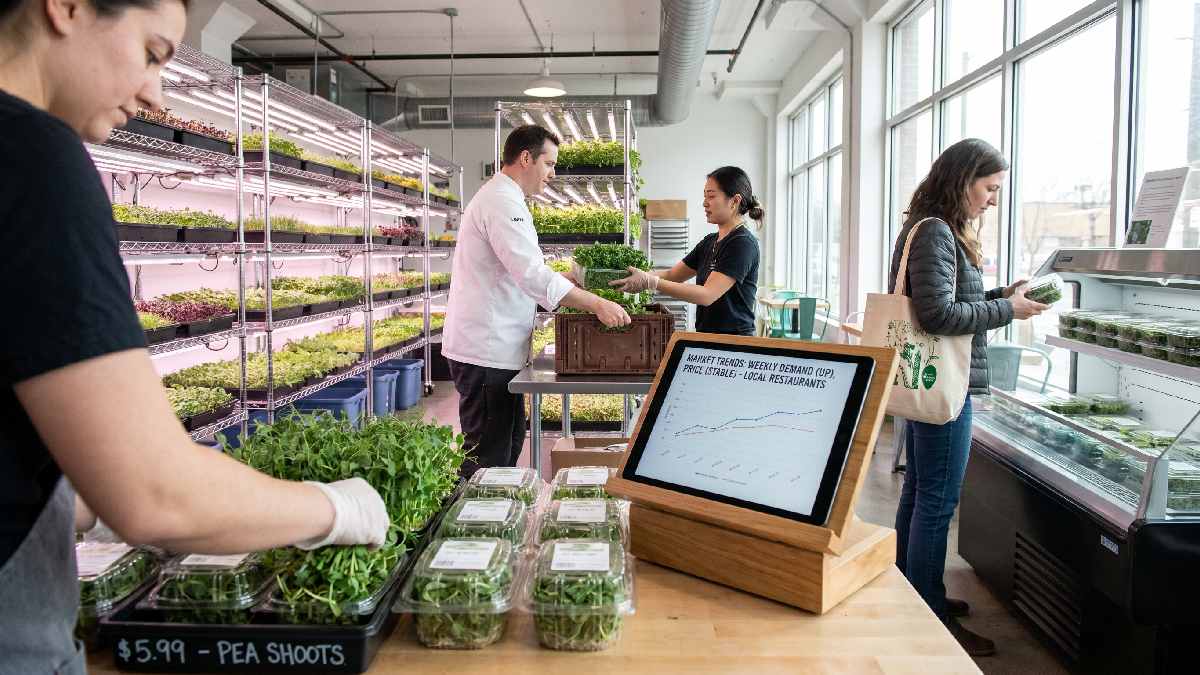
I learned local buyers value reliability more than variety. Without demand, even good production has no profit. Beginners should first check the eck local market before scaling. Strong demand with stable price makes business predictable and sustainable in the long-term microgreens farming setup.
Shelf Life and Storage
Shelf life affects how much product actually reaches customers. I noticed microgreens lose freshness quickly if not stored properly. Poor storage reduces quality and profit. Refrigeration helps, but only for a short time. Fresh harvest sells best, delay reduces value. I usually plan the harvest close to the delivery time.
Longer shelf life means less waste and better income stability. Beginners often ignore this and productivity. Proper handling and timing improve overall profitability. Freshness is a key factor in microgreens business success and directly impacts final earnings from each batch.
Best Microgreens to Grow for Profit
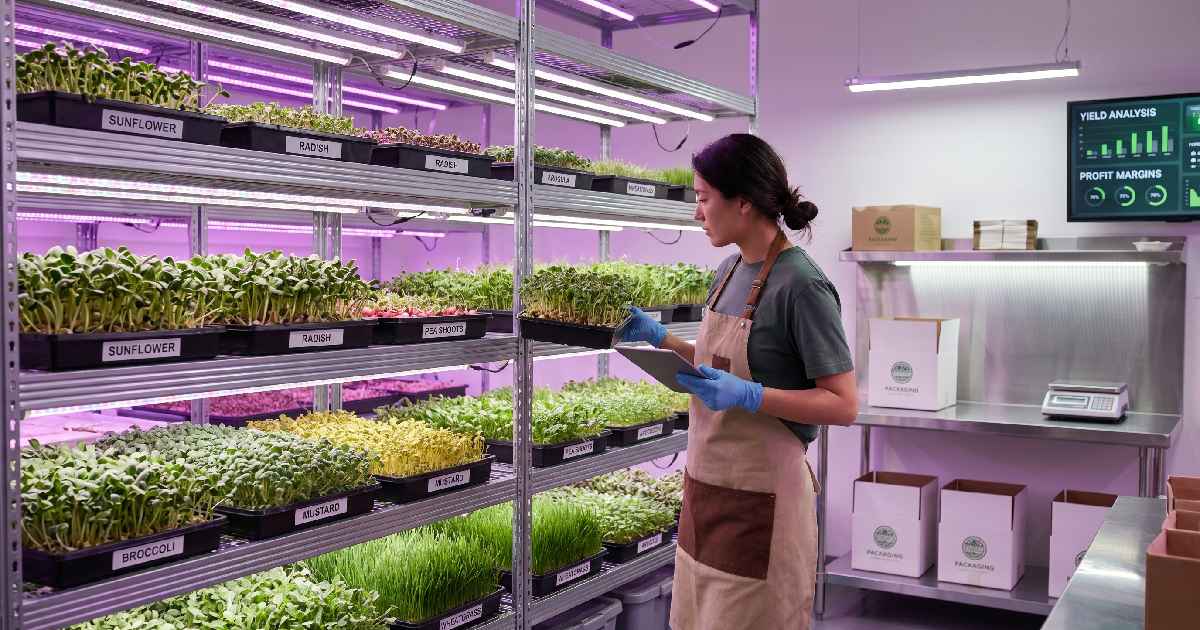
When I started focusing on profit, I realized not all microgreens give the same return. Some grow faster, some sell better, some are just easier to manage. I tested different trays at home and saw clear patterns. Sunflowers and radishes gave quick cycles. Pea shoots and broccoli had steady demand.
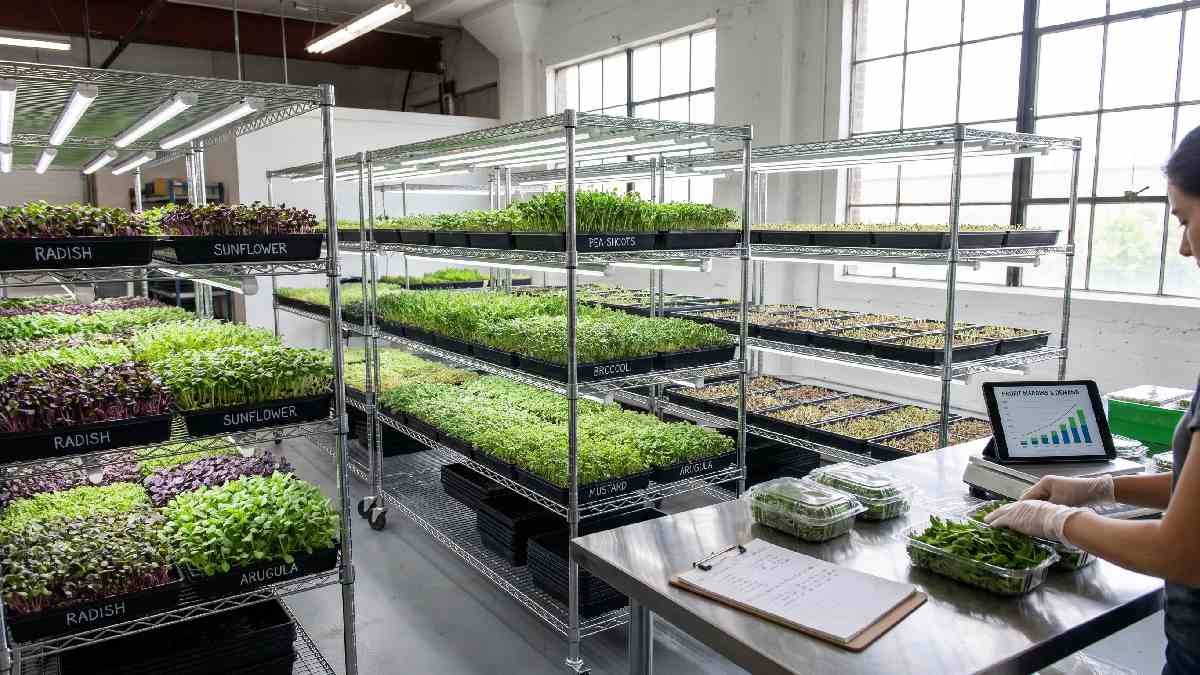
Mustard and arugula brought niche buyers. Profit comes from choosing a mix of speed, yield, and market value. Beginners should not try everything at once. Start with a few reliable crops, understand the selling flow, then expand slowly for a stable and consistent microgreens income indoors or a small setup.
Sunflower Microgreens (High Yield & Demand)
Sunflower microgreens give a high yield per tray. I noticed this very early. Seeds are large, output feels heavy and satisfying. Growth is strong, not delicate like other greens. Restaurants like their crunchy texture and mild nutty taste. I often get repeat interest when the quality stays the same.
They grow in around 8to 12 days, which is good for the profit cycle. Space usage is efficient, and trays feel full every time. Beginners like them because mistakes don’t ruin the entire batch easily. High yield plus steady demand make sunflowers one of the most reliable choices for a microgreens business.
Radish Microgreens (Fastest Growing Crop)
Radish microgreens are the fastest in my setup. I often harvest-ready in just a week. That speed helps cash flow move quickly. Flavor is spicy, strong, and noticeable, which restaurants like for garnish. Growth is simple; no complicated care is needed. Even beginners get good results with radish trays.
I noticed they sell quickly in the local market due to bold taste. Fast cycle means more production rounds in a month. That increases overall profit potential. Radish is ideal when you want a quick turnaround and easy indoor farming with a low-risk setup.
Pea Shoots (Restaurant Favorite)
Pea shoots are very popular with restaurant buyers in my experience. They grow tall, soft, and fresh-looking. Chefs like their sweet taste and clean texture. I get consistent demand when quality stays stable. Growth takes a bit longer than radish, around 10to 14 days, but the yield is good.
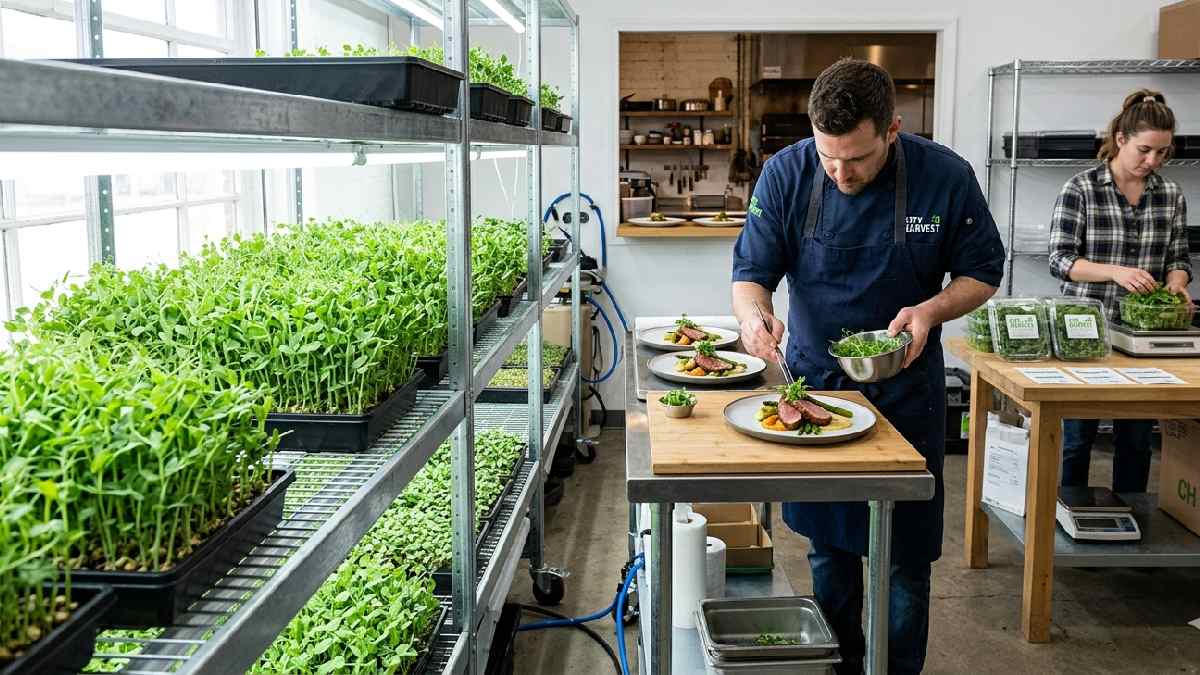
Trays look full and attractive. They also handle transport better than delicate greens. I noticed repeat orders happen more with pea shoots. Beginners should try them for steady restaurant connections. They bring a reliable income when the supply is consistent and fresh every cycle.
Broccoli Microgreens (Health Market Leader)
Broccoli microgreens are strong in the health-focused market. I saw demand from fitness and wellness buyers increasing over time. They are rich in nutrients, so people prefer them for salads and juices. Growth is simple, medium speed, around 8–12 days. Yield is decent, not the highest, but stable.
I noticed they sell at a better price compared to basic greens. Appearance is clean and uniform, which helps in packaging. Beginners like them because they are easy to grow and store. Broccoli remains a safe choice for a consistent health-oriented microgreens business.
Mustard & Arugula Microgreens (Spicy Gourmet Demand)
Mustard and arugula microgreens are for the niche spicy taste market. I tried them for restaurant garnish demand and got mixed but strong responses. Flavor is sharp, peppery, and very noticeable in dishes. Growth is fast and easy, around 7–10 days. Yield is moderate, but the value is higher per tray.
Not everyone likes them, but chefs use them in gourmet plating. I noticed a small quantity still sells well. Beginners can add them later for variety. They increase product range and help target premium buyers who prefer bold flavor microgreens in food presentation.
Profit Comparison of Microgreens
Profit comparison helps understand which microgreens actually give better returns. I noticed that all crops don’t perform the same in the real setup. Some grow fast but sell cheap, others take longer but give higher value. When I compared trays, clear differences appeared in time, yield, and profit margin.
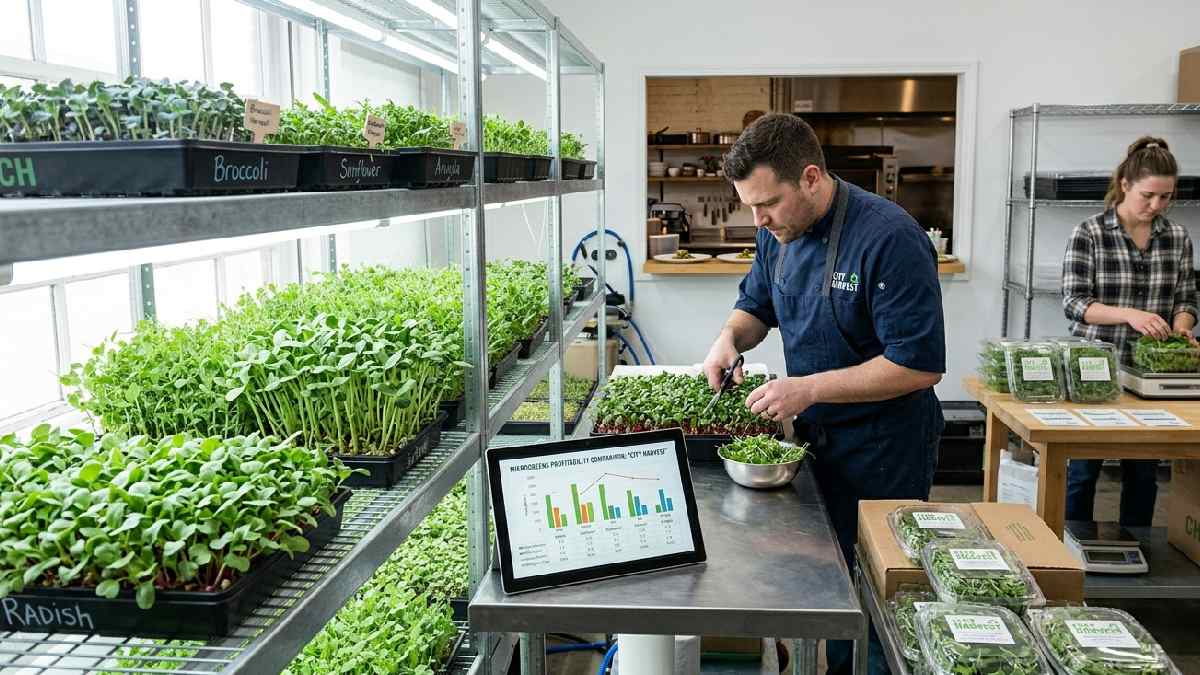
Beginners often think everything gives the same income, but reality is different. Each microgreen behaves differently in the market. Understanding comparison helps choose smarter crops. It saves time, reduces waste, and improves overall business planning for small indoor or home-based microgreens production systems.
Growth Time Comparison
Growth time decides how fast money comes back. I noticed radish grows in about 7 days, a very fast cycle. Sunflowers and broccoli take around 8 to 12 days. Pea shoots need slightly longer, almost 10 to 14 days. Mustard also stays in the fast range, similar to radish. Shorter growth means more cycles per month.
That increases production speed and income flow. Longer crops reduce rotation speed but sometimes give a better price. Beginners should balance fast and medium crops. Time control directly affects how efficient the microgreens business becomes over a monthly production cycle indoors.
Yield per Tray Comparison
Yield varies widely among microgreens. I saw sunflowers giving the heaviest output per tray, very full and dense. Pea shoots also produce good volume, but take more space. Radish gives a moderate yield but compensates with speed. Broccoli is lighter but consistent in every cycle.
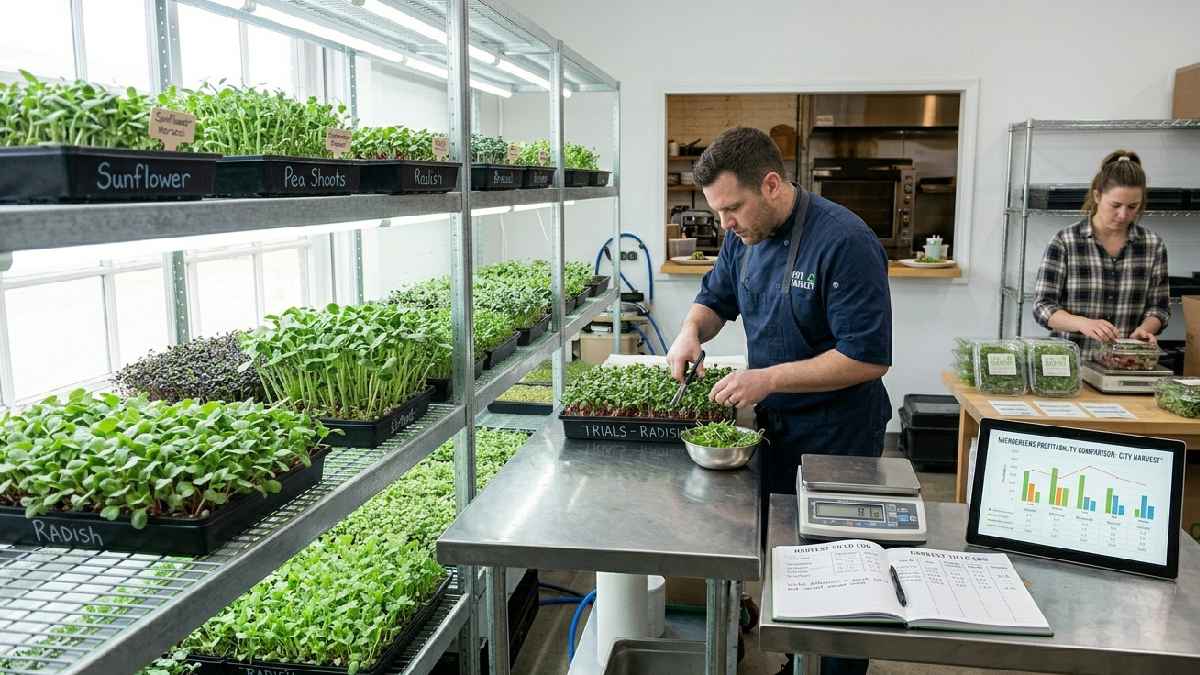
Mustard remains average in weight but high in flavor. I learned that yield is not only size, but it’s also usable harvest. Beginners should check how much usable product comes from each tray. Higher yield means better return from the same space and effort in indoor growing systems overall.
Profit Margin Comparison
Profit margin depends on cost, yield, and selling price together. I noticed sunflower and pea shoots give stronger margins due to high demand. Radish gives a quick but slightly lower margin because the price is lower. Broccoli stays stable with medium profit and steady buyers. Mustard gives niche high value but limited demand.
I realized consistency matters more than a single high, profit crop. Beginners should mix varieties for balance. Profit improves when fast and premium crops are combined. Overall margin becomes stronger when production is planned smartly instead of relying on one type of microgreen only.
How to Maximize Profit from Microgreens
I learned profit in microgreens is not only about growing, but it’s also about selling smart. Early batches I just produced and hoped for buyers; the results were slow. Later, I focused on systems. Restaurants, subscriptions, and mixed packs changed everything. Rotation also mattered; no empty trays sat idle.
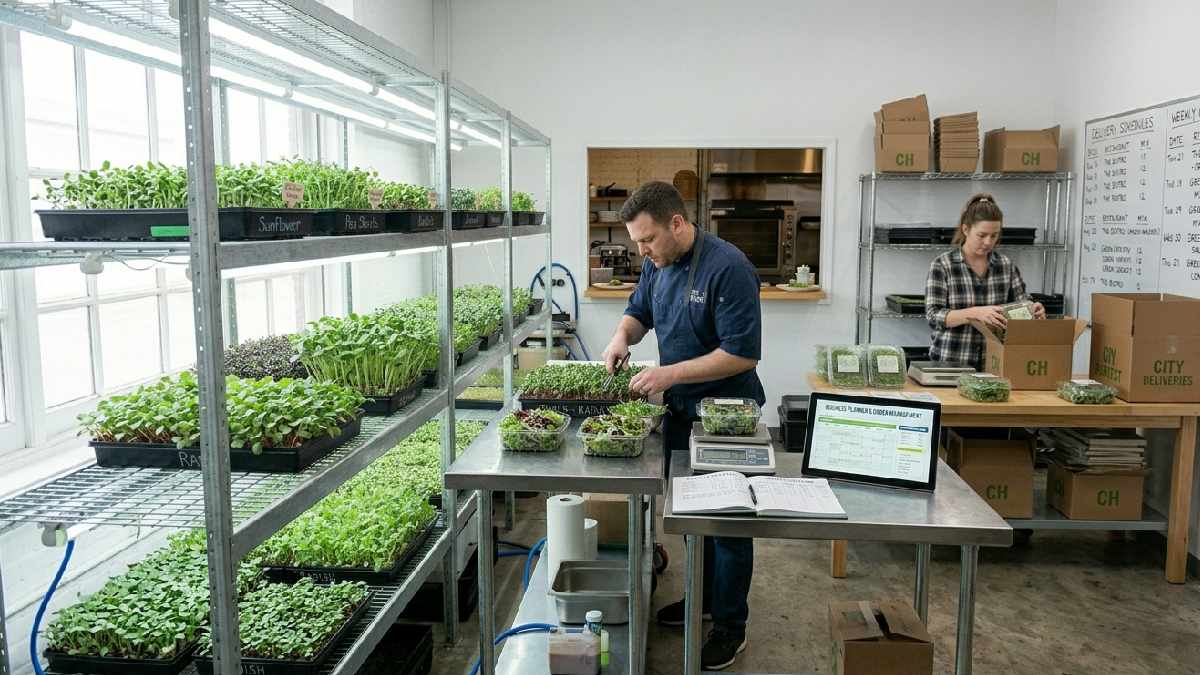
When production and selling connect properly, income becomes steady. Beginners usually miss this link. Once the flow is fixed, the same space starts giving more return. Small planning changes can turn simple home growing into a consistent microgreens income without increasing setup size or complexity indoors.
Selling to Restaurants Directly
Selling directly to restaurants gave me the best early results. I visited small cafes first and showed fresh samples. Chefs liked the quality and freshness. Orders started small, then became regular. Restaurants prefer a consistent supply more than anything. I learned that timing delivery matters a lot. Early morning fresh trays get a better response.
Pricing stays stable when trust builds. No middle agent involved, so profit improves. Beginners should start local, not big markets. Direct connection reduces waste and increases repeat orders. Once the relationship is strong, sales become predictable and easier to manage every week.
Weekly Subscription Model
The weekly subscription model worked surprisingly well for me. I offered fixed weekly delivery of fresh microgreens. Customers liked a regular supply without ordering again and again. It created a stable income flow. Even small households joined in. I kept it simple, same mix every week. Consistency mattered more than variety.
Payments became predictable, which helped plan production cycles. Beginners can start with a few customers only. No need for a big scale at first. Once trust builds, subscriptions grow naturally. It reduces selling effort and keeps trays rotating smoothly without extra marketing pressure.
Bundling and Mixed Packs Strategy
Bundling different microgreens improved my sales value per order. Instead of selling one type, I started mixing sunflower, radish, and pea shoots. Customers liked the variety in a single pack. It also reduced unsold stock. I noticed mixed packs sell faster in the local market. Pricing becomes slightly higher compared to single trays.
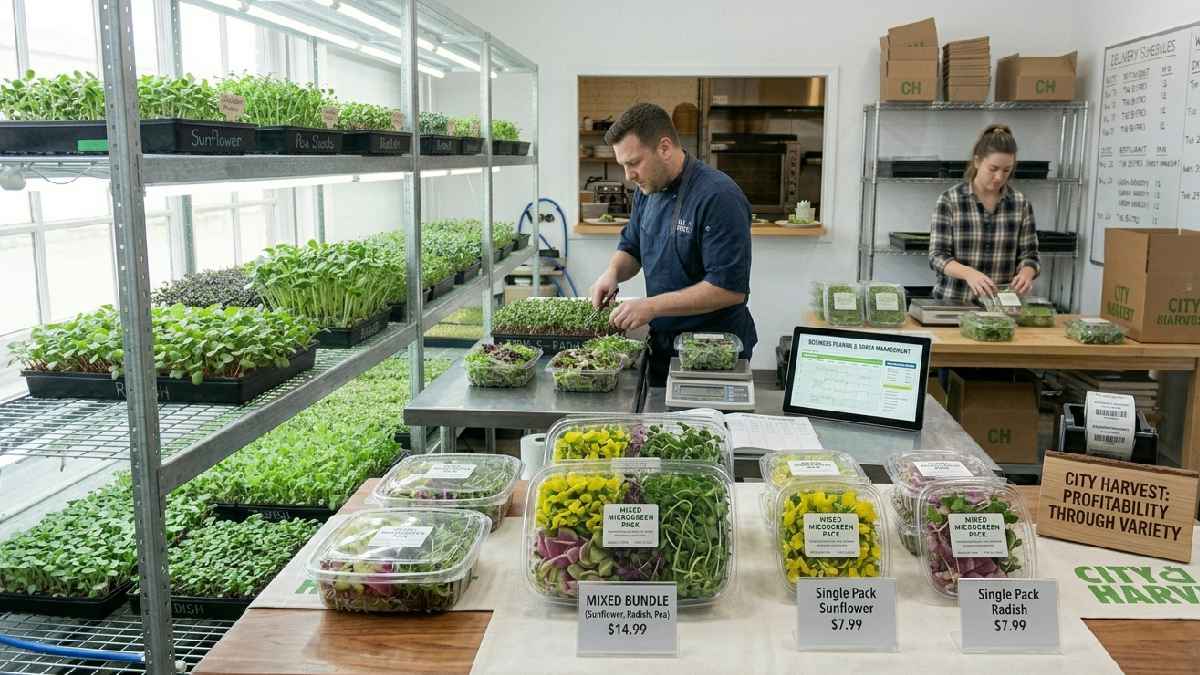
Beginners can use simple combinations at the start. It also helps introduce new varieties without risk. Presentation matters here; a clean and fresh look increases interest. Bundling makes small harvests more profitable and reduces dependency on a single crop for income stability.
Efficient Harvest Rotation System
Harvest rotation changed how I manage production. I stopped growing everything at the same time. Now I stagger trays every few days. This keeps a continuous supply ready for selling. No gap between harvests. I always have something fresh available. It also helps manage workload easily. I learned idle trays reduce profit potential.
Rotation improves space usage and cash flow. Beginners should plan a simple schedule first. Even two or three tray rotations help a lot. This system keeps indoor setup active, organized, and more productive without extra investment or complicated structure changes.
Common Mistakes to Avoid
When I started microgreens for profit, I made many avoidable mistakes. Some trays looked fine but gave no sales. Some crops grew well but had zero demand. The setup also affected quality when I ignored the basics. Watering and light mistakes reduced the yield a lot. I realized growing is only half of the business.
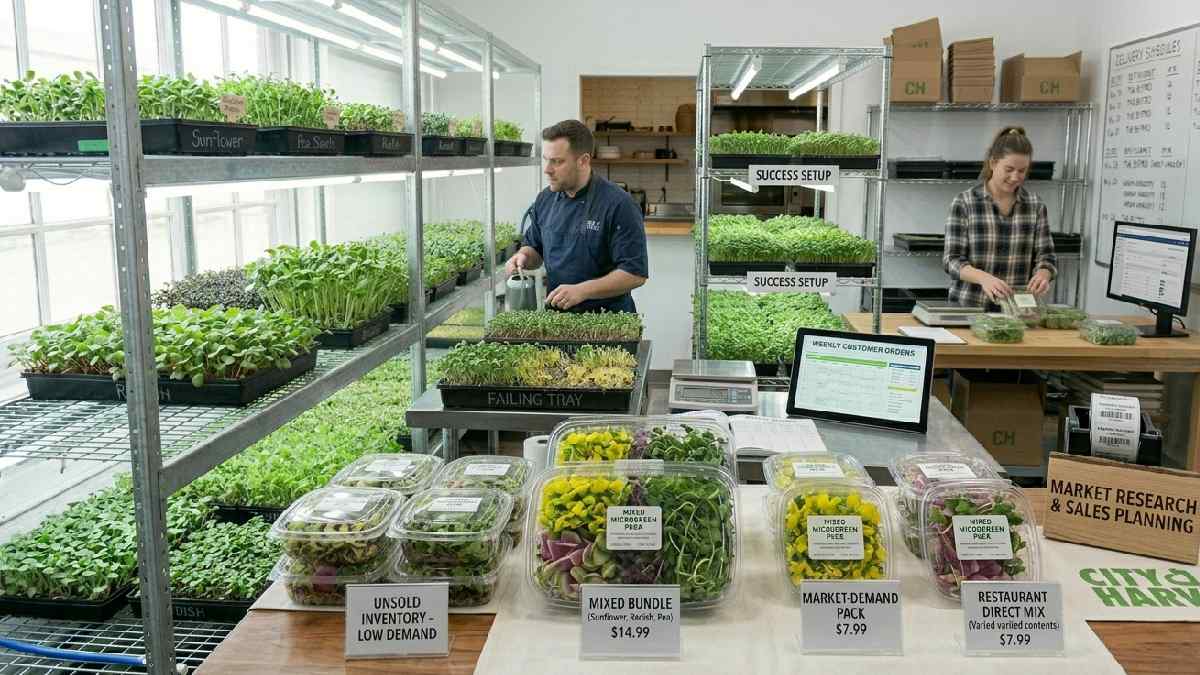
Selling and planning matter equally. Beginners often focus only on production and forget the market side. That leads to wasted effort. Once I corrected these mistakes, profit became more stable and predictable. Small awareness changes can save time, money, and frustration in the microgreens business.
Choosing Low-Demand Crops
I once tried growing random microgreens without checking demand. They grew fine, but nobody wanted to buy them. That was a big lesson. Some crops look interesting but have a very small market. Effort goes into production, but sales stay zero or very low. I learned that demand matters more than curiosity.
Now I always check local buyers first. Beginners often choose crops based on looks or personal interest. That leads to waste. Profit comes from what people actually want, not just what grows easily in trays at home or small indoor setups.
Poor Watering or Lighting Setup
Watering and lighting mistakes affected my early profits a lot. I overwatered trays sometimes, which caused weak growth and mold. Other times, I used uneven light, plants stretched and looked unhealthy. Poor setup reduced quality, and buyers noticed it quickly. I learned that balance is important. Not too much water, not too little light.
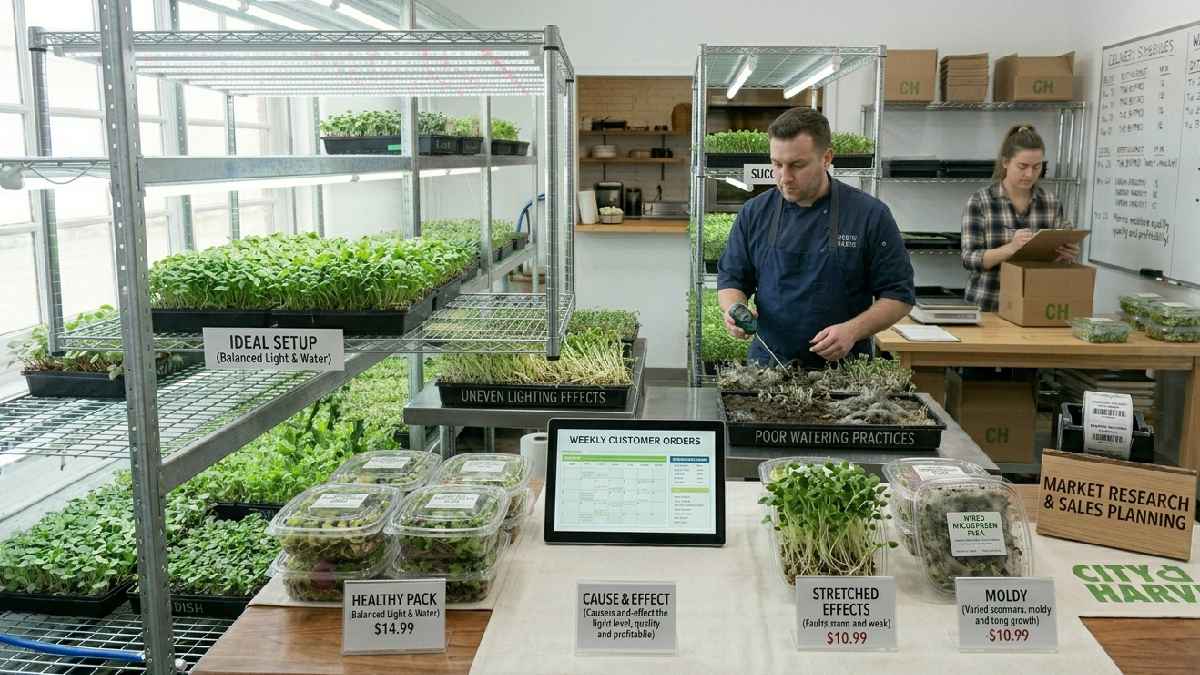
Simple consistency works better. Beginners often change settings too often. That creates unstable growth. Once I fixed the watering and lighting routine, quality improved, and sales became easier. A stable setup directly improves income in microgreens production systems.
Ignoring Market Research
Ignoring market research was one of my biggest mistakes. I started growing without knowing who would buy. Results were slow and confusing. Later, I visited local restaurants and asked directly. That gave clear direction. I learned what people actually need, not what I thought would sell. Without research, production becomes random.
Beginners often skip this step and face low sales. Market understanding guides crop selection and pricing. Once I started studying demand first, my production became focused and profitable. Knowing your buyers is more important than just growing microgreens at home.
FAQs About Profitable Microgreens
Which microgreens are most profitable?
Sunflower, radish, and pea shoots are most profitable. I noticed they grow fast, sell easily, and give consistent demand from restaurants and local buyers.
How much money can you make from microgreens?
Income depends on scale. Small setups can earn daily small profit. I saw steady income grow when trays and customers increased over time consistently.
What is the fastest growing microgreen?
Radish is the fastest microgreen I grew. It often finishes in about 7 days. Very quick harvest cycle and easy for beginners indoors.
Do restaurants regularly buy microgreens?
Yes, many restaurants buy microgreens regularly. I get repeat orders when quality and freshness stay consistent. Chefs prefer steady local supply for daily use.
Can microgreens be a full-time business?
Yes, microgreens can become full, time business with proper planning. I noticed success comes from steady buyers, good crop rotation, and consistent indoor production system.
Conclusion
The microgreens business looks simple, but it needs balance in growing and selling. I learned profit comes from consistency, not one-time effort. Fast crops, good demand, and proper setup make a real difference. Beginners should start small, test the market, then scale slowly.
Indoor systems work well when managed properly. I saw results improve after fixing mistakes and focusing on routine. With time, it becomes a steady income source. Not magic, just simple daily discipline and smart crop choices.