


Microgreen Seed Calculator: How to Use It for Maximum Yield and Zero Waste
A microgreen seed calculator is an essential tool for every microgreen grower, whether a beginner or a commercial farmer. It tells you exactly how many grams of seeds to sow per tray based on your tray size and chosen variety. Using the right seed density prevents overcrowding, reduces wasted seeds, and produces healthier, more uniform microgreen crops every single time.
Without a microgreen seed calculator, most growers either oversow and waste expensive seeds or undersow and get thin, patchy trays with poor yields. This guide explains how microgreen seed calculators work, why seed density matters, which varieties need different densities, and how to use this powerful tool to grow perfect microgreens consistently at home or on a commercial farm.
What Is a Microgreen Seed Calculator and How Does It Work?
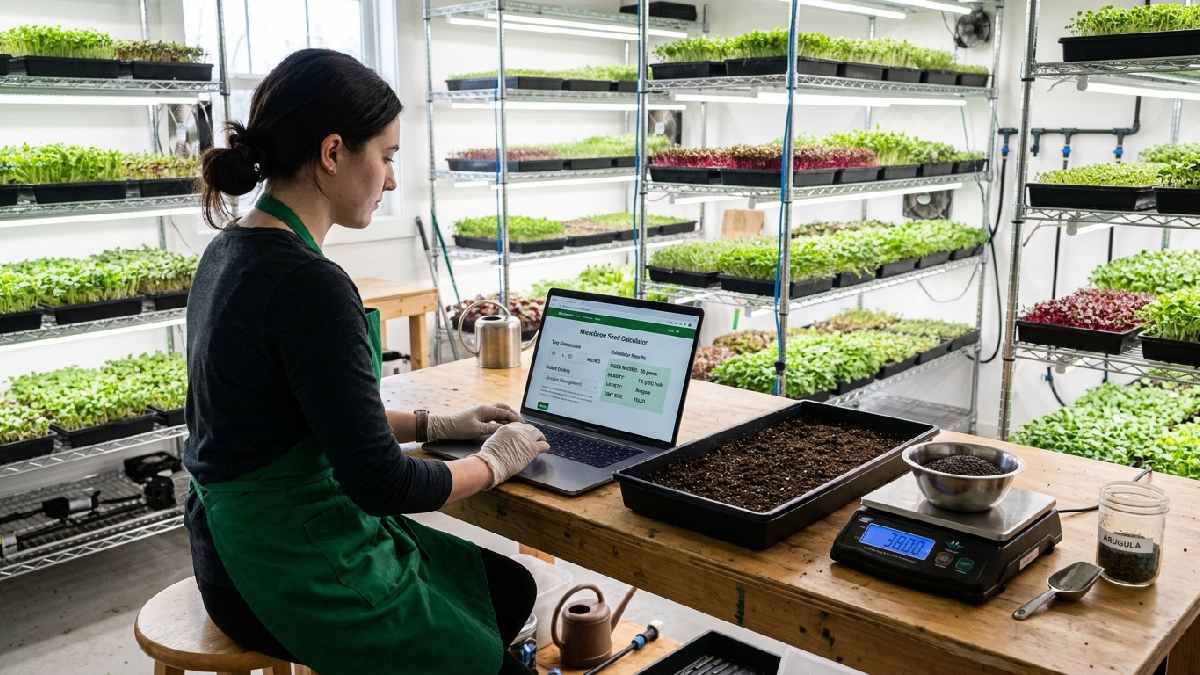
A microgreen seed calculator is a digital tool that calculates the precise amount of seeds needed for your specific growing tray size and microgreen variety. You simply input your tray dimensions, length and width in inches or centimeters, then select your microgreen variety from a dropdown list. The calculator instantly outputs the exact seed weight in grams needed for perfect coverage and optimal growth density.
Some advanced microgreen seed calculators also provide soaking time, blackout period duration, total growing time from sowing to harvest, and expected yield weight per tray. These tools are based on scientific research, real growing experiments, and data from experienced commercial microgreen producers worldwide.
How to Use a Microgreen Seed Calculator Step by Step
Using a microgreen seed calculator is simple and takes less than one minute. First, measure your growing tray’s inner dimensions, length and width in inches or centimeters. Enter these numbers into the calculator’s dimension fields. Next, select your microgreen variety from the available list, which typically covers over twenty to sixty common varieties.
Press calculate, and the tool instantly shows how many grams of seeds to sow for that exact tray size. Use a kitchen scale to weigh seeds precisely before sowing. Following the calculator’s output consistently produces uniform, healthy microgreen trays with minimal seed waste each growing cycle.
What Data Does a Microgreen Seed Calculator Provide?
A good microgreen seed calculator provides far more than just seed weight. It tells you the ideal seed density measured in seeds per square inch of growing surface. It indicates whether specific varieties require pre-soaking before sowing and for how many hours. It shows the recommended blackout period, the days seeds should be kept in darkness after sowing for strong germination and root development.
It also shows the total expected growing time from sowing to harvest for each variety. More advanced calculators include expected yield weight per tray and profitability estimates based on current seed costs and local selling prices for that specific microgreen variety.
The Science Behind Microgreen Seed Density Calculations
Microgreen seed calculator data is based on average seed weight measurements from laboratory experiments and real-world growing trials. Researchers, including Penn State University’s vegetable crop scientists, have conducted extensive microgreen density trials to establish optimal sowing rates.
Commercial seed companies, including Johnny’s Selected Seeds and TrueLeaf Market, have also published density trial data that feeds into public calculators. Seed weight varies slightly between batches and seed lots, so calculator results are accurate starting points rather than absolute fixed values. Growers refine results through personal experimentation after using calculator outputs as their initial baseline density.
Difference Between Home and Commercial Microgreen Seed Calculator Results
Home microgreen seed calculators use lower seed densities than commercial calculator outputs. Commercial growers sow at higher densities to maximize production volume per tray. However, this very dense commercial seeding means plants compete intensely for light, especially in the center of trays.
Home growers benefit from slightly lower densities that allow individual plants to develop more fully, producing better flavor, nutrition, and visual quality per plant. When using any microgreen seed calculator, always check whether its data is calibrated for home growing or commercial production and adjust expectations accordingly based on your specific growing goals and tray size used.
Why Seed Density Matters in Microgreen Growing
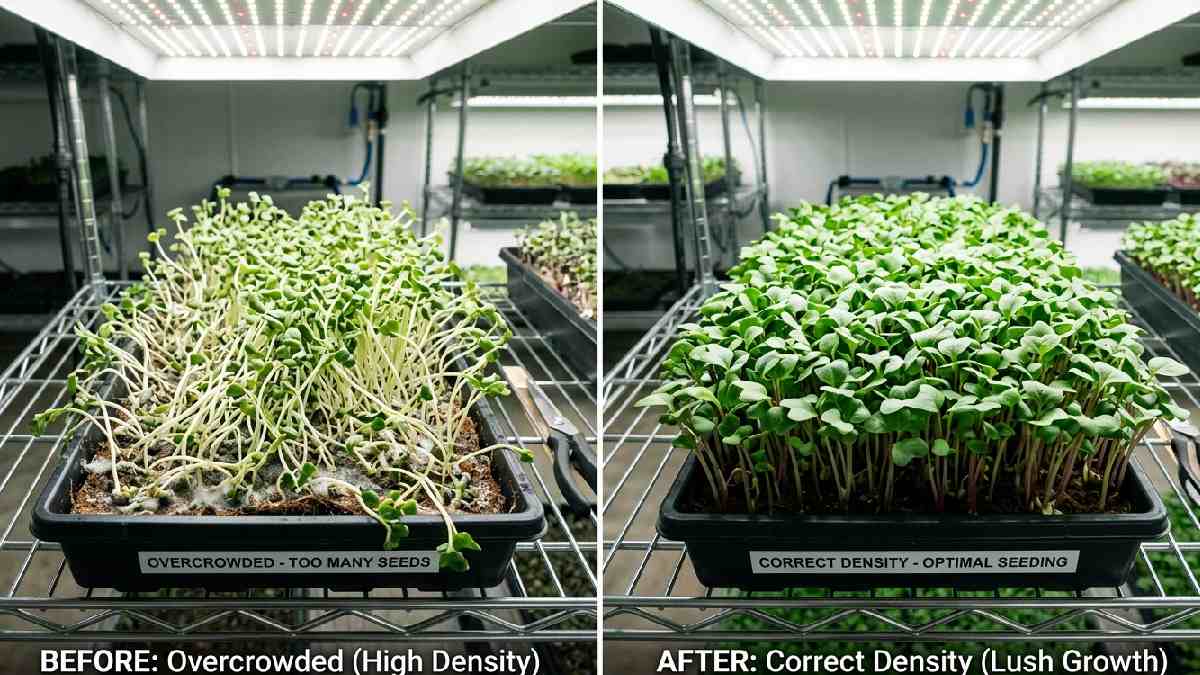
Seed density is one of the most critical factors determining microgreen quality, yield, and profitability. Too many seeds per tray create intense competition for light, water, and nutrients between plants. Overcrowded microgreens develop weak stems, uneven height, and poor flavor. Mold problems also increase dramatically in overcrowded trays due to restricted airflow between plants.
Too few seeds per tray waste growing space and reduce total yield per tray significantly. The microgreen seed calculator eliminates this guesswork by providing the optimal middle ground for each specific variety. Correct seed density produces strong, uniform, flavorful microgreens that reach harvest faster with fewer problems and higher yields per growing cycle.
Consequences of Oversowing Microgreen Trays
Oversowing is the most common mistake new microgreen growers make without a microgreen seed calculator. When too many seeds are packed into a tray, plants compete fiercely for limited light and airflow. Stems become thin and weak as plants stretch upward searching for light. Airflow restriction between tightly packed plants creates humid conditions perfect for mold and damping-off disease to develop rapidly.
Harvesting overcrowded microgreens is also more difficult since stems tangle and mats form. Oversowing wastes expensive seeds without producing better yields. Using a microgreen seed calculator from the very first tray prevents all of these costly and frustrating oversowing problems entirely.
Consequences of Undersowing Microgreen Trays
Undersowing microgreen trays wastes valuable growing space and reduces profitability per tray significantly. When too few seeds are sown, large gaps appear between plants after germination, leaving wasted tray area producing nothing. Total harvest weight per tray drops considerably below its potential maximum yield. Weeds and contaminating plants have more opportunity to establish themselves in undersown gaps.
Thin trays also look less attractive and are harder to sell at premium prices to restaurants or farmers’ market customers who expect full, lush microgreen trays. A microgreen seed calculator eliminates undersowing completely by providing the precise minimum seed amount needed for full, even tray coverage every single time.
How Seed Density Affects Microgreen Flavor and Nutrition
Seed density directly impacts the flavor and nutritional quality of harvested microgreens. Overcrowded plants receive less individual light exposure and produce less chlorophyll, directly reducing their nutritional content and green color intensity. Light-stressed, overcrowded microgreens also develop weaker, less flavorful profiles compared to properly spaced plants.
Correctly spaced microgreens, as calculated by a reliable microgreen seed calculator, develop stronger stems, richer green color, more intense flavor, and higher levels of vitamins and antioxidants per gram of harvested weight. For growers selling to health-conscious customers or restaurants, proper seed density directly determines the premium quality and price their microgreens can command at market.
Seed Density Variations Between Microgreen Varieties
Different microgreen varieties require dramatically different seed densities, which is why a microgreen seed calculator is so valuable. Small-seeded varieties like broccoli, radish, and arugula need only ten to fifteen grams of seeds per standard ten-by-twenty-inch tray. Medium-seeded varieties like sunflower require approximately sixty to eighty grams per standard tray.
Large-seeded varieties like pea shoots need the most seeds, typically two hundred to two hundred eighty grams per tray, since peas are pre-soaked and laid in a single dense layer. Without a microgreen seed calculator, remembering the correct density for each of dozens of different varieties is nearly impossible for any grower.
Popular Microgreen Varieties and Their Seed Calculator Values
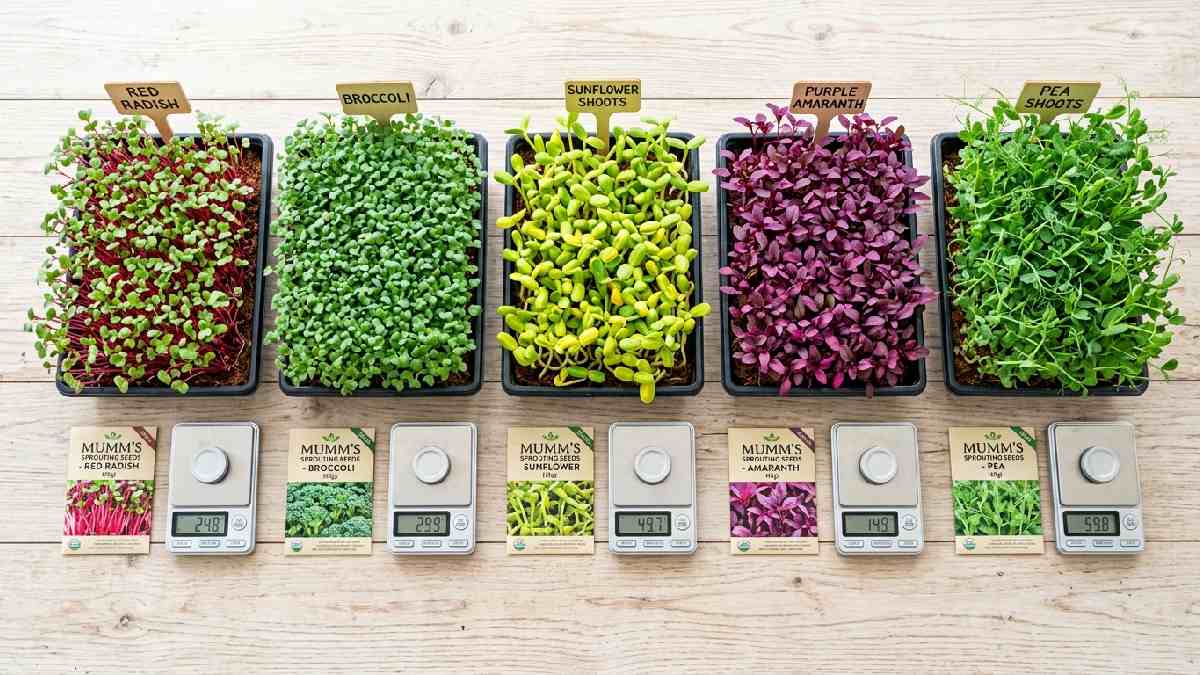
Understanding seed requirements for popular microgreen varieties helps growers plan purchases and growing schedules efficiently. Radish microgreens need approximately twenty-five to thirty-five grams per standard ten-by-twenty-inch tray and grow in just five to eight days, the fastest common variety. Broccoli needs ten to fifteen grams per tray and takes seven to ten days to reach harvest.
Sunflower requires sixty to eighty grams per tray with eight to twelve days of growing time after soaking. Pea shoots need the highest seed weight at two hundred grams or more per tray, but produce some of the highest yields. Using a microgreen seed calculator for each of these varieties ensures accurate seeding every single time without relying on memory or guesswork.
Radish Microgreens, Fast Growing and Easy to Calculate
Radish is the most beginner-friendly microgreen variety and one of the easiest to calculate using a microgreen seed calculator. Standard seed density is approximately twenty-five to thirty-five grams per ten-by-twenty-inch tray. Radish germinates very quickly within one to two days and reaches harvest in just five to eight days total.
It tolerates temperature variations better than most other varieties, making it forgiving for new growers. Radish microgreens yield approximately six to ten ounces per standard tray at proper seed density. Their fast turnaround and reliable germination make radish the perfect first variety for any grower learning to use a microgreen seed calculator for consistent results.
Broccoli and Brassica Microgreens Seed Calculator Values
Broccoli microgreens require lower seed density than most varieties because their seeds are very small and germinate at high rates. A standard ten-by-twenty-inch tray needs only ten to fifteen grams of broccoli seeds, according to most microgreen seed calculators. Despite the low seed weight, broccoli trays produce impressive yields of four to six ounces per tray at harvest.
Broccoli microgreens are among the most nutritionally dense varieties available, packed with sulforaphane and essential vitamins. Other brassica family varieties, including kale, cabbage, and kohlrabi, have similar small seed sizes and follow comparable density guidelines in any reliable microgreen seed calculator tool.
Sunflower and Pea Shoot Seed Calculator Requirements
Sunflower microgreens require significantly more seeds per tray than small-seeded varieties. Most microgreen seed calculators recommend sixty to eighty grams of sunflower seeds per standard tray. Sunflower seeds should be soaked for eight to twelve hours before sowing to improve germination rates and speed. They produce high yields of eight to twelve ounces per tray with eight to twelve days of total growing time.
Pea shoots require the highest seed density of any common microgreen variety, approximately two hundred grams per standard tray. Both sunflower and pea shoots need accurate measurement using a microgreen seed calculator to avoid the very common mistake of severely undersowing these larger-seeded, higher-quantity varieties.
Specialty Varieties, Basil, Cilantro, and Amaranth
Specialty microgreen varieties like basil, cilantro, and amaranth have unique seed density requirements that make a microgreen seed calculator especially valuable. Basil seeds are tiny, mucilaginous, and require very low seed density, approximately five to eight grams per standard tray. Cilantro has unusual dual-seeded structures where each seed casing contains two seeds, requiring careful density adjustment in calculator outputs.
Amaranth needs only five to eight grams per tray and produces some of the most visually striking purple and red colored microgreens available. These specialty varieties demand precise seeding calculations because mistakes in either direction significantly impact germination quality and final tray appearance at harvest time.
Using a Microgreen Seed Calculator for Commercial Growing
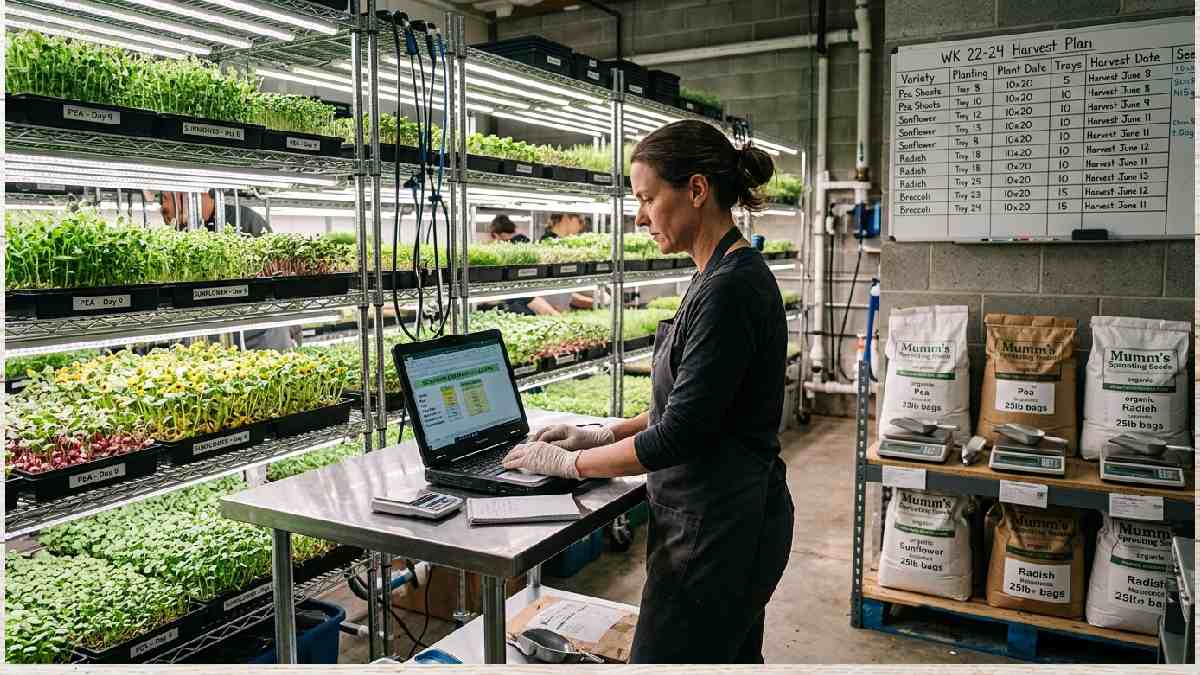
Commercial microgreen growers benefit enormously from consistent use of a microgreen seed calculator across all production trays. Consistency in seed density directly translates to consistent yields, harvest timing, and product quality that restaurant and retail customers expect and demand. Commercial operations growing dozens or hundreds of trays weekly need precise seed calculations to manage seed purchasing budgets accurately.
A microgreen seed calculator helps commercial growers calculate exact seed costs per tray, project total monthly seed expenditure, and identify which varieties offer the best profit margins per dollar of seed cost invested. Data-driven growth powered by accurate calculator tools separates profitable commercial microgreen businesses from those that struggle with unpredictable yields and high seed waste costs.
Calculating Seed Costs and Profit Margins Per Tray
A microgreen seed calculator helps commercial growers calculate precise seed costs per tray for every variety in their production schedule. Broccoli seed costs are typically low at around ten to eighteen dollars per pound, and at fifteen grams per tray, the cost per tray is minimal. Sunflower seeds cost three to five dollars per pound, but require more grams per tray, making the cost per tray higher.
Radish seeds cost eight to twelve dollars per pound at thirty grams per tray, producing strong profit margins. Microgreens sell for two to four dollars per ounce retail and twenty-five to fifty dollars per pound wholesale. Seed costs typically represent only ten to twenty percent of total revenue, making microgreens one of the highest-margin crops available per square foot of growing space.
Planning Production Schedules Using Seed Calculator Data
Commercial growers use microgreen seed calculator data to build precise staggered production schedules that ensure continuous daily or weekly harvests. By knowing exact growing times for each variety, five days for radish versus fourteen days for cilantro, growers can sow multiple trays at calculated intervals to guarantee product availability every single day.
This succession sowing approach prevents harvest gaps that disappoint restaurant customers expecting regular weekly deliveries. Calculator data showing exact sowing dates, blackout periods, and expected harvest dates allows growers to manage dozens of simultaneous tray cycles without confusion, missed harvests, or delivery delays that damage customer relationships and business reputation.
Reducing Seed Waste With Accurate Calculator Measurements
Seed waste is a major unnecessary cost for microgreen growers who do not use a microgreen seed calculator consistently. Expensive specialty seeds like basil, dill, and cilantro can cost fifteen to thirty dollars per ounce. Oversowing these varieties by even a small percentage wastes significant money across multiple trays each week. A microgreen seed calculator provides gram-precise measurements that eliminate overestimation when paired with an accurate kitchen scale.
Commercial growers report saving ten to twenty-five percent on annual seed costs simply by switching from eyeballed measurements to calculator-guided precise weighing for every single tray sown. This saving compounds significantly across a full year of commercial production operations.
Microgreen Profitability Calculators for Business Planning
Advanced microgreen profitability calculators go beyond basic seed density to provide complete business financial analysis. These tools calculate seed cost per tray, variable costs including growing medium and packaging, fixed monthly overhead costs, and final profit margin per tray. They allow growers to stress test their business by modeling slower sales months or seed price increases.
A small operation with ten trays running three growing cycles per month can gross six hundred to twelve hundred dollars monthly from microgreen sales. Profitability calculators show exactly which varieties and tray volumes are needed to cover all costs and generate the desired monthly income target for any size of microgreen growing operation.
Tips for Getting the Most Accurate Results From Your Microgreen Seed Calculator
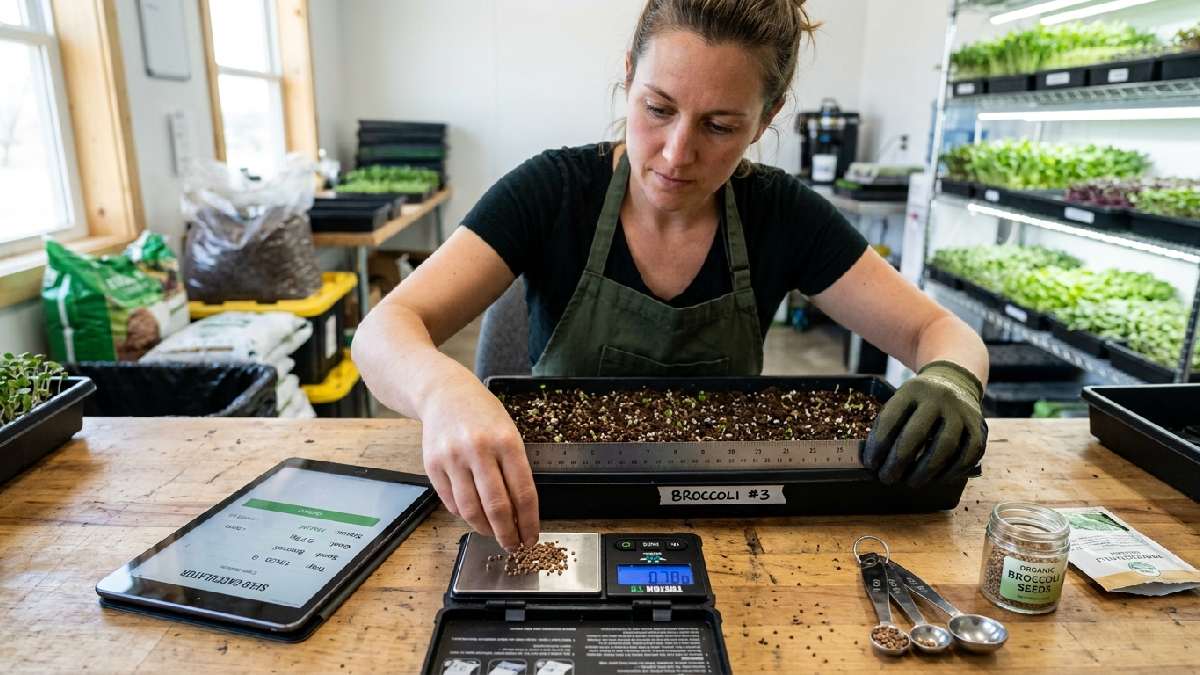
Getting accurate results from any microgreen seed calculator requires following a few important best practices consistently. Always use a digital kitchen scale accurate to one gram for weighing seeds; visual estimates are never precise enough for reliable results. Measure your actual inner tray dimensions carefully rather than using assumed standard sizes since tray sizes vary between manufacturers.
Use the calculator’s output as a starting baseline and adjust slightly based on personal observations from your first few growing cycles. Note which variety lots germinate at higher or lower rates than expected and fine-tune accordingly. Store your calculated seed amounts per variety written directly on seed storage containers for quick reference during busy growing days without needing to recalculate repeatedly.
Measuring Tray Dimensions Accurately for Calculator Input
Accurate tray measurement is essential for reliable microgreen seed calculator outputs. Always measure the inner growing surface area, not the outer tray edge, since the outer edge includes the tray wall thickness, which does not grow any seeds. Use a ruler or measuring tape to find the exact inner length and width in inches or centimeters.
Standard ten-by-twenty-inch nursery trays typically have inner dimensions closer to nine and a half by nineteen inches. This small difference affects the total growing area and, therefore, the correct seed weight output significantly. Accurate inner dimension measurement ensures the calculator provides the most precise seed weight recommendation for your specific trays and growing setup.
Adjusting Calculator Results Based on Growing Conditions
Microgreen seed calculator outputs are excellent starting points but growing conditions in your specific environment may require small adjustments. Growers in high-humidity environments may benefit from slightly lower seed density to improve airflow and reduce mold risk between plants. Growers using coco coir as a growing medium versus soil may see different germination rates affecting effective plant density after emergence.
Older seed lots with lower germination rates may need slightly higher sowing weights to achieve the same final plant density as fresh seeds. Light intensity also affects how much space plants need; lower light conditions favor slightly lower densities to reduce competitive stretching behavior between individual microgreen seedlings.
Tracking Results and Refining Calculator Usage Over Time
The most experienced microgreen growers keep detailed growing records alongside their microgreen seed calculator use. Record the exact seed weight used, tray dimensions, germination percentage observed, days to harvest, and final yield weight for every tray grown. Compare these real results to calculator predictions and note any consistent patterns of over- or underproduction.
Over time, this data builds a personalized density database tailored to your specific growing environment, seed sources, and growing medium preferences. Many commercial growers develop their own refined seed density charts based on years of recorded data, making their production more accurate and profitable than any generic public calculator alone could achieve.
Best Free Microgreen Seed Calculators Available in 2026
Several excellent free microgreen seed calculators are available online for home and commercial growers in 2026. The Penn State Extension Microgreens Seed Density Calculator is one of the most scientifically validated tools available, based on university research. Home Microgreens offers an interactive web calculator covering over twenty common varieties specifically calibrated for smaller home-growing trays.
MP Seeds provides a comprehensive calculator covering sixty microgreen varieties, including soaking time, blackout period, and total growing time data. Microgreen Manager offers a free public seed density tool with data verified by commercial farm operators. Veg Geek provides one of the most complete variety lists available with data cross-checked against multiple commercial seed company trials and independent research publications.
FAQs
What is a microgreen seed calculator used for?
A microgreen seed calculator tells you exactly how many grams of seeds to sow per tray for each specific microgreen variety.
How accurate are microgreen seed calculators?
They are very accurate starting points based on research data, though personal growing conditions may require small adjustments over time.
How many grams of radish seeds per tray?
Most microgreen seed calculators recommend twenty-five to thirty-five grams of radish seeds per standard ten by twenty inch tray.
Do I need a scale to use a microgreen seed calculator?
Yes, always use a digital kitchen scale accurate to one gram for precise seed measurement based on calculator output values.
What happens if I sow too many microgreen seeds?
Oversowing causes overcrowding, weak stems, poor airflow, increased mold risk, and lower quality harvests despite using more expensive seeds.
Can a microgreen seed calculator help commercial growers?
Absolutely. It reduces seed waste, standardizes production, improves profit margins, and helps plan consistent supply schedules for commercial customers.
Which microgreen variety needs the most seeds per tray?
Pea shoots require the most seeds at approximately two hundred grams or more per standard tray due to their large individual seed size.
Conclusion
A microgreen seed calculator is one of the most valuable tools any microgreen grower can use, from first-time home gardeners to experienced commercial producers. It eliminates seed waste, prevents overcrowding, and ensures consistently high-quality harvests every single growing cycle. By providing precise seed weights based on tray dimensions and variety type, these calculators take the guesswork out of one of the most important decisions in microgreen production.
Combine calculator data with accurate kitchen scales, careful tray measurement, and detailed growing records to achieve the best possible yields and profitability. Whether growing microgreens at home or running a commercial operation, a microgreen seed calculator makes every tray better, smarter, and more productive.