

My neighbor killed three trays of microgreens before she got one right. Told me this over the fence one evening. Half laughing, half annoyed, holding a mug of tea that had gone cold an hour ago.
That’s usually how it goes. People hear “microgreens are easy” and expect a flawless first try. Then reality shows up and does its own thing.
Some microgreens really are forgiving though. Others punish the smallest mistake. Knowing which is which before you start saves a lot of wasted seed. And your patience too, honestly. If this is your first attempt at growing anything indoors, check our home farming for beginners guide first. Get oriented before you touch a single seed packet.
Radish: Basically Impossible to Mess Up
If there’s a gateway crop into this hobby, it’s radish. Cheap seeds germinate in a day, sometimes two. And that peppery kick makes even a boring sandwich taste like you actually tried.
Radish also happens to be one of the varieties studied for nutrient content; researchers have noted certain microgreens carry way higher vitamin levels than their full-grown versions. Interesting, but not really why people grow it.
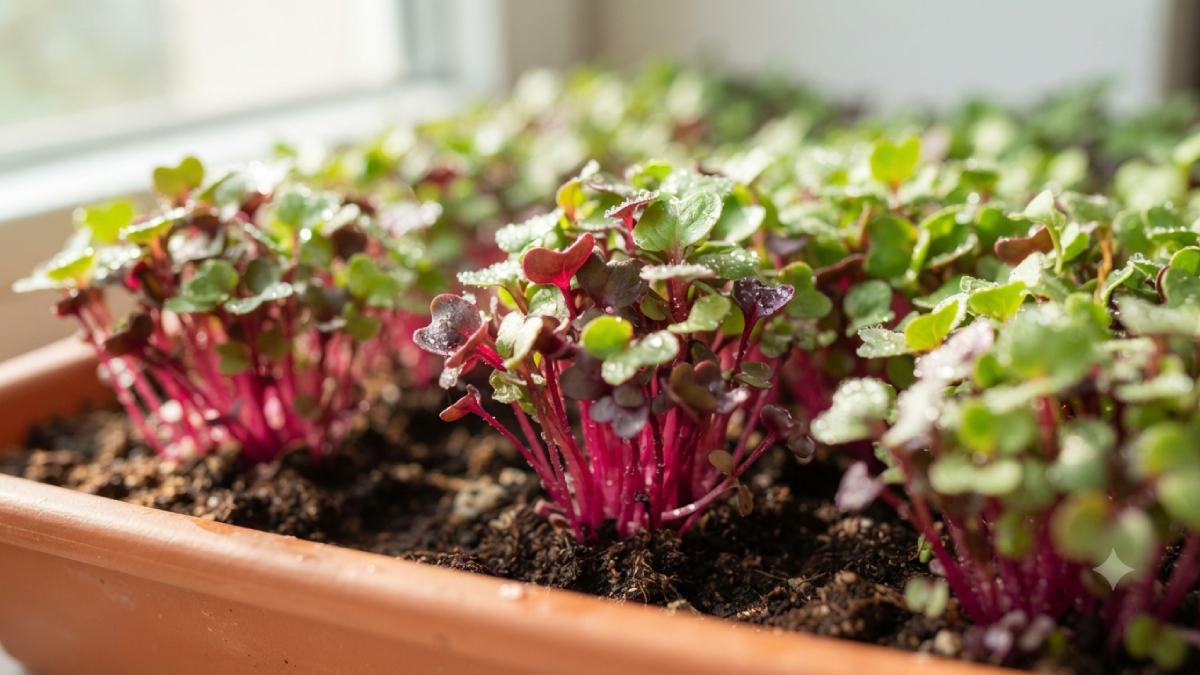
They grow it because it’s forgiving. Water too much one day? Shrugs it off. Forget to mist for a few hours? Still fine, mostly. This isn’t true of every variety. With radish, though, small mistakes rarely turn into a dead tray.
One thing. Radish grows fast. You’ll often harvest within seven to ten days. Blink, and you might miss the window, so once true leaves show up, pay attention.
Broccoli Is Nearly As Easy
Sits right next to radish in terms of difficulty. A touch slower though, and milder in flavor. Some people say it tastes faintly like the actual vegetable, just softer, less bitter. Kids tend to like it more than grown broccoli, small win if your household resists green things.
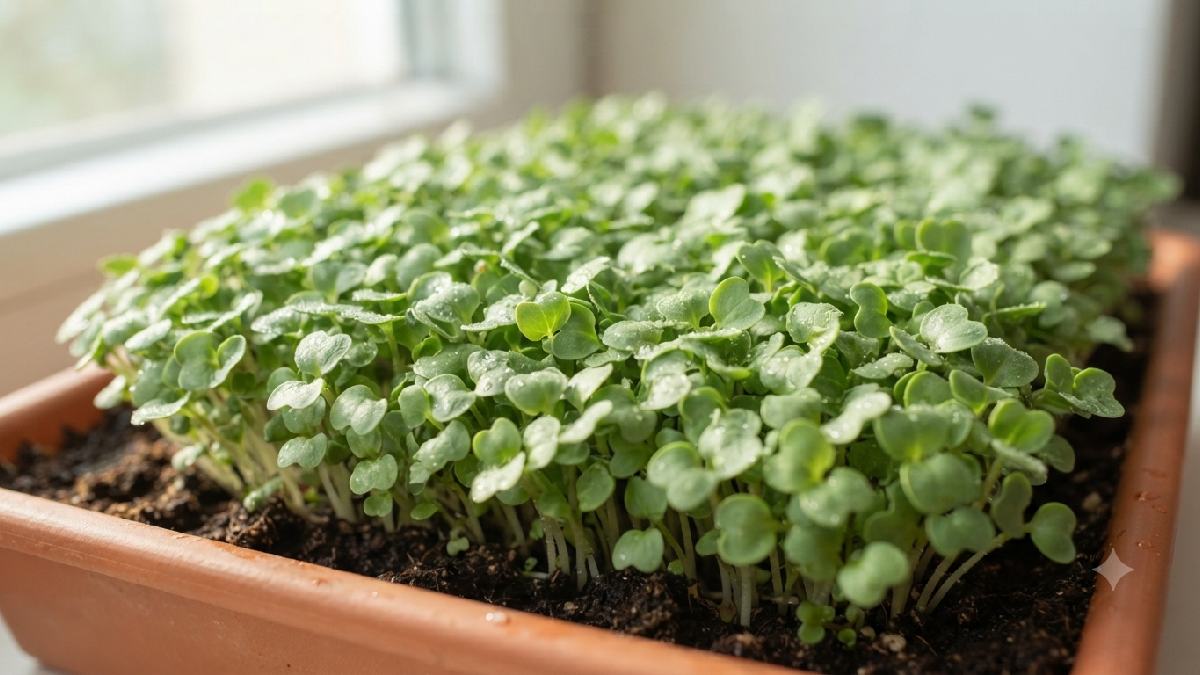
Germination takes about the same time as radish. What’s different is how tightly the roots knit together. Helps beginners actually, because that dense root mat holds moisture more evenly. Fewer dry patches ruining half your tray.
Pea Shoots Slower, But They Rarely Fail
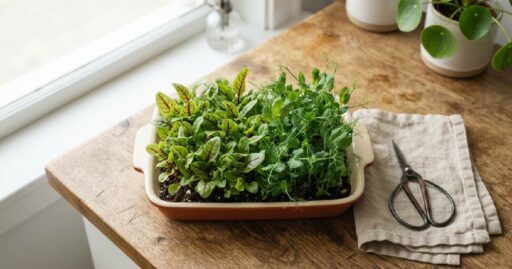
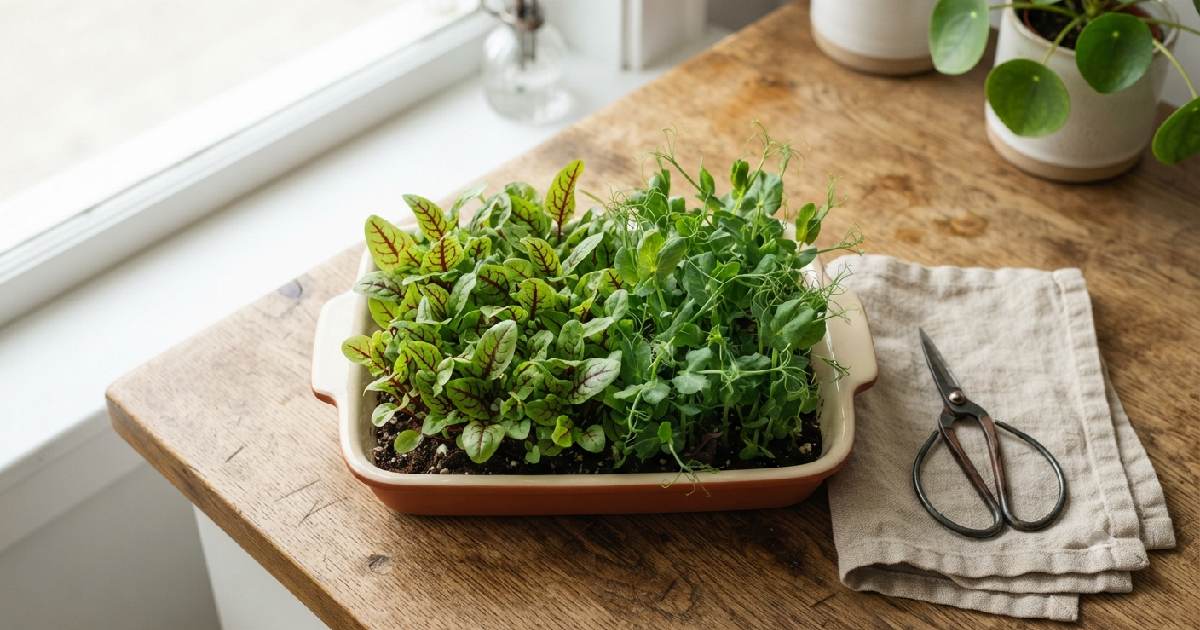
Bit of a paradox, pea shoots. Not fast usually ten to fourteen days before harvest yet people who’ve never touched a seed tray in their life often nail it on the first try. Why? Big seeds easy to handle, forgiving of uneven spacing.
There’s something satisfying about watching them grow too. Tendrils curl, stems thicken. By week two, it looks less like a science experiment, more like an actual crop you could be proud of. Flavor’s sweet, close to fresh snap peas. Great in salads, decent as a soup garnish.
Quick tip: soak the seeds eight to twelve hours before planting. Softens the shell. Speeds germination up noticeably.
Sunflower Microgreens Ask a Little More
These ask more than radish or broccoli, but not a ton more. Seeds need a longer soak, sometimes overnight. They also do better weighted down under a tray for the first few days; it lets the roots anchor before the stems push up.
Once they get going though? Hard to mess up. Sturdy don’t wilt easily. That nutty, slightly crunchy bite is why a lot of people who actually sell microgreens at farmers markets lean on sunflower specifically. Want something a bit more “serious” without the fuss? This is the next step after radish or broccoli.
Arugula Is Fast Just Watch the Smell
Worth mentioning because it’s genuinely quick. Ready within a week, often the catch it has this distinct smell during germination. Some new growers find it off-putting, almost like wet hay. Fades once the greens mature, but it catches people off guard the first time, every time.
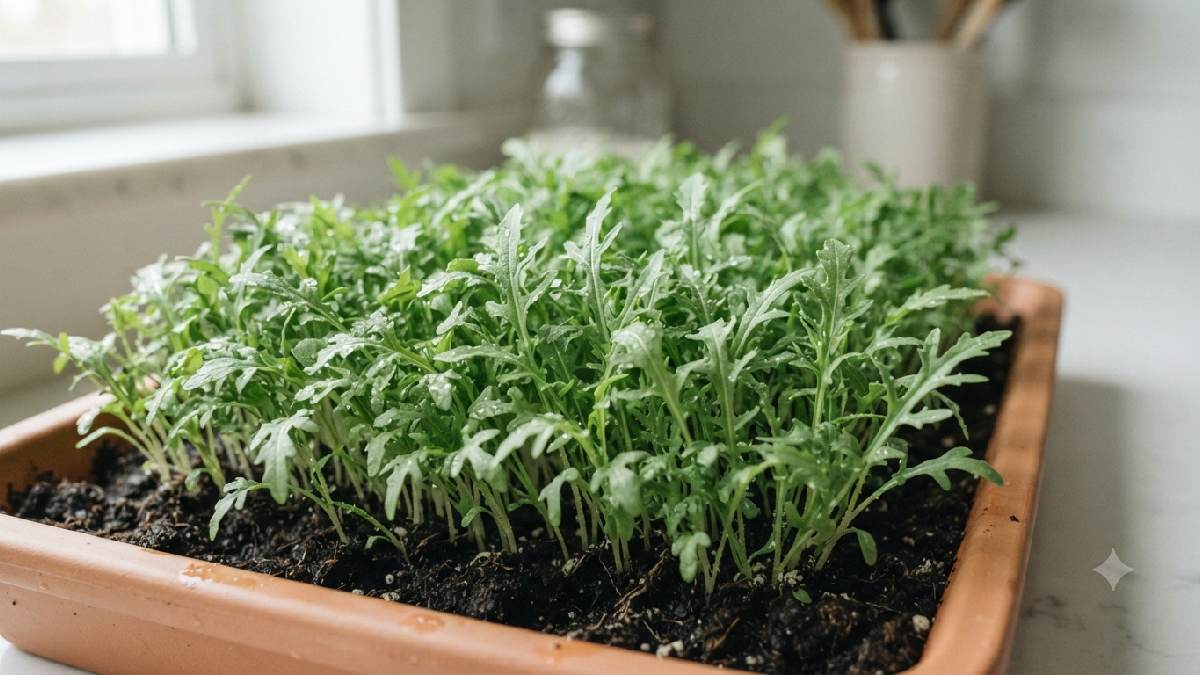
Flavor carries that same peppery bite as mature arugula, just packed into a tiny leaf. Good variety once you’ve got one or two easier crops behind you and want something with more character.
What Actually Makes a Microgreen “Easy”
Comes down to three things really: germination speed. Tolerance for watering mistakes, resistance to mold. Radish and broccoli check all three, which is why they’re on every beginner list ever written.
Pea shoots and sunflower trade a bit of speed for extra resilience once established. Arugula’s fast but slightly less forgiving with humidity.
Smaller, thinner-shelled seeds like broccoli and kale that type mold if the tray’s too wet or airflow’s bad. Bigger seeds like peas and sunflower resist mold naturally, mostly because of size and shell thickness.
A Simple Starter Combo
Not sure where to begin? Plant radish and pea shoots side by side, in separate trays, week one. Radish gives you a fast win, often within ten days. Pea shoots teach patience without much risk. Once you’re comfortable with the watering rhythm, broccoli and sunflower are natural next steps.
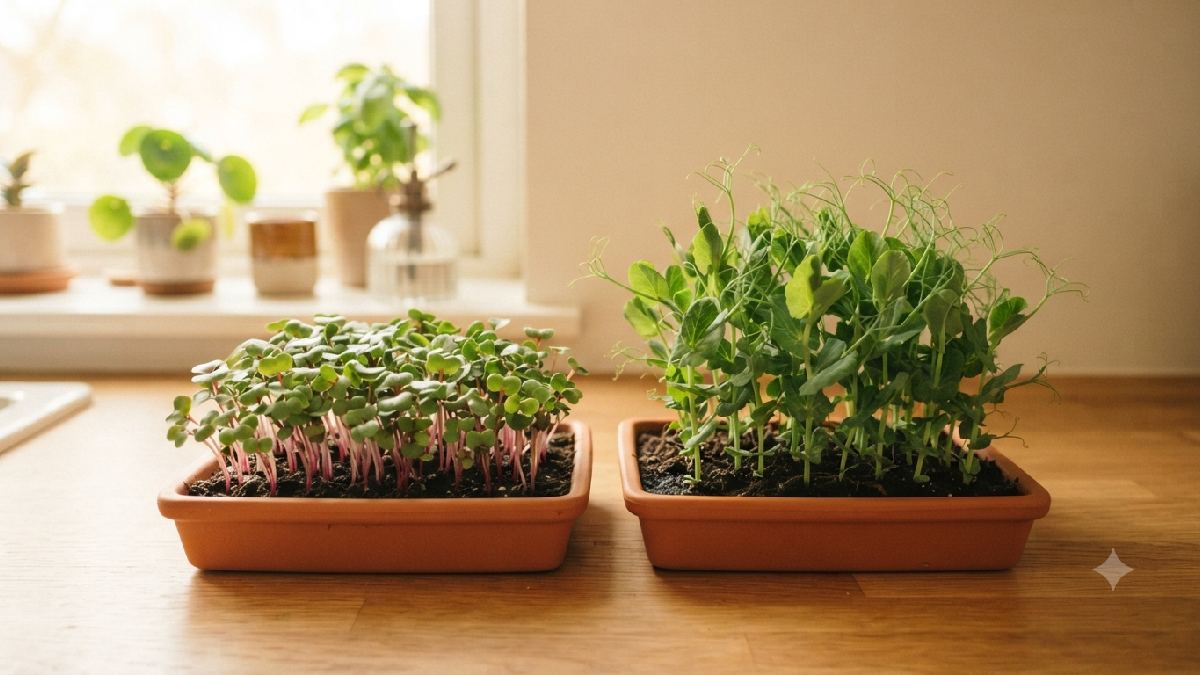
No need to rush into exotic blends or specialty seeds right away. Most experienced growers I’ve talked to started with exactly this pairing. Branched out later, once they understood how their specific space, light, humidity, and airflow actually behaved.
Ranking Them, Roughly
Radish sits at the top; broccoli close behind. Pea shoots and sunflower next, not because they’re hard, just because they need extra prep like soaking. Arugula lands last on this list. Not hard exactly. Just less predictable in humid spaces.
None of this is gospel, though. Someone growing in a dry apartment with a small fan running might find arugula totally manageable. Someone else in a humid basement corner might struggle with the same seeds. Your environment matters more than any general ranking ever will.
Space You Need Less Than You Think
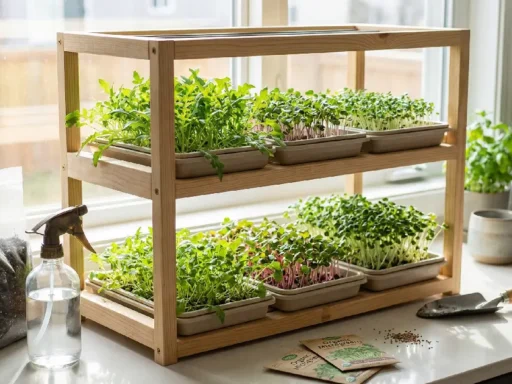
People assume microgreens need serious real estate; rarely true. A standard 10×20 tray, the same one used for seed starting, is enough for a solid harvest of anything on this list. Radish and broccoli, smaller seeds, can go a bit denser without much risk. Pea shoots and sunflower need slightly more room since the seeds are physically bigger.
your kitchen counter or a windowsill fits one tray, you can grow any of these. Part of what makes this hobby approachable for apartment dwellers. No backyard required, no dedicated grow room either. Need a tray or a starter kit before your first attempt? Our gardening tools & supplies section has the basics.
Why “Easy” Varieties Still Fail Sometimes
Happens more than you’d think. Someone follows every instruction to the letter. Uses radish specifically because it’s supposed to be foolproof. Still ends up with a moldy, disappointing tray. Usually it’s not the seed. It’s airflow. Or lack of it.
Microgreens grown in a closed, stagnant space even easy radish mold far more than the same seeds near a cracked window or under a small desk fan on low. Air movement isn’t optional once the dome comes off. Rarely gets mentioned matters more than seed choice, most of the time.
Soil or Soil-Free? Doesn’t Matter As Much As You’d Think
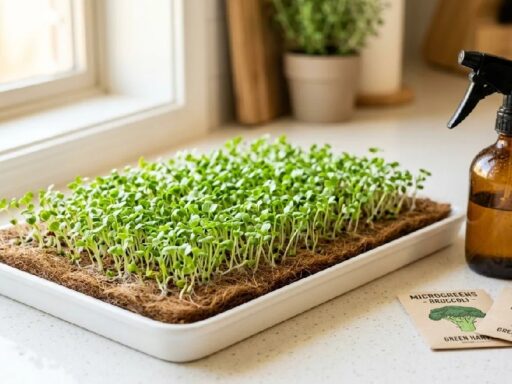
Radish, broccoli, arugula all do fine in soil-based mix or soil-free mats made from hemp or coconut coir. Soil holds moisture a bit longer, helpful if you occasionally forget to mist on schedule. Soil-free mats are cleaner, easier to rinse at harvest, but dry out faster and need more attention.
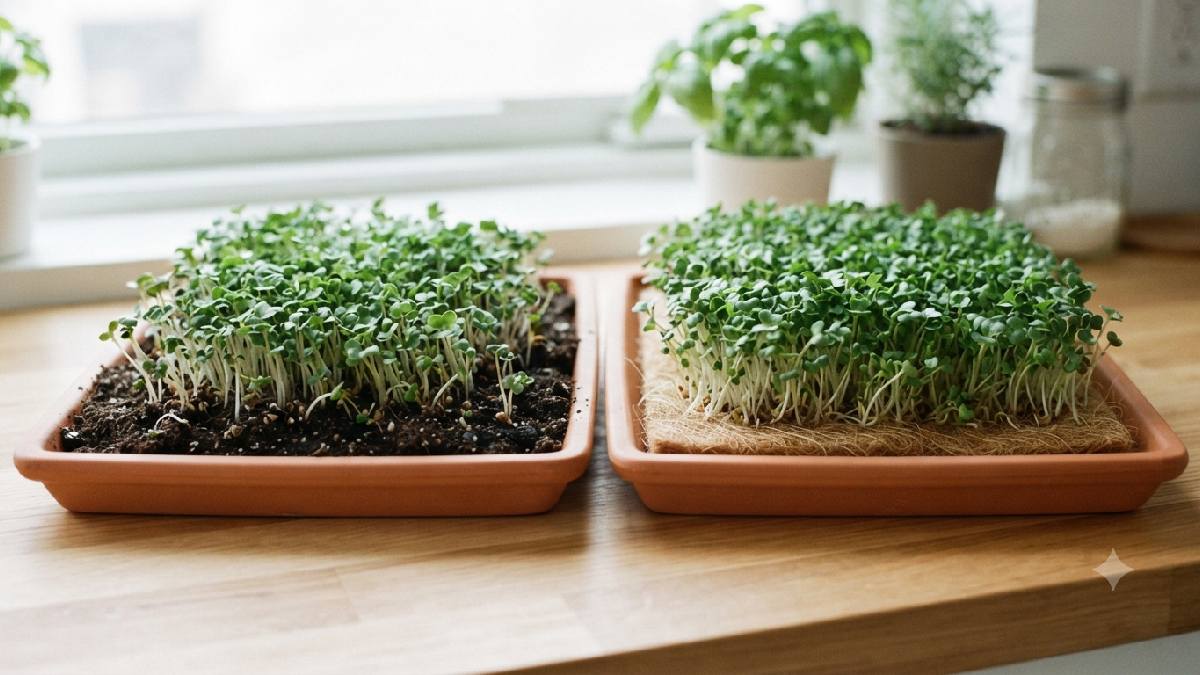
Pea shoots and sunflower, because of bigger seeds and heavier roots, usually do better in an actual growing medium rather than a thin mat. Roots need more to grab onto.
No universally right answer here. Comes down to how much mess you’ll tolerate versus how much monitoring you’re willing to do.
Temperature Matters More Than People Realize
Most beginner guides skip this part. Temperature. It’s not glamorous, doesn’t photograph well for social media, but it quietly decides whether your tray germinates in two days or five.
Radish and broccoli both like it warm, somewhere around seventy to seventy-five degrees. Too cold and germination just stalls. Nothing dramatic happens, no dying, just nothing. Seeds sit there looking exactly the same for days.
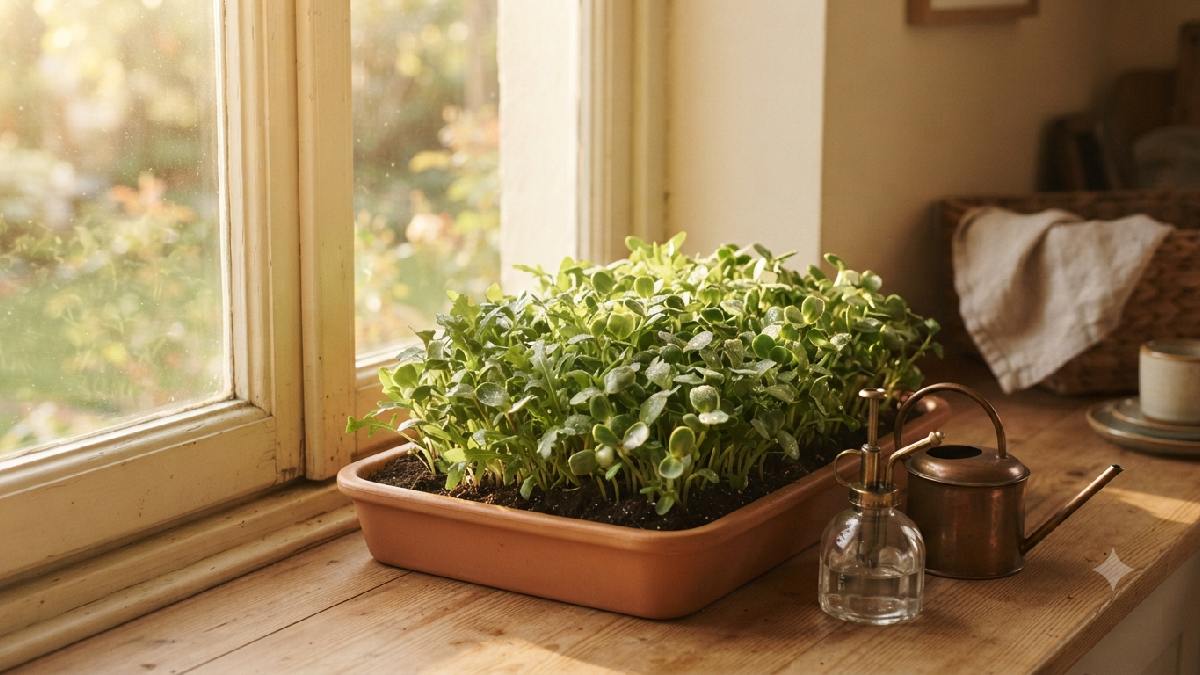
Pea shoots and sunflower are a bit more tolerant of cooler rooms, which is part of why they work well for people growing on drafty windowsills in older houses. Still, a spot near a heating vent or on top of a fridge, somewhere with gentle ambient warmth, speeds things up noticeably for any variety.
You don’t need a thermometer stuck in your growing tray. Just notice where things feel comfortable to you in a t-shirt. Seeds mostly agree with that assessment.
The First Tray Almost Never Looks Like the Pinterest Photo
Worth saying out loud. Your first tray of radish, or whatever you pick, probably won’t look like the perfectly even, carpet-green photo you saw online. Some patches will grow faster. A corner might be a little thin. That’s normal, not failure.
Even growers who’ve been doing this for years get uneven trays sometimes. Seed distribution is never perfectly uniform by hand, and light rarely hits every square inch of a tray with identical intensity. A slightly uneven harvest still tastes exactly the same on a sandwich.
What actually signals a problem is different fuzzy white growth that looks distinctly different from root hairs, a sour or ammonia-like smell, or stems that go slimy and collapse. Those are the things worth tossing a tray over. Uneven height is not one of them.
Frequently Asked Questions
Which microgreen grows the fastest?
Radish and arugula, usually. Ready in seven to ten days depending on room temperature and light.
Do I need a grow light for beginner microgreens?
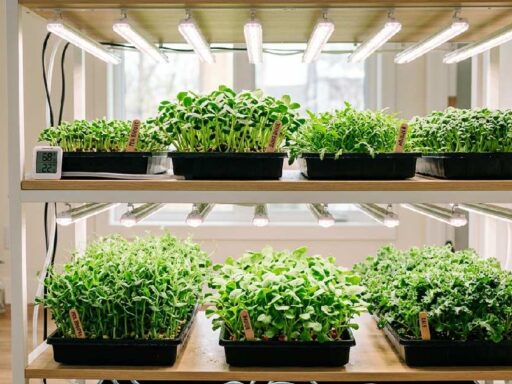
Not necessarily a bright windowsill works fine for radish and broccoli. A basic LED grow light helps if natural light is limited though, more consistent results.
Can I mix different easy varieties in the same tray?
Possible not really recommended for beginners. Different seeds germinate and mature at different speeds, makes harvest timing messy. Simpler to keep each variety in its own tray at first.
Why did my radish turn moldy? It's supposed to be easy.
It's supposed to be easy mold's almost always about airflow or standing water, not the seed itself. Even easy-growing seeds like radish need circulation once that dome comes off.
How many times can I harvest from one tray?
Most of these radish, broccoli, arugula are one-shot harvests. Pea shoots occasionally give a smaller second growth if roots stay intact and watered. Regrowth's usually thinner than the first cut though, don't expect much.
Conclusion
Start with radish or broccoli. Takes most of the guesswork out of your first tray they forgive uneven watering. They grow fast enough that you’re not sitting around wondering if something went wrong; real, edible results within a week or two.
From there, pea shoots and sunflower build confidence without much added risk. Arugula gives you something bolder once you’re ready for it.
My neighbor, by the way, finally got her radish tray right on the fourth attempt. Brought a handful over wrapped in a paper towel, a little proud of herself. Honestly, they were good. That’s usually how this hobby goes: a few false starts. Then suddenly you’ve got more fresh greens than you know what to do with, and a much better sense of what your own kitchen can actually handle.