

Backyard Vegetable Garden Layout Ideas That Actually Work
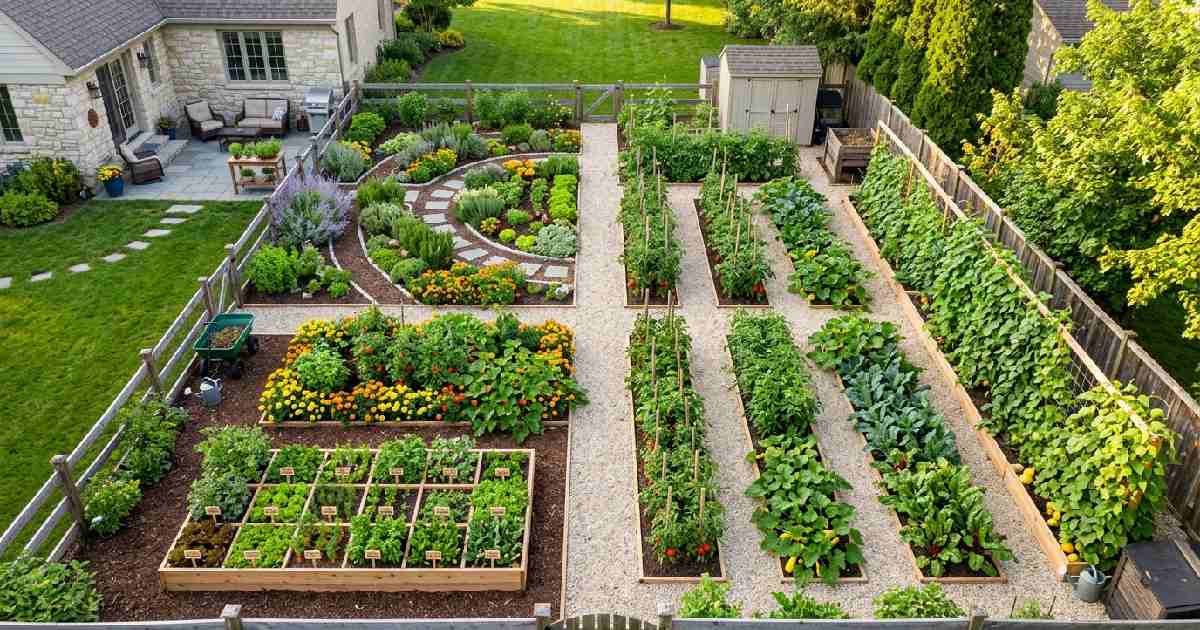
Planning a backyard vegetable garden layout is the first step to a successful harvest. A good layout saves space, improves plant health, and makes maintenance easier. Whether you have a small yard or a large open space, the right backyard vegetable garden layout ideas make a big difference.
Smart planning helps you grow more food with less effort. This guide covers the best layouts for every backyard size and skill level. Use these ideas to design a garden that actually works for you.
Why Garden Layout Matters for Vegetable Growth
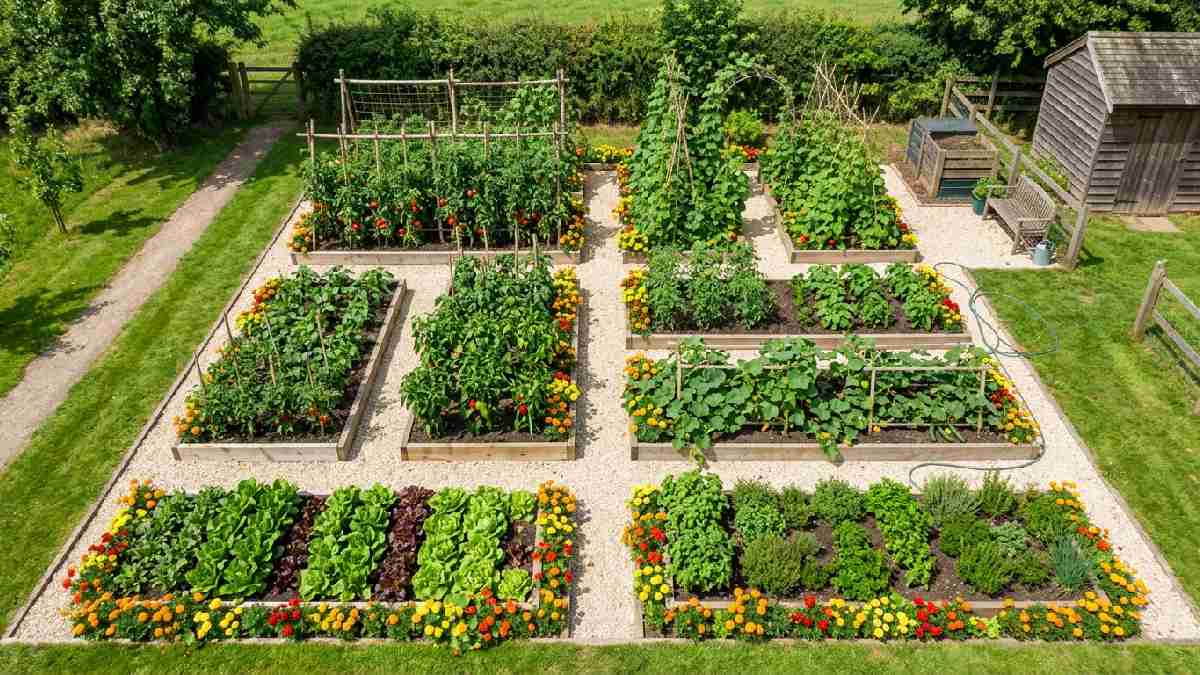
Your garden layout directly affects how well your plants grow. A poor layout leads to low yields, wasted space, and constant problems. A smart backyard vegetable garden layout helps plants get enough sunlight, water, and air. It also makes watering and harvesting much easier.
Poor planning is the main reason beginner gardens fail. Choosing the right layout from the start saves time, money, and frustration all season long. Every successful garden starts with a solid plan.
Sunlight Direction and Plant Placement
Sunlight is the most important factor in garden planning. Most vegetables need at least six to eight hours of direct sun daily. Place tall plants like tomatoes and corn on the north side. This prevents them from shading shorter crops.
Smaller vegetables like lettuce and carrots grow best in the southern area. Observe your yard at different times of day before planting. Proper sunlight placement directly increases your total harvest output.
Proper Spacing for Higher Yield
Correct spacing allows every plant to access sunlight, water, and nutrients. Overcrowded plants compete for resources and grow weak. Tomato plants need 24 to 36 inches of space between them.
Lettuce can grow 6 to 12 inches apart. Always read seed packets for exact spacing requirements. Good spacing also improves airflow and reduces disease risk. One well-spaced plant always outperforms three crowded ones.
Easy Watering and Maintenance Setup
Plan your garden so every bed is easy to reach without stepping on soil. Keep bed widths under four feet so you can reach the center easily. Use drip irrigation or soaker hoses for consistent watering.
Add mulch to reduce weeding and retain moisture. Pathways should be at least 18 to 24 inches wide. A good maintenance setup means less time working and more time enjoying your garden results.
Raised Bed Garden Layout Ideas for Beginners
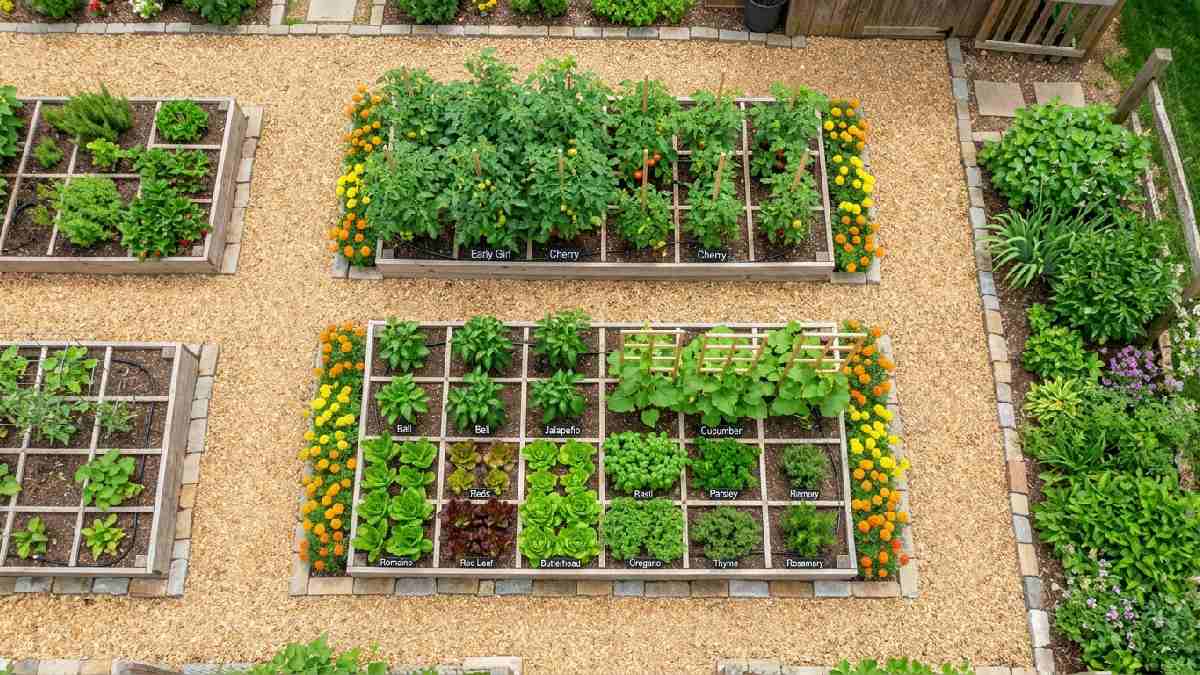
Raised bed gardens are one of the most popular backyard vegetable garden layout ideas today. They give you full control over soil quality and drainage. Raised beds warm up faster in spring.
They keep weeds out more effectively than in-ground gardens. Beginners love them because they are easier to manage. You can build one raised bed and expand it each season. This layout works in almost any backyard size.
What Are Raised Beds and Why Use Them
Raised beds are framed garden areas filled with quality soil and compost. They are usually made from wood, metal, or bricks. They work well on poor soil, rocky ground, or hard surfaces. Soil in raised beds drains better and warms up earlier in the season.
You never walk on the soil, so it stays loose and healthy. Raised beds reduce back strain because you work at a higher level. They are the top choice for beginners starting a vegetable garden.
Best Raised Bed Shapes and Sizes
The most popular raised bed size is 4 feet by 8 feet. This size gives you 32 square feet of growing space. You can reach every plant from the sides without stepping inside. Rectangular beds are easiest to build and manage.
Square beds should stay under four feet wide on each side. Keyhole designs allow full access from all sides. Keep pathways between beds at least two to three feet wide.
Pathways and Spacing Between Beds
Pathways are essential in any raised bed garden layout. Leave at least two to three feet between each bed. This space allows you to walk, kneel, and move a wheelbarrow. Fill pathways with gravel, wood chips, or landscaping fabric.
Wide pathways prevent soil compaction and protect plant roots. They also make harvesting and maintenance much more comfortable. Never skip pathway planning when designing your raised bed layout.
Traditional Row Garden Layout for Large Backyards
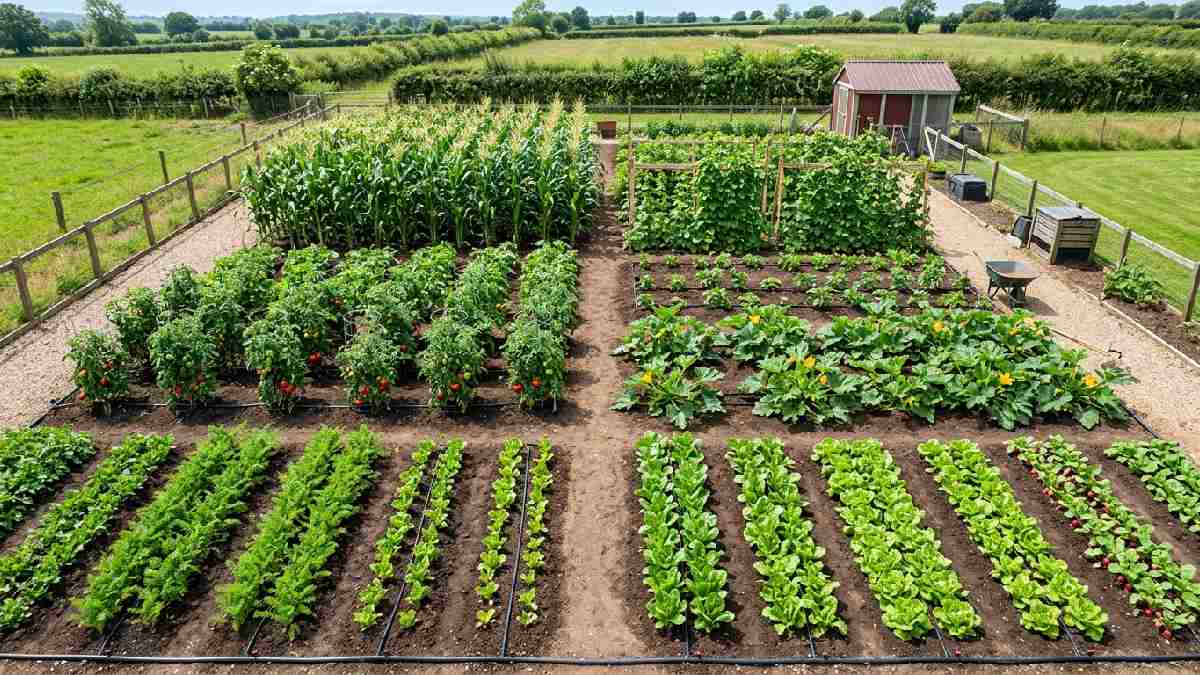
The traditional row garden is a classic backyard vegetable garden layout for large spaces. You plant vegetables in long, parallel rows with paths between them. This layout is simple, flexible, and easy to expand.
It works best when you have a moderate to large open area. Row gardens allow easy crop rotation each season. They give you room to grow larger vegetables like corn and squash. This is the most straightforward layout for big backyards.
North–South Row Direction Benefits
Always orient your garden rows in a north-to-south direction. This orientation gives all plants equal sun exposure throughout the day. East-west rows cause taller plants to shade shorter ones. North-south rows allow sunlight to reach every plant on both sides.
This simple choice improves yields across your entire garden. Most experienced gardeners follow this rule without exception. Mark your garden’s compass direction before laying out any rows.
Tall and Short Plant Placement Strategy
Place your tallest plants on the north end of each row. Corn, sunflowers, and pole beans grow very tall. They can block the sun from smaller plants if placed incorrectly. Short plants like lettuce, carrots, and radishes go on the south end.
Medium-height plants like peppers and bush beans go in the middle. This arrangement ensures every plant receives maximum sunlight. Plan plant placement by height before you start digging rows.
Irrigation and Watering Flow
Row gardens work best with a consistent watering system. Soaker hoses run perfectly along each row and save water. Drip irrigation delivers water directly to plant roots. Water in the early morning to reduce evaporation.
Group plants by similar water needs in the same rows. Deep, infrequent watering is always better than shallow daily watering. Good irrigation planning keeps your row garden healthy all season.
Square Foot Garden Layout for Small Spaces
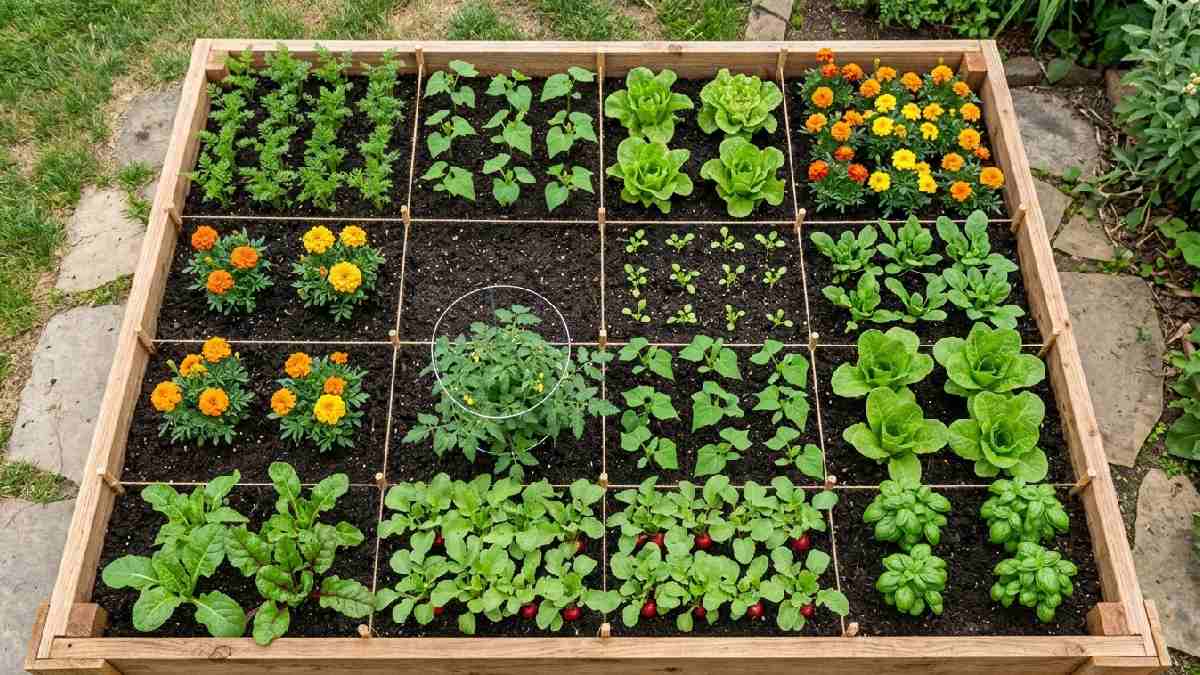
The square foot gardening method is perfect for tight backyard spaces. You divide your garden bed into one-foot square sections. Each section holds a different vegetable based on its size.
This system was developed by Mel Bartholomew and is very beginner-friendly. It eliminates guesswork about plant spacing. You grow more food in less space with this method. It is the most organized and efficient small garden layout available.
Grid System Explained (1×1 Ft Sections)
Build a 4×4 foot raised bed and mark it into 16 one-foot squares. Use string or wood strips to create the grid. Each square grows a different crop based on plant size. Large plants like peppers get one plant per square.
Medium plants like lettuce get four plants per square. Small plants like radishes get up to 16 per square. This grid system keeps everything organized and easy to manage.
Best Vegetables for Square Foot Gardening
Compact vegetables grow best in a square foot garden layout. Good choices include lettuce, spinach, radishes, beets, and carrots. Herbs like basil, parsley, and chives also fit perfectly. Bush beans and dwarf varieties of peppers work well too.
Avoid very large spreading plants like pumpkins or sprawling squash. Choose compact or dwarf seed varieties for best results. Always check the mature plant size before adding it to your grid.
High Yield in Limited Space
Square foot gardening produces remarkable results in very small areas. One 4×4 bed can feed a family of four with fresh salad greens. Plants grow close together, so weeds have no room to establish. Soil never gets compacted because you never step inside the bed.
You add compost regularly to keep nutrients high for dense planting. This method is proven to yield far more than traditional row gardening per square foot. It is the best layout when space is your biggest limitation.
Vertical Garden Layout Ideas for Compact Backyards
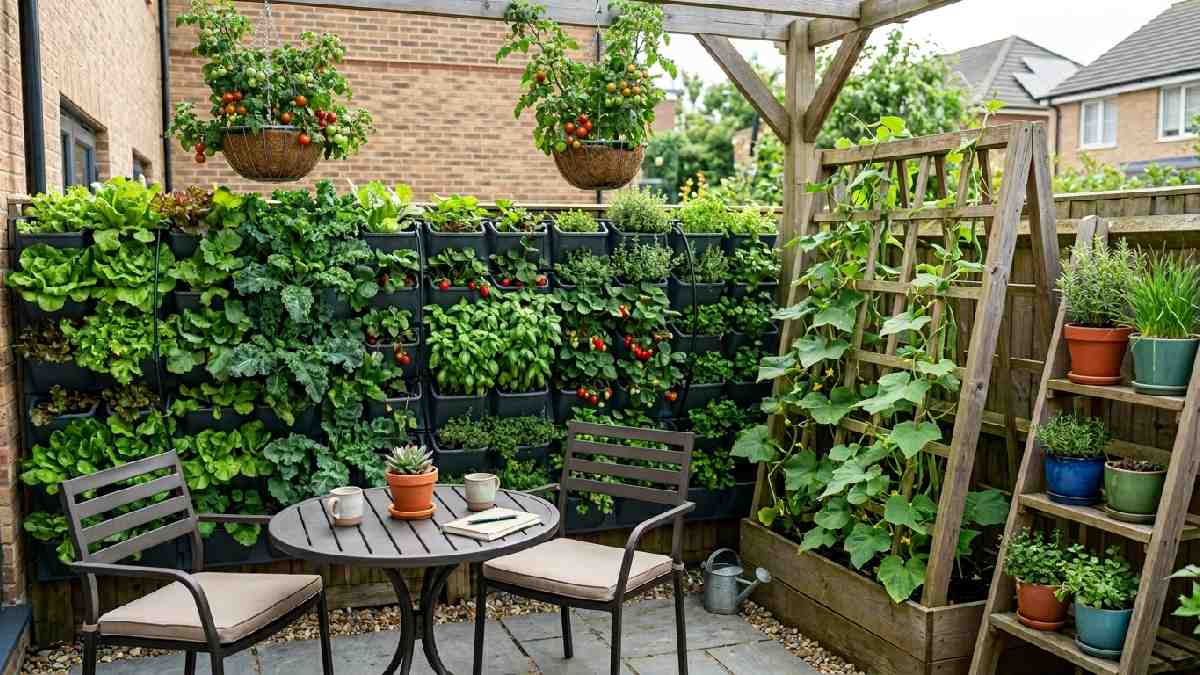
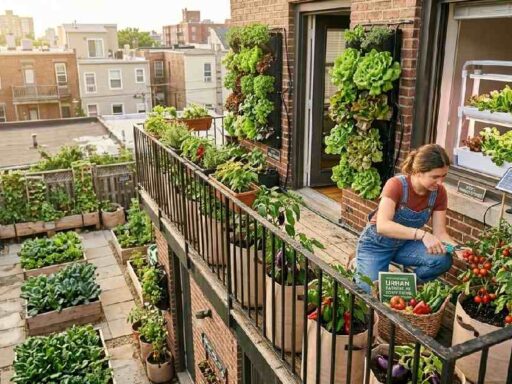
Vertical gardening is one of the smartest backyard vegetable garden layout ideas for small spaces. Instead of spreading out, you grow plants upward. This frees up ground space for other crops. Vertical gardens also improve airflow and reduce disease risk.
Fruit stays clean and straight when grown off the ground. This method works on fences, walls, trellises, and arches. Any compact backyard can double its growing capacity with vertical gardening.
Using Fences, Trellises, and Walls
Your existing fence is a free vertical growing structure. Attach wire mesh or a wooden trellis to any fence panel. Climbing plants will use it as natural support. Wall-mounted trellises work in very tight spaces.
Wood and wire trellises are durable and easy to build. String trellises are a cheap and effective option for raised beds. Always ensure your vertical structure is firmly anchored before planting.
Best Climbing Vegetables
Many popular vegetables grow naturally upward with support. Pole beans, cucumbers, and peas are natural climbers. They easily grab onto trellises with their own tendrils. Tomatoes, especially indeterminate varieties, grow tall with support.
Squash and gourds can climb cattle fencing or arched structures. Vining plants like melons also grow well on sturdy trellises. These crops grow cleaner, healthier, and easier to harvest when grown vertically.
Space-Saving Benefits
Vertical gardening increases your total growing area without expanding your footprint. Plants grown upward free up ground space for low-growing crops underneath. Airflow improves dramatically when plants grow vertically.
Better airflow means fewer fungal diseases and healthier plants. Harvesting becomes easier because fruits hang at eye level. Vertical gardens also look attractive and add structure to your backyard. This layout is the ultimate solution for maximizing small garden spaces.
Companion Planting Layout Strategy
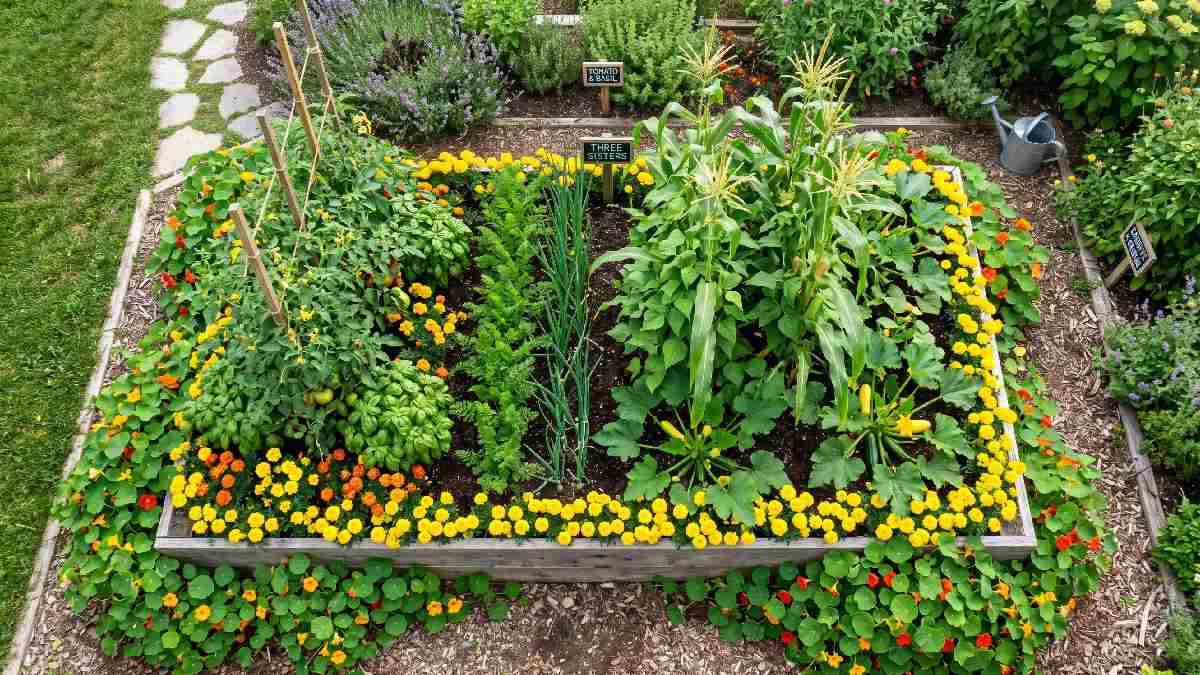
Companion planting is a powerful strategy for any backyard vegetable garden layout. You grow different plants side by side so they help each other. Some plants repel pests naturally. Others improve soil or attract helpful pollinators.
This method reduces the need for chemical sprays. It creates a healthier and more productive garden ecosystem. Companion planting has been used by gardeners for centuries worldwide.
What Is Companion Planting
Companion planting means growing plants together for mutual benefit. Some combinations are one-sided, like flowers attracting pollinators near vegetables. Others benefit both plants equally. The classic Three Sisters method is the most famous example.
Corn supports climbing beans, beans enrich the soil with nitrogen, and squash shades the ground to suppress weeds. This ancient technique works with nature instead of against it. Every garden benefits from thoughtful companion plant combinations.
Best Plant Combinations
Tomatoes grow best alongside basil and French marigolds. Basil repels aphids and whiteflies from tomato plants. Marigolds deter harmful nematodes in the soil around roots. Carrots and onions protect each other from their specific pests.
Cucumbers grow well next to dill and nasturtiums. Corn, beans, and squash together form the productive Three Sisters trio. Peppers pair well with basil, carrots, and spinach for good results.
Pest Control and Soil Benefits
Companion planting provides natural pest control without chemicals. Strong-smelling herbs like basil and rosemary repel aphids and moths. Marigolds planted around the garden perimeter deter a wide range of insects. Legumes like beans and peas fix nitrogen directly into the soil.
This free nitrogen feeds neighboring plants and improves overall yields. Leafy ground covers suppress weeds and retain soil moisture effectively. Companion planting builds a healthier, more self-sustaining garden over time.
Common Mistakes in Backyard Garden Layouts
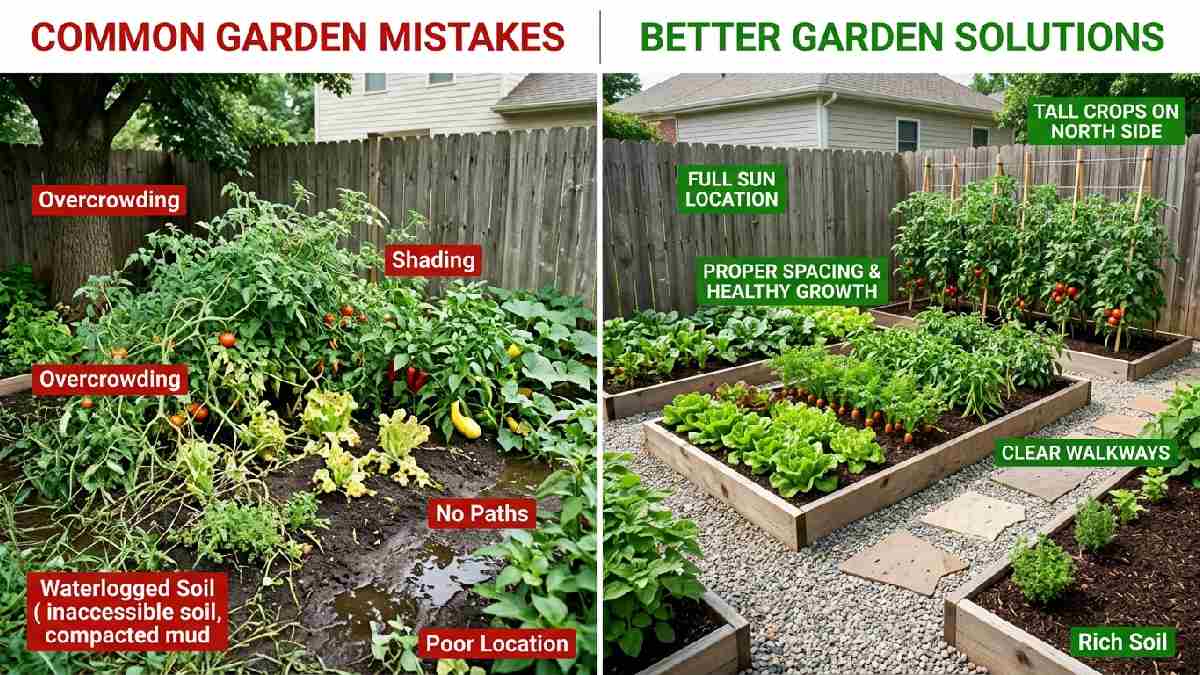
Even experienced gardeners make layout mistakes that hurt their harvest. Poor planning leads to wasted space, stressed plants, and low yields. Most mistakes happen before the first seed goes in the ground. Understanding what to avoid saves you time and frustration later.
A little planning prevents the most common backyard garden problems. Study these mistakes carefully before you finalize your garden layout. Avoiding them gives your garden the best chance of success.
Overcrowding Plants
Overcrowding is the most common beginner vegetable garden mistake. Plants placed too close together compete for sunlight, water, and nutrients. Leaves block each other, reducing photosynthesis and overall growth. Poor airflow in crowded beds promotes fungal disease and pests.
One healthy, well-spaced plant always outproduces three crowded ones. Always follow seed packet spacing recommendations without skipping. Resist the urge to squeeze one extra plant into a full bed.
Ignoring Sunlight Direction
Placing your garden in the wrong spot kills yields before you start. Most vegetables need six to eight hours of direct sunlight daily. A shady location produces weak, unproductive plants no matter what else you do. Tall plants placed on the south side will shade everything else.
Observe how sunlight moves across your yard at different times. Place tall crops on the north end and short crops on the south. Sun planning is the single most important layout decision you will make.
No Walking Paths
Forgetting pathways is a serious garden layout mistake. Without clear paths, you step on soil and compact it around roots. Compacted soil restricts root growth and blocks water absorption. It also makes harvesting and weeding difficult and uncomfortable.
Plan all pathways before building or planting anything in your garden. Paths should be at least 18 to 24 inches wide at minimum. Wide enough for a wheelbarrow is always the better option.
Which Backyard Vegetable Garden Layout Is Best for You
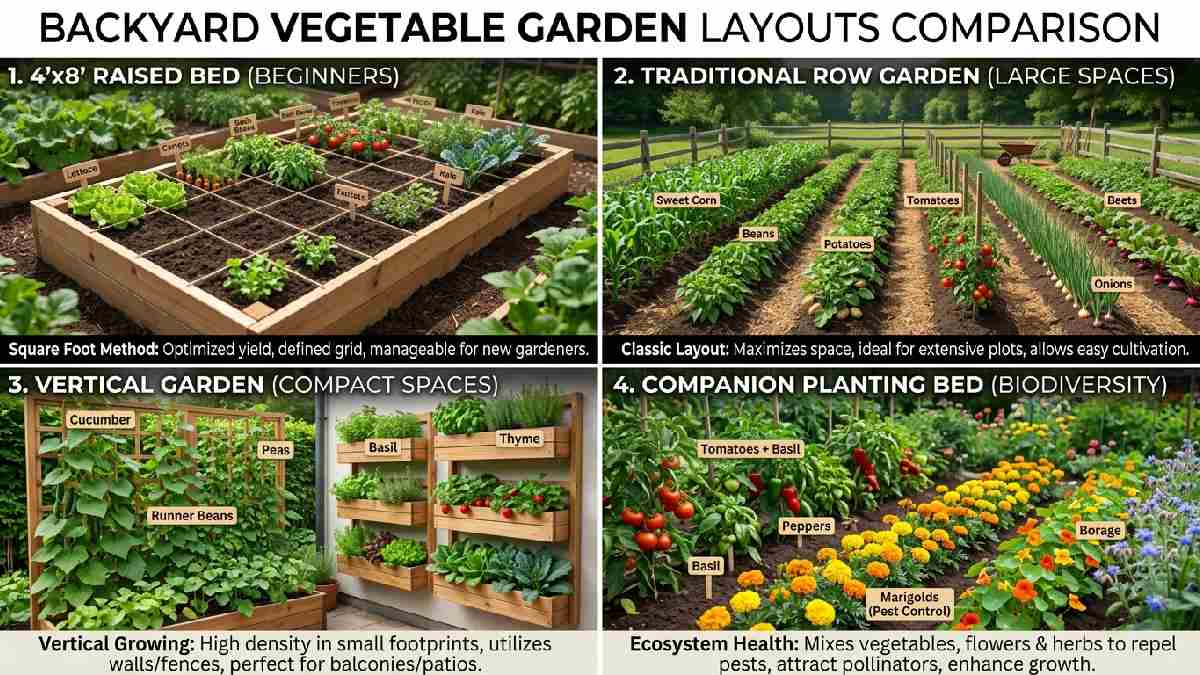
Choosing the right backyard vegetable garden layout depends on your space and skill level. There is no single perfect layout for every gardener. Your yard size, available time, and goals all matter. The best layout is one you can manage consistently throughout the season.
Start simple and add complexity as your confidence grows. Every experienced gardener started with a small, manageable space. The right layout makes gardening enjoyable instead of overwhelming.
Small Yard vs Large Yard Comparison
Small yards benefit most from raised beds, square foot grids, or vertical layouts. These methods maximize production in limited space. Large yards give you more options, including traditional row gardening. Row gardens allow you to grow large-volume crops like corn and potatoes.
Both small and large gardens benefit from companion planting strategies. Match your layout to your actual available space first. Trying to force a large-yard layout into a small space always fails.
Best layout for beginners
Beginners should always start with a single 4×8 raised bed. This size is manageable and teaches you the basics quickly. The square foot method inside a raised bed is ideal for first-time growers. It eliminates spacing guesswork and keeps everything organized visually.
Stick to easy-growing vegetables like lettuce, radishes, herbs, and tomatoes first. Avoid spreading into multiple beds until you master one successfully. A small, well-managed garden is always better than a large neglected one.
How to Start Simple and Expand Later
Start with one small garden bed and grow confidently from there. Learn what works in your specific yard, soil, and climate conditions. Add one new bed each growing season as your skills improve. Keep notes on what grew well and what struggled each year.
Rotate crops each season to maintain healthy, productive soil long-term. Expand your layout gradually, adding new techniques like vertical or companion planting. Slow, consistent growth builds the best long-term backyard vegetable garden.
FAQs
What Is the Best Layout for a Backyard Vegetable Garden?
Raised beds with square foot gardening work best for most backyard gardeners. They are organized, efficient, and easy to manage for all skill levels.
How Do I Arrange Vegetables in My Garden?
Place tall plants on the north side and short plants on the south. Group vegetables by sunlight and water needs for best results.
What Direction Should Garden Rows Face?
Always orient garden rows north to south. This gives all plants equal sun exposure and prevents taller plants from shading shorter ones.
Are Raised Beds Better Than Ground Gardens?
Raised beds offer better drainage, warmer soil, and fewer weeds. They are easier to manage and work especially well on poor or compacted soil.
What Is the Easiest Layout for Beginners?
A single 4x8 raised bed using the square foot method is easiest. It is organized, manageable, and helps beginners avoid common spacing mistakes.
Conclusion
A smart backyard vegetable garden layout is the foundation of every productive garden. Whether you choose raised beds, square foot grids, vertical structures, or traditional rows, planning always pays off. Match your layout to your space, time, and experience level. Start small and grow with confidence each season.
Use companion planting to boost yields and fight pests naturally. Avoid common mistakes like overcrowding, shade problems, and missing pathways. The right backyard vegetable garden layout ideas turn any backyard into a productive and rewarding growing space.