
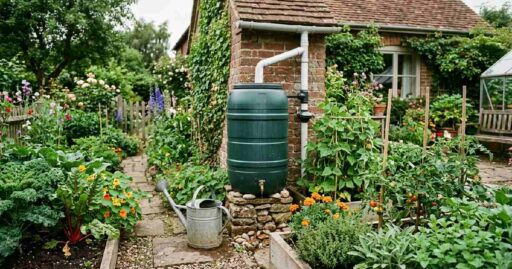
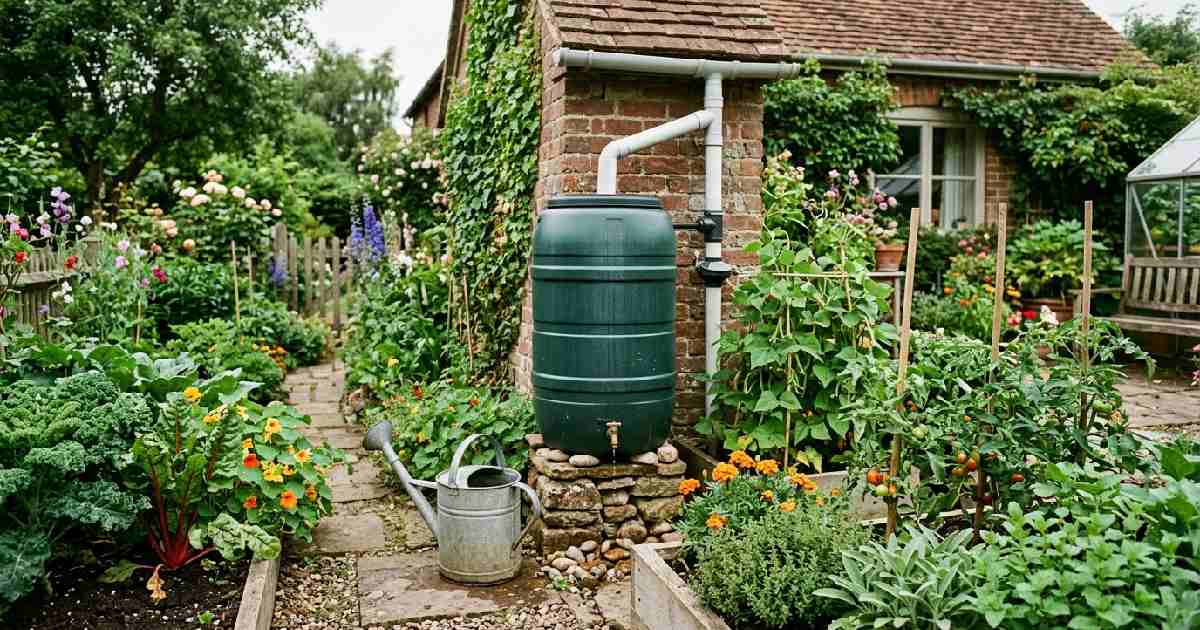

Rainwater Harvesting for Garden Home
Water is becoming scarce every day. Every home garden needs a steady water supply. Rainwater harvesting for a garden home is the smartest solution available today. It helps you collect free water from rain. You use this stored water to grow healthy plants. It saves money on utility bills.
It also protects the environment from water waste. More homeowners are choosing rainwater harvesting for garden homes every single year. This complete guide covers everything you need. You will learn the setup, benefits, types, and maintenance of rainwater harvesting for a garden home.
What Is Rainwater Harvesting?
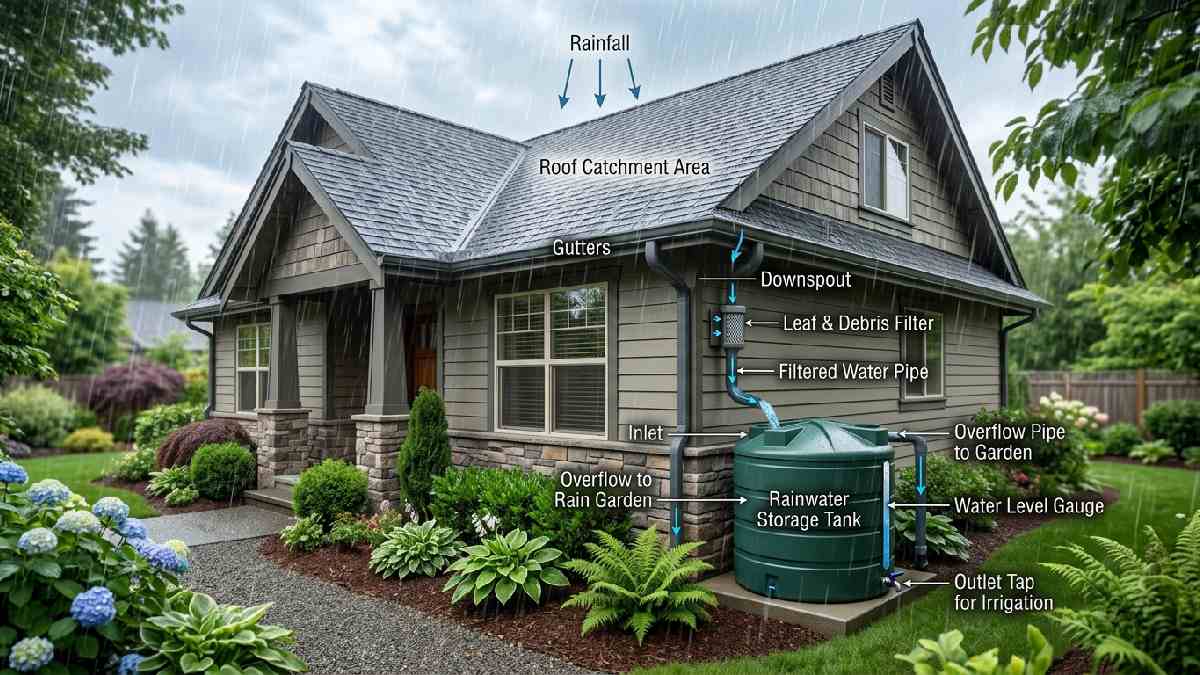
Rainwater harvesting means collecting and storing rainwater from rooftops or other surfaces. You store it in tanks or barrels for later use. Rainwater harvesting for garden home is one of the most practical uses of this method. Homeowners use collected water to irrigate plants and lawns easily.
It reduces dependency on expensive tap water every month. The system is simple, affordable, and beginner-friendly. Anyone can start rainwater harvesting for garden home with basic tools and a small budget. It is a proven water conservation method used by millions of people around the world today.
How Rainwater Harvesting Works
Rainwater falls on your rooftop during rain. Gutters catch this water quickly. Downspouts carry it down into a storage tank. A filter removes dirt, leaves, and debris. Then you use this clean stored water for your garden. Rainwater harvesting for garden home works with this simple and natural flow.
No complex machines are required at all. Basic pipes and containers are enough to get started. The process is efficient and very easy to manage for any homeowner wanting rainwater harvesting for garden home.
Why Home Gardeners Use Rainwater
Home gardeners prefer rainwater harvesting for garden home for many good reasons. Rainwater is naturally soft and completely chemical-free. It does not contain chlorine like regular tap water does. Plants grow much better with natural rainwater than tap water. It also costs nothing once your system is installed and running.
Gardeners save money every single season with this method. During dry months, stored rainwater becomes extremely helpful for plant survival. Rainwater harvesting for garden home gives your garden a reliable and free water source all year.
Benefits of Rainwater Harvesting for Home Gardens
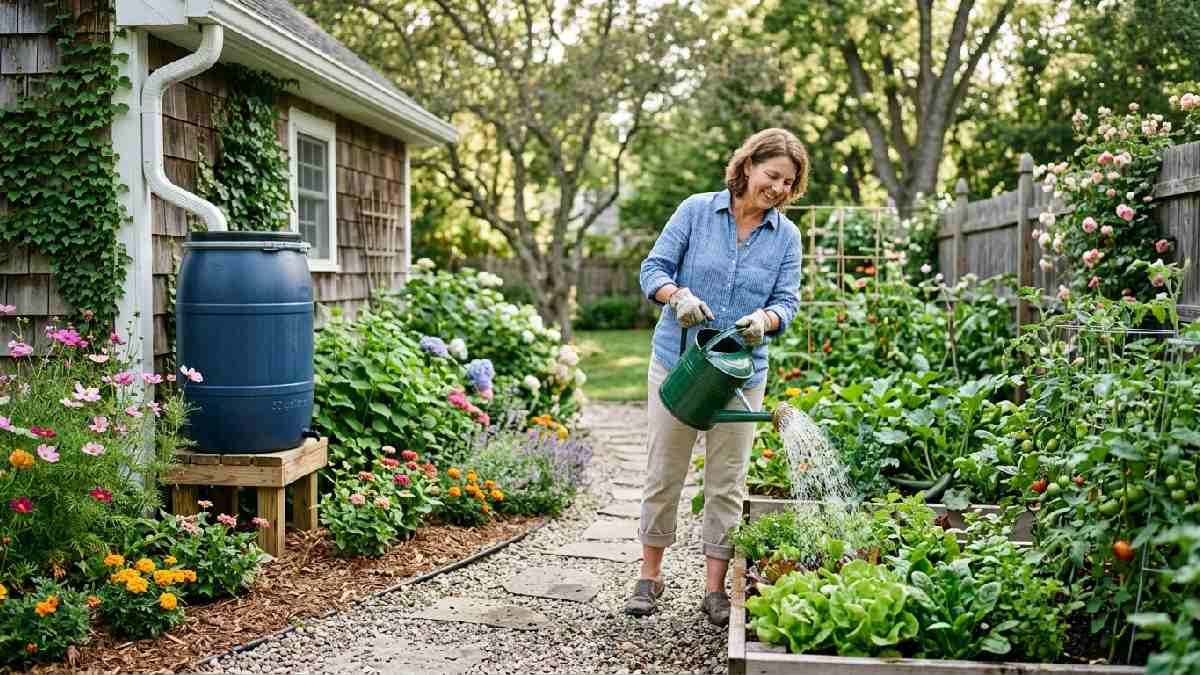
Rainwater harvesting for garden home offers many great advantages to homeowners. It helps families save money while protecting the natural environment. It also improves plant health significantly compared to tap water use. Gardens become stronger, greener, and more productive with regular rainwater use.
These powerful benefits make rainwater harvesting for a garden home a wise long-term investment for every household. Millions of gardeners worldwide have already adopted this method successfully. Starting your own rainwater harvesting for garden home system is one of the best decisions you can make for your garden today.
Reduces Water Bills
Rainwater harvesting for garden home cuts your water bills significantly every month. You use free rainwater instead of costly tap water daily. This directly reduces your monthly utility expenses fast. Over time, the savings add up to hundreds of dollars yearly.
Many families recover their setup cost within one or two seasons easily. The system pays for itself very quickly after installation. Rainwater harvesting for a garden home is a budget-friendly and practical choice for every homeowner who regularly waters their garden throughout the year.
Provides Chemical-Free Water for Plants
Regular tap water contains chlorine and harmful chemicals. These substances damage plant health over long periods of time. Rainwater is naturally pure and has a neutral pH level. Plant roots absorb it more easily than hard tap water. Rainwater harvesting for a garden home gives your plants the cleanest possible water.
Flowers bloom better and look more vibrant with it. Vegetables grow healthier and produce more with rainwater irrigation. This is one of the strongest reasons gardeners choose rainwater harvesting for their garden home over tap water.
Supports Sustainable Gardening
Rainwater harvesting for garden home is a deeply eco-friendly gardening practice. It reduces pressure on local municipal water systems naturally. It lowers harmful stormwater runoff in your neighborhood. This protects nearby rivers, streams, and soil from damage. You use a natural resource in the smartest possible way.
Sustainable gardening always starts with smart and responsible water use. Rainwater harvesting for a garden home helps you grow a truly green garden in every sense. It benefits your plants and the entire planet at the same time.
Reduces Water Waste
Rainwater that lands on your roof usually goes straight to waste. It flows into storm drains and is lost forever. Rainwater harvesting for the garden home completely stops this unnecessary waste. You capture and store every drop of this valuable water. Then you use it exactly where it matters most in your garden.
Nothing gets wasted with a proper system in place. Less water goes into storm drains every rainy season. Rainwater harvesting for garden home turns wasted rooftop water into a genuinely useful and free garden resource.
Helps During Dry Seasons
Dry seasons are very tough for home gardens everywhere. Tap water becomes expensive and sometimes restricted during droughts. Rainwater harvesting for garden home solves this serious problem effectively. You can store large amounts of water during rainy months easily.
Then you use that stored supply throughout dry and hot months. Your garden stays green and healthy all year long. You never depend completely on unpredictable rain or a costly water supply. Rainwater harvesting for garden home gives your garden real water security in every season.
Different Types of Rainwater Harvesting Systems
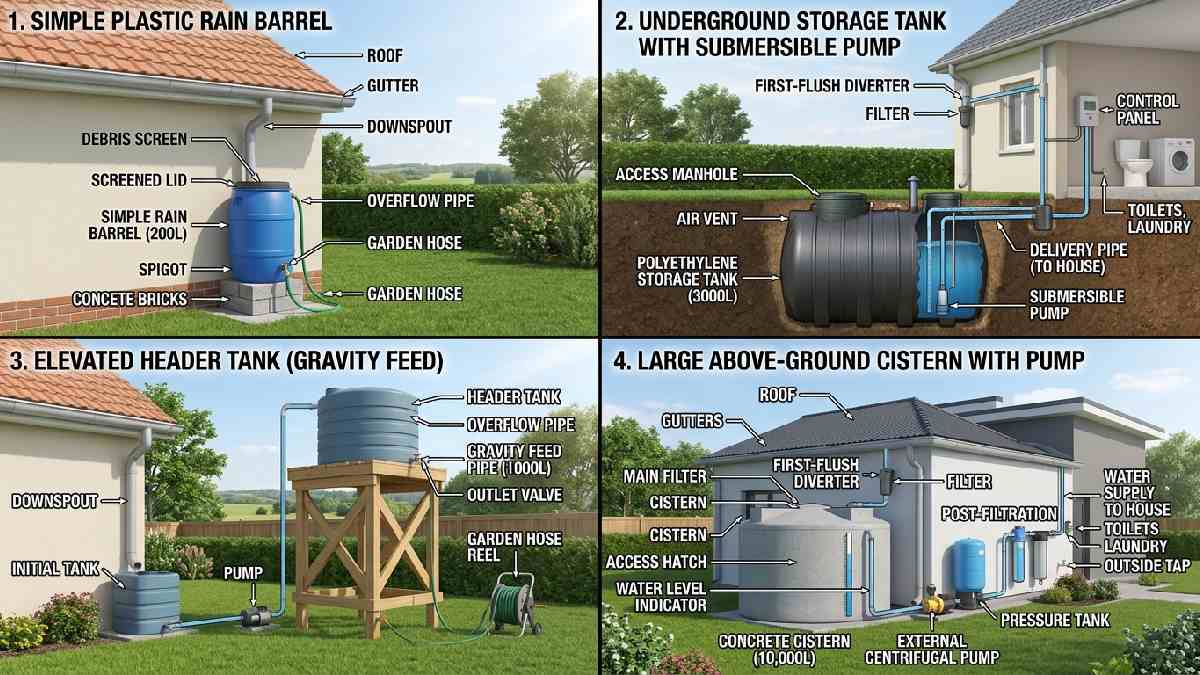
There are several types of rainwater harvesting for garden home systems available. Each type works differently and suits different home setups. The right system depends on your garden size, budget, and space. Knowing all your options helps you choose the best possible rainwater harvesting for garden home setup.
Some systems are simple and cheap to install yourself. Others require professional help but store much more water long-term. Understanding the differences helps every homeowner make the smartest decision for their rainwater harvesting for a garden home project today.
Rain Barrel Systems
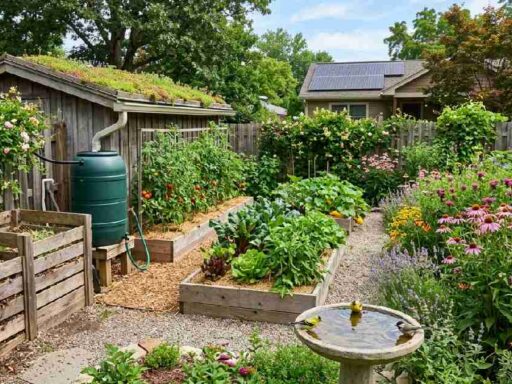
A rain barrel is the simplest rainwater harvesting for garden home system available. You can connect a barrel directly to your roof downspout easily. It collects water flowing off the roof during every rainfall. A tap at the bottom releases water to your garden hose.
This type of rainwater harvesting for a garden home is very affordable for beginners. It suits small gardens and limited budgets perfectly. Setup takes only a few hours with basic tools. This is the most popular starting point for rainwater harvesting for garden home beginners worldwide.
Above-Ground Storage Tanks
Above-ground tanks store much more water than simple rain barrels. They come in many different sizes and materials to choose from. You place them close to your downspout for easy connection. Water flows into the tank through a basic filter system. A pump or gravity tap releases water to your garden easily.
Rainwater harvesting for a garden home with above-ground tanks suits medium and large gardens well. They are very easy to inspect, maintain, and clean regularly. They are a practical and popular upgrade from basic rain barrel systems.
Underground Storage Systems
Underground tanks are installed below the ground surface completely. They save valuable garden and yard space efficiently. They keep the water cooler and cleaner for longer periods. They hold very large amounts of water for big properties. A pump brings water up to your garden irrigation system.
Rainwater harvesting for a garden home with underground tanks suits large properties and serious gardeners. They require more professional installation work upfront. But they are extremely efficient and long-lasting once properly installed. This system is ideal for serious large-scale rainwater harvesting for garden home projects.
Rain Gardens
A rain garden is a specially designed planted area in your yard. It collects rainwater runoff from roofs and hard surfaces naturally. Water soaks slowly and deeply into the soil over time. Native plants in the garden absorb this water over several days. Rain gardens also reduce flooding and filter water naturally through soil.
Rainwater harvesting for a garden home through rain gardens is both beautiful and highly functional. Native plants work best and need very little extra care. A rain garden is a passive and attractive rainwater harvesting method for a garden home.
How to Set Up a Rainwater Harvesting System for Your Garden
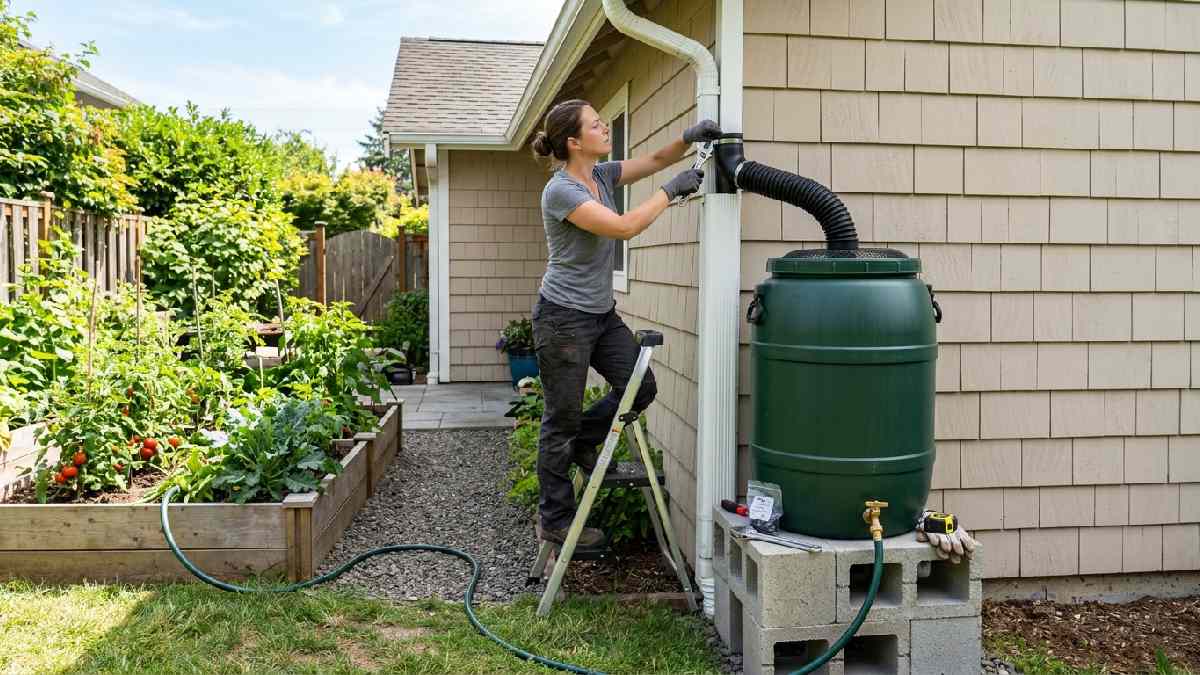
Setting up rainwater harvesting for a garden home is simple for most homeowners. Follow these clear steps carefully for the best results. A properly installed system works efficiently for many years with minimal effort. Each step is important for a clean, safe, and effective rainwater harvesting for garden home setup.
Take your time with each step. Do not skip any part of the installation process. A well-built system gives you reliable free water for your entire garden every single rain season without any major problems.
Choose a Collection Area
Your rooftop is the best and most common collection area. Most roof types work well for rainwater harvesting for garden home systems. Metal roofs collect the cleanest water of all materials. Asphalt shingles are also commonly used and work fine. Choose a roof surface that receives maximum rainfall during storms.
Avoid areas directly under heavy tree branches with lots of debris. The larger the roof collection area, the more water you gather. Selecting the right collection surface dramatically improves your rainwater harvesting for garden home results.
Install Gutters and Downspouts
Gutters catch all the water flowing from your roof surface. Downspouts carry collected water down into your storage tank. Install gutters properly and securely for rainwater harvesting for a successful garden home. Make sure all gutters have no gaps, holes, or leaks anywhere.
Clean them at least twice each year to remove debris. Position downspouts to direct water flow directly into your storage tank. Use leaf guards on gutters to keep large debris out easily. Good gutters are the essential foundation of any rainwater harvesting system for a garden home.
Add a Filtration System
Filters are essential for keeping stored water clean and safe for plants. A basic mesh screen filter removes leaves, insects, and large debris. For rainwater harvesting for a garden home, a first-flush diverter is very useful. It removes the first dirty water that flows after rain starts falling.
This keeps your entire storage tank much cleaner throughout the season. Cleaner stored water always means healthier and stronger plants in your garden. Always include proper filtration in your rainwater harvesting for a garden home system to avoid serious contamination problems.
Select the Right Storage Container
Choose your storage container based on your actual garden water needs. Small gardens need containers holding 50 to 100 gallons of water. Larger gardens require tanks holding 250 gallons or much more. Always use food-grade or UV-resistant containers for safe water storage.
Keep all containers fully covered to prevent algae and mosquito growth. Dark-colored tanks block sunlight and prevent algae formation effectively. Rainwater harvesting for a garden home works best when you choose the correctly sized and right-quality storage container from the very beginning.
Connect to Your Garden Irrigation
Connect your storage tank to a garden hose or drip irrigation system. A simple bottom tap works perfectly for small rainwater harvesting for garden home setups. For larger systems, install a small submersible or pressure pump. Connect pump output to drip irrigation lines for efficient and targeted watering.
Raise your tank slightly higher for better natural gravity water pressure. This allows water to flow through hoses without needing any electricity. A well-connected system makes rainwater harvesting for a garden home fully efficient, automatic, and very easy to manage daily.
How Much Rainwater Can You Collect?
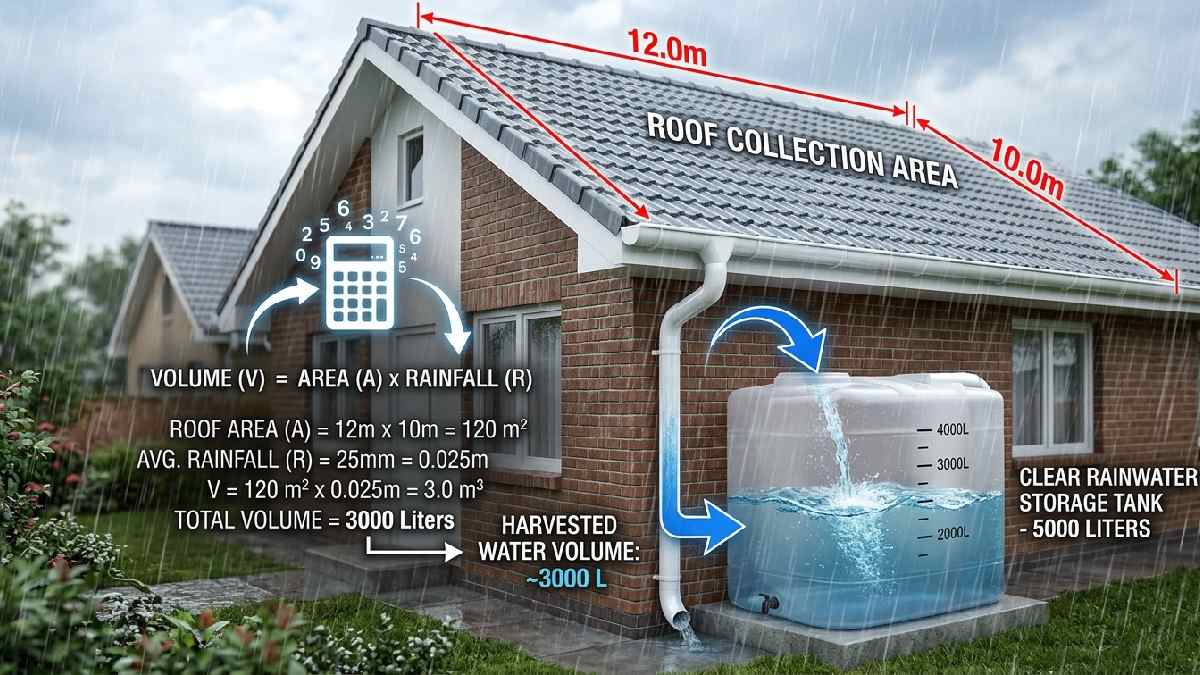
You can collect a surprisingly large amount of water through rainwater harvesting for a garden home. The total amount depends on your roof size and local annual rainfall amounts. Knowing your collection potential helps you plan the right storage size.
It also helps you decide how much of your garden you can water using only harvested rainwater. Calculating this early prevents buying a tank that is too small. Proper planning makes your rainwater harvesting for a garden home system far more efficient and useful from the very first rainfall of the season.
Factors That Affect Collection
Several important factors affect how much water you collect each season. Your roof size is the most important factor of all. A larger roof surface collects significantly more water per rainfall. Local annual rainfall amounts also directly determine your total collection.
Filtration efficiency and overflow system design affect usable water volume. The roof material also plays a role in water cleanliness and flow. All of these factors together determine your total yearly rainwater harvesting for garden home water output and storage capacity.
Simple Rainwater Collection Formula
Use this simple formula for planning your rainwater harvesting for a garden home system accurately. One inch of rain falling on one square foot of roof produces about 0.623 gallons. A 1,000-square-foot roof collects over 600 gallons from just one inch of rain.
This adds up to thousands of gallons every rainy season easily. First, calculate your total roof area in square feet. Then check your local average annual rainfall data online. Multiply both numbers to estimate your full rainwater harvesting for garden home collection potential each year.
Best Ways to Use Harvested Rainwater in the Garden
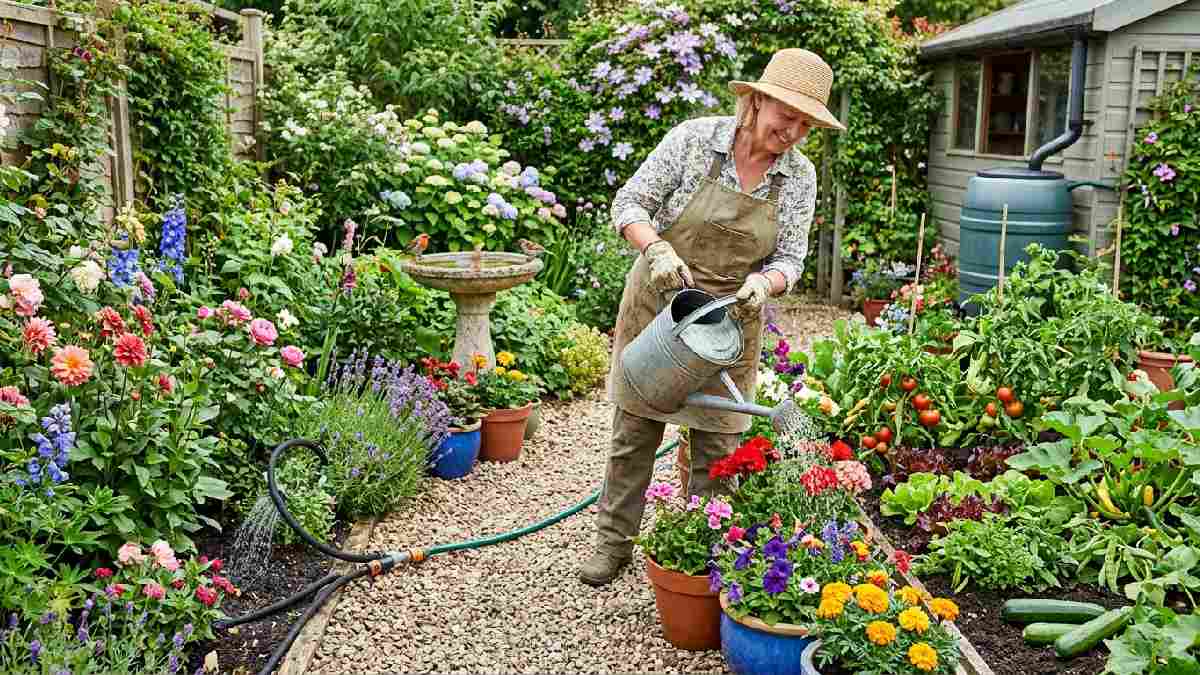
Rainwater harvesting for a garden home gives you free, clean water for many different garden uses. Using it smartly makes your entire garden thrive all season long. Proper use of harvested rainwater also reduces waste significantly. Here are the most effective and popular ways to use your rainwater harvesting for a garden home water supply every day.
Each method maximizes the benefit of every gallon you collect from your roof. Smart use of stored rainwater makes your whole garden more productive and beautiful throughout the entire growing season.
Watering Vegetable Gardens
Vegetables absolutely love natural rainwater for healthy growth. It is naturally soft and completely free of harmful chemicals. Use your rainwater harvesting for your garden home supply daily to water tomatoes, peppers, cucumbers, and herbs. Always water in the early morning for the best plant results.
Avoid overwatering to prevent root rot in vegetable beds. Drip irrigation works extremely well with your harvested water supply. Your vegetables will grow faster and taste noticeably better with consistent rainwater harvesting for garden home irrigation every single growing season.
Irrigating Flower Beds
Flower beds respond very well to rainwater harvesting for garden home water. Flowers grow healthier with natural rainwater than with hard chlorinated tap water. Chlorine in tap water stresses sensitive flower varieties significantly over time. Rainwater has a neutral pH that most flowers genuinely love and need.
Use a watering can or a connected garden hose to water your flower beds. Water in the early morning or evening for the best absorption results. Your flowers will bloom longer and look far more vibrant with regular rainwater harvesting for garden home irrigation.
Maintaining Container Plants
Container plants dry out much faster than ground-planted garden beds. They require more frequent and careful watering throughout the growing season. Rainwater harvesting for a garden home is perfectly suited for container plant care. Use a small watering can to gently water all your pots and containers daily.
Natural rainwater never leaves harmful mineral deposits on container soil over time. This keeps all container soil healthy and well-balanced for plant growth. Plants in containers grow significantly better and live longer with consistent soft rainwater from your rainwater harvesting for your home garden.
Drip Irrigation Systems
Drip irrigation delivers water directly and slowly to plant root zones. It is the most water-efficient irrigation method available for home gardens. Connect your rainwater harvesting for garden home storage tank directly to a drip irrigation line. Water flows slowly and steadily to the roots throughout the day automatically.
Every single drop of your harvested water reaches plants without any waste. Drip irrigation paired with rainwater harvesting for a garden home is the most efficient combination possible. Set it on a simple timer, and your entire garden waters itself automatically every day.
Common Rainwater Harvesting Mistakes to Avoid
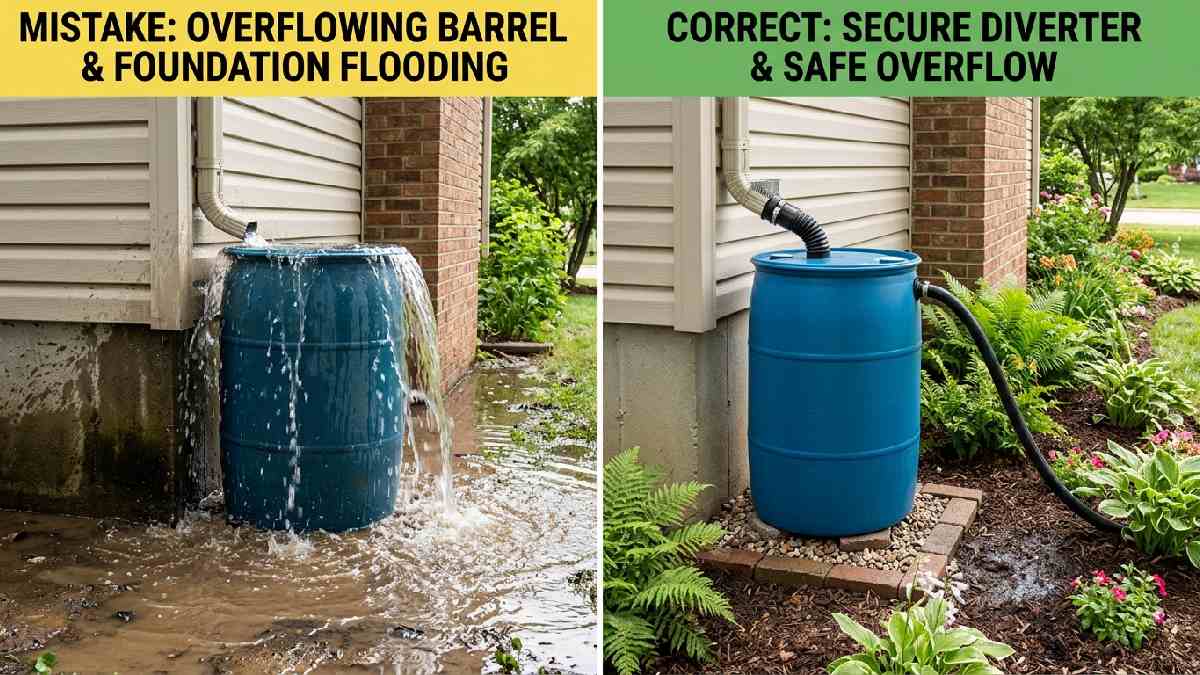
Many beginners make avoidable mistakes with rainwater harvesting for garden home setups. These errors reduce system efficiency and can create plant health problems. Avoiding these common mistakes saves you time, money, and frustration. Learning what not to do is just as important as learning proper setup steps.
Your rainwater harvesting for a garden home system will work much better when you avoid these pitfalls completely from the beginning. Read each mistake carefully and make sure your own system does not repeat these common and costly errors made by many new users.
Ignoring Filtration
Skipping filtration is the most common and damaging mistake in rainwater harvesting for a garden home. Without filters, leaves, insects, and dirt flow directly into your storage tank. This contaminates your stored water very quickly and completely. Dirty water can harm your plants and block your irrigation lines badly.
Always install at least a basic mesh screen filter in your system. Add a first-flush diverter for significantly better water quality results. Never skip or ignore filtration in your rainwater harvesting for a garden home setup under any circumstances at all.
Poor Tank Maintenance
Neglecting tank cleaning is a serious mistake for rainwater harvesting for homeowners. Algae grows quickly in unclean and poorly maintained storage tanks. Harmful bacteria can also develop in neglected tank water over time. Water quality drops significantly when tanks are not cleaned regularly.
Clean your rainwater harvesting tank for your garden home at least once or twice every year. Remove all settled sediment from the tank bottom completely. Scrub interior walls if algae growth is visible. A consistently clean tank ensures your stored water stays safe for all your plants.
Overflow Problems
An overflowing tank wastes all your carefully collected rainwater instantly. Overflow water can also cause serious flooding around your home’s foundation. Always plan and install a proper overflow outlet when setting up your system. Direct overflow water safely away from your home toward a garden or drain.
A connected rain garden works very well for handling excess overflow water. Always check your rainwater harvesting for garden home system before heavy rain season begins. Make sure all overflow pipes are completely clear and fully functional at all times.
Using Incorrect Storage Containers
Not all containers are safe or suitable for rainwater harvesting for garden home water storage. Some old containers leach harmful chemicals into stored water over time. Never use old chemical barrels or unmarked industrial containers for water storage. Avoid any containers that allow direct sunlight to enter the stored water.
Sunlight penetration causes rapid algae growth inside tanks very quickly. Always choose purpose-built, food-grade, or UV-resistant dark-colored sealed containers. Using the correct container protects your water quality and keeps your garden plants completely safe and healthy.
Maintenance Tips for Rainwater Harvesting Systems
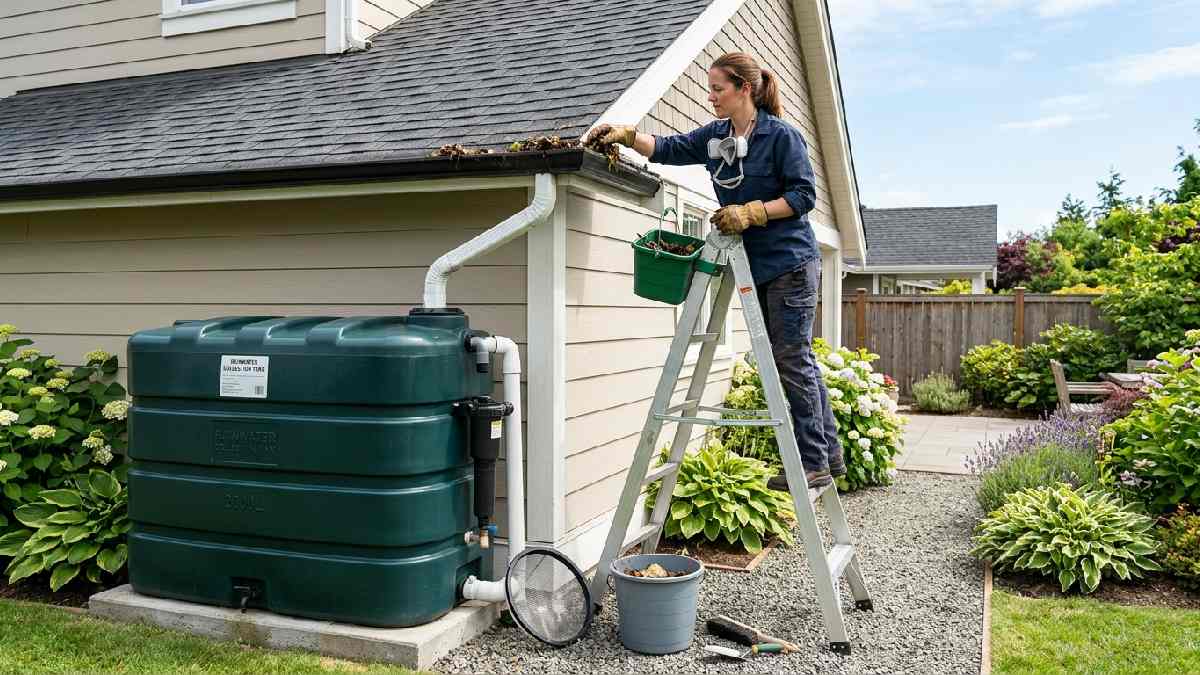
Regular maintenance keeps your rainwater harvesting for the garden home system performing at its very best. Simple tasks performed consistently prevent large and expensive problems later. A properly maintained system delivers clean and reliable water for many years. Maintenance does not take much time when done regularly and correctly.
These simple tips will keep your rainwater harvesting for the garden home system healthy all year. Follow them consistently every season for the best long-term results. Skipping maintenance always leads to bigger problems and higher repair costs down the road for any rainwater harvesting system for a garden homeowner.
Cleaning Gutters Regularly
Clean your gutters at least two times every year without fail. Leaves, twigs, and debris block water flow through gutters badly. Blocked gutters overflow and waste all the rainwater you could have collected. Regular cleaning dramatically improves water collection for rainwater harvesting in a garden home.
Wear gloves and use a small scoop to remove all debris carefully. Rinse gutters thoroughly with a garden hose after every cleaning session. Install quality leaf guards to reduce how often cleaning is needed. Gutter cleaning is the single most important regular maintenance task for rainwater harvesting for a garden home.
Inspecting Storage Tanks
Inspect your storage tank thoroughly every few months throughout the year. Look carefully for any cracks, chips, or slow leaks around the tank body. Check all pipe fittings and hose connections for signs of damage or leaks. Make sure the tank lid fits tightly and seals completely at all times.
Check all filters for blockages and clogs that reduce water flow. Look at your stored watercolor regularly throughout the season. Clear water confirms that your rainwater harvesting for the garden home system is working correctly and efficiently. Cloudy or discolored water means immediate cleaning is necessary.
Preventing Mosquito Breeding
Mosquitoes breed very quickly in standing water inside uncovered tanks. Your rainwater harvesting for garden home storage tank can become a mosquito breeding site. Always keep your tank covered with a tight and well-fitted lid. Seal every opening on the tank with very fine mesh screening material.
Check all seals and mesh covers regularly for any gaps or damage. Add safe mosquito dunks to tank water if breeding becomes a problem. A fully covered and properly sealed tank keeps your rainwater harvesting for garden home water clean and completely free of mosquitoes always.
Seasonal Maintenance Checklist
Before the rainy season, clean all gutters and inspect every filter in the system. Check tank walls and all connections for any cracks or leaks carefully. During the rainy season, monitor overflow outlets and check for any new leaks. After the rainy season, clean your tank completely and remove all settled sediment.
In freezing climates, drain your tank fully before winter frost arrives. In the dry season, use all stored water wisely and efficiently for maximum garden benefit. This full seasonal checklist keeps your rainwater harvesting for the garden home system working all year round perfectly.
Is Rainwater Harvesting Worth It for Home Gardens?
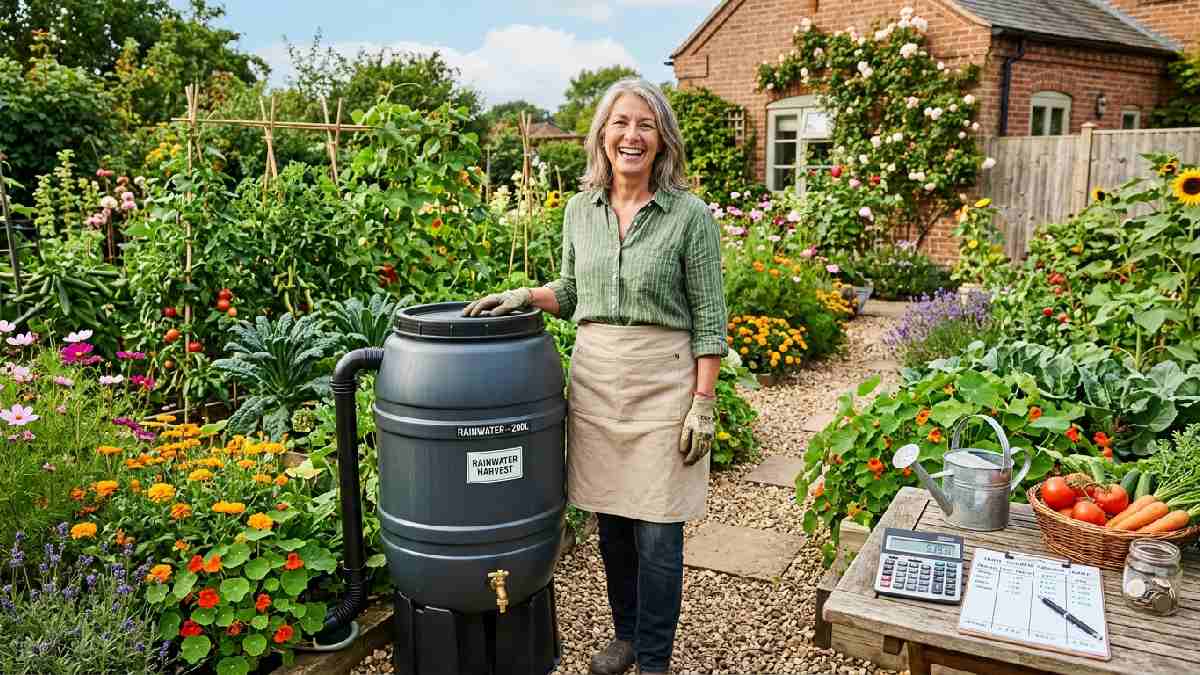
Many homeowners ask this important question before investing in a system. Rainwater harvesting for garden home is genuinely worth it for the vast majority of gardeners. It provides real financial savings and significant environmental benefits together. But like any home improvement project, it has both advantages and disadvantages worth knowing.
Understanding both sides clearly helps you make the right decision confidently. Rainwater harvesting for garden home suits most homeowners who have a garden and want to save money. Consider your local climate, garden size, and budget carefully before deciding on the right system for you.
Pros
Rainwater harvesting for garden home saves significant money on monthly water bills. It provides completely chemical-free and natural water for all your plants. It is highly eco-friendly and greatly reduces your total environmental footprint. It reduces harmful stormwater runoff in your local neighborhood effectively.
It provides an emergency water supply during dry spells or water restrictions. Once installed properly, it is very easy and inexpensive to maintain. The initial investment pays back within one to two growing seasons easily. Rainwater harvesting for garden home makes your garden self-sufficient and truly sustainable in the long term.
Cons
Rainwater harvesting for garden home does have a few real disadvantages to consider. The startup and installation cost can be moderately high for some homeowners. Your total water supply depends completely on local and seasonal rainfall amounts. Large storage tanks require significant physical space in your yard or garden. Regular maintenance is genuinely required to keep the system working properly.
Some regions have legal restrictions on rainwater collection you must check first. Underground systems require professional installation, which increases the total project cost. But with good planning, most of these challenges are very manageable for rainwater harvesting for garden homeowners.
Frequently Asked Questions
Is rainwater better than tap water for plants?
Yes. Rainwater is completely chemical-free and has a naturally neutral pH. Plants absorb it far more easily than chlorinated municipal tap water.
How much rainwater can I collect from my roof?
One inch of rain on 1,000 square feet of roof collects approximately 600 gallons. Your total depends on local rainfall and your actual roof size.
What size rain barrel do I need?
A 50 to 100 gallon barrel works well for small gardens. Larger gardens need 250 gallons or more for effective rainwater harvesting for garden home.
Can harvested rainwater be used on vegetables?
Yes. Rainwater is completely safe and ideal for all vegetables. It is chlorine-free and promotes healthy, fast, and strong plant growth naturally.
How often should a rainwater tank be cleaned?
Clean your tank at least once or twice every year. Regular cleaning keeps your water safe and your rainwater harvesting for garden home system working well.
Conclusion
Rainwater harvesting for garden home is a smart and sustainable long-term choice. It saves real money every season. It helps your garden grow stronger and healthier. It protects the environment from water waste and runoff. Start small with a simple rain barrel system today. Then expand your rainwater harvesting for garden home system gradually as your needs grow.
Proper setup and regular maintenance make all the difference. Follow every tip shared in this complete guide carefully. Avoid all the common mistakes covered above. Your garden will reward you with healthy and vibrant growth all season long with rainwater harvesting for your garden home.