

Microgreen Nutrition Chart: 20 Varieties Compared
Microgreens are grown for about 7 to 14 days before harvest, yet in that short window they build up nutrient levels that can run several times higher than the same plant fully grown. A landmark 2012 study from the USDA Agricultural Research Service and the University of Maryland tested 25 varieties and found most of them carried anywhere from 4 to 40 times more vitamins and antioxidants than their mature counterparts, gram for gram.
That’s a wide range, and it depends entirely on which variety you’re eating and which nutrient you’re chasing. Red cabbage microgreens are a vitamin C standout. Green daikon radish leads in vitamin E. Garnet amaranth tops the list for vitamin K. Sunflower shoots deliver a rare plant-based complete protein.
This microgreen nutrition chart breaks all of that down in one place, explains what the numbers actually mean for your plate, and helps you pick the right varieties for your specific goals whether that’s more iron, more antioxidants, or simply the most nutrition per bite.
What Makes a Microgreen Nutrition Chart Different From a Regular Vegetable Chart
A microgreen is not a baby vegetable and it isn’t a sprout either it sits in its own category, and understanding why explains a lot about the numbers you’ll see on any microgreen nutrition chart.
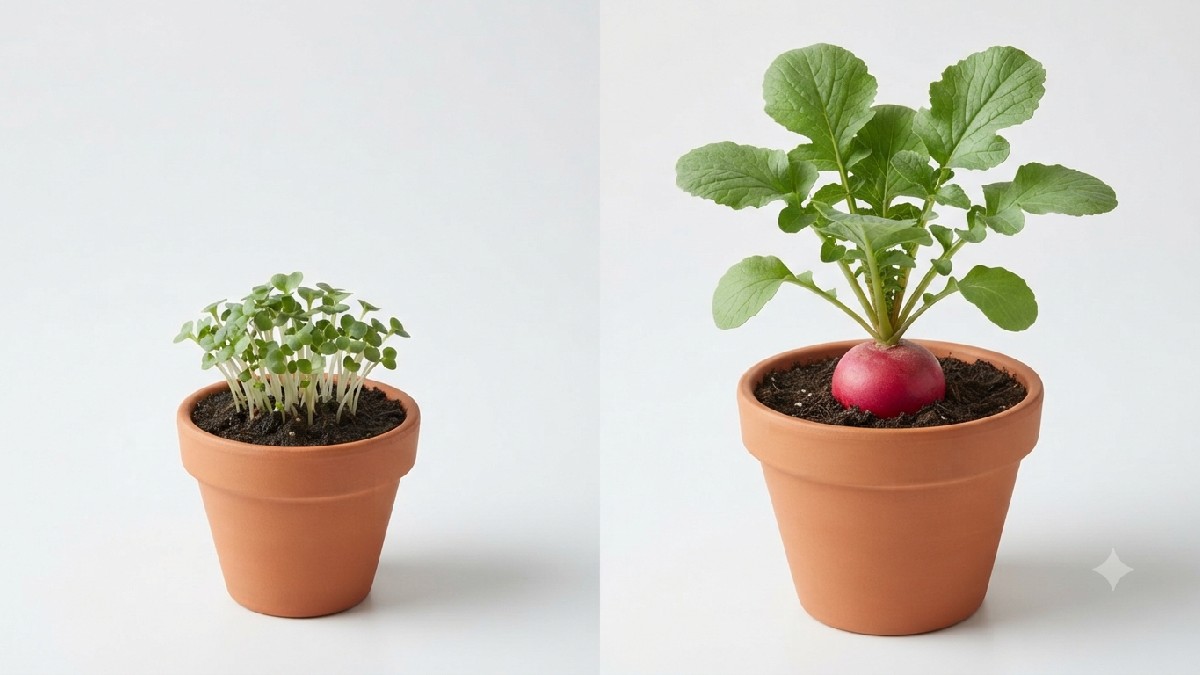
Sprouts are germinated seeds, usually grown in water and total darkness, and eaten root, seed, and shoot together within a few days. Because they never see light, they don’t photosynthesize, and their nutrient profile stays fairly close to that of the raw seed.
Microgreens are grown in soil or a soil-free growing medium, under light, for 7 to 14 days. That light exposure matters it’s what triggers photosynthesis and lets the plant start manufacturing chlorophyll, carotenoids, and other phytonutrients. You harvest just the stem and first leaves (the cotyledons), cutting above the soil line, which is why microgreens carry a much lower food-safety risk than sprouts.
Mature vegetables are the same plant grown for weeks or months. As a plant matures, its biomass increases faster than its nutrient production, which effectively dilutes nutrient concentration per gram even though the total nutrients in the whole, larger plant may still be higher.
That dilution effect is the whole story behind the “microgreens are more nutritious” headlines. A gram of red cabbage microgreens can carry roughly six times the vitamin C of a gram of mature red cabbage, not because the microgreen contains some magic ingredient, but because the nutrients haven’t yet been spread across a much bigger plant.
The 2012 USDA/University of Maryland study measured four nutrient groups across the 25 varieties: vitamin C (ascorbic acid), vitamin E (tocopherols), vitamin K1 (phylloquinone), and carotenoids (beta-carotene, lutein, zeaxanthin, and violaxanthin). It remains the most frequently cited dataset behind almost every microgreen nutrition chart online, and most of the figures below trace back to it, along with more recent studies that have expanded the picture to minerals, protein, and specialty compounds like sulforaphane.
The Complete Microgreen Nutrition Chart
This microgreen nutrition chart compares 20 popular varieties across calories, standout nutrients, and their single best-known health benefit. Values are approximate per 1-ounce (28g) serving of fresh microgreens, and are based on published research rather than lab testing of any single batch actual nutrient content shifts with growing conditions, light exposure, seed genetics, and how many days after germination you harvest.
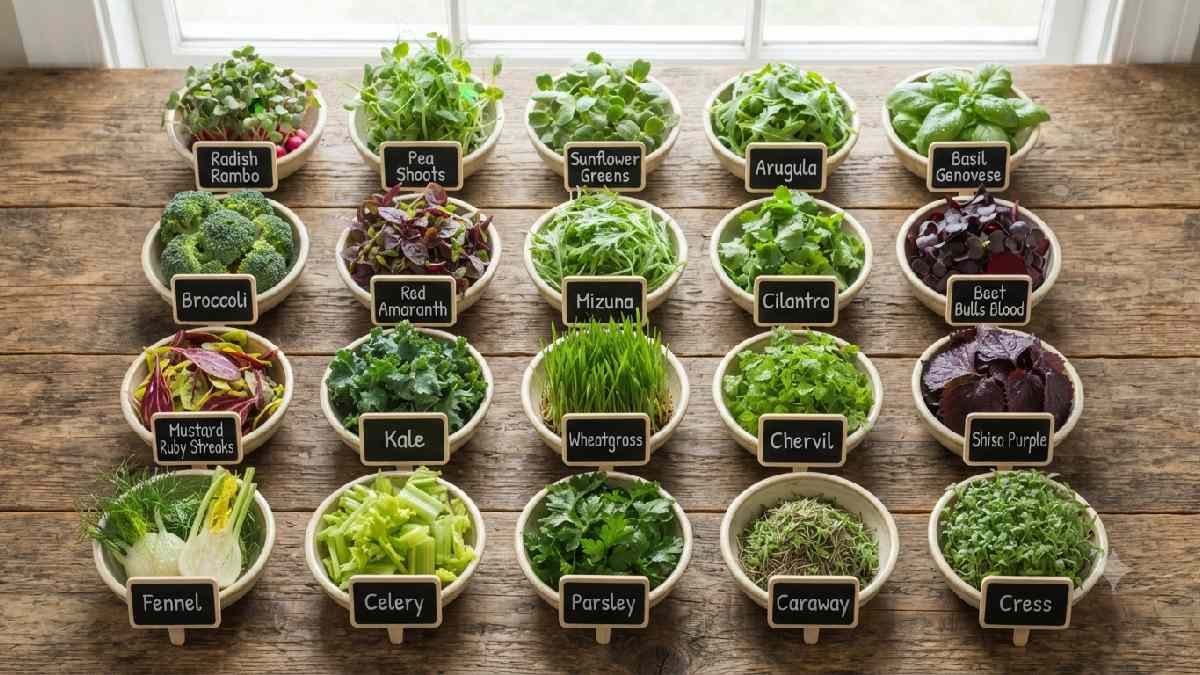
| Variety | Calories/oz | Standout Nutrients | Best-Known Benefit |
|---|---|---|---|
| Sunflower | ~45 | Vitamin E, zinc, selenium, complete protein | One of the few plant sources of complete protein |
| Buckwheat | ~25 | Rutin, magnesium, B vitamins | Supports cardiovascular health |
| Pea Shoots | ~35 | Vitamin C, folate, vitamin A | Roughly 7x the vitamin C of blueberries by weight |
| Amaranth | ~12 | Calcium, iron, vitamin K, magnesium | One of the most mineral-dense microgreens |
| Kale | ~12 | Vitamin K, vitamin C, calcium | Exceptional vitamin K for bone health |
| Beet | ~12 | Iron, potassium, betalains | Anti-inflammatory pigment compounds |
| Swiss Chard | ~10 | Vitamin K, vitamin A, iron | Strong combined vitamin K and iron source |
| Fenugreek | ~10 | Iron, fiber, diosgenin | Diosgenin studied for blood sugar support |
| Red Cabbage | ~9 | Vitamin C, vitamin E, anthocyanins | Highest vitamin C of any tested microgreen |
| Mustard | ~8 | Vitamin C, vitamin K, glucosinolates | Strong antioxidant and anti-inflammatory profile |
| Radish | ~8 | Vitamin C, vitamin E, magnesium | Highest vitamin E among tested varieties |
| Kohlrabi | ~8 | Vitamin C, vitamin K, sulforaphane | Brassica benefits with a milder flavor |
| Clover | ~8 | Vitamin C, vitamin K, isoflavones | Contains hormone-balancing isoflavones |
| Broccoli | ~10 | Sulforaphane, vitamin C, vitamin K | Highest known food source of sulforaphane |
| Cilantro | ~6 | Beta-carotene, lutein, zeaxanthin | Among the broadest carotenoid profiles tested |
| Basil | ~6 | Vitamin K, vitamin A, polyphenols | High polyphenol, anti-inflammatory content |
| Wheatgrass | ~7 | Chlorophyll, iron, vitamin C | Extremely high chlorophyll concentration |
| Arugula | ~7 | Vitamin K, folate, glucosinolates | Rich in cancer-research-linked glucosinolates |
| Mizuna | ~7 | Vitamin C, vitamin K, folate | Mild brassica with solid folate content |
| Watercress | ~4 | Vitamin K, vitamin C, PEITC | PEITC compound studied for cell protection |
Note: this microgreen nutrition chart is a reference guide, not a lab certificate of analysis. Treat the numbers as directional useful for comparing varieties against each other, not as a substitute for a nutrition label.
The 5 Most Nutritious Microgreens on This Chart
If you only have room to grow a handful of trays, these five varieties from our microgreen nutrition chart give you the broadest nutritional coverage based on the available research.
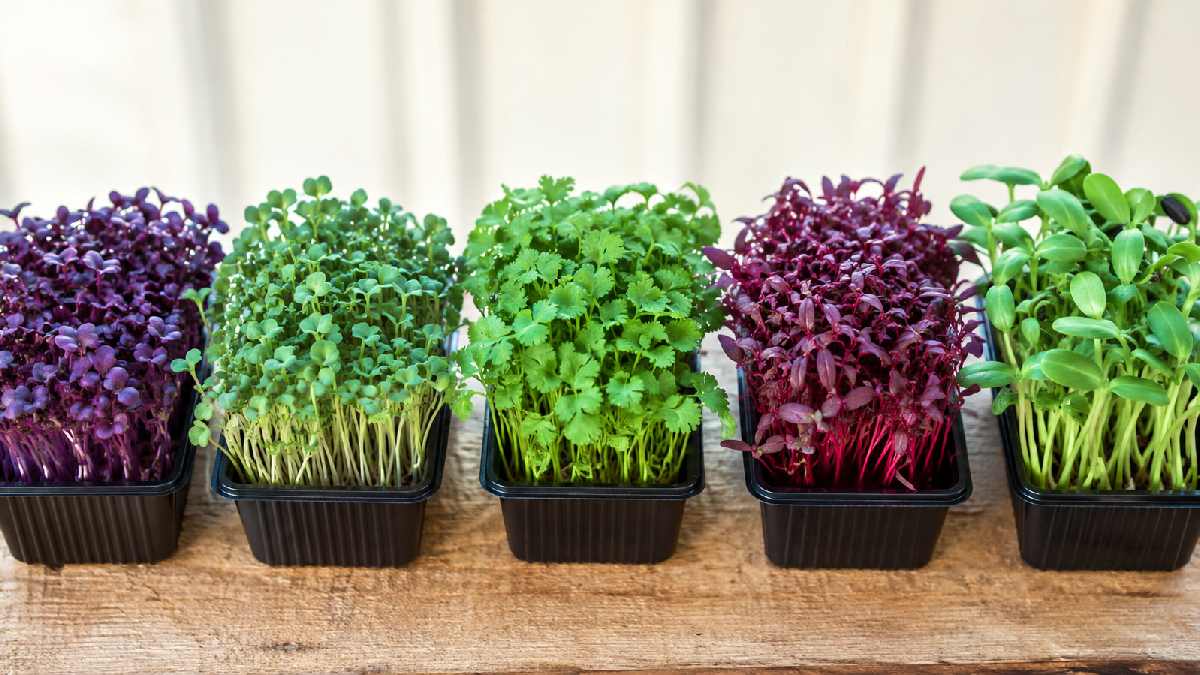
1. Red Cabbage
Red cabbage microgreens topped our microgreen nutrition chart and the 2012 USDA study for vitamin C, reaching close to 147 mg per 100g of fresh weight around six times what you’d get from the same weight of mature red cabbage, and comparable to or higher than an equivalent amount of orange.
They also carry meaningful vitamin E and vitamin K, plus anthocyanins, the purple-red pigments tied to antioxidant activity. If you wanted to grow just one variety for all-around nutrition, this is a defensible pick.
2. Broccoli
On this microgreen nutrition chart, broccoli microgreens are best known for sulforaphane, a sulfur compound generated when the plant’s cells are damaged (as happens during chewing).
Research out of Johns Hopkins has measured sulforaphane precursor levels in broccoli microgreens at 10 to 100 times higher than in the mature vegetable.
Sulforaphane is one of the more heavily studied plant compounds in cancer-prevention research, and broccoli microgreens deliver it alongside solid vitamin C, K, and A content all for around 10 calories an ounce.
3. Cilantro
Cilantro microgreens scored among the highest for carotenoid diversity on this microgreen nutrition chart and in the USDA study beta-carotene, lutein, zeaxanthin, and violaxanthin all showed up in meaningful amounts.
These compounds are associated with eye health and immune support. Cilantro also tested well for vitamin C and vitamin A, giving it one of the broadest nutrient spreads of any variety on this list.
4. Amaranth
Garnet amaranth microgreens led the pack for vitamin K1 on this microgreen nutrition chart and in the USDA data, and they’re also one of the more mineral-dense options overall, contributing calcium, iron, and magnesium.
Their deep red color is a visual cue for betalains, a class of pigments with antioxidant properties. If iron or vitamin K is your target, amaranth belongs on your tray list.
5. Sunflower
Sunflower microgreens round out our microgreen nutrition chart’s top five because they contain all nine essential amino acids a genuine complete protein, which is unusual for a plant-based food at this stage of growth. They’re also rich in vitamin E, zinc, and selenium.
At around 45 calories an ounce they’re the most calorie-dense microgreen on this list, but that comes with a satisfying crunch and more staying power than leafier varieties.
Best Microgreens by Nutrient or Health Goal
Rather than trying to eat “the most nutritious microgreen” overall, it’s usually more useful to use this microgreen nutrition chart to match a variety to whatever you’re actually trying to get more of.
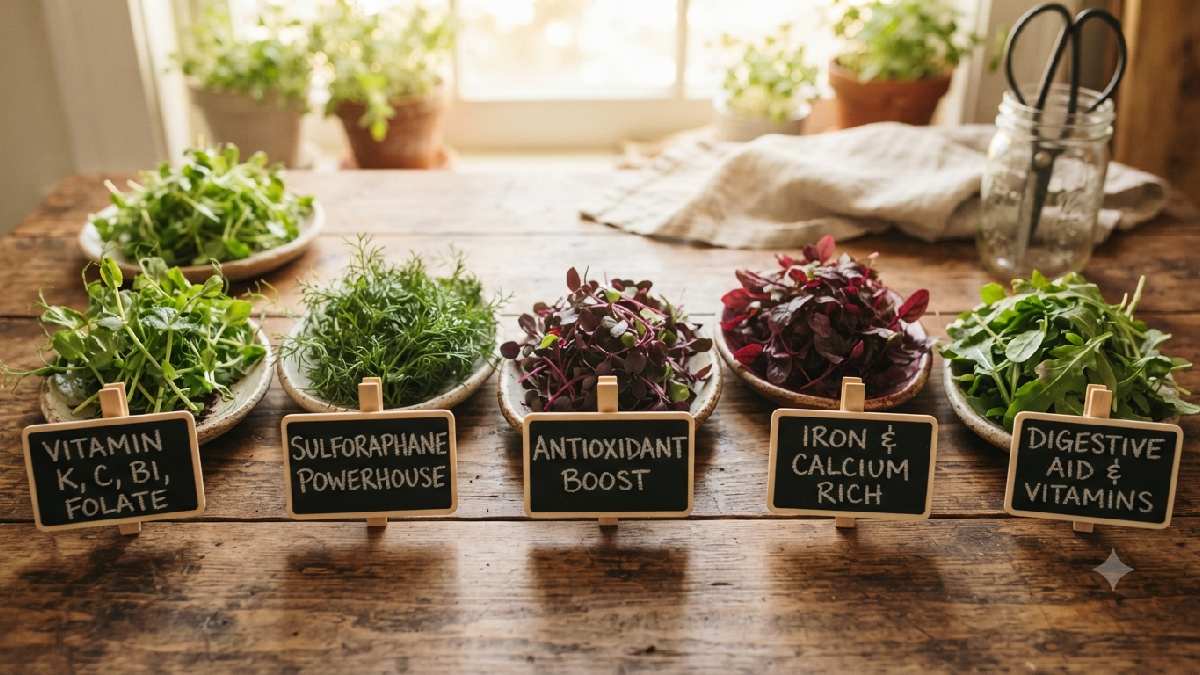
Highest in Vitamin C
Top picks: red cabbage, radish, pea shoots, mustard, kale
Red cabbage led all 25 varieties on this microgreen nutrition chart and in the original USDA testing, with ascorbic acid levels around 147 mg per 100g more than double what you’d find in an equivalent weight of fresh orange. Radish and pea shoot microgreens are close behind; pea shoots alone are estimated to carry about seven times the vitamin C of blueberries by weight.
Highest in Vitamin K
Top picks: amaranth, parsley, kale, basil, Swiss chard
Vitamin K plays a central role in blood clotting and bone metabolism. Garnet amaranth measured highest on this microgreen nutrition chart and in the USDA study, and kale and parsley aren’t far behind. A single small serving of any of these can supply well over your full daily vitamin K need.
Highest in Vitamin E
Top picks: green daikon radish, sunflower, red cabbage, Swiss chard
Green daikon radish microgreens recorded the highest tocopherol (vitamin E) levels on this microgreen nutrition chart and in the USDA testing reported at roughly 87 mg per 100g fresh weight, which is exceptionally high for a leafy green. Sunflower microgreens are the next-best source, and vitamin E’s role in skin and immune health makes both worth including regularly.
Highest in Iron
Top picks: amaranth, beet, fenugreek, Swiss chard, wheatgrass
Amaranth and beet microgreens are the standout non-heme iron sources on this microgreen nutrition chart. Since plant-based iron absorbs less efficiently than the iron in meat, pairing these with a vitamin C-rich variety red cabbage or radish, for example meaningfully improves how much of that iron your body actually absorbs.
Highest in Protein
Top picks: sunflower, pea shoots, fenugreek, buckwheat, clover
According to this microgreen nutrition chart, microgreens aren’t a primary protein source by total volume you’d need to eat an unreasonable amount to hit daily protein targets from microgreens alone. But per calorie, sunflower and pea shoots outperform most common vegetables, and sunflower’s complete amino acid profile is genuinely rare in a plant this size.
Highest in Antioxidants
Top picks: broccoli (sulforaphane), red cabbage (anthocyanins), cilantro (carotenoids), beet (betalains)
Antioxidants aren’t one single compound, so “highest in antioxidants” on a microgreen nutrition chart depends on which class you mean. Broccoli dominates for sulforaphane. Red cabbage leads in anthocyanins. Cilantro covers the widest range of carotenoids. Growing a rotation of all three gives you the broadest antioxidant coverage rather than betting on one variety.
Microgreens vs. Mature Vegetables: What the Research Actually Shows
The comparison every microgreen nutrition chart repeats most “microgreens have 4 to 40 times more nutrients than mature vegetables” comes directly from that 2012 study. Researchers compared nutrient concentrations in the 25 microgreen varieties against USDA National Nutrient Database values for the same plants at full maturity. In nearly every case, the microgreen stage won on a per-gram basis. A few of the more striking gaps:
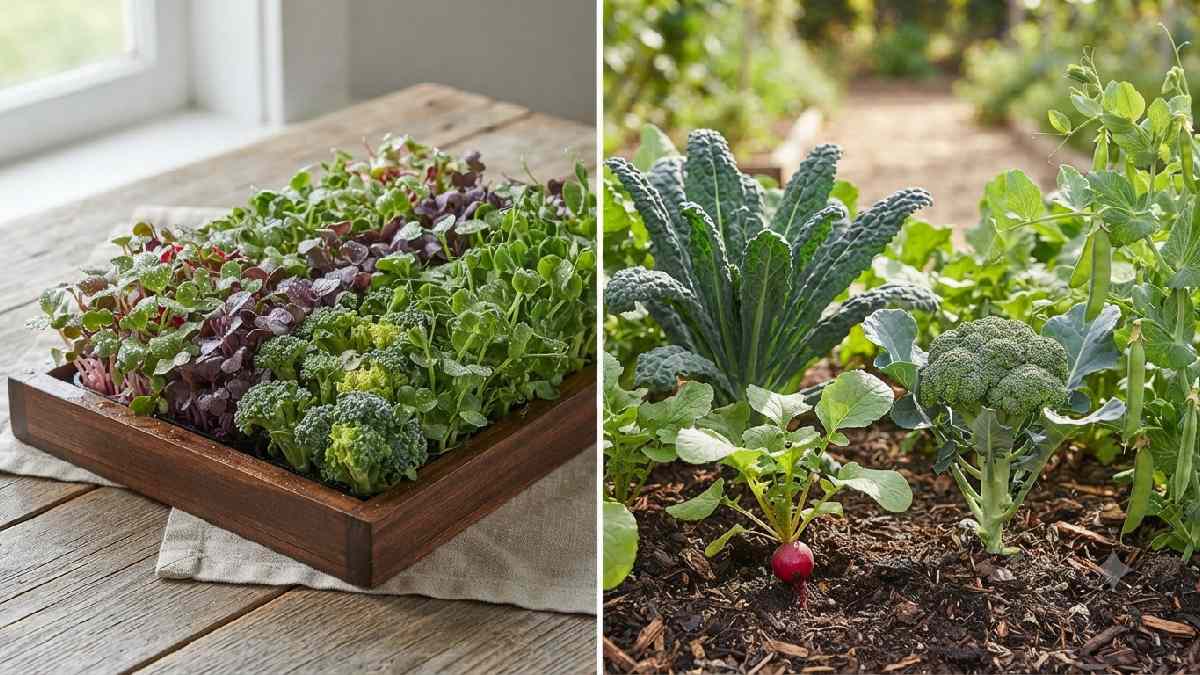
- Red cabbage microgreens carried about 6 times the vitamin C of mature red cabbage
- Cilantro microgreens carried roughly 3 times the beta-carotene of mature cilantro leaves
- Green daikon radish microgreens showed vitamin E levels far above anything found in the mature vegetable
- Averaged across all 25 varieties, microgreens ran about 5 times more nutrient-dense than their mature versions
There’s an important caveat that most articles skip over: this is a per-gram comparison, not a per-plant one. A full head of cabbage weighs vastly more than a tray of cabbage microgreens, so a normal serving of the mature vegetable still delivers more total nutrients in absolute terms you’re simply eating a lot more mass. What microgreens offer isn’t a replacement for vegetables; it’s a way to pack a disproportionate amount of nutrition into a small amount of food, which is especially useful as a topping or mix-in rather than a meal’s entire vegetable content.
To put the numbers on this microgreen nutrition chart into everyday terms: roughly an ounce of microgreens can deliver about as much calcium as a cup of milk, close to as much vitamin C as a whole orange, and more vitamin A than a large carrot all from a garnish-sized portion.
Do Microgreens Lose Nutrients After Harvest?
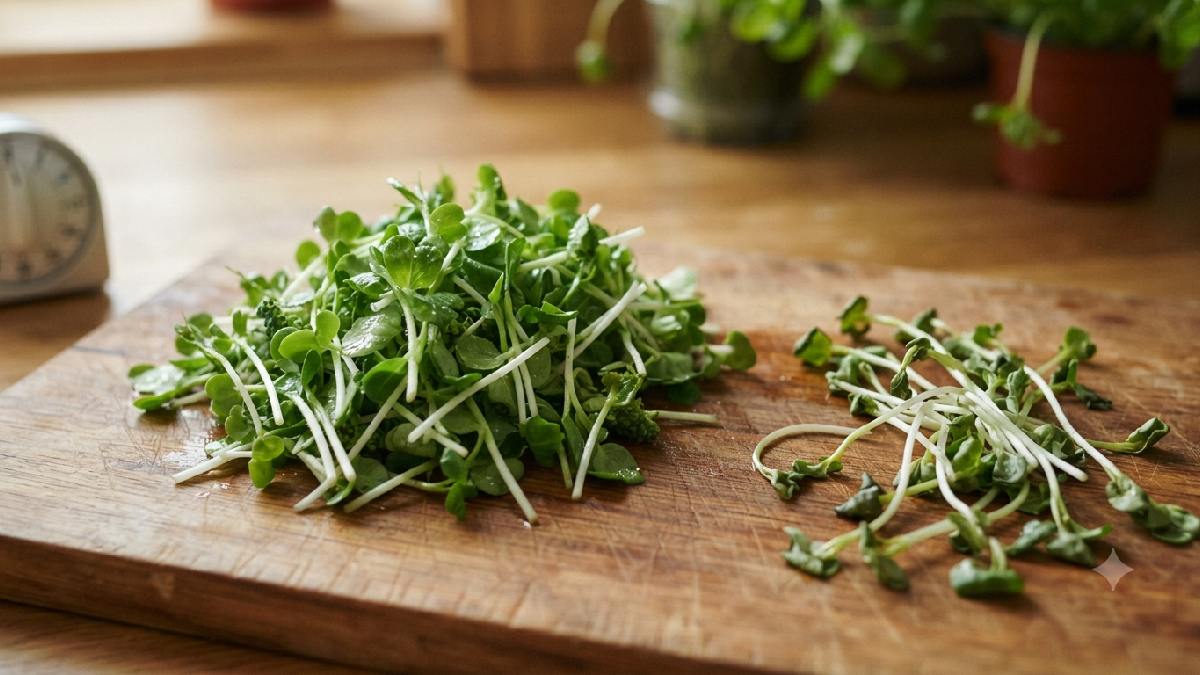
Yes, and this is one of the more overlooked parts of the nutrition story that any microgreen nutrition chart should mention. Microgreens are delicate, thin-walled, and metabolically active even after they’re cut, which means nutrient degradation starts almost immediately.
Vitamin C is especially fragile. Some studies on post-harvest storage have found that vitamin C content can drop by 30 to 50 percent within 7 to 10 days, even under refrigeration. Carotenoids and vitamin E degrade too, though usually more slowly.
A few factors speed up that decline:
- Temperature storage above roughly 40°F (4°C) accelerates nutrient breakdown. The colder end of your fridge is better than the door.
- Light exposure UV light degrades certain vitamins, so an opaque or semi-opaque container helps.
- Moisture excess dampness promotes both spoilage and bacterial growth. A dry paper towel in a loosely sealed container extends shelf life.
- Time since harvest this is the biggest factor by far. Store-bought microgreens may already be several days post-harvest by the time they reach your cart, so you’re not getting peak nutrition even if the package looks fresh.
This is the strongest practical argument for growing your own. A windowsill tray or a simple countertop setup can produce a fresh harvest in 7 to 14 days, and cutting what you need right before eating captures nutrient levels at their highest point something no store-bought package can fully replicate.
How to Use This Microgreen Nutrition Chart to Pick the Right Variety
Rather than trying to grow all 20 varieties, most people get better results using this microgreen nutrition chart to pick two or three based on an actual goal:
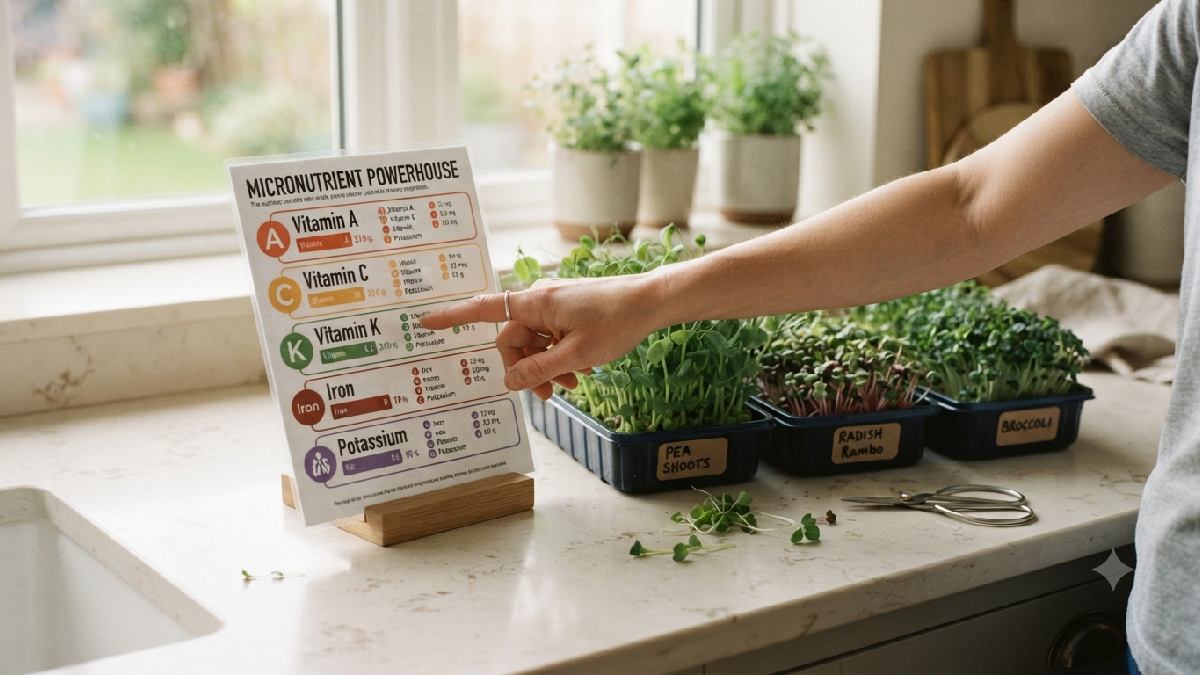
If you want more iron in your diet grow amaranth and beet microgreens, and eat them alongside a vitamin C-rich variety like red cabbage or radish to improve absorption.
If you’re focused on gut and digestive support broccoli and radish microgreens bring glucosinolates and sulforaphane, compounds tied to supporting healthy digestion and detoxification pathways.
If you want the most nutrient density for the least effort radish and arugula are fast growers (5–7 days), low in calories, and consistently rank near the top for vitamin C and vitamin E without requiring much space or time.
If you want something more filling sunflower and pea shoots have more substance, more calories, and genuine protein content, making them a better fit mixed into a full meal rather than used purely as a garnish.
If you want the broadest antioxidant spread rotate broccoli, red cabbage, and cilantro. Together they cover sulforaphane, anthocyanins, and a wide range of carotenoids rather than leaning on one compound.
Does Growing Method Affect the Numbers on a Microgreen Nutrition Chart?
Every figure on a microgreen nutrition chart should be read as a range, not a guarantee. The same variety grown two different ways can show meaningfully different nutrient levels, driven by a handful of variables:
- Light intensity and duration more light generally means more chlorophyll and carotenoid production, up to a point.
- Growing medium soil-grown microgreens sometimes test higher in minerals than those grown on hydroponic mats, though results vary by study.
- Seed quality and variety even within “red cabbage,” different cultivars can carry different baseline nutrient levels.
- Harvest timing cutting a day or two earlier or later changes the balance between leaf development and nutrient concentration.
None of this means a microgreen nutrition chart is unreliable it means treat the numbers as a comparison tool between varieties rather than an exact promise for every tray you grow.
To put that variability in perspective: two trays of the same broccoli seed, grown a week apart under slightly different light setups, could show a noticeable gap in vitamin C or sulforaphane content even though they look identical on the counter. Commercial growers who supply nutrition-focused buyers sometimes standardize light schedules and harvest windows specifically to keep this variability down, but for a home grower or a casual buyer, it’s simply not something you can control precisely tray to tray. This microgreen nutrition chart still holds as a reliable guide to which varieties tend to rank highest for which nutrients the exact numbers just shouldn’t be treated as fixed.
How Much Is a “Serving” on a Microgreen Nutrition Chart, Really?
Most of the figures on a microgreen nutrition chart are expressed per ounce (28g), which sounds small and is small compared to a typical vegetable serving. A cup of raw spinach, for comparison, weighs around an ounce as well, but a cup of loosely packed microgreens looks visually larger because the leaves are so light and airy. In practical terms, a small handful enough to lightly top a sandwich, a bowl of soup, or a plate of eggs usually lands close to that one-ounce reference point.
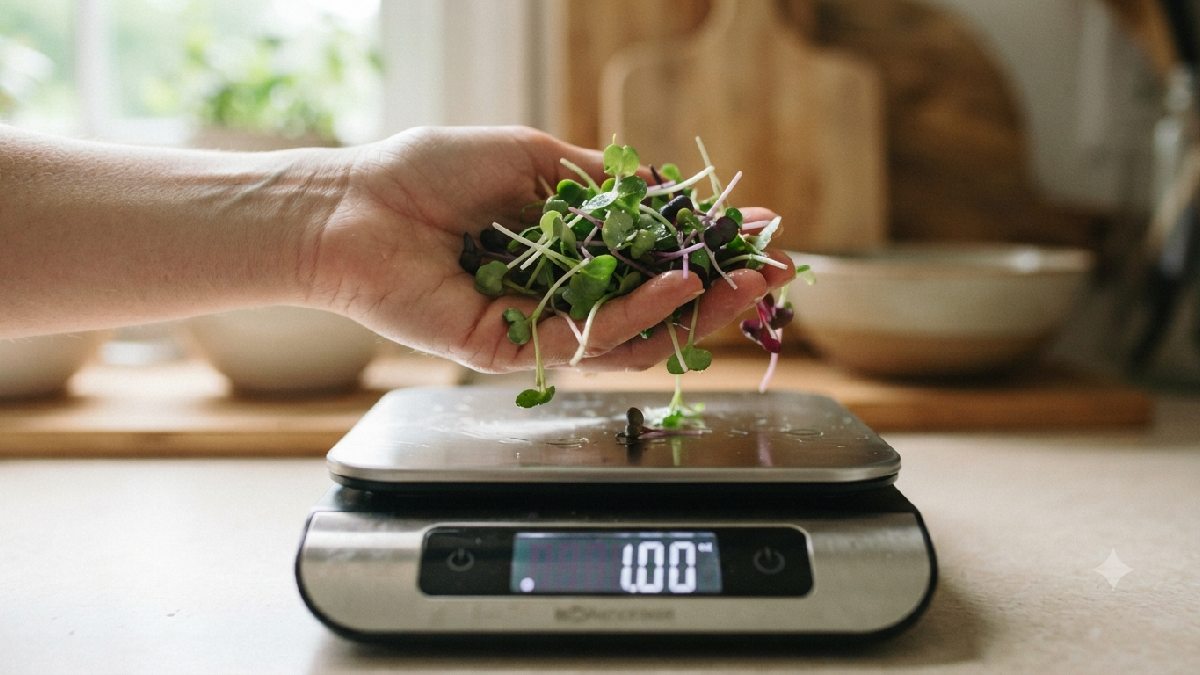
This matters when reading nutrition claims about microgreens, because headlines about “40 times more nutrients” can make it sound like a tiny pinch delivers enormous nutritional value. The more accurate takeaway is that a normal, realistic serving a handful, not a garnish-sized sprinkle is what gets you meaningfully closer to the numbers on this microgreen nutrition chart. A few strands scattered on a plate for visual appeal won’t move any nutritional needle, no matter how nutrient-dense the variety is per gram.
How to Add Microgreens to Meals Without Losing Their Nutrition
Knowing which microgreens rank highest on a microgreen nutrition chart doesn’t help much if you’re cooking off half their value before you eat them. A few habits make a real difference:

Add them last. Whether it’s a bowl of soup, a stir-fry, or scrambled eggs, microgreens should go on top after the dish is off the heat. Even a few minutes of residual heat is enough to degrade a meaningful portion of their vitamin C and reduce sulforaphane activity in brassica varieties like broccoli and mustard.
Use them as a swap, not a sprinkle. A tablespoon of microgreens scattered over a plate looks nice but barely moves the needle nutritionally. Using a full handful in place of a lower-nutrient leaf swapping iceberg lettuce for pea shoots in a sandwich, for instance gets you closer to a meaningful serving.
Blend the ones that don’t work raw for you. Not everyone likes the peppery bite of mustard or radish microgreens on their own. Blending them into a smoothie with fruit masks the sharper flavors while keeping the nutrient content largely intact, since blending doesn’t involve heat.
Combine colors on purpose. Green varieties tend to carry more chlorophyll and folate, purple and red varieties (red cabbage, amaranth) carry more anthocyanins and betalains, and yellow-green varieties often carry more carotenoids. Cross-referencing a microgreen nutrition chart by color is an easy way to cover more nutritional ground than any single variety eaten alone.
Buying Microgreens vs. Growing Your Own: Which Preserves More Nutrition?
Given how quickly nutrients decline after harvest, the source of your microgreens matters almost as much as which variety a microgreen nutrition chart tells you to pick.
Store-bought microgreens may match every number on a microgreen nutrition chart at the point of harvest, but they’ve usually already traveled through a supply chain harvested at a farm, packed, shipped to a distributor, then shelved at a store before you ever see them. Depending on the retailer, that can mean the package in your cart is anywhere from two to seven days post-harvest, which based on the vitamin C degradation research cited earlier could already represent a meaningful drop from peak nutrient levels.
Farmers’ market microgreens typically close that gap considerably, since many growers harvest within a day or two of the market. If nutrition is your main reason for buying, asking the grower directly when a batch was cut is a reasonable thing to do most are happy to answer.
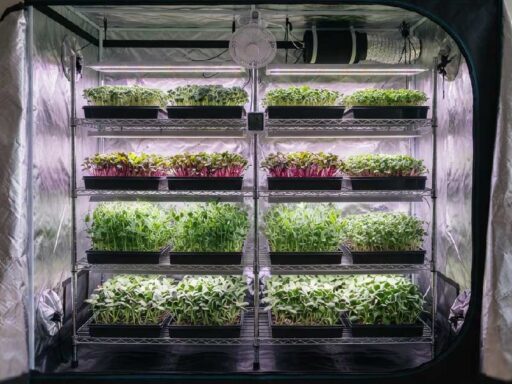
Home-grown microgreens give you the shortest possible harvest-to-plate window, which is the best way to actually hit the numbers promised on a microgreen nutrition chart. Growing your own doesn’t require much: a shallow tray, a growing medium (soil or a soil-free mat), a light source, and 7 to 14 days depending on the variety. Fast growers like radish and broccoli are typically ready within a week, while slower varieties like sunflower can take closer to two weeks. For anyone tracking nutrition closely rather than just flavor or garnish appeal growing your own is the only way to reliably capture peak nutrient levels at the point of eating.
That said, growing space, time, and consistency aren’t realistic for everyone, and a slightly nutrient-diminished microgreen still outperforms most other vegetables gram for gram. The choice between buying and growing is less about avoiding a “bad” option and more about how much control you want over freshness.
Frequently Asked Questions About the Microgreen Nutrition Chart
According to a microgreen nutrition chart, what is the most nutritious microgreen overall?
According to a microgreen nutrition chart, what is the most nutritious microgreen overall? There's no single winner across every nutrient, but red cabbage, broccoli, cilantro, amaranth, and sunflower consistently rank at the top across different studies, each excelling in a different category (vitamin C, sulforaphane, carotenoids, vitamin K, and protein, respectively).
Does a microgreen nutrition chart show microgreens as more nutritious than sprouts?
Generally yes. Because microgreens grow under light and photosynthesize, they develop a broader range of vitamins and phytonutrients than sprouts, which are germinated in the dark. Microgreens also carry a lower food-safety risk since they're grown in soil rather than the warm, wet conditions sprouts require.
Based on a typical microgreen nutrition chart, how much microgreens should I eat per day?
There's no official daily recommendation, but most nutrition researchers point to roughly 1 to 2 ounces (about 25 to 50 grams), a small handful as enough to provide meaningful benefit when eaten consistently. Regular small servings tend to matter more than occasional large ones.
Do microgreens lose nutrients when cooked?
Yes, heat degrades vitamin C and reduces compounds like sulforaphane. Most nutritionists recommend eating microgreens raw, added to a dish after cooking, rather than cooked into it, to preserve as much of their nutrient content as possible.
Can microgreens replace a multivitamin?
No. They're missing or very low in a few key nutrients, including vitamin D, vitamin B12, and omega-3 fatty acids. What they do offer is an unusually concentrated source of vitamins A, C, E, and K, along with iron, calcium, and a wide range of antioxidants a strong nutritional add-on, not a full replacement.
Which microgreens are highest in protein?
Sunflower and pea shoot microgreens lead this category, with sunflower notably providing all nine essential amino acids a genuine complete protein source, which is uncommon for a plant at this early growth stage.
Conclusion
There’s no single “best” row on a microgreen nutrition chart the right pick depends entirely on what you’re after. Red cabbage wins on vitamin C, broccoli dominates for sulforaphane, amaranth leads in vitamin K and iron, and sunflower stands alone as a complete plant protein. What ties all of them together is the same underlying fact from the 2012 USDA study: harvested at 7 to 14 days old, virtually every variety tested carried several times the nutrient concentration of its fully grown counterpart.
The practical takeaway isn’t to swap out your vegetables for microgreens it’s to treat them as one of the most efficient nutrient boosts available, added to meals you’re already eating. Use this microgreen nutrition chart to pick two or three varieties that match your goals, grow or buy them as close to harvest time as possible, and rotate colors and families to cover the widest range of nutrients over time.