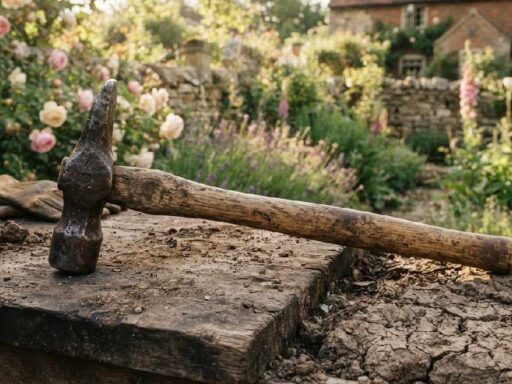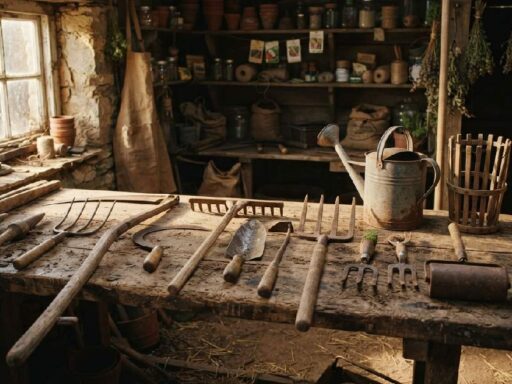

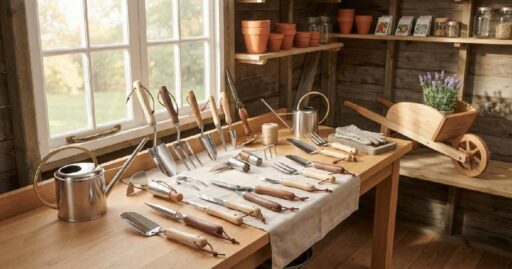
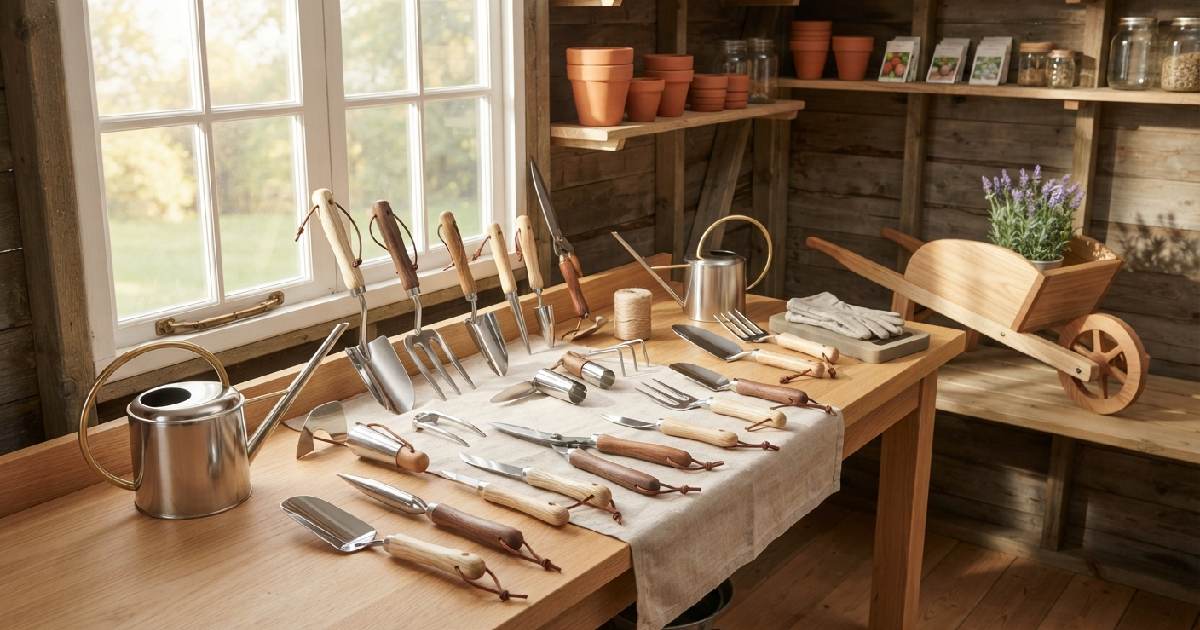

Open an old garden shed, and you might find a strange metal tool with a curved blade. No idea what it does. Just a feeling that someone once used it every single day. That’s the pull of antique gardening tools. Each one had a job. Each one solved a problem before power tools took over. Some of these tools are still used today. They quietly outwork their modern replacements. Others have faded into curiosities, loved more for their design than their use.
Gardeners a hundred years ago didn’t have a hardware store down the road for every small task. Tools grew slowly instead, shaped by real trial and error in real gardens. Each one ended up doing its job well, nothing more, nothing less. That simple, honest design is part of why these old tools still catch our eye today.
This list walks through 17 antique gardening tools worth knowing. Some you’ll know right away. Others might surprise you. Each one carries a bit of history and a reason it earned its spot in a gardener’s shed decades ago.
Why Antique Gardening Tools Still Fascinate Us
Before we jump into the list, it helps to ask why these old tools still grab our attention. Part of it is simple craft. A tool built by hand, shaped for a real job, feels different in your grip than something stamped out by a machine. There’s a solid feeling to it. A sense that someone actually thought about how it would be used.
Part of it is memory too. Many people remember a grandparent’s shed, full of tools with worn wooden handles and rust in just the right spots. Picking up a similar tool today brings that memory right back, even for someone who never gardened with their grandparent.
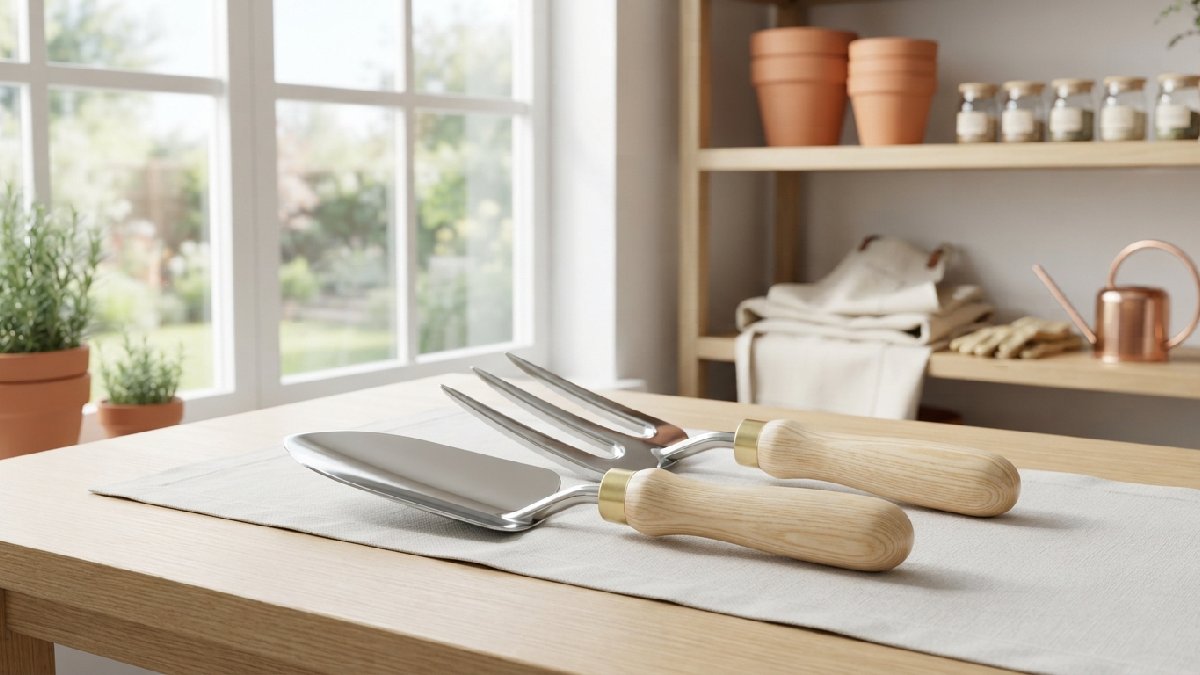
There’s also something to the stories these tools carry. A trowel with a worn handle wasn’t used just once. It dug hundreds of holes. It planted hundreds of seedlings. It passed through the hands of someone who leaned on it season after season. That kind of history is hard to find in a tool fresh off a store shelf.
Even the small flaws tell a story. A slightly bent tine. A handle fixed with a bit of wire. A blade worn down after decades of use. These little details show exactly how a tool spent its working life, something a brand new tool just can’t offer, no matter how well it’s made.
17 Antique Gardening Tools Worth Knowing
Here’s a closer look at seventeen classic tools, grouped by the kind of work they were built for. Each one covers what the tool did, how it was shaped for that job, and why it earned a spot in a well-stocked shed.
Tools for Digging and Turning Soil
1. The Border Spade
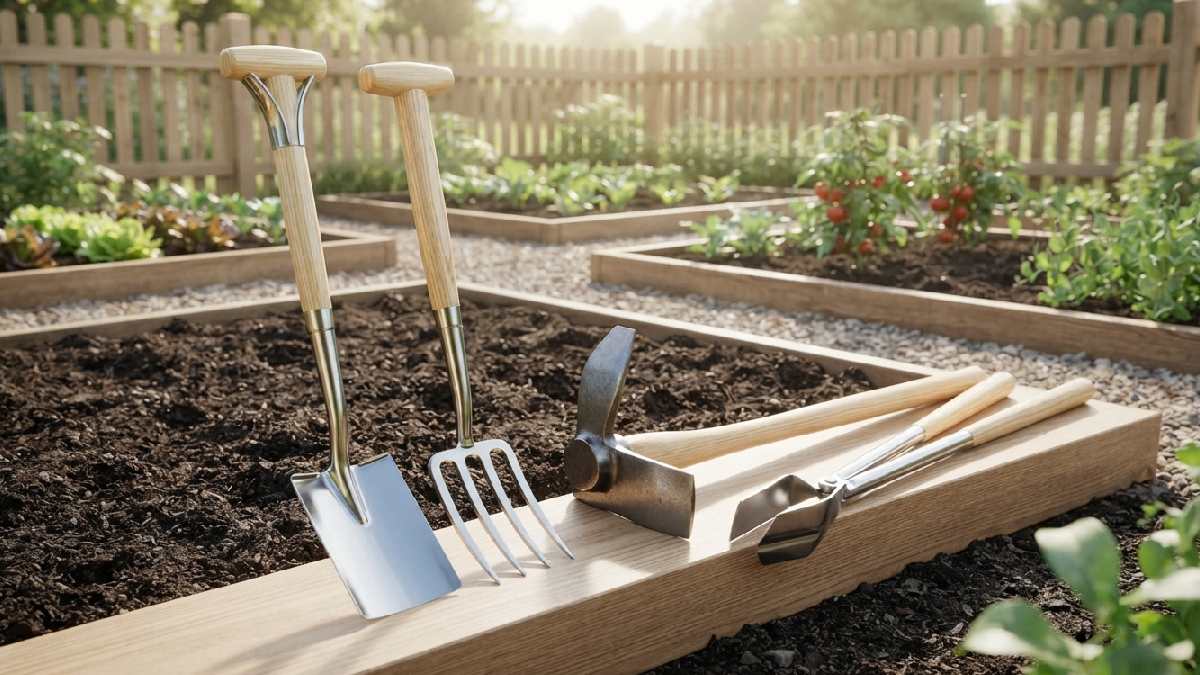
Smaller and narrower than a standard spade, the border spade was built for tight flower beds. A full-size spade would trample the plants nearby. Its slim blade let gardeners dig cleanly along the edges. Many gardeners kept one just for cutting a crisp lawn edge, since the narrow blade made a cleaner line than a wide spade ever could.
2. The Digging Fork
With four sturdy, forged tines, the digging fork broke up heavy or packed soil that a spade would struggle with. It also worked well for turning compost and lifting root vegetables without slicing through them. Some older forks had slightly curved tines, a small detail that made lifting soil much easier than a straight tine could.
3. The Mattock
Part axe, part hoe, the mattock was a heavy tool for breaking through rocky or root-filled ground. One side had a flat blade for chopping. The other had a pick point for prying out stubborn rocks and roots. It saw more use clearing new ground than tending an old garden, showing up whenever a family expanded their garden into unused land.
4. The Post-Hole Digger
Built with two long handles and clamshell-style blades, this tool dug a narrow, deep hole for fence posts or plant stakes. It didn’t dig up a wide area around the hole. Older versions relied fully on hand strength, working the two handles apart and together to scoop soil out bit by bit. It took real patience, but the narrow result caused far less mess than digging a wide pit with a shovel.
Tools for Planting and Sowing
5. The Dibber
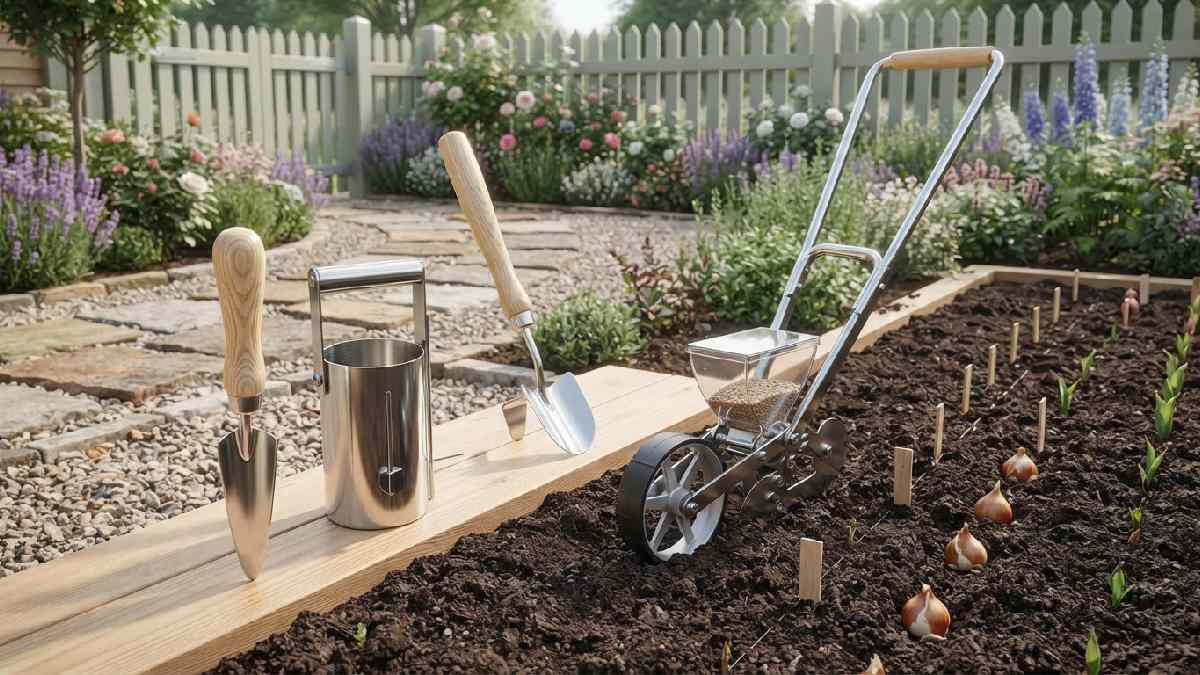
A simple pointed tool, often just shaped hardwood with a metal tip, the dibber made quick work of poking holes for seeds, seedlings, or bulbs. Some old versions had marks carved into the handle. This helped gardeners plant at the same depth every time. A well-worn dibber often fit snugly in the hand, shaped over years into something that felt made just for its owner.
6. The Bulb Planter
Shaped like a hollow metal tube with a sharp edge, the bulb planter cut a clean plug of soil. A gardener could drop a bulb in the hole, then put the plug back on top. This made planting lots of bulbs, like tulips, much faster than digging each hole by hand. Some versions had depth marks on the tube, taking the guesswork out of how deep each bulb should sit.
7. The Seed Drill
A bigger tool than most on this list, the antique seed drill let a gardener sow seeds in a straight, even row by walking the tool along the ground. It dropped seeds at set spacing as it moved. Smaller hand-pushed versions were common in home gardens. Larger versions were closer to farm equipment. Getting spacing right by hand took real skill, so this tool saved gardeners a lot of time during busy planting season.
Tools for Cutting and Pruning
8. The Pruning Knife
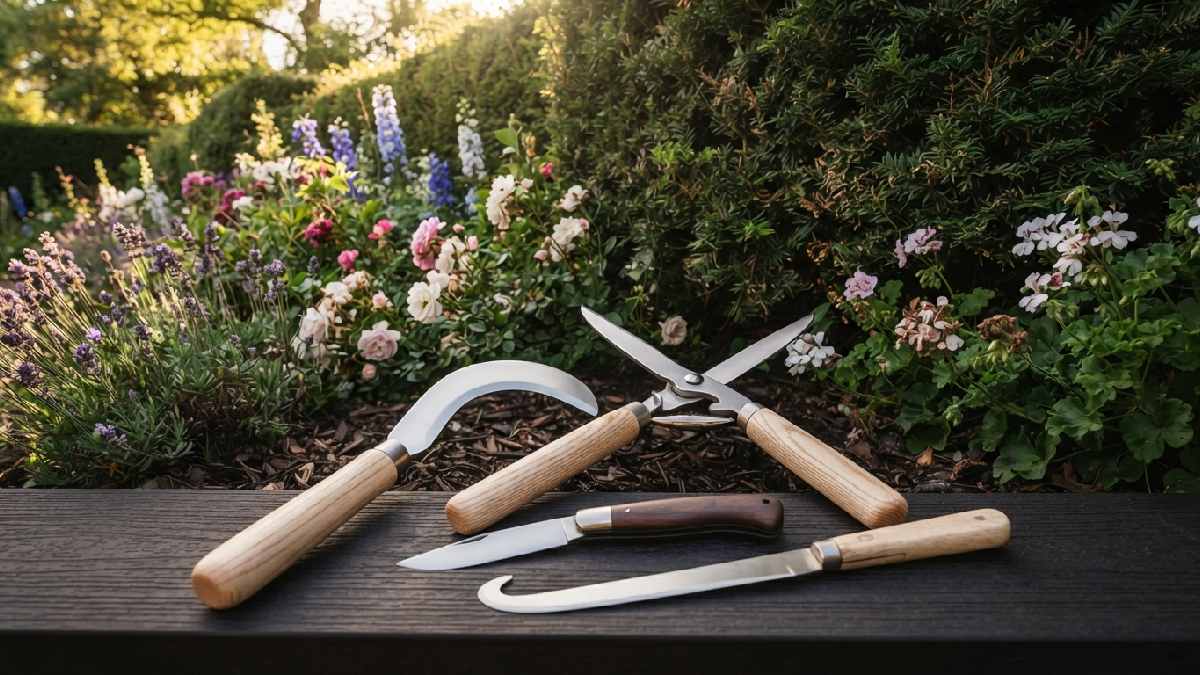
Before spring-loaded shears became common, gardeners used a simple, sharp folding knife to trim small branches and remove dead growth. A well-kept pruning knife could hold its edge for years. Skilled gardeners often liked the control a knife gave them over the mechanical action of shears, especially for delicate cuts.
9. Hedge Shears
Long, heavy blades and a scissor-like action made hedge shears the go-to tool for shaping bushes long before electric trimmers existed. Their weight actually helped with cutting power, letting gravity do some of the work instead of just arm strength. Shaping a long hedge by hand took real stamina, sometimes stretching across a whole afternoon.
10. The Billhook
A curved, single-edged blade on a short wooden handle, the billhook was a tough all-purpose cutting tool. Gardeners used it to clear brush, cut back overgrown branches, and do light woodworking around the garden. This made it one of the most useful tools a household could own. Its curved shape gave it extra cutting power compared to a straight blade, which mattered a lot for thick, woody stems.
11. The Asparagus Knife
A narrow, forked blade on a long handle, this tool was made to harvest asparagus below the soil line without hurting nearby shoots. Its special shape made it useless for much else, which is exactly why it earned its own spot in a well-stocked shed. Gardeners who grew asparagus year after year often called this one of their most needed tools.
Tools for Weeding and Cultivating
12. The Draw Hoe
With a flat blade set at an angle to the handle, the draw hoe was pulled toward the gardener to slice through weeds just below the soil. This made quick work of clearing a row without bending down to pull each weed by hand. Its angled blade also worked well for shaping soil into raised rows.
13. The Scuffle Hoe
Sometimes called a hula hoe or stirrup hoe, this tool used a push-pull motion instead of the pulling action of a draw hoe. A loop-shaped blade cut weeds on both the forward and backward stroke. This made it a faster choice for clearing large open areas of soil. Gardeners with big vegetable plots often liked this style since it cut work time nearly in half.
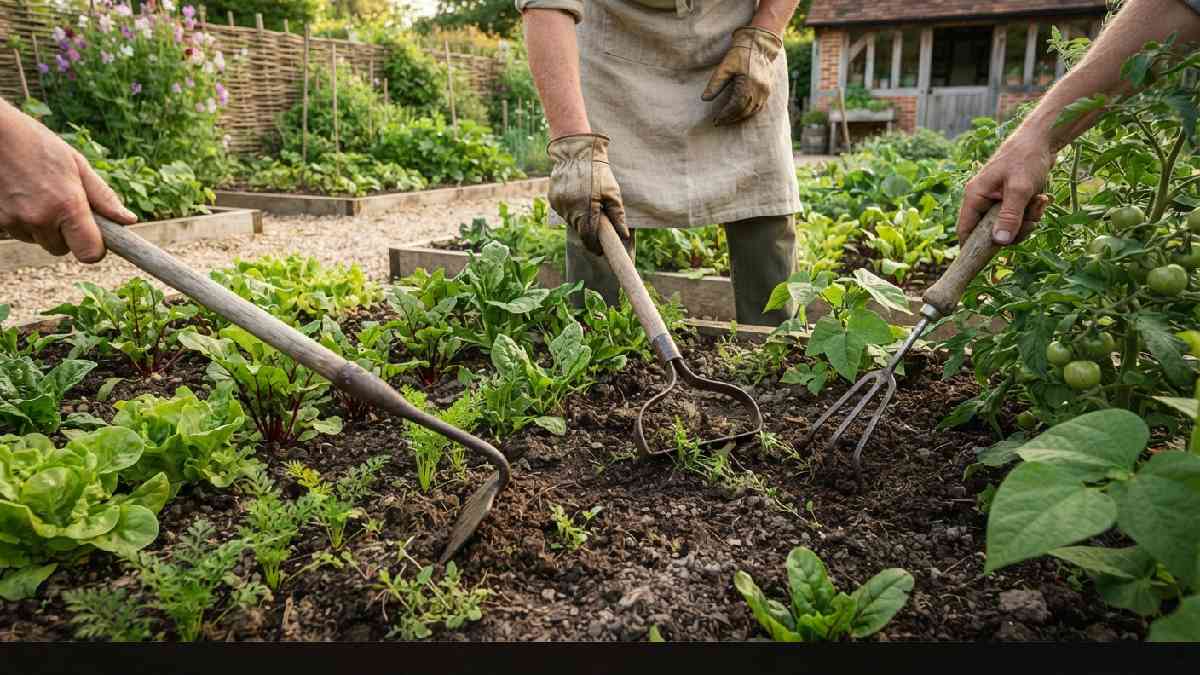
14. The Hand Cultivator
A small, claw-shaped tool with three or more curved tines, the hand cultivator loosened soil around plants and broke up crusted dirt without hurting roots. Its small size made it perfect for close, careful work in flower beds and vegetable rows. Many gardeners kept one nearby for quick touch-ups between bigger gardening sessions.
Tools for Watering and Everyday Garden Work
15. The Watering Can
Antique watering cans, often made from galvanized metal or copper, had a long spout and a removable rose, the small perforated cap that softened water flow for delicate seedlings. Many were shaped beautifully, treated almost like a piece of art as much as a tool. Copper versions have become popular with collectors, prized for how the metal ages into a soft, green tone over time.
16. The Garden Roller
A heavy cylinder, often filled with water or sand for extra weight, the garden roller flattened and firmed soil after seeding a lawn. It also pressed down freshly turned earth in a vegetable bed. Pushing one across a yard was hard work, but it made a smooth surface that was hard to get any other way. Bigger properties sometimes used a version pulled behind a horse, though hand-pushed versions stayed common in home gardens.
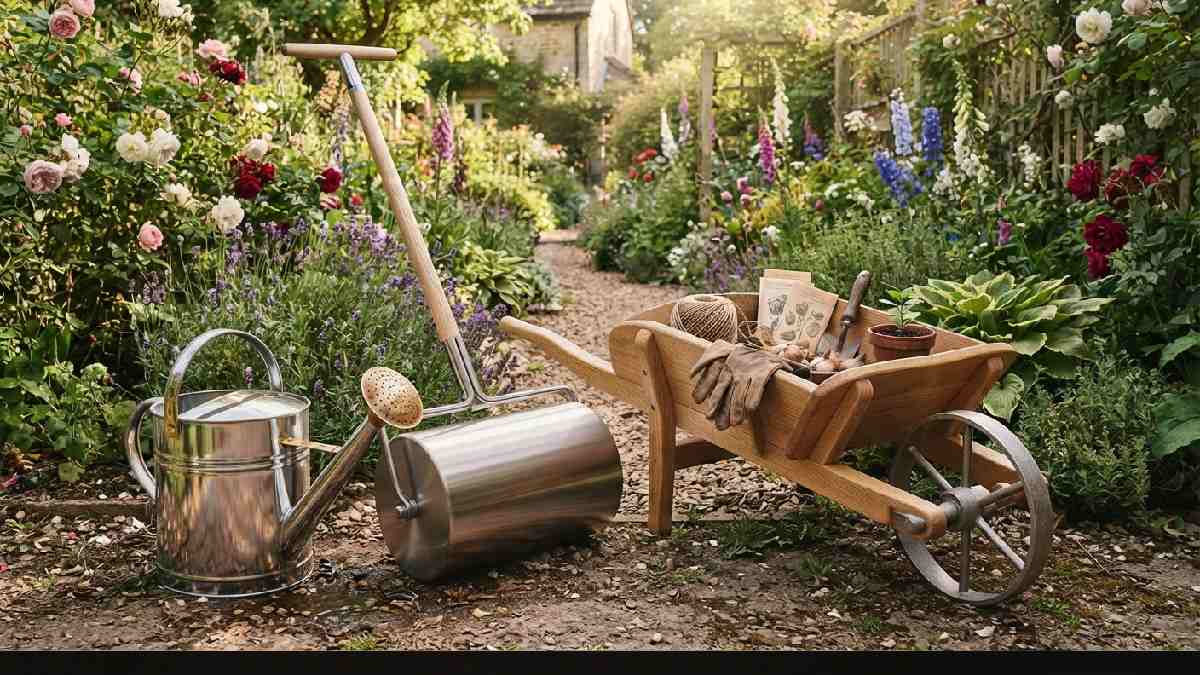
17. The Wooden Wheelbarrow
Before steel and plastic versions took over, wheelbarrows were built almost fully from wood, sometimes with a single iron-rimmed wheel. They hauled soil, compost, tools, and crops around a property. This made them one of the hardest-working tools in any serious garden. A well-built wooden wheelbarrow could last decades with a few repairs. Many old examples still roll smoothly today after a hundred years of use or more.
How These Tools Were Traditionally Made
Knowing how these tools came together helps explain why they’ve held up so well. Most were forged, not cast. This means a blacksmith or small factory worker actually shaped hot metal by hand with a hammer and anvil, rather than pouring melted metal into a mold. Forging makes a denser, stronger piece of metal than casting. This is part of why so many old tool heads have survived without cracking under stress.
Handles got just as much care as the metal parts. A skilled tool maker chose wood not just for looks but for how it would perform under repeated stress. Ash and hickory were common choices, since they flex slightly under pressure instead of snapping outright. This absorbed shock in a way that protected both the tool and the person using it.
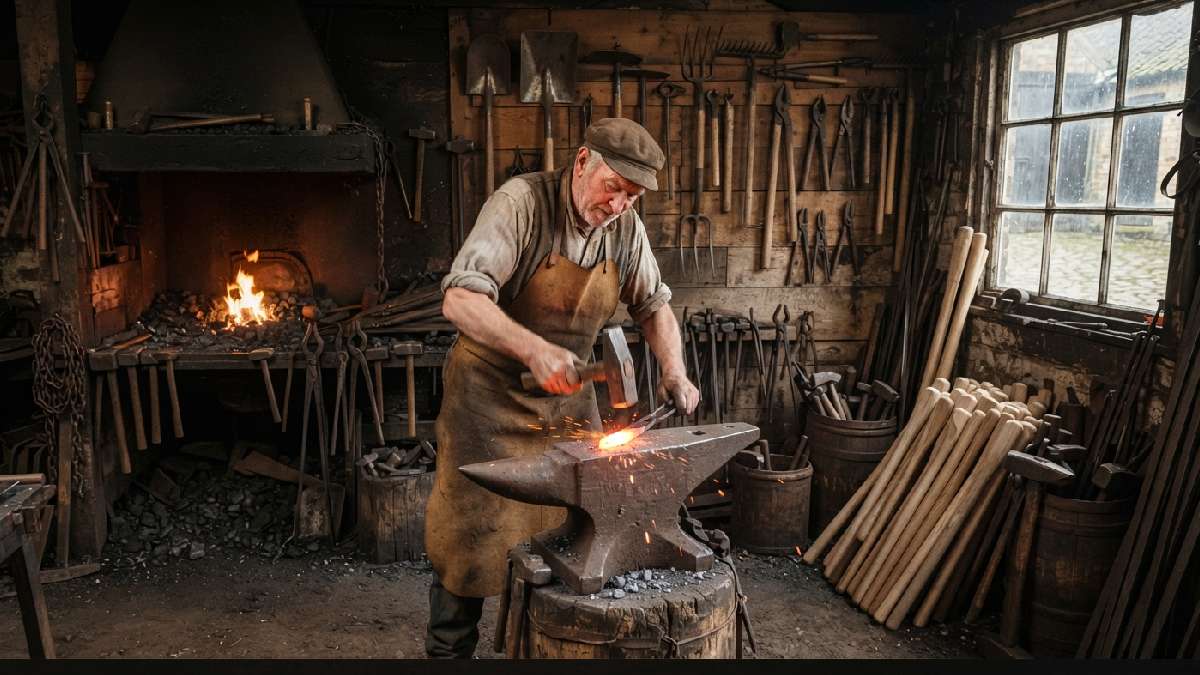
Small workshops and family businesses made a huge share of these tools well into the 1900s, often passing skills down from one generation to the next. This is part of why you’ll sometimes find two tools of the same type that look a little different in shape or size. Each workshop had its own habits and small tweaks, building quiet regional differences into tools that might otherwise look nearly the same.
Even the small finishing touches mattered. Many tool heads got a specific heat treatment to harden the cutting or digging edge, while leaving the rest of the metal a bit softer and more flexible. This balance meant a tool could hold a sharp edge without becoming so brittle that it cracked under normal use. That took real skill to get right, again and again.
How These Old Tools Compare to Modern Versions
A lot of these antique tools have modern versions today, but the differences go beyond just materials. Older tools were often made by small workshops, so slight differences showed up even between two tools of the same general type. This gave each piece a bit of its own character, something mass production tends to smooth away.
Weight is another clear difference. Many antique tools feel heavier in the hand than their modern versions, thanks to solid forged metal instead of lighter stamped materials. That extra weight wasn’t a flaw. It often added useful force to cutting and digging tools, letting the tool’s own weight help with the work.
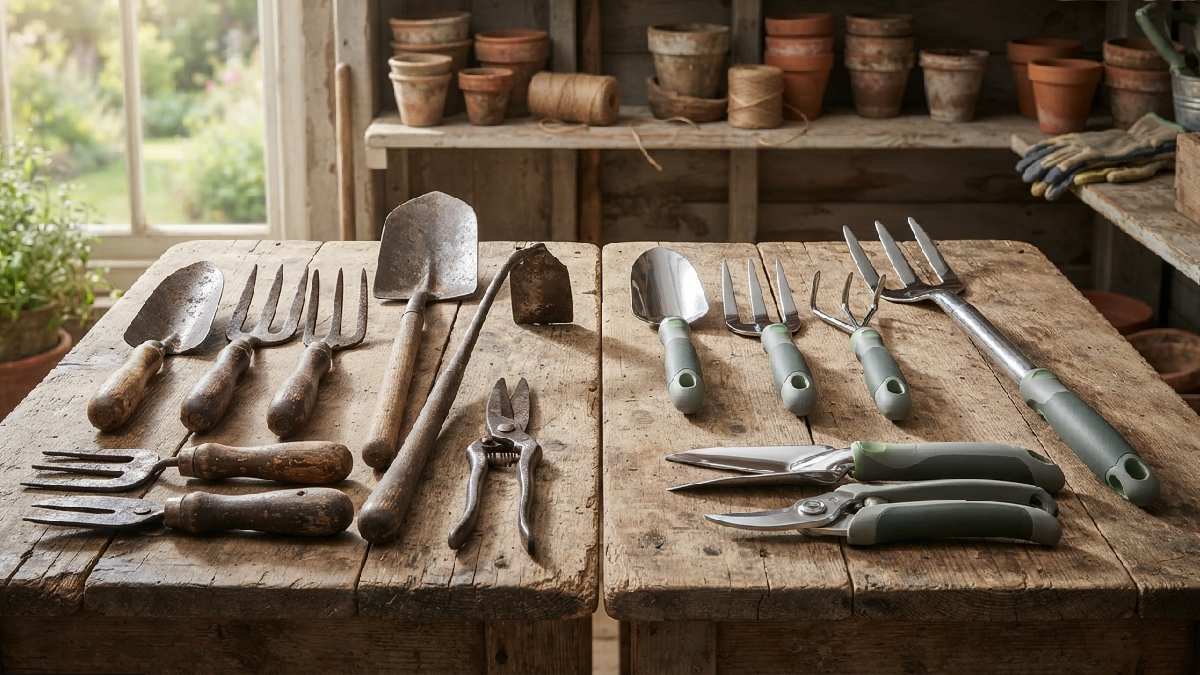
Toughness stands out too. A well-made antique tool, cared for properly, can easily outlast several generations of cheaper modern tools. Wooden handles could get replaced when worn out, while the metal heads, often forged from solid steel or iron, simply didn’t wear down the way some modern materials eventually do.
Fixing things also set these older tools apart. A modern tool with a molded plastic handle usually gets thrown away the moment it cracks, since replacing just the handle often isn’t easy or even possible. Antique tools, on the other hand, were built with repair in mind from the start. A broken wooden handle could be pulled out and replaced by any decent woodworker, keeping the still-working metal head in service for many more years.
Where These Tools Show Up Today
Antique gardening tools turn up in more places than you might think. Estate sales and flea markets remain the classic hunting ground. They often turn up tools tucked in the back of an old shed or barn, sometimes still covered in decades of dust from their last use.
Antique shops and special dealers sometimes carry a curated selection, cleaned up and priced by rarity and condition. These tend to cost more than a flea market find. But they also come with less guesswork about age, since a knowledgeable seller has usually already looked into a piece’s likely history before offering it for sale.
Online auction sites and collector forums have made it easier than ever to track down specific tools, compare prices, and connect with other fans who share tips on spotting and fixing old pieces. A quick search often turns up dozens of listings, from rough, unrestored finds to carefully cleaned pieces ready for use or display.
Some gardeners simply inherit these tools, finding a shed full of old gear after a family member passes away or moves. These inherited pieces often carry the most personal value of all, tied not just to the tool’s history but to the specific person who once used it.
Local auctions, often held right on a property before it changes hands, can also turn up whole collections of tools at once. These events tend to move fast and sell in bulk lots, so getting there early and knowing what you’re looking for gives you a real edge over other buyers. Bringing a small flashlight can also help when checking tools in a dim barn or cluttered shed.
FAQ
Are antique gardening tools still practical to use today?
Many are, especially well-kept digging and cutting tools, though it's worth checking handles and edges carefully before putting real weight behind an older piece.
Which antique gardening tool is the easiest to find?
Watering cans and hand trowels tend to be among the most common finds at flea markets and estate sales, since so many were made and many survived in decent shape.
Why were older gardening tools often heavier than modern ones?
Older tools used solid forged metal instead of lighter stamped materials, and that extra weight actually helped with cutting and digging power rather than being a flaw.
What should I look for when buying an antique gardening tool?
Check for a sturdy, uncracked handle, little to no deep rust on metal parts, and build details like riveted joints that hint at real age rather than a modern copy.
Are these old tools worth collecting even if I don't garden?
Yes, many people collect them purely for their look, craft, and history, showing them off as functional art rather than using them for real garden work.
Conclusion
These seventeen tools only scratch the surface of what gardeners leaned on decades ago. But they show some of the most common, clever, and lasting designs from that time. Each one solved a real problem, often in a way that still makes sense today, long after the factories that made them shut their doors.
Whether you like these tools for their history, their craft, or simply because they still work well, there’s something genuinely satisfying about holding a piece of gardening’s past in your hands. Keep an eye out at your next estate sale or flea market. You might just walk away with a tool that outlasts everything else in your shed.
Start small if this world is new to you. Pick up one tool that catches your eye. Learn what it was built for, and let your curiosity guide you from there. Before long, you might find yourself spotting old tools across a crowded flea market table that most other shoppers would simply walk right past.