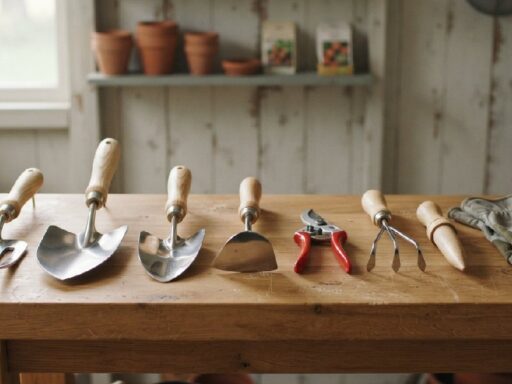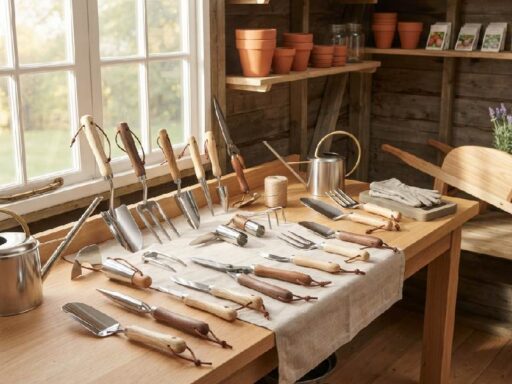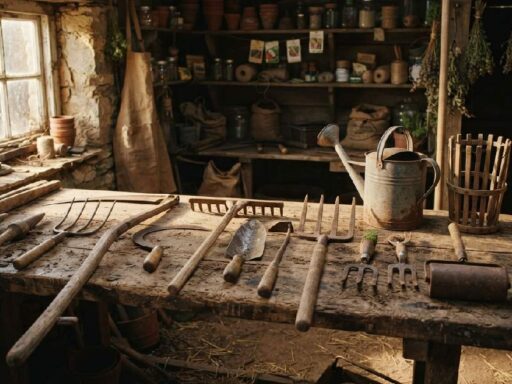

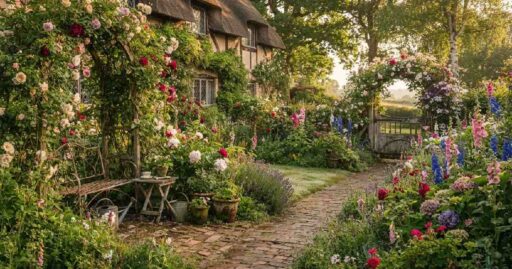
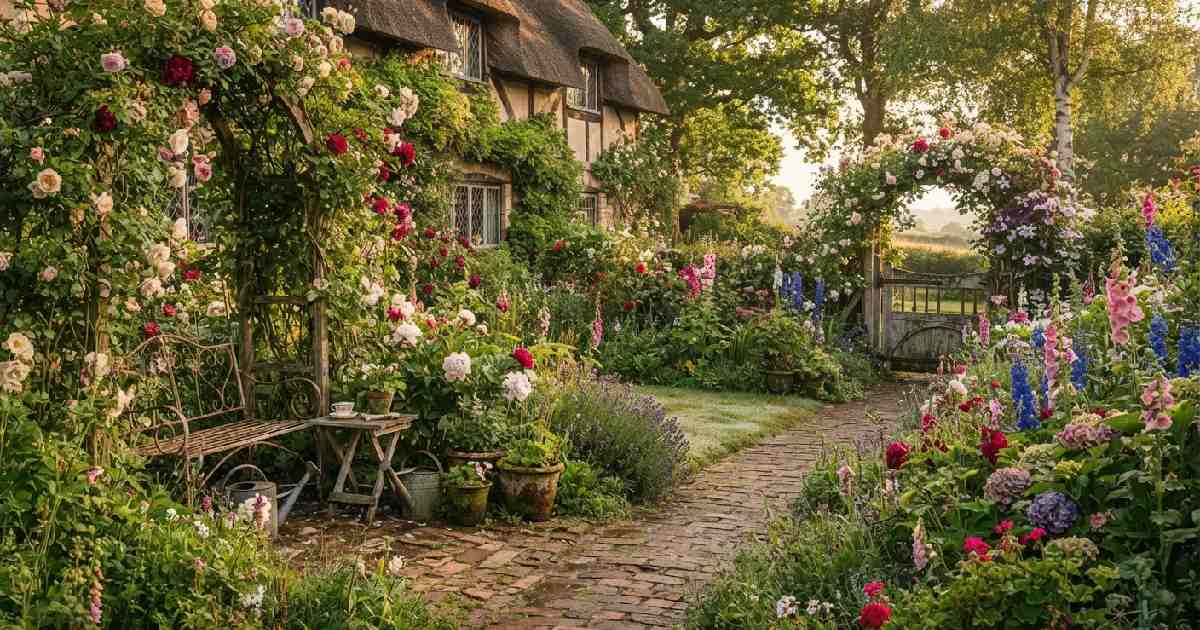

Some gardens just feel different the moment you step into them. You walk in, and something inside you slows down without you even noticing. Maybe it’s the cracked brick path under your feet, or maybe it’s a rose bush that’s bloomed every June for thirty years, and nobody quite remembers who planted it. A vintage garden has that kind of pull. It doesn’t shout for attention the way a manicured lawn does. It just sits there, a little wild around the edges, a little worn in the best way, and somehow that’s exactly why people fall in love with it.
If you want your own backyard to feel this way, this guide will walk you through everything you need. We’ll cover the plants that give a vintage garden its personality, the layout choices that make a space feel old even when it’s brand new, the furniture and décor that pull the whole look together, and the small daily habits that keep a vintage garden thriving without losing its relaxed charm. You don’t need a huge budget for any of this. You don’t even need a big yard. What you need is a handful of good ideas and enough patience to let a garden grow into itself over time.
What Actually Makes a Garden Feel “Vintage”
A vintage garden isn’t really about age, even though the name suggests otherwise. New gardens can look old within a season or two if they’re planted right, and old gardens can look strangely modern if they’re kept too tidy and too controlled. Vintage is more of a feeling than a timeline. Picture the soft, slightly messy look of an old cottage garden, the kind your grandmother might have kept without ever trying too hard. Flowers spill past their borders instead of staying inside neat lines. Paths bend and curve instead of running straight from point A to point B. Nothing looks planned down to the inch, and honestly, that lack of perfection is the entire point.
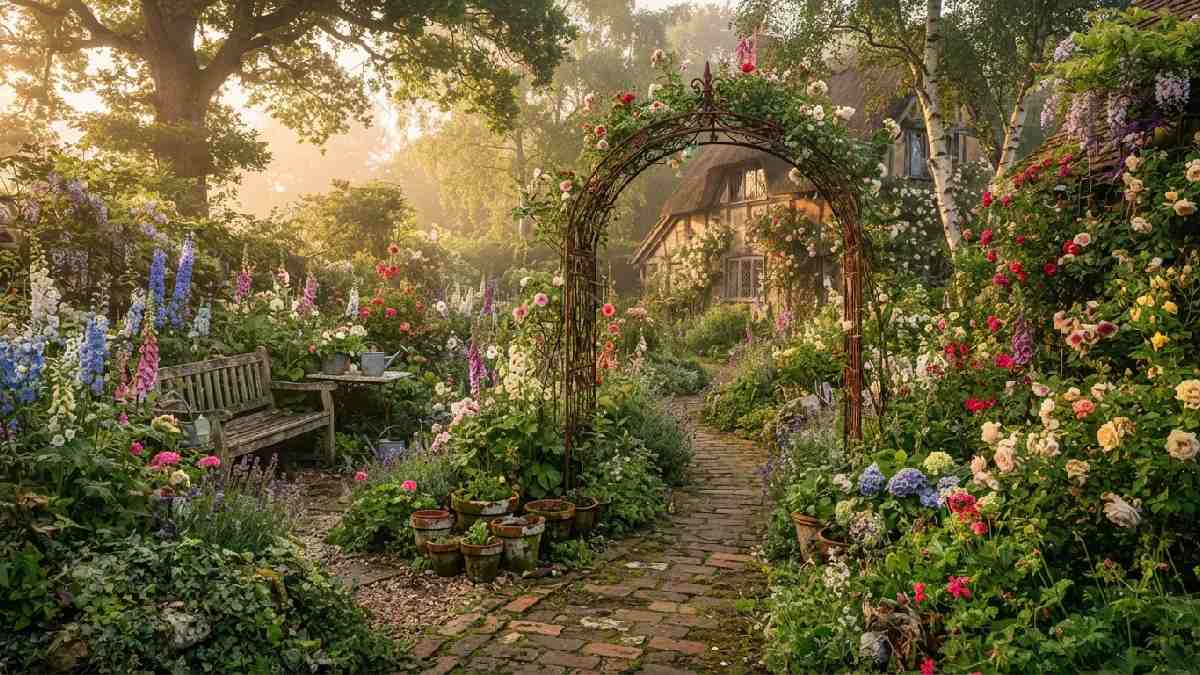
A few things tend to separate this style from the average modern backyard:
- Soft, curved shapes instead of sharp geometric lines
- Plants growing close together, almost tangled into one another
- Materials that look aged on purpose, weathered wood, old brick, rusted iron
- Small handmade or antique touches, a chipped clay pot, a slightly bent gate
- A sense that the space carries some kind of history, even if it was planted last spring
You don’t actually need real antiques to pull this off. You just need to understand the feeling those antiques leave behind and recreate it with whatever you have.
Why This Style Never Really Goes Out of Fashion
Trends in landscaping come and go, but the vintage garden look keeps coming back for a simple reason. It feels lived-in. It feels human. A perfectly trimmed hedge might look sharp in a magazine, but it doesn’t invite you to sit down and stay a while. A vintage garden does exactly that, and that’s a feeling most people don’t get tired of.
Getting the Layout Right Before You Plant Anything
Before you dig a single hole or buy a single plant, it helps to think carefully about the shape of your future garden. Vintage gardens rarely look like they were drawn out with a ruler and a protractor.
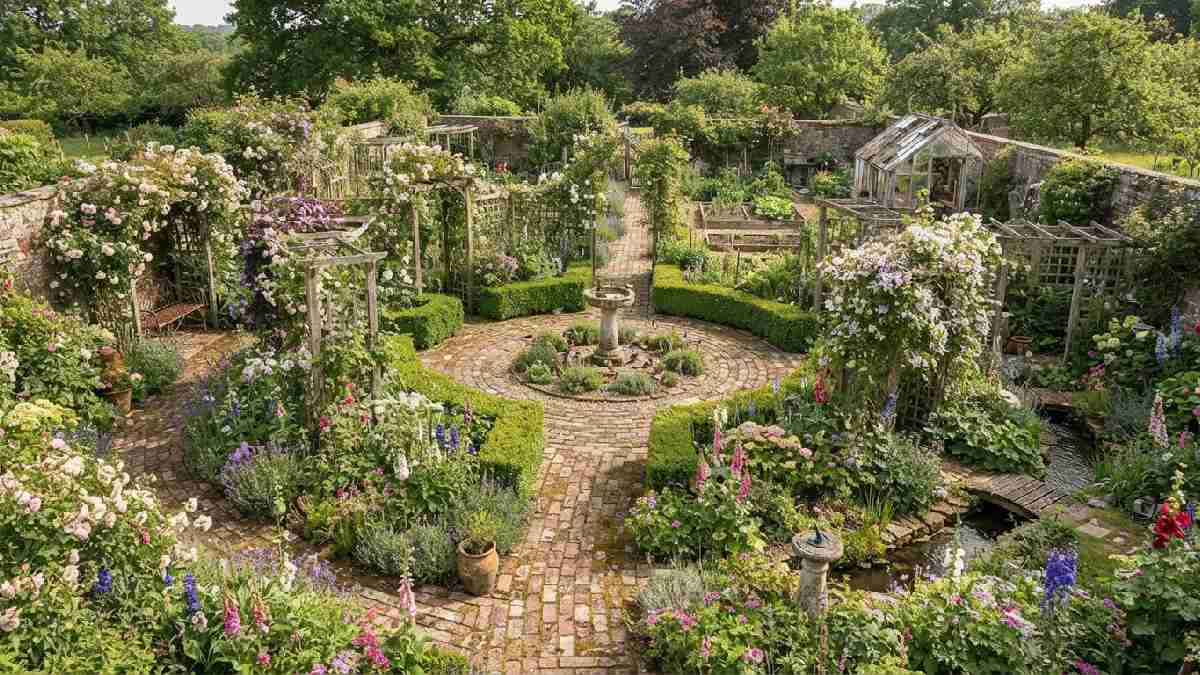
They grow full, a little unpredictable, sometimes even slightly crowded, and all of that is completely fine within this style.
Curve Your Paths Instead of Running Them Straight
Curved paths beat straight ones almost every time in a vintage garden. A path that bends gently around an old tree or disappears behind a cluster of tall flowers feels like it grew there naturally over the years. A straight path, by comparison, feels stiff and almost office-like, which runs counter to everything a vintage garden is trying to achieve.
Break the Yard Into Small “Rooms”
It also helps to break the space into smaller sections instead of leaving it as one big open area. Older gardens usually had a series of little “rooms” tucked next to each other, each with its own mood and purpose. You might find herbs clustered in one corner, a bench sitting quietly under a tree in another, and a cutting garden for flowers somewhere else entirely. You don’t need actual walls to create this feeling. A low hedge, a cluster of tall hollyhocks, or even a simple wooden trellis can mark the edge of one “room” and the start of the next.
Let the Plants Touch Each Other
Letting plants touch is another small trick that makes a huge difference. Don’t leave wide, neat gaps between plants the way you might in a modern landscaped bed. When leaves and stems overlap slightly, the whole bed looks fuller, richer, and considerably older than it actually is. This tangled look is basically the secret behind the cottage-garden aesthetic that so many vintage garden lovers are chasing.
Choose One Main Focal Point
Give your eye somewhere to land within the space. Every good vintage garden tends to have one main feature that pulls focus, an old tree with a wide canopy, a stone birdbath sitting quietly among the flowers, or an arch covered thick in climbing vines. Once you’ve chosen that centerpiece, build everything else around it.
Plants That Give You That Old-Garden Feel
Plants are really the soul of any vintage garden, more than furniture or décor could ever be. The good news is that most of the classic flowers people associate with this style are genuinely easy to grow, which is probably why they’ve remained popular for generations.
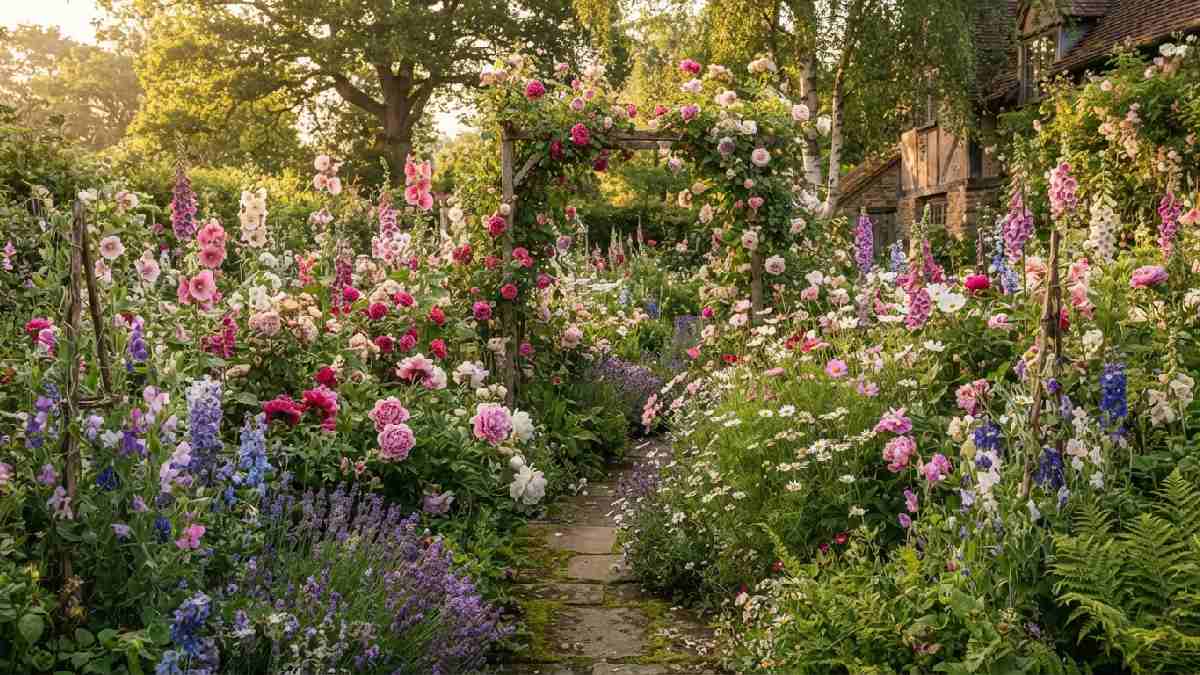
Classic Flowers Worth Planting First
Roses deserve the top spot on almost any list, especially climbing varieties or older heirloom types that carry a stronger, more old-fashioned scent than many modern hybrids. Peonies bring those big, heavy, almost impossibly full blooms that practically define the look of an old-fashioned garden in early summer. Hollyhocks grow impressively tall against a fence or wall and look wonderful from a distance across the yard. Foxgloves add dramatic height with their spiky, bell-shaped flowers stacked one on top of another. Lavender contributes color, fragrance, and that soft gray-green foliage that softens everything growing around it. Delphiniums bring rich blues and purples exactly where a garden needs a cooling pop of color. Sweet peas climb eagerly and smell absolutely incredible planted near a porch or gate. And plain old daisies and cosmos remain cheap, easy, and endlessly reliable.
Don’t Forget the Herbs
Herbs matter here too, probably more than most beginners expect. Old gardens routinely mixed flowers with herbs because herbs were genuinely useful for cooking, home remedies, and tea, not just decoration. Mint earns a spot near the house, though it’s best kept in a pot since it spreads aggressively if left unchecked. Rosemary, thyme, sage, and chamomile all deserve a place too, filling gaps with fragrance and soft texture that flowers alone can’t quite provide.
Plant in Layers for More Depth
Layering the height of your plants adds real depth to a vintage garden bed. Tall plants belong in the back, climbing roses trained up a trellis, or hollyhocks pressed against a sunny wall. Medium-height plants fill the middle ground: peonies, lavender, delphiniums. Low plants come forward at the front edge: creeping thyme, sweet alyssum, low-growing daisies. This layering gives the bed a sense of fullness, so it reads as lush and established even from far across the yard.
Décor That Actually Adds Charm
Once the plants are settled into the ground, the real fun of building a vintage garden begins.
Give Old Household Items a New Job
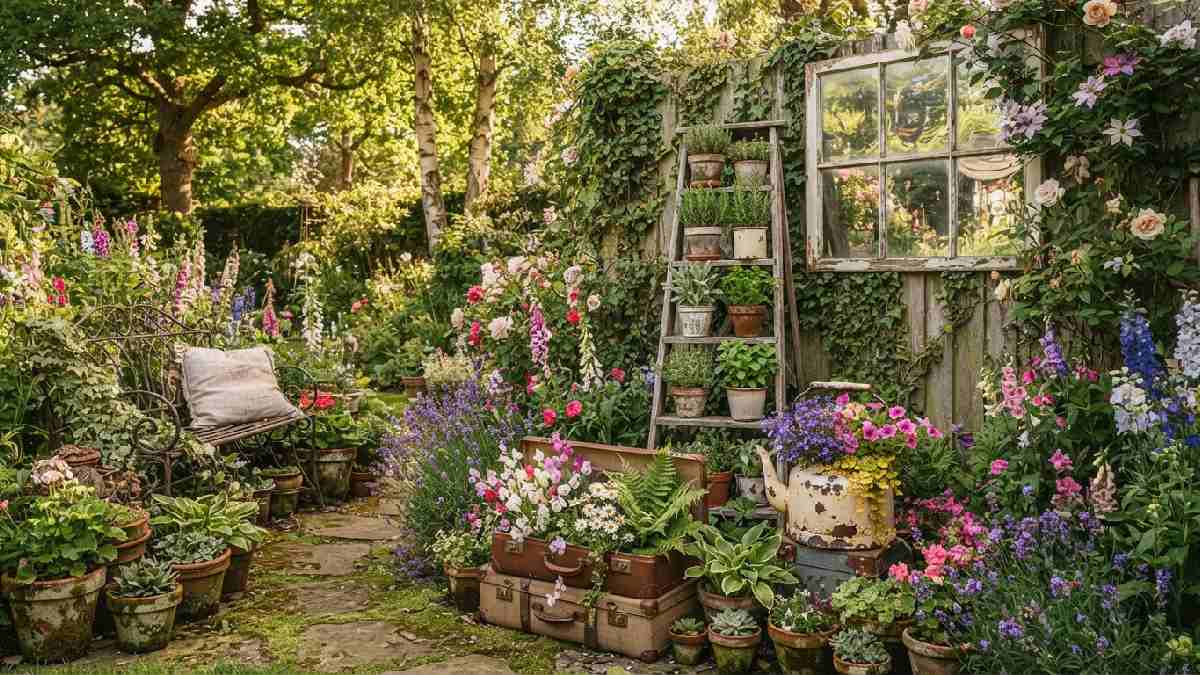
Old household items make some of the most charming garden décor you’ll ever find. An old wooden ladder, leaned against a fence, becomes a rustic plant stand for a row of potted herbs. A chipped teapot or an old enamel kettle becomes a quirky planter for trailing flowers. An old window frame, hung flat against a fence, turns into one-of-a-kind wall art that nobody else’s garden will have. Stack a couple of battered vintage suitcases and set potted flowers on top for an unexpected display. Thrift stores, flea markets, and weekend yard sales are genuine goldmines for finds like these, and the more worn something already looks, the better it tends to suit a vintage garden.
Pick Furniture With Character
Furniture sets the emotional tone for the whole space in a way that plants alone can’t manage. A wrought iron bench, either freshly painted or left with a touch of natural rust, instantly signals “old garden” to anyone who sits on it. A weathered wooden bench works just as well, especially tucked beneath a shady tree. Mismatched chairs pulled loosely around a small table feel far more inviting than a matching patio set ever could. A porch swing hung from a sturdy tree branch adds both charm and function. If your existing furniture looks too new for the vintage garden you’re building, a light hand-sanding followed by a coat of chalky paint in soft white or sage green will age it convincingly within a weekend.
Add an Arch or a Trellis
Arches and trellises do a tremendous amount of visual work in any vintage garden. A rose-covered arch positioned at the entrance instantly announces “old garden” before a visitor even notices the flower beds beyond it. Trellises placed against a fence, supporting clematis or morning glory, gradually soften hard edges and make the whole space feel more settled as the seasons pass.
Keep Ornaments Simple
Small ornaments matter too, though restraint pays off here. A stone birdbath, an old iron lantern, a weathered sundial, or a cluster of aged terracotta pots all add character without overwhelming the space. Two or three well-chosen pieces feel genuinely charming. Ten scattered pieces start to feel cluttered and take away from the natural, unforced look you’re working to achieve.
Paths, Fences, and the Little Boundaries
The ground beneath your feet sets the tone for the entire garden before the flowers even register in your peripheral vision. Skip smooth poured concrete wherever possible, since it reads as distinctly modern no matter how you dress it up. Brick laid in a herringbone pattern, flagstone with soft moss creeping between the cracks, gravel edged neatly with low-growing thyme, or simple stepping stones spaced casually through a flower bed, all of these choices read as genuinely old in a way that concrete simply never will.
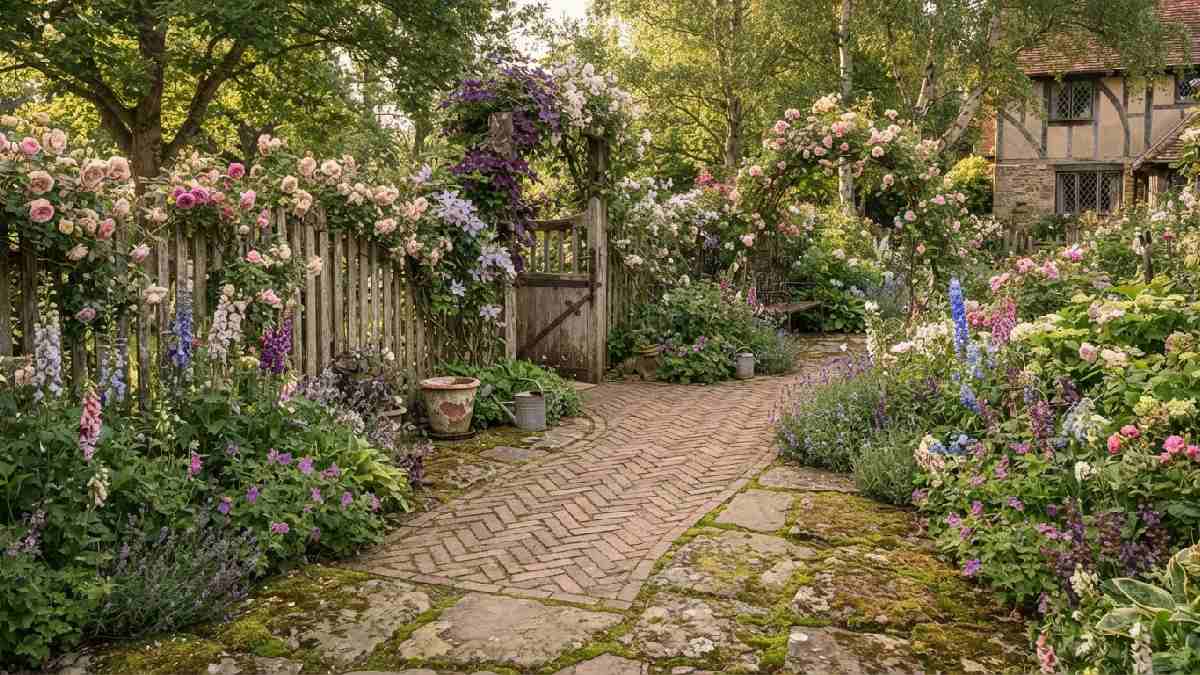
Fences matter more than most people give them credit for. A plain chain-link fence kills the entire mood instantly, no matter how beautiful the plants inside it might be. A wooden picket fence, whether freshly painted white or left to weather naturally into silver-gray, changes the entire feeling of the space. The same goes for a simple wooden gate marking the entrance. Grow roses, ivy, or clematis along the fence line and within a couple of growing seasons it will largely disappear beneath layers of greenery, which almost always looks better than any bare fence ever could on its own.
Water and Light in the Evening
Water adds a particular kind of calm to a vintage garden that’s genuinely hard to achieve through any other means. It doesn’t need to be large or elaborate to work its magic. A small stone birdbath tucked among the flowers, a tiny pond stocked with just a few aquatic plants, or even an old-fashioned hand pump kept purely for decoration can all bring that same soft, soothing quality. Water also draws in birds, and birds bring a sense of movement and life to the space that’s genuinely hard to fake through decoration alone.
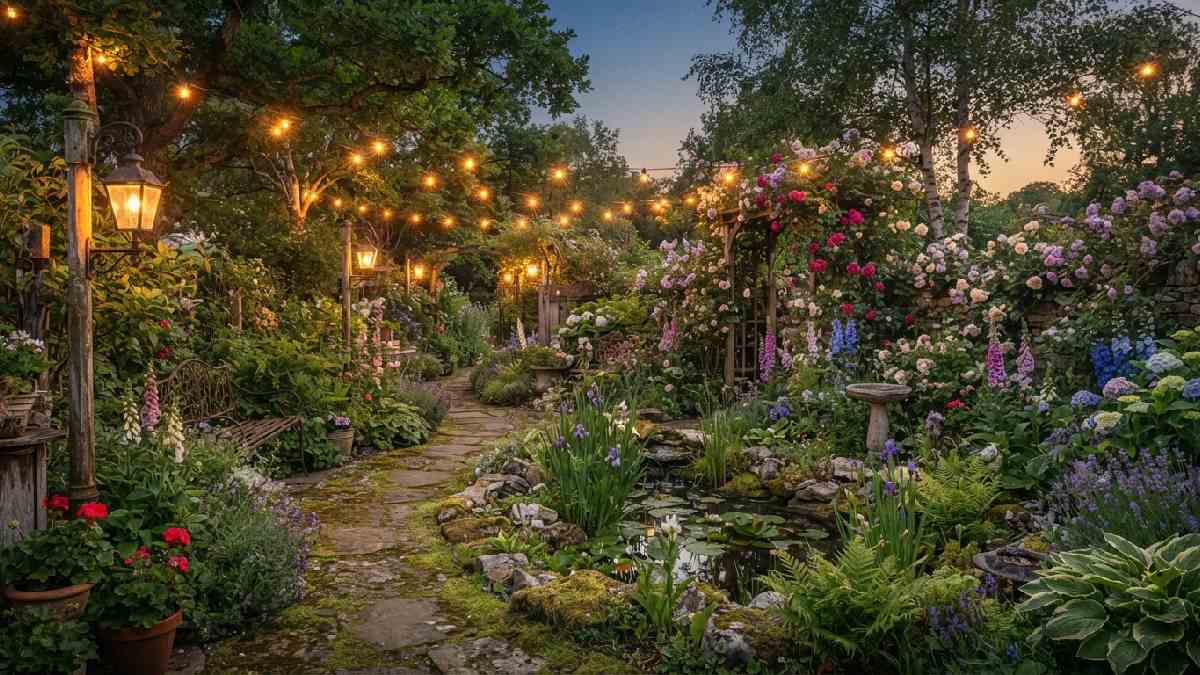
Lighting matters just as much once the sun starts going down. Skip anything harsh, bright, or clinical white in tone. String lights hung loosely between two trees create a warm, inviting glow after dark. Old-style lanterns, whether battery-powered for safety or fitted with real candles for a special evening, add flickering warmth throughout the space. Solar path lights shaped like tiny old-fashioned lamps line a walkway without needing any wiring at all. A fire pit or a small chiminea gives people a reason to linger outside long after the sun has set. Soft, warm light transforms a vintage garden into somewhere people genuinely want to spend their evenings, not just their afternoons.
Keeping It Alive Without Over-Managing It
A vintage garden tends to run a bit more relaxed than a heavily manicured landscape, but that doesn’t mean it can survive without real, consistent care.
Water consistently, particularly during the first year while new plants are still settling into their roots. Prune with a light hand rather than a heavy one, since the goal here is fullness and softness, not sharp, controlled perfection. Simply clear away dead or damaged growth and let the rest of the plant do what it naturally wants to do. Feed the soil with compost once or twice a year to keep everything growing strong beneath the surface. And allow a little self-seeding to happen naturally throughout the space.
Foxgloves and cosmos both drop seed at the end of the season and often return on their own the following spring without any help from you. Instead of pulling every single seedling that pops up in an unplanned spot, let a few stay exactly where they land. This is genuinely how old cottage gardens developed their slightly chaotic, ever-changing character in the first place, generation after generation.
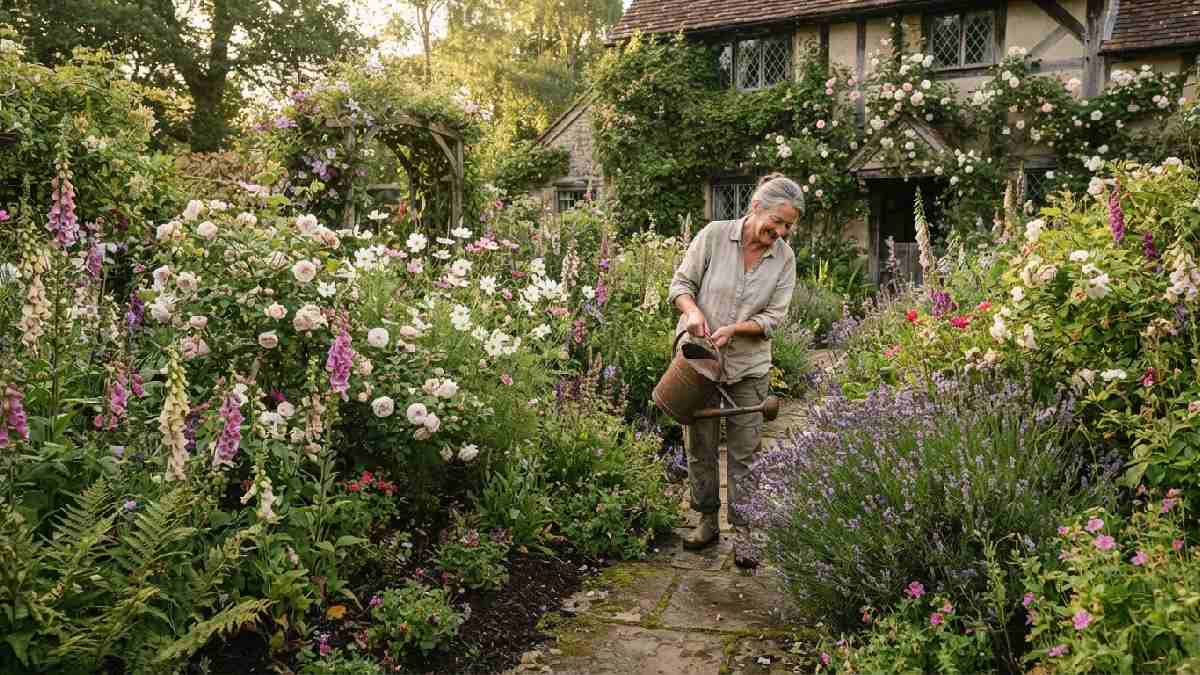
Don’t be overly strict with weeding either, since a vintage garden thrives on a little imperfection. A stray wildflower or a small patch of clover here and there actually adds to the overall charm rather than detracting from it. Just make sure the more aggressive, truly invasive weeds don’t get the chance to take over the whole bed.
Small Yards Can Do This Too
Don’t have a large backyard to work with? That’s genuinely not a problem when it comes to building a vintage garden. A balcony, a patio, or even a narrow side yard can pull off this look with a bit of creative planning. Use vintage-style containers instead of digging up ground beds, choosing pots with some age or character to them wherever possible.
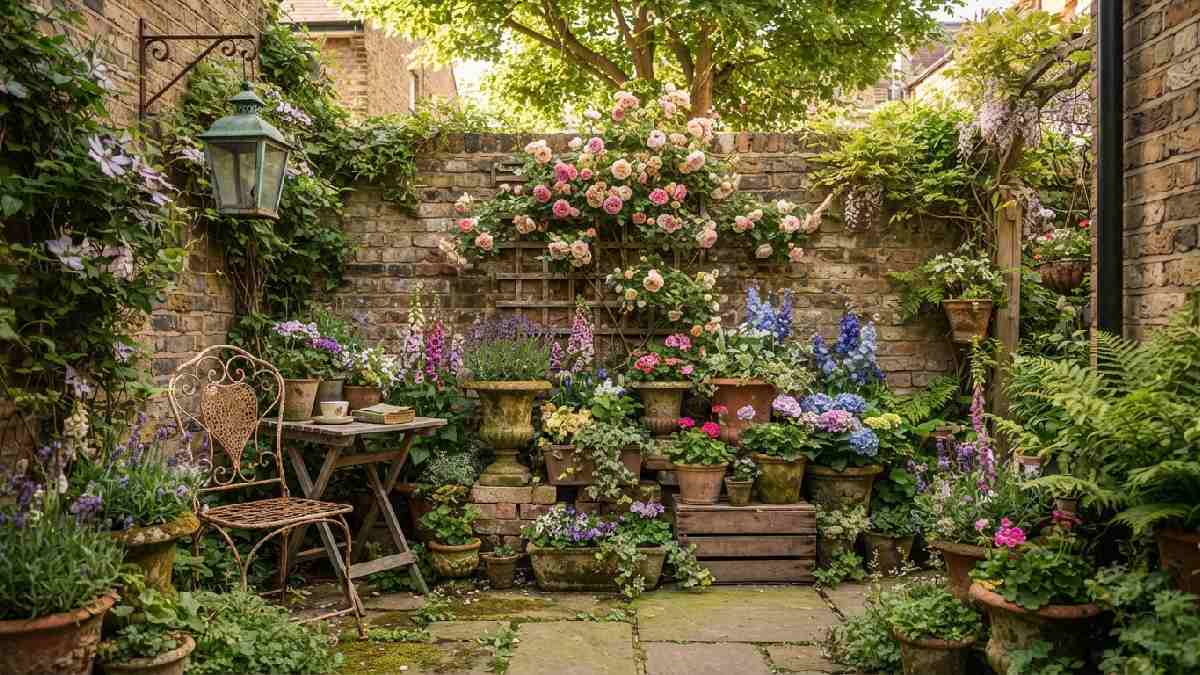
Stack containers at different heights so the display doesn’t read as flat or one-dimensional. Add a single small trellis against a wall to give at least one climbing plant somewhere to grow. Choose a couple of strong statement pieces, one iron chair, one hanging lantern, rather than a dozen small items competing for attention in a tight space. Even a genuinely tiny space can feel like its own secret garden if the mix of plants, containers, and small details is chosen carefully.
Frequently Asked Questions
No schema found.Conclusion
A vintage garden isn’t something you finish over a single weekend, no matter how motivated you are when you start. It grows the same slow way it always has, one season stacked carefully on top of the last. Start simple. Plant a handful of true classics first: roses, peonies, lavender, and build outward from there as your confidence grows. Add furniture and décor piece by piece over time, choosing items that genuinely mean something to you instead of just filling space for the sake of it. Let the plants get a little wild at the edges. Let the path wear in gradually under your feet, season after season. Let a bench sit quietly beneath a tree, waiting patiently for someone to finally sit down and rest there.
Give it enough time, and your vintage garden eventually stops feeling like something you deliberately built. It starts feeling like something that simply grew on its own, quietly carrying a little bit of history that belongs entirely to you and the space you’ve shaped with your own hands.