



Anyone who has spent an afternoon weeding knows the feeling. You kneel and get lost in the work. Then you stand up, and your knees remind you they’re not happy. Almost every gardener feels this sooner or later. A gardening chair fixes this problem. It’s one of those tools people buy only after their body forces them to.
Gardening should feel good. That’s really the whole point. Fresh air, watching plants grow, working with your hands. But when every session leaves you sore, it stops feeling fun. It starts feeling like a chore. A gardening chair changes that. It lets you work close to the ground without putting all your weight on tired knees and joints.
This guide covers what you need to know about gardening chairs. What they do, the different types, what to look for, and how to use one the right way let’s jump in.
By the end, you should feel confident picking a chair that actually fits your body and your garden, instead of just grabbing whatever looks nice on the shelf.
If you’ve never used one, it might sound like a small thing. But ask anyone who switched from kneeling on hard dirt to using a real garden seat. They’ll usually say the same thing. It changes how long they can garden, how their body feels after, and how much they actually enjoy it.
Whether you’ve gardened for years or you’re just starting out, this guide should help you pick a chair that fits your garden and your own body. Nobody wants sore knees to be the reason they stop enjoying something they love.
Why a Gardening Chair Makes a Difference
A lot of garden work happens close to the ground. Weeding, planting seeds, picking low vegetables, checking soil, all of it means bending or kneeling for a long time. This isn’t easy on the body. The strain builds up slowly, and a lot of gardeners don’t notice until it’s already a problem.
A gardening chair takes that pressure off your knees, hips, and back. Instead of balancing on your knees or bending over again and again, you sit at a height that actually helps your body. This matters a lot for older gardeners. But even younger people with strong knees start to like a good chair after a few tough seasons.
There’s also comfort to think about. Kneeling on soil, even soft soil, gets uncomfortable fast. Rocks and roots make it worse. A chair with padding gives you a steady, comfy seat no matter what’s underneath. That means you can focus on the actual work instead of shifting around trying to get comfortable.
A lot of gardeners only discover this after years of doing things the hard way, kneeling on old towels or foam pads that never quite did the job. Once they finally try a real chair, the difference usually shows up within the first few minutes of using it.
Time matters too. Gardeners who use a good seat tend to work longer, simply because their body isn’t complaining every few minutes. If you’ve ever stopped early because your knees gave out, a chair might help you get twice as much done.

This kind of change adds up over a full season. A little extra time in the garden each week, without the usual aches slowing you down, can be the difference between a garden that barely gets by and one that really thrives.
Think bigger picture too. Gardeners who feel pain during work often start skipping certain tasks without even realizing it. Maybe they avoid the lower beds. Maybe they put off weeding until it’s really needed. Over time, this means parts of the garden get less care. Fixing the discomfort brings back a steadier routine.
There’s a mental side too. Knowing a comfy seat is waiting changes how you feel about starting a task. Instead of dreading a long weeding session, you can plan to spend a couple hours outside without any hesitation. That shift alone gets people gardening more often.
Types of Gardening Chairs and Seats
Not every gardening chair looks the same. Picking the right type depends on what kind of gardening you do. Here’s a look at the main styles.
Kneeler Seats and Garden Stools
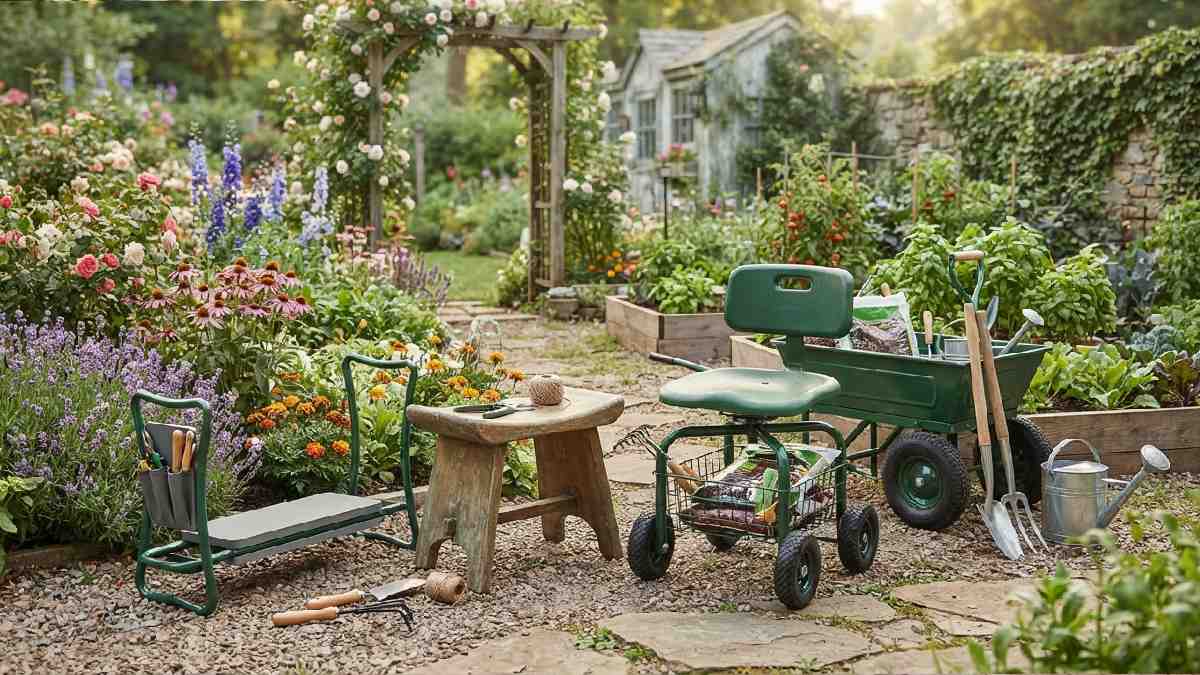
Kneeler seats are probably the most popular style. They usually flip between two positions: a padded seat for sitting, and a padded pad for kneeling. Most come with side handles too. This makes it easier to push yourself back up when you’re done.
Garden stools are simpler. They’re just a low seat, sometimes with a small tray underneath for tools. They work well when you’re staying in one spot, like a raised bed or a row of plants. Some stools even swivel, letting you turn without standing up.
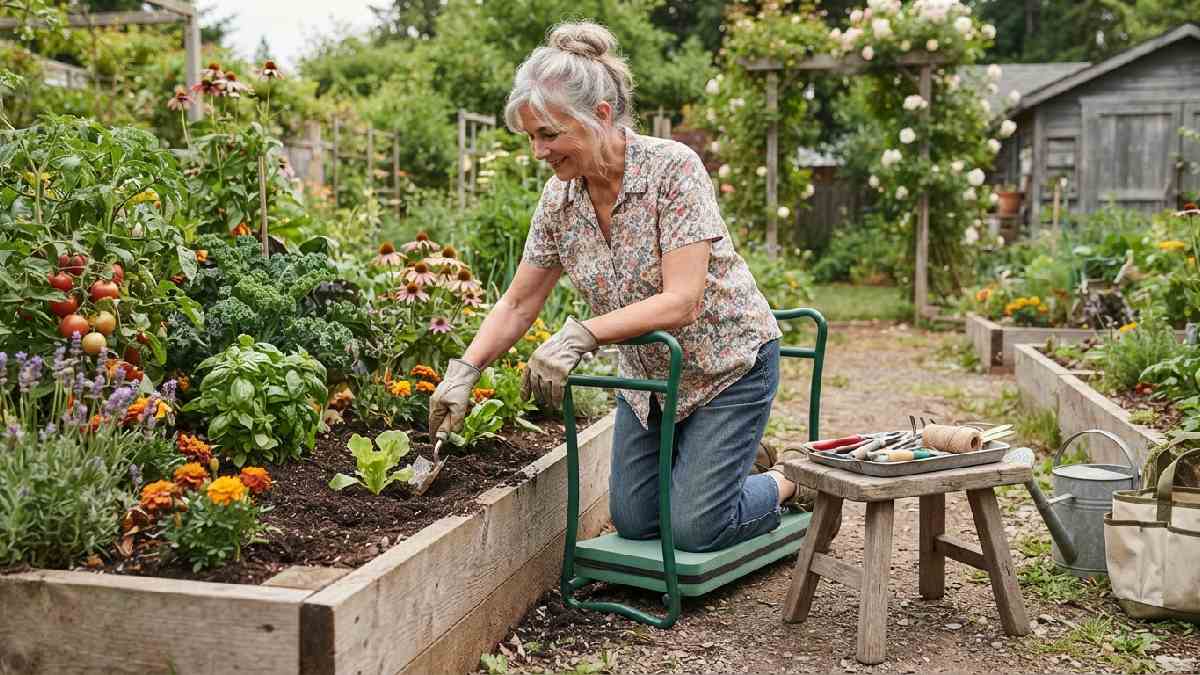
Both styles are usually light and easy to move around. This makes them great if you work in different spots during a session. They also tend to cost less, making them a good first choice if you’ve never used a garden seat before.
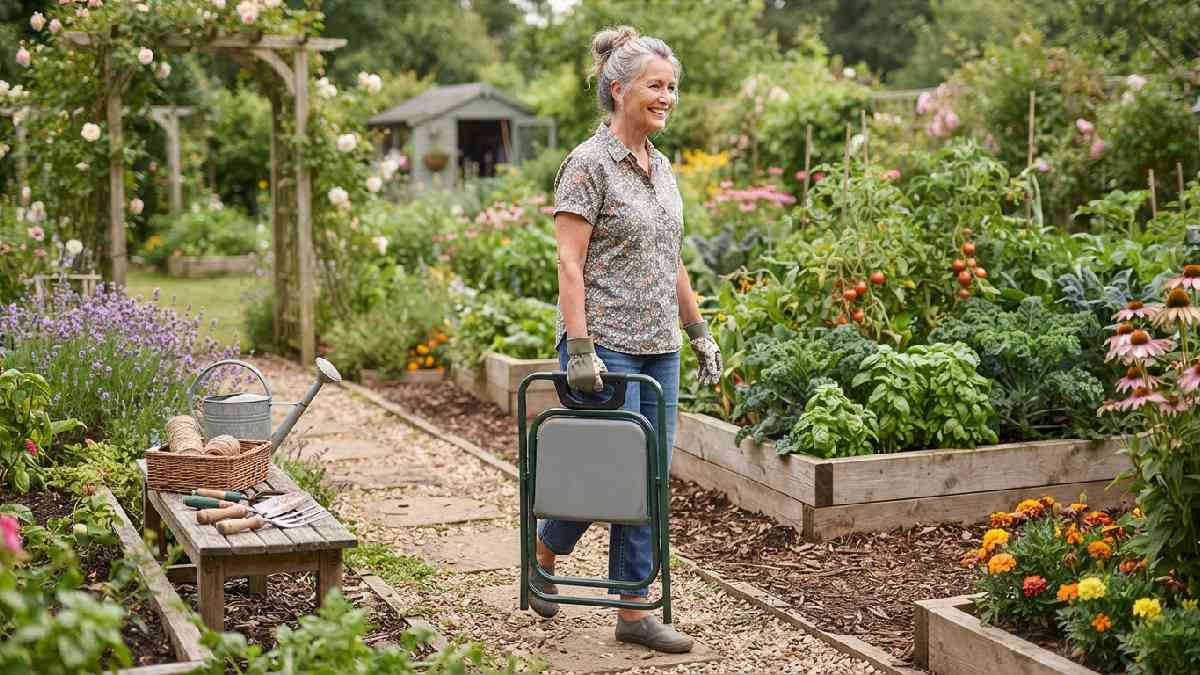
Some kneeler seats fold flat for storage too. This matters more than it sounds like, since garden tools already take up a lot of space in a shed. A folding chair leans against a wall or slides under a bench, instead of sitting out taking up room all year.
A lot of first-time buyers find kneeler seats the easiest to get used to, mostly because they’re simple to understand right out of the box. There are no wheels to figure out, no complex parts to adjust, just flip it one way to sit, or the other way to kneel.
Rolling Garden Chairs and Carts
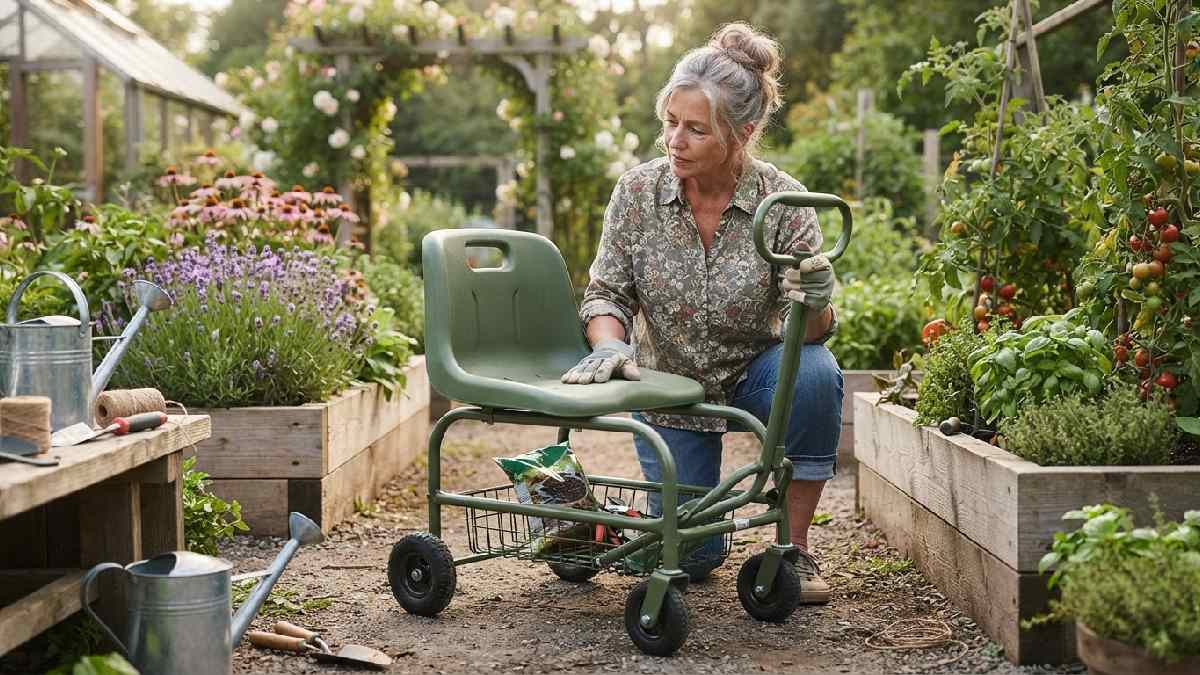
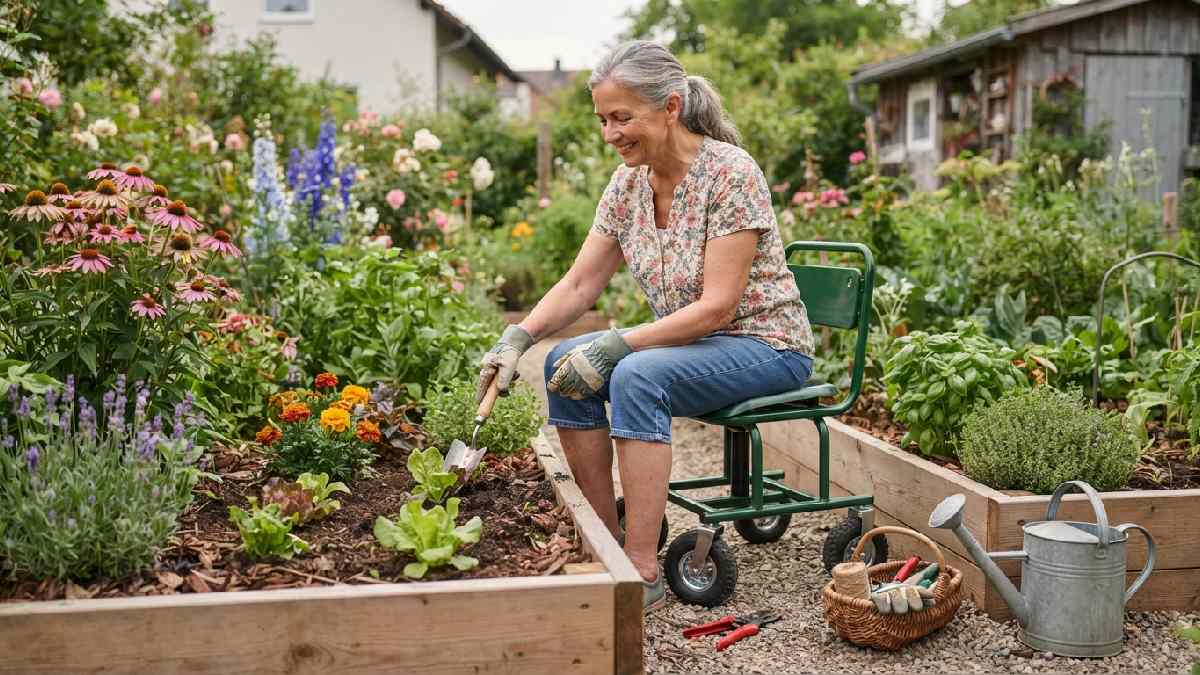
Rolling garden chairs add wheels to the mix. This lets you move along a row without standing up and sitting back down every few feet. It works great for long garden beds, where constant moving would eat up a lot of time and energy.
Garden carts go a step further. They often combine a rolling seat with storage for tools, gloves, and small pots. Some even have a tray for cut flowers or vegetables, so you don’t need extra trips back to the house.
The tradeoff with rolling chairs is weight. They’re usually heavier than a simple stool, and they work best on flat, even ground. Rolling one over a rocky path or thick mulch gets frustrating fast. Think about your yard’s ground before picking a rolling design.
Some rolling models use soft, air-filled tires instead of hard plastic wheels. These handle bumpy ground much better. If your yard has any slope or rough patches, check the wheel type before buying. Hard plastic wheels tend to get stuck or bump hard over roots and rocks.
Storage space also varies a lot between models, so it’s worth thinking about what you actually plan to carry. A gardener who only needs a spot for gloves and a trowel doesn’t need the same size cart as someone hauling a full set of hand tools around the yard.
What to Look for When Choosing a Gardening Chair
Not all gardening chairs are built the same. A few key details make a big difference in how comfortable and useful yours turns out to be.
Height and Adjustability
Seat height matters more than people expect. Too low, and you’re still straining to reach plants or stand up. Too high, and you lose the benefit of being close to the ground for detailed work like weeding. Many good chairs offer adjustable height. This lets you switch between sitting and a lower kneeling position depending on the task.
If you’re tall, check the seat height before buying. Some cheap models are made with a shorter person in mind. The same goes if you’re short, since a seat that’s too tall leaves your feet dangling. That’s not great for balance while reaching for plants.
It also helps to think about your garden’s layout. Raised beds usually need a taller seat than ground-level planting, since you’re working at a higher surface already. A chair with adjustable height covers both, so you don’t need two separate seats.
Testing the height before you buy, if you can, makes a real difference too. Sitting in the chair for even a minute in the store tells you more than any spec sheet, since comfort depends a lot on your own body shape and how you naturally sit.
Weight and Portability
A gardening chair that’s hard to carry defeats its own purpose. If you have a big yard with many garden beds, you’ll want something light enough to move easily. Look for a chair with a carry handle or a folding design. These features make storage easier when you’re not using it, and moving it easier when you are.
If you mostly garden in one small spot, weight matters less. A heavier, sturdier chair might actually work better here, since it won’t wobble as much while you lean to reach something.
Material matters too. Aluminum frames are lighter and resist rust better than steel. This is worth thinking about if your chair sits outside a lot, exposed to rain and humidity. Plastic parts keep the weight down further, but they can crack over time if left in direct sun for years.
Weight limit is worth checking too. It’s easy to overlook while comparing chairs based on looks alone. Cheaper models sometimes have a lower weight limit than expected. A chair that wobbles or feels shaky isn’t doing its job, no matter how soft the cushion feels at first.
Foldable chairs also tend to travel well, which matters if you ever bring your gardening habit to a community plot, a friend’s yard, or a gardening class. A chair that folds down small enough to fit in a car trunk gives you options a bulkier one simply can’t.
Benefits for Your Back, Knees, and Joints
The biggest reason people buy a gardening chair comes down to their body, plain and simple. Gardening means a lot of repeated bending, kneeling, and crouching. Over time, this wears down joints that weren’t built for that kind of stress.
Knees usually take the worst of it. Direct pressure on hard or uneven ground, plus twisting to reach plants at odd angles, wears down knee joints faster than most people think. A cushioned seat removes that pressure completely. You can work through a whole session without your knees holding up your body weight.
Your lower back benefits just as much. Bending from the waist to reach low plants puts a lot of strain on your spine, especially when it happens dozens of times in one session. Sitting at the right height lets you reach forward without that constant bending. This cuts down on the ache you feel the next morning.
This matters a lot if you deal with arthritis, old injuries, or general stiffness that comes with age. A gardening chair won’t fix these problems, but it removes one of the biggest daily strains. That often makes the difference between gardening comfortably for years, and giving it up because it hurts too much.
A lot of people don’t realize how much this one change can affect their overall love for gardening. Pain has a sneaky way of turning a favorite hobby into something you start avoiding, even without meaning to. Removing that pain, even partly, tends to bring the joy right back.
Even without joint problems, a chair helps stop them before they start. Strain builds up slowly and quietly. A lot of gardeners don’t notice the damage until it’s already a real issue. Using good support early is a simple way to protect your body for years to come, not just this season.
Hips and ankles benefit too, even though people don’t talk about them as much. Crouching for a long time puts odd pressure on your hips. Shifting your weight while balancing on your feet can tire out your ankles more than you’d think. A seat takes pressure off all these joints at once, instead of fixing just one spot while the rest of your body picks up the slack.
Wrists and shoulders often get pulled into this too, especially if you use hand tools a lot. Balancing awkwardly on your knees while gripping a trowel adds extra tension through your arms. A stable seat gives you a steady base to work from. This makes your hand movements feel more controlled and a lot less tiring by the end of a session.
Posture plays a role too, even if it doesn’t get much attention. Sitting with your back reasonably straight while you work puts far less strain on your spine than hunching forward for an hour straight. A chair with some back support, even a small amount, helps keep your posture in check without you having to think about it constantly.
How to Use a Gardening Chair Effectively
Owning a gardening chair is one thing. Using it in a way that actually helps your body is another. A few small habits make a real difference here.
Positioning for Different Tasks
Different tasks call for different seat positions. Switching between them as you work makes everything more comfortable. For close-up tasks like weeding or planting seedlings, the kneeling position on a kneeler seat usually gets you close enough to the ground without straining your back.
For tasks like pruning or trimming flowers at a higher level, the seated position often works better. It keeps your hands at a more natural height without you hunching forward. Rolling chairs shine here too, letting you move along a row and adjust your position without standing up between each plant.
It also helps to face your work directly instead of twisting your body to reach something off to the side. This sounds small, but repeated twisting while seated is actually a common way people strain their back, even in a good chair. Moving the chair itself, instead of twisting toward the plant, protects your spine a lot more than people think.
Taking breaks matters too, even with a comfy seat. A chair cuts down on strain, but it doesn’t remove the need to stand and stretch now and then. Staying in one spot too long, even a supported one, can still leave you stiff. A quick stand and stretch every twenty minutes keeps your whole body feeling better by the end of the day.
Planning your tasks by height helps too. Start with lower, ground-level work while you’re still fresh. Then move to seated tasks at a higher level as your energy dips. This stops you from switching positions too much when you’re already tired. A little planning up front helps you finish feeling good instead of worn out.
Caring for Your Gardening Chair
A gardening chair spends a lot of time outside, facing dirt, moisture, and sun. A bit of basic care goes a long way toward making it last.
Wipe down the seat and frame after use, especially after working in wet soil or right after watering. Dirt and moisture left sitting on cushions can lead to mold over time. This shortens the life of the padding and makes the seat less pleasant to sit on.
Store your chair somewhere dry when you’re not using it. A shed or garage is better than leaving it out in the yard all the time. Constant sun breaks down padding and plastic parts faster than most people expect. It fades colors and makes materials brittle after a season or two.
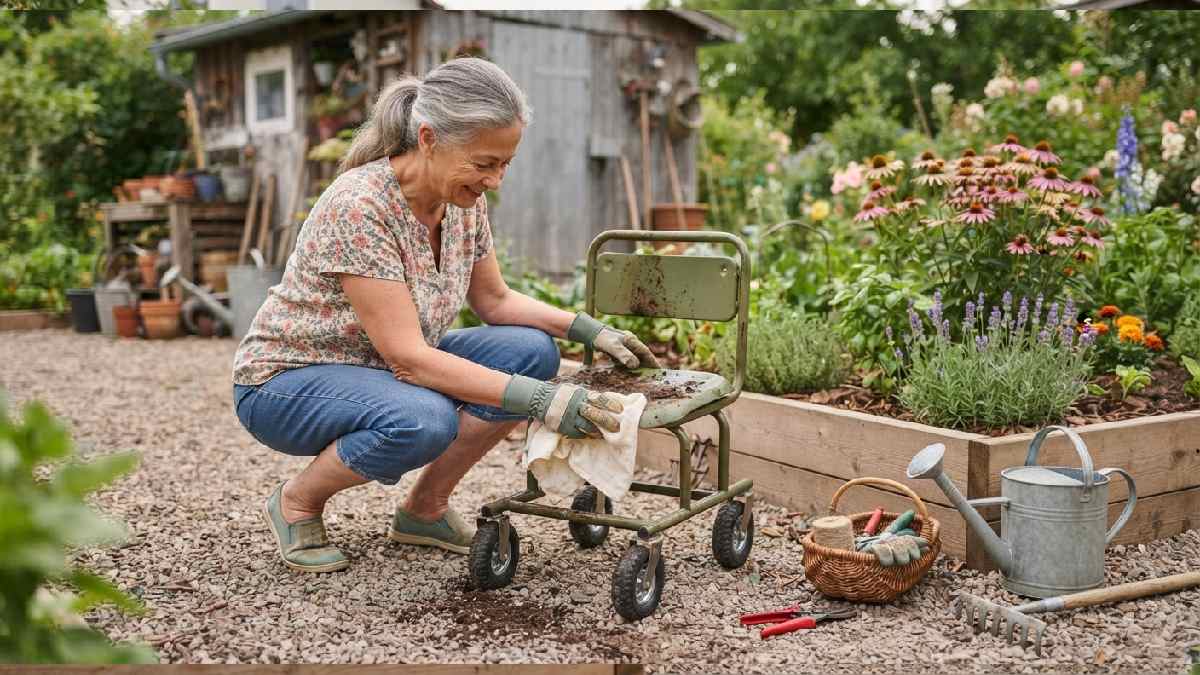
Check the moving parts once in a while too, especially on rolling chairs or folding models. Wheels can pick up dirt that slows them down over time. Folding hinges also benefit from a quick wipe-down now and then. A few minutes of care every month keeps your chair working well for years instead of needing a replacement after one season.
If your chair has a removable cushion cover, wash it every so often, especially at the end of a busy gardening season. Dirt and sweat build up over months of use, and a clean cushion just feels better to sit on. Most covers can go in the washing machine, but check the care label first.
A quick check each spring, before the busy season starts, also helps catch small problems early. Look for loose bolts, worn padding, or cracks in plastic parts. Fix small issues right away instead of waiting until something breaks mid-task. A chair that gets checked and cared for tends to feel just as sturdy in year three or four as it did on day one.
This kind of upkeep doesn’t take long, maybe ten minutes once a year, but it saves you from buying a whole new chair sooner than you actually need to.
FAQ
No schema found.Conclusion
A gardening chair might seem like a small thing to add to your setup, but the difference it makes on your body is anything but small. Less strain on your knees, less ache in your back, and more time spent actually enjoying your garden instead of fighting through discomfort just to finish a task. It’s a simple change with a genuinely big payoff.
Whether you go with a simple kneeler seat, a rolling chair, or a full garden cart with storage built in, the right choice comes down to how you garden and how much ground you cover in a typical session. Try one out, get a feel for how it changes your routine, and there’s a good chance you’ll wonder why you didn’t get one sooner. Even a modest, budget-friendly option beats no seat at all, so you don’t need the fanciest model to notice a real difference right away.
Many gardeners describe the switch as one of those rare purchases that quietly improves something they already loved doing. Think about your own habits honestly before deciding, and don’t be afraid to spend a little more for comfort on a tool you’ll use all season long. A few extra dollars now often saves both money and pain later.
At the end of the day, gardening is supposed to feel good, plain and simple. A comfortable seat is one of the easiest ways to make sure it actually does, season after season, without your body paying the price for all that time spent close to the ground.
If you take one thing away from this guide, let it be this: comfort while gardening isn’t a luxury; it’s just common sense. Your knees and back will thank you for making the switch, and so will your garden, once you’re spending more happy time in it.