
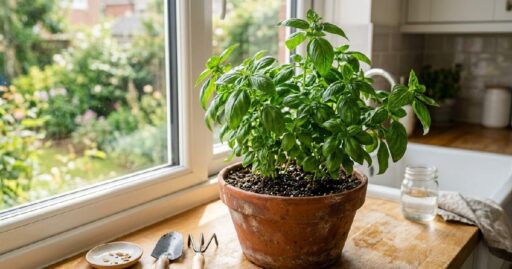
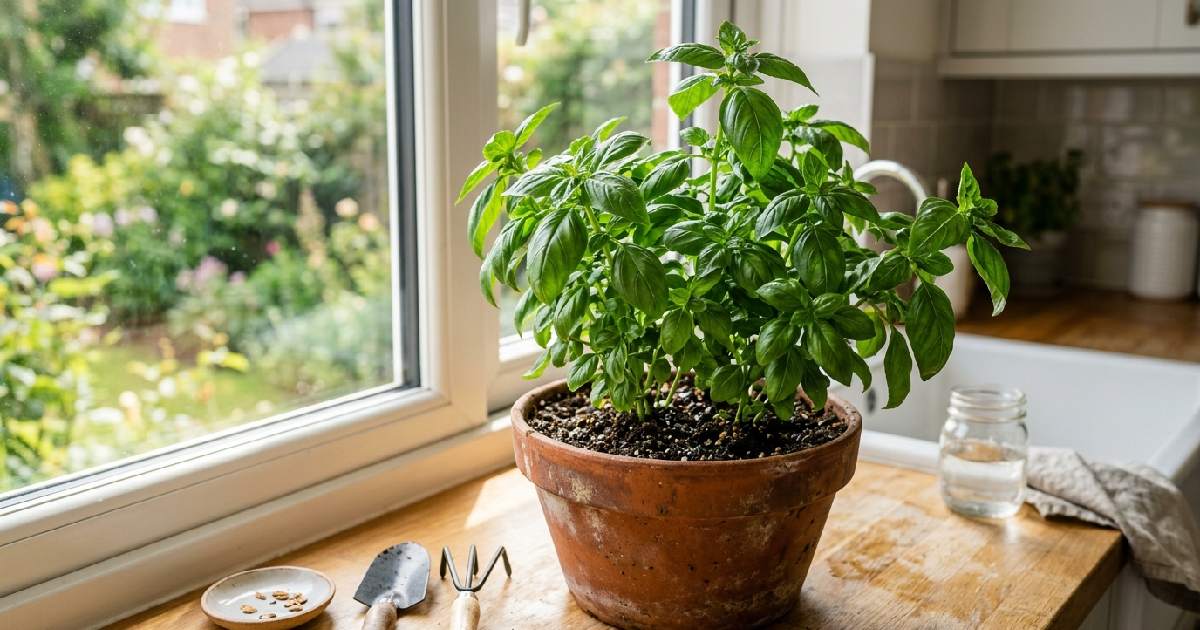

Basil is one of those herbs that almost everyone tries to grow at some point. It smells amazing the second you touch it, it grows fast, and one good plant can keep your kitchen stocked all summer. Learning how to grow basil is also pretty forgiving, so it’s a great pick if you’ve never grown anything before.
But basil isn’t totally hands-off. It wants a fair amount of sun, steady water, and regular trimming. Give it that, and it turns into a bushy little machine that keeps growing back no matter how much you pick from it. Skip those steps, and you’ll end up with a tall, thin plant that flowers early and stops tasting very good.
This guide covers the whole process of how to grow basil, from picking a variety and starting seeds, to keeping the plant healthy, to harvesting without slowing it down. It works whether you’re growing basil in a garden bed, a raised bed, or just a pot on your windowsill.
What Is Basil, and Which Kind Should You Grow?
Before getting into how to grow basil step by step, it helps to know what you’re actually working with. Basil is a warm-weather annual. That means it grows, flowers, and dies in a single season, and it can’t handle frost at all. It’s actually part of the mint family, which you can see in the square stems if you look closely. It originally comes from warm parts of Asia and Africa, so heat and sun are basically its favorite things.
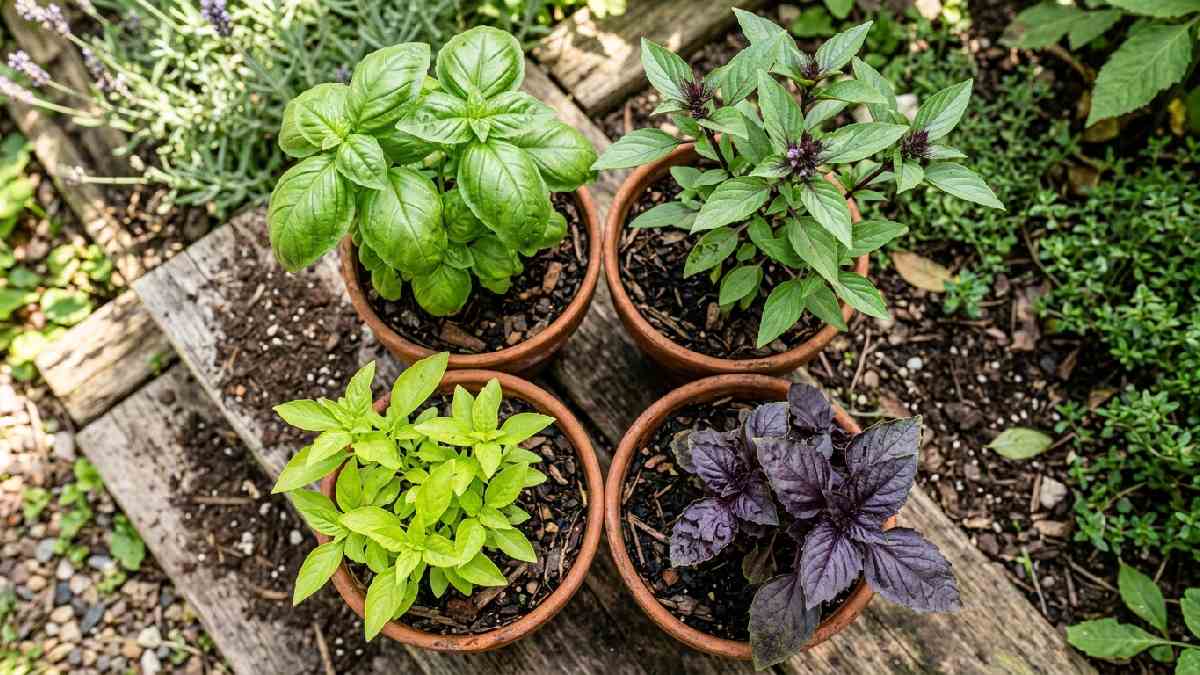
There’s more than one type of basil, and the one you pick can change your cooking more than you’d think. Knowing how to grow basil well starts with choosing a variety that fits your kitchen and your climate.
Sweet Basil (Genovese)
This is the basil most people picture. It’s what goes into pesto and most Italian recipes. It’s also the easiest to find at a garden center, so it’s the obvious first choice.
Thai Basil
Thai basil tastes spicier, almost like anise. It holds up well in stir-fries and hot dishes because it doesn’t lose its flavor as fast as sweet basil does.
Lemon Basil
This one has a bright, citrusy kick. It works nicely in drinks, salads, and fish dishes.
Purple Basil
Sometimes labeled Dark Opal, this variety looks great in a garden and on a plate. The flavor is a bit milder and a little peppery compared to sweet basil.
A Few Others Worth Trying
Holy basil, or Tulsi, has a stronger, clove-like taste and shows up more in tea than in cooking. Greek basil grows in small, tight mounds, which makes it a good choice for pots or garden borders. Once you’ve had luck with one type, adding a second is easy since they all need pretty much the same care.
Seeds or Starter Plants: Which Should You Buy?
One of the first real decisions in how to grow basil is whether to start from seed or buy a small plant. You can grow basil from seed or grab small plants from a nursery. Both work fine. It really just comes down to timing.
Seeds are cheaper, and you’ll find way more variety than what’s sitting on a garden center shelf. The catch is time. Basil seeds take five to ten days to sprout, then a few more weeks before there’s enough to actually harvest.
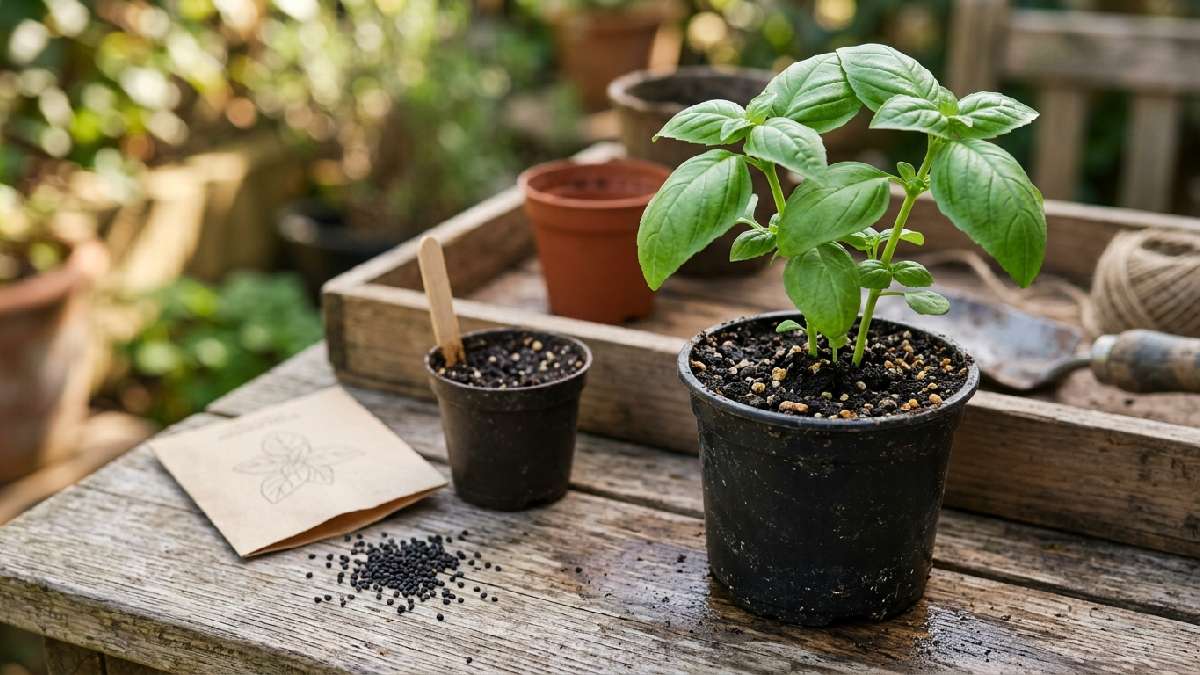
Starter plants skip all that waiting. You get a few weeks’ head start, which is handy if you’re planting later than you planned. The tradeoff is cost, and fewer variety options.
If it’s your first time growing basil, a nursery plant takes some pressure off. Once you’ve done it once, seeds stop feeling so intimidating.
When and Where to Plant Basil
Getting the timing and location right is where most of how to grow basil successfully actually happens. Get this part wrong and nothing else on this list will save the plant.
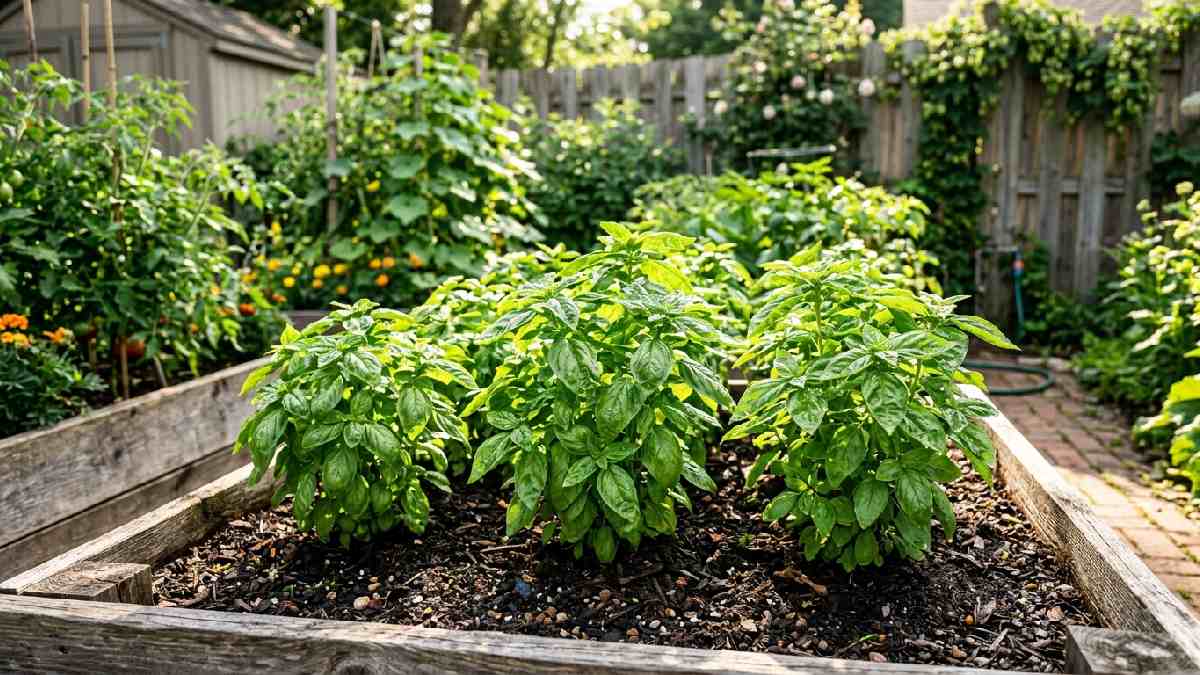
Timing: Basil and Cold Don’t Mix
Basil really can’t stand the cold. A light frost will kill it outright, and anything under about 50°F will stunt it and turn the leaves black. So timing matters more here than with most herbs.
Outdoors, wait until frost season is completely over and the soil has warmed up, usually a week or two after your last frost date. Basil actually prefers soil closer to 70°F. Plant too early and you’ll probably just be replanting after a late cold snap wipes everything out.
Want a head start? Start seeds indoors about six weeks before your last frost date. That timing lines up nicely with when the soil outside is finally ready. If you’re growing basil indoors year-round, frost isn’t even a factor, just keep it away from cold drafts near windows in winter.
How Much Sun Does Basil Need?
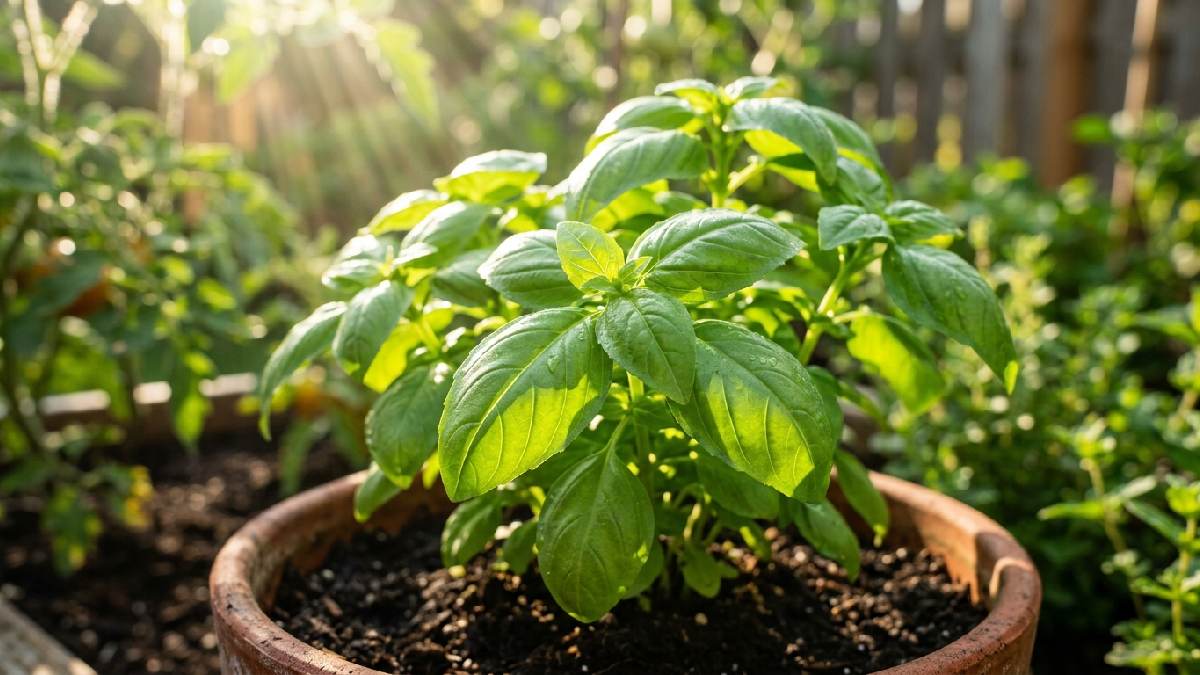
Sunlight is probably the single biggest factor in how to grow basil that actually produces something worth harvesting. A lot. Six to eight hours of direct sun is the target. In really hot climates, a little afternoon shade actually helps, since too much heat plus full sun can make the leaves turn bitter. Everywhere else, more sun usually just means a fuller, more productive plant.
Soil and Drainage
Soil is the part of how to grow basil that people underestimate most. Drainage matters just as much as sunlight here. Basil hates sitting in wet soil, and soggy roots are one of the fastest ways to kill it. Rich, well-draining soil with a pH somewhere between 6.0 and 7.0 is the sweet spot.
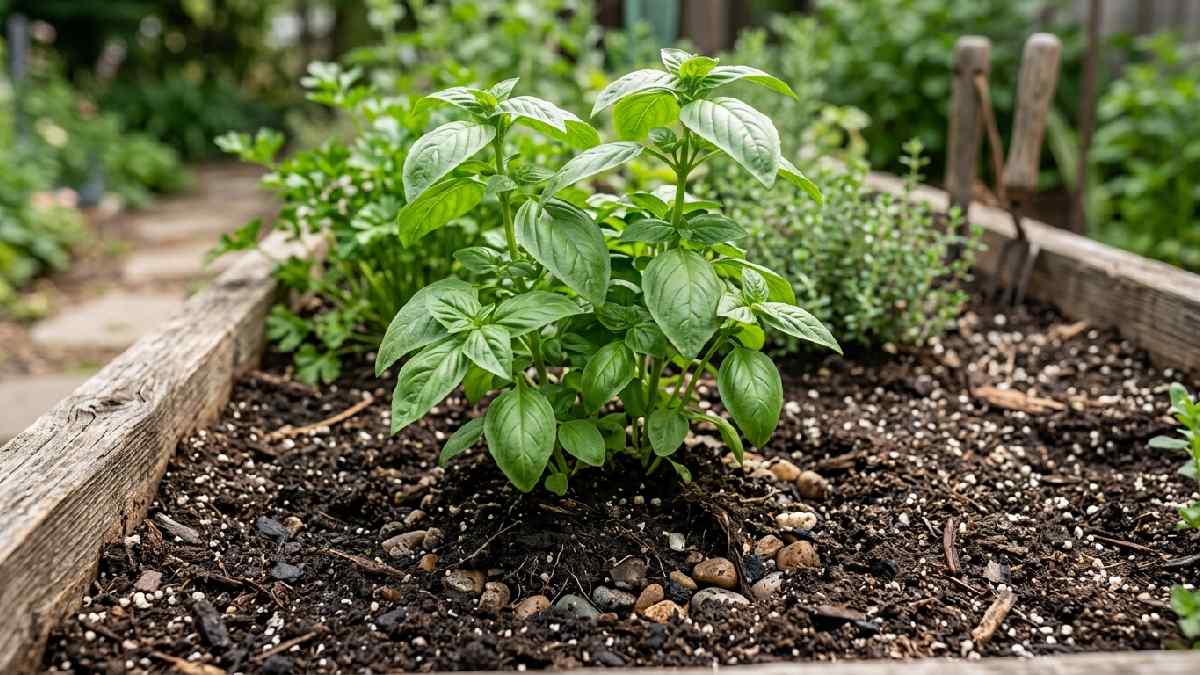
If you’re planting in the ground, mix a few inches of compost into the top six inches of soil first. That takes care of both nutrients and drainage at once. If your yard tends to stay soggy after rain, a raised bed or container gives you a lot more control.
Growing Basil in Pots
If you’re wondering how to grow basil without a yard, containers are the answer. Basil does great in containers, which is good news if you don’t have garden space. Go with a pot that’s at least eight to twelve inches wide, with drainage holes. Smaller pots work for a little while, but basil grows fast and will outgrow them quickly.
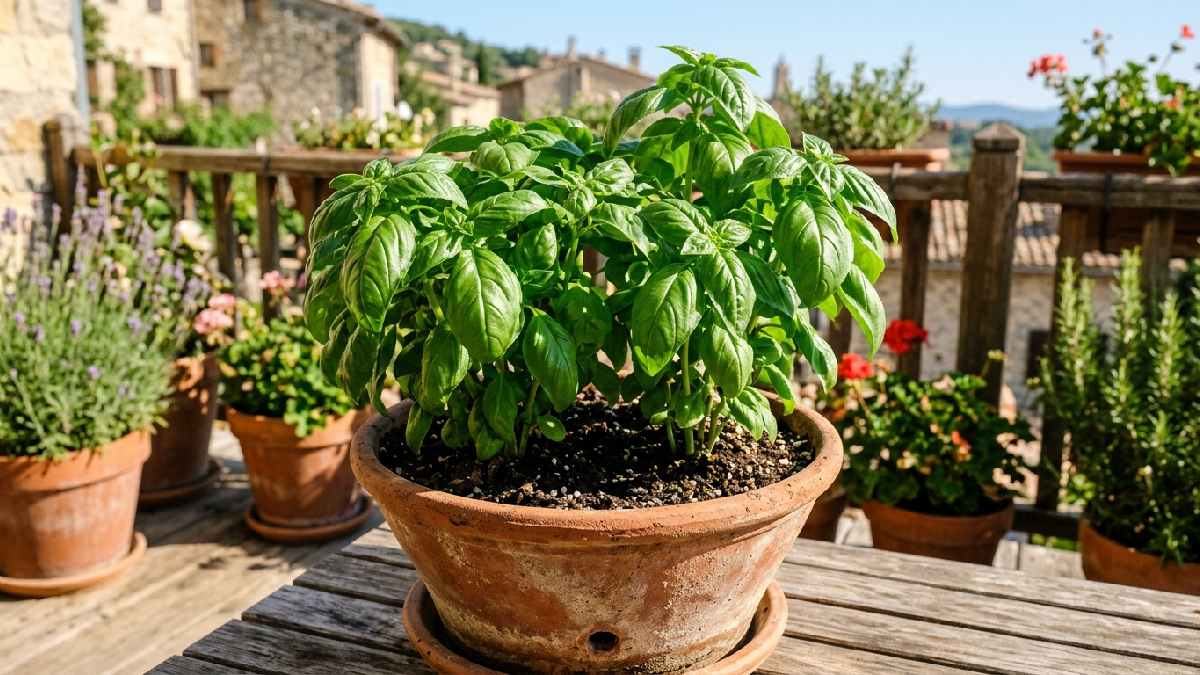
Skip garden soil in pots. Use a potting mix instead, since garden soil compacts and drains poorly in containers. As for pot material, terracotta breathes well and helps avoid overwatering, but dries out faster, so you’ll water more often in summer. Plastic and glazed ceramic hold moisture longer, which helps in heat but makes it easier to overwater when it’s cooler out. Either way, drainage holes aren’t optional.
Planting Basil, Step by Step
This is the hands-on part of how to grow basil, where all the planning turns into an actual plant in the ground or in a pot.
Starting Seeds Indoors
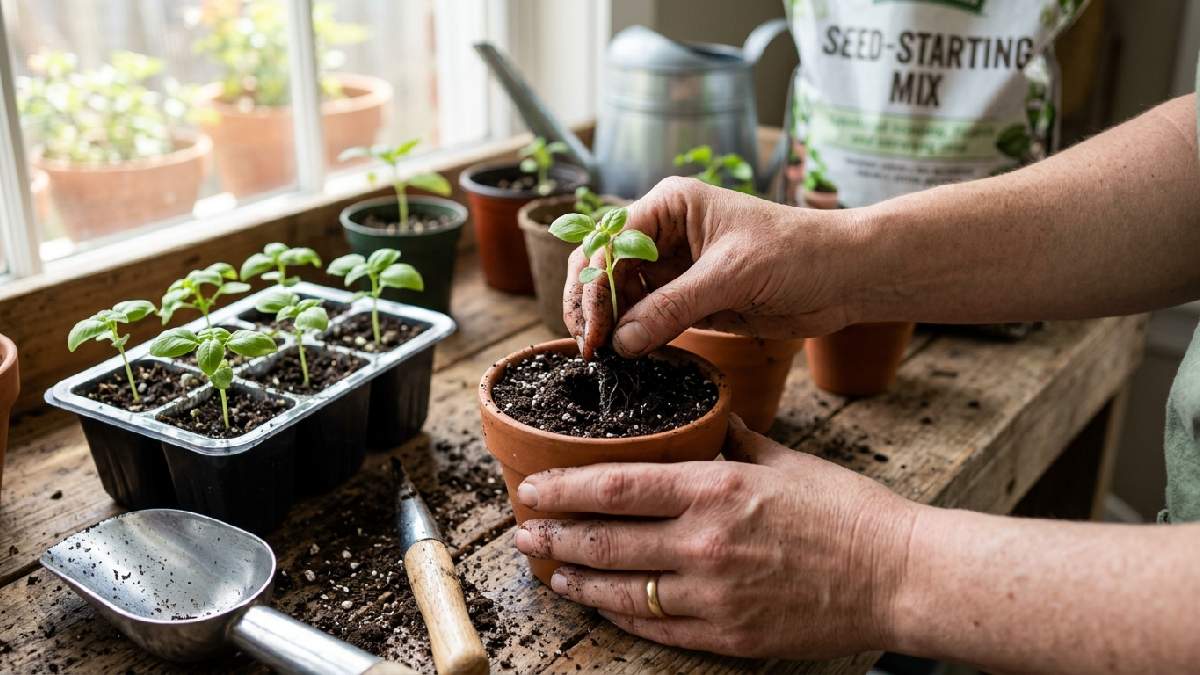
This is where how to grow basil from scratch really begins for most people. Fill small pots or trays with seed-starting mix, water it well, and sow seeds about a quarter inch deep. They’re tiny, so a light dusting of soil is plenty. Keep it moist, not soaked, and put it somewhere warm, around 70°F if you can manage it. A sunny window works, but a grow light gives more consistent results if your light is weak.
Seeds usually pop up in five to ten days. Once you see the first real leaves, not the little rounded ones that show up first, thin things out so each cell or pot only has one seedling. It feels wasteful, but crowded seedlings just compete with each other, and you’ll end up with stronger plants by giving each one its own space.
Sowing Seeds Outdoors
Once the soil’s warmed up, sow seeds a quarter inch deep, about two inches apart. When seedlings are a couple inches tall, thin them to their final spacing, usually ten to twelve inches.
Moving Seedlings Outside
If you’re transplanting seedlings that grew indoors, harden them off first. Basically, get them used to outdoor conditions gradually over about a week. Start with an hour or two outside somewhere sheltered, then slowly build up. Skip this step and you’ll likely see shock, where leaves wilt or scorch from the sudden change.
Once they’re hardened off, plant at the same depth they were growing at before, water them in, and space plants ten to twelve inches apart so they have room to fill out.
Taking Care of Basil All Season
The real skill in how to grow basil well shows up after planting, in the weeks and months of ongoing care.
Watering Basil the Right Way
Getting watering right is one of the trickiest parts of how to grow basil, since too much or too little both cause real problems. Basil wants steady moisture, not wet feet. Aim for soil that stays lightly damp, never bone dry and never soggy.
Stick a finger in the top inch of soil. Dry? Water it. Still damp? Wait another day. This works a lot better than watering on some fixed schedule, since weather and pot size change how fast things dry out.
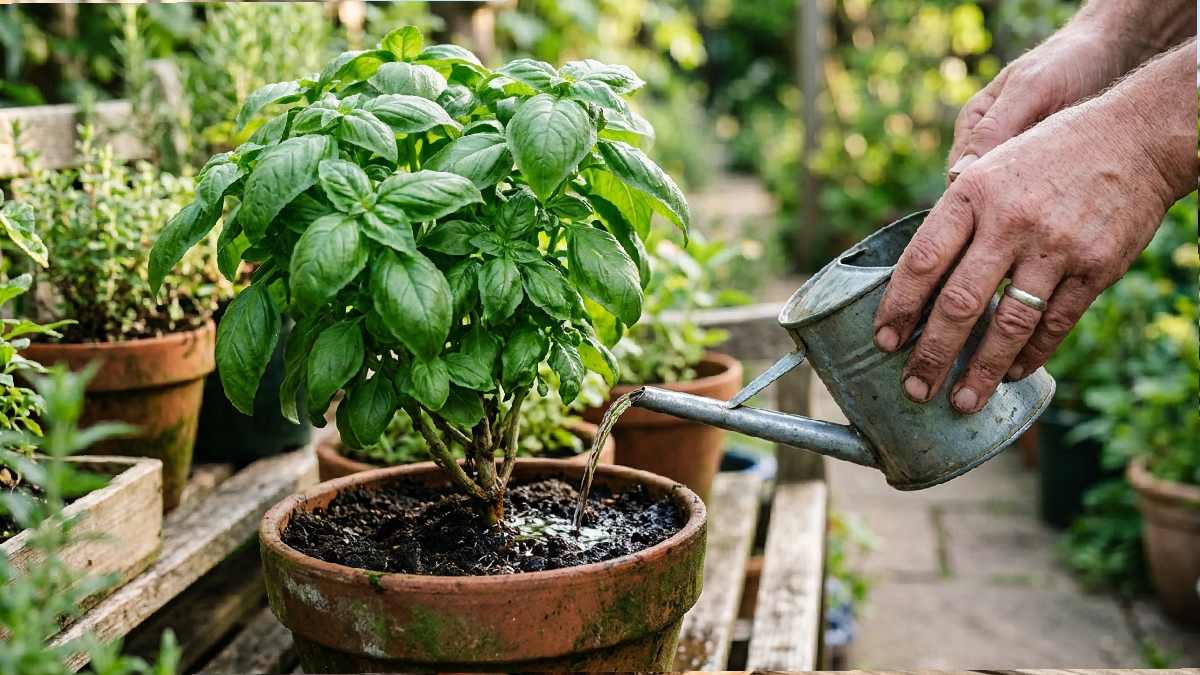
Water at the base, not overhead. Wet leaves, especially overnight or in humid weather, invite fungal issues like downy mildew, which is one of basil’s more common problems. Pots dry out fast, sometimes needing water daily when it’s hot, so check on container basil more often than anything planted in the ground. Mulch helps hold moisture for in-ground plants, just keep it a couple inches from the stem so it doesn’t rot.
Feeding Basil
Feeding correctly is another piece of how to grow basil that people either overdo or ignore completely. Basil doesn’t need much feeding, especially if you already worked compost into the soil. Still, a little regular feeding keeps leaf growth strong, especially in containers, where nutrients wash out every time you water.
A balanced liquid fertilizer, diluted to about half strength, every three or four weeks during the season, works well for most basil. Skip heavy nitrogen feeds, since they push leafy growth at the cost of flavor and can attract more pests. Fish emulsion or diluted compost tea work just as well, and plenty of gardeners prefer them for anything they’re planning to eat.
If your soil’s already rich from compost, you might not need to feed much at all. Watch the leaves instead. Pale or slow-growing leaves usually mean it’s time for a feed.
Pinching and Pruning: The Step Everyone Skips
If there’s one thing that separates people who actually know how to grow basil from people who just plant it and hope, it’s this step. Here’s the one thing that matters more than anything else on this list, and it’s the step almost every beginner skips. It just feels wrong to cut a plant that’s barely gotten started.
Once your basil has three or four sets of true leaves, usually around six inches tall, pinch off the top of the stem right above a leaf node, where two leaves meet the stem. This pushes the plant to grow two new stems instead of one. More stems means more leaves, and a bushier, sturdier plant overall.
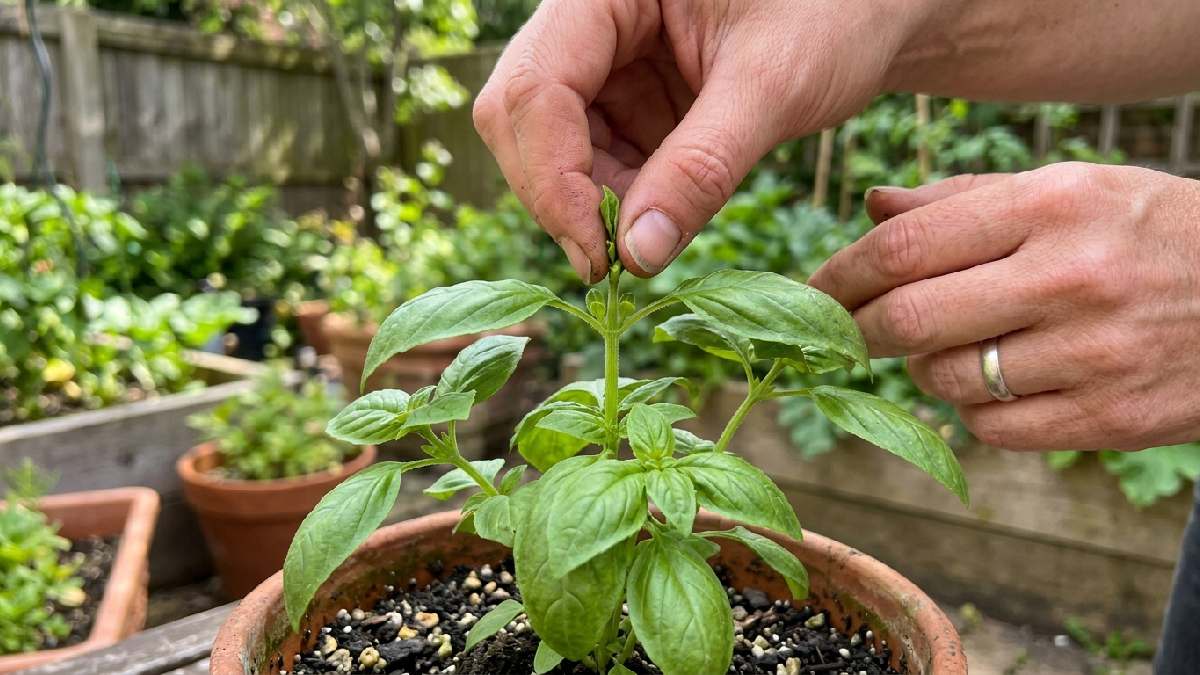
Keep doing this every couple of weeks all season. When you harvest for cooking, do it the same way: cut stems above a leaf node instead of pulling individual leaves off the top. That constant light trimming is what keeps a plant productive for months instead of flowering early and calling it quits.
Watch for tiny flower buds at the top of the stems, too. Once basil flowers, it shifts its energy into making seeds instead of leaves, and the flavor usually turns bitter. Pinch those buds off as soon as you see them. And if you do miss it and the plant flowers anyway, it’s not ruined. Just cut it back hard and it’ll usually bounce back with fresh growth.
Common Basil Problems and Quick Fixes
Even when you know how to grow basil well, a few problems tend to show up sooner or later. Here’s how to spot and fix the common ones.
Yellowing Leaves
Almost always a watering issue, either too much or too little. Check the soil before jumping to conclusions. Overwatered basil often looks yellow and wilted even though the soil’s wet. Underwatered basil looks dry, crispy, and droopy.
Black Spots After Cold Weather
This is usually cold damage, not disease. Basil really doesn’t like anything under 50°F, and even one chilly night can leave marks that stick around. New growth should look fine once it warms back up.
Downy Mildew
Shows up as yellow patches on top of the leaves with a fuzzy gray coating underneath. It loves humidity and still air, so watering at the soil level, spacing plants out, and avoiding overhead watering (especially at night) all help prevent it. Once it shows up, pulling off affected leaves and improving airflow is really your best option. There’s no great cure once it’s established.
Aphids and Beetles
Pests are just part of how to grow basil outdoors, and these two show up more than any others. These are the most common pests you’ll deal with. A strong blast of water knocks aphids right off, and insecticidal soap handles worse infestations. Japanese beetles can just be picked off by hand into soapy water. Tedious, but it works.
Root Rot
Caused by soil staying wet for too long. It’s one of the more serious basil problems, but also one of the easiest to avoid. Well-draining soil and pots with drainage holes take care of most of the risk before it even starts.
Growing Basil Indoors All Year
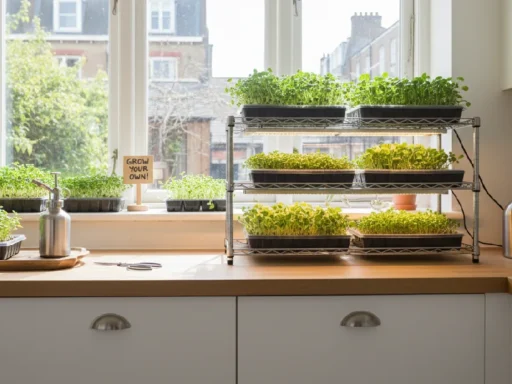
Figuring out how to grow basil indoors comes down to solving one problem: light. The biggest challenge inside is light. A south-facing window gets the most sun in most homes, but it’s often still not quite enough to hit basil’s six to eight hour preference, especially once winter days get shorter. A grow light placed close to the plant, running twelve to sixteen hours a day, makes a real difference compared to relying on a windowsill alone.
Indoor basil likes a bit of airflow too, whether that’s an open window on a mild day or a small fan nearby. Still air causes the same fungal issues indoors as it does outside, and a bit of movement also helps the stems grow stronger. Water it the same way you would outdoors: check the soil instead of sticking to a strict schedule, since indoor conditions shift a lot depending on heating and the season.
Growing Basil Alongside Other Plants
Part of how to grow basil successfully is picking the right neighbors for it in the garden. Basil is often planted next to tomatoes, and there’s good reason for that. Some gardeners think it helps keep certain pests away from tomatoes, and at the very least, both plants want similar sun and water, so they’re easy to grow together. Peppers make a good neighbor too.
On the flip side, basil doesn’t get along well with rue, and it’s often kept away from sage as well, since the strong smells can mess with each other’s growth. None of this is backed by hard science across the board, but generations of gardeners have noticed the pattern, and there’s little harm in trying it yourself.
Harvesting, Storing, and Keeping Basil Fresh
The whole point of learning how to grow basil is getting to actually use it, so harvesting the right way matters just as much as growing it.
When and How to Pick It
Start harvesting once the plant has enough leaves to spare, usually around six to eight inches tall with several sets of leaves. Early morning is best, after the dew’s dried off but before the day heats up, since that’s when the essential oils behind basil’s flavor and smell are strongest.
Cut stems just above a leaf node instead of pulling off individual leaves. This keeps the same bushy regrowth going that pinching encourages earlier on, and the plant stays full instead of looking picked-over.
A healthy basil plant can handle being harvested from again and again all season. Sometimes it grows back fast enough to pick again within a week or two. The more you harvest and pinch, the more it produces, which is a rare case where using something a lot actually helps it thrive.
Keeping Basil Fresh After Cutting
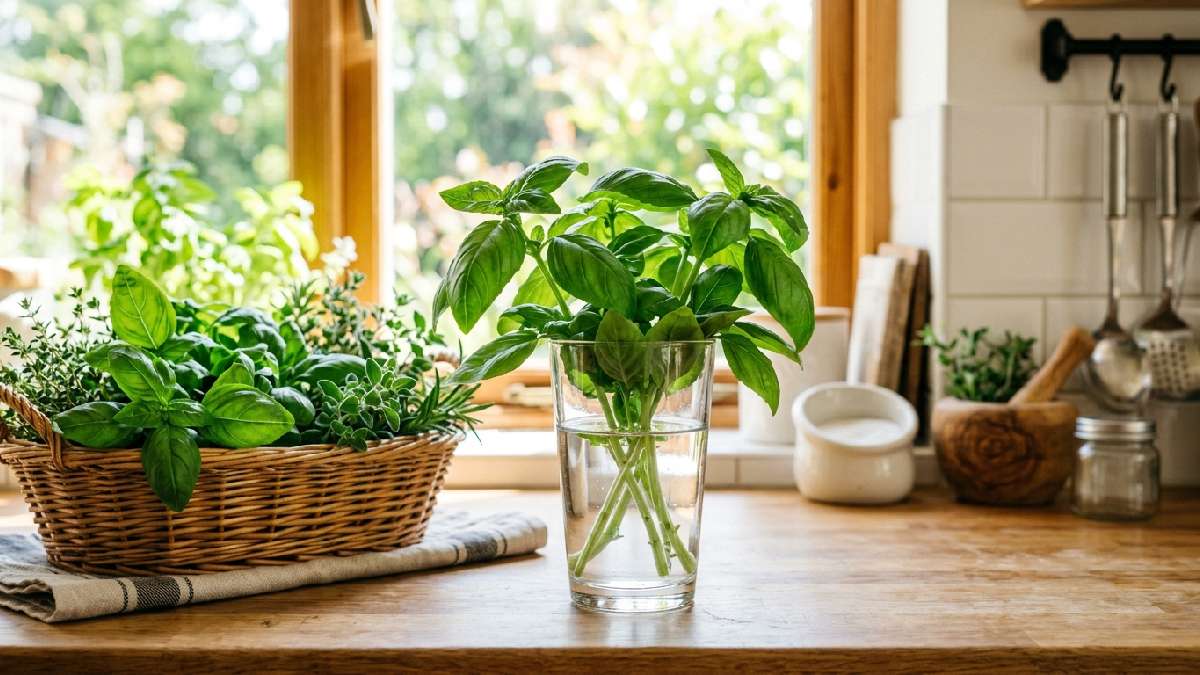
Fresh basil doesn’t do well in the fridge. Cold turns the leaves black within a day or two. Instead, treat it like cut flowers: stand the stems in a glass of water at room temperature, out of direct sun, and it’ll stay fresh for several days, sometimes even growing roots.
Freezing or Drying Extra Basil
Got more basil than you can use? It freezes and dries well. Freezing chopped leaves in a bit of olive oil, using an ice cube tray, keeps most of the flavor for later cooking. Drying works too, though dried basil tastes noticeably milder, so it’s better suited to slow-cooked dishes than something like a fresh Caprese salad.
Frequently Asked Questions
Here are quick answers to the questions people ask most about how to grow basil.
How long does basil take to grow?
From seed, basil usually takes three to four weeks before you can start light harvesting, and around eight weeks to reach a full, bushy size. Starter plants cut a lot of that time out and can often be harvested within a couple weeks of planting, which is worth knowing if you're impatient to see results from how to grow basil at home.
Why is my basil tall and thin?
That's called being leggy, and it almost always comes down to not enough light or not enough pinching. This is one of the most common mistakes in how to grow basil, so give it more sun if you can, and pinch the tips regularly so it branches out instead of just shooting upward.
Can basil handle cold weather outside?
No. It's very sensitive to cold and gets damaged or killed below about 50°F, with actual frost killing it outright. If a cold night is coming and your basil's in a pot, bring it inside for the night rather than risk losing it.
Does basil grow back every year?
No, it's an annual, so one plant lives out its whole cycle in a single season and won't return on its own next year. That said, it self-seeds pretty easily if you let it flower, so a lot of gardeners get volunteer basil popping up the following spring anyway.
How often should potted basil be watered?
Often, especially in hot weather, sometimes daily since pots dry out fast. Instead of watering on a set schedule, just check the top inch of soil with your finger and water when it's dry.
Conclusion
Basil rewards a little effort more than most herbs do. Give it plenty of sun, keep the watering consistent without letting it sit in soggy soil, and pinch it back regularly instead of leaving it alone, and you’ll get a plant that keeps producing for months. Skip the pinching, though, and you’ll probably end up with a tall, sparse plant that flowers early and stops being much use in the kitchen.
Whether it’s one pot on a windowsill or a full row in a vegetable bed, the basics of how to grow basil don’t change. Wait for warm soil with no frost risk, give it plenty of sun, water with a bit of thought, and harvest often. Basil is one of the rare plants where using it constantly is actually what keeps it going, so don’t hold back once it gets growing. That, in short, is how to grow basil that actually keeps you in fresh leaves all season.