

Broccoli Microgreens: Health Benefits, Nutrition & Growing Tips
A few years back, most people never cared about microgreens. They looked like decorations on restaurant plates. Tiny leaves, thin stems, high prices. That was it. Then people started noticing something strange. These small greens were carrying more nutrition than many fully grown vegetables. Broccoli microgreens became one of the biggest names in that conversation.
Now they are everywhere. Fitness kitchens, healthy cafes, even small home gardens. There’s a reason behind that hype, though. These greens are not just trendy food. They actually bring serious nutritional value while taking almost no space to grow.
Introduction
Broccoli Microgreens are becoming very popular because they are fresh, healthy, and easy to grow at home. A few years ago, most people thought these tiny greens were only for restaurant decoration, small leaves, thin stems, nothing special. Later, people started learning that Broccoli Microgreens contain strong nutrition in a very small amount.
That changed how people looked at them. Now they are used in salads, sandwiches, smoothies, and healthy meals every day. I tried them once in a homemade salad, and they tasted fresh and light. Another reason people like Broccoli Microgreens is how simple they are to grow. They need little space, grow fast, and fit easily into healthy eating habits at home.
Why Are Broccoli Microgreens Considered a Superfood?
Broccoli microgreens look simple at first glance. Small green shoots, nothing fancy. But people who have studied nutrition closely often talk about them like they carry something extra inside. Almost like the plant packed its strongest version in the earliest stage of life. You don’t need a big serving either; a small handful already feels different in terms of nutritional density.
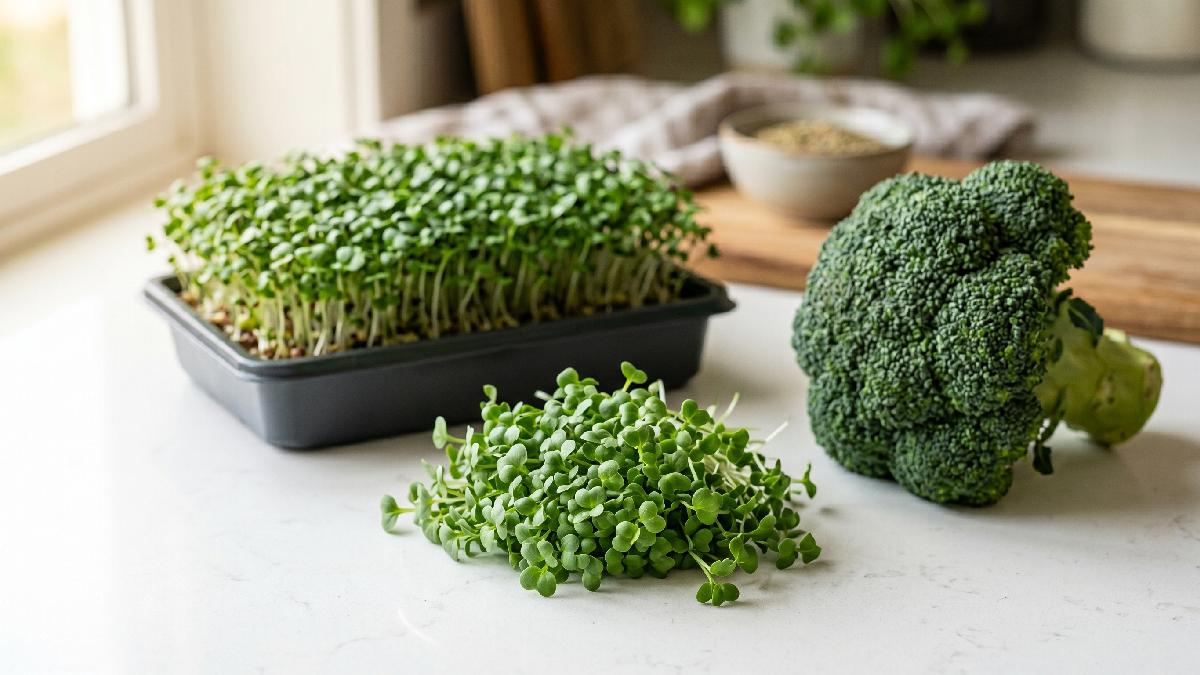
In modern diets where processed food dominates, these tiny greens started getting attention. Not because of the trend only, but due to what they actually contain. They grow fast, are harvested early, and somehow that early stage makes them richer in certain compounds compared to mature broccoli. Some people eat them daily, others just add them on top of meals. Either way, they stand out.
Rich in Sulforaphane
Sulforaphane is the main reason broccoli microgreens get so much attention. It’s a natural compound that forms when the plant is chopped or chewed. Sounds technical, but it basically activates inside your body when you eat it.
Researchers often connect sulforaphane with cellular protection and detox support. Not in a “magic cure” way, more like a support system inside the body that helps manage stress at a cellular level.
Broccoli microgreens carry a higher concentration of this compound compared to mature broccoli. That’s the interesting part. Same plant, different stage, different strength. People don’t usually notice taste changes much, slightly peppery, maybe, but the real value is hidden in what you don’t see on the plate.
Loaded With Vitamins and Nutrients
These microgreens are not just about one compound. They carry a mix of vitamins like A, C, and K, along with minerals in small but useful amounts. The density is what matters here. Because they are harvested early, nutrients stay concentrated. You eat less volume but still get a good nutritional punch. It’s kind of efficient food if you think about it.
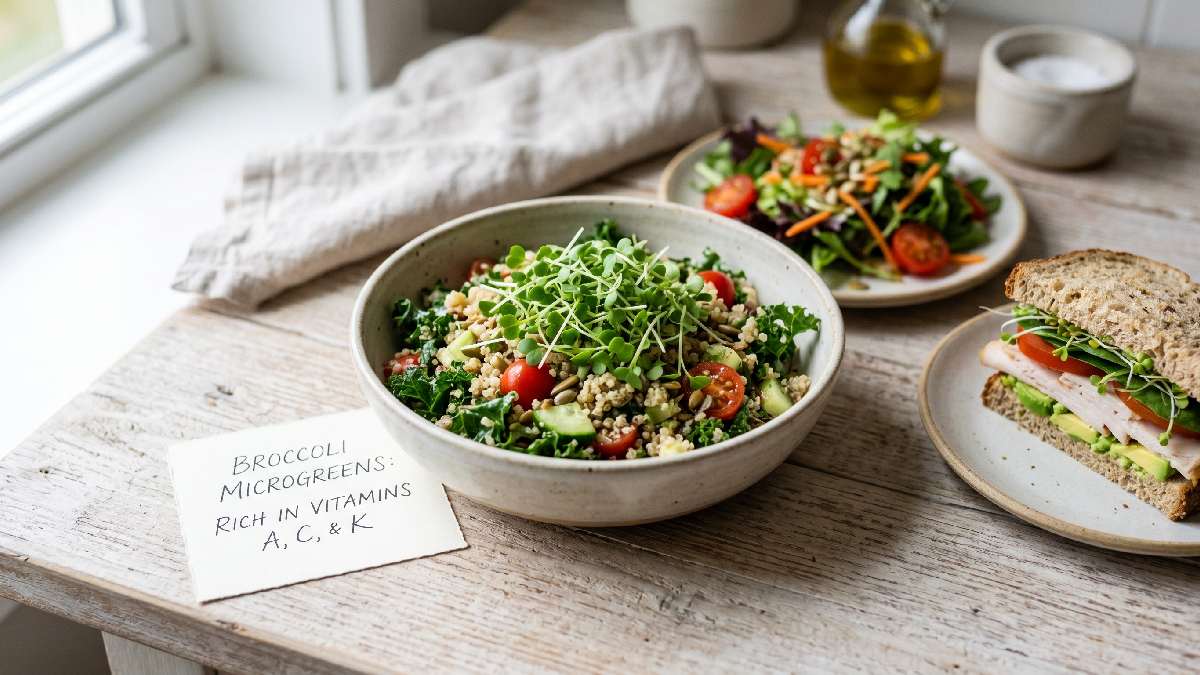
They also fit easily into daily meals. Salad, sandwich, smoothie, or even sprinkled over rice. No complicated cooking. Just a simple addition, and it changes the profile of the meal slightly. Not every superfood feels accessible, but this one does. It doesn’t demand lifestyle change, just small habit shifts.
May Support Overall Wellness
People often talk about “wellness” in a big abstract way, but in reality, it’s small, consistent inputs. Broccoli microgreens fit into that idea quietly. They may support digestion, immune response, and general body balance due to their nutrient profile. Nothing dramatic or instant, more like long-term support if taken regularly.
Some eat them for prevention; others just for better nutrition. Both approaches work in their own way. It doesn’t feel like medicine, more like food doing its job properly. In their daily routine, they don’t demand attention. But over time, they become part of a healthier pattern without much effort.
Broccoli Microgreens vs Broccoli Sprouts
People often mix up broccoli sprouts and broccoli microgreens. Looks similar at first glance; both are young forms of the same plant. But the way they grow, the time they take, and even the texture you eat are quite different.
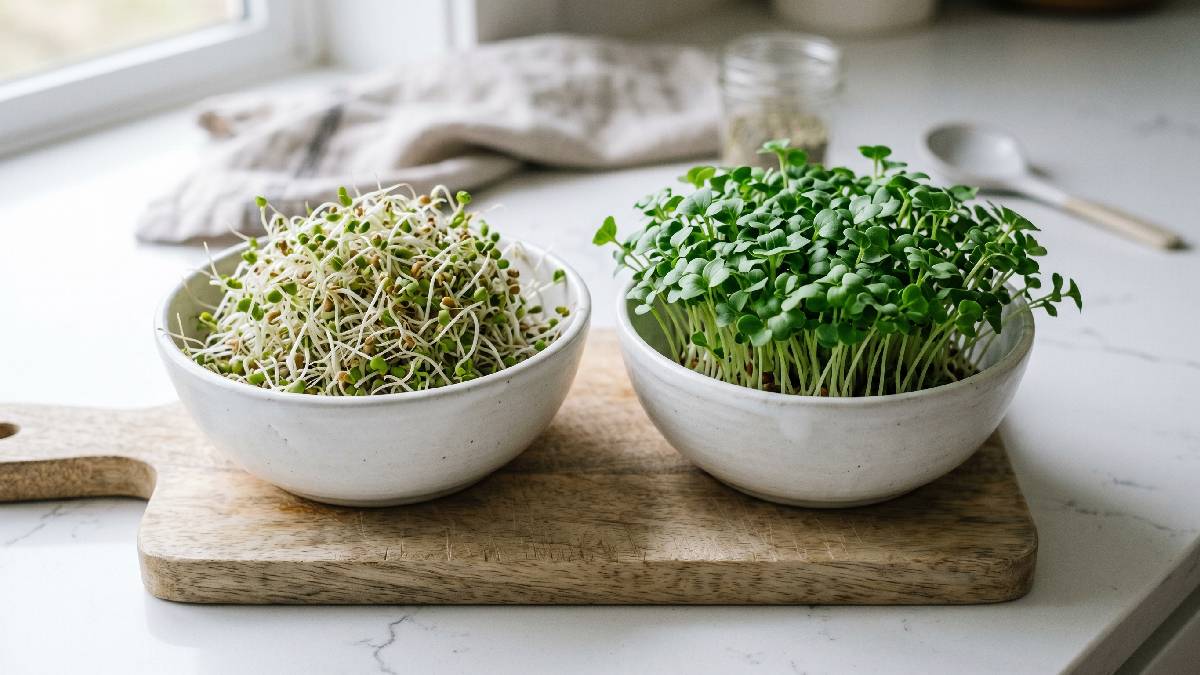
Once you notice these differences, it becomes easier to choose what fits your plate better. They are not at the same stage of life, not even close. One is almost at the newborn plant stage, the other is already starting to form leaves.
Growing Method
Broccoli sprouts are grown in water. No soil, just moisture and a controlled environment. They are usually rinsed multiple times a day to keep them fresh and active. It’s a very wet growing system. Broccoli microgreens grow in soil or sometimes a growing medium like coco peat.
They need light, air, and a bit more space compared to sprouts. You can actually see tiny leaves forming, not just seed shoots. Different environment, different structure. That alone changes everything else, too.
Harvest Time
Sprouts are super quick. Around 3 to 5 days, and they are ready. That’s almost like instant food in plant terms. They are harvested before any real leaf development starts. Microgreens take more patience.
Usually 7 to 14 days, depending on conditions. They are allowed to grow a bit more, develop stem strength, and produce early leaves before cutting. So one feels fast and raw, the other slightly more developed and structured.
Texture and Taste
Sprouts are crunchy and juicy. You bite them, and there’s a watery freshness, almost mild and neutral in taste. They don’t carry strong flavor layers. Microgreens feel different. More leafy texture, slightly firm stems, and a stronger flavor profile.
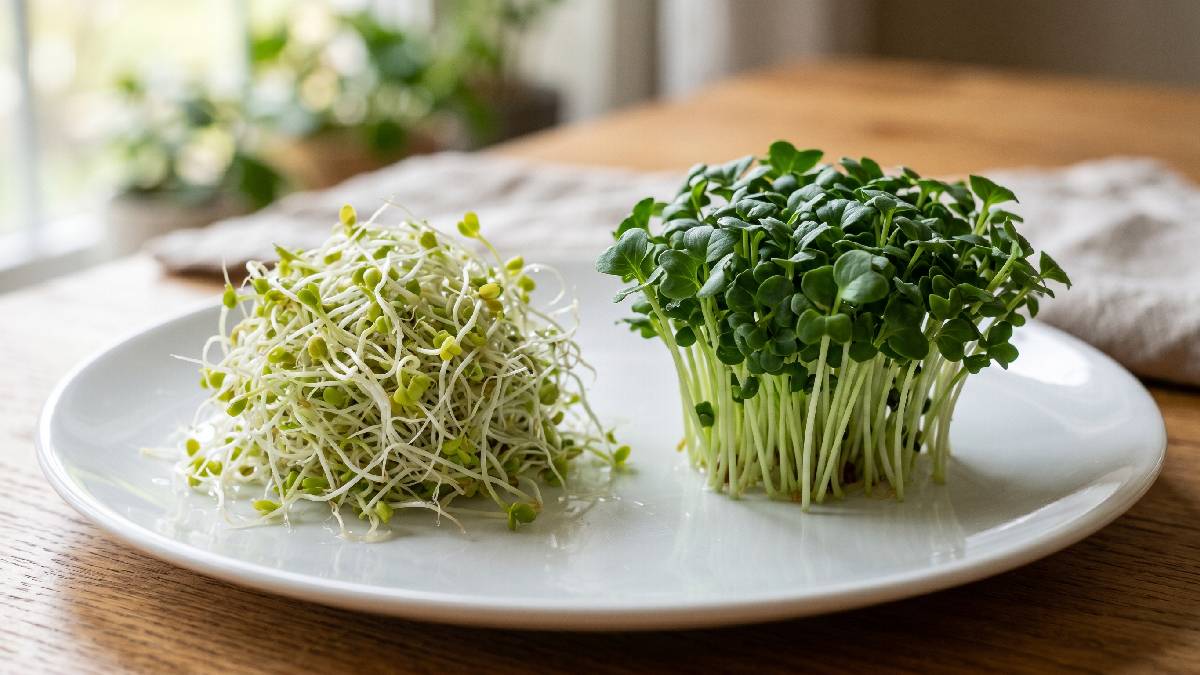
Sometimes peppery, sometimes earthy, depending on growing conditions. They feel more like “real greens” on a plate. That’s why chefs often prefer microgreens for finishing dishes. They add both taste and visual appeal.
Safety Differences
Safety is one area where the growing method matters a lot. Sprouts are grown in very wet conditions. That moisture can sometimes increase the risk of bacterial growth if not handled properly. That’s why washing and hygiene are very important. Microgreens grow with better airflow and less constant moisture sitting around.
Soil or growing medium allows roots to breathe more, which reduces some of the risks linked to overly wet environments. Not saying one is unsafe, and the other is perfect, but the conditions definitely change the level of caution needed. In simple terms, sprouts are faster and wetter; microgreens are slower and more structured. Both have their place, just different roles on the plate.
How to Grow Broccoli Microgreens at Home
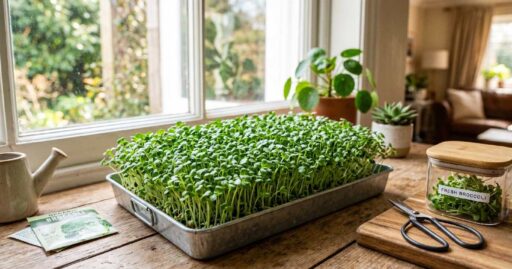
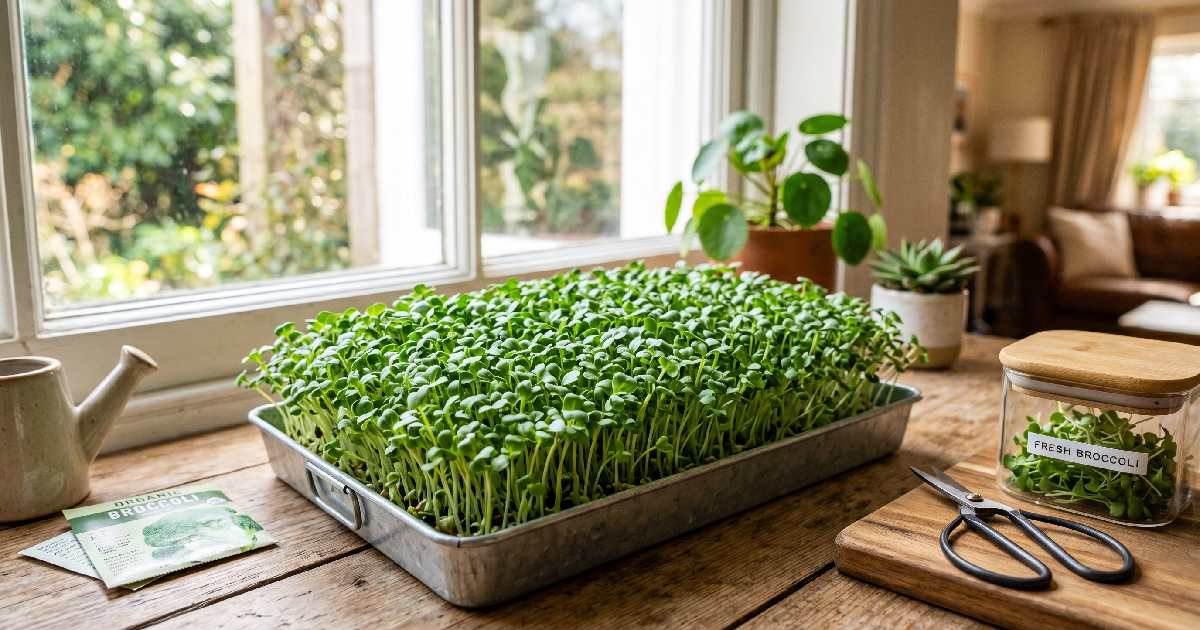
Broccoli microgreens are one of those things that look “advanced,” but actually, they are not. First-time growers often get surprised by how simple it is. You don’t need a garden, not even a balcony in a strict sense. A small corner in a room works fine.
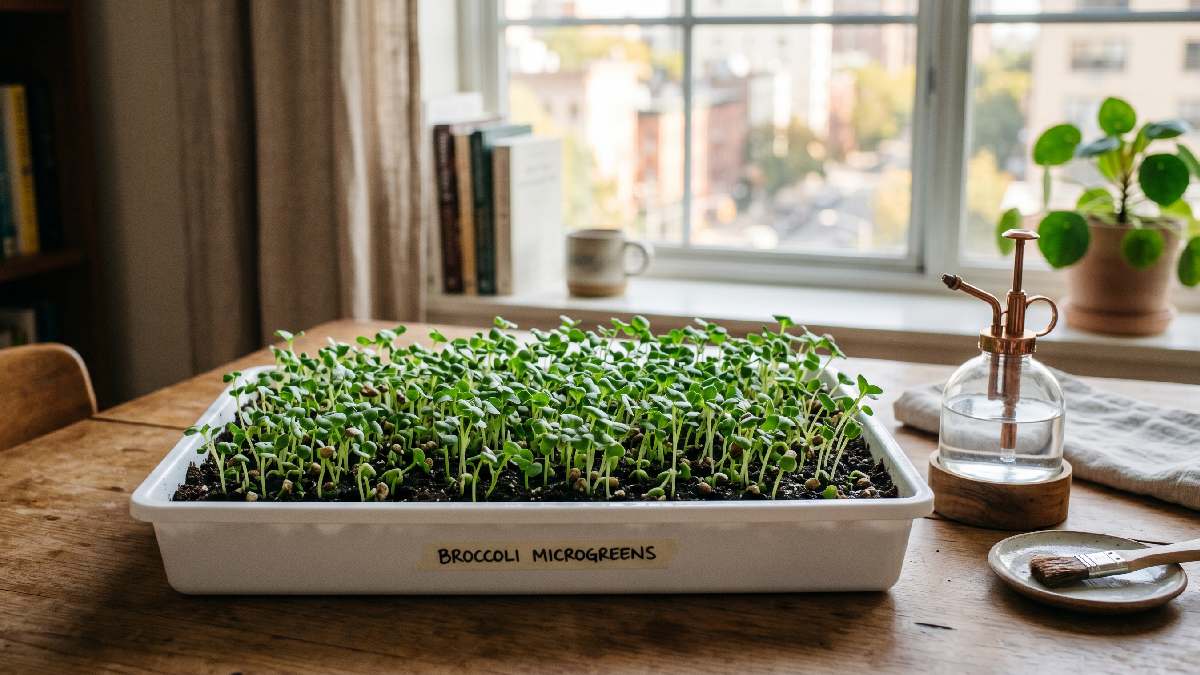
That’s why people in apartments like them a lot. Budget stays low, setup stays minimal, and results come fast. Beginner, friendly in a real sense, not just a label. It feels almost like a small experiment on your table, but it gives edible results within days.
Supplies You Need
Before starting, a few basic things are enough. Nothing heavy or expensive. You need broccoli microgreen seeds. Quality matters here because weak seeds affect germination speed. Then a shallow tray, not deep pots. Something flat works best for even growth. For growing medium, you can use potting soil or coco coir. Both work fine, just keep it light and airy. A water spray bottle is important because direct pouring can disturb seeds. Light source matters too.
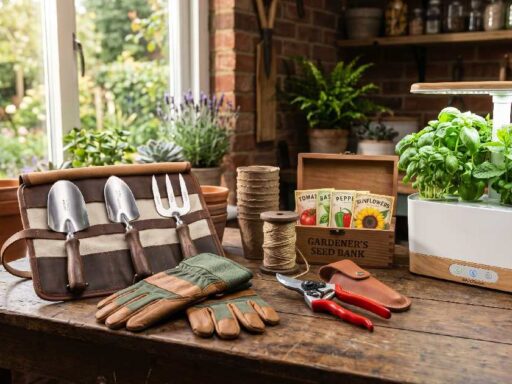
Natural sunlight near a window is okay, but many people also use a grow light for consistent growth. If you want to understand lighting better, a guide like the Grow Lights Guide helps a lot. You may also find the seed storage guide useful if you plan to keep seeds for multiple batches. Setting up tools, organic gardening tools, and indoor gardening setup resources can help organize things better. Scissors are the final simple tool for harvesting clean cuts later.
Step 1: Prepare the Tray
Start by adding moist soil into the tray. Spread it evenly so the surface looks flat. Don’t press it too hard. Soil should stay light and breathable. Moisture level is important here.
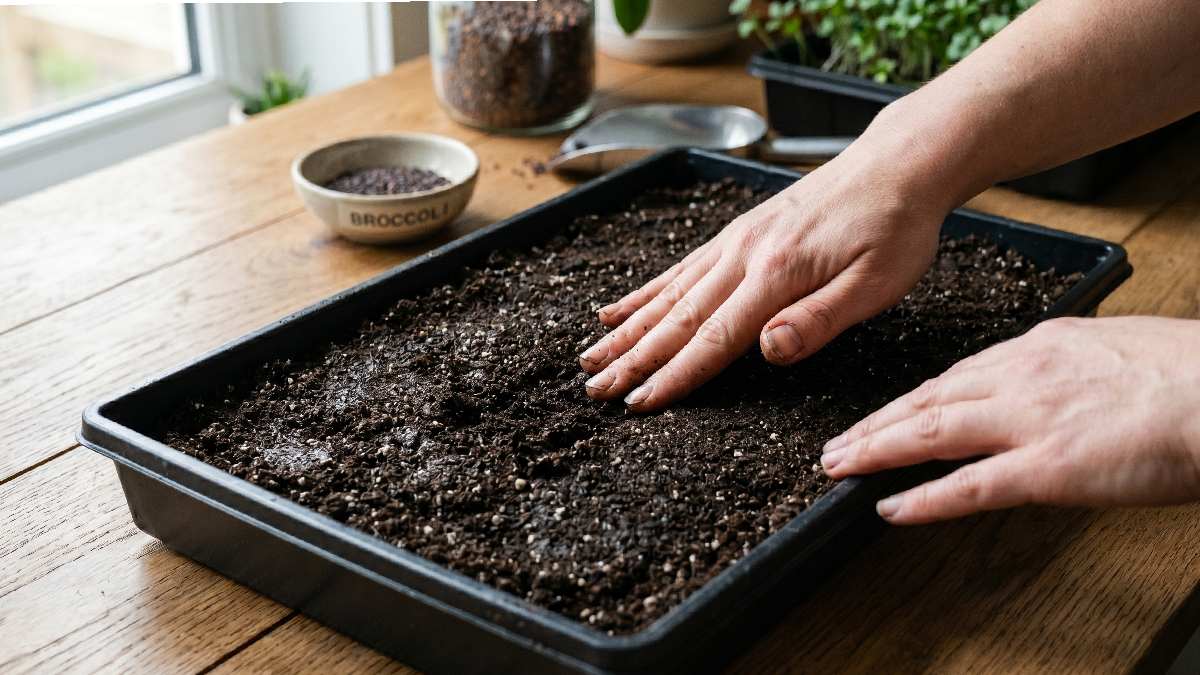
It should feel damp, not dripping wet. If it becomes too compact or too wet, seeds struggle later, and airflow is reduced. A small balance issue here changes the whole growth outcome.
Step 2: Spread the Seeds
Now spread broccoli seeds evenly across the surface. Try not to leave big empty gaps, but also don’t dump them in piles. A dense layer is okay; microgreens actually grow close together, but airflow should still pass through.
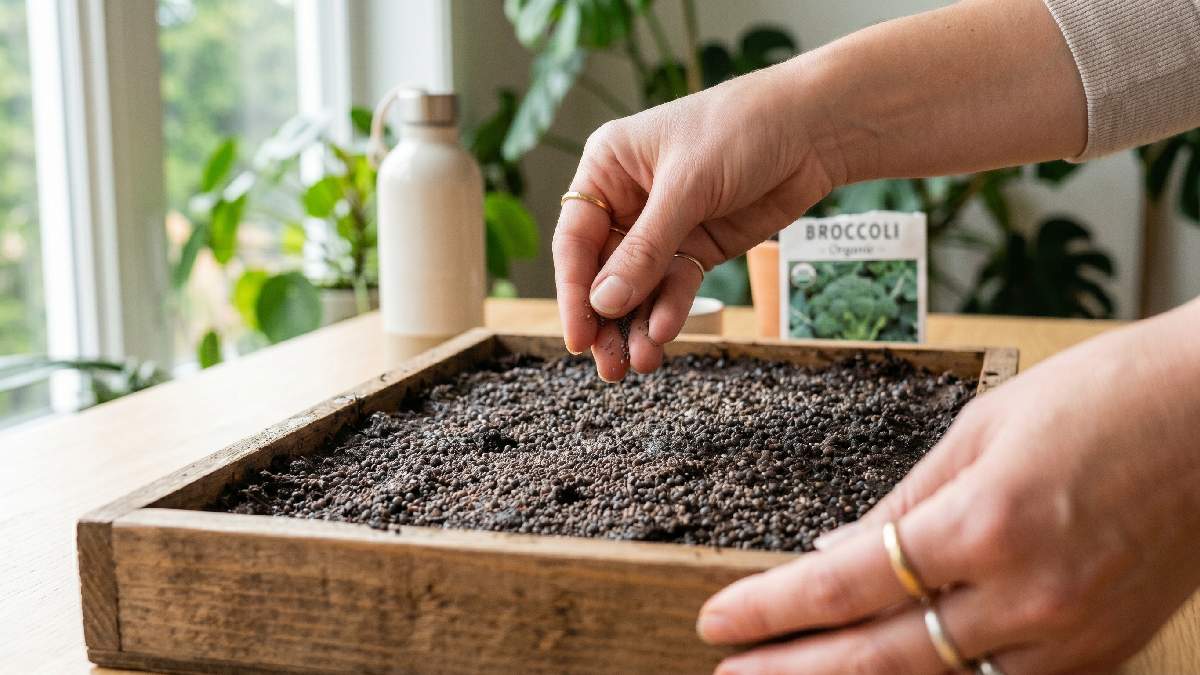
If seeds are too crowded, mold risk increases, and growth becomes uneven. It looks simple, but spacing affects everything later.
Step 3: Mist and Cover
After spreading seeds, lightly mist them with water. No heavy pouring. Just enough to activate moisture. Then cover the tray. This is the blackout period. Seeds don’t need light at this stage; they need warmth and humidity.
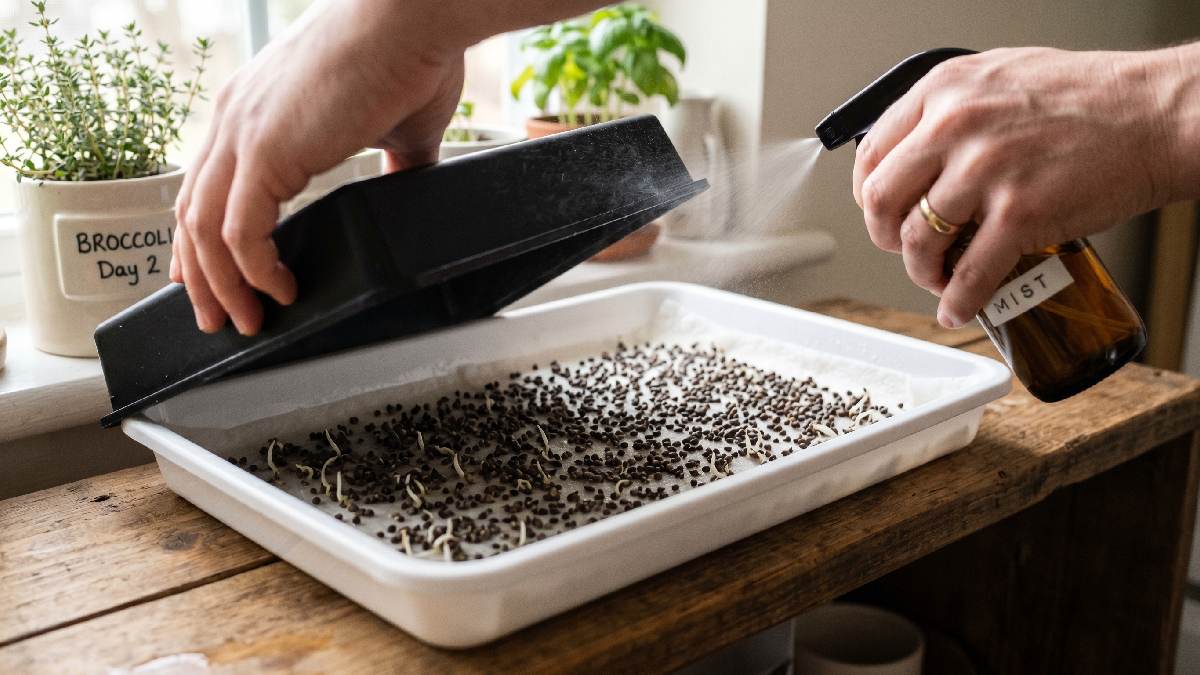
Within 2 to 3 days, germination usually starts. You’ll notice tiny white roots and early green movement. That’s the signal things are working.
Step 4: Provide Light and Water
Once seeds sprout, remove the cover. Now, light becomes important. Place the tray near indirect sunlight or under grow lights. Direct harsh sun can stress young greens, so gentle light is better. Watering should be careful. Overwatering is a common mistake here.
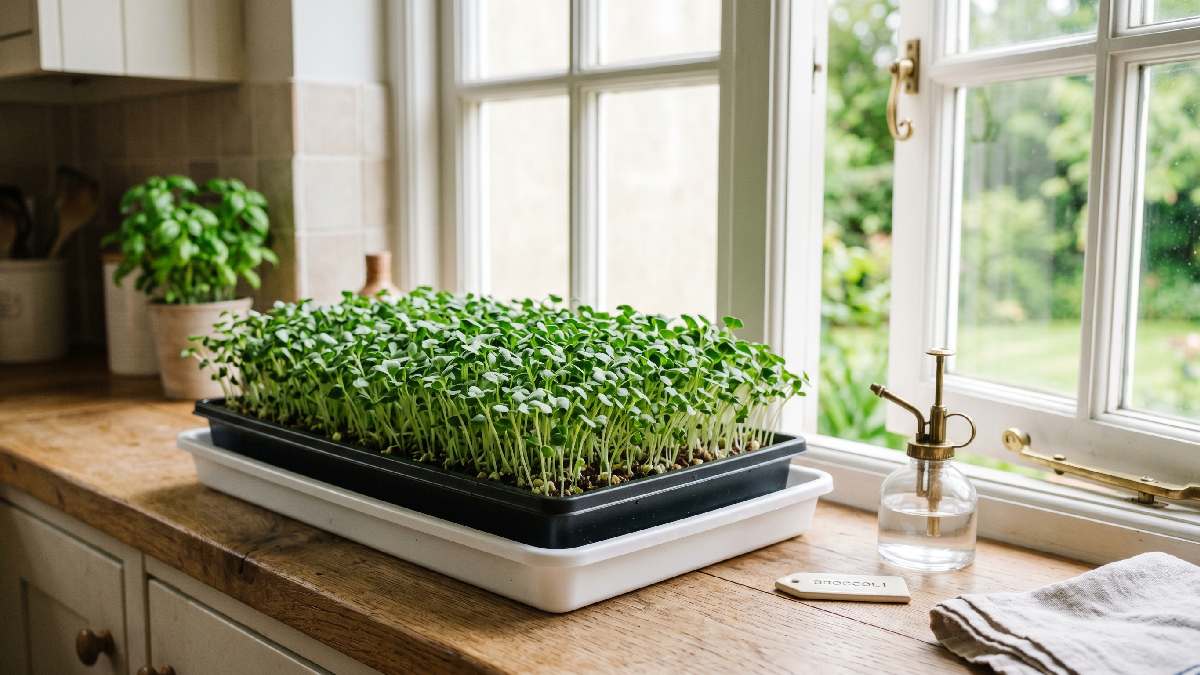
Many growers use the bottom watering method, where water is added below the tray so roots absorb slowly. This helps reduce fungal issues and keeps the surface dry. Airflow also matters. Slight ventilation reduces mold chances and keeps plants strong.
Step 5: Harvest the Microgreens
Microgreens are usually ready in 7 to 10 days. When they reach around 2 to 3 inches in height, they are at the perfect stage. Use scissors and cut just above soil level. Clean cut, no pulling. Harvest before true leaves become too large, because that’s when flavor and texture start changing.
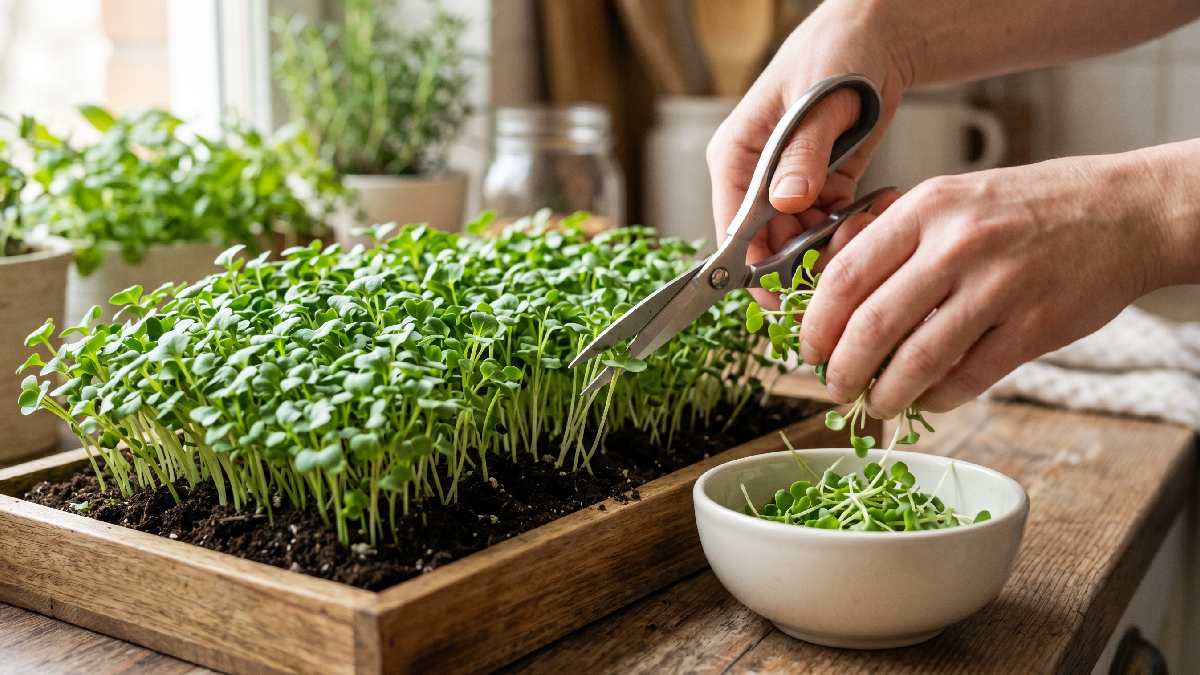
After harvest, you get a fresh batch of greens ready to use immediately in salads, sandwiches, or toppings. Simple process, but feels satisfying every time.
Common Problems When Growing Broccoli Microgreens
Growing Broccoli Microgreens is simple, but small mistakes can still create problems during growth. Mold is one of the most common issues, usually caused by too much water and poor airflow around the tray. I once watered too heavily, and white fuzzy mold started appearing near the stems. Yellow leaves are another common problem, mostly from a lack of proper light after sprouting.
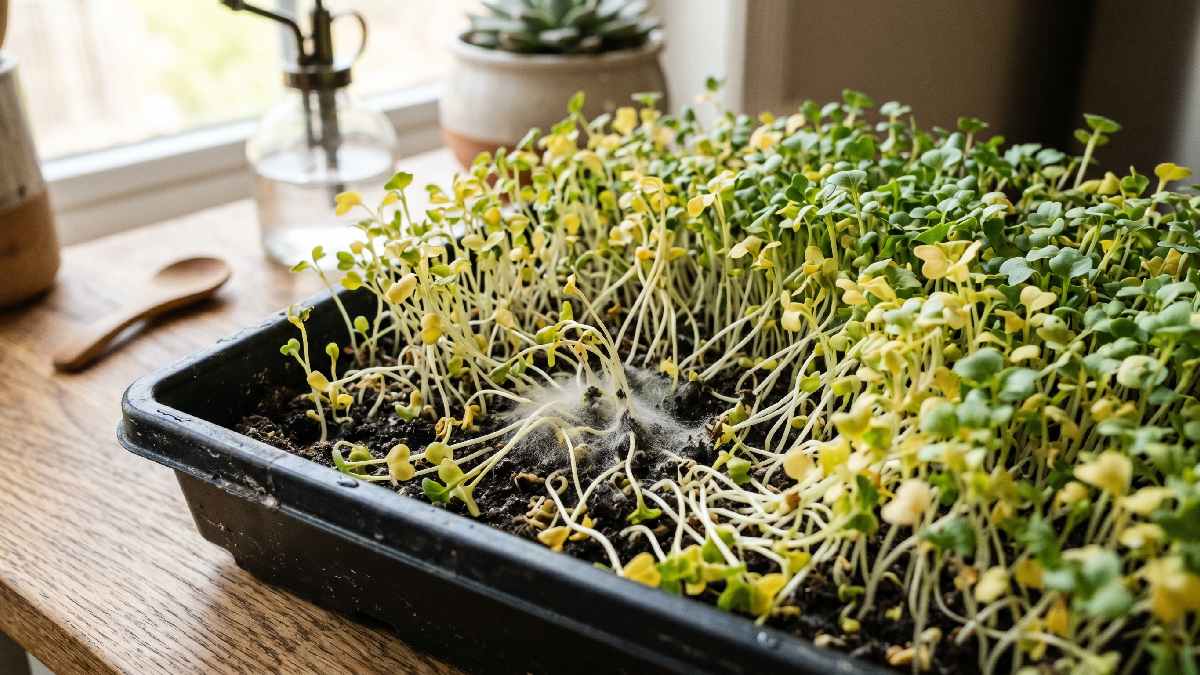
Some people also face poor germination because of old seeds or uneven moisture in the soil. Overcrowding seeds can slow growth and reduce airflow as well. Simple balance in watering, light, and spacing helps Broccoli Microgreens grow healthy and fresh.
Mold Problems
Mold is probably the most common issue people face. It usually shows up as fuzzy white or grey patches on soil or stems. Not a good sight, but it doesn’t happen randomly. Most of the time, it comes from poor airflow. When air stays trapped around the tray, humidity builds up and creates a perfect environment for mold. Overwatering makes it worse because extra moisture sits on the surface. Another hidden cause is seed overcrowding.
When seeds are packed too tightly, air cannot move properly between them. Everything stays damp for too long, and mold starts developing. Fixing it is not complicated. Improve ventilation first. Even a small fan or open window helps. Reduce watering, especially on the surface. And next time, avoid excessive seed density. A slight spacing change can prevent the whole issue.
Yellow Leaves
Yellow leaves can look worrying, but in many cases, it is just part of the early growth phase. During the blackout period, seedlings don’t get light, so they stay pale or slightly yellow. Once they are exposed to light, they usually turn green naturally. That green shift happens as chlorophyll starts developing.
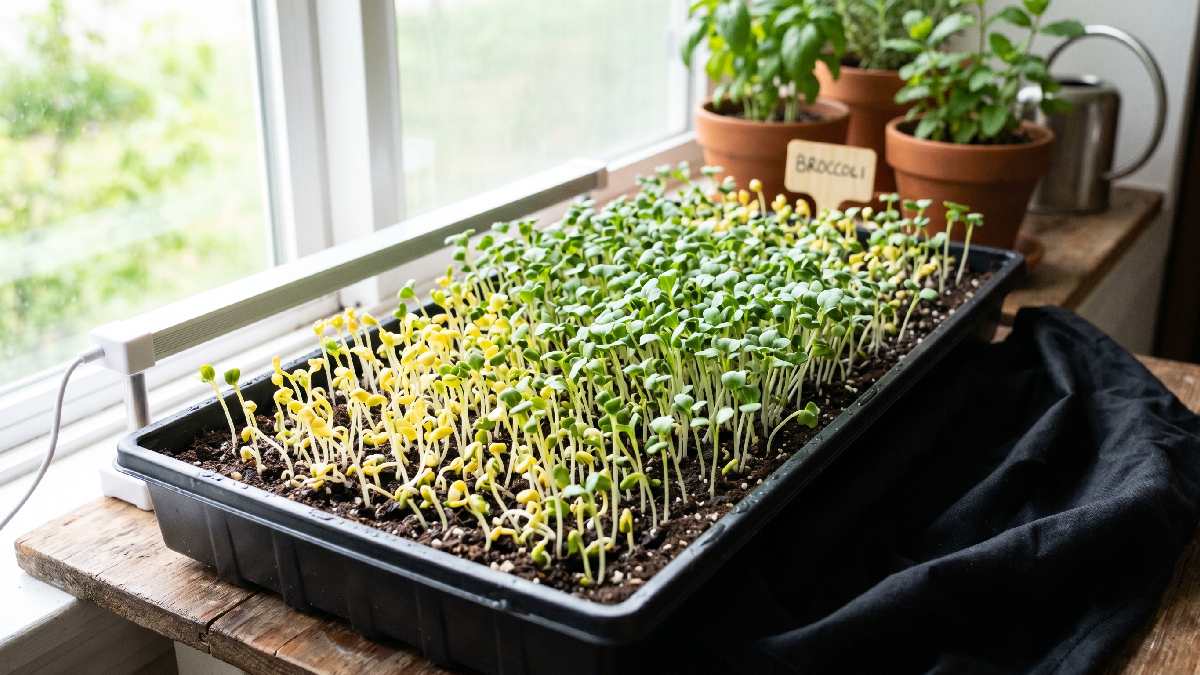
But if leaves stay yellow for too long, then light becomes the issue. Insufficient light slows down greening and weakens overall growth. Sometimes people keep trays too far from windows or use very dim lighting. The solution is simple. Give consistent indirect sunlight or proper grow light exposure. Not harsh sun, just steady brightness. Plants respond slowly but clearly.
Poor Germination
Poor germination feels frustrating because nothing seems to happen after planting. Seeds just sit there, no movement. There are a few common reasons behind it. Old seeds are one of them. If seeds lose viability, they simply don’t sprout properly. Another issue is uneven moisture. Too dry and seeds stay inactive, too wet, and they may rot before sprouting. Temperature also plays a role.
If the environment is too cold or unstable, germination slows down or fails. The most important factor is seed quality. Good quality seeds increase the success rate significantly. Even if the setup is not perfect, strong seeds still manage to sprout. So if germination keeps failing, don’t always blame the technique first. Sometimes the real issue is just the seeds themselves.
How to Harvest and Store Broccoli Microgreens
Broccoli Microgreens are usually ready to harvest within 7 to 10 days when they reach around 2 to 3 inches tall. The best way is to use clean scissors and cut just above the soil level. I tried pulling them once, and it made everything messy with roots and soil. Fresh cutting works much better.
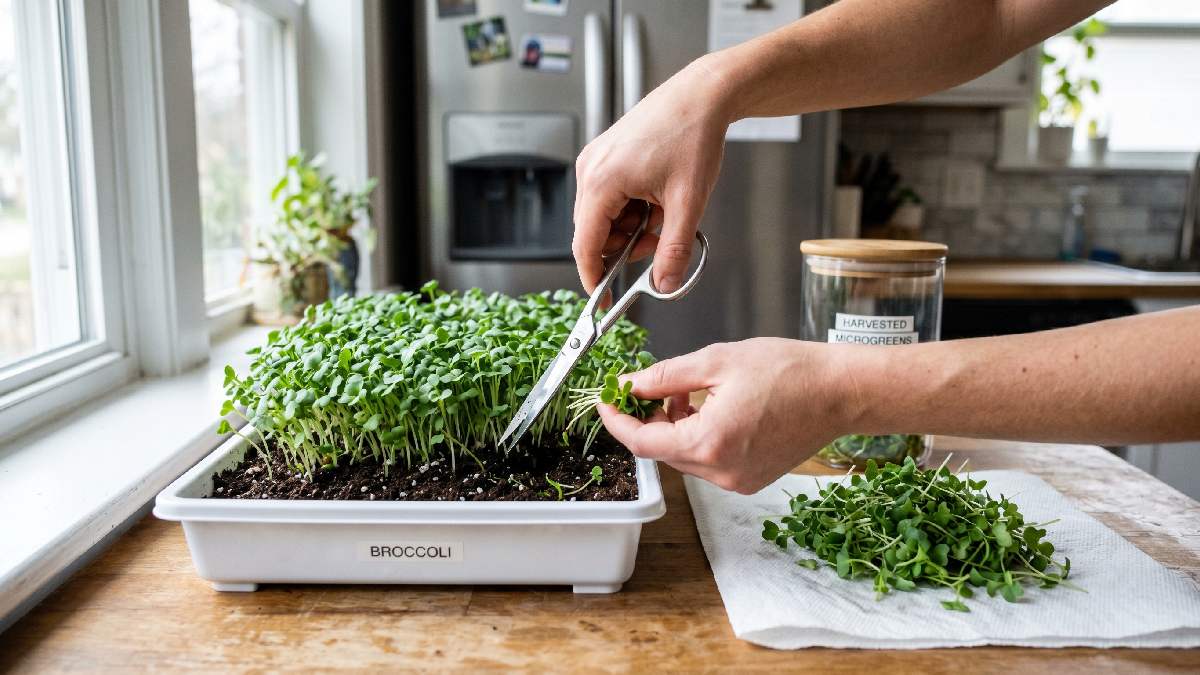
After harvesting, let the Broccoli Microgreens dry slightly before storing because extra moisture reduces freshness quickly. Place them in an airtight container and keep them inside the refrigerator. They usually stay fresh for several days, but the taste is best when eaten soon after harvesting at home.
Best Ways to Eat Broccoli Microgreens
Broccoli microgreens are easy to add to daily meals because they have a mild, fresh taste and soft texture. Many people eat them raw to keep nutrients fresh and natural. I tried adding them to simple food, and they mixed well without changing flavor too much. You can use broccoli microgreens in salads, sandwiches, wraps, smoothies, soups, and even eggs.
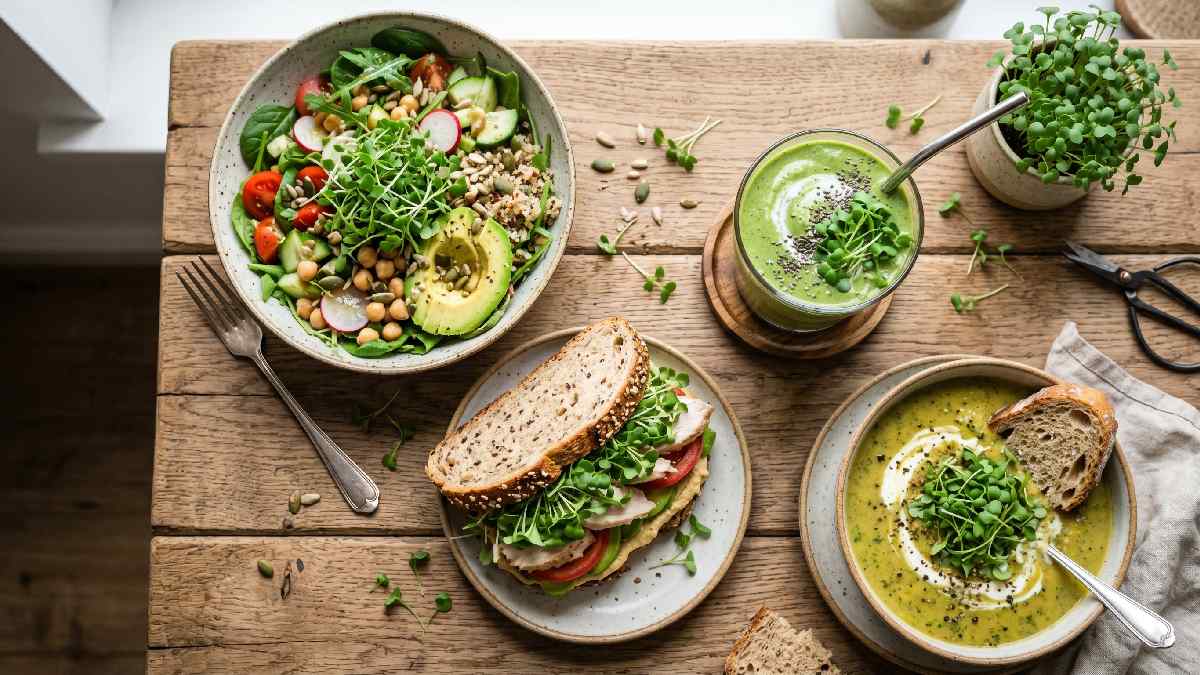
Some people also place them on pizza or rice bowls after cooking. They do not need heavy preparation, just wash and use them fresh. Their light crunch and healthy nutrients make them a simple option for clean and healthy eating habits every day.
Are Broccoli Microgreens Worth Growing?
Broccoli Microgreens are worth growing because they are fast, simple, and full of nutrition. You do not need a big garden or expensive setup to start. A small tray near a window is enough for healthy growth. I tried growing them at home and was surprised by how quickly they were ready to eat.
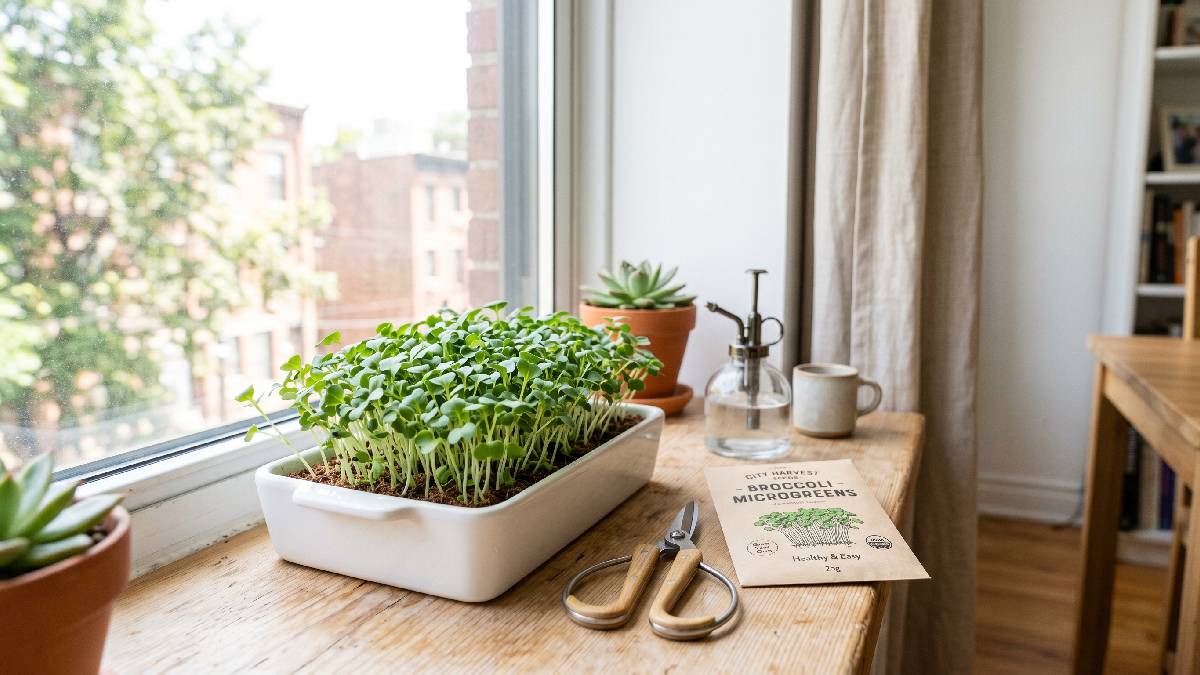
They also save money because one packet of seeds can grow several batches. Fresh Broccoli Microgreens taste better than store-bought ones and feel more natural in meals. People use them in salads, sandwiches, and smoothies every day. Overall, they are an easy option for healthy eating and beginner-friendly home growing.
Frequently Asked Questions
Are broccoli microgreens healthier than mature broccoli?
People usually say broccoli microgreens feel more “concentrated” in nutrition because they are harvested very early. So in a small amount, you get a lot of plant goodness. Mature broccoli is still healthy, just not as dense in that early-stage form.
How long do broccoli microgreens take to grow?
Not long at all. Around 7 to 10 days, and they are ready. Sometimes a bit faster if conditions are good, sometimes a bit slower, but overall it’s a quick cycle. You don’t really wait much.
Can you eat broccoli microgreens raw?
Yes, and most people do exactly that. Raw is actually the best way. No cooking needed. Just wash lightly and add them straight to food. Cooking them too much takes away that fresh feel.
Do broccoli microgreens regrow after harvesting?
No, they don’t regrow. Once you cut them, that tray is finished. If you want more, you just start a new batch. It’s a reset each time.
What do broccoli microgreens taste like?
They taste fresh with a light peppery kick. Not too strong, not boring either. Somewhere in between sprouts and full broccoli. That’s why they fit easily in different foods without taking over the taste.
Conclusion
Broccoli microgreens honestly don’t feel like something complicated you need to plan a lot for. You just grow them, cut them, and use them. That’s it. Simple routine, no heavy effort. They grow fast, which makes the whole thing feel easy. You don’t wait for weeks; you just see progress in a few days, and it keeps you going. Even space is not a problem.
A small tray in a room, kitchen corner, or near a window is enough. No garden needed, nothing big. They also stay useful for people trying to eat better food. Fresh greens at home anytime, no market trips, no extra cost again and again. Once setup is done, it keeps giving. For beginners, it’s even better because mistakes don’t break everything.
You learn while doing it, and still end up with something usable most of the time. That’s why many people call it one of the easiest superfoods to grow at home. At the end, it really feels like a small effort with real value. Nothing fancy, just fresh greens from your own space whenever you want them.