
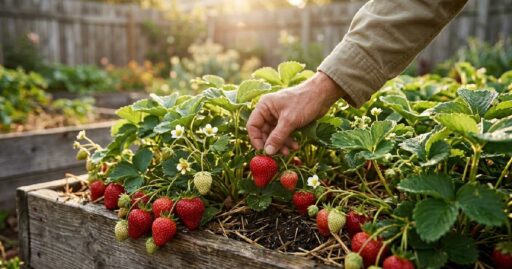
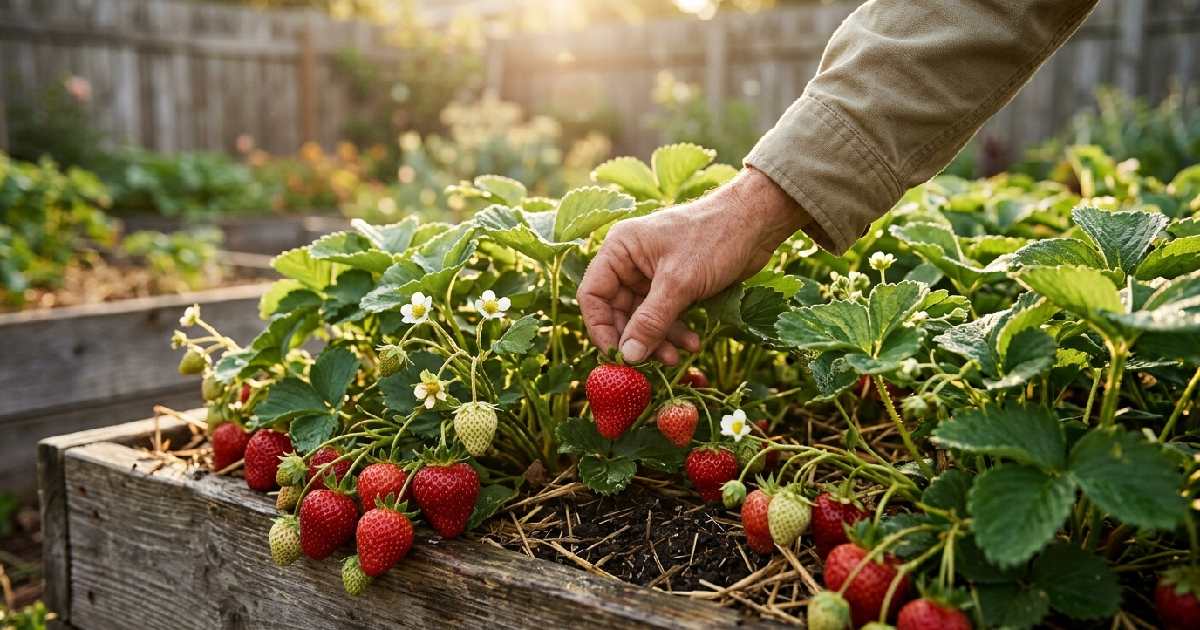

Strawberries, picked warm straight from your own garden, honestly don’t taste anything like that pale, kind of watery fruit you see in most shops. They’re sweeter, softer, and honestly way more fragrant, and once you taste one, it clicks, and you get why people end up searching for how to grow strawberries in the first place.
The good news is that learning how to grow strawberries at home is easier than most people think, because they’re probably one of the simplest fruits you can start with. You don’t need a massive garden, a greenhouse, or years of experience. They’ll do just fine in a hanging basket or in a raised bed; it really comes down to what you can manage.
This guide on how to grow strawberries walks you through the whole thing, from the very start to your first big harvest, and then beyond that. You’ll figure out which variety fits your weather, when to plant, where to put them, how to prep the soil, and how to water and feed them without going too far.
You’ll also learn how to keep slugs from turning up like it’s a buffet, how to stop birds, and how to prevent mold. Then there’s the long game: getting your plants producing for years. If you’re new, or if your last go ended with sad, tiny berries, these tips on how to grow strawberries will give you a much better shot.
Choose the Right Strawberry Variety for Your Garden
Before you buy a single plant, it helps to know strawberries aren’t all the same. The variety you choose affects when you harvest, how much fruit you get, and what kind of care the plants actually demand. Lots of beginners grab whatever is cheapest at the nursery, and then wonder why the harvest feels wrong.

Taking ten minutes here can save you an entire season of frustration, so it’s smart to understand the three main types before you shop
June-Bearing Strawberries
June-bearing strawberries usually give you one big crop each year, often over about two to three weeks, usually in late spring or early summer. The name is a little misleading, because your location changes the timing, but the idea stays: you get a heavy flush of berries all at once.
These plants often produce the biggest, sweetest, most flavourful fruit, so they’re the top pick if you want lots for jam, freezing, or baking. They also send out plenty of runners so they spread and fill in pretty fast. The catch is patience, because you should remove the flowers in the first year to help build strong roots; then the second year tends to be much better
Everbearing and Day-Neutral Strawberries
Everbearing varieties typically produce two or three smaller harvests through the season. Often you’ll see one in early summer, another in late summer, and sometimes a light one later in autumn. Day-neutral strawberries are similar, but they keep flowering and fruiting as long as temperatures stay roughly between 10 and 29 degrees Celsius (50 to 85 degrees Fahrenheit).
Both types usually make fewer runners, and each berry is smaller compared to June-bearers, but you get fruit steadily for months. That’s perfect if you like picking a few for breakfast every couple of days.
They also work great in containers, or if you’re dealing with a small space. If you want fresh strawberries over time instead of one big event, these are usually your best bet
How to Pick Between Them
A simple way to decide is to think about what you want to do with the fruit. If you’re aiming for large amounts for preserving or sharing, go with June-bearing. If what you want is a long, gentle rhythm of fresh snacking berries, choose everbearing or day-neutral.
Many gardeners even plant a mix, so they get a bigger early crop then a steady “trickle” after. Whatever you choose, buy certified disease-free plants from a reputable nursery, and check which varieties do well in your area, because local garden centres often stock what suits the local conditions. Bare-root plants are usually cheaper and establish easily, while potted plants give you more wiggle room with timing
When and Where to Plant Strawberries
Timing and location are some of the biggest reasons strawberries either thrive or struggle. A healthy plant in the wrong spot gives weak growth and sour fruit, while an average plant in the right spot can still surprise you with a heavy harvest.
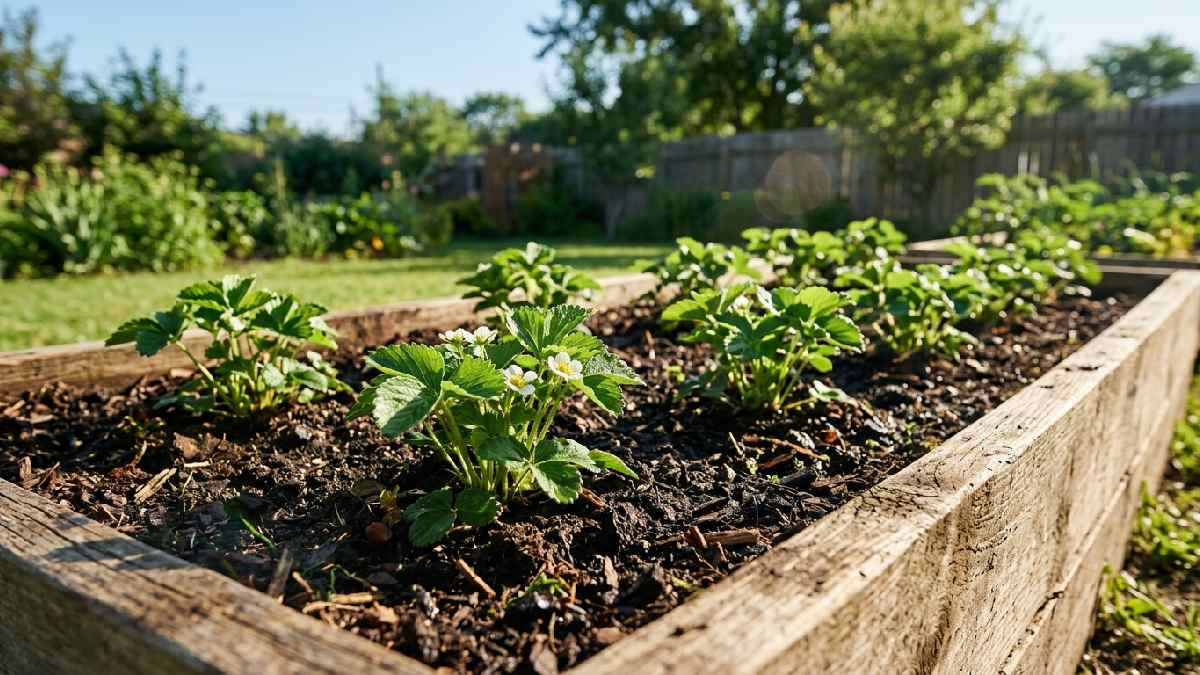
Strawberries are fairly forgiving, but they still have real preferences. Get the basics right from the start, and you’ll spend less time fixing problems later
The Best Time to Plant
In cool and temperate climates, plant strawberries in early spring, as soon as the soil is workable and the threat of hard frost has passed. That timing lets the plants set roots before summer kicks in.
Some people also plant in late summer or early autumn, which helps the roots settle before winter, and often means a stronger crop the following year. In warm or subtropical areas where summers run hot, autumn planting is usually better, because the plants grow through a mild winter then fruit in spring before the heat becomes too much. Just avoid planting during extreme heat, or if the ground is frozen solid
Choosing a Sunny Spot
Strawberries need full sun to make sweet fruit, meaning at least six to eight hours of direct sunlight every day. In very hot climates, it can help to choose a spot that gets some shade during the hottest part of the afternoon, so the plants don’t scorch.
Air circulation matters too, because still damp air encourages fungal trouble, like grey mould. Try not to plant in low areas where cold air sinks or water collects, since “frost pockets” can damage early blossoms, and soggy soil can push root rot. A gentle slope or raised bed is often ideal since water drains away more naturally
What Not to Plant Nearby
One beginner mistake that shows up a lot is putting strawberries where tomatoes, potatoes, peppers, or aubergines (eggplants) have been growing recently. These crops can leave behind a soil fungus called verticillium, which can make strawberry plants wilt and die.
If you don’t know the history of a patch, use raised beds or containers with fresh compost instead. You should also avoid planting right next to lawn grass, because grass roots will compete for water and nutrients, and strawberries really don’t need that kind of extra stress.
Strawberries somehow get along pretty well with herbs like thyme, borage, and chives, and also with onions plus garlic. These companions can help to confuse pests, so they don’t notice the berries as easily.
Prepare the Soil and Plant Strawberries Step by Step
Strawberries have shallow roots, so the top few inches of soil do almost all the work of feeding them. That makes soil preparation one of the most rewarding jobs in this whole thing.
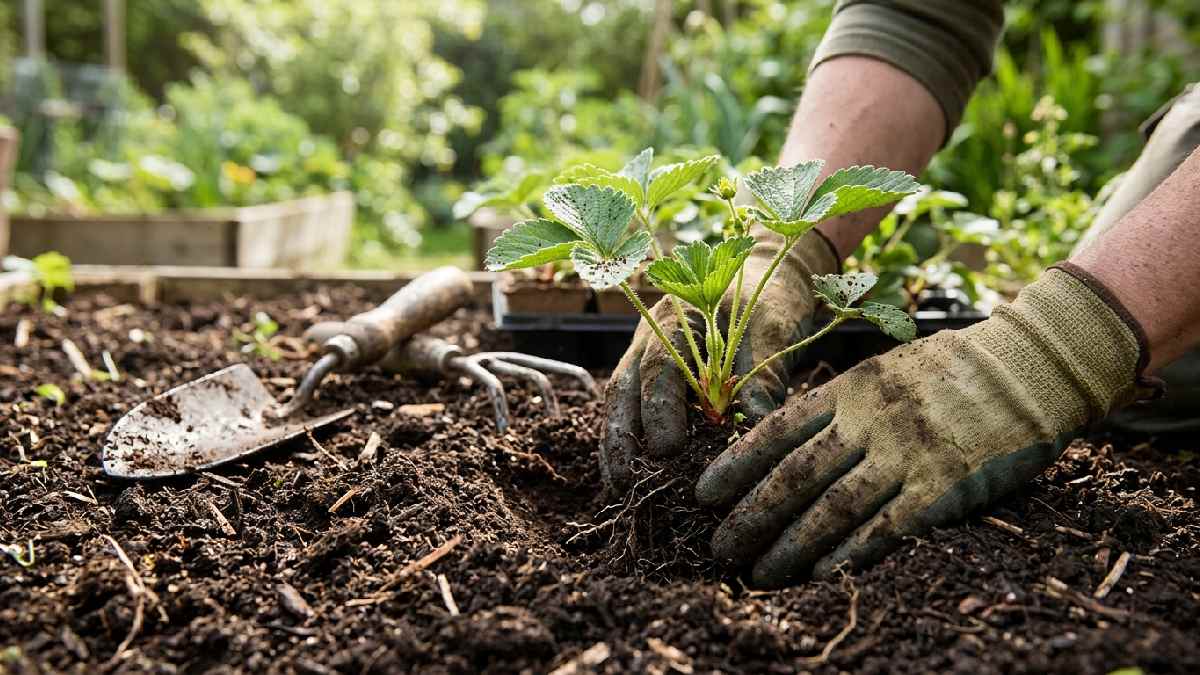
A little effort before planting pays off for years, because later you won’t be able to dig deeply around established plants without messing up the roots. Think of this stage as building a comfortable little home before they move in, kind of like prep work but for roots.
Getting the Soil Right
Strawberries grow best in loose, well-draining, fertile soil that’s slightly acidic, with a pH around 5.5 and 6.5. If you’re unsure about your yard, grab a cheap home test kit; it will basically tell you where you stand.
Dig the bed to roughly the depth of a spade, then remove weeds and stones, and mix in plenty of well-rotted compost or aged manure. This helps drainage in heavy clay and also helps sandy soil hold onto moisture a bit better. Don’t use fresh manure; it can burn roots and also spread weed seeds, so yeah, skip that.
If your soil is heavy and slow to drain, building a raised bed about 20 to 30 centimetres (8 to 12 inches) tall is an easy correction, like a simple redesign.
Spacing and Planting Depth
Space the plants about 30 to 45 centimetres (12 to 18 inches) apart, and keep rows around 60 to 90 centimetres (2 to 3 feet) apart so air can move between them, which helps prevent problems. The planting depth detail is the one that really matters. Every strawberry plant has a crown, which is the thick part where roots meet the leaves.
Dig a hole wide enough to spread the roots, then set the plant so the crown sits right at soil level. If you bury that crown, it will rot, and if you leave it too high, the roots dry out. Spread the roots gently like a fan, fill in with soil, and press firmly around the plant so there are no air pockets. Nothing fancy, just steady pressure.
Watering In and First Care
After you put them in the ground, water thoroughly so the soil settles around the roots. Keep things evenly moist, not soaked, for the first few weeks while plants settle. If you’re growing June-bearing types, pinch off all the flowers during the first season. It can feel weird to remove blossoms, but it puts the plant’s energy into roots and runners instead of fruit. The harvest in the second year usually ends up much heavier.
For everbearing and day-neutral types, remove flowers until early summer, then let them fruit. Add a layer of mulch around the plants , it holds moisture and reduces weeds, also makes everything look tidier.
How to Grow Strawberries in Pots, Baskets, and Small Spaces
You don’t need a big garden to grow strawberries. Container growing is honestly one of the best routes, because the plants stay cleaner, slugs have a harder time getting to them, and you can move the pots to follow the sun.
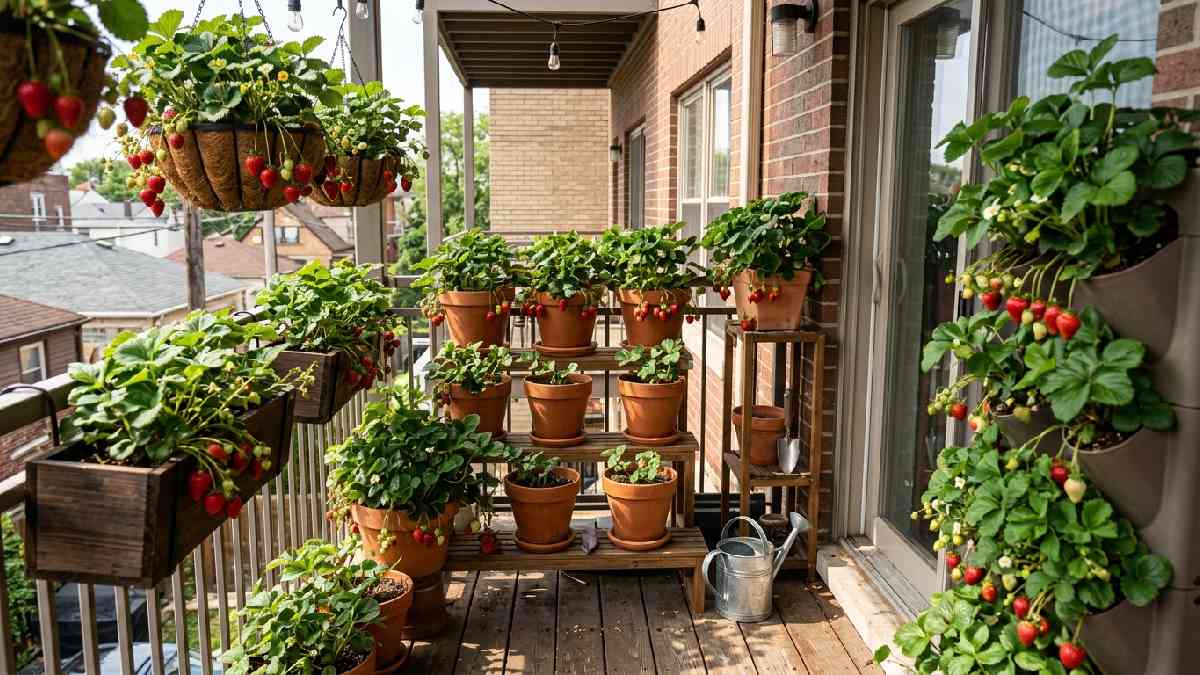
Balconies, patios, window ledges, even sunny doorsteps can still produce a surprising amount of fruit. Also, if your garden soil is poor or maybe contaminated, containers solve that, since you control what the plants grow in.
Choosing the Right Container
Almost any container works, as long as it has drainage holes and is at least 20 to 25 centimetres (8 to 10 inches) deep. One plant is happy in a pot about 25 centimetres wide. A bigger trough or window box can hold several plants, spaced around 20 centimetres apart.
Hanging baskets are great because they keep fruit off the ground, and away from rot and slugs too. Strawberry towers and pots with pockets along the sides are fun and save space, but they do need careful watering, because the lower pockets can dry out unevenly. Light-colored containers help keep roots cooler when it’s hot.
Potting Mix and Placement
Use a good quality potting mix, not garden soil. Garden soil can be heavy and full of pests, and containers don’t forgive that. Mix in some compost for extra nutrients, and toss in a handful of perlite for better drainage.
Put the crown at the surface, just like you would in the ground. Water well after planting. Place the pot in the sunniest spot you have, ideally with six to eight hours of direct light. In very hot weather, move it so it gets afternoon shade, because a small pot can heat up fast.
Ever-bearing and day-neutral varieties usually match containers best since they keep producing over many weeks.
Watering and Feeding Container Plants
Pots dry out way quicker than garden beds, and in hot weather you might need to water every day. Push a finger about two centimetres into the mix. If it feels dry, water slowly until it comes out through the drainage holes.
Because frequent watering also washes nutrients out of the pot, container strawberries need regular feeding too. Use a liquid fertiliser for fruiting plants, and apply every two weeks once flowers appear, to keep them productive.
In cold climates, protect the pots from hard freezes. Move them against a wall, wrap them in insulation, or store them in an unheated shed over winter.
Watering, Feeding, and Mulching for Healthy Plants
Once your strawberries are planted, steady, simple care makes the biggest difference between an average harvest and a really good one. They don’t require constant fuss, but they do like consistency.
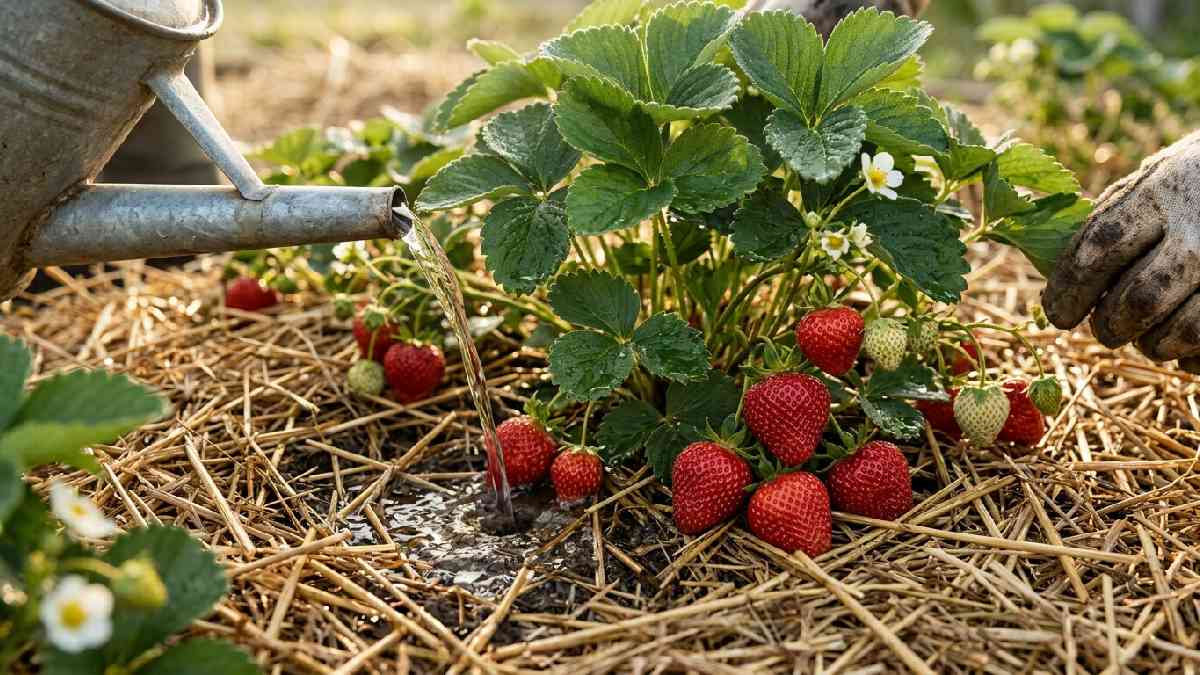
If watering is irregular, fruit can come out small or oddly shaped. Too much fertiliser gives you lots of leaves, and hardly any berries. A basic plan is regular water, light feeding, and mulch. That’s what most gardeners need.
How Much Water Strawberries Need
Strawberries usually need about 2.5 to 4 centimetres (1 to 1.5 inches) of water per week, including rainfall. The most critical time is when plants are flowering, and when the fruit is swelling up. Since roots are shallow, keep the soil evenly damp, but never waterlogged.
Water at the base in the morning so leaves dry quickly, because wet foliage encourages fungal disease. Drip irrigation or a soaker hose is ideal; it sends water straight to the roots and helps keep the fruit drier. Overhead sprinklers are best avoided once the berries have formed, as they can cause rot.
Feeding Your Plants
Strawberries are kind of light feeders, so usually it’s over-fertilising that causes trouble, not really underfeeding. If you already put compost in before planting, you might only need a quick little feed in spring, once the fresh growth starts up. After that, use a balanced fertiliser, or something that is a bit higher in potassium, which helps flowering along and the fruit quality too.
Try to dodge fertilisers with lots of nitrogen once the plants start flowering, because they’ll push leaf growth instead of berries, and the berries end up softer and easier to rot, so yeah. For June-bearing types, a feed right after harvest gives them extra strength to carry into next year. And always follow the label, then water the fertiliser in properly.
Mulch, Weeds, and Runners
A mulch layer around five centimetres (two inches) thick keeps moisture in the soil, reduces weeds, and stops the berries from sitting on damp ground. Straw is the classic choice, and it’s also the reason people often say the “strawberry” name came from it, though pine needles, shredded leaves, and even landscape fabric also do the job.
Weeds steal nutrients, especially since strawberry roots are shallow, so pull them by hand rather than digging too deep with a hoe. Runners are those long stems that crawl over the soil and root wherever they touch.
If you want a bigger patch, let a few take hold, then snip them free later. If you want larger berries, trim most runners away so the plant focuses energy on fruit instead of spreading out.
Common Strawberry Pests, Diseases, and Problems
Strawberries get attention from more than just gardeners. So sooner or later, something else is going to sample your crop. The good part is that most issues are pretty preventable, if you keep up good habits like clean beds, decent airflow, and sensible watering.
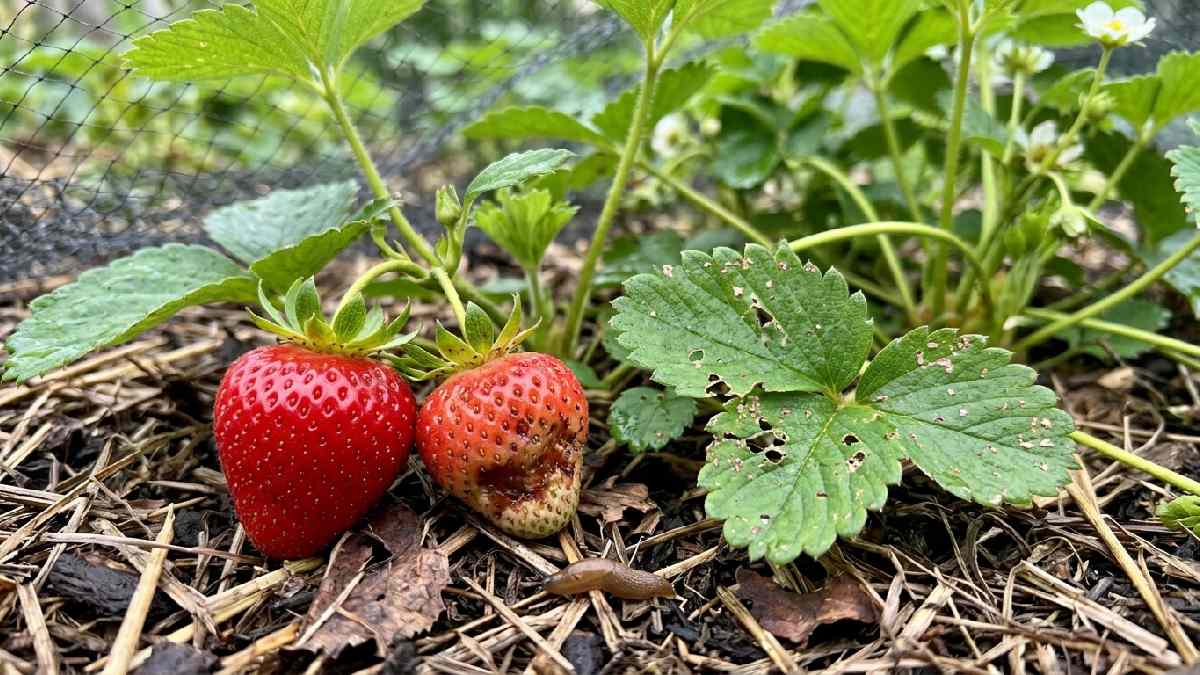
Healthy plants that are well fed resist pests and diseases way better than plants that are stressed, so honestly everything you already did counts as real protection.
Slugs, Birds, and Other Pests
Slugs and snails are some of the most common culprits, leaving ragged holes in berries right as they start ripening. Straw mulch helps, copper tape around containers can help too, and doing evening checks with a torch keeps numbers down.
Also, raising pots off the ground makes it harder for them. Birds are another huge headache, because they can spot ripe red fruit from far away, and they do not care at all. Lightweight netting on hoops is usually the most reliable solution; just make sure the edges are secured so birds cannot sneak underneath.
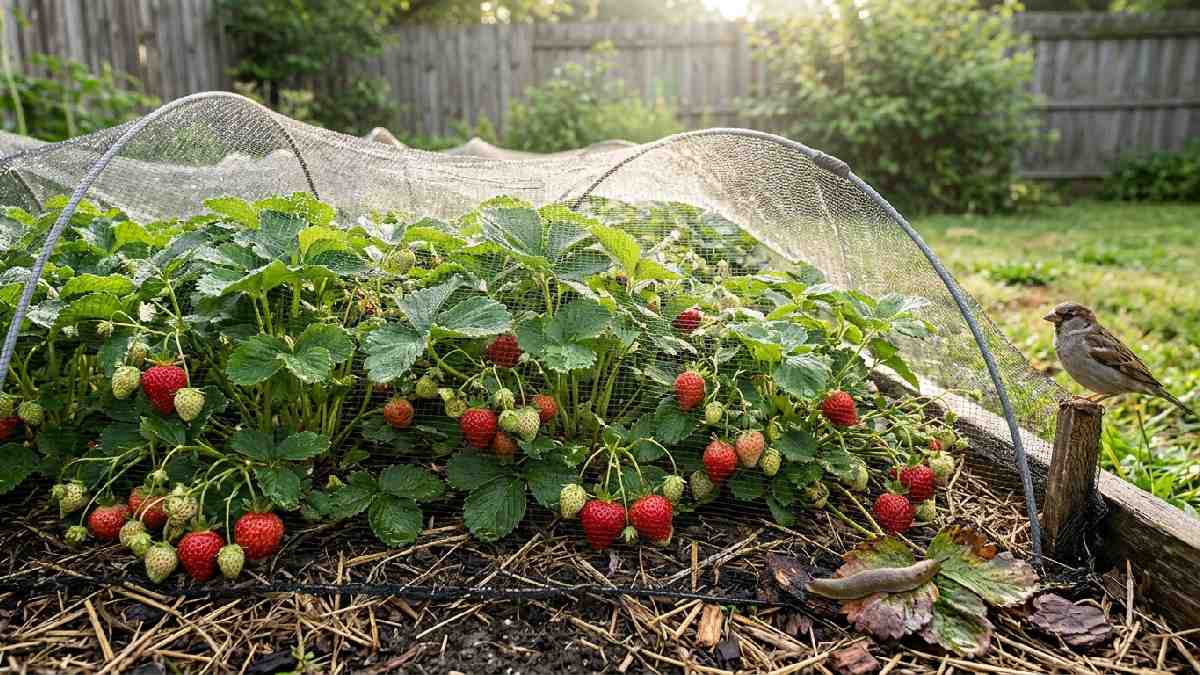
Aphids and spider mites sometimes show up during warm, dry weather, and you can often knock them back with a strong jet of water, or use insecticidal soap if needed. Also, letting ladybirds and other helpful insects stick around can naturally keep aphids under control.
Fungal Diseases and Rot
Grey mould, sometimes called botrytis, appears as fuzzy grey patches on fruit, especially when it’s damp and cool. Leaf spot and powdery mildew pop up too, typically when plants are crowded or when leaves stay wet for too long.
Your best defence is basically prevention: space plants properly, water at the base, mulch so fruit stays off the soil, and remove any infected berries or leaves immediately instead of leaving them on the ground. Pick ripe fruit promptly, because overripe berries invite rot.
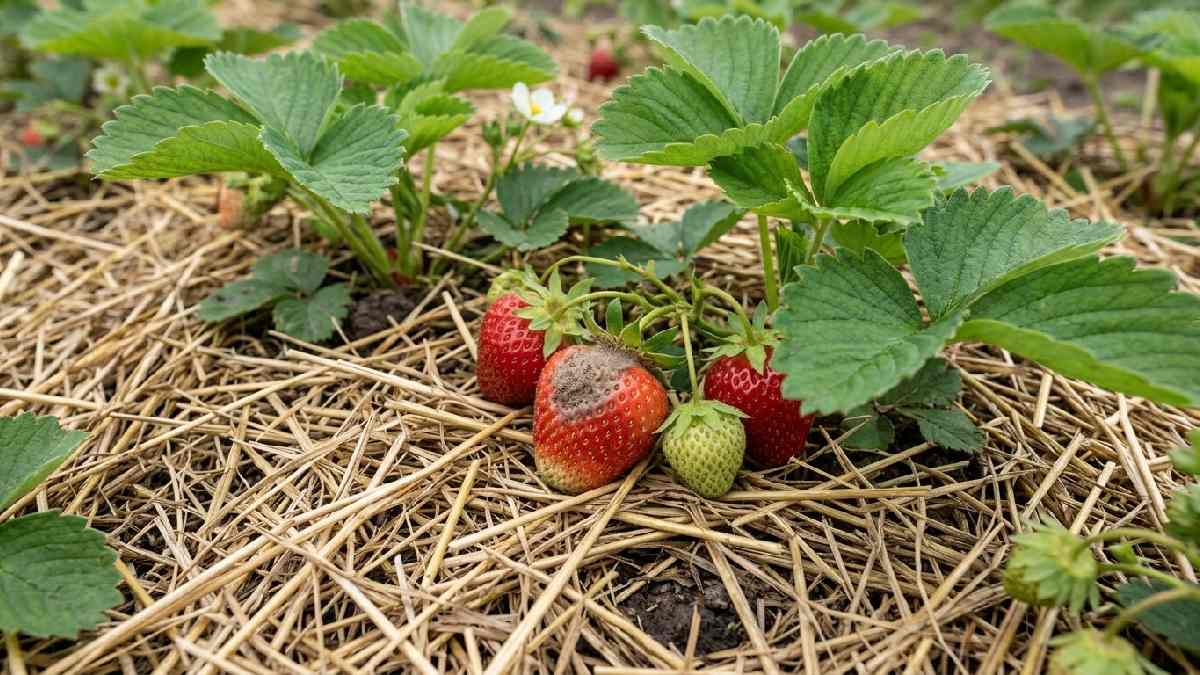
If a disease keeps coming back in the same spot, rotate your strawberry bed to a new location every few years, and start with healthy, certified plants.
Why Your Strawberries Might Be Small or Sour
If the plants seem fine but the berries are disappointing, there are a few common reasons. Not enough sunlight is the number one cause of small, sour fruit, so check if trees or buildings are shading the patch. Inconsistent watering can do it, as can poor pollination and overcrowding.
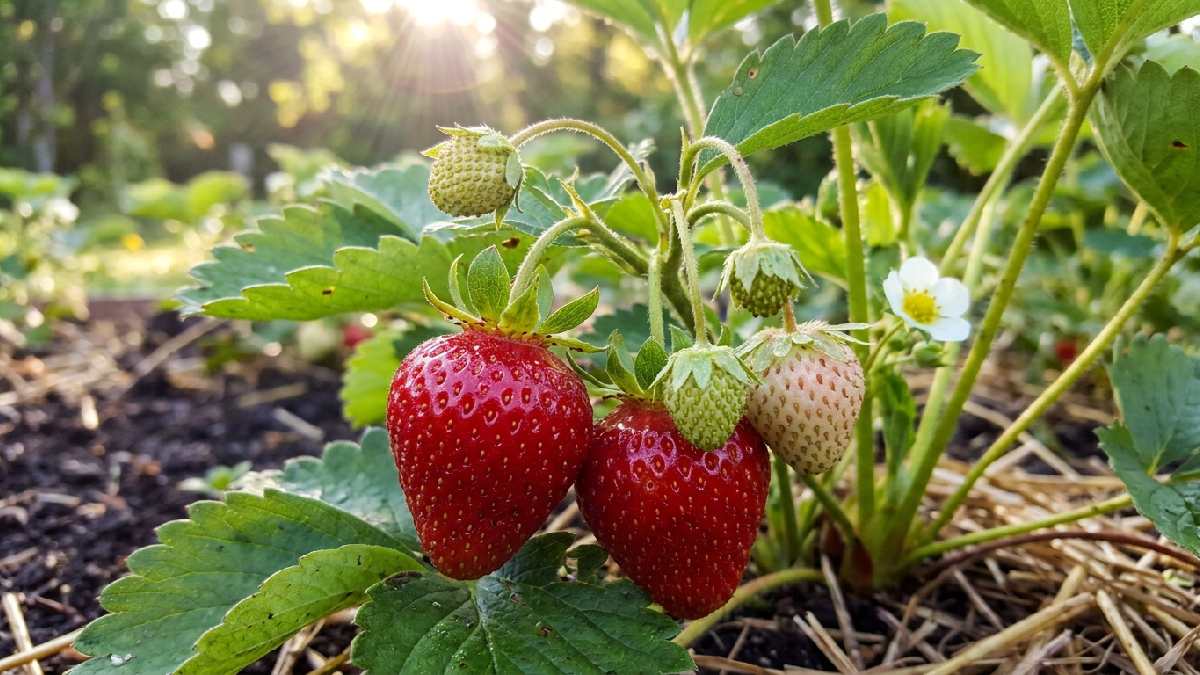
Berries that look odd or misshapen often point to weak pollination, which can happen with cold weather or if you don’t have enough bees around. Planting flowers nearby may help pull in pollinators. Also, old plants lose vigour over time, so if you notice yields dropping after about three or four years, it’s time to replace them with fresh stock.
Harvesting Strawberries and Keeping Your Plants Productive for Years
This part is the payoff. Harvesting strawberries at the right moment makes a big difference for flavour, because unlike many fruits, strawberries don’t really keep ripening after you pick them.

If you pick a berry too early, it stays sharp and pale no matter how long it sits on your kitchen counter. Learning how to judge ripeness and handling the berries gently is what gets you the full sweetness you worked for.
How to Tell When Strawberries Are Ripe
A strawberry is ready when it’s fully red from top to tip, with no white or green shoulders close to the stem. It should look glossy and feel slightly soft, and you’ll often catch that sweet fragrance as you get near the plant. Usually, most berries ripen about four to six weeks after flowering starts, though warm weather speeds things up.
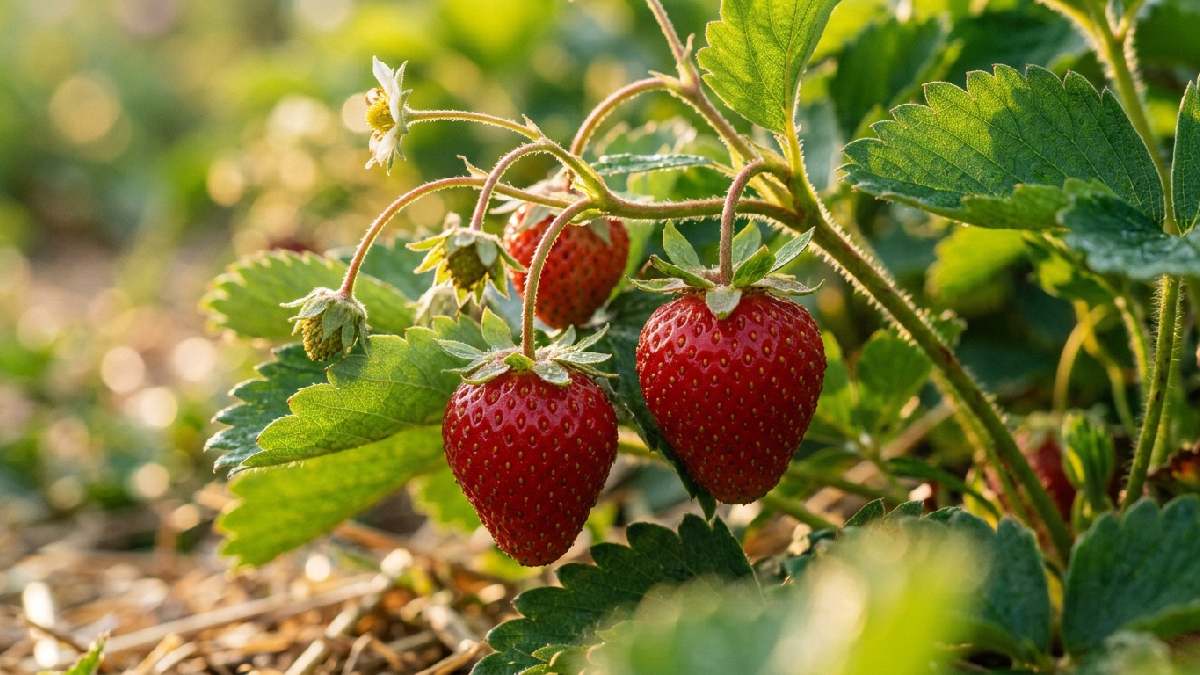
Pick in the cool of the morning, when the fruit is firm, then check the plants every day or two during peak season, because berries can shift from perfect to overripe fast. Also taste one yourself, because quick testing beats guessing.
Picking and Storing Your Harvest
Pinch or snip the stem about one centimetre above the berry; keep the green cap attached. Pulling straight off can bruise the fruit or damage the plant. Put berries in a shallow container, not a deep bucket, so they don’t crush each other.
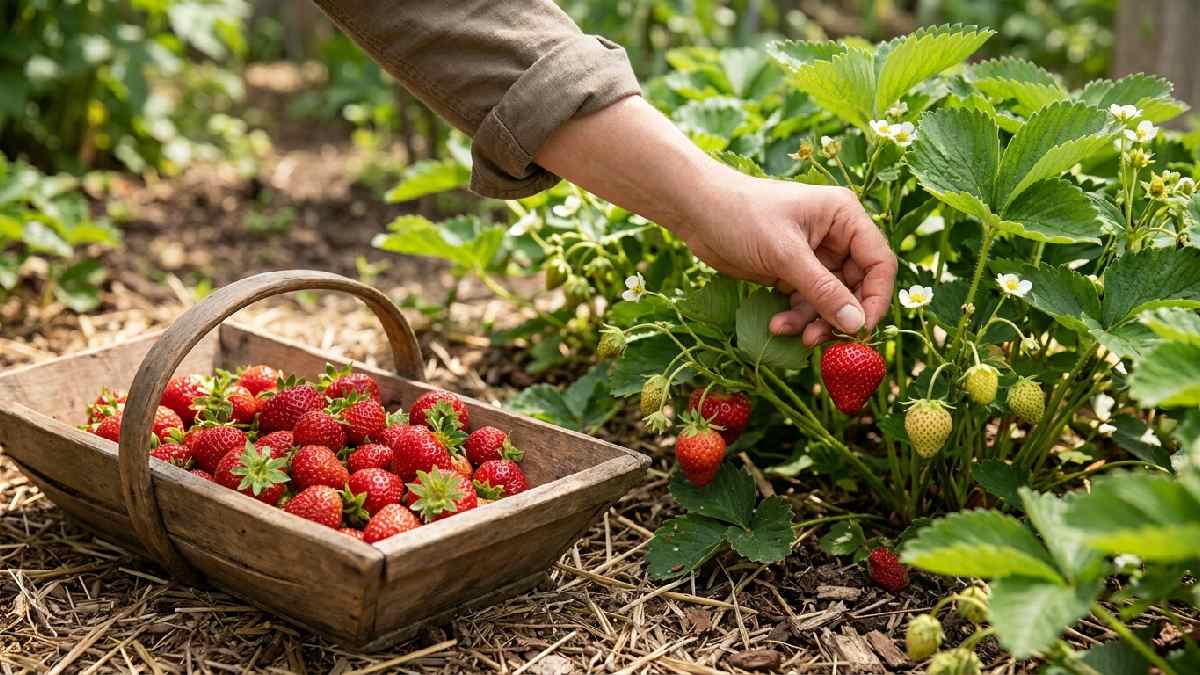
Fresh strawberries are best eaten the same day, but unwashed berries will keep in the fridge for two to three days. Wash them only right before eating, since extra moisture speeds up spoilage. If you end up with a lot, freeze whole berries on a tray first before bagging them, or make jam, sauces, and smoothies.
Caring for Plants After the Harvest
What you do after harvest determines next year’s crop. For June-bearing plants, remove old leaves, clear away weeds and any straw that has become dirty, and give the bed a light feed: thin out crowded runners and tidy everything so air can circulate. In colder areas, cover the plants with a loose layer of straw once temperatures drop and the plants go dormant, then pull it back in spring, when growth starts up again. Strawberry plants are most productive for about three to four years, so replace a third of your plants each year with healthy young runners to keep the harvest strong and the patch free of disease.
Frequently Asked Questions About Growing Strawberries
How long does it take to grow strawberries?
Most strawberry plants start giving fruit in their first year, if they are everbearing or day-neutral types, you’re usually looking at about eight to twelve weeks after planting… give or take. June-bearing varieties are sort of different, they’re typically allowed to settle in for a full season, but the flowers are removed, and then they give their first proper harvest the next year. After planting, each single berry usually takes around four to six weeks to ripen, once the flowers have actually opened.
Can I grow strawberries from seed?
Yes, you can, but it is slow and honestly less dependable than using runners, or even young plants. Strawberry seeds need a cold treatment, a long germination period, and yeah patience you almost never have enough of. Plus the plants might not fruit until the following year. Seeds are mostly worth the effort for rare alpine strawberries. For most home gardeners, bare-root plants or potted plants are faster, and in the long run they’re often cheaper too, with results you can count on more.
How often should I water strawberry plants?
Try to give them roughly 2.5 to 4 centimetres (1 to 1.5 inches) of water each week, but spread it across two or three deep waterings , not some daily sprinkle thing. If they’re in containers, hot weather can mean watering every day. Quick check: stick your finger into the soil, and water when the top few centimetres feel dry, always aiming right at the base of the plant, not the leaves.
Do strawberries come back every year?
Yes. Strawberries are perennials, so the same plants usually return year after year and they’re often productive for about three to four years. After that, the yields often drop, so swapping older plants for fresh runners is a smart move. In very cold areas, a layer of straw mulch over winter can help the plants stay alive until spring shows up.
Why are my strawberries small or not producing fruit?
This is pretty common and the usual suspects are: not enough sunlight, watering that’s all over the place, plants being overcrowded, poor pollination, or too much nitrogen fertiliser, which pushes leaf growth instead of fruit. If you have young June-bearing plants, their flowers may need to be removed on purpose during the first year as well. Just make sure they get at least six hours of sun and that you aren’t overfeeding them.
Conclusion
Growing strawberries is one of those projects that feels really rewarding, especially for a home gardener. Pick a variety that fits your climate and how you plan to use the fruit, then give the plants plenty of sun and soil that is loose and fertile. Keep the watering steady, protect the berries from slugs and birds, and harvest only when they’re fully ripe. Also, renew your plants every few years , and soon enough your first handful of homegrown strawberries will taste better than anything you can buy, and you will probably be planting even more next season.