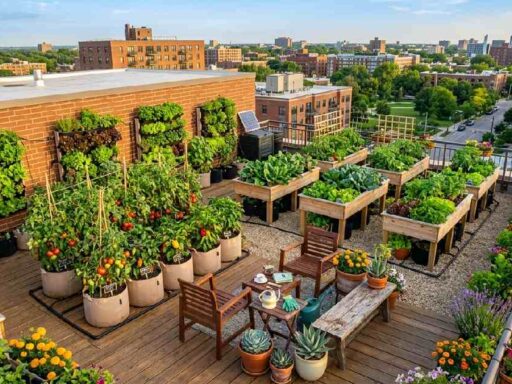

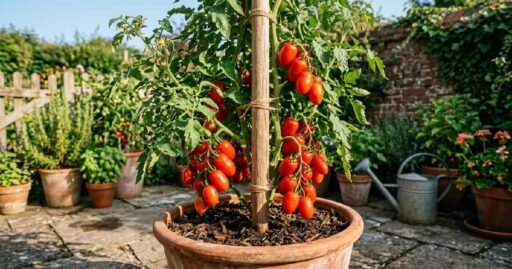
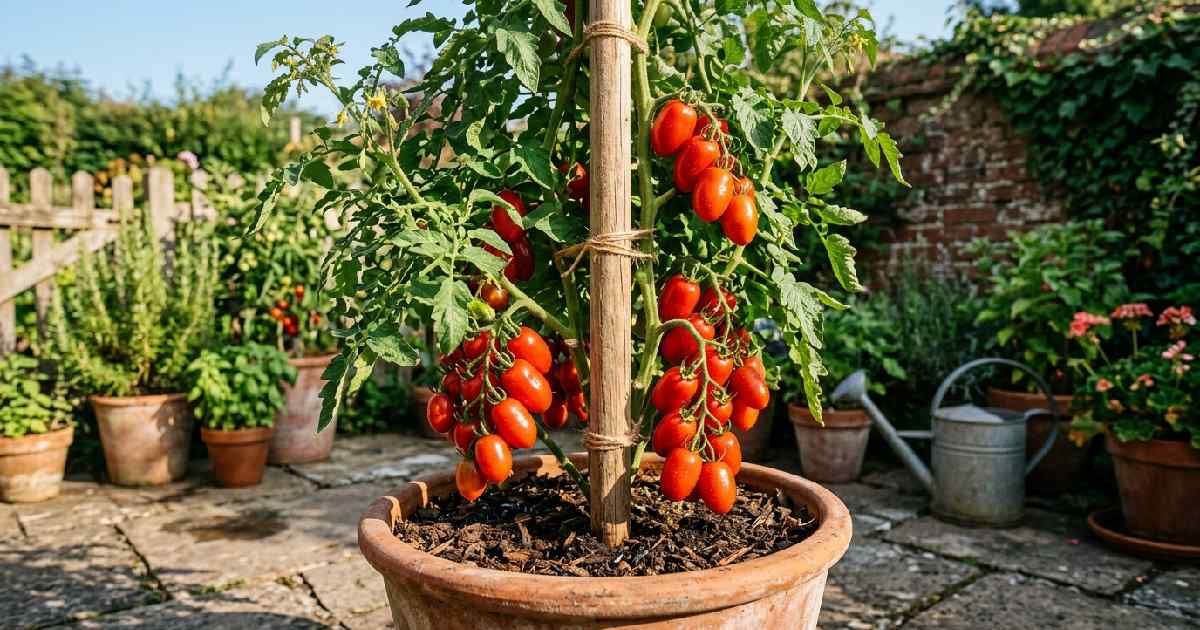

You don’t really need a big backyard at all. A sunny patio works almost every time. So does a balcony, or even a calmer spot by the front steps, you know. You just have to get a few things right. How to grow tomatoes in pots can do just as well as tomatoes planted in the ground. Sometimes even better. You get to manage the soil, you manage drainage, and you kinda decide how much sun the plant actually gets.
The tricky part: container tomatoes need a little more attention than most people expect. Pots dry out faster; nutrients wash out sooner. And if you pick a container that’s too small, you can slow the plant down before it ever really gets going. None of this is hard, though, not once you know what to watch for.
In this guide, you’ll get the full run-through. Choosing the right variety and container, planting, feeding. Supporting the plant as it grows. Then, picking your first ripe tomato, all that good stuff. Whether you’re working with one pot on a balcony or stacking a dozen pots on a patio, the basics stay pretty much the same.
Why Grow Tomatoes in Containers?
Many gardeners choose pots on purpose, not only because they don’t have yard space. Containers warm up faster in spring, so you can often start earlier. Also, you can move them. If a storm is rolling in, or the weather does that unexpected cold snap thing, you can shift the plants somewhere safer instead of feeling panicky.
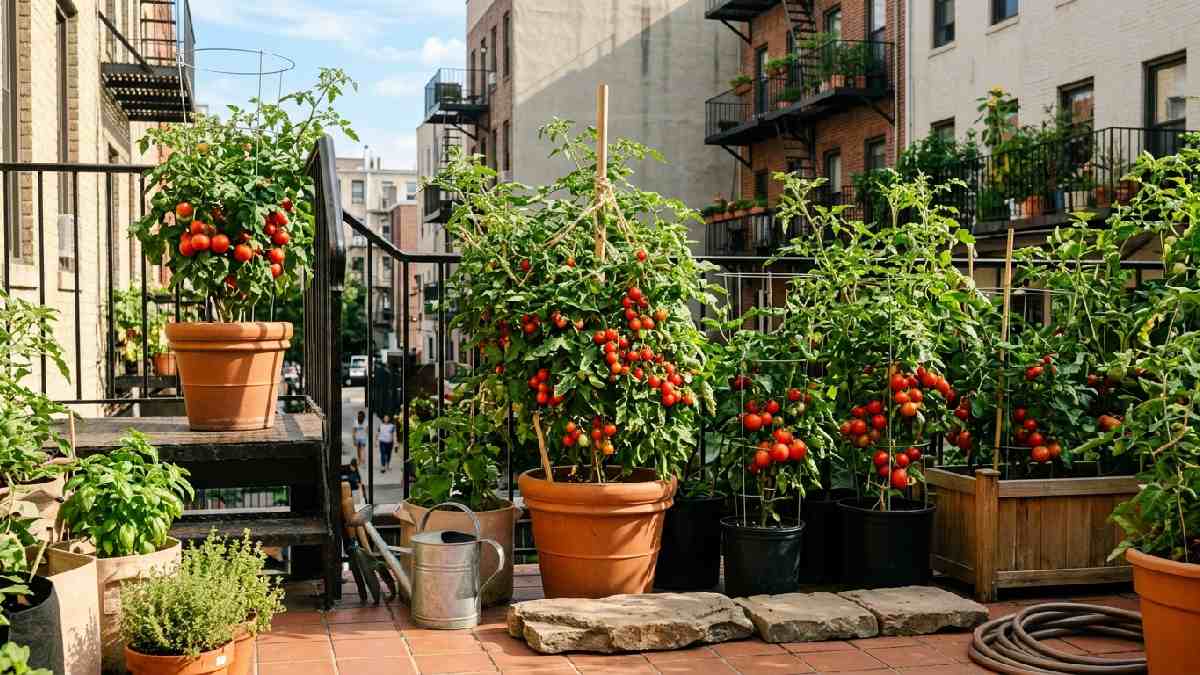
Containers can also reduce soil troubles. Diseases and pests that hang around in garden soil year after year, like certain wilt types, don’t usually bother the plant as much when it’s growing in fresh potting mix. And if your yard has heavy clay, or drainage that never quite cooperates, a pot just avoids the whole mess.
The tradeoff is watering, though. Container soil dries out faster. Tomatoes in pots need more frequent checking than the same plants in the ground, especially once summer heat shows up.
Choosing the Right Tomato Variety for Pots
Not all tomato plants are really made for container life. Some types just stay small and compact, while others sprawl out and get tall enough that you’ll need serious support. Picking the right variety from the start can save you from dealing with an oversized plant in a too-small pot later, which is kinda messy and annoying. Here’s how to tell what’s what and which kinds actually do well in containers, even when space is limited.
Determinate vs. Indeterminate
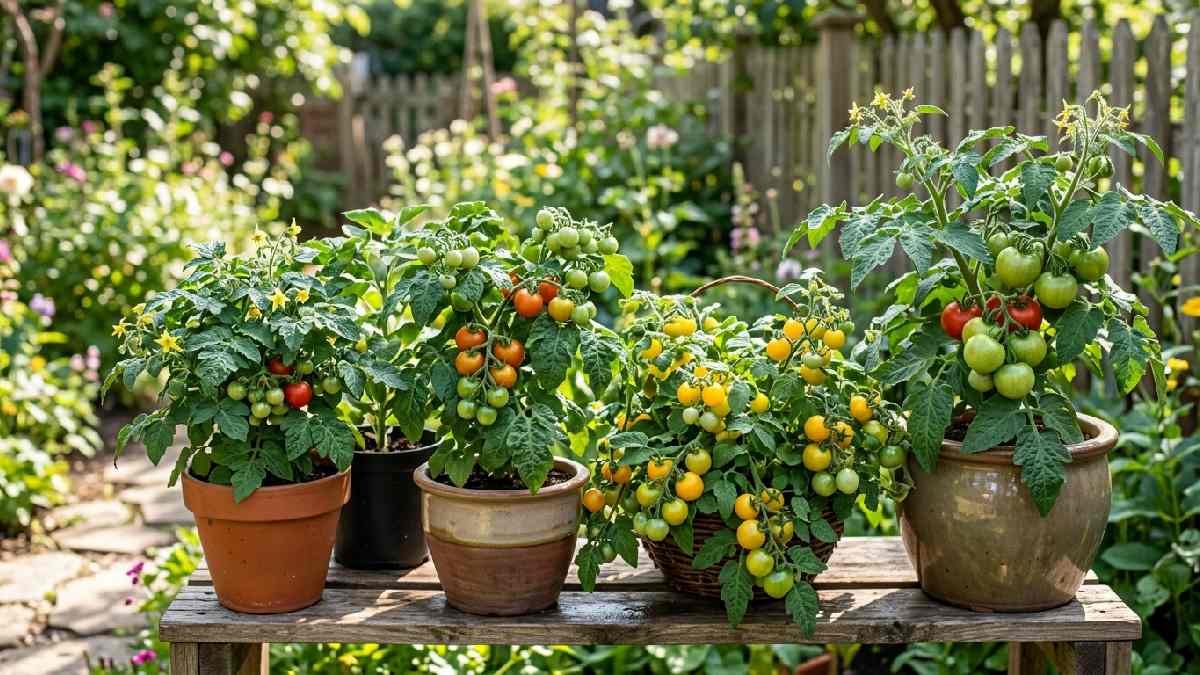
This choice kind of shapes everything else. Determinate tomatoes, sometimes called bush varieties, grow to a set size. They also produce fruit over a shorter time window, and they stay fairly compact. Indeterminate tomatoes keep growing and producing until frost ends things, often growing six feet or taller unless you rein them in.
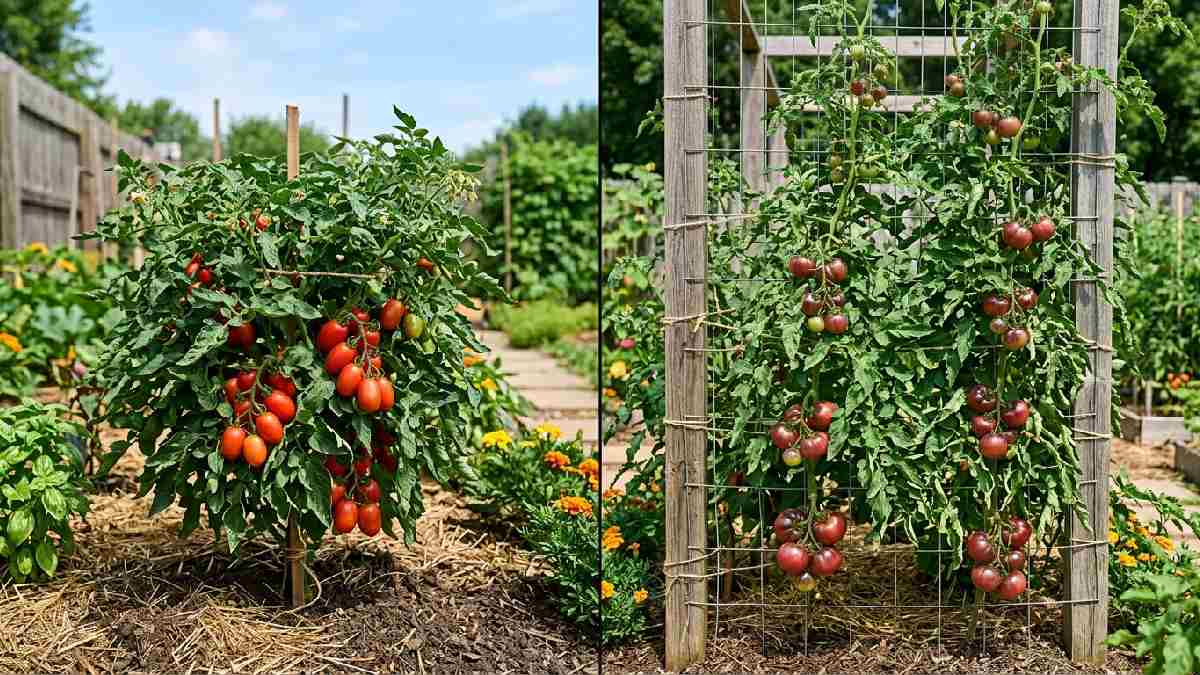
For pots, determinate varieties are usually the easier option. Their smaller size fits a container limit pretty naturally. Indeterminate can still work in pots, but they usually need a bigger container and a sturdy support system to handle the extra height and messy sprawl.
Good Varieties for Container Growing
Patio and dwarf tomatoes are basically bred for containers. Names like Patio, Tiny Tim, Bush Early Girl, and Better Bush are compact, steady, and pretty forgiving for people just starting out. Cherry and grape tomatoes are also great in pots, like Tumbling Tom or Sweet 100; they often produce a lot even when the pot is not massive.
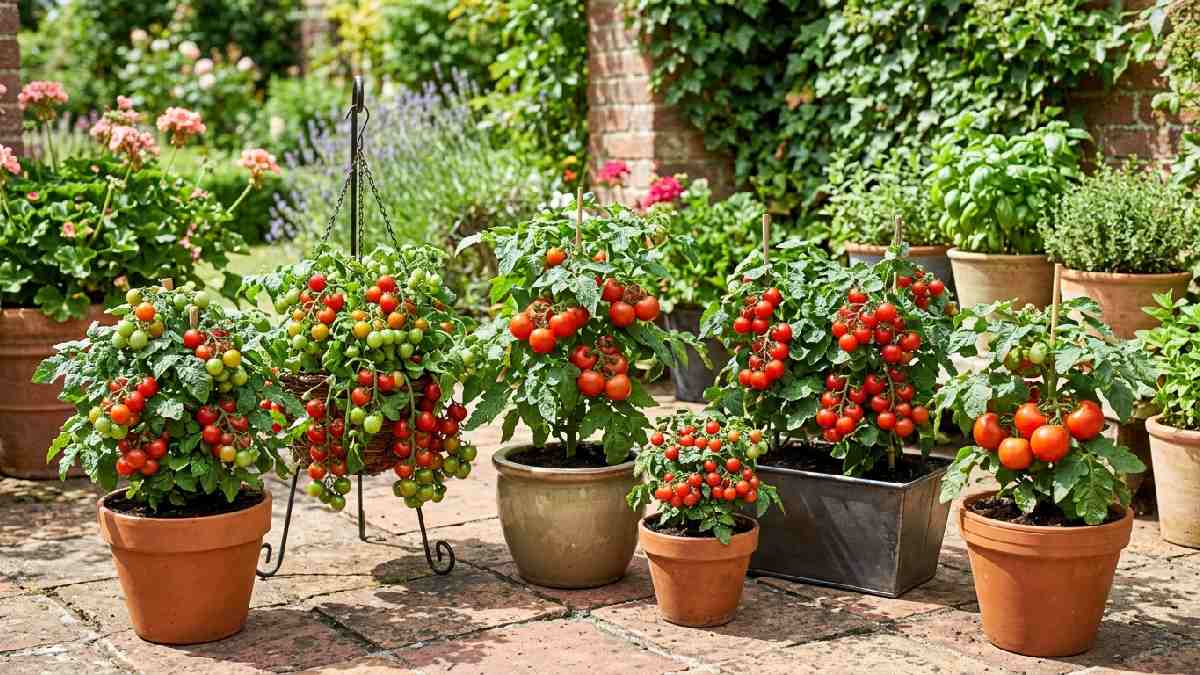
If you’re set on a big slicing type, like Beefsteak, it can still be grown in a container. Just expect you’ll need a larger pot, plus solid staking. Those types get tall and heavy once the fruit starts loading up.
Picking the Right Pot and Potting Mix
The container, and the soil you choose, kinda matter almost as much as the plant itself. If the pot is too small, or the soil type isnt a good match, even a healthy seedling can end up struggling all season long. Getting this bit right from the start really helps, because it spares you a bunch of watering headaches and that awkward, stunted growth stuff later.
Container Size Matters More Than You’d Think
This is where many container tomato problems begin, honestly. A container that’s too small limits root growth, which then limits everything else. That means less water the plant can handle, fewer nutrients it can grab, and fewer tomatoes at the end.
For most varieties, five gallons is the bare minimum. Ten to fifteen gallons usually works a lot better for anything beyond the tiniest dwarf plants. Bigger indeterminate varieties really want something like fifteen to twenty-five gallons. That sounds like a lot for one plant, but tomato roots spread further than people assume. Giving them space pays off later.
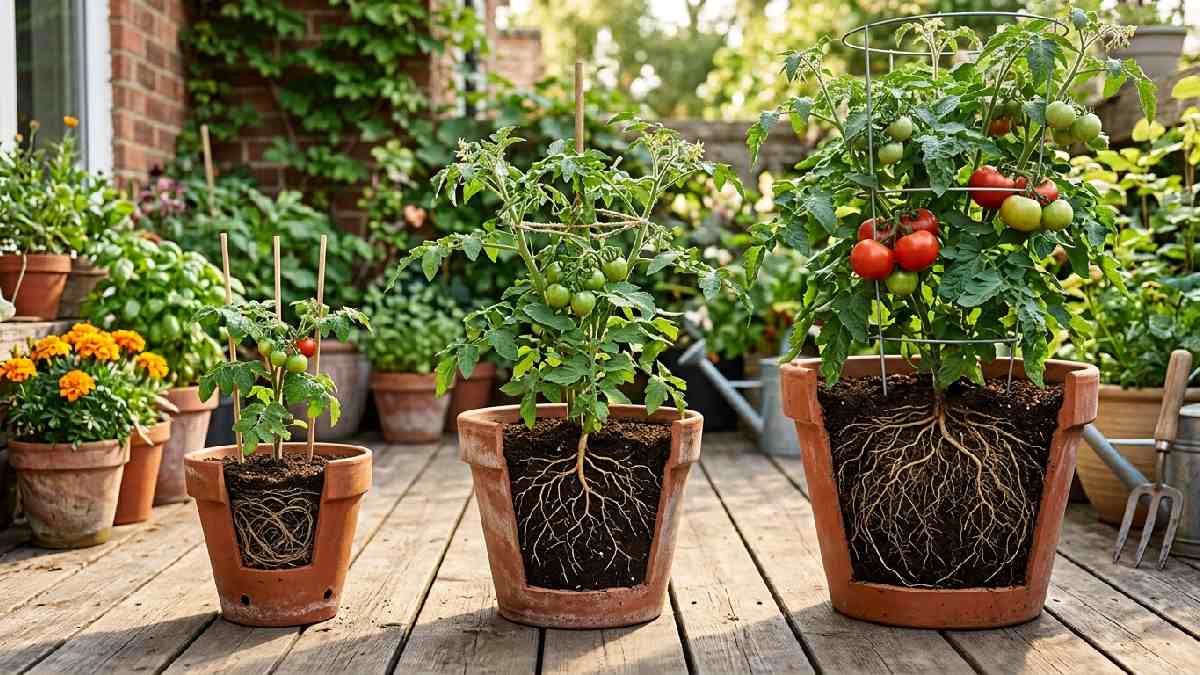
No matter what container you choose, drainage holes at the bottom are non-negotiable. Tomatoes hate sitting in soggy soil. A pot without drainage is basically a shortcut to root rot.
Choosing a Potting Mix
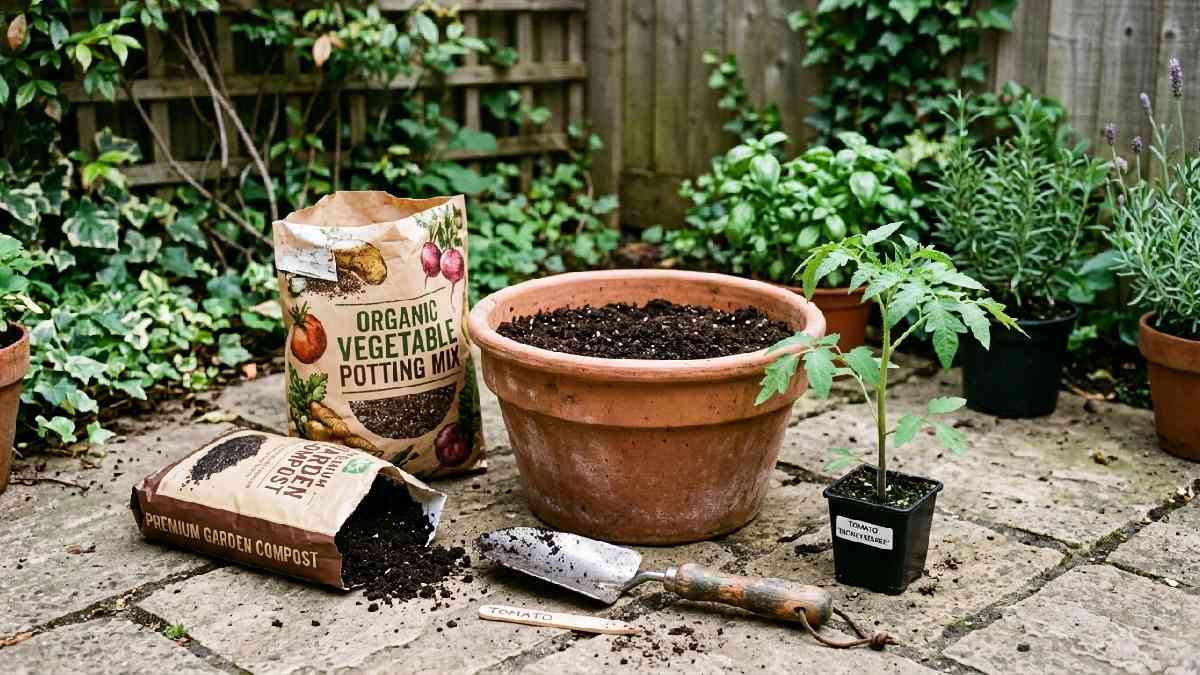
Skip garden soil entirely. Garden soil compacts quickly, drains poorly, and can bring in pests or diseases you absolutely don’t want near your container tomatoes. A good potting mix, ideally one made for vegetables or a blend mixed with some compost, gives the roots the loose, well-draining setup they actually want.
Some gardeners add perlite or vermiculite for extra drainage. That can help a lot, especially in humid regions where pots stay damp longer than expected. Mixing in a small amount of compost at planting time gives the plant a nutrition boost right away too.
Choosing the Right Pot Material
Pot material matters more than you’d think. Terracotta breathes well, which helps reduce overwatering. But it also dries out faster, so you’ll probably be watering more in hot summer weather. Plastic and glazed ceramic hold moisture longer, which can help during hot spells, but it also makes overwatering easier when temperatures cool off.
Fabric grow bags are worth mentioning, too. They’re light, usually affordable, and drain very well. When roots hit the fabric wall, they stop growing there instead of circling endlessly. Some gardeners say that supports a healthier root system overall. The downside is simple: fabric bags dry out even quicker than plastic or ceramic, so watering has to be consistent.
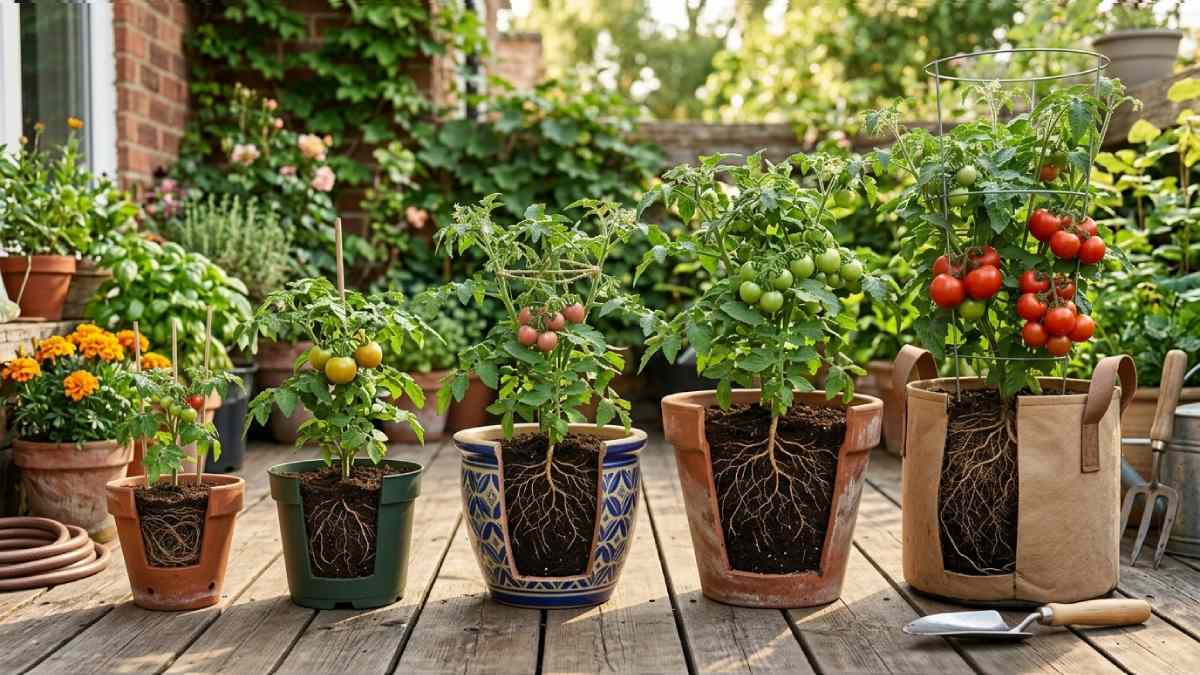
Also keep color in mind. Dark pots absorb more heat. That can be helpful in cooler climates but might overheat roots during a hot summer. Light colored containers usually stay cooler, so they fit hot regions better.
Planting Tomatoes in Pots, Step by Step
Once you have the right variety, pot, and soil lined up, the actual planting part is kind of easy. The timing matters more than most people think, and there is one little trick with tomatoes that gives the whole plant a real head start. Here is how to do it.
When to Plant
Tomatoes are warm-season plants; they can’t tolerate frost. Wait until frost risk is fully gone and nighttime temps are staying reliably above 50°F before moving anything outdoors. Starting seeds indoors about six to eight weeks before your last frost date gives you a head start. Or you can just pick up young plants from a nursery once the timing feels right.
Planting the Seedling
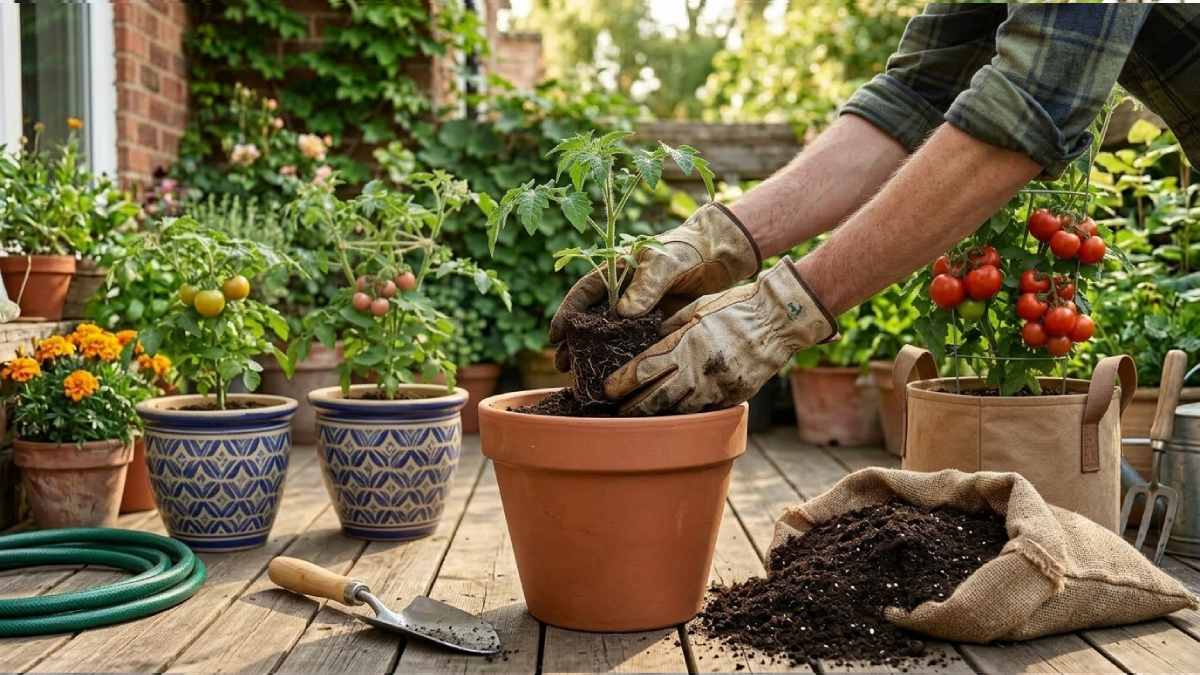
Tomatoes have a neat trick most other plants don’t: they send out roots along a buried bit of stem. So when you plant, bury the seedling deeper than it sat in the nursery pot, like all the way up to that first set of leaves. That buried stem turns into more roots or whatever, which usually makes the plant more solid and helps it reach water and food a bit better later on
Fill the container with potting mix, dig a hole deep enough for that extra burial, and set the seedling in. Then gently pack the soil around it, not too tight. Water it really well right after, just so everything settles down nicely
Hardening Off Before Planting Outside
If you started seeds inside, you’ll want to harden the seedlings off before they go outside for real. Basically, ease them into outdoor conditions bit by bit, over about a week. Start with maybe an hour or two outside, in a sheltered spot, then add time each day. If you skip it you’ll likely get shock, where leaves end up scorched or droopy from the sudden change
Sunlight, Location, and Support
Where you put the pot, and how you prop the plant up as it starts to climb and stretch, has a bigger effect on the harvest than most folks realize. Tomatoes are basically sun-hungry, and even if they are fed well and watered properly, they can still let you down if they are not getting enough light. There is a little planning here; it really goes a long way.
How Much Sun Do Container Tomatoes Need?
Give them as much sun as you can, honestly. Try for six to eight hours of direct sun a day. If you fall short, it shows up in the harvest: fewer tomatoes, smaller fruit, and a leggier plant that just looks weaker overall
A container is kind of great though, because you can shift the pot to chase the sun across the day, or even across the season, something you just can’t really do once it’s in the ground. A spot near a south-facing wall often works especially well too, since that wall throws back extra warmth and light at the plant
Staking and Supporting the Plant
Nearly every tomato variety appreciates some kind of support, even the smaller patio types. A stake, a cage, or a trellis keeps the plant upright, keeps fruit from sitting on the soil where it can rot, and it generally makes the whole growing thing easier
Set the support up when you plant, not later after the plant is already sprawling. Trying to put a cage around a grown tomato once it’s tangled and heavy is a pain, and you can end up snapping stems or messing with roots trying to force it into place. For indeterminate varieties especially, sturdy support is worth the extra effort at the start, since they just keep climbing all season long
Watering and Feeding Container Tomatoes
This is the part of growing tomatoes in pots that needs the most consistency, I mean honestly, because containers dry out fast, and they also lose nutrients kind of quick. So watering and feeding aren’t really a once-a-week, “afterthought” sort of thing here. Try to get into a steady rhythm with both of them, and then most other little issues start sorting themselves out.
Watering: The Most Important Daily Task
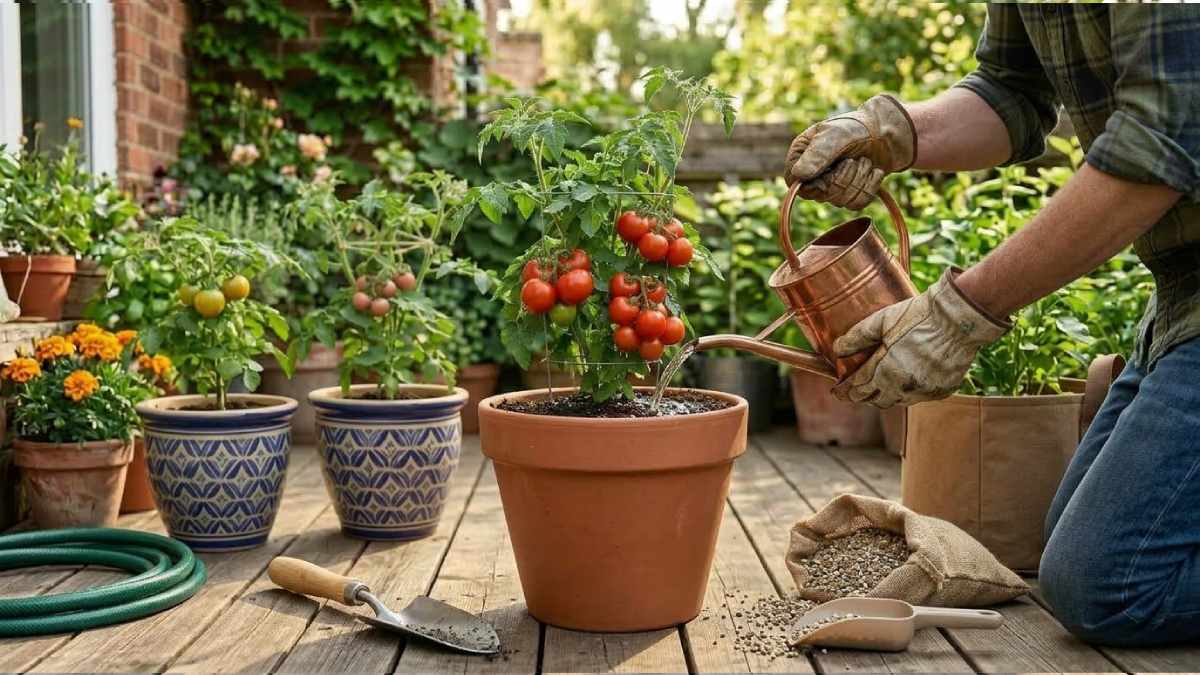
Container tomatoes drink fast. Pots dry out so much quicker than garden beds. In hot weather, daily watering is often necessary. Sometimes, even twice a day if the pots are small and the heat is really pushing
Check the top inch or two of soil with your finger. If it’s dry, water thoroughly until water actually comes out of the drainage holes. If it’s still damp, wait a little longer. Inconsistent watering is one of the biggest headaches here. Going from super dry to soaking wet can trigger blossom end rot and splitting fruit, so keeping moisture steady matters more than sticking to some perfect calendar
Water at the base rather than over the leaves. Wet foliage invites fungal problems. A mulch layer on top of the potting mix helps as well; straw or shredded bark both do the job. Mulch slows evaporation and keeps moisture a lot more even between waterings
Feeding Tomatoes in Containers
Container soil only carries so many nutrients to begin with, and frequent watering washes a lot of them right out. So potted tomatoes usually need more frequent feeding than the same plant growing in the ground
Start with a balanced fertilizer when you plant. After that, switch to tomato fertilizer, usually lower nitrogen and higher phosphorus and potassium, and feed every two to three weeks through the season. Too much nitrogen pushes leafy growth instead of real fruit, so grabbing something made for tomatoes beats using some generic leafy blend
Organic options like compost tea or fish emulsion can also work well, and plenty of gardeners prefer them if they’re planning to eat tomatoes straight off the vine
Common Problems With Potted Tomatoes
Even with pretty good care, potted tomatoes run into a handful of issues, fairly often, sort of. A lot of it traces back to watering, whether that is too much, too little, or just too inconsistent, and not in a steady rhythm. If you know what to look for early on, it becomes pretty simple to correct things before they quietly steal what you hoped for from the harvest.
Blossom End Rot
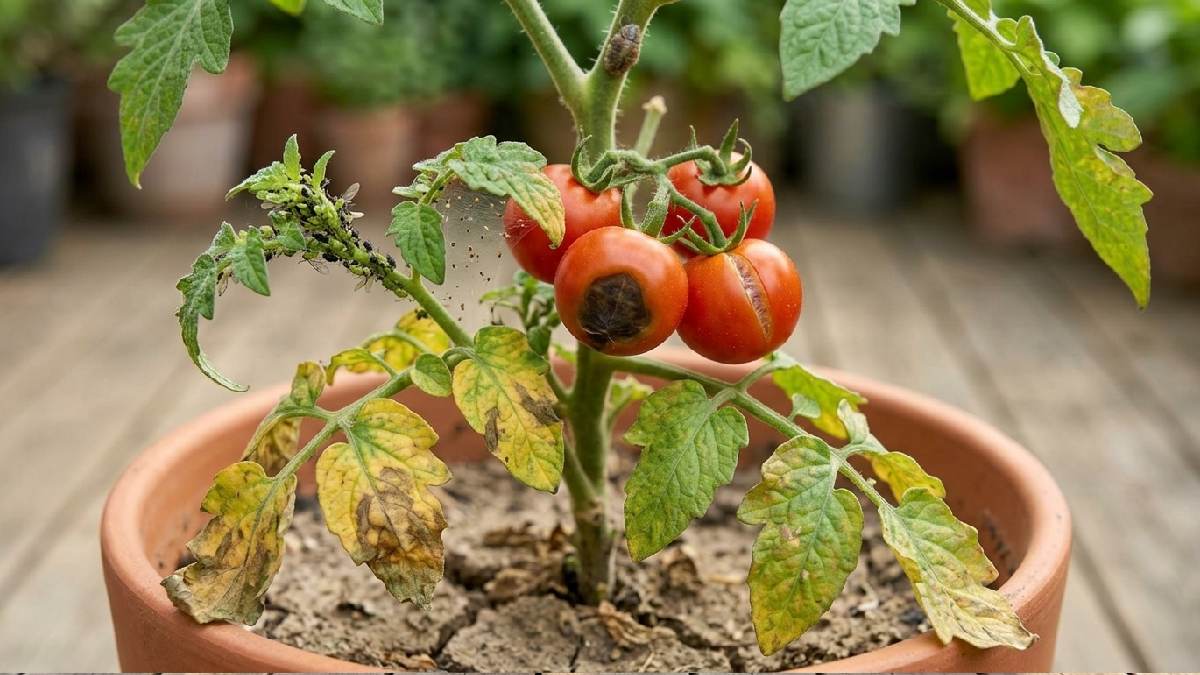
You’ll spot this as a dark, sunken patch on the bottom of the fruit. It’s usually caused by inconsistent watering that disrupts calcium uptake, not necessarily because your soil is truly missing calcium. Consistent, even watering tends to fix it far better than any calcium spray or supplement
Yellowing Leaves
Yellow leaves, especially the lower ones, usually mean a watering or feeding problem. Overwatered plants can look yellow and limp even if the soil is staying wet. A nitrogen shortage tends to show up as pale yellow leaves that start near the bottom and move upward across the plant
Cracking or Splitting Fruit
This tends to happen when the plant grabs water too fast after a dry stretch, and then the fruit swells faster than the skin can stretch without problems. The best prevention is steady watering, letting the soil not go completely dry in between
Pests
Aphids and whiteflies pop up on container tomatoes fairly often, especially on patios or balconies where there aren’t as many natural predators around. A strong spray of water knocks aphids loose quickly, and insecticidal soap usually handles tougher infestations. Check under leaves regularly, since pests often hide there first
Blight and Fungal Disease
Fungal issues like early blight show up as dark spots on lower leaves. Over time, they tend to climb upward if you do nothing. Better airflow around the plant, watering at soil level instead of overhead, and removing affected leaves quickly all help keep things under control
Extending the Season and Overwintering
One big plus with growing tomatoes in containers is that the plant isn’t stuck in the ground once the weather turns, you know. A pot can be moved around, sheltered, or even brought indoors to squeeze out a few more weeks of the season. It also makes it easier to keep a favorite variety running into next year, rather than just letting it go.
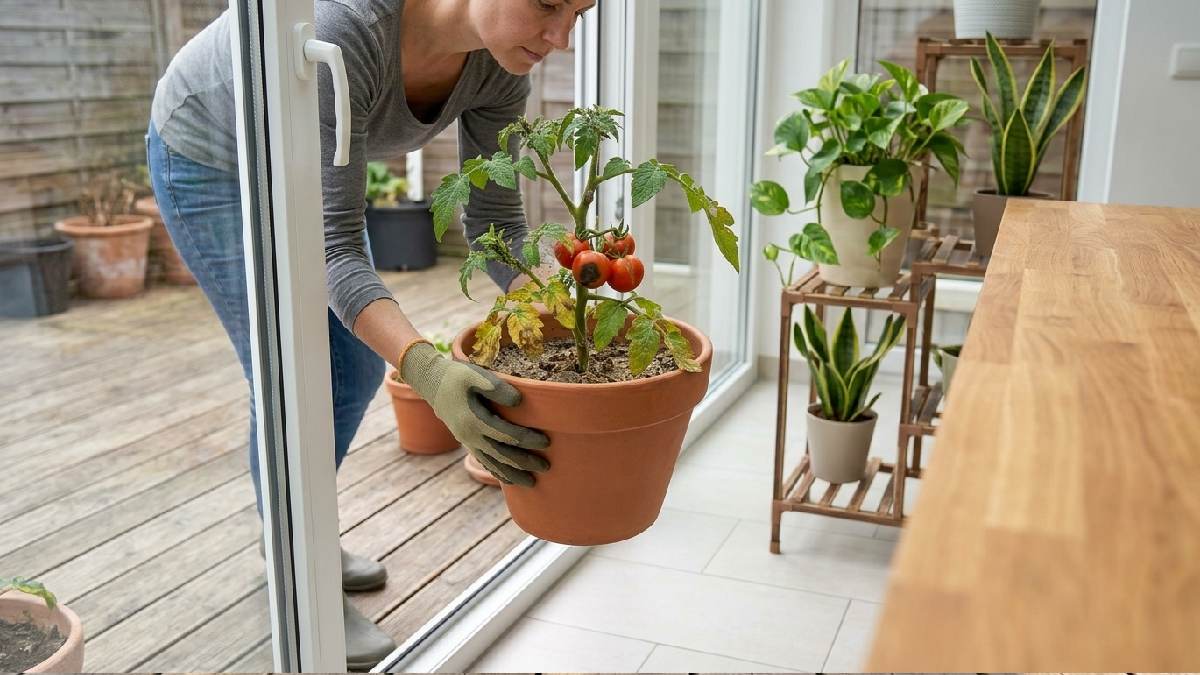
Bringing Plants Indoors Before Frost
One handy thing about container tomatoes is that you can move them. If an early frost is coming, you can bring the whole pot inside or into a garage for the night. It won’t keep working forever, because tomatoes still need strong light to keep producing, but it can buy you a few extra weeks at the very end of the season
A sunny window, or like a spot under a grow light, kinda keeps the plant alive a little longer, ya know. But don’t really bank on brand new fruit at this stage. Most of the time the idea is just to let the green tomatoes already there finish ripening, slowly.
Taking Cuttings to Keep a Variety Going
If you grew a variety you really liked, you can take a cutting before the season ends and root it indoors over winter. Snip a healthy side shoot, put it in a glass of water, and wait for roots to show up, usually in one to two weeks. After that, pot it up and keep it going inside under a grow light until it’s warm enough to bring back outside next spring.
It’s a pretty neat move for keeping an indeterminate variety rolling year after year, without having to start completely from seed again every time.
Companion Planting in Pots
You can share a bigger pot with tomatoes and a few compatible companions. Basil is the classic buddy. People say it boosts flavor, and it may also help nudge away certain pests, plus it basically wants similar sun and water as tomatoes anyway. Marigolds are also a common pick. They add color and may help keep nematodes and other little troublemakers away from the roots.
Try not to put tomatoes next to fennel or dill once they get mature, because both can mess with tomato growth. If you do want to grow fennel or dill at all, keep those in separate pots.
If you’re tight on space, one large container can sometimes handle one tomato plant plus a couple of low-growing herbs along the edges, like basil, or parsley too. Just make sure the tomato still gets the bulk of the light, plus root space, since it’s the biggest feeder in the group.
Harvesting Tomatoes From Containers
Tomatoes are ready when they hit full color for whatever variety you’re growing, deep red, orange, yellow, or that other totally different color. The fruit should feel slightly firm, but it should still give a bit when you press gently.
Twist or snip the tomato off the vine; don’t yank it. Pulling can damage the stem, and it can also mess with other fruit still ripening nearby. Harvesting often actually encourages more production, because once the plant has ripe fruit, it spends less energy on making new flowers.
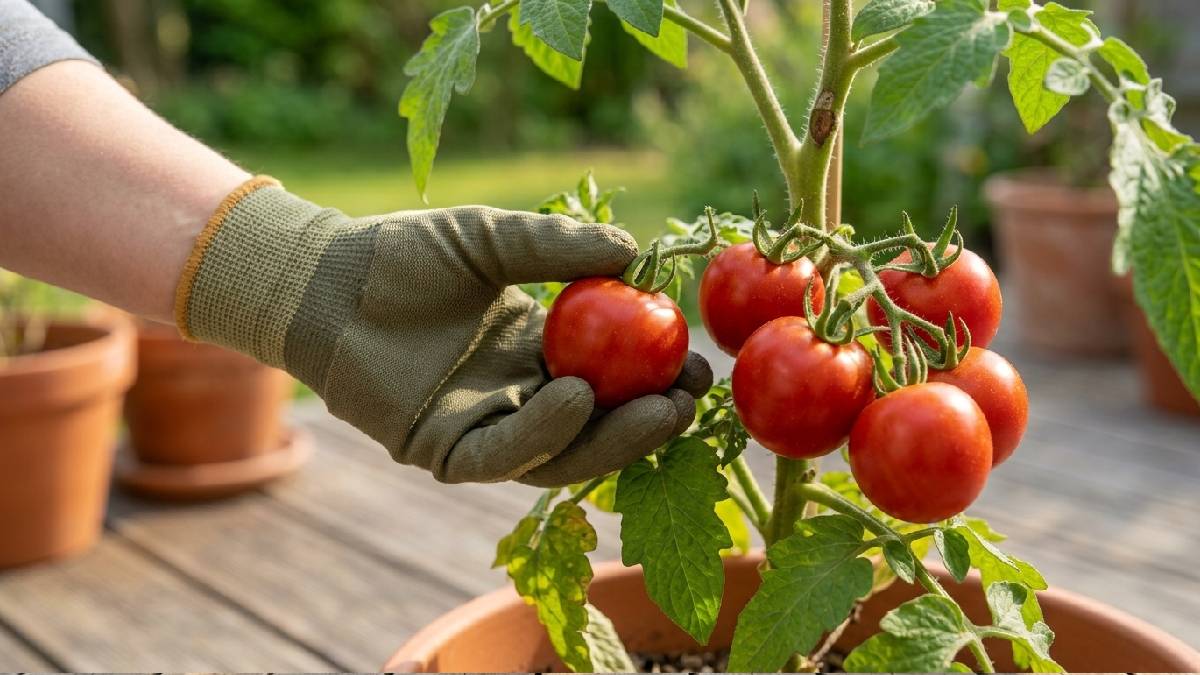
If frost is creeping in and you still see green tomatoes on the vine, pick them and ripen indoors on a windowsill, or use them green in dishes meant for unripe tomatoes like fried green tomatoes.
Frequently Asked Questions
What size pot do I need to grow tomatoes?
Most varieties need at least a five-gallon container. But ten to fifteen gallons is usually a safer bet for steadier growth, plus a real harvest. Larger indeterminate types do best in the fifteen to twenty five gallon range, because they grow bigger root systems and carry heavier fruit loads.
Can you grow tomatoes in pots without a cage or stake?
Very compact varieties sometimes manage without support, but most tomatoes do better with staking or caging even in a pot. Support keeps things upright, keeps fruit off the soil, and makes the whole plant easier to handle as it fills out.
How often should I water tomatoes in pots?
Often, like really. Especially when it’s hot, sometimes you’re watering daily, or even twice a day if the container is smaller. Check the top inch or two of soil with your finger and water when it feels dry, not by some fixed schedule, ok.
Why are my container tomatoes not producing fruit?
Usually it’s not enough sun, temperature swings, or too much nitrogen fertilizer, which pushes leafy growth more than flowers. Aim for six to eight hours of direct sun, and if you’ve been using a general fertilizer, switch to something tomato specific.
Can I grow tomatoes in pots indoors?
You can, but it’s harder than outside because tomatoes need intense light that’s tough to copy indoors without a strong grow light running most of the day. If you try it, choose a compact variety and plan on relying a lot on supplemental light.
Conclusion
Growing tomatoes in pots mostly comes down to a few basics, done consistently. Use a big enough container, good potting mix, give them plenty of sun, water steadily, and feed regularly. Once those are dialed in, a container tomato plant can produce almost as well as one in the ground, sometimes even more, because you’re controlling the growing conditions so closely.
If you choose a variety that does well in container life, then size your pot kinda generously, don’t go stingy, and keep an eye on watering once the weather really warms up. After that, it’s almost like the rest goes by itself: staking, feeding, then harvesting whatever you want to call it. A couple of pots with tomatoes on a bright sunny patio can, pretty easily, keep a household stocked with fresh tomatoes through most of the summer long.