

Best Grow Lights for Microgreens
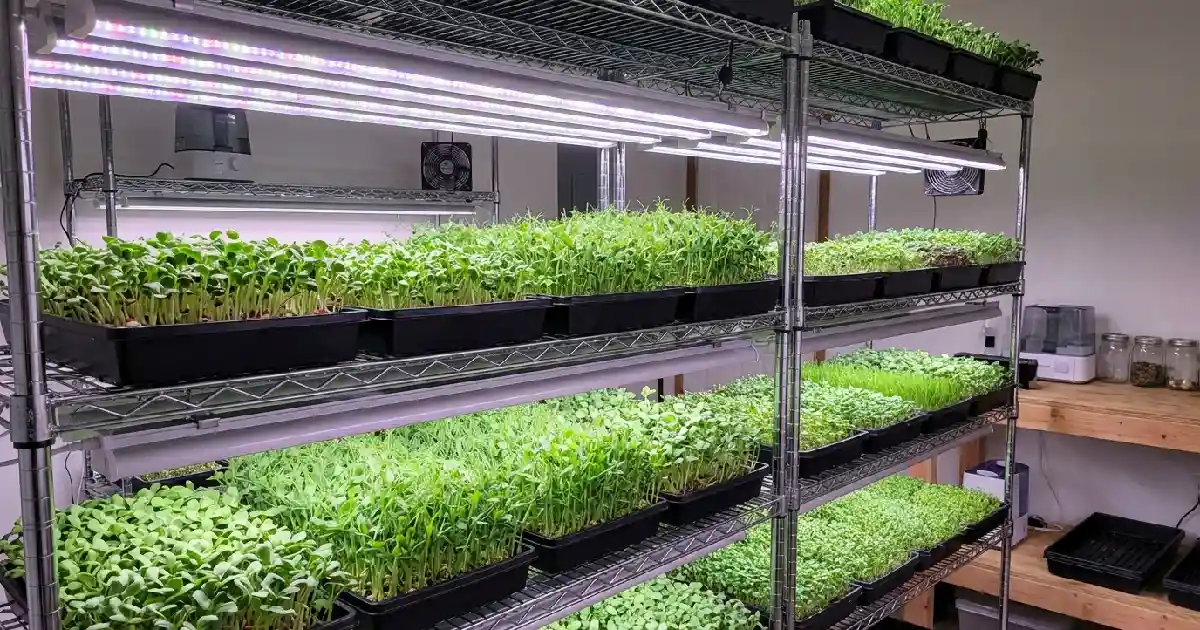
Microgreens grow fast, but they don’t grow well without proper light. Normal room bulbs can’t do the job. Plants stretch, stems get thin, leaves turn pale. Good grow lights fix this; LEDs are best. They stay cool, save energy, and spread light evenly. Small panels are fine for one or two trays. Bigger LED bars cover racks and multiple trays. The right light makes microgreens strong, compact, and colorful. You notice the difference in a week.
Height and timing matter a lot. Keep lights around 12–18 inches above trays. Run them 12–16 hours a day, too close and leaves burn. Too far, and plants stretch thin; consistent light helps microgreens grow better. Color, taste, and yield all improve with even small adjustments to distance or duration. Proper grow lights are simple but essential.
Why Light Quality Makes or Breaks Microgreens
Microgreens seem tiny and delicate, but light controls everything. Without proper light, stems get thin, leaves turn pale, and growth slows. Just putting them by a window doesn’t help indoors. Sunlight alone is too inconsistent. Clouds, short days, or bad window angle mess it up. The right light decides whether your microgreens stay compact and strong or become weak and stretched.
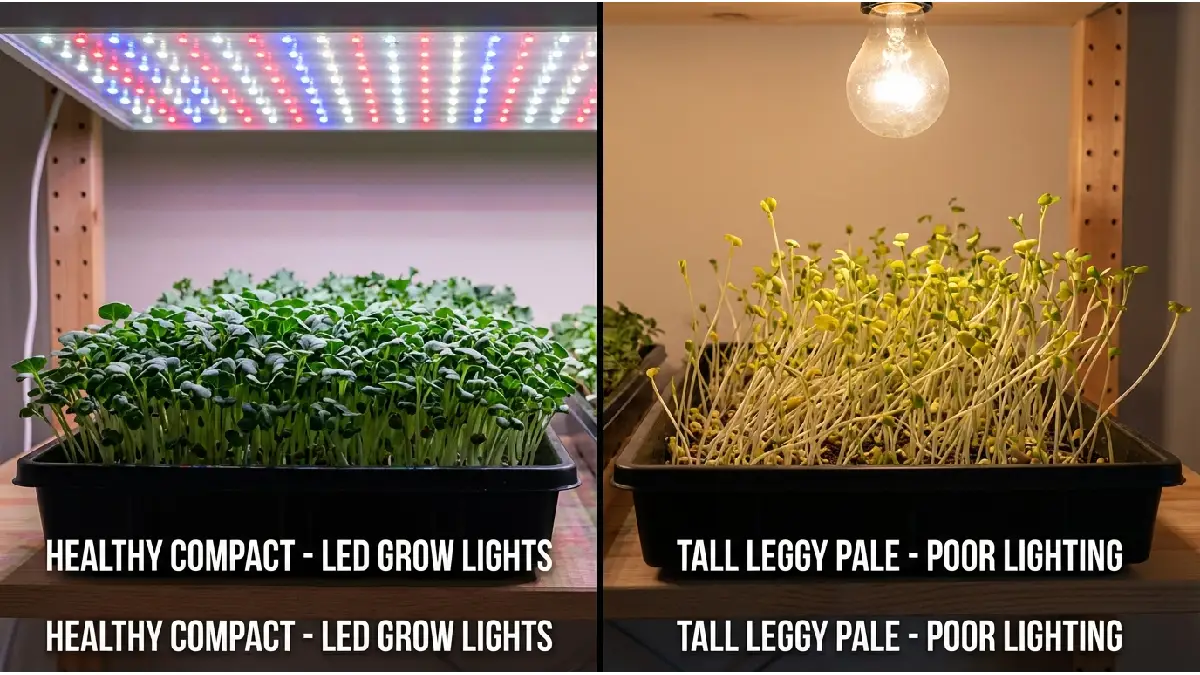
Grow lights give plants exactly what they need. Red and blue light make stems stronger, leaves darker, and growth faster. Sunlight is good, yes, but inconsistent. Artificial lights give steady energy every day. With proper lighting, microgreens stay tight, colorful, and ready for harvest. You notice the difference in the first week itself. Even small changes in light make big differences in yield and quality.
What to Look for in the Best Grow Lights
Choosing the right grow light can completely change how your microgreens turn out. Not all lights are equal; some are weak, uneven, or too hot for tiny seedlings.
If you pick wrong, plants stretch, leaves pale, and growth slows. Focus on a few simple things: spectrum, intensity, distance, and energy efficiency. These basics alone decide whether your trays will look lively or sad.
Full Spectrum vs Red/Blue Lights
Full-spectrum LEDs in the 5000K–6500K range are the safest choice. They give a balance of red and blue wavelengths, which plants need to grow strong stems and vibrant leaves. Avoid the old “blurple” lights.
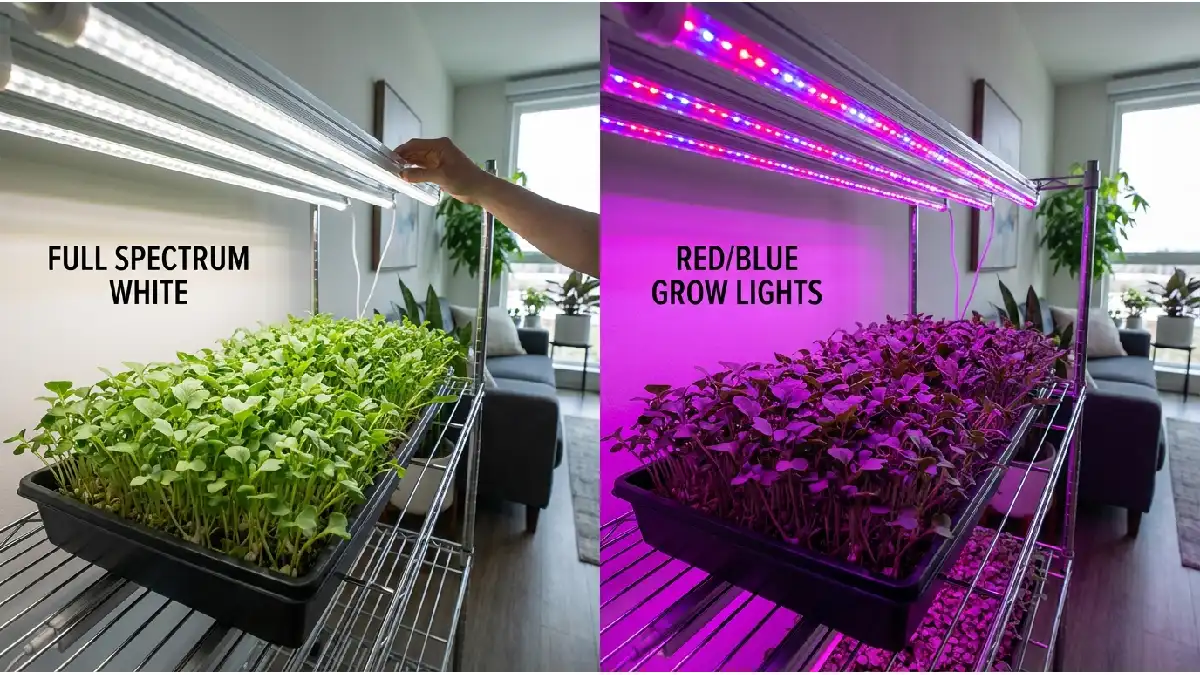
They may look futuristic, but in reality, they produce uneven growth, pale leaves, and weak microgreens. Full-spectrum lights mimic natural sunlight more closely, helping seedlings stay compact and healthy. Even small differences in the spectrum show up in color and flavor.
Light Intensity (PPFD Explained Simply)
Intensity is important, but don’t overthink the numbers. Microgreens need steady, bright energy without being burned; too little light makes stems long and thin.
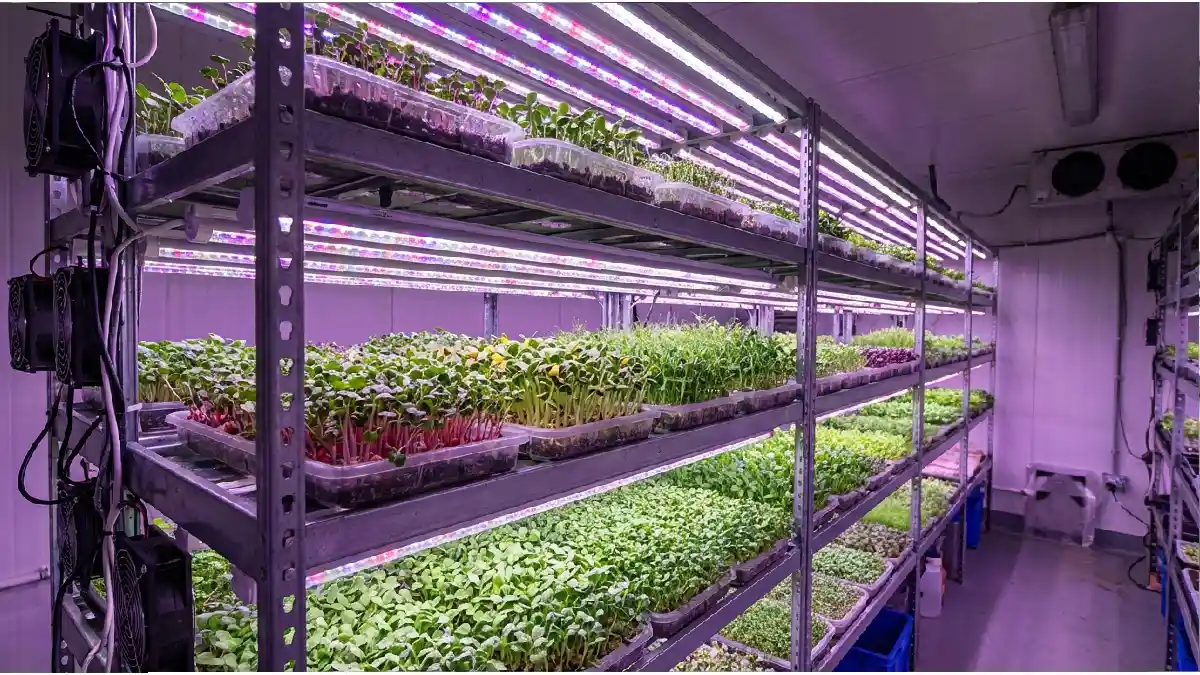
Too much can dry leaves or cause stress. Moderate intensity works best; the goal is healthy growth, tight stems, and rich green leaves. You don’t need fancy technical setups, just consistent brightness over your trays.
Distance from Microgreens
Light placement matters a lot; a good rule is 6–12 inches above trays. Too close, and leaves may burn or curl. Too far, and plants stretch and turn leggy. Watch them carefully, pale, tall stems mean light is too far.
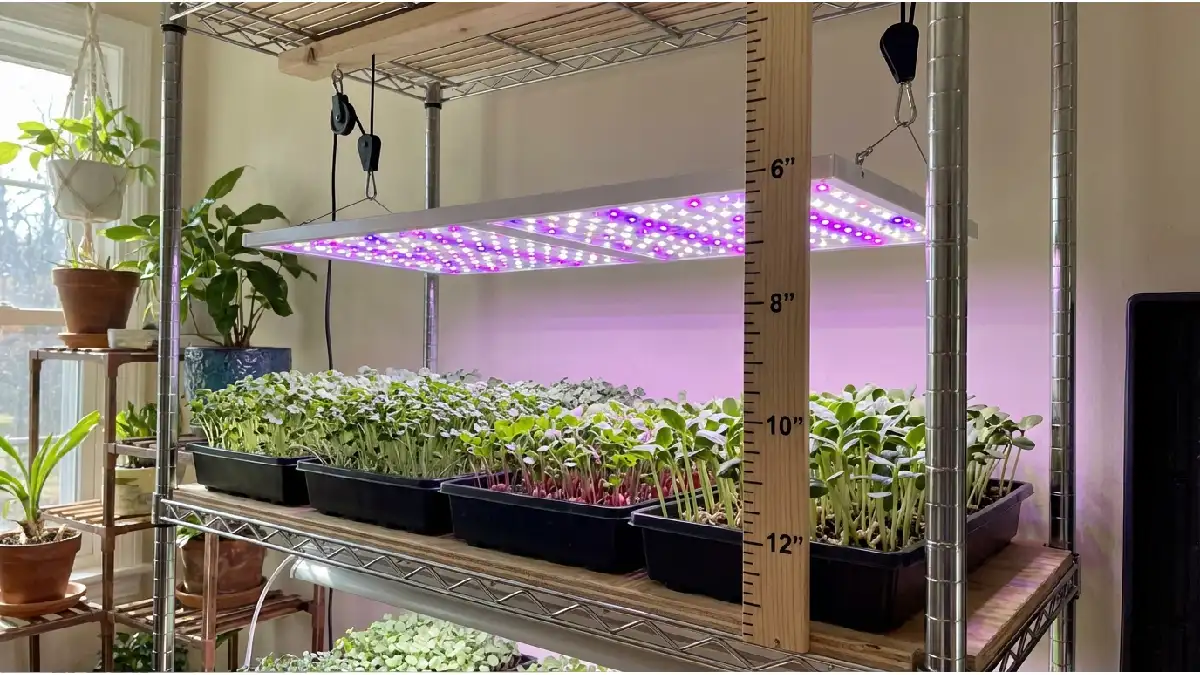
Curled or scorched edges mean it’s too close to adjust gradually. Even a few inches change the look and strength of your microgreens.
Energy Efficiency & Cost
LEDs save electricity and last years longer than old fluorescent or cheap bulbs. Cheap lights cost less upfront, but they run hotter and use more energy over time.
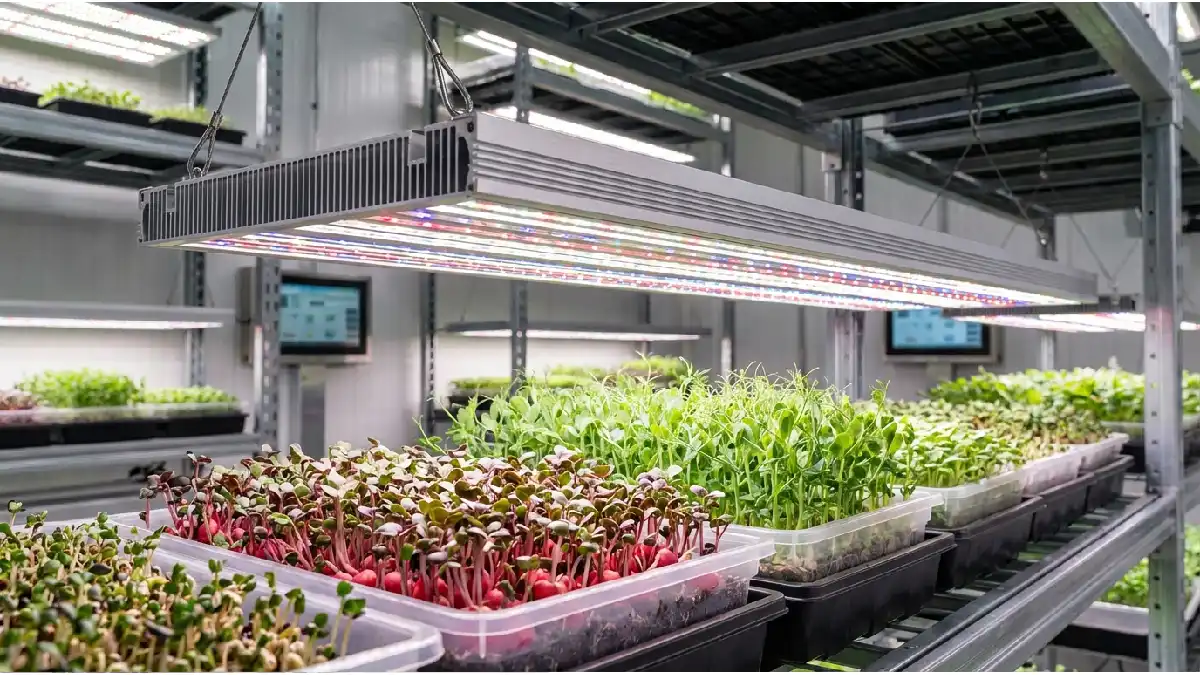
Investing in efficient LEDs pays off with lower power bills, cooler growing space, and better results. Over months, the difference in cost and plant quality is obvious.
7 Best Grow Lights for Microgreens (Tested Picks)
Choosing the right grow light for microgreens can feel confusing. There are so many types, wattages, and colors. But honestly, for tiny plants, you don’t need to overthink.
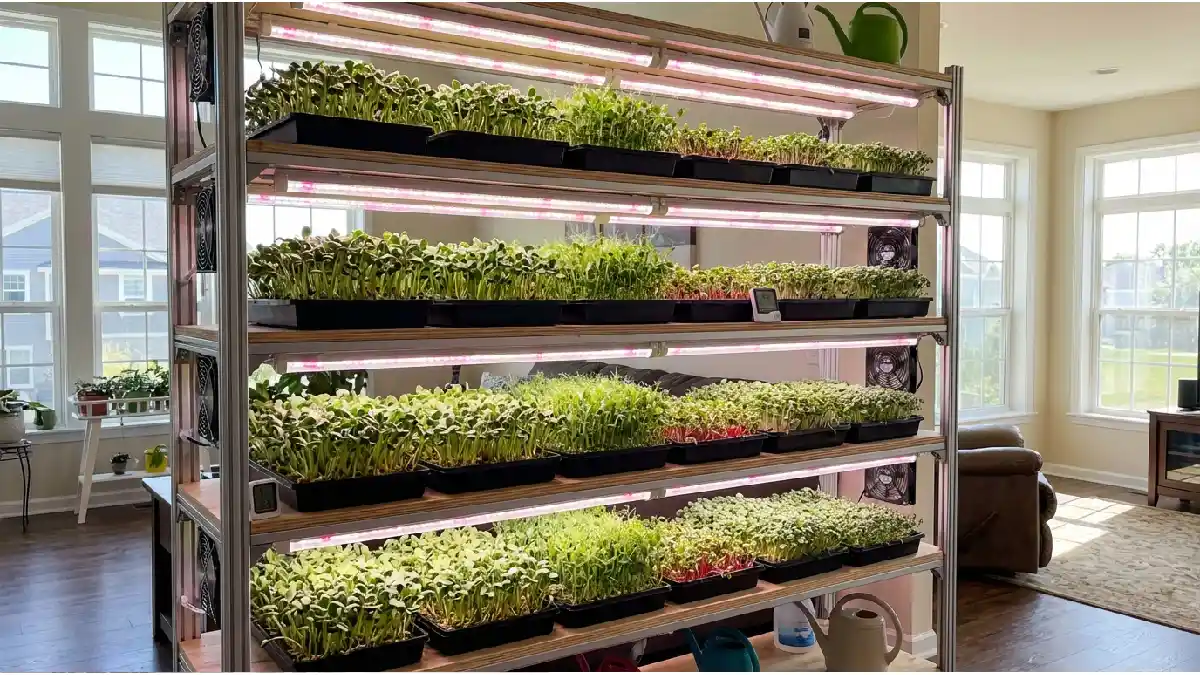
The basics matter more: even light, proper spectrum, and something that won’t overheat your seedlings. Pick the wrong one, and plants stretch, stems get weak, leaves turn pale. Pick the right one, and they stay tight, colorful, and grow fast.
We tested a bunch of lights for home trays, shelf racks, and even small commercial setups. Some were cheap but weak, others were strong but expensive. Only a few stood out for real performance, reliability, and ease of use. These are the ones that consistently gave compact, vibrant microgreens without fuss.
Whether you’re starting your first tray or growing multiple racks, these lights make a difference. They don’t just keep plants alive, they help them thrive. Below, you’ll find the 7 best tested options, with who they’re best for, key specs, pros, small drawbacks, and setup tips. It makes picking the right light much easier.
1. BrightGrow Full Spectrum LED Panel
Who it’s best for
Beginners or home growers with 1–2 trays. Simple setup, no confusing controls.
Key specs
Full spectrum 5000K–6500K
Low heat LEDs
Covers 2’ x 2’ tray area
Pros
Easy to install
Energy efficient
Even light spread
Small drawback
Too small for multiple trays or racks
Setup recommendation
Hang about 10–12 inches above trays. Run 14 hours per day. Great starter light for consistent, compact growth.
2. GreenLeaf Adjustable LED Bars
Who is it best for? Shelf growers or multi-tray setups.
Key specs
Adjustable length
Dimmable output
Full-spectrum LEDs
Pros
Customizable coverage
Height adjustable as plants grow
Even brightness across trays
Small drawback
Slightly more expensive than basic panels
Setup recommendation
Line bars over each shelf. Keep 8–10 inches above trays. Adjust gradually as microgreens grow.
3. SunWave Pro 1000 LED Grow Light
Who it’s best for
Serious growers or small commercial setups.
Key specs
High intensity LEDs
Full spectrum 5500K
Fan-cooled design
Pros
Strong light coverage
Faster growth
Balanced spectrum improves color and density.
Small drawback
Fan noise can be noticeable in quiet rooms
Setup recommendation
Hang centered over 3–4 trays at 12 inches. Run 14–16 hours per day for uniform growth.
4. EcoFarm Slim LED Bars
Who it’s best for
Budget-conscious growers who still want quality.
Key specs
Slim profile
Full spectrum
Low power consumption
Pros
Affordable
Easy to mount
Good spread for small shelves
Small drawback
Slightly lower intensity than premium options
Setup recommendation
Use 2 bars per tray if needed. Keep 10–12 inches above microgreens. Works well for small setups without spending too much.
5. HarvestGlow Adjustable LED Panel
Who it’s best for
Growers who want dimming and flexibility for different stages.
Key specs
Dimmable control
Full spectrum
Heat dissipation design
Pros
Adjust brightness easily
Stays cool
Works well with different crops
Small drawback
Dimming settings may need trial and error
Setup recommendation
Start at medium brightness, 12 inches above trays. Adjust as plants grow. Ideal for experimenting with growth rates.
6. NovaGrow Strip Lights
Who it’s best for
DIY setups or small racks.
Key specs
Long strip design
Full-spectrum LEDs
Plug-and-play setup
Pros
Easy installation
Even light spread
Compact design fits shelves.
Small drawback
If mounted too high, the brightness drops
Setup recommendation
Mount 8–10 inches above each shelf. Great for tight spaces or small apartment setups.
7. ProFarm Dual LED Bars
Who it’s best for
Growers who want reliability and backup coverage.
Key specs
Dual bar setup
Balanced spectrum (5000K–6000K)
Low heat
Pros
Double coverage for multiple trays
Reliable and consistent light
Low electricity cost
Small drawback
Takes more space if racks are crowded
Setup recommendation
Run bars parallel over shelf racks. Keep 10–12 inches above trays. Best if planning to scale up production.
Budget vs Commercial Setup – Which One Should You Choose?
Picking the right grow light setup really depends on how serious you are about microgreens and how much space you’ve got. If you just want to grow a few trays for yourself, a basic setup is enough.
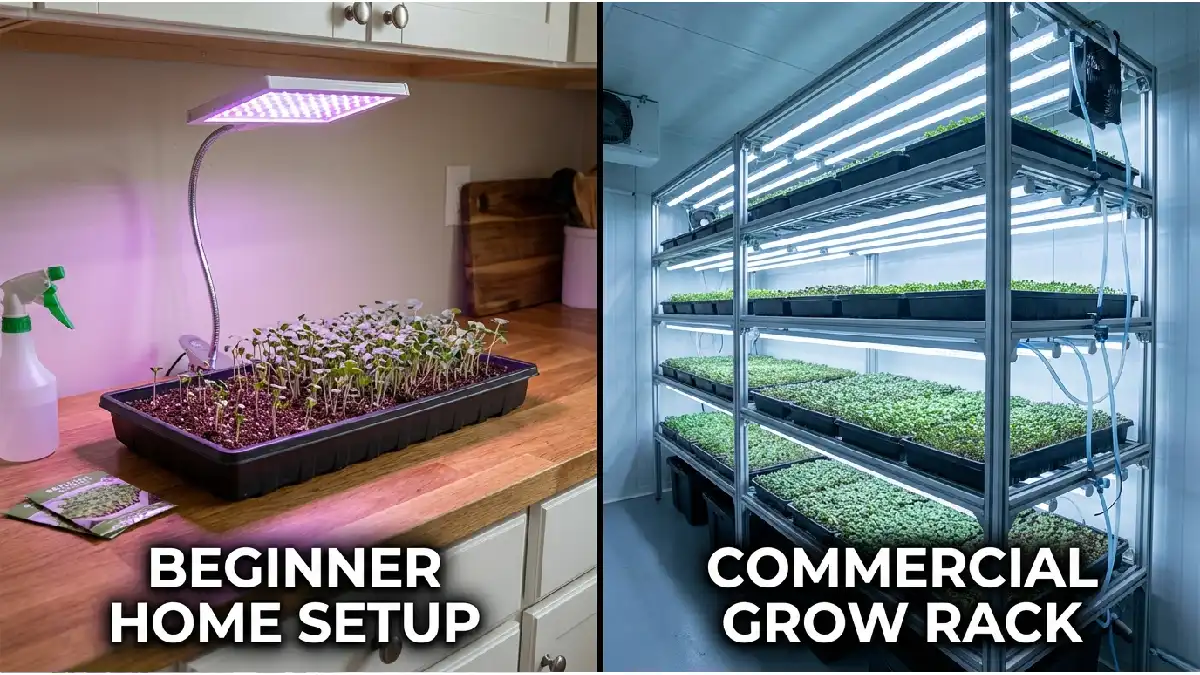
But if you’re thinking bigger, selling to friends, local shops, or markets, then a commercial setup makes more sense. Each option has its own pros and small cons, and understanding them helps you avoid wasted money or weak crops.
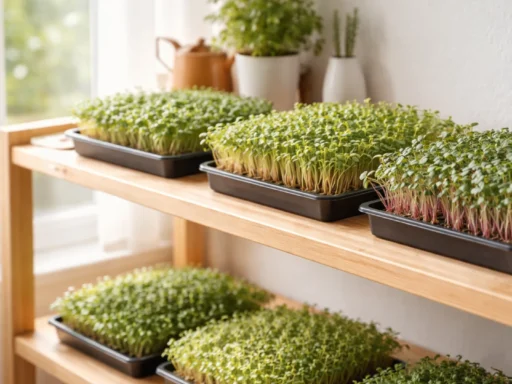
Beginner shelf setup
A beginner shelf setup is simple and cheap. You use a shelf or table with a couple of trays and a basic full‑spectrum LED panel above. It’s not fancy, but it gives steady light that keeps stems short and leaves green. This suits people who want fresh microgreens weekly or just want to try growing without spending too much. You don’t need large racks or expensive lights. Just hang the panel right above the trays and let it run 12–14 hours a day.
Home grower
As a home grower, you might want a bit more. Maybe a small rack with 3–6 trays stacked. This gives you more space and more consistent harvests. Adjustable LED bars make sure every tray gets even light. You spend more than a beginner setup, but you also grow more at once. This works well if you share with friends, sell a few bunches here and there, or just enjoy a steady supply without running out too fast.
Small commercial rack
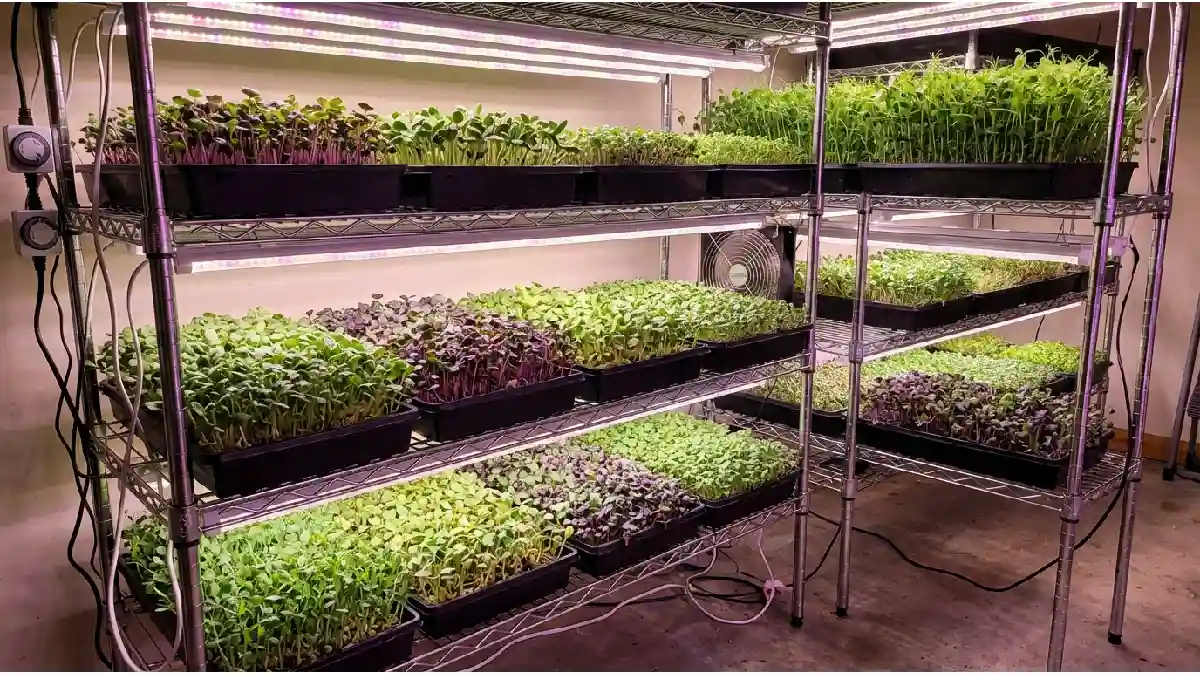
A small commercial rack setup is for those who really want to scale up. Multiple trays, stronger LED lights, maybe even timers and dimmers. This costs more upfront, but you can handle a lot more microgreens at once. If you plan to sell regularly to a local store, through delivery, or at a farmer’s market, this setup pays off. The lights are stronger, the coverage wider, and the growth more reliable. You’ll harvest more, save time, and satisfy customers with tighter stems and deeper color.
Simple cost comparison
For a simple cost comparison, beginner setups are cheapest and easiest to manage. Home grower racks cost a bit more but give better yield and flexibility. Commercial racks cost the most up front, but they handle the most trays and save time over many harvest cycles. Your choice should match your goals, your space, and how often you want to harvest. The right grow light setup makes growing microgreens easier, healthier, and more productive.
Ideal Light Schedule for Microgreens
Microgreens may look small, but light is everything for them. Usually, 12–16 hours of light per day is enough. Less than that, stems get long and weak. Leaves pale. Growth slows. More than that, plants can get stressed or dry out. The secret is consistency. When light runs the same hours every day, microgreens stay compact, green, and grow on schedule.
A timer is really helpful. You don’t have to remember turning lights on or off. Microgreens respond to steady cycles better than random light. If you have a few trays or a small shelf rack, a timer makes life easier. It keeps growing even. You set it once, forget about it, and plants do their thing.
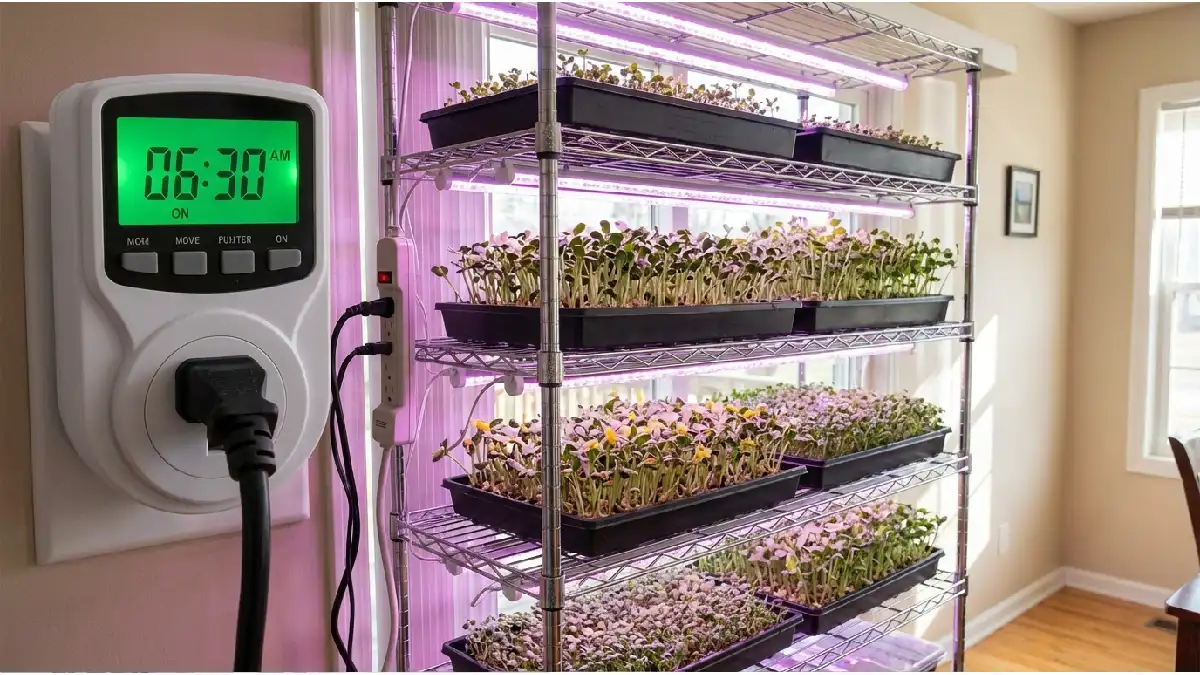
Some microgreens also benefit from a short blackout phase during germination. Seeds sprout in darkness before reaching the light. Usually, 2–3 days work fine. After that, switch to the normal 12–16-hour schedule. This helps stems grow strong, leaves stay vibrant, and growth speeds up.
Keep it simple. 12–16 hours of light, a timer, and a short blackout at germination are all you really need. Microgreens grow healthier, look better, and taste richer. Even small changes in timing or distance from the light make a noticeable difference in growth and yield.
Common Lighting Mistakes to Avoid
Growing microgreens under lights looks simple. Plug in, switch on, wait. But small mistakes with lighting quietly ruin trays. I’ve seen perfect seeds turn into thin, pale stems just because the light was wrong.
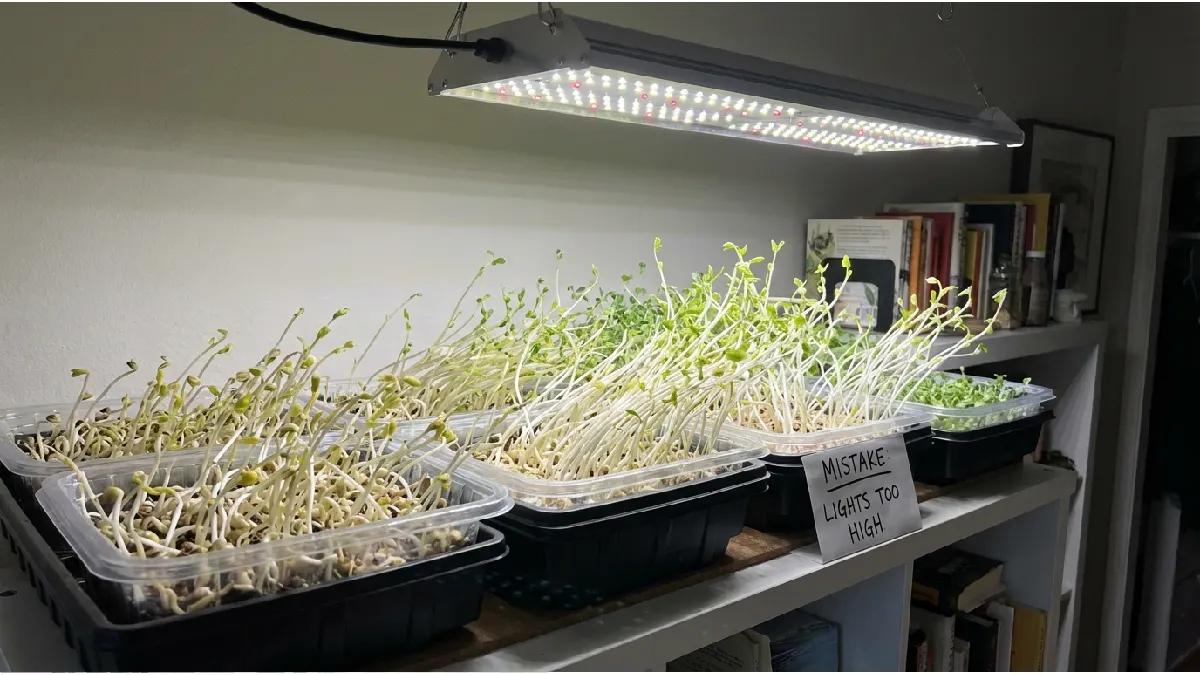
Most problems don’t come from seeds or water. They come from a light setup that feels “okay” but isn’t.
Lights Too Far
When lights hang too high, microgreens start stretching. Stems grow long and soft. They fall over before harvest. You might think they are growing fast, but actually, they are just reaching for light. The tray looks tall, but weak.
Keep lights around 6–12 inches above the canopy. Adjust as they grow. If you notice leaning or thin stems, the light is probably too far. Bring it slightly closer and watch the difference in two days.
Cheap Weak Bulbs
Not every bulb works for microgreens. Some cheap household bulbs look bright to the eye but don’t give enough usable light. Plants grow slowly. Color stays dull. Yield drops without you realizing why.
It’s better to use proper full-spectrum LED grow lights. They don’t have to be expensive. Just strong enough. A weak bulb running 16 hours won’t fix what intensity is missing.
No Timer
Turning lights on and off manually sounds easy. In the first few days, you remember. Then you forget. One day, they get 10 hours. Next day 18. Plants don’t like that. Growth becomes uneven across trays.
A simple plug-in timer fixes this completely. Same hours every day. No guessing no stress. Microgreens respond well to routine, even if we don’t.
Overheating
Too much heat from the lights can dry out trays faster than expected. Soil surface cracks. Leaves curl slightly. Sometimes growers think watering is the issue, but actually it’s heat buildup.
LED lights help reduce this problem because they run cooler. Still, airflow matters. If your grow rack feels warm when you stand near it, check the distance and ventilation. Microgreens prefer light, not heat.
Small lighting mistakes don’t look dramatic at first. But tray after tray, they reduce quality. Fixing these simple issues often improves stem strength, color, and harvest weight almost immediately.
Frequently Asked Questions
Do microgreens need special grow lights?
Not really. Microgreens mostly need steady brightness. If trays sit near a sunny window, they often grow fine. Indoor shelves usually don’t get enough daylight through the whole day, that’s where grow lights help. They keep the light consistent so stems stay shorter and leaves develop deeper color.
Can I use normal LED bulbs?
Yes, many small growers begin with normal LED bulbs. A cool white household LED can work when it’s bright enough and placed close to the tray. If the bulb stays too far above the plants, stems stretch and growth becomes thin.
How many watts do microgreens need?
Microgreens don’t demand huge power. For one shelf with a couple trays, something around 20–40 watts often does the job. Larger racks sometimes use stronger fixtures so light spreads evenly across all trays.
How far should the lights grow?
Most growers keep lights around 6–12 inches above the microgreens. This distance usually provides strong light without building too much heat. If plants lean or stretch upward, the light is probably sitting too far away.
Are cheap Amazon grow lights worth it?
Some budget lights work fine for beginners testing a small setup. They are easy to install and inexpensive. Extremely cheap ones can produce weaker light though, so growth may end up slower compared with stronger LED bars or full spectrum fixtures.
Conclusion
Picking a grow light for microgreens doesn’t need to feel complicated. Most trays simply respond to steady, bright light and a routine that stays the same each day. Many growers end up using lights like Barrina T5, Spider Farmer SF-1000, or VIVOSUN LED bars because they give stable brightness and don’t waste much electricity. They’re commonly seen on microgreen racks for a reason.
But the “best” light still depends on how big the setup is. Someone growing a couple of trays on a kitchen shelf usually does fine with basic LED strip lights. A home grower running a small rack may prefer stronger bars that spread light across several trays.
Once the rack gets bigger, stronger fixtures help keep the whole shelf evenly lit. In the end, it comes down to matching the light with the space you have. Too much power isn’t always necessary, and too little light makes plants stretch. When the balance feels right, microgreens start growing thicker, greener, and more uniform across the tray. Sometimes small adjustments in light distance or timing end up making the biggest difference.