
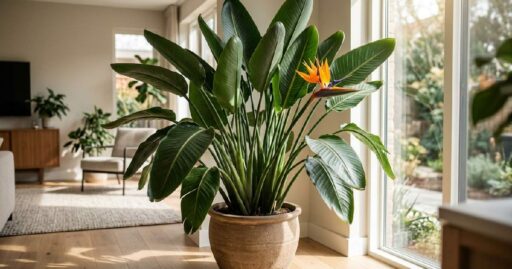
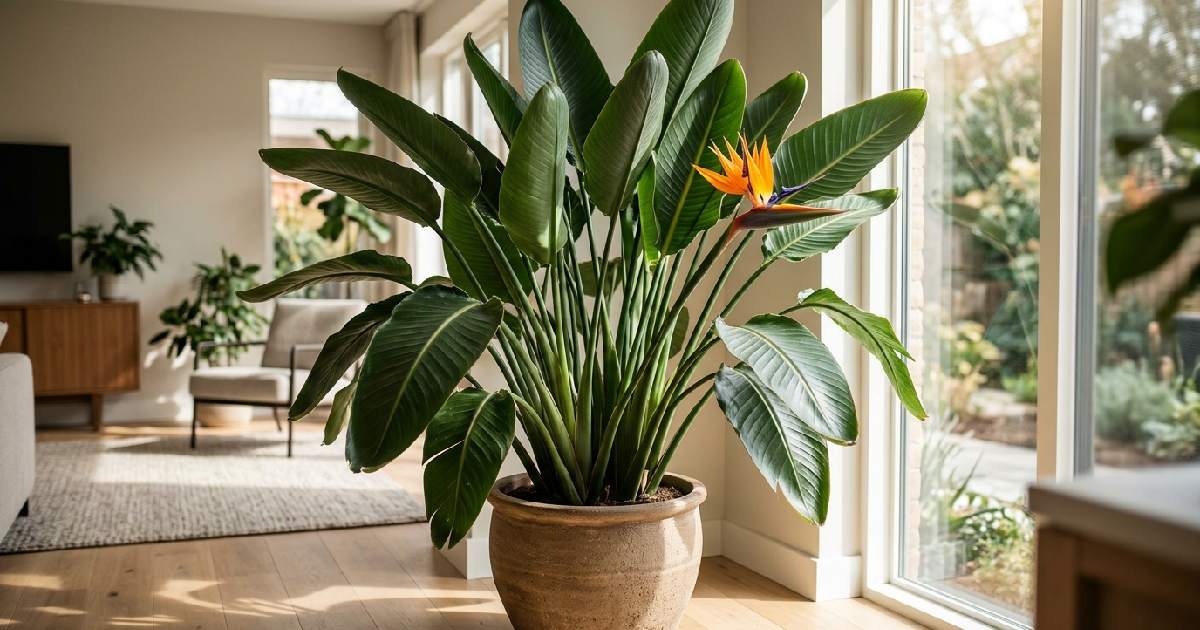

Few houseplants can kind of do the whole “plain corner tropical escape” thing like a birds of paradise plant does, you know, with those huge glossy, paddle-ish leaves. There’s that bold, upright look and then the flowers, which look like some kinda colourful bird mid-jump or mid-flight: bright crest, pointed beak, pretty wild.
But yeah, there is a catch, because plenty of people bring one home, and then suddenly the leaf edges go brown, the leaves curl up, and then the flowers just never happen, and it feels personal. If this sounds familiar, you’re probably not doing anything terribly wrong. The plant just has a few specific needs, and once you get the hang of it, it is honestly way easier to keep than it first looks.
In this guide, you’ll learn how to grow a birds of paradise plant with confidence. We’ll talk light, a watering routine that actually makes sense, soil, feeding, and repotting steps, plus how to coax flowers out of it and fix the common problems people run into. Whether this is your first birds of paradise plant or your fifth one, the advice here is based on how these plants behave in real homes and gardens, not just theory from a book or whatever.
What Is a Bird of Paradise Plant? (Types and Basics)
A birds of paradise plant is in the genus Strelitzia, a small group of evergreen perennials from South Africa. They are closely related to the banana; that’s why the leaves are so big and kind of banana-like. The name “birds of paradise” comes from the flower itself, which resembles the head of an exotic bird, with a bright crest and a pointed beak.

The Main Types You Will See
There are five recognised species, but really, three show up again and again:
- Strelitzia reginae (orange bird of paradise): The classic one. It grows about 3 to 6 feet tall indoors, and it makes those well known orange and blue flowers. You might also see it called the crane flower.
- Strelitzia nicolai (white bird of paradise): A bigger, almost “small tree” situation. It can look like a little banana tree, reach 10 feet or more indoors, and the flowers are white with dark blue-purple tones. It grows faster, but it needs more room.
- Strelitzia juncea (rush-leaf bird of paradise): This one is weird in a good way, sort of almost leafless with thin spear-like stems. If you like a modern, sculptural look, this is the one people talk about.
Most garden centres sell reginae or nicolai, and they’ll often just slap on the same simple label. If you’re choosing your first birds of paradise plant, check the botanical name on the tag. A small apartment usually suits reginae far better, while nicolai wants a high ceiling, and honestly a lot more floor space too.
How Big Does It Get?
Indoors, an orange bird of paradise plant usually settles between 3 and 6 feet, while the white one keeps going until it hits the ceiling. Outdoors, when it’s planted in warm ground, a birds of paradise plant can get much bigger over the years, forming a thick clump of stems. Growth is steady, not some explosive thing. You’ll usually get a few new leaves each growing season when the conditions are right.
Quick Facts at a Glance
| Feature | What to Know |
|---|---|
| Botanical name | Strelitzia reginae / Strelitzia nicolai |
| Light | Bright light, some direct sun |
| Water | When the top 2 inches of soil are dry |
| Temperature | 65–80°F (18–27°C) |
| Humidity | Around 50% or higher |
| Hardiness | USDA zones 9–11 outdoors |
| Pet safety | Mildly toxic to cats, dogs, and people |
Light, Temperature, and Placement for a Healthy Bird of Paradise Plant
How much light does a bird of paradise need? It wants bright light basically every day, and ideally at least four hours of direct sun. If it doesn’t get enough, growth slows down, the new leaves come in smaller, and it will rarely flower.
Honestly, this is the main reason people struggle. A bird of paradise plant in a dim corner may survive, but it just won’t thrive. Think “sun-lover,” but trapped in your living room.
Finding the Best Window
In the Northern Hemisphere, a south-facing window tends to give the strongest light, while a west or east window still works pretty well. Place it within about a metre of the glass. If the sun is blazing in summer and you see pale, scorched patches on the leaves, pull it back a little or soften the light with a thin curtain.
Also, rotate the pot a quarter turn every week or two. The leaves lean toward the light, so regular turning helps it stay balanced, not one-sided or lopsided. If your home barely gets natural light, a full spectrum grow light placed above the plant for 10 to 12 hours a day can fill that gap.
The Right Temperature
These plants like the same temperature range most people are comfortable with. They grow best between 65°F and 80°F (18°C to 27°C). Anything below about 50°F (10°C) can hurt the leaves and stall growth. Keep your bird of paradise plant away from cold window glass in winter, air conditioner vents, heaters, and those drafty doors. Sudden temperature swings stress it more than steady warmth ever will.
Growing Outdoors
Outside, the plant is hardy in USDA zones 9 to 11, so places where winter frosts are mild or basically absent. In areas with very hot summers, a bird of paradise plant planted in the ground still appreciates a bit of afternoon shade, especially when it is young. Pick a spot sheltered from strong wind too, because wind can tear up those big leaves. If your winters are cold, grow it in a large container and move it indoors before temperatures drop.
How to Water a Bird of Paradise Plant Without Causing Root Rot
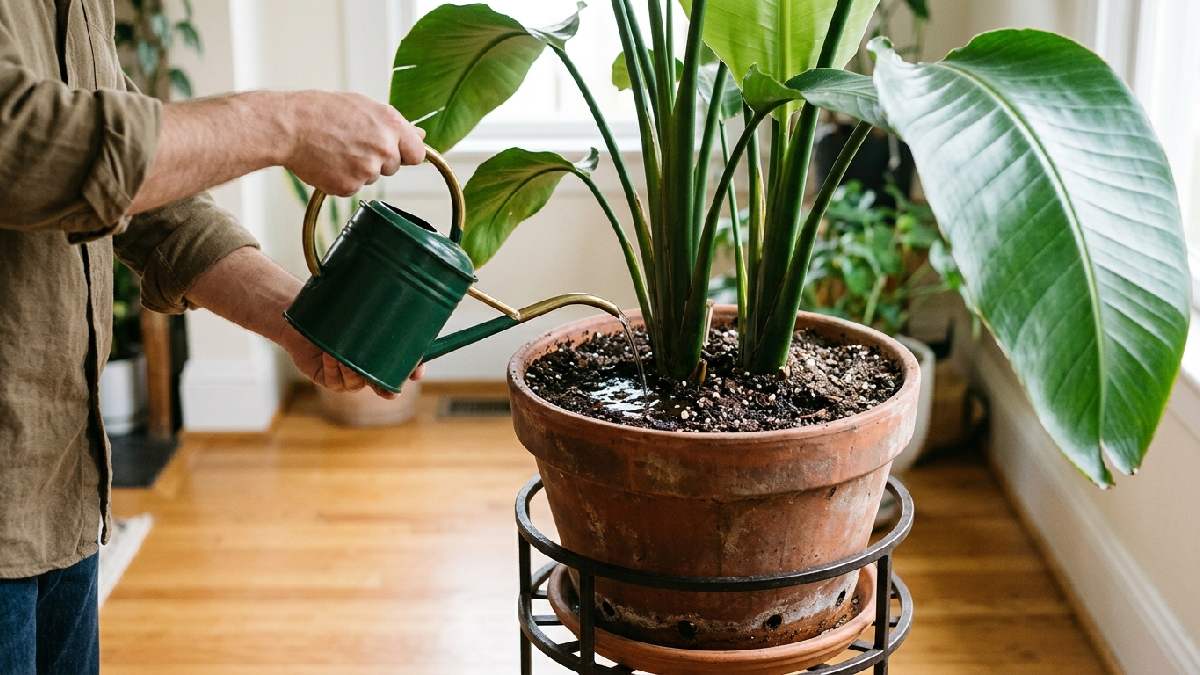
How often should you water a bird of paradise? Water when the top 2 inches of soil feel dry, and that’s usually every 7 to 10 days during the growing season, and every 2 to 3 weeks in winter. Don’t just follow some strict calendar; always check the soil first.
Overwatering is the number one killer here. The thick roots store water, so it handles dry stretches much better than constant wet soil. When you overwater a bird of paradise plant, the roots suffocate and rot, and the first signs show up as yellow leaves, plus a soft, dark base.
A Simple Watering Routine
Stick a finger about two inches down in the dirt, yeah? If it feels damp, ok, do nothing and wait. If it is dry, then water slowly until you see water coming out of the drainage holes, not just a tiny splash. Let the pot drain out fully, then dump the saucer after about 15 minutes. In autumn and winter, cut back, because the plant kinda moves slower.
Also, if the pot feels light when you lift it, it usually means it wants water. If it feels heavy, usually you’re good. After a few weeks, you’ll start noticing the weight difference without even trying.
Humidity Matters More Than You Think
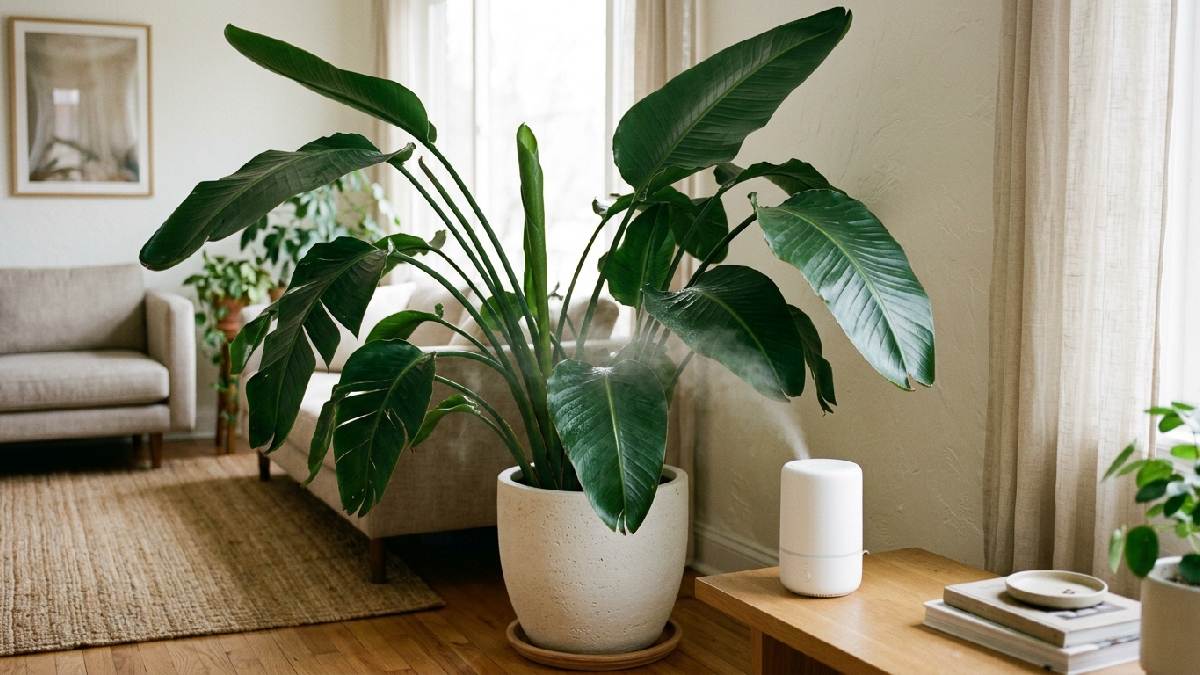
In its home range, this plant likes warm air that’s fairly humid. A birds of paradise plant is most content with humidity around 50 percent , which is often higher than what heated or air-conditioned homes give. When the air gets too dry, the leaf tips and edges crisp first. Like it’s the earliest warning sign.
Easy ways to raise humidity (not overly fancy)
- Group it with other plants.
- Set a tray with water and pebbles nearby, but keep the pot sitting above the water line.
- Use a small humidifier in the room.
- Wipe the leaves with a damp cloth every few weeks. It removes dust, and honestly helps it absorb light better too.
Misting is more like a quick fix for just a couple minutes, so don’t lean on it as your main plan.
Water Quality Counts
Even when watering seems perfect, lots of people still see brown, crispy tips on birds of paradise plants. A common culprit is the water itself. Tap water can have fluoride, chlorine, and dissolved salts that build up in the potting mix over time. If you spot white crust on top of the soil , flush the pot with plenty of water now and then.
Gentler choices tend to be rainwater, filtered water, or tap water that sat out overnight.
Best Soil, Pot, Fertilizer, and Repotting Tips
Great roots really do matter, so it’s worth getting the base right instead of rushing.
Choosing the Right Soil
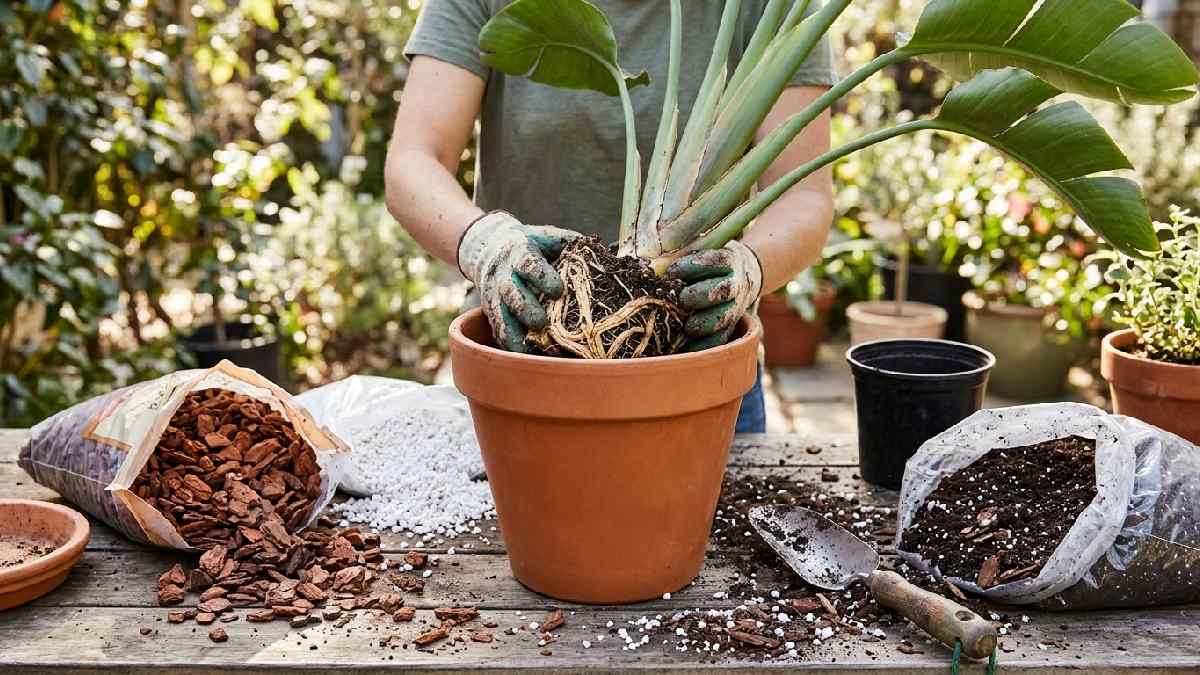
This plant likes soil that holds a bit of moisture but drains fast. A solid mix is: two parts good potting soil, one part perlite or coarse sand, and one part orchid bark or coco chips. Skip heavy garden soil in containers because it packs down and drowns the roots. Slightly acidic to neutral soil, around pH 6 to 7, is usually best.
Picking a Pot
Get a sturdy pot with drainage holes. Since the plant gets tall and top-heavy, light plastic pots can tip. Heavy ceramic or terracotta stays steadier. Also, choose a pot only about 2 inches wider than the current root ball. If the pot is way bigger than it needs, the extra wet soil sits there too long and can encourage rot.
Feeding for Lush Growth
This is a hungry plant during the growing season. Feed your bird of paradise plant once a month from spring through late summer using a balanced liquid fertilizer, like a 10-10-10 blend diluted to the label strength. Don’t feed in autumn and winter.
If you go the slow-release route, apply granules in early spring, then again in mid-summer. Too much fertilizer can burn roots, so “more” is not the answer.
When and How to Repot
You don’t have to repot all the time. Plan on every two to three years, usually in spring, or whenever roots poke out of drainage holes or start pushing the plant up out of the pot.
Here’s the basic process:
- Water it the day before.
- Slide it out gently, then loosen the outer roots a little.
- Cut off any black, mushy roots using clean scissors.
- Put it into the new pot at the same depth as before.
- Fill with fresh mix, water well, and keep it out of harsh sun for a week.
Useful secret: these plants often flower better when they’re slightly crowded. A gently root-bound birds of paradise plant often blooms sooner than one sitting in a huge pot with tons of extra space. So don’t upsize just because. Only go bigger if it truly needs it. If repotting feels sketchy , just top-dress instead: swap out the top few inches of old mix with fresh mix every spring.
How to Make Your Birds of Paradise Plant Bloom
“Why is my bird of paradise not flowering?” The usual suspects are too little light, the plant is too young, or fertilizer is missing. Fix those three and flowers usually show up later.

The bright flowers are the whole reason people want this plant, but they’re also why it can feel frustrating. Patience is part of it. A young birds of paradise plant might simply not be ready. Many plants need about four to six years before the first bloom, and indoor plants often take longer than ones grown outdoors.
What a Mature Plant Needs
Once it’s mature, aim for these conditions:
- Strong light: about four to six hours of direct sun is the biggest trigger.
- Regular feeding: in the growing season, monthly fertilizer helps, and a formula with a bit more potassium supports bud formation.
- Roots that aren’t drowning in space: avoid repotting too often.
- A cooler winter rest: give it slightly cooler nights, around 55 to 60°F (13 to 15°C), and water less in winter. That rest time often pushes spring flower spikes.
- Healthy leaves: stronger leaves usually mean more energy to produce blooms.
What Flowering Looks Like
At first you’ll see a stiff, boat-shaped green bract rising from between the leaves. Over the next weeks it slowly swells, then the bright petals show up one by one. A healthy birds of paradise plant can keep producing flowers for months, and each bloom may last two weeks or more while still on the plant.
After the Bloom
When a flower fades, cut the stalk off at the base using clean, sharp scissors. That keeps it neat and sends energy back into new growth. Also, it’s normal if it skips a flowering year. Sometimes it rests after a heavy bloom season, no big drama.
Common Birds of Paradise Plant Problems and easy fixes
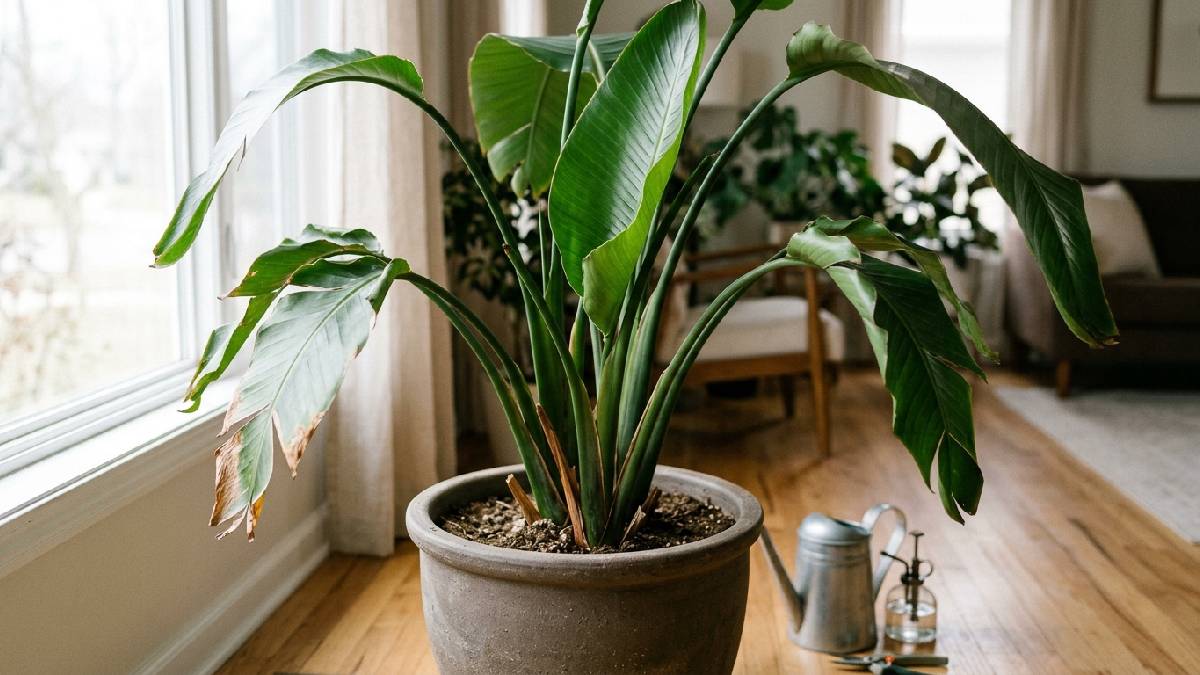
Most things go back to light, watering, or humidity, kinda. Here’s a quick guide before we dig into each one, ok
| Symptom | Likely Cause | Quick Fix |
|---|---|---|
| Brown, crispy tips | Dry air or mineral build-up | Raise humidity, use filtered water |
| Yellow lower leaves | Overwatering or old leaves dying | Let soil dry, check drainage |
| Curling leaves | Thirst or low humidity | Water deeply, mist or humidify |
| Leaves splitting | Natural, or wind and handling | Usually no action needed |
| Sticky leaves, white fluff | Mealybugs or scale | Wipe with alcohol, use neem oil |
| Fine webbing | Spider mites | Rinse leaves, repeat treatment |
Brown Leaf Tips
Brown edges are the most common complaint. First check humidity, then your water source too. Trim the brown part with clean scissors, try to match the natural leaf shape. Cutting off the whole leaf is not necessary, unless it is mostly dead or collapsing.
Curling or Folding Leaves
When leaves roll inwards like a tube, the plant is usually asking for water, or the air is very dry. Water deeply, then check it again over the next day or two. If the soil is already wet and they still curl, look at the roots for rot, because that’s the usual culprit.
Split Leaves: Normal or a Problem?
Splits along the leaf veins can be totally normal. In the wild, wind tears the leaves so air moves through without toppling the whole plant. An indoor birds of paradise might still split as the leaves get larger and older. If the splits are clean and the leaf stays green, you can relax.
Yellow Leaves
One yellow leaf near the bottom every once in a while is normal ageing. But if a bunch of leaves turn yellow at once, suspect overwatering, poor drainage, or cold temps. Pull the plant out of the pot and look at the roots. Healthy roots look firm and are usually pale orange or white. Mushy, dark, or funky-smelling roots mean rot, so trim it up and repot into fresh, dry mix.
Pests to Watch For
Spider mites, scale, mealybugs, and aphids sometimes drop by. Check your birds of paradise plant about once a week, especially the underside of leaves and where stems meet. Wipe pests off with a cotton pad dipped in rubbing alcohol, or use insecticidal soap or neem oil, every 7 days, until the problem stops. Keep it away from your other houseplants while you treat it. Clean leaves and fresher air are the best prevention too
Pruning, Propagation, and Pet Safety
How to Prune Properly
Pruning is pretty straightforward. You can prune a birds of paradise plant by cutting off dead, brown, or damaged leaves right at the base of the stem. Use clean, sharp scissors or secateurs, and cut close to the soil line. Remove spent flower stalks the same way. Don’t remove a bunch of healthy leaves at once, because it uses them for energy, basically.
Propagating by Division
Division is the fastest, most reliable way to get a new plant. It’s best to divide a birds of paradise plant in spring, when growth is active and it can recover quickly.
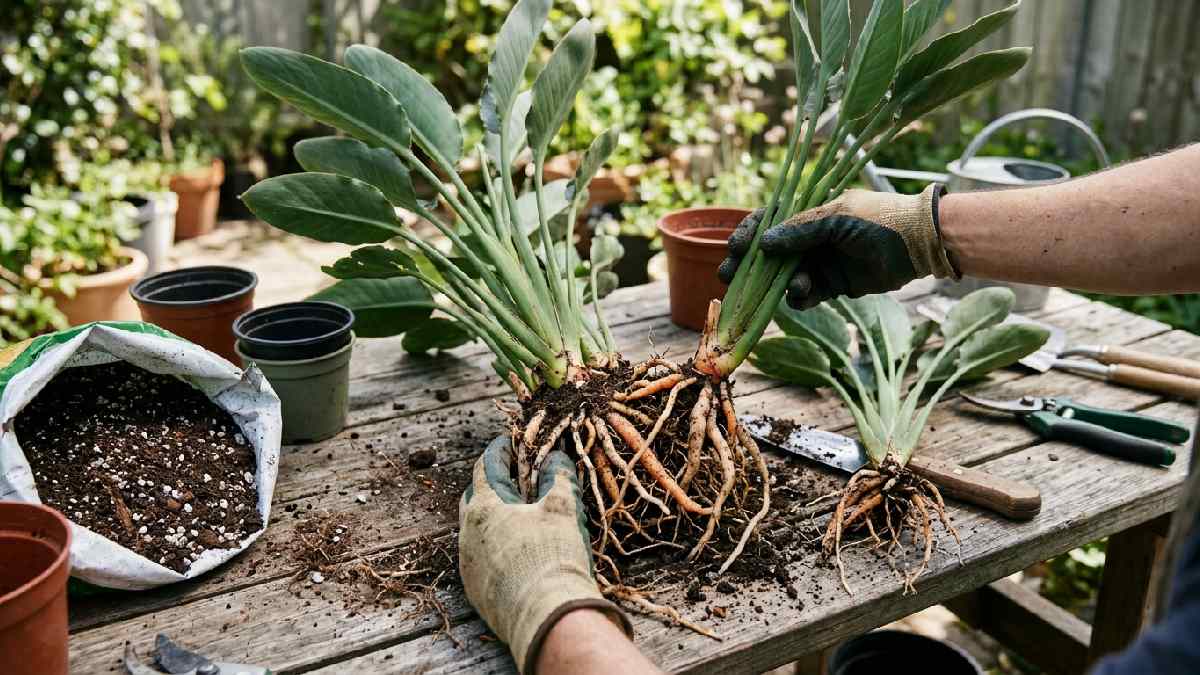
- Take the plant out of its pot and brush off loose soil.
- Find a section with at least two or three leaf fans plus a healthy chunk of roots.
- Cut or gently pull it away from the mother plant, keep as many roots as you can.
- Pot the division in fresh, well-draining mix, then water lightly.
- Keep it warm and bright, but not in harsh sun, for a few weeks.
Expect it to sulk for a month-ish. Once new leaves show up, it has settled in.
Growing from Seed
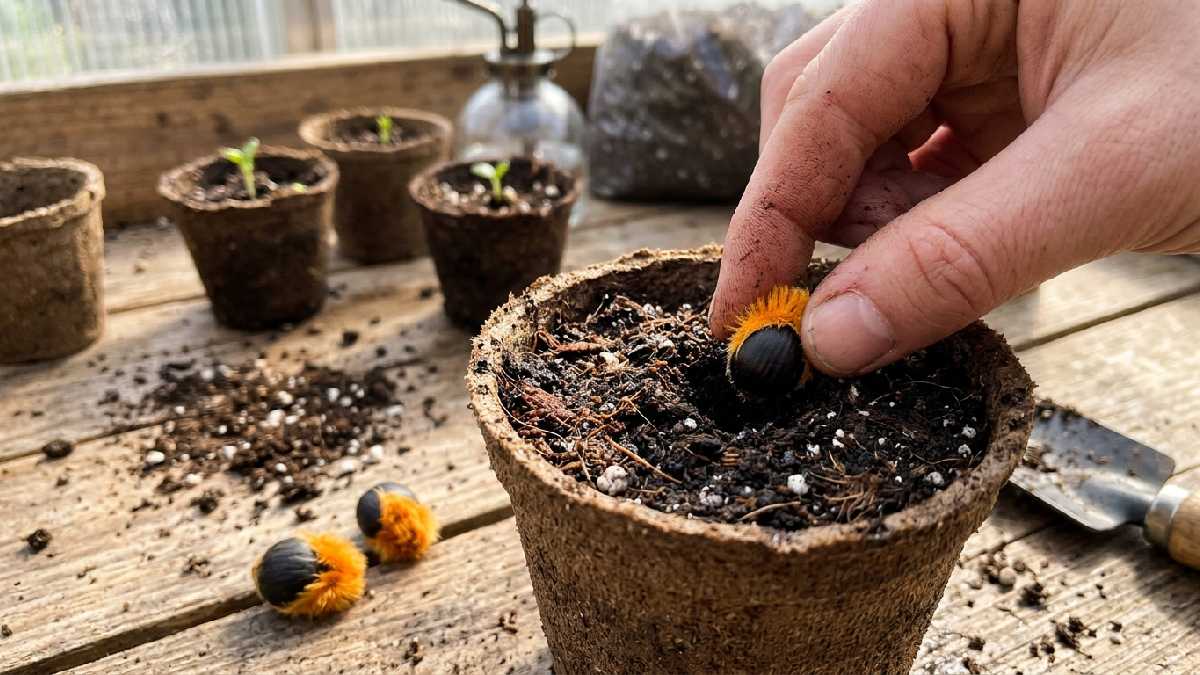
You can do it, but it takes patience. Growing a bird of paradise plant from seed can take 1 to 6 months just to germinate, and the first flowers might take 5 to 7 years to appear. Soak seeds in warm water for 24 hours, nick the tough coat gently, and plant them in a warm, moist seed mix around 75 to 80°F. Most people go with division for that reason, honestly.
Is It Safe for Pets and Kids?
Is a birds of paradise plant poisonous to cats and dogs? Yeah, mildly. It is listed as mildly toxic to cats, dogs, and humans, mostly the seeds and flower parts. Chewing can cause drooling, vomiting, or an upset stomach. Keep it out of reach of curious pets and little kids, and call your vet if something gets eaten. Wear gloves when handling if you have sensitive skin, just to be safe.
Birds of Paradise Plant FAQs
How often should I water my bird of paradise?
Water when the top 2 inches of soil are dry. For most homes, that is about once a week in spring and summer and every two to three weeks in winter. Always check the soil first.
Why are my bird of paradise leaves turning brown?
Brown tips and edges usually come from dry air, mineral-heavy tap water, or irregular watering. Raise humidity, use filtered or rainwater, and water deeply but less often.
Can I keep it indoors all year?
Yes, a birds of paradise plant adapts well to indoor life as long as it gets bright light, ideally near a sunny window. Some gardeners move it outside for summer, but it must come back indoors before temperatures drop below 50°F.
How fast does a bird of paradise grow?
It grows moderately fast in good conditions, adding several new leaves per year. The white species grows faster than the orange one, and outdoor plants grow faster than indoor ones.
Is it hard to take care of?
Not really. It is forgiving about watering mistakes as long as the roots do not stay wet, and it only asks for good light and regular feeding. Most problems are easy to fix once you know the cause.
Conclusion
Growing this tropical-looking plant is easier than it first seems. Give it bright light, let the soil dry between waterings, feed it through spring and summer, and be patient while it matures. If you do those things consistently, a bird of paradise plant will reward you with bold, architectural leaves and, eventually, those really unforgettable flowers, yeah
Start with the basics from this guide, watch how your plant responds, and adjust slowly. Plants communicate through their leaves, and once you learn to read them, you will know exactly what yours needs.