
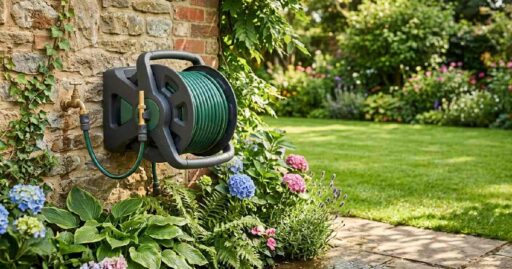
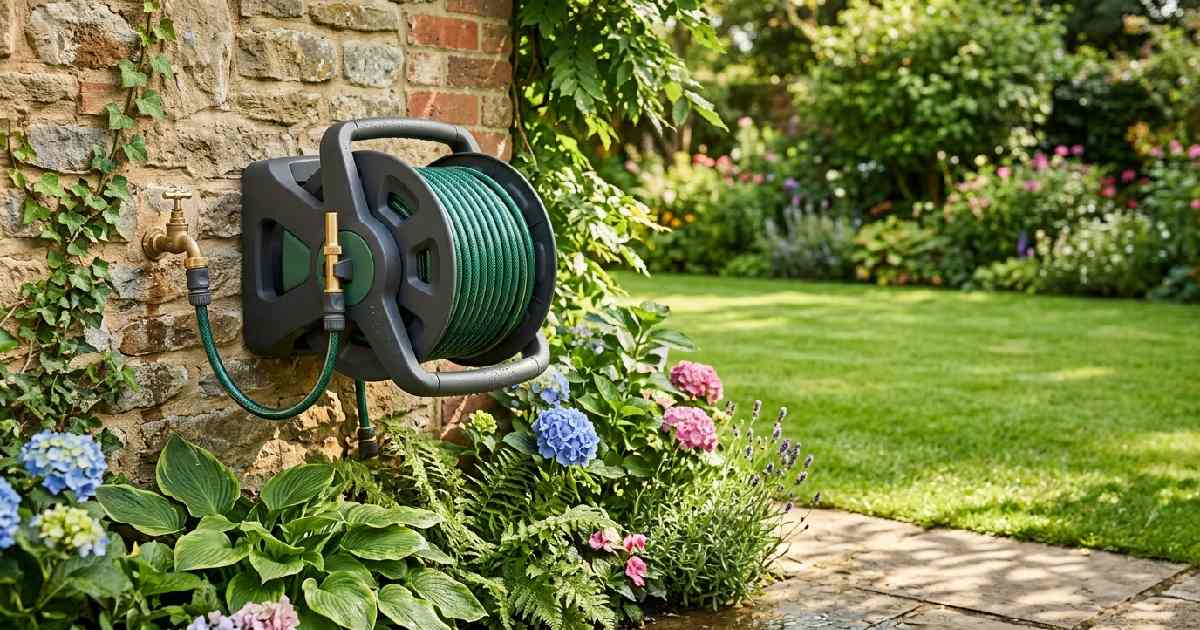

You know the scene. It’s a hot Saturday, you want to water the tomatoes, and your hose has turned into a tangled green mess with three kinks in it. You tug, it fights back, and the water dribbles out of the nozzle like it gave up. A garden hose reel fixes that whole headache in one move.
In this guide, you’ll learn what a garden hose reel actually does, which type suits your yard, how to size one correctly, and what to check before you pay. I’ve also added installation steps, maintenance tips, and the mistakes that cause most returns. By the end, you’ll be able to pick the right garden hose reel with confidence instead of guessing from a product photo.
The best garden hose reel is one that matches your hose length, fits the space you have, and is made from rust-resistant, UV-stable material. For most homes, a wall-mounted reel that holds 100 feet of 5/8-inch hose is the safest all-round choice.
What Is a Garden Hose Reel and Do You Really Need One?
A garden hose reel is a drum, frame, or cabinet that lets you wind your hose into neat coils and store it off the ground. Some mount on a wall. Some sit on wheels. Some wind back automatically with a spring. The goal is always the same: keep the hose tidy, protected, and ready when you need it.
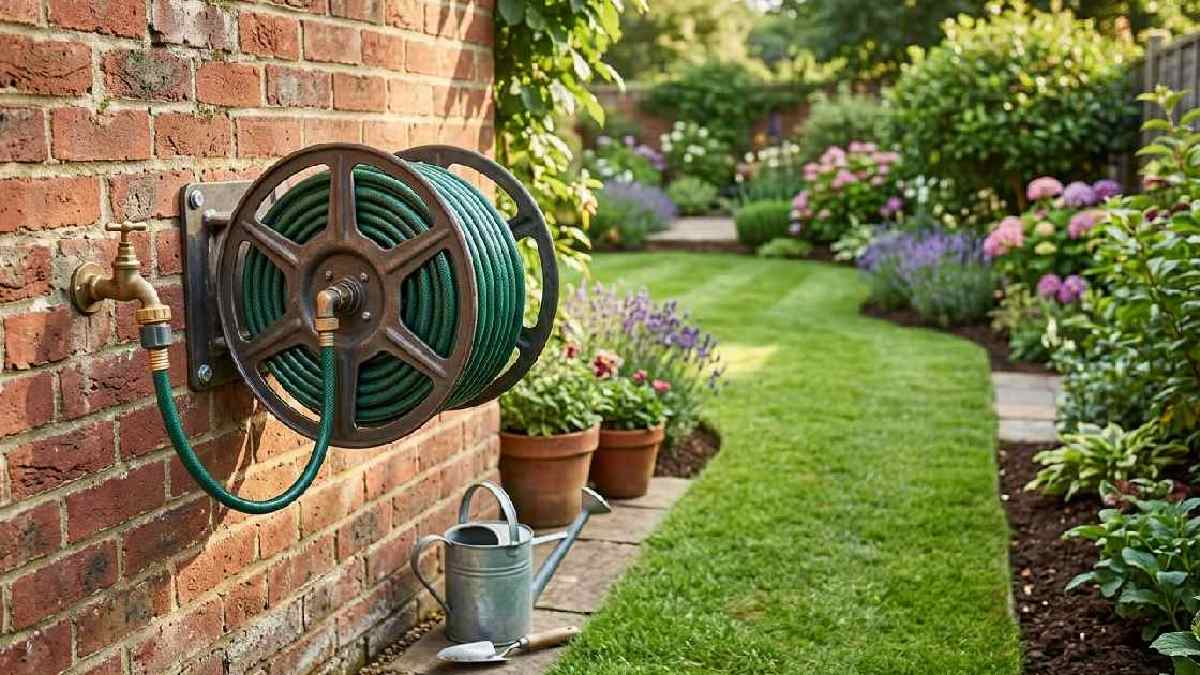
Do you need a garden hose reel? If your hose is longer than 25 feet, yes, it’s worth having one. A hose left on the ground gets stepped on, run over by the lawn mower, baked by the sun, and twisted into kinks. A kinked hose develops weak spots, and weak spots turn into leaks sooner than you’d think.
Benefits you’ll notice quickly
- Longer hose life. Sun and constant ground contact break down rubber and vinyl. Storing the hose coiled and in the shade slows that damage a lot.
- A safer yard. A loose hose across a path is a tripping hazard for kids, guests, and older family members.
- Better water flow. Kinks choke the flow. Even coiling on a drum keeps the hose straight and the pressure steady.
- A cleaner look. A hose reel turns a messy corner of the garden into something that looks planned.
- Less back strain. Wheeled and crank models save you from dragging and re-coiling a heavy hose by hand.
When you can skip one
If you only have a short 15-foot hose for a balcony or a small patio, a simple wall hook may be enough. Once you move past 30 or 40 feet, though, the hook stops being practical. The hose slides off, sags, and ends up on the floor anyway.
Types of Garden Hose Reels: Which One Fits Your Yard?
Before you look at brands, decide which style fits the way you garden. Choosing the wrong style is the most common reason people end up unhappy with a garden hose reel, so take your time here.
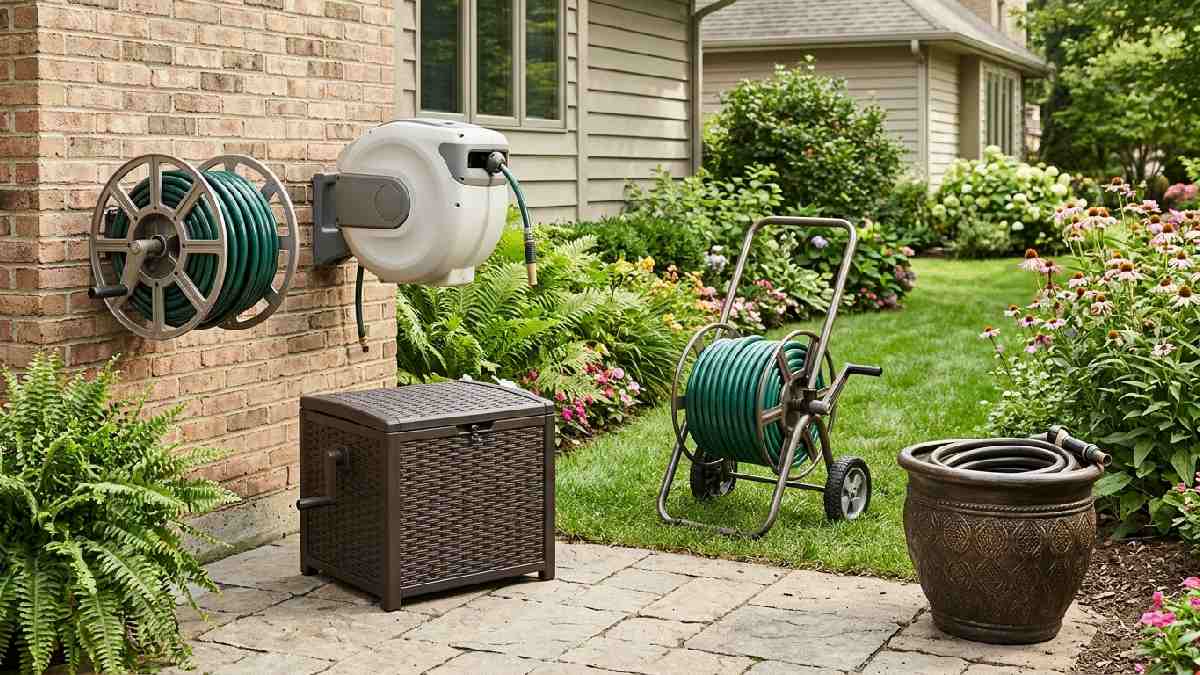
Wall-mounted reels
These attach to an exterior wall or fence post near your tap. They take almost no floor space, which makes them popular for small and medium yards. Many have a swivel bracket, so you can pull the hose out at an angle instead of straight in front of the reel.
- Best for: homes with a wall close to the outdoor tap.
- Pros: saves space, keeps the hose off the ground, usually affordable.
- Cons: needs proper mounting, and you can’t move it around the garden.
Freestanding and cart-style reels
These sit on a frame with wheels, like a small trolley. You roll the whole thing to the plants that need water. They suit large lawns, allotments, and gardens where the tap sits far from the beds.
- Best for: big yards and long hoses of 100 to 200 feet.
- Pros: movable, no drilling, can hold a lot of hose.
- Cons: takes up storage space, and cheaper plastic carts can tip when the hose is full.
Retractable reels
A retractable garden hose reel uses an internal spring. You pull out as much hose as you need, let it lock, and give a light tug when you’re done so it winds itself back. It feels very convenient, and it is, but it comes with trade-offs.
- Best for: people who water often and hate manual winding.
- Pros: fast, tidy, no cranking.
- Cons: the hose is usually shorter (often 50 to 100 feet), springs can wear out, and a fast rewind can whip the hose end. Always guide it back with your hand.
Hose reel boxes and hide-away cabinets
These are enclosed boxes, often wall-mounted, with a hose reel inside. Only the hose end and the tap connection show. They look the neatest and protect the hose from sunlight, which is a real bonus in hot climates.
- Best for: front gardens, patios, and anyone who cares about looks.
- Pros: excellent UV protection, very tidy.
- Cons: costs more, and you need to check that the inner reel is sturdy.
Decorative hose pots and stands
Pots, ceramic-style holders, and ornamental stands hold the hose in loose coils. They’re pretty, but they don’t wind anything. Treat them as decoration, not as a true garden hose reel, and expect to coil by hand.
Quick comparison table
| Type | Best for | Typical capacity | Watch out for |
|---|---|---|---|
| Wall-mounted | Small to medium yards | 75–150 ft | Weak wall anchors |
| Cart-style | Large gardens | 100–200 ft | Tipping when full |
| Retractable | Frequent, quick watering | 50–100 ft | Spring wear, fast rewind |
| Hose box | Neat patios and fronts | 50–100 ft | Higher price |
| Hose pot | Decoration | 50–100 ft | No winding mechanism |
How to Choose the Right Garden Hose Reel
Now for the part that saves you money. Work through these five checks in order, and you’ll avoid nearly every common regret.
Step 1: Match the reel to your hose length and thickness
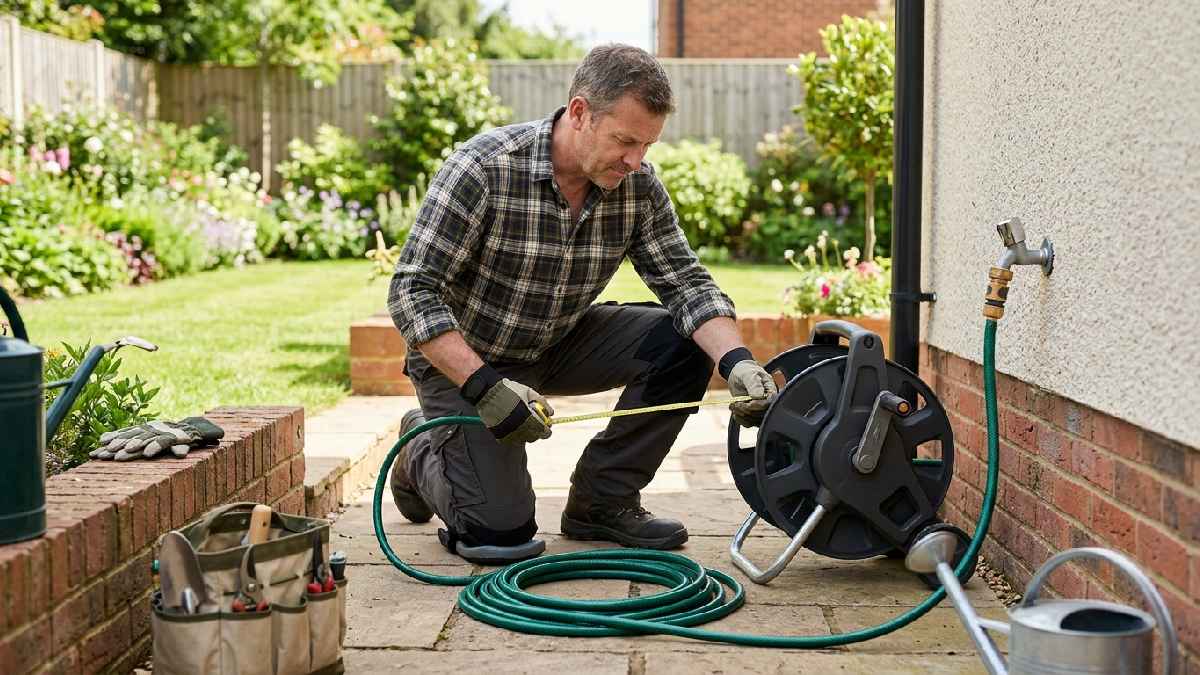
Reels list a capacity, such as “100 feet of 5/8-inch hose.” Read that line carefully. Capacity is often quoted for a thinner 1/2-inch hose, and a thicker hose takes up more room on the drum. If you own a 5/8-inch hose, you might fit about a quarter less than the headline number.
A simple rule: pick a reel rated for at least 25 feet more than your hose. For example, if you have a 75-foot hose, look for a garden hose reel rated for 100 feet or more. That spare space means the coils won’t pile over the edge, and it leaves room if you buy a longer hose later.
What size garden hose reel do I need? Measure your hose, add 25 feet, and check the manufacturer’s capacity chart for your hose diameter. That number is your minimum size.
Step 2: Look at your tap and your space
Walk outside and stand at your tap. Ask yourself three questions:
- Is there a solid wall or post within a couple of feet of the tap?
- Do I need to reach the whole garden from one spot, or only one side?
- Is that spot in full sun for most of the day?
If you answer yes to the first, a wall-mounted model works well. If your garden is large and the tap is far from the beds, a cart is smarter. If the spot gets blasted by midday sun, lean toward a hose box or a reel made from UV-stabilized material.
Step 3: Check the material and build quality
This is where cheap and good separate. Look for powder-coated steel, aluminum, or thick UV-resistant resin. Thin, brittle plastic cracks within a season or two in strong sunlight. Check the crank handle, too. A flimsy handle is the first part to snap, and it’s the one you’ll use every single time.
Step 4: Pay attention to the features that matter
- Swivel bracket: lets the reel rotate so you can pull the hose from different angles without bending it.
- Hose guide: a small arm that spreads the hose evenly as you wind. It prevents lopsided coils.
- Lock or brake: holds the reel steady while you work, so the hose doesn’t unwind itself.
- Leader hose: the short hose that links the tap to the reel. Make sure it’s included and that the fittings are brass or a strong polymer.
- Smooth crank: turn it in the store if you can. It should feel free, not gritty.
Step 5: Set a realistic budget
You don’t need the most expensive model, but you also shouldn’t buy the cheapest one. Entry-level reels are fine for a short hose and light use. Mid-range models are the sweet spot for most households because they pair sturdy materials with useful features. Premium reels make sense if you use the hose daily, have a very long hose, or want a cabinet that blends with your home. A cheap garden hose reel that breaks in one season costs more over time than a mid-range one that lasts for six.
Garden Hose Reel Materials: Plastic vs Metal vs Resin
Material decides how long your reel survives sun, rain, and daily use. Here’s an honest comparison.
Plastic reels. Plastic is light and cheap. Good plastic, labeled UV-stabilized, can last for years. Cheap plastic turns chalky and brittle. It may hold up well in a shaded corner and fail quickly on a sunny wall. If you buy plastic, choose a thicker, well-reviewed model.
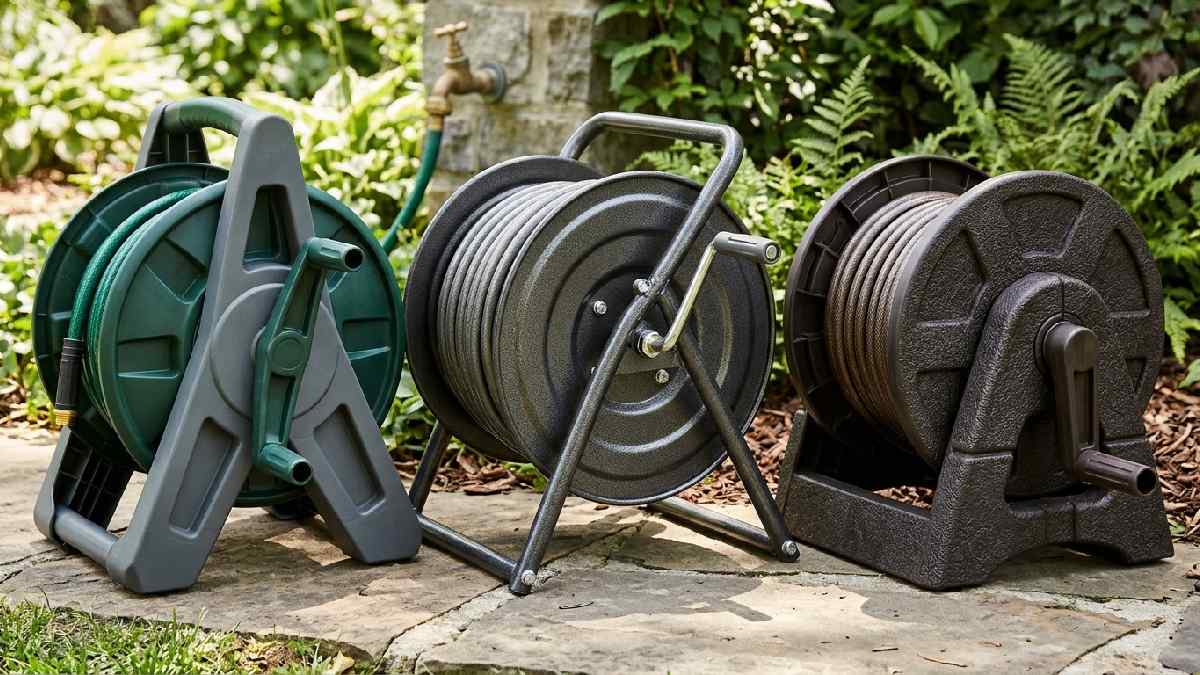
Steel reels. Steel is strong and handles heavy hoses without flexing. The weak point is rust. Look for powder-coated or galvanized finishes. If you see bare metal at the welds or screw holes, the rust will start there. Steel is a great choice for a wall-mounted garden hose reel that holds a lot of hose.
Aluminum reels. Aluminum doesn’t rust and is lighter than steel. It costs more, but for damp or coastal areas it’s often worth it. The trade-off is that very thin aluminum can bend under a full, heavy hose, so check the thickness.
Resin and composite reels. Resin blends feel like tough plastic but handle weather better. Many hose boxes use resin because it doesn’t rust, doesn’t fade fast, and resists impact. For a low-maintenance garden hose reel, resin is a strong all-rounder.
Which material is best for a garden hose reel? Powder-coated steel and quality UV-stable resin are the best all-round choices for most climates. Choose aluminum if you live near the sea or in a very humid area.
Real-World Scenarios: Which Reel Fits You?
Specs only help so much. Here is how the decision plays out in four typical situations.
A small front yard. Imagine a narrow garden, a tap beside the door, and a 50-foot hose used for pots and washing the car. A compact wall-mounted garden hose reel with a swivel bracket is ideal. It sits flat against the wall, costs little, and never blocks the path.
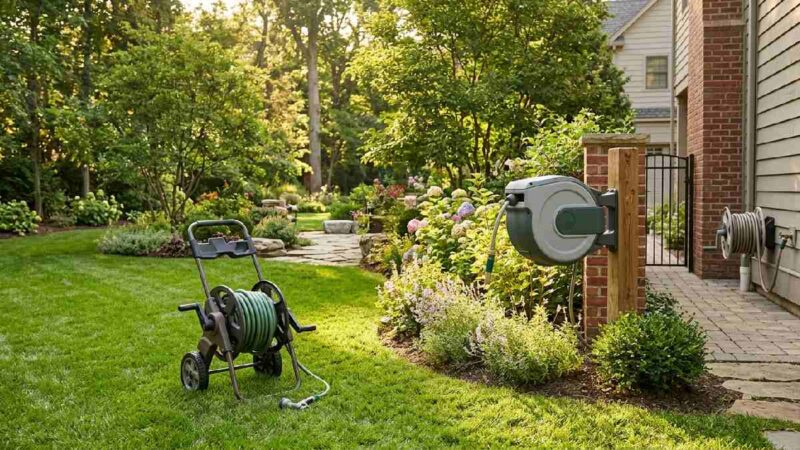
A big back lawn. Now picture a tap at the back of the house and a lawn that stretches 120 feet to the fence. A cart-style reel with large wheels lets you roll the hose to wherever you need it, instead of dragging it across flower beds and snapping stems. Big rubber wheels matter on soft or uneven grass.
A busy morning routine. If you water for ten minutes before work and have no patience for cranking, a retractable model with a 65-foot hose gives you thirty seconds of setup and thirty seconds of tidying. You accept a shorter hose in exchange for speed.
A hot, sunny climate. Where summer sun is fierce, UV damage is usually what kills a hose first. A closed hose box in resin or coated metal shields it from direct light. In that case, a boxed garden hose reel often pays for itself by extending the life of the hose.
Hose Reel vs Hose Hanger vs Hose Pot: Is a Reel Really Better?
A wall hook costs almost nothing and works fine for short hoses. The catch is that it can’t wind anything, so you still coil by hand, and the sharp bend where the hose hangs creates kinks over time. A hose pot has the same limitation, even though it looks nicer.
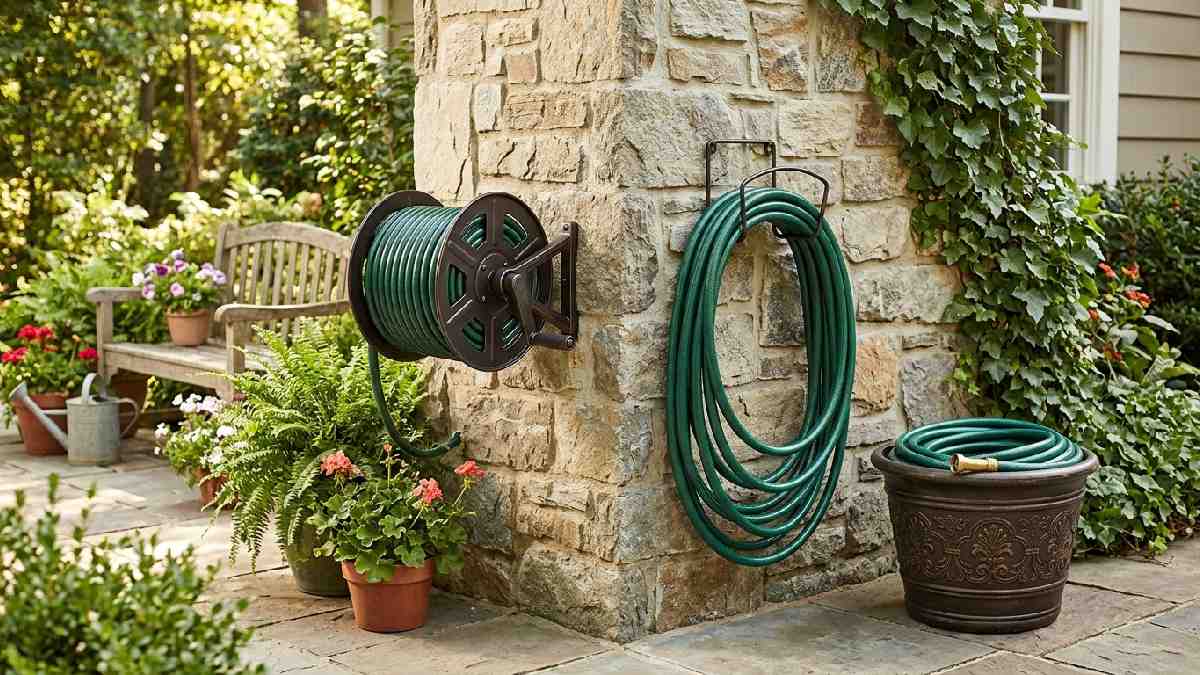
A reel is the only option that both stores and winds the hose, which is why a garden hose reel starts to make sense once your hose is long enough that coiling feels like a chore. If you only water a few pots now and then, save your money. If you water most days, buy the reel.
Don’t Forget the Hose Itself
Even the best garden hose reel can’t rescue a poor hose. Stiff, cheap hoses resist coiling, spring back, and kink at the drum. Look for a flexible, kink-resistant hose with reinforced layers. Rubber hoses are tougher but heavier, PVC hoses are lighter but can stiffen in cold weather, and hybrid hoses sit in between.
Check the fittings too. Solid brass connectors last far longer than plastic ones and rarely strip when you tighten them. A reel and a hose that work well together will save you more frustration than any single feature on the spec sheet.
A Quick Buying Checklist
Before you click “buy,” run through this list one last time:
- My hose length plus 25 feet is within the reel’s rated capacity for my hose diameter.
- The tap, wall, or post I plan to use is solid enough for the load.
- The frame, bracket, and crank are metal or thick, UV-stable resin.
- A leader hose and a hose guide are included.
- The reel turns smoothly and has a lock or brake.
- Spare parts, such as washers or a swivel, are easy to find.
How to Install and Use a Garden Hose Reel
Good installation matters as much as the reel itself. A full 100-foot hose can weigh over 20 pounds once it’s filled with water, so a weak mount will eventually pull away from the wall.
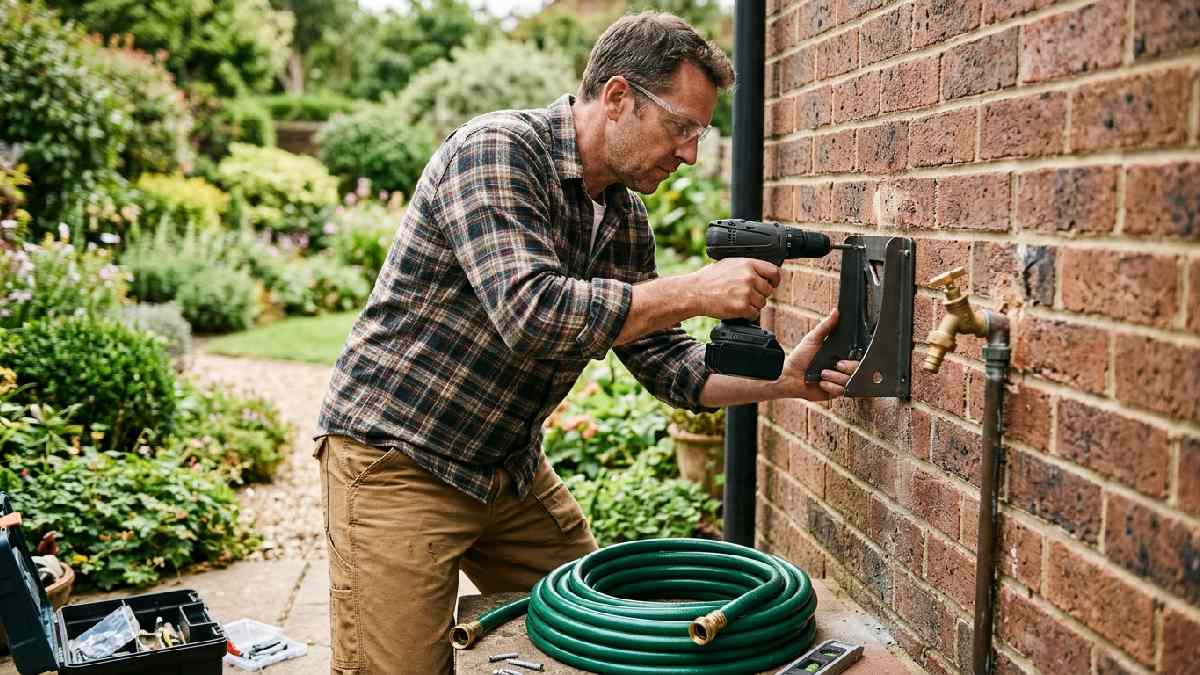
Installing a wall-mounted reel step by step
- Choose the spot. Pick a wall within reach of the tap, about waist to chest height. Make sure the hose can unwind without rubbing against sharp corners.
- Find solid material. Mount into brick, concrete, or a wooden stud. Avoid plaster or thin cladding, which can’t hold the load.
- Mark and drill. Hold the bracket against the wall, level it, and mark the holes. Drill using the right bit for your wall type and insert wall plugs if you’re working with masonry.
- Fix the bracket. Use the screws that suit your wall. The ones supplied in the box are sometimes too short, so don’t be afraid to buy better ones.
- Attach the reel. Slide or bolt the reel onto the bracket and check that it spins freely.
- Connect the leader hose. Screw one end to the tap and the other to the reel’s inlet. Use a rubber washer at each joint to prevent drips.
- Wind the hose. Connect your hose to the reel outlet and wind it slowly, guiding the coils evenly across the drum.
- Test for leaks. Turn the tap on gently, then fully. Tighten any joints that weep.
Everyday use tips
- Turn the tap on slowly. A sudden blast of pressure strains the swivel joint.
- Unwind enough hose for the job. Water flows better through a straight, fully unrolled hose.
- Switch the tap off and release pressure at the nozzle before you wind the hose back.
- Wind steadily and keep the hose guide moving, so one side of the drum doesn’t bulge.
Garden Hose Reel Maintenance and Troubleshooting
A little care goes a long way. Spend ten minutes a few times a year, and your reel will outlast most of its competitors.
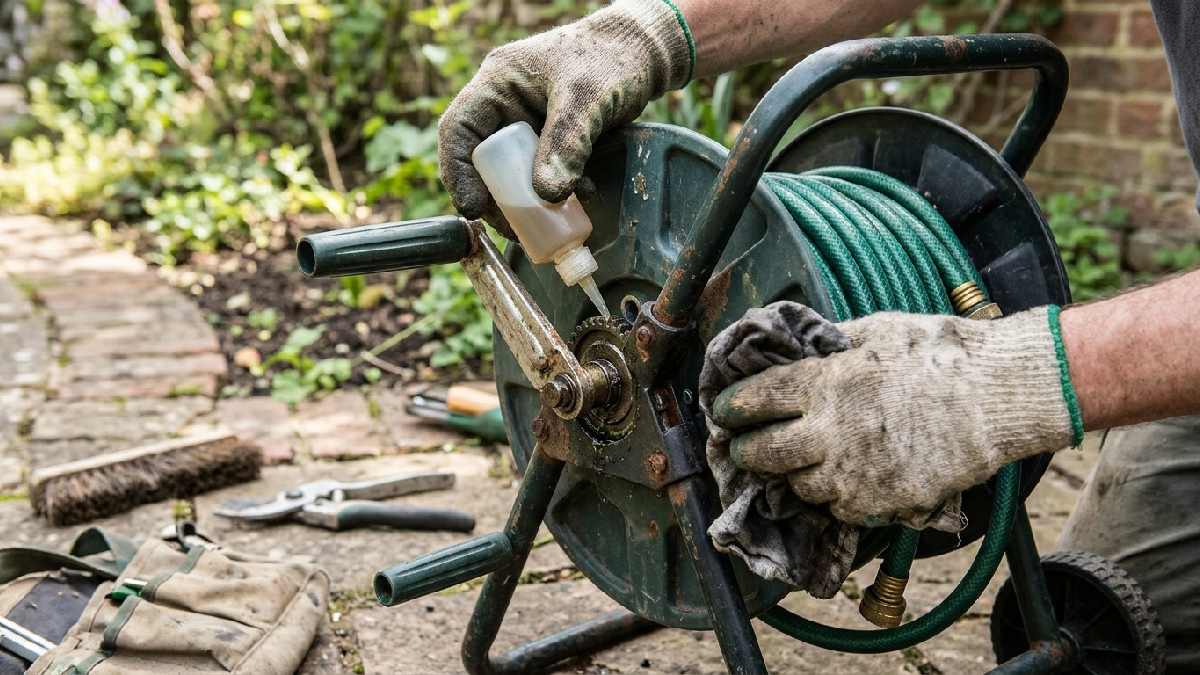
Simple maintenance routine
- Wipe it down. Mud and grit act like sandpaper on moving parts. A quick wipe after heavy use is enough.
- Lubricate moving parts. A drop of silicone spray or light machine oil on the swivel and crank joints keeps everything turning smoothly. Avoid heavy grease that attracts dust.
- Check washers and seals. Rubber washers dry out and crack. They cost very little to replace, and they stop most leaks.
- Drain before cold weather. If you live somewhere that freezes, empty the hose fully. Trapped water expands as it freezes and can split both the hose and the reel’s inlet.
- Store smart. If you can, shade the reel or cover it during the harshest months of the year.
Common problems and quick fixes
The reel leaks where it connects to the tap. Nine times out of ten, it’s a worn washer. Replace it and tighten the connection by hand, then give it a quarter turn with pliers.
Water sprays from the swivel joint. The internal seal has worn out. Check whether the manufacturer sells a replacement swivel. If not, a plumber’s tape wrap on the threads sometimes helps as a temporary fix.
The reel is hard to turn. Grit or dry joints are usually the cause. Clean the area, add a little lubricant, and test again.
The reel wobbles or leans. The bracket has probably loosened. Tighten the screws, and if the holes are stripped, move to larger wall plugs or a new spot in solid material.
A retractable reel won’t rewind. The spring may be tangled or worn. Pull the hose out fully, let it sit for a moment, and try again. If the problem returns, the spring likely needs replacing.
Common Mistakes to Avoid When Buying a Garden Hose Reel
After looking at the way people shop for these, the same errors keep showing up.
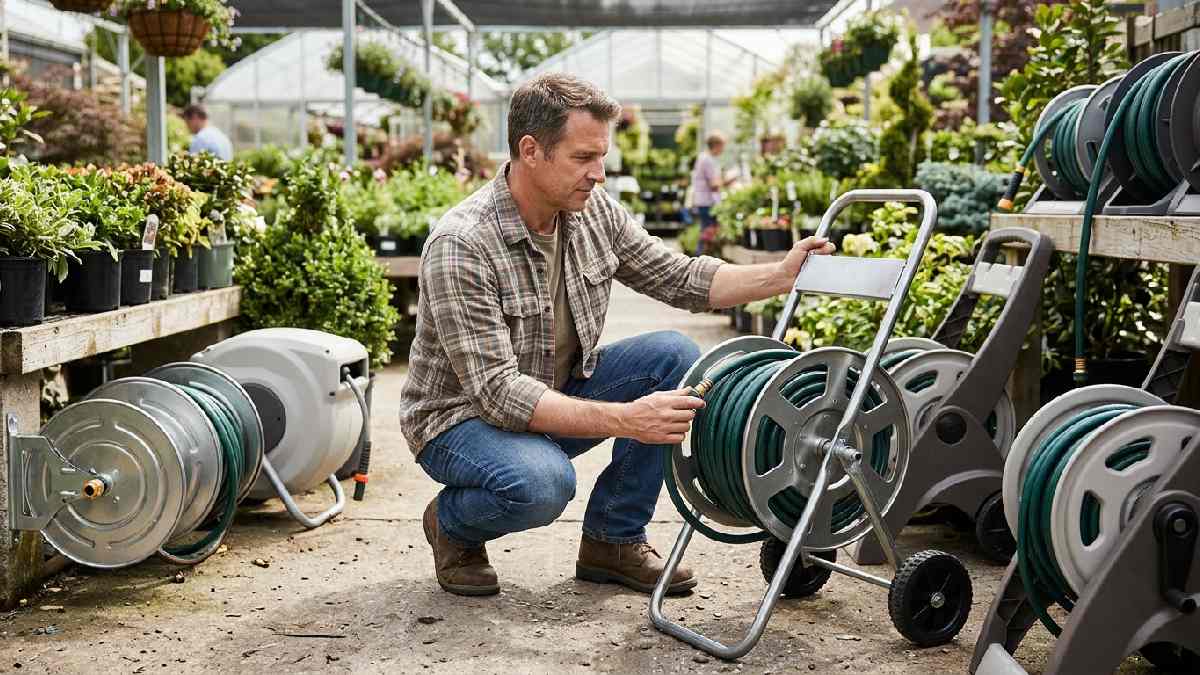
- Buying on price alone. The cheapest option often uses thin plastic and weak screws. It saves money today and costs you a second purchase later.
- Ignoring hose diameter. A reel that “holds 150 feet” might only hold 100 feet of your thicker hose. Always check the right line on the spec chart.
- Skipping the wall check. Mounting on weak plaster is a recipe for a reel on the ground within weeks.
- Forgetting weight. Water adds a lot of weight to a long hose. Make sure the bracket and frame are rated for it.
- Leaving the hose pressurized. Keeping the tap on with the hose coiled puts steady strain on the leader hose and fittings. Switch it off after use.
- Placing it in all-day sun without protection. Even tough materials fade faster under constant harsh sun. A bit of shade or a hose box helps a lot.
Garden Hose Reel FAQs
How long does a garden hose reel last?
A well-made garden hose reel typically lasts five to ten years with basic care. Cheaper plastic models may only last two or three seasons, especially in strong sun.
Is a retractable garden hose reel worth it?
Yes, if you water often and want speed and tidiness. Just accept that you'll probably get a shorter hose capacity, and spring parts may need replacing eventually.
Can I mount a hose reel on a fence?
You can, as long as the fence post is solid and thick. Thin panels and flimsy boards can't carry a loaded reel. If in doubt, mount it on a wall or use a cart-style model instead.
Should I leave the hose on the reel in winter?
In freezing climates, drain the hose first and, if possible, bring the hose and reel indoors or into a shed. In mild climates, simply drain it and keep the reel out of direct sunlight.
What length of hose is best for a hose reel?
For small gardens, 50 feet is plenty. For medium yards, 75 to 100 feet works well. Very long hoses add weight and reduce water pressure at the nozzle, so don't buy more length than you truly need.
Conclusion
For almost any garden with a hose longer than a few steps, yes. A good garden hose reel protects your hose, clears your paths, keeps water flowing properly, and gives you back the ten minutes you’d otherwise waste untangling things. The key is to choose by your own situation: measure your hose, check your wall, pick sturdy materials, and be honest about how often you’ll use it.
If you remember just one thing, let it be this: buy the reel that fits your hose and your space, not the one with the flashiest photo. Do that, and your next garden hose reel could keep working for many seasons to come.