
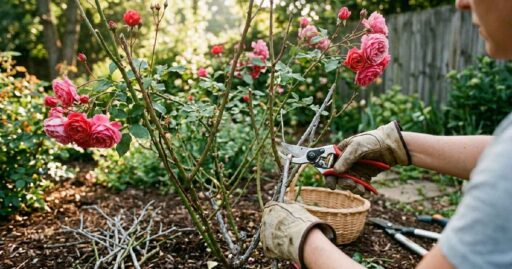
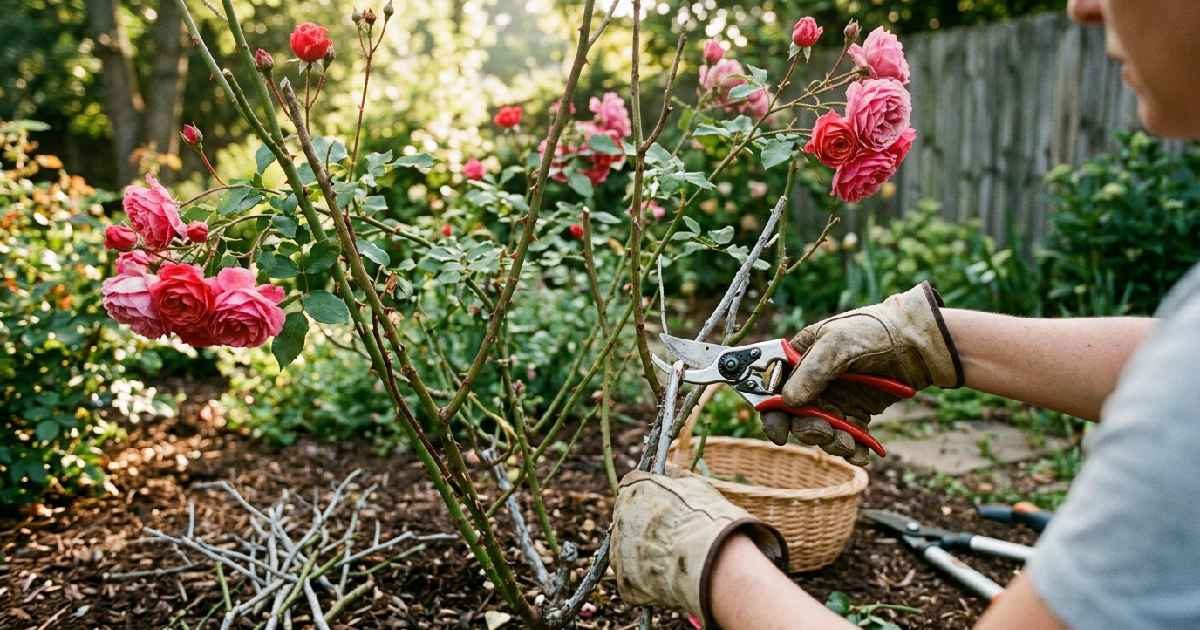

You wake up one morning, walk outside into the garden, and your rose bush is like a tangled heap of grey sticks, crossed canes, and just a few tired leaves. So you ask yourself, “Do I cut it?” And if yeah, like how much, and exactly where? Most gardeners kinda freeze right there, and yeah, that fear is one of the reasons so many roses end up leggy, sickly, or only give you a handful of flowers, then act like nothing’s wrong.
Here’s the thing, though. Learning how to prune roses is way less dramatic than it sounds. Roses are tough, and one clean cut in the right-ish spot (not perfect perfect ) rarely kills them. Once you get a couple of simple rules in your head, you can grab your secateurs with real confidence, and you’ll usually see bigger, healthier blooms pretty soon after.
In this guide, you’ll learn how to prune roses step by step, in plain language, with real examples. You’ll figure out when to prune, what tools to use, how to treat different rose types, and what mistakes to dodge. If you’ve got two pots on a rooftop or twenty bushes in a courtyard, the basic logic stays the same for most folks, even if conditions look a bit different.
By the time you finish reading, you should know how to prune roses so your plants stay strong, open, and full of flowers year after year.
Why Pruning Roses Matters (and What If You Skip It)
A rose that never gets pruned doesn’t really stay the same. It slowly turns into this crowded thicket. Old canes become woody, and they stop pushing decent flowers. Stems rub against each other, and those tiny injuries can give fungus a doorway.
Inside the center, air barely moves, leaves stay wet longer, and diseases like black spot or powdery mildew tend to feel comfortable. They’re basically like “oh cool, thanks for the humid welcome mat.”
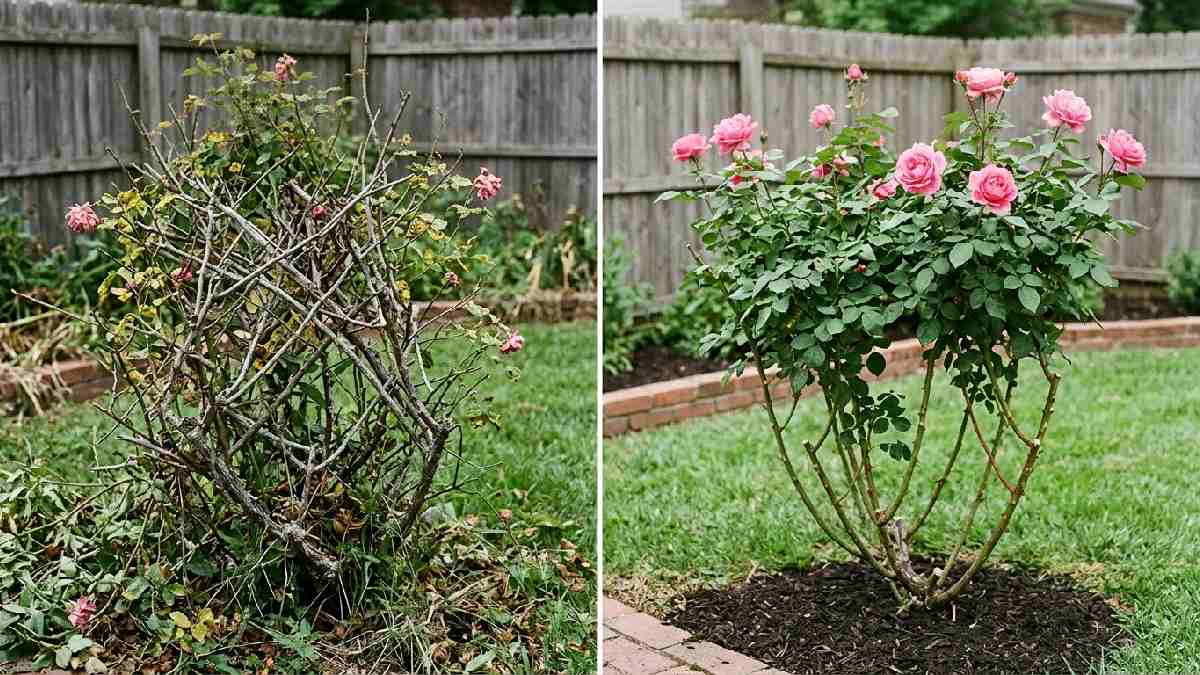
Pruning helps. When you cut properly, you’re basically telling the plant where to funnel its energy. Instead of feeding a bunch of thin, weak stems, your rose puts strength into a handful of sturdy canes that carry bigger flowers on longer stalks.
So that’s why most gardeners want to know how to prune roses the “right way”. It’s not just about shrinking the plant for the looks; it’s about health and output.
Here’s what good pruning often gives you:
- More flowers. Roses bloom on new growth, so pruning helps kick off fresh shoots.
- Better shape. An open, vase-like structure looks tidy, and sunlight lands on more of the plant.
- Less disease. Airflow makes leaves dry faster, so fungal problems drop.
- A longer life. Old, tired wood gets removed, and the plant stays younger and lively.
- Easier care. A trimmed bush is easier to spray, water, and even deal with when you’re walking past; somehow it hurts less.
Think of pruning like a haircut. Small, steady trimming keeps things healthier. If you ignore it for years, it becomes harder, but it’s rarely too late to start. And if you’re still nervous, remember this too: a rose is forgiving. Even a clumsy first attempt usually grows back better than the unpruned mess would.
So the best way to learn how to prune roses is to start, not just think about starting.
When Is the Best Time to Prune Roses?
Timing matters almost as much as the technique. Cut at the wrong moment, and you can lose early blooms. In colder areas, you might also expose tender new shoots to frost, which is just rude.
The general rule
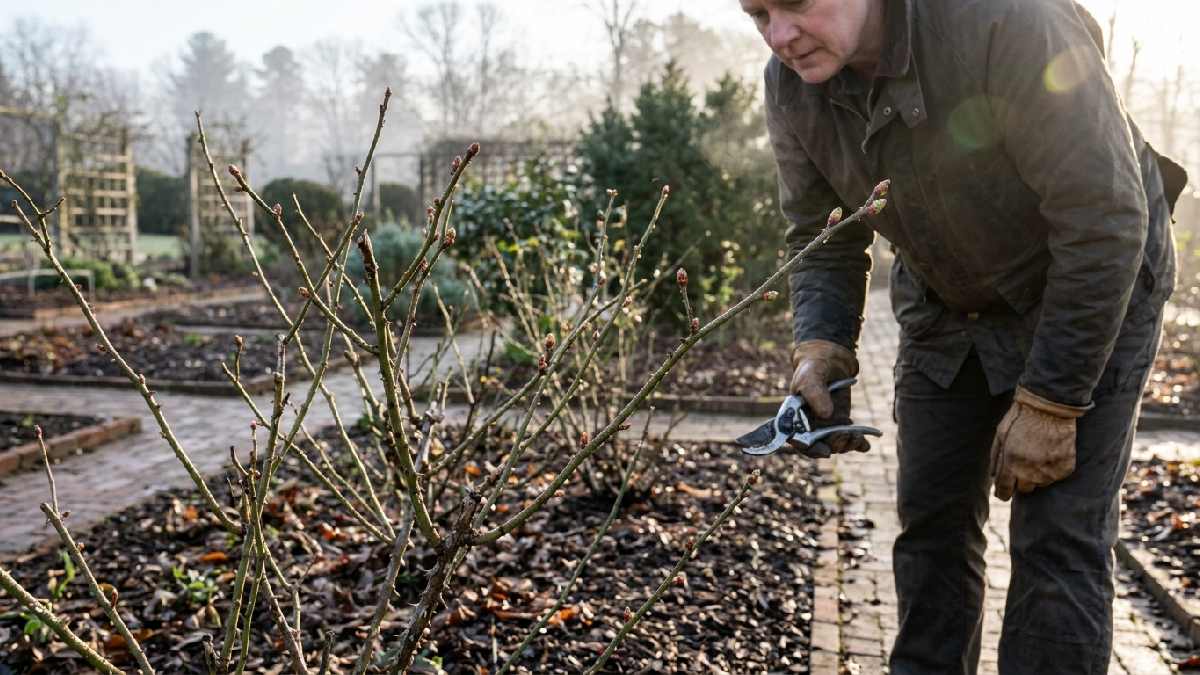
For most roses, the main pruning happens at the end of dormancy, right before the plant wakes up and starts pushing new growth. In cool and cold climates, that usually means late winter or early spring.
A simple sign a lot of gardeners look for is buds on the canes swelling and turning slightly red or green. When that shift shows up, the plant is basically ready.
In warm climates, it can look different. Roses in places without hard freezes, like the Punjab plains in Pakistan, often do main pruning after the extreme heat cools down, commonly late October into November. That timing helps them build fresh growth, then push a strong flush of flowers during cooler months. Local nurseries and experienced growers can usually tell you the best week for your area, because conditions change from city to city, and honestly street to street too.
So if you’re asking “how do I prune roses at the right moment?” the short answer is: prune when the plant is slowing down, or just waking up. Don’t prune during deep frost, don’t prune in brutal heat, and don’t prune when humidity is heavy and constantly hanging around.
Quick answer for featured snippets
When should you prune roses? In cold climates, prune in late winter or early spring, just as buds start to swell. In hot climates, prune in cooler months like autumn when growth slows down.
Timing by rose type
- Repeat-blooming roses (hybrid teas, floribundas, most shrub roses): prune once a year during the main dormant pruning window, then do light trimming while the season runs.
- Once-blooming roses (many old garden roses and ramblers): prune right after flowers fade, because they bloom on last year’s wood. If you hard-prune in winter, you may accidentally cut off buds that would become next season’s blooms.
- Climbers: do the structure work in dormancy, but deadhead spent flowers all season long.
Light Pruning During the Growing Season
You can remove dead flowers, broken stems, and diseased leaves anytime. That’s not the big annual prune. It’s more like maintenance, and it keeps the plant tidy plus healthier, so everyone’s less stressed.
The main thing to remember is this: timing can flex a little, but technique is where it really matters. Beginners often worry about missing some perfect date. But in reality, cutting a few weeks early or late usually causes way less damage than skipping the job completely.
If you’re studying how to prune roses, that’s the part worth keeping.
Tools You Need Before You Learn How to Prune Roses
Ok so first, you do not need, like, a shed full of stuff. Honestly, just a few decent tools are enough, and the better the quality, the more the rose gets a clean outcome.
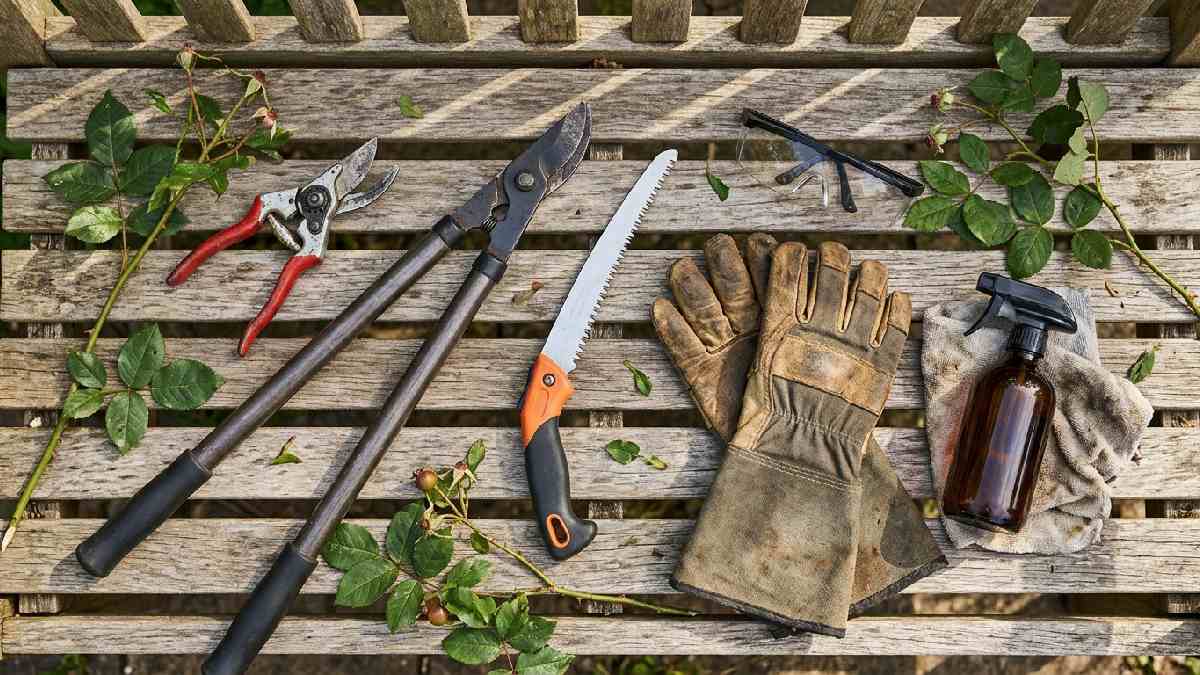
If your blades are dull, they kinda crush the stems instead of cutting them. That crushing heals slowly, and then disease shows up more easily, or just lingers around.
The essential kit
Bypass secateurs (hand pruners). These sort of act like scissors; two blades slide past each other. This gives you a clean cut on live stems. Try not to use an anvil-style pruner for roses, because it tends to squash the stem rather than do the job properly.
- Loppers. Long-handled cutters for canes that are thicker, like bigger than a finger, usually from about 1.5 cm up to around 4 cm.
- A small pruning saw. For really old, thick canes that the loppers can’t handle.
- Thick gloves. Long gauntlet style gloves help protect your forearms from thorns. Thin gloves, cheap ones, really do not cut it with roses, like at all.
- Eye protection. Those springy canes can whip back , and thorns also seem to have a personal mission for your eyes.
- A disinfectant. Rubbing alcohol is fine, or use a mix of 1 part household bleach to 9 parts water. Use it to wipe down your blades.
Why Cleaning your tools matters
Diseases can hop from plant to plant on dirty blades. So say you cut a cane with cankers or black spot, then you go right to a healthy bush. You might be carrying the problem with you. Wipe the blades with disinfectant between each plant, and also always after cutting anything that looks sick.
Then, sharpen your blades once a season. A sharp pair of secateurs makes everything quicker, and it leaves the plant with a neat wound that seals itself faster.
Now that your tools are ready, you can move on to the main event. Everything before this was the setup, and the next part is where it gets practical: how to prune roses.
How to Prune Roses Step by Step: 7 Simple Stages
This is the core method that works for most roses. Once you learn it, adjusting it for different rose types becomes much easier. Take your time on the first bush, and you’ll notice the rest go faster.
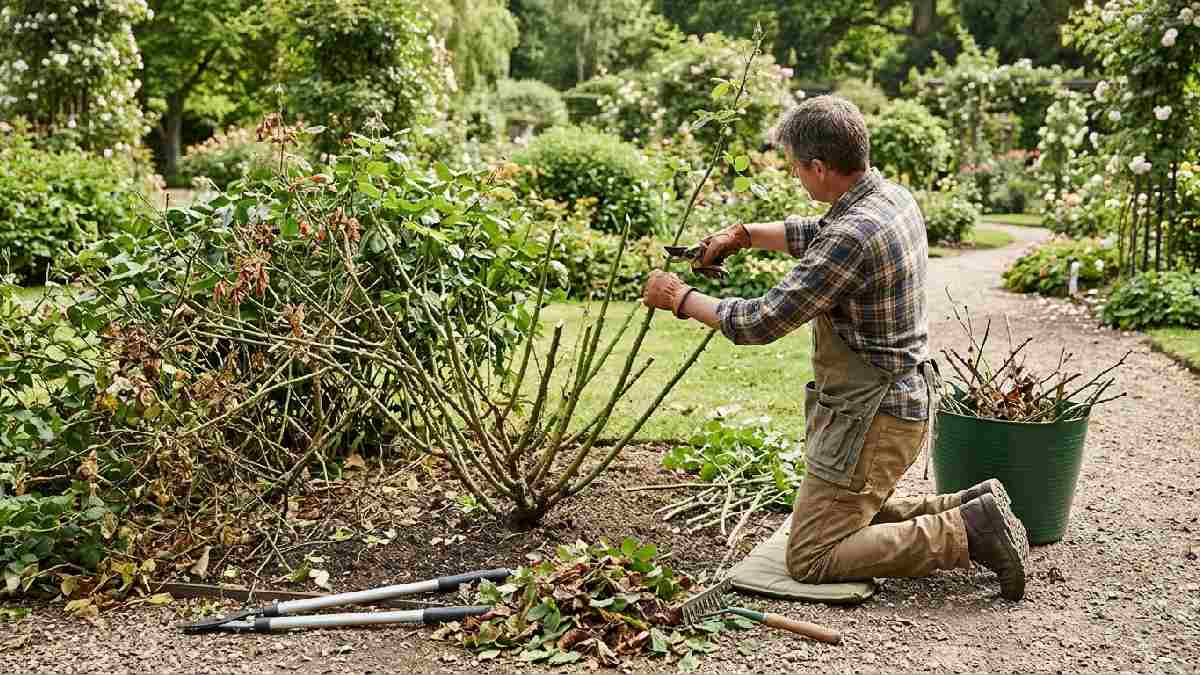
Quick answer: To prune a rose, remove dead, damaged, and diseased wood first, then cut out weak or crossing stems, open up the center, and shorten the remaining healthy canes with angled cuts right above outward-facing buds.
Step 1: Look before you cut
Stand back and study the plant for a minute. See which canes are thick and green or reddish,which ones are grey and brittle,and which ones cross through the middle. Just this quick planning saves you from cutting something you will regret. This first look is honestly the most overlooked step in how to prune roses, and it takes less than a minute.
Step 2: Remove the three Ds
Start by cutting out anything dead, diseased, or damaged. Dead canes are brown, black, or shriveled, and they snap easily. Diseased canes might show dark spots or sunken patches. Damaged canes look broken, cracked, or torn.
Cut each one back until you hit healthy wood. You’ll know it is healthy because inside the cane, the pith is white or cream. If the center is brown, keep cutting lower until it turns white. This one step alone can improve the look of a neglected rose by about half.
Step 3: Take out thin and weak stems
Next, remove those spindly canes that are thinner than a pencil. They usually do not make great flowers, and they just compete with stronger stems for water and nutrients. Cut them off at the base, where they meet a thicker cane or the main crown.
Also remove suckers if your rose is grafted. These are shoots that grow below the graft union, and they come from the rootstock, not the rose you actually wanted. Follow them down to where they pop up, then pull them or cut them cleanly at the source. If you cut them partway, they tend to come back more.
Step 4: Fix the crossing and crowded canes
Check for stems that cross over each other, or grow inward toward the center. When two branches rub together, pick the stronger one and remove the other. Your target is an open center that looks a bit like a vase, so air and light can reach every part of the plant.
This is where a lot of beginners stall. If a cane is healthy but sits in the wrong place, it’s still okay to remove it. Structure matters more than keeping every single stem.
Step 5: Choose which canes to keep
At this point you should see the plant more clearly. For most bush roses, aim to keep around three to five strong canes that are healthy and spaced out around the plant. Younger canes with smooth bark, green or reddish, are usually best. Older woody grey canes are often less productive, so remove one or two of the oldest every year to refresh the plant slowly.
Honestly, learning how to prune roses well comes down to this decision: which canes help the plant move forward, and which ones are just getting in the way.
Step 6: Shorten the remaining canes
This is where the height reduction actually happens. For a hard prune on hybrid teas, many growers cut the remaining canes back to roughly 30 to 45 cm, which is 12 to 18 inches from the ground. For a lighter prune on shrub roses and floribundas, you might remove about one third of the height instead.
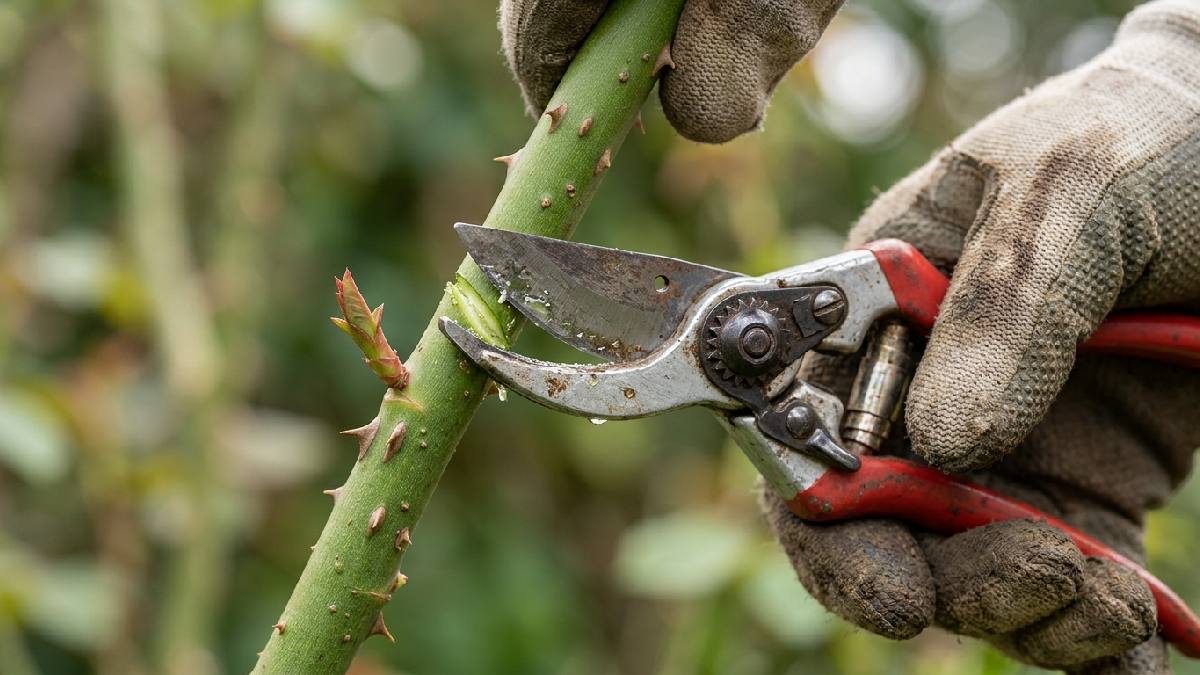
Make each cut about 6 millimetres (a quarter of an inch) above a bud that faces outward from the center of the bush. Angle the cut at about 45 degrees, sloping away from the bud. That angle helps rainwater run off instead of pooling on the bud and rotting it. The outward-facing bud sends the new shoot away from the center, so your shape stays open.
Step 7: Clean up
Gather every cut piece, plus any fallen leaves around the base. Fungal spores can hang around in old leaves and stems,so leaving them means trouble later. Bag them up, or burn them where it is safe. Do not toss diseased material into your compost.
Then wipe down your tools. You’ve finished the full routine, and now you know how to prune roses from start to finish.
A real-world example
Ok so here’s a real-world scenario: you’ve got this six-year-old hybrid tea, and it’s been kind of left alone for two whole years. It’s basically nearly a metre and a half high, with around fourteen canes too, kind of wild-looking. First you remove four dead or grey canes, ok, then you deal with two thin ones, and after that you cut three crossing ones out, carefully. Now you end up with five solid canes, and you chop those down to about 40 centimetres. Honestly, the bush looks sort of small, almost bare, but yeah, that’s normal-ish, and then in six to eight weeks you start seeing vigorous fresh shoots. The first flowers pop up not long after. Beginners usually freak out here, like “did I ruin it?” but if you wait, it pays off.
How to Prune Roses by Type: Hybrid Teas, Climbers, and more (kinda)
Not every rose wants the same haircut. The seven steps above are a good foundation, but each type has its own little personality. So you tweak what you do based on what rose it actually is.

Hybrid teas
These are the classic long-stemmed roses you see as cut flowers. They flower on new wood, and they take fairly hard pruning without drama. Use the seven steps, and shorten the canes to around 30 to 45 centimetres. If you want fewer blooms but bigger ones, you prune harder. If you want more flowers, on a taller plant, prune a little lighter. For this group, how to prune roses is probably the most straightforward option.
Floribundas
Floribundas make clusters of smaller blooms together, and they look best as thicker, bushier plants. You prune them more gently than hybrid teas, taking off roughly one third to one half of the plant height. Leave more canes in place, because they rely on multiple stems to make that cloud of colour, not just one or two.
Shrub roses and landscape roses
These are pretty stubborn and low effort. Many modern shrub roses just need a light trim to keep them in bounds. Remove dead or damaged wood, thin crowded canes, and cut the whole plant back by about a third. You don’t have to fuss over every single bud, which is honestly nice. If you are just starting with how to prune roses, these are the best practice plants.
Climbing roses
Climbers need a different mindset entirely. You are not trying to keep them small, no. You are basically training a framework of long canes along a wall, fence, or trellis.
- Young climbers (first two years): do almost nothing pruning-wise. Remove only dead or broken wood, then let the main canes stretch out.
- Mature climbers: tie the main canes in as horizontally as possible. Horizontal training pushes side shoots to form, and those side shoots end up carrying the flowers.
- Side shoots: cut the flowering side shoots back to two or three buds, which is roughly 8 to 15 centimetres.
- Old canes: every few years, remove one or two of the oldest canes at the base, to make room for newer ones.
Also, timing really matters here. Repeat-flowering climbers can be pruned in the dormant season, while once-flowering climbers should be pruned right after the blooming ends. Getting this wrong is one of the biggest ways people lose a whole season of climbing flowers, so pause before any big cut. In other words, how to prune roses that climb depends a lot on how and when they flower.
Ramblers and old garden roses
Ramblers and a lot of old garden roses bloom only once, on wood they grew the year before. Prune them right after flowering. Remove some of the oldest canes at the base, thin tangled growth, and tidy the rest lightly. Don’t cut them hard in winter, because you’ll remove flower buds before they open, and then it’s just sad.
Container and patio roses
Potted roses follow the same basics, but at a smaller scale. Since the roots are more restricted, container roses like a yearly tidy-up plus a bit of refresh. Take out dead stems, shorten the remaining canes by about a third, and keep the centre open. If you grow roses on a rooftop or balcony, you can follow this same how to prune roses plan, and they usually handle it well.
Common Pruning Mistakes to Avoid
Even experienced gardeners slip up sometimes. Here are the mistakes that cause the most issues, plus easy ways to avoid them.
Using blunt or dirty tools
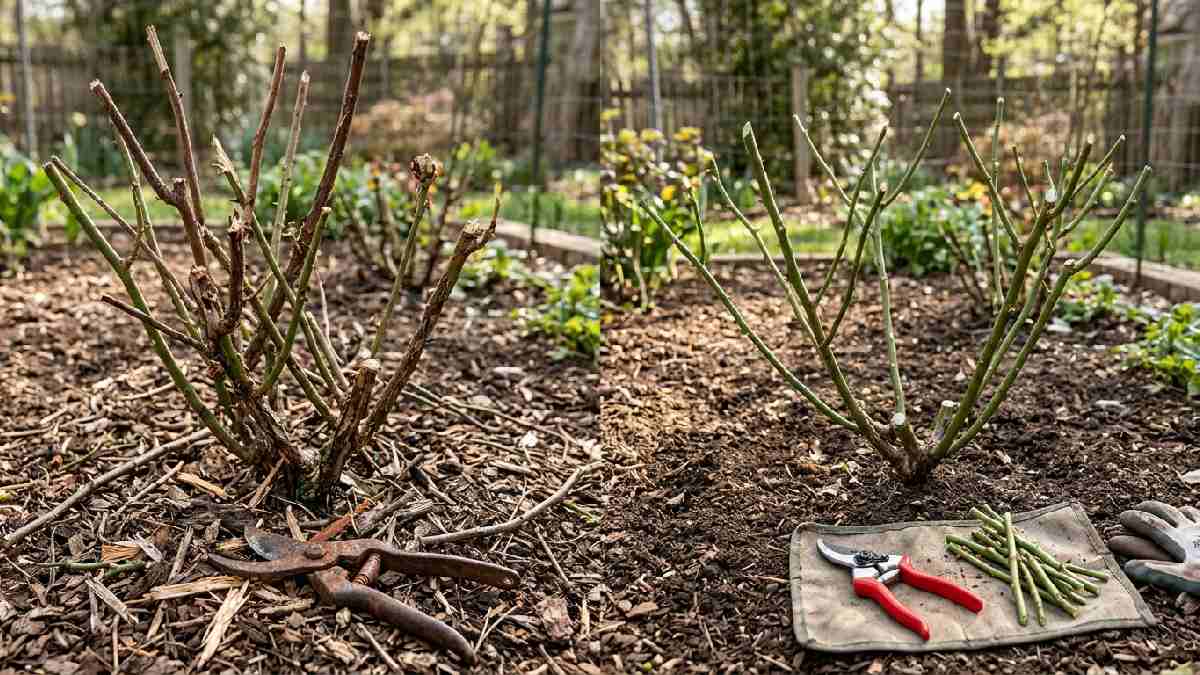
Dull blades tear stems and leave ragged wounds. Dirty blades can spread disease. Sharpen your tools once a year, and wipe them between plants. If you want a dependable way to learn how to prune roses without problems, start with clean, sharp equipment.
Cutting too close or too far from the bud
Cut too close to the bud, and you might damage it. Leave a long stub above the bud, and that stub dies back, which can let disease move into the cane. Aim for about 6 millimetres above the bud, on a clean 45-degree angle. That’s the sweet spot.
Pruning at the wrong time
A hard prune right before frost can trigger soft new growth, and that is not what you want. A heavy prune in peak summer heat stresses the plant. And cutting a once-blooming rose in winter removes its future flowers. So check timing for your climate and your rose type before you start cutting.
Being too timid
This surprises people. Some beginners only snip the tips. Then the plant turns tall and thin, bare-ish at the base, with flowers way up high where you barely get to enjoy them. A modest but confident cut usually beats a bunch of nervous trimming. People who figure out how to prune roses often learn fast that bold cuts usually work better.
Leaving stubs and old wood
Stubs and dead canes become little doorways for fungus and pests. Always cut back to a healthy bud or all the way to the base of the plant. Never leave a dead cane standing just because you didn’t want to reach for it.
Skipping cleanup
Fallen leaves and trimmings can carry spores that infect the plant again next season. Rake them up, remove them from the garden, and keep the area tidy.
Ignoring the base of the plant
Some gardeners only focus on the top and forget the crown. Check near the base for suckers, old woody canes, and weak shoots. Thinning out the base helps keep the whole plant productive, not just the upper parts.
What to do after pruning: aftercare for better blooms
Ok so those cuts are honestly only like half the thing. The next couple of weeks kinda decide how fast your rose bounces back, and how many flowers it ends up making, so don’t rush it.
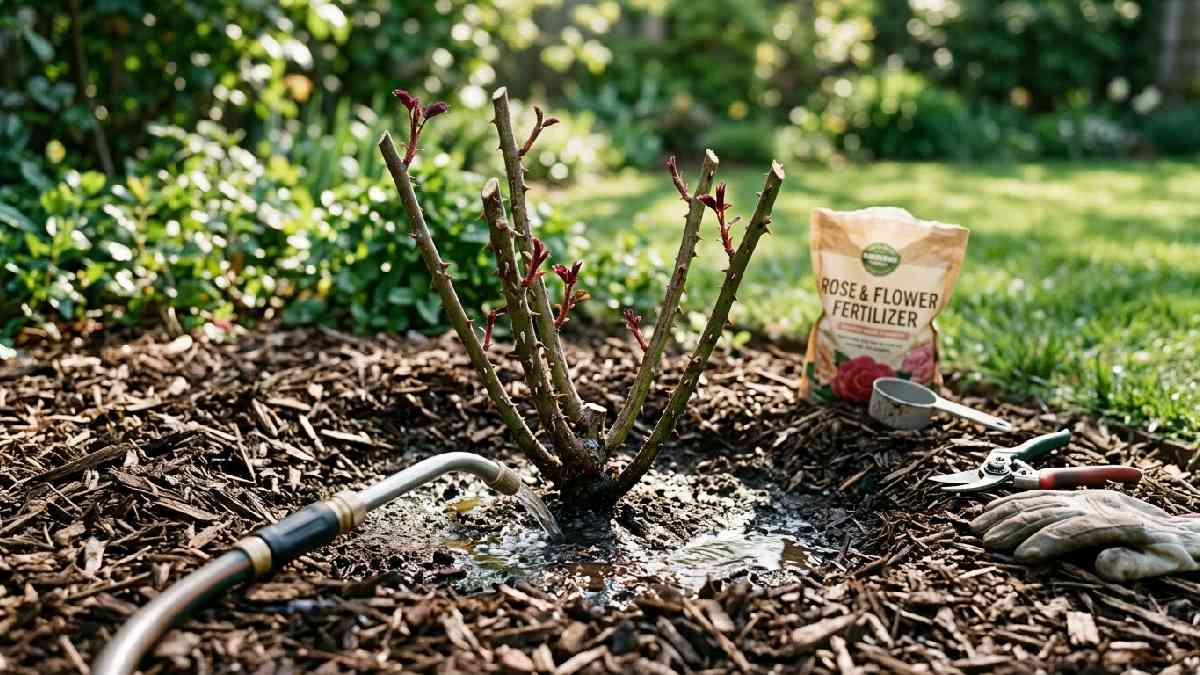
Water deeply
Right after pruning, give the plant a proper soaking, then keep watering deeply but not every single day with tiny little drinks. When you water deeply, the roots go down, and the whole plant is more settled even if the weather gets dry. Try aiming the water at the soil, not the leaves, because wet foliage can bring on fungal issues.
Feed the plant
Once you spot fresh growth starting up, feed your rose with a balanced rose fertilizer, or use well-rotted compost, or aged manure. Just stick to the instructions on the packet, because too much can scorch roots and you end up with growth that’s kinda weak and floppy. Spread the feed around the base, then water it in, so it actually does something.
Add mulch
Add a mulch layer about 5 to 7 centimetres thick near the base, but don’t let it touch the canes directly. Leave a few centimetres gap, ok. Mulch helps lock in moisture, cuts down on weeds, and keeps roots cooler during hot spells. This aftercare part also connects to knowing how to prune roses properly, since the plant still needs support while it recovers.
Watch for pests and disease
New growth is soft and fresh, so aphids and fungal problems act like it’s a free buffet. Check your plant every week, or every two weeks if you’re busy. If aphids show up, you can usually blast them off with a strong spray of water, or use mild insecticidal soap. If black spot or other fungus stuff appears, remove affected leaves right away and improve airflow by not letting things get too crowded.
Keep deadheading
When the rose is in flower, pull off the spent blooms by cutting just above the first fully formed five-leaflet leaf below the flower. This pushes the plant to set new buds, and keeps it looking neat. Deadheading is kinda like a smaller, steady version of how to prune roses across the whole season.
Be patient
After a hard prune, your bush might look bare and kinda disappointing for a few weeks. That’s normal. New red shoots will push out, leaves will unfurl, and buds will form. Most roses bloom about six to eight weeks after a good prune, but it depends on the weather and the variety.
FAQs: How to prune roses questions answered
What is the easiest way to prune roses for beginners?
The easiest method is to remove dead, diseased, and damaged wood first, cut out thin or crossing stems, and then shorten the remaining canes by about a third to half. Always cut at a 45-degree angle just above an outward-facing bud. Following this simple routine is the fastest way to learn how to prune roses with confidence.
How far back should I cut my roses?
It depends on the type. Hybrid teas can be cut to roughly 30 to 45 centimetres, while shrub roses and floribundas are usually reduced by one third to one half. Climbers are trained, not cut back hard, with side shoots trimmed to two or three buds.
Can I prune roses in summer?
Yes, but only lightly. Summer is the time for deadheading, removing broken stems, and cutting out diseased leaves. Avoid heavy pruning during heat waves or very humid weather. The main structural prune should happen when the plant is slowing down or dormant.
What happens if I never prune my roses?
The plant will not die right away, but it will gradually become congested and woody. You will usually see fewer, smaller flowers, more disease, and a messy, tangled shape. Learning how to prune roses, even at a basic level, makes a big difference to plant health.
Do I need to seal the cuts on rose canes?
It is optional. Some gardeners dab a little wax or white glue on thick cuts to keep out cane borers, especially in areas where they are a problem. In most home gardens, a clean cut on a healthy plant heals naturally without any sealing.
Conclusion
Pruning can feel scary the first time, but it makes sense once you see the pattern: remove what is dead or weak, open up the centre, and cut just above a healthy outward-facing bud. Do it in the right season, and your roses reward you with sturdier stems and more blooms.
Start with just one plant. Take a slow look first, use clean, sharp tools, and clear away the clippings. By the second, or third bush, it starts to feel a lot more natural. That’s pretty much everything about how to prune roses.
And once you get your first bloom from a plant you shaped with your own hands, you’ll see why so many gardeners stick with this yearly ritual. Keep this guide around, trust your eye, and enjoy learning how to prune roses like someone who’s done it for years.