
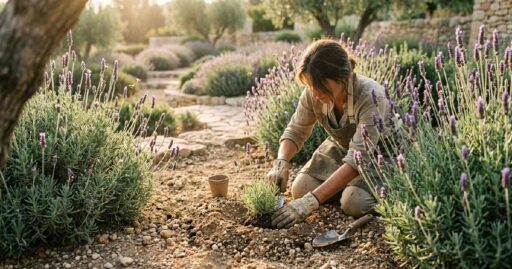
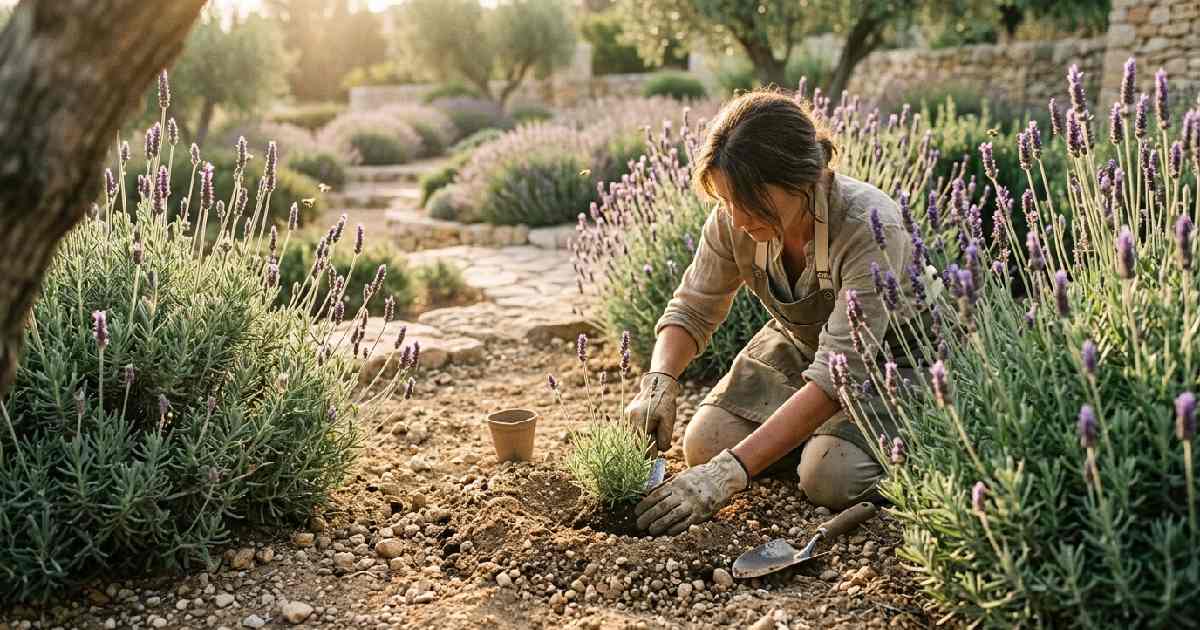

So you got a few lavender plants, or maybe it was just a packet of seeds, and now in your head you can already see those purple flower spikes, buzzing with bees, kinda soft like they belong here, and that calming scent drifting across the garden. Then you suddenly remember your friend, the one whose lavender went brown and kind of just died within one season. And you’re like, ok wait, is lavender actually easy, or is it just fussy in disguise?
Truth is, lavender is one of the easiest plants to grow once you nail the planting part, and it is also one of the quickest plants to disappoint you if the timing or conditions are off. Most lavender problems come from day one, like when it’s put in the ground. Too much shade, heavy wet soil, the plant sitting too deep, or giving it extra water because “more help” feels right—yeah, that last one is a classic.
This guide is basically you learning how to plant lavender, whether you’re starting with nursery plants, seeds, cuttings, or even a pot situation on a balcony. You’ll cover when to plant, where to plant, what to do with the soil, how far apart to space each plant, and what to do during that first year so it turns into a strong shrub that lives a long time. And honestly, by the end you’ll see that lavender’s “wants” are pretty straightforward, much simpler than most people pretend.
How to Plant Lavender in 7 Quick Steps
If you just want the short version, here. Each part gets more detail later.
- Choose the right lavender type for your climate.
- Plant at the right time, usually spring after the last frost, or early autumn if your area is mild.
- Pick a sunny spot, full sun, meaning at least 6 to 8 hours of direct light daily.
- Improve drainage by mixing sand or fine gravel into heavy soil, or plant on a mound, or use a raised bed.
- Dig a hole about twice as wide as the root ball, and about as deep.
- Set the plant so it’s level with the soil surface, backfill, then press gently.
- Water thoroughly once, then water lightly only after the soil has dried out.
That’s it. The rest of this guide just explains why each step is important, and how to tweak it so it fits your garden.
Choose the Right Type of Lavender Before You Plant
A lot of people grab whatever lavender looks prettiest at the nursery. It seems harmless, but it’s a mistake, because different lavenders don’t want the same life. A variety that thrives in a cool mountain garden might sulk in a hot, humid summer, and yep, the same goes the other way.
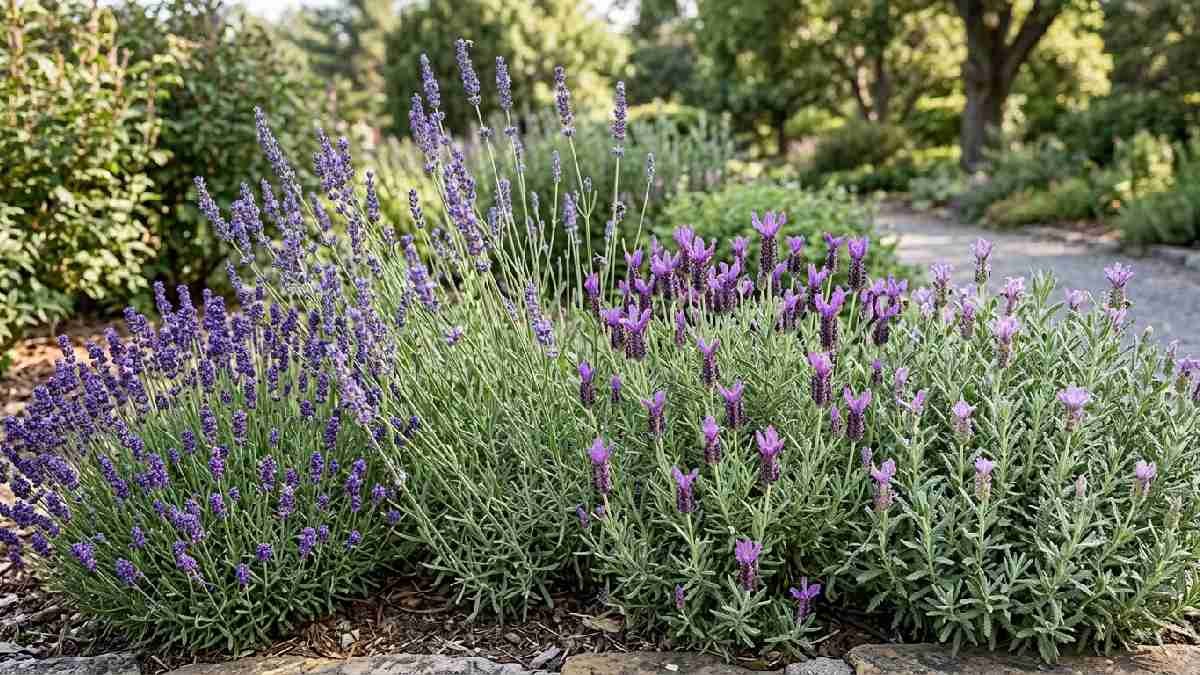
There are four main groups you’ll run into.
English Lavender (Lavandula angustifolia)
English lavender is the classic for scent, cooking, and dried bundles. It’s the hardier one, handles cold winters well, usually in zones 5 to 9, and some kinds tolerate even colder conditions. Common favorites are Hidcote, Munstead, and Vera. These plants usually stay compact, often around 1 to 2 feet tall, and the flowers smell sweet and soft. If your winters actually get properly cold, this is a great place to start.
Lavandin (Lavandula x intermedia)
Lavandin is kind of a blend—English lavender plus spike lavender. It grows bigger, quicker, often reaching 2 to 3 feet tall and wide. You’ll notice longer flower stems and a stronger, sharper fragrance. Grosso and Provence are well-known types. Lavandin handles heat and humidity better than English lavender, which makes it a solid choice for big borders, hedges, and cutting gardens too.
Spanish Lavender (Lavandula stoechas)
Spanish lavender is the one with little “rabbit ear” petals sitting on top of each flower head. It loves warm, dry places, and it’s hardy mostly in zones 7 to 9. It blooms early, and it’s also very decorative, but it doesn’t like hard frosts. If you live in mild or hot regions, it can be a lovely easy plant.
French Lavender (Lavandula dentata)
French lavender has toothed, fern-like leaves and flowers most of the year in warm climates. It’s best for zones 8 and 9, and it does really well in pots. Still, it isn’t winter-hardy, so gardeners in colder areas usually grow it in containers, then move it indoors.
So which lavender is easiest for beginners?
For most cool or temperate gardens, English lavender varieties—like Munstead or Hidcote—tend to be the easiest. If you’re dealing with hot summers, lavandin or Spanish lavender usually do better.
A Quick Tip on Buying Healthy Plants
When you buy plants, check for compact, silvery-green foliage with no brown tips, and no mushy stems. If you can, slide the plant out of its pot. You want white or pale roots that fill the pot, but without circling too tightly. Skip plants that are already woody at the base but sparse on top, because they often struggle to bounce back. Smaller, younger plants in 4-inch or 1-gallon pots typically settle in faster than big, root-bound ones.
When Is the Best Time to Plant Lavender?
So basically, when is the best time to plant lavender? Most of the time, it’s spring, like after the last frost is done, and once the ground has started to warm up a bit. If you live somewhere with mild winters , and then hot summers right after, early autumn can work too—only because the roots get time to grow while things are cooler, and not under that crazy summer heat stress.
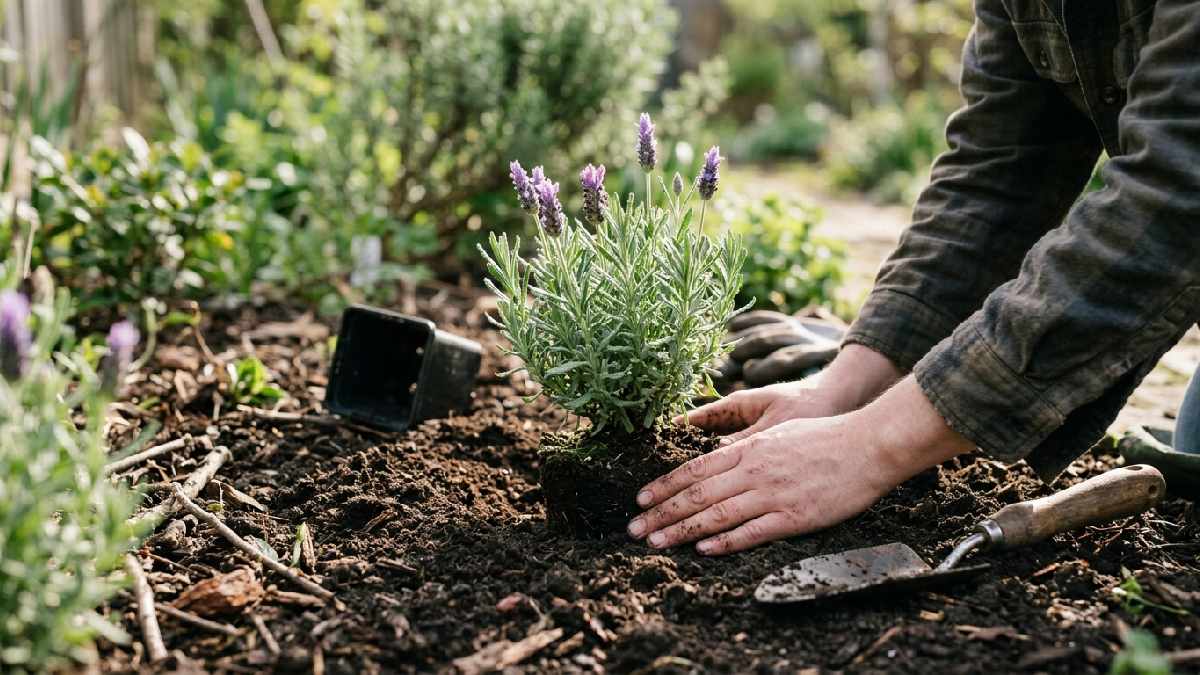
Timing is kinda a big deal with lavender, because it needs a handful of months to set up roots before it gets hit with either cold snap vibes or heat wave stuff. If you plant way too late in autumn, it might not settle properly before winter. And if you drop it in at the start of a hot stretch, it’ll spend its energy just trying to survive instead of establishing.
Planting in Cold-Winter Regions
If your winters freeze the ground solid, do spring planting. Wait until the hard frost danger is gone, then go with any time from mid-spring to early summer. This gives the plant the entire growing season to establish itself. Also, try not to plant in late autumn, because tiny roots can heave up when freeze-thaw cycles kick in, and that can mess things up.
Planting in Mild or Hot Regions
If your winters are gentler, try early autumn or late winter. The soil usually stays warm enough in autumn, the air feels cooler, and the plant gets natural rain without frying in scorching sun. Spring is still possible, but you’ll probably need to water more closely once temperatures start climbing.
Can You Plant Lavender in Summer?
You can, but it’s trickier, and it’s not the easiest route. If you really have to plant in summer, pick a cloudy day, or do it in the evening. Water it thoroughly right away, then add some light shade in the afternoon for the first couple of weeks. Don’t let it completely dry out, but also don’t keep it wet and soggy like it’s a swamp.
Pick the Perfect Spot and Prepare the Soil
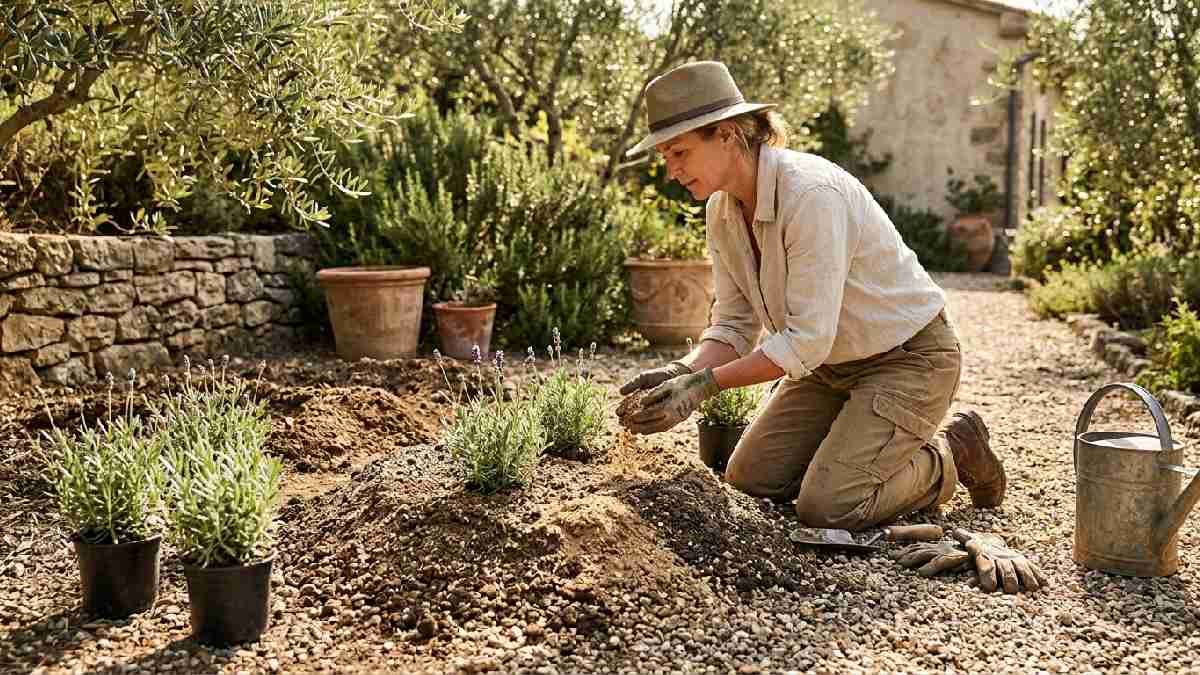
If there’s one part you should read twice, it’s this one, honestly. Lavender is from dry, rocky Mediterranean hillsides. So everything about it, from the silvery leaves down to the deep roots, is tuned for bright sun and soil that drains fast, no lingering puddles. Give it that, and the rest usually falls into place.
How Much Sun Does Lavender Need?
Lavender wants full sun, meaning about 6 to 8 hours of direct sunlight daily, at minimum. More sun is better. If it sits in shade, it tends to grow tall and kind of floppy; it flowers less, and the scent can fade. Plus, dampness sticks around longer in shady spots, which makes fungal issues more likely.
Before planting, just walk around your garden for a day. Watch where the sun hits in the morning, around midday, and later in the afternoon. In the Northern Hemisphere, a south-facing or west facing area often ends up being the best. Keep lavender as far as possible from the shadow of big trees, tall walls, and fences.
What Kind of Soil Does Lavender Like?
Lavender prefers light soil , like sandy or gravelly types that drain quickly. It does best with slightly alkaline to neutral ground, around pH 6.5 to 8.0. It doesn’t need rich feeding. In fact, very fertile soil can push lavender into growing soft and leafy, with fewer blooms and a shorter lifespan.
And the real enemy isn’t “poor” soil; it’s wet soil. Lavender roots rot fast when they sit in water, and root rot is basically the top reason people lose lavender.
How to Test Your Soil Drainage
Here’s an easy drainage test you can do in about ten minutes:
- Dig a hole roughly 12 inches deep, and wide enough for a real look.
- Fill it with water and let it drain fully.
- Fill it again, then time how long it takes to empty.
If it drains in about an hour or two, you’re usually good. If it takes four hours or longer, or the water is still sitting there the next morning, you’ve got drainage trouble and you should fix it before planting.
How to Improve Heavy or Clay Soil
Clay soil acts like a bowl and holds water, which is bad news for lavender. You basically have three solid options.
Mix in grit. Add coarse sand, fine gravel, or grit into the planting area. Try something like one part grit to two parts soil, mixed across a wider area—not only the hole. If you amend only the hole, you can accidentally make a little “pond spot” where water collects.
Plant on a mound. Make a raised mound about 6 to 12 inches high, then plant on top. Water runs away from the plant crown, which is exactly what lavender likes.
Use a raised bed. A raised bed with a gritty, well draining mix is one of the most reliable fixes for wet or clay heavy gardens. It also warms up earlier in spring, which helps.
What About Acidic Soil?
If your soil is acidic, with pH below 6.5, you can raise it using a bit of garden lime or crushed limestone, following what the package says. A cheap soil test kit can tell you where you stand. Don’t dump in compost or manure in big amounts, because lavender really doesn’t want extra nutrition piled on.
How to Plant Lavender Step by Step (From Nursery Plants)
Buying young plants from a nursery is usually the fastest and most dependable way to start. Here’s the full flow.
Step 1: Water the Plant First
Water the plant in its pot about an hour before you plant. A well-hydrated root ball holds together better , and it handles shock better too.
Step 2: Space Your Plants Correctly
Spacing gives lavender the airflow it needs to stay healthier. Crowded plants stay humid inside, which invites mold and rot.
How far apart should lavender be? Compact English varieties: about 12 to 18 inches apart Medium types: 18 to 24 inches Large lavandins: 24 to 36 inches between plants
If you want a low hedge, you can set them slightly closer, but plan on pruning more carefully. It may look thin at first, but lavender fills in faster than you think. By the second year, the gaps usually close up.
Step 3: Dig the Hole
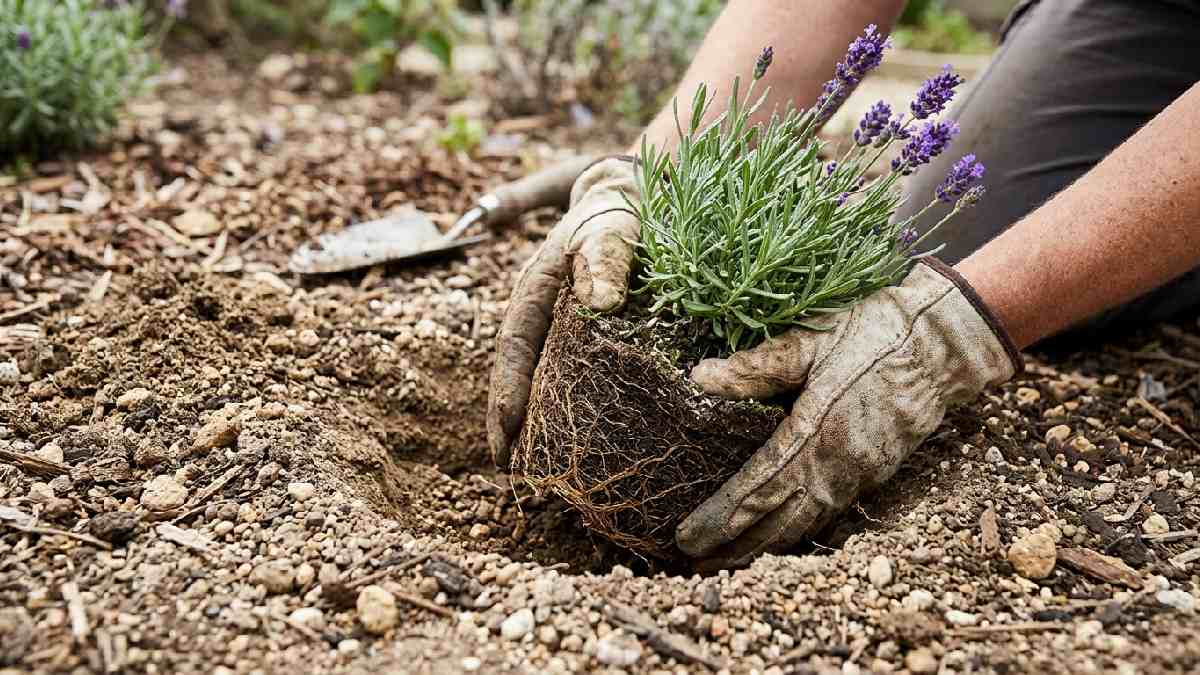
Dig a hole about twice as wide as the root ball, and about the same depth. A wider hole lets roots spread into loosened soil. Don’t dig deeper than the nursery pot height, because soft soil down there can settle and pull the plant downward.
Step 4: Loosen the Roots
Carefully slide the plant out of its pot. If the roots are wrapping in circles around the bottom, loosen them by hand, or use a clean knife to make a few shallow vertical cuts. That nudges the roots to grow outward instead of continuing the circle pattern.
Step 5: Get the Plant in the Right Depth, like really close to it.
Ok so, this part is where a lot of gardeners sort of mess up, and then wonder why the lavender won’t behave. Put your lavender in at the same height as it was in the pot, with that crown, you know where the stems meet the roots, a bit above the soil line. If you bury the crown it can trap moisture near the stems and that leads to rot, which is just not the vibe. If you’re sitting there thinking, “is this too high, or too low ” go a little high, then gently mound soil up around the root ball.
Step 6: Fill Back In and Sort of Settle the Soil
Add the soil back into the hole, and mix in a touch of grit if you feel it’s needed. Use your hands to press it down lightly; you want to get rid of big air pockets, but don’t go full stomp mode. Lavender roots need air as much as they need water, so compacting hard is a bad idea.
Step 7: Water Deeply Just Once, at First
Give the new plant a solid slow soaking, so the water reaches the roots and the soil settles in properly. After that first watering, wait until the soil dries out before you water again, don’t keep it constantly wet.
Step 8: Use the Right Mulch, not the “usual” kind
Mulch helps, but pick the kind with intention. Wood chips and bark keep moisture around, and that’s kinda the opposite of what lavender wants. Instead, use a thin layer of gravel, crushed stone, or coarse sand around the plant. It helps with weeds, bounces heat and light back up, and keeps the crown drier. Leave a little gap around the stems too, so the mulch does not touch them.
How to Plant Lavender From Seed
Growing lavender from seed usually costs less and gets you more plants, but it takes patience. Seedlings are slow, and plants started this way can vary a bit from the parent plant. Also some named types, especially lavandin and similar hybrids, won’t come true from seed, so yeah double check what the packet says.
Cold Treatment Helps Germination (Sort of Like a Reset)
Lavender seeds often sprout better after cold treatment, which is called stratification. You can mix seeds with a little damp sand, or put them in a damp paper towel inside a small bag, then pop them in the refrigerator for about 4 to 6 weeks. Some seed suppliers pre-treat their seeds already, so read the instructions before you do anything dramatic.
Sowing the Seeds
- Start seeds indoors about 10 to 12 weeks before your last expected frost.
- Fill seed trays with a light, well draining seed mix.
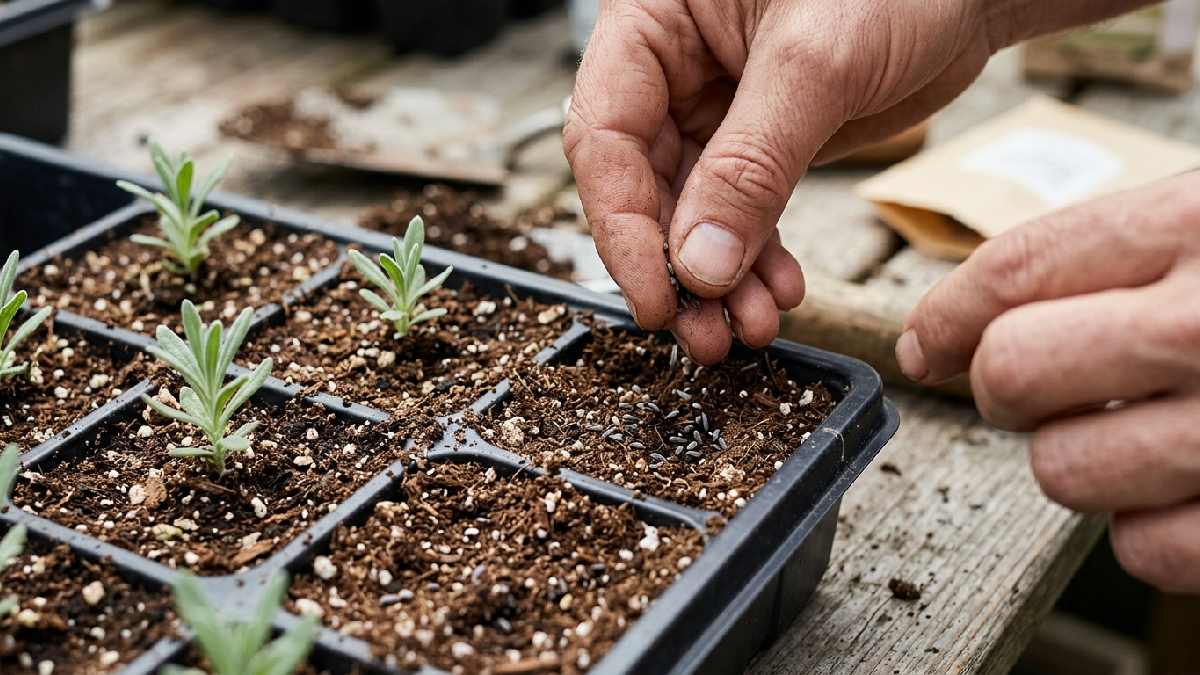
- Press seeds onto the surface and cover with only a thin film of mix, because lavender seeds need light to germinate.
- Keep it lightly moist, not soggy, and aim for about 18 to 21 degrees Celsius, (65 to 70 degrees Fahrenheit).
- Be patient. Germination can take from two to six weeks, and sometimes longer, depending on conditions.
Moving Seedlings Outdoors
When seedlings have two or three sets of true leaves, move them into small individual pots. Once frost is basically done, harden them off by setting them outside for a few hours each day, then increase the time over 1 to 2 weeks. After that, plant in the garden using the same steps as you’d do for nursery plants. Don’t expect many flowers in year one, because the first season is mostly about root growth, not showy blooms.
How to Plant Lavender From Cuttings
Cuttings are usually the best way to copy a plant you already love, and honestly it is easier than most people think.
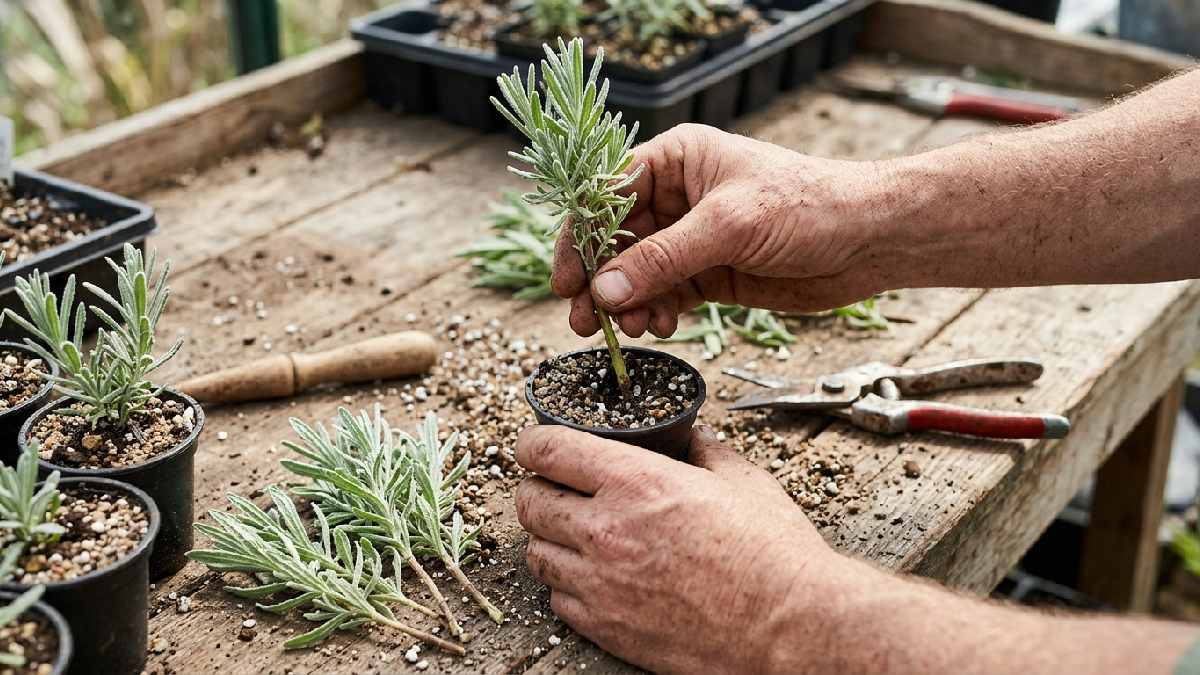
How do you root lavender cuttings? Take 3 to 4 inch cuttings from healthy, non flowering shoots in late spring or summer. Remove the lower leaves, dip the cut end in rooting hormone if you have it, then push the cuttings into a gritty mix, half sand or perlite and half potting soil. Keep them in bright light, but not in harsh midday sun, and keep the mix slightly moist.
Most cuttings root in four to eight weeks. You’ll know they’ve taken when new growth shows up at the top, or when there’s a little resistance if you gently tug. Pot them up on their own, grow them on for a few months, then plant out. Also take more cuttings than you think you need, because some will always fail, even when you do everything “right”.
How to Plant Lavender in Pots and Containers
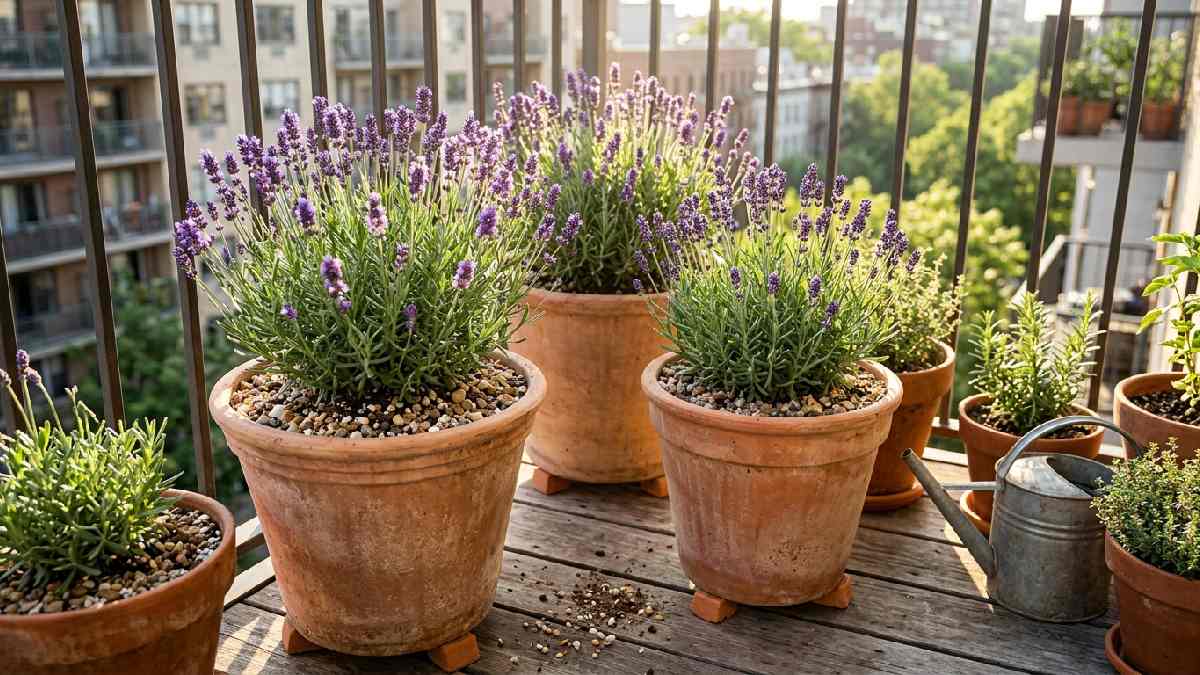
No garden bed, no worries. Lavender does great in containers, and it gives you serious control over drainage and soil conditions. It’s also a top option for heavy clay, wet winters, or even small balconies.
Choosing the Right Pot
Pick a pot at least 12 inches wide and deep for one plant, and go bigger for larger varieties. Make sure it has drainage holes. Terracotta or unglazed clay pots are ideal, because they let moisture evaporate through the sides. Plastic and glazed pots work too, you just have to water a bit more carefully.
The Best Potting Mix for Lavender
Regular potting soil tends to hold too much water by itself. A solid mix is about two parts standard potting mix to one part coarse sand, perlite, or fine gravel. You can also use cactus and succulent mix and stir in a handful of grit. If your mix is peat-heavy, add a small handful of garden lime, because lavender likes slightly alkaline soil.
Planting and Caring for Potted Lavender
Plant at the same depth as the original pot, and add a little gravel on top of the soil. Put the container in the sunniest spot you have. Water only when the top two inches of soil feel fully dry, and dump any saucer water so the pot never sits in standing water. In very cold areas, move pots to a sheltered, unheated location over winter, since container roots freeze faster than roots in the ground. Repot every two or three years into fresh mix.
How to Care for Lavender After Planting
Good planting helps lavender get started strong. Good care during the first year helps it stay strong.
How Often Should You Water Newly Planted Lavender?
For the first few weeks, water new lavender about once or twice per week depending on weather, then slowly back off. The point is encouraging deep roots. Check the soil with your finger. If it is dry a couple inches down, it’s time. Water at the base of the plant, not on the leaves, please.
After the first season, established lavender usually needs very little water. In a lot of climates, normal rainfall is enough. During a long dry spell, deep watering every two or three weeks is plenty. Overwatering is way more dangerous than underwatering, and a common sign is yellowing with drooping leaves, plus a damp base.
Should You Feed Lavender?
For most soils, no. Lavender likes being ignored a bit, and too much nitrogen makes it grow all soft and leafy, but with fewer flowers, so less of the good stuff. If your soil is really poor, a light sprinkle of a low-nitrogen, balanced fertilizer in early spring is enough, honestly. A little bone meal may also support flowering, but keep it mild.
How and When to Prune Lavender
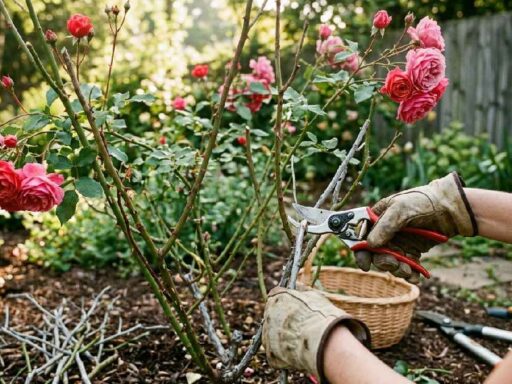
Pruning is basically what keeps lavender compact, healthy, and around for a long time. If you skip it, the plant gets woody, kinda bare inside, then later it can split open.
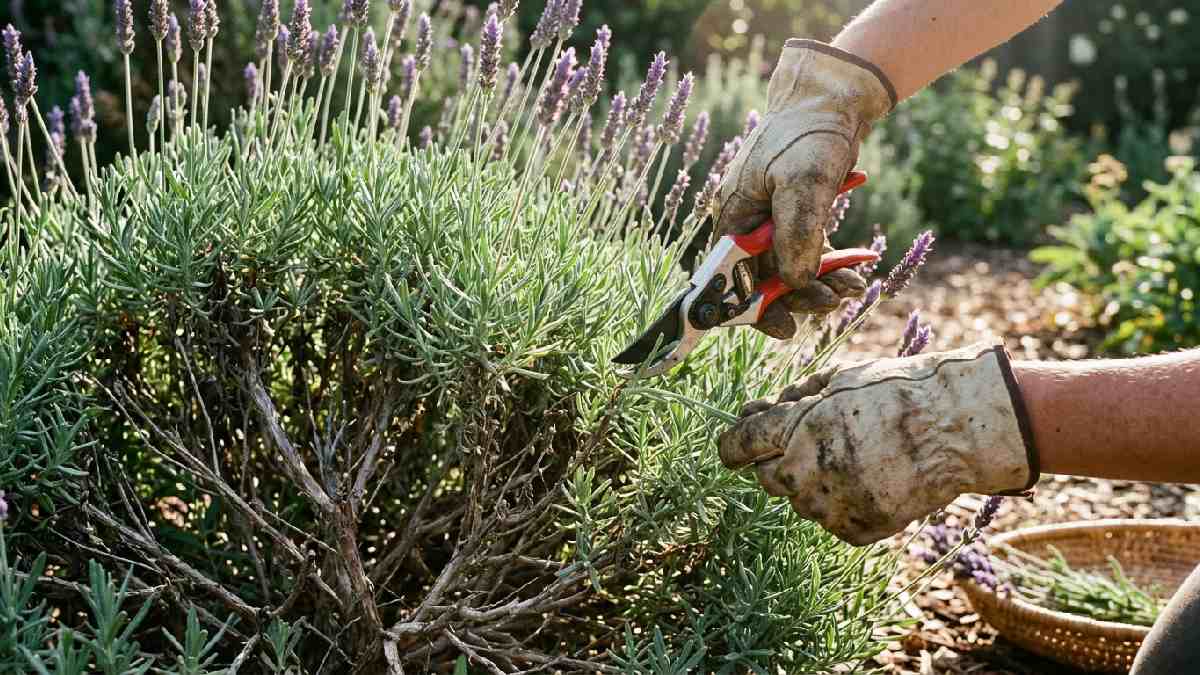
In the first year, don’t go heavy. Just pinch off flower buds in the first few weeks after planting , so the plant focuses on roots. Then let it bloom later in the season, if it feels like it.
Starting from year two, follow this kind of routine:
- After the first big flush of flowers, trim the flower stems back and remove about one third of the green growth
- In late summer, or early autumn, do a light shaping trim, but don’t keep going past that point where frost starts looming
- Never cut into old, bare wood. Lavender usually does not bounce back from leafless stems, so leave some green leaves on each stem you prune
Protecting Lavender in Winter
In colder areas, try not to do heavy pruning in autumn, and leave the foliage in place to protect the crown. A light layer of evergreen branches or a bit of frost cloth works during harsh cold snaps.
Avoid thick, wet mulch, plastic, or tight coverings, because trapped moisture tends to cause more problems than the cold itself.
Planting Lavender in Hot or Humid Climates
Lavender really likes heat, but not when heat comes with high humidity and a lot of heavy rain. In subtropical or monsoon-style regions, that mix can lead to fungal issues and root rot.
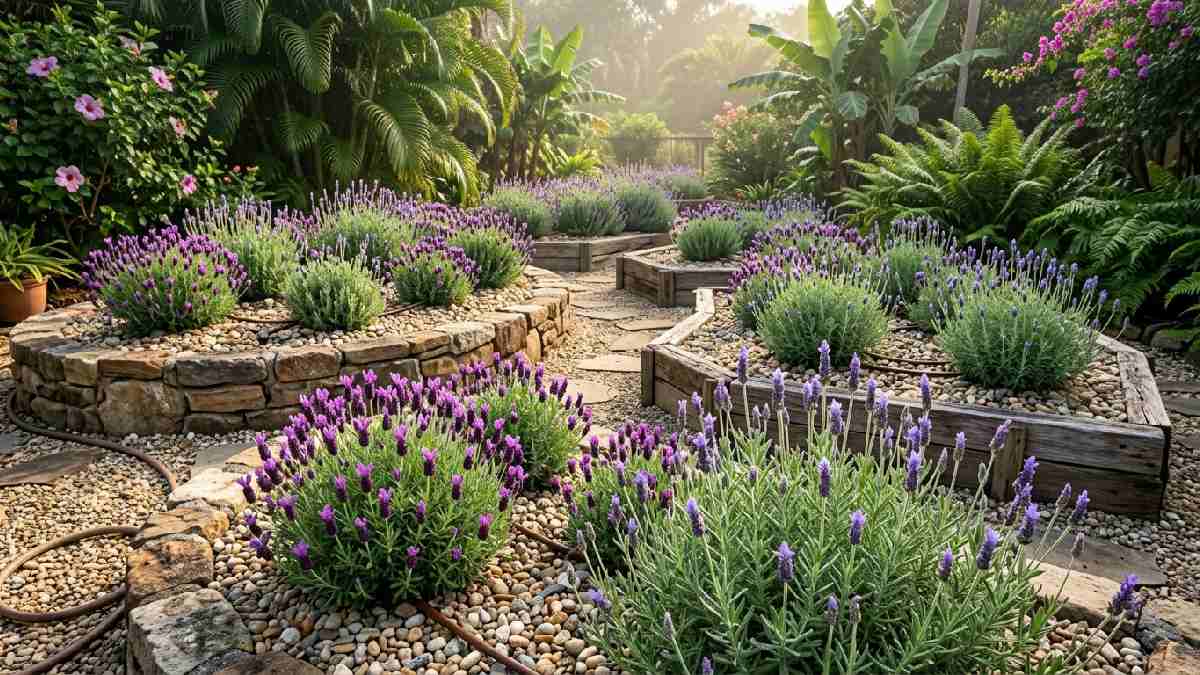
If you garden somewhere hot and humid, a few swaps help a lot:
- Pick heat-tolerant types like Spanish lavender, French lavender, or lavandin
- Use raised beds or containers, so drainage is easier to manage when the rain keeps showing up
- Give it more spacing for airflow, and prune lightly to keep the center of the plant not too closed
- Use gravel mulch to keep the crown drier and reflect heat
- Avoid overhead watering, and water early in the morning so the leaves dry fast
- If the hottest part of summer scorches the leaves, try light afternoon shade, while still getting morning sun
In very wet seasons, move potted plants under a roof or veranda for a few weeks. It is way easier to shield lavender from rain than to rescue a plant after rot has already started
Common Mistakes to Avoid When Planting Lavender
Most lavender failures come from a small set of issues. Skip these, and your odds jump a lot.
Planting in shade. Less than about six hours of sun means weak, floppy plants with disappointing blooms
Using rich, wet soil. Lavender wants lean, gritty, well-drained soil. Too much compost and constant moisture tends to kill it
Burying the crown. Plant it at the same level as in the pot, or slightly higher
Overwatering. If you’re not sure, wait another day
Using bark mulch. It holds moisture right against the stems. Use gravel or sand instead
Planting too close together. Poor airflow equals mildew, rot, and weak growth
Skipping the yearly prune. Lavender that never gets pruned turns woody and doesn’t last as long
Cutting into old wood. Leave some green growth on every stem you cut
Choosing the wrong type for your climate. A tender French lavender in freezing weather, or a delicate English lavender in a swampy summer, will struggle even if you do everything “right”
Frequently Asked Questions About Planting Lavender
How long does it take for lavender to grow?
Plants from nursery pots usually bloom in their first or second year. Lavender grown from seed generally takes two years before it flowers well. Most plants reach full size in about three years.
Does lavender come back every year?
Yes. Lavender is a perennial shrub, so it returns every year when grown in a suitable climate and cared for properly. Most plants stay productive for 5 to 10 years, and some live longer with correct pruning.
Can you plant lavender next to other plants?
Yes, as long as the neighbors like similar conditions. Good companions include rosemary, sage, thyme, oregano, echinacea, and ornamental grasses. Avoid planting lavender next to thirsty plants such as vegetables or lawn grass, because the extra watering will harm it.
Is lavender easy to grow for beginners?
Yes, once you understand what it needs: full sun, sharp drainage and minimal fuss. Gardeners who give it the least attention often get the best results.
Can lavender grow indoors?
It can, but it is difficult. Indoor lavender needs a very bright south-facing window or a strong grow light for many hours a day. Without enough light, it grows thin and weak. French and Spanish types handle indoor life better than English lavender.
Conclusion
Getting lavender planted “right” really comes down to a few steady habits. Choose a variety that fits your climate. Give it as much sun as you can. Make sure the soil drains well, even if you add grit or build a small mound. Plant it at the correct depth, water carefully at first, then step back.
If you remember one thing, make it this: lavender tends to favor neglect over pampering. The more you handle it like a plant from a bright, stony slope, honestly, the calmer it will feel. Do that, and in a season or two you’ll have fragrant, silvery shrubs dressed in purple blossoms, buzzing with bees and ready for snipping, drying, or even just savoring. Pick your spot, sort out your soil, and start planting. Your whole garden will smell much better afterwards.