

Ask any gardener with a few good seasons behind them what changed everything, and a surprising number will say the same thing: they started writing things down. Not because they’re organized people by nature, but because gardens have short memories and long ones at the same time. You’ll swear you remember exactly when you planted the beans, until next spring arrives and you genuinely can’t recall if it was early April or the middle of May.
A gardening notebook fixes that. It’s not complicated, it doesn’t need to be pretty, and you don’t need to be a “journaling person” to keep one. What it does is turn a season of guesswork into a season of actual knowledge, because you’re no longer relying on memory to tell you what worked, what failed, and why.
This guide walks through why a notebook is worth the five minutes a week it takes, exactly what to put in one, how to set it up whether you prefer paper or an app, and the mistakes that make people quit after two weeks. By the end, you’ll have a format you can start using today, even if all you have on hand is the back of an envelope.
Most gardeners who keep one for a few years say the same thing: it’s rarely the big dramatic notes that help most; it’s the small ones, like exactly when the frost passed or how long the peas took to sprout, that quietly save an entire season from repeating last year’s mistakes.
Why Keep a Gardening Notebook at All?
The honest answer is that gardening produces far more information than any of us can hold in our heads. Sowing dates, weather patterns, which variety of tomato actually tasted good, which one got hit by blight, how long the lettuce took before it bolted in the heat. On their own, none of these facts feel important enough to remember. Together, over two or three seasons, they become the difference between a garden that repeats its mistakes and one that gets noticeably better every year.

There’s also a simpler reason. Writing things down slows you down just enough to actually notice them. A gardener who jots “aphids on the broad beans, worse on the ones near the fence” is paying closer attention than one who just sprays and moves on. That habit of noticing is most of what separates an experienced gardener from a beginner, and a notebook builds it almost by accident.
What a notebook actually solves
Most gardening frustration comes down to a handful of repeating questions. When did I plant this last year? Why did the courgettes fail while the neighbour’s did fine? Did I actually feed the roses, or did I just mean to? Was the frost really gone by the time I put the seedlings out, or did I jump the gun?
A notebook answers all of these with your own data instead of guesswork. It also protects you from what a lot of experienced gardeners call “the fog of the growing season.” Mid-July, when everything is growing at once and there are ten jobs a day, small details vanish fast. A quick note written in the moment survives that fog. A memory usually doesn’t.
Who actually benefits from this
It’s tempting to think a notebook is only for serious growers with big vegetable plots, but that’s not really true. Someone with three pots on a balcony benefits just as much, maybe more, because container plants dry out fast and small mistakes show up quickly. Beginners benefit because they’re building a base of knowledge from nothing. Experienced gardeners benefit because they’re refining something that’s already working and want to know exactly why.
What to Actually Write Down
This is where a lot of people either overthink it or underthink it. Some try to record everything, which becomes exhausting by June. Others write nothing beyond a shopping list of seeds, which doesn’t capture anything useful. The right amount sits in the middle, and it’s smaller than most people expect.
The basics that matter most
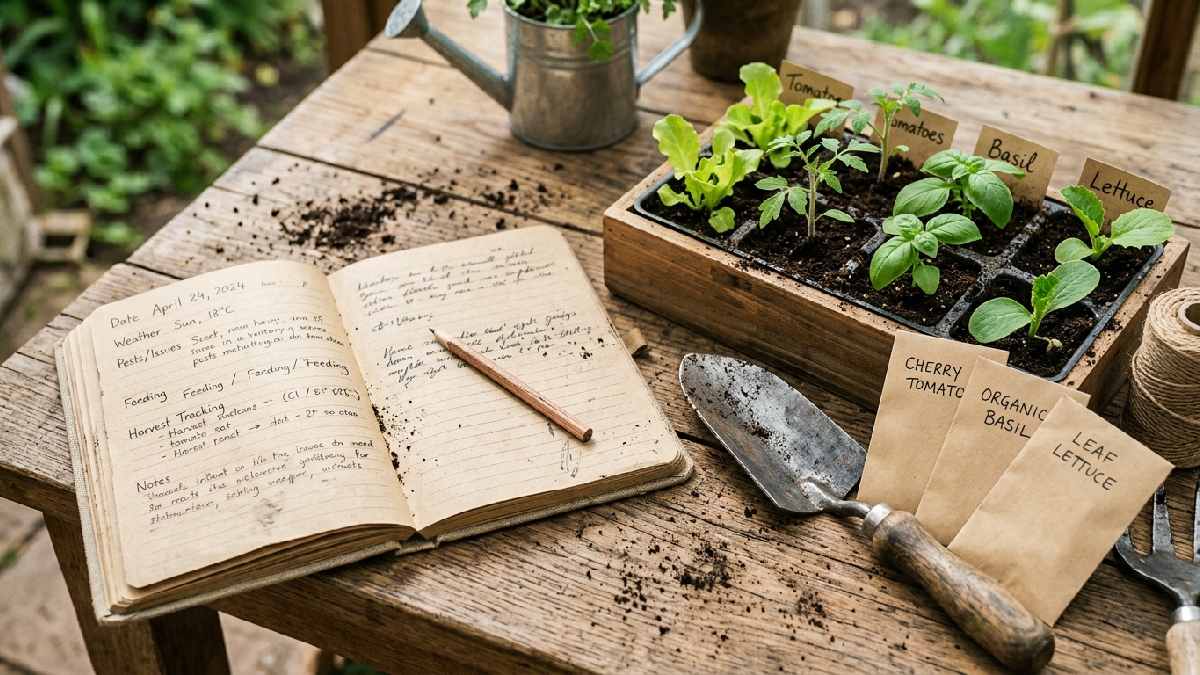
Sowing and planting dates. This is the single most valuable thing you can record, and it’s the one people regret not tracking the most. Write down what you sowed, when, indoors or direct, and when it actually came up. Next year, instead of guessing, you’ll know that your peas always take nine days to germinate in your soil, not the seven the packet claims.
Weather notes. Not a full forecast, just the odd thing that mattered. A late frost, a heatwave, an unusually wet week. These explain a surprising number of “why did this fail” moments months later, when the actual cause has long been forgotten.
What you fed and when. Compost, manure, liquid feed, whatever it was. Fertilizing is easy to lose track of, and both underfeeding and overfeeding cause problems that are hard to diagnose without knowing what was actually applied.
Pest and disease sightings. Even a short line like “aphids on the roses again, worse than last year” builds a pattern over time. You’ll start noticing which plants get hit every year and which ones never do, and that shapes what you choose to grow next.
Harvest dates and yields. Roughly how much you picked and when. This tells you which varieties actually performed, not which ones you simply remember liking.
What you’d do differently. This one line, written honestly at the end of a crop’s life, is often the most useful thing in the whole notebook.
The details worth adding if you have time
Once the basics are a habit, a few extra details add a lot of value without much extra work. Variety names are worth noting exactly, because “the good tomato” isn’t searchable next year, but “Gardener’s Delight” is. Spacing and layout, even a rough sketch of what went where, saves you from planting the same crop family in the same bed two years running, which is one of the easiest ways to build up soil pests and disease. Watering notes, particularly for containers, help you spot patterns like a pot that always dries out faster than the rest.
Photos are worth mentioning separately, because they capture things words don’t. A photo taken every couple of weeks in the same spot shows growth, spacing, and problems in a way that’s genuinely hard to describe accurately from memory.
What you can safely skip
Not everything needs writing down, and treating a notebook like a chore is the fastest way to abandon it. Daily weather unless something unusual happened, every single watering session, and detailed notes on plants that are doing exactly what they should are all fine to leave out. The goal is useful information, not a complete transcript of your garden’s life.
How to Set Up a Paper Gardening Notebook
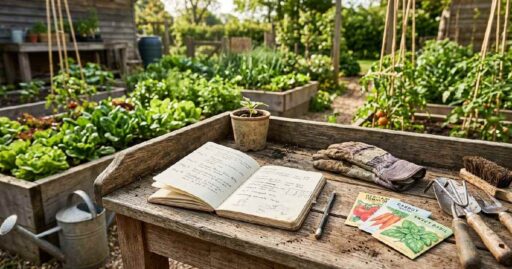
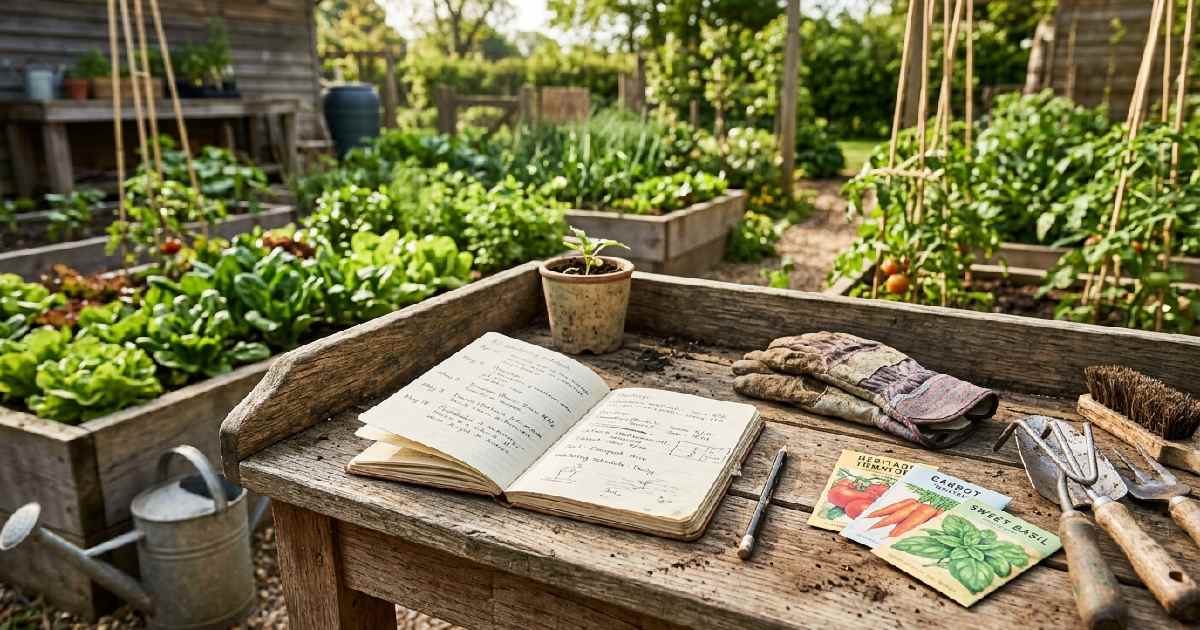
There’s something to be said for paper. It doesn’t need charging, it survives being left outside on the potting bench, and there’s decent evidence that writing by hand helps information stick better than typing does. If you’re the kind of person who actually enjoys the physical act of writing, paper is worth trying first.
Choosing the notebook itself
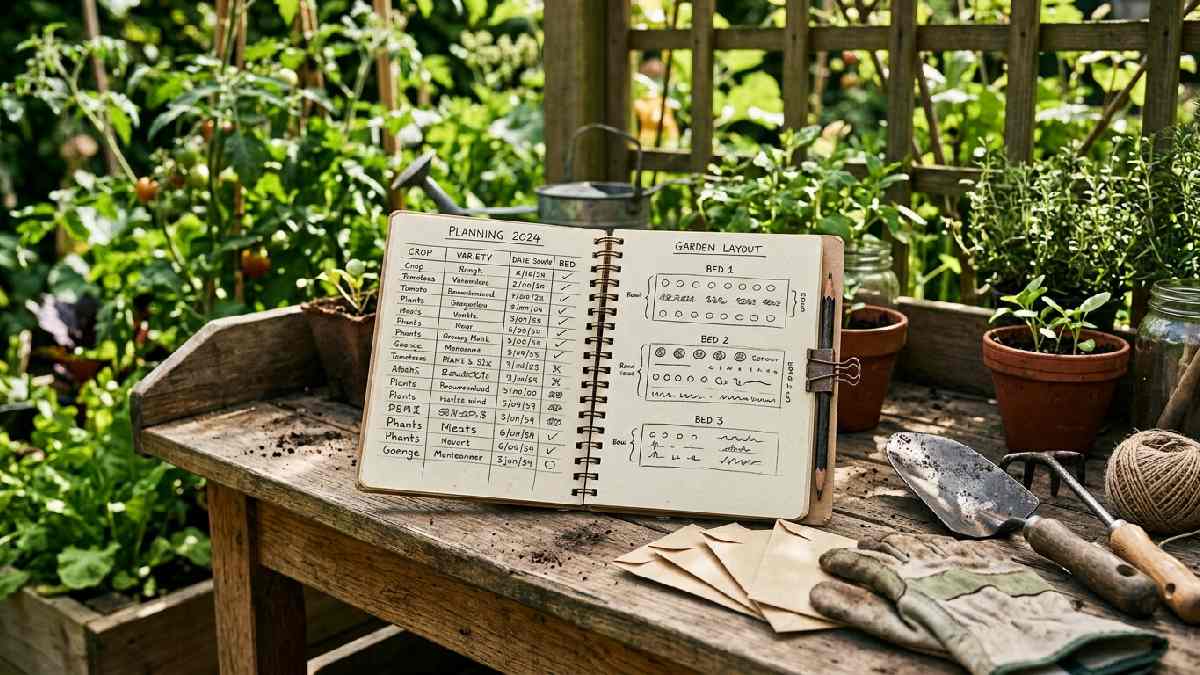
You don’t need anything fancy, though a few features genuinely help. A hardback or spiral-bound cover holds up better outdoors than a soft paperback. Squared or dotted pages make it easier to sketch bed layouts than lined pages do. Size matters more than people expect: something pocket-sized is more likely to actually make it outside with you, while a larger notebook works better if it’s staying on a shelf and you’re transferring notes from a small pad later.
A lot of gardeners use a two-notebook system without really planning to. A small, rough pad lives in a pocket or by the back door for quick notes scribbled in the moment. A tidier notebook indoors gets the same information copied over properly once a week, with a bit more detail added while it’s still fresh.
A simple layout that works
You don’t need a complicated system. A layout that works well for most people looks something like this.
At the front, keep a running planting log as a simple table: date, what was planted, where, and any notes. This becomes your reference for next year’s timing.
Give each main crop or bed its own page or two, with space for sowing date, variety, feeding, problems, and harvest results. This is where the detail lives.
Keep a few pages for pests and diseases as they come up through the season, so you can flip back and see the whole pattern rather than hunting through individual crop pages.
End the season with a short review page: what worked, what didn’t, and what to try differently next year. This single page, written honestly, often ends up being the most valuable part of the whole notebook.
Making it a habit that actually sticks
The single biggest reason paper notebooks get abandoned is that they’re never in the right place at the right moment. Keep it somewhere you’ll actually see it, by the back door, on the potting bench, in your gardening bag, rather than tucked away on a bookshelf. A pencil or pen tied or clipped to it removes the “I’ll write it later” excuse, which is where most good intentions quietly die.
Digital Gardening Notebooks and Apps
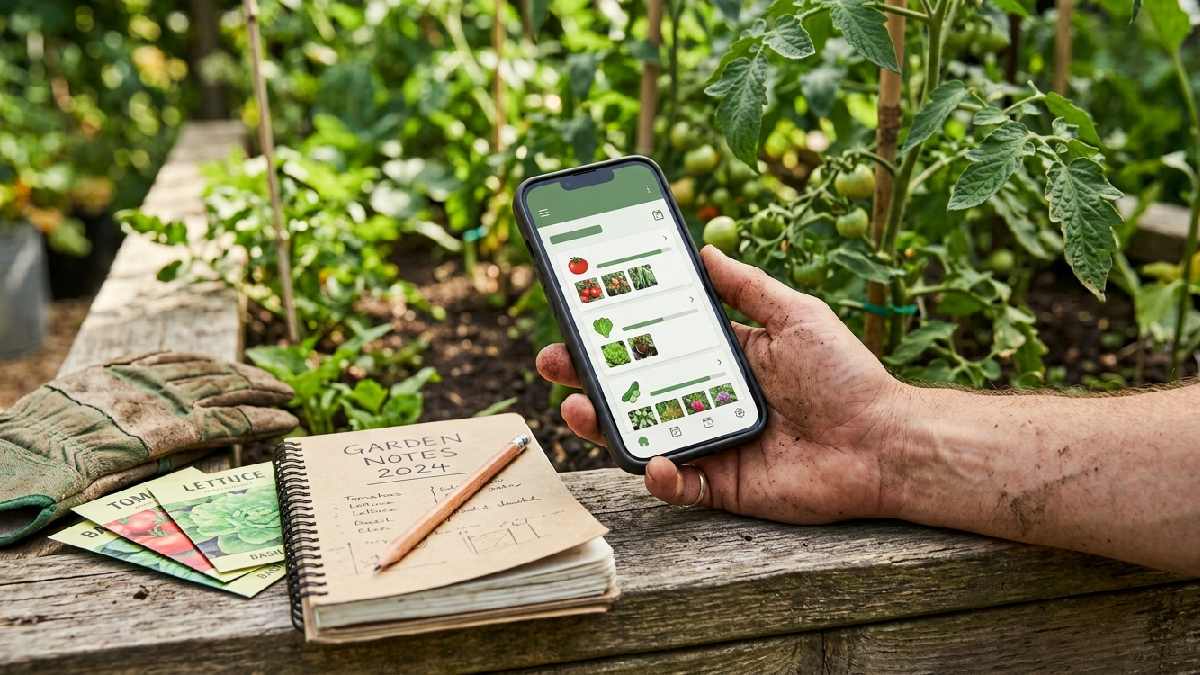
Paper isn’t for everyone, and there’s nothing wrong with going digital instead. A phone is already in your pocket every time you’re outside, which solves the “I forgot my notebook” problem completely. Photos slot in naturally, search works instantly across years of notes, and nothing gets lost if it gets rained on.
Simple digital options
You don’t need dedicated software to get most of the benefit. A notes app with a template you reuse for each planting works fine. A spreadsheet is genuinely excellent for tracking sowing dates, harvest weights, and variety comparisons over multiple years, since it’s easy to sort and compare. Purpose-built garden planning apps add reminders, weather integration, and planning tools, which suit people who want more structure. Even a simple voice memo, recorded on the spot and transcribed later, works well for people who find typing outside impractical, especially with dirty hands.
The trade-offs worth knowing
Digital tools are convenient, but they come with a couple of real downsides. Battery life and signal aren’t guaranteed everywhere in a garden, and typing with soil-covered hands is nobody’s idea of fun. Some gardeners land on a hybrid approach: quick voice notes or photos taken in the moment, transcribed into a proper digital or paper log once a week when hands are clean and there’s a few minutes to sit down with a cup of tea.
Sample Weekly Entry
Seeing an example is usually more useful than any explanation of what to write. Here’s roughly what a real weekly entry might look like.
Week of June 9th. Sowed a second batch of lettuce and radish in bed two, direct. First courgette flowers opening, no fruit yet. Aphids showing up on the broad beans again; sprayed with soap solution in the evening. Watered deeply twice this week, hot and dry. Tomatoes in the greenhouse could use feeding soon; last fed about three weeks ago. Picked the first handful of strawberries, sweeter than last year.
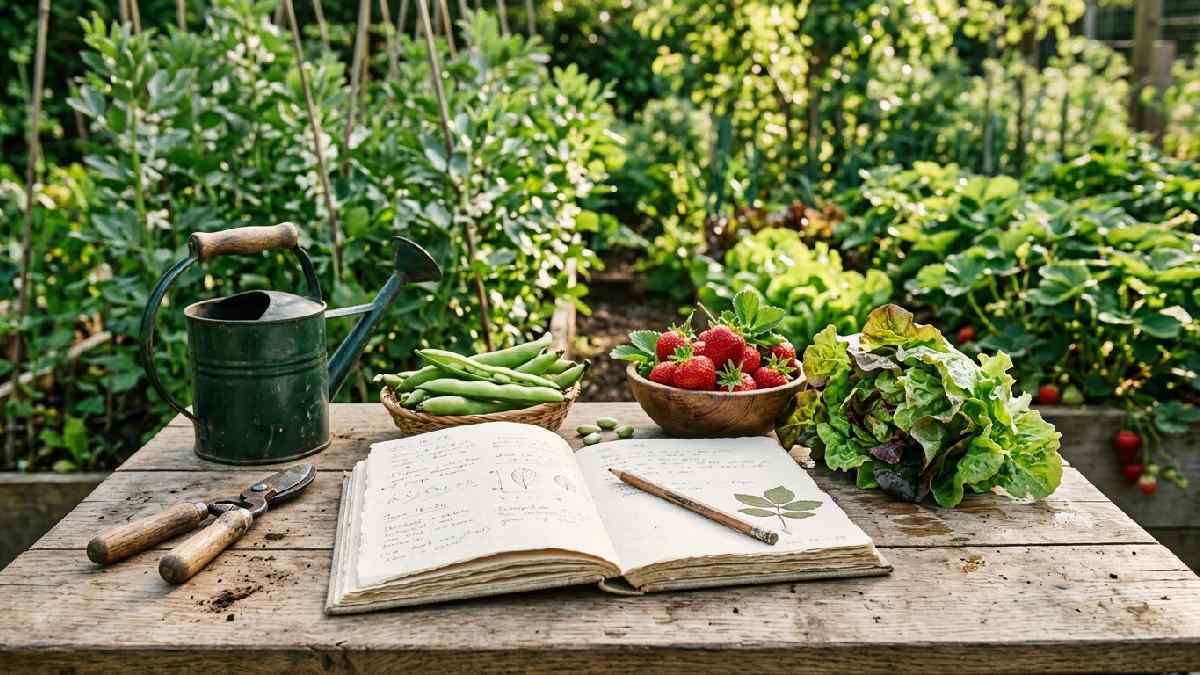
Notice this took maybe two minutes to write and covers planting, pests, watering, feeding, and harvest all at once. That’s the level of detail that’s genuinely sustainable week after week, as opposed to a full essay that sounds great in theory but quietly stops happening by the third week of the season.
Common Mistakes That Make People Quit
Starting a gardening notebook is easy. Sticking with it for a full season is where most people fall off, and it’s almost always for one of the same few reasons.
Trying to record everything. A notebook that takes twenty minutes a day to update will get abandoned within a couple of weeks, no matter how good the intentions were at the start. Short, quick entries beat long, detailed ones that never actually happen.
Keeping it somewhere inconvenient. If it’s not within reach when something happens worth noting, that note simply doesn’t get written. Location matters more than the notebook itself.
Waiting for the “right” system before starting. Plenty of people spend weeks designing the perfect template and never actually write a single entry. A messy notebook that gets used every week beats a beautiful one that sits empty.
Only writing down the good news. It’s tempting to skip logging the failures, but a note like “blight hit the tomatoes again, third year running” is often the single most useful thing in the whole book, because it points straight at what needs to change.
Giving up after a gap. Missing a week or two is completely normal and doesn’t mean the notebook has failed. Just pick it back up where you are. There’s no streak to protect, and a notebook with a few gaps in it is still far more useful than no notebook at all.
Using Last Year’s Notebook to Plan This Year
This is really where all the effort pays off, and it’s the part that turns a notebook from a nice habit into a genuinely useful tool. Before the new season starts, sit down with last year’s notes and actually use them.
Check your sowing dates against how things actually turned out, and adjust timing based on what really happened rather than what the seed packet says. Look back at your pest and disease notes to plan crop rotation properly, moving anything that struggled to a different spot this year. Review your harvest notes to decide which varieties earned a second chance and which ones aren’t worth the space again. And read your own honest end-of-season review, because that single page usually contains two or three changes that will make the biggest difference this year.

This is the step that separates a notebook that just sits there recording things from one that actively makes your garden better. A record on its own is only half the value. Reading it back with intention is the other half, and it’s the half a lot of people skip. Gardeners who do this every winter tend to notice their gardens improving in a way that feels almost automatic, even though nothing about it actually is.
A Simple Way to Start This Week
If all of this feels like more than you want to commit to right now, start smaller than you think you need to. Grab any notebook you already own, even a half-used one from a drawer, or open a blank note on your phone. Write today’s date and one line about what’s happening in the garden right now. Do that again next time you’re out there, whenever that is.
That’s genuinely the whole system to begin with. The format, the layout, the categories, all of that can develop naturally over a few weeks once the habit of writing something down at all is in place. Most gardeners who’ve kept a notebook for years didn’t start with a perfect system. They started with a single scribbled line, and the rest built itself from there.
Frequently Asked Questions
What should I write in a gardening notebook?
At minimum, track sowing and planting dates, feeding, pest or disease sightings, harvest dates and rough yields, and a short note on what you'd do differently next time. These five things give you almost all of the practical value with very little effort.
Is a paper or digital gardening notebook better?
Neither is objectively better, it depends on your habits. Paper works well if you enjoy handwriting and want something that survives outdoor conditions without needing charge. Digital works well if your phone is always with you and you want easy photos and searchable notes. Many gardeners end up using a mix of both.
How often should I update my gardening notebook?
A quick note once or twice a week is enough for most gardens. Trying to update it daily usually leads to burnout and abandonment within a few weeks. Short, consistent entries beat long, occasional ones.
Do I need a special gardening journal, or can I use any notebook?
Any notebook works. A dedicated gardening journal with pre-printed sections can help beginners who aren't sure what to track, but a plain notebook or a notes app works just as well once you know what you want to record.
What's the biggest benefit of keeping a gardening notebook?
Accurate timing. Knowing exactly when you sowed, planted, and harvested in past years is the single most useful piece of information for planning the next season well, and it's the detail memory gets wrong most often.
Conclusion
A gardening notebook doesn’t need to be impressive. It needs to be used. The gardeners who get the most out of one aren’t the ones with the neatest handwriting or the most detailed spreadsheets; they’re the ones who wrote something down, even briefly, most weeks of the season.
Start today if you can. Grab whatever’s nearest, paper or phone, write down what’s happening in your garden right now, and build the habit from there. In a year, that small habit will be the reason you finally know exactly when to sow the peas, which tomato variety is actually worth growing again, and why the courgettes did so much better this time around.