
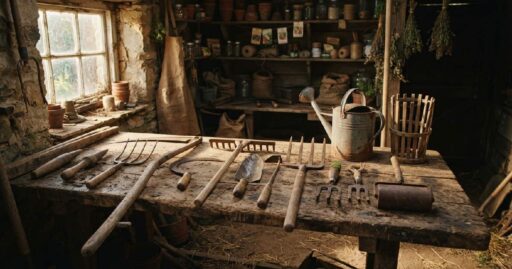
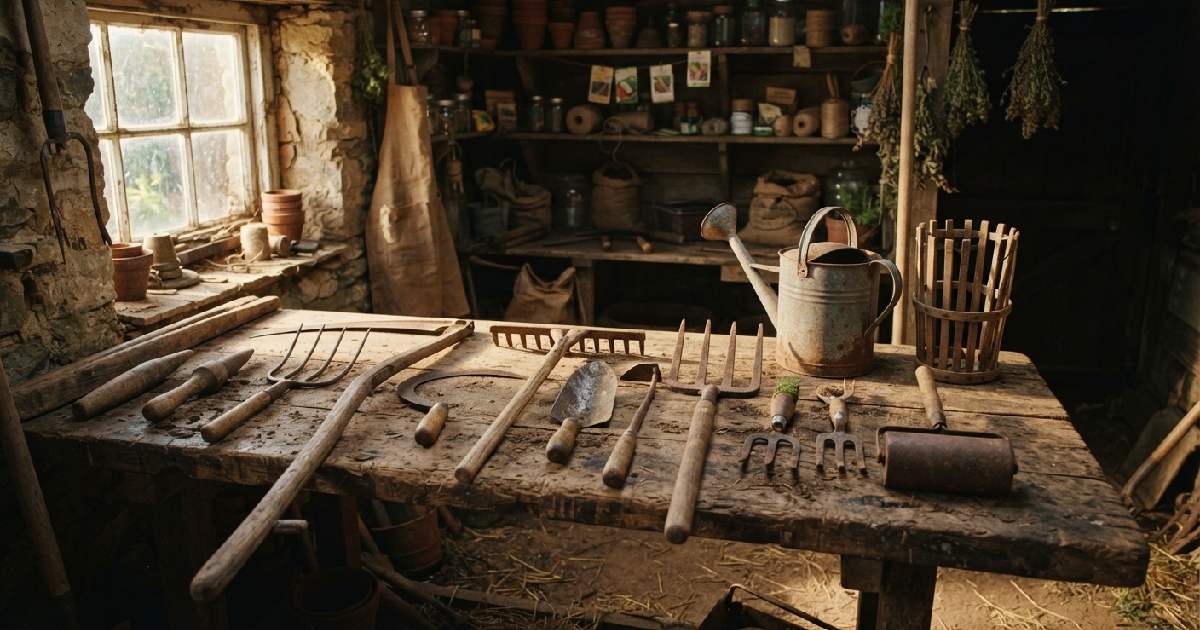

Many of these tools are now forgotten. Some sit quietly in old barns. Some are sold in antique shops. Some are still used by gardeners who love old-style farming. In this article, we will look at 15 old gardening tools. We will learn what they did, how they worked, and why some gardeners still love them today.
If you enjoy history, gardening, or simple old-fashioned things, this article is for you. Let’s dig in.
Long ago, a garden was not just a pretty place. It was where a family got much of its food. Vegetables, fruits, and herbs all came from the soil right outside the door. Because of this, gardening tools were not toys or hobby items. They were important, everyday tools, just like a kitchen knife or a cooking pot.
Every tool on this list had a clear purpose. Nothing was wasted. A farmer did not buy a tool just because it looked nice. Each tool had to earn its place in the shed by doing real, useful work. This is one big difference between old tools and many modern tools, which are sometimes made more for looks than for use.
As you read through this list, imagine a small farm from long ago. Picture a gardener waking up early, walking out to a shed, and picking up one of these tools to start the day’s work. That is the story behind every item on this list.
Why Old Gardening Tools Still Matter
Before we start our list, let’s talk about why these tools are important.
Old gardening tools were made to last. They were often made by hand. A blacksmith would shape iron into a strong tool. A carpenter would carve a wooden handle that fit well in the hand. These tools were built with care, not made fast in a big factory.
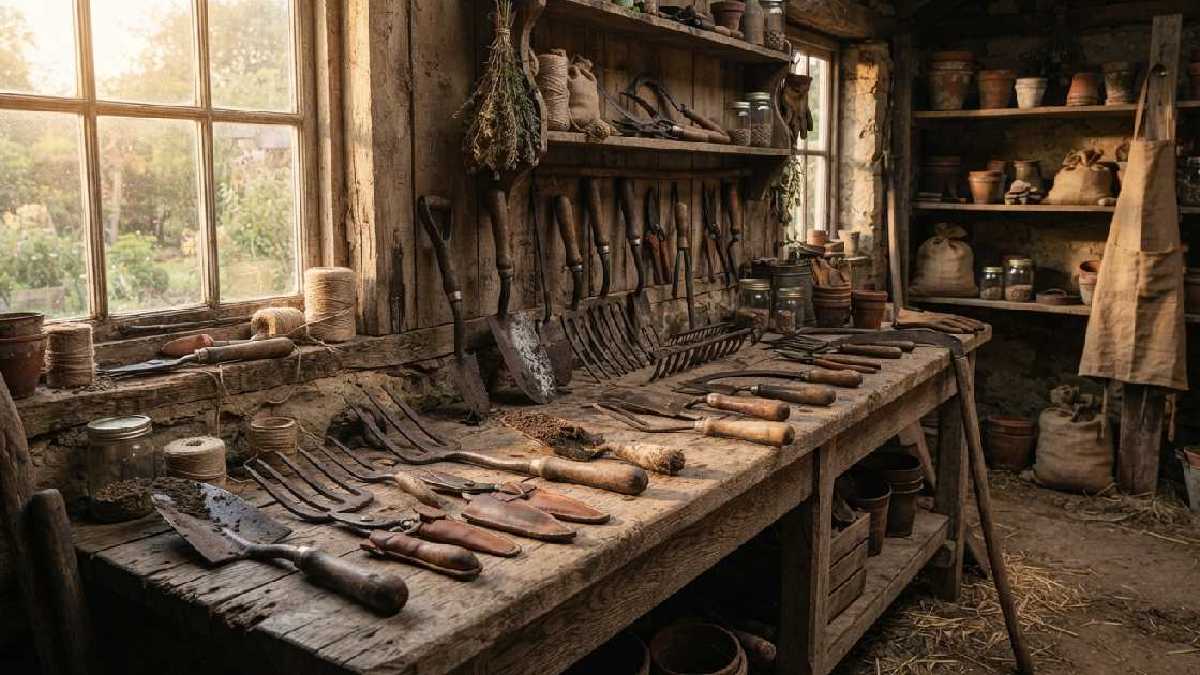
Old tools also teach us about how people gardened long ago. Farmers and gardeners did not have machines. They used their hands, their strength, and simple tools to grow food and flowers. Learning about these tools helps us understand history better.
Many people today also like old tools because they are simple. They do not need electricity or batteries. They do not break easily. A good old tool, taken care of well, can last for many, many years.
Now, let’s look at our list of 15 forgotten gardening tools.
1. The Dibber (Dibble)
A dibber, also called a dibble, is a small pointed tool. It looks like a large wooden stick with a sharp end. Gardeners used it to make small holes in the soil. These holes were perfect for planting seeds or small plants.
The dibber was very popular in old English gardens. A gardener would push the pointed end into the soil, twist it a little, and pull it out. This left a neat hole ready for a seed.
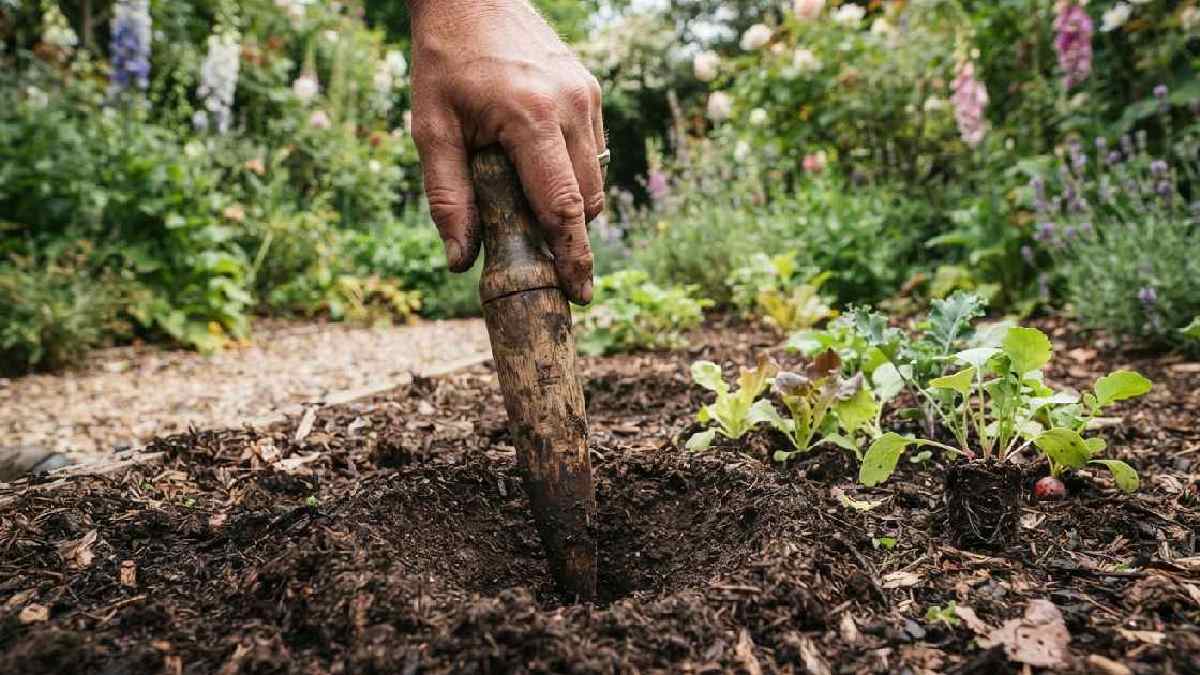
Some dibbers had a metal tip to make them stronger others were made fully from wood. Farmers loved this tool because it was fast and easy to use. Even today, some gardeners still use a modern version of the dibber for planting bulbs and seedlings.
There were even different types of dibbers for different jobs. A small dibber worked well for tiny seeds like cabbage or lettuce. A larger, thicker dibber was better for bigger plants like leeks or young trees. Some old dibbers even had a small handle on top, shaped like a T, so the gardener could push down harder without hurting their hand. This little tool may look simple, but it saved gardeners a lot of time compared to digging every hole with a full-sized shovel.
2. The Hay Fork (Pitchfork)
The hay fork, often called a pitchfork, has long metal prongs and a long wooden handle. Farmers used it to lift and move hay, straw, and leaves.
This tool was heavy work equipment on old farms. Workers used it to load hay onto wagons. They also used it to spread hay for animals to eat. The long handle let workers stand up straight while working, which saved their backs from bending too much.
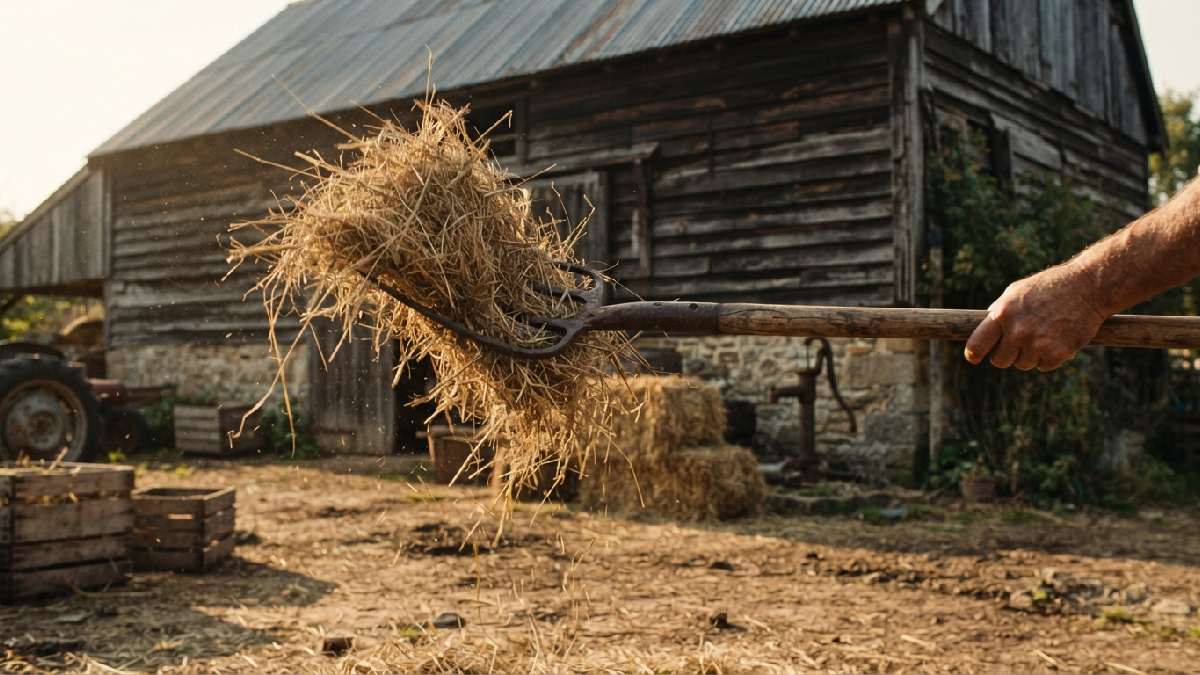
Pitchforks came in different sizes some had two prongs some had three or four. The number of prongs changed how much hay a worker could lift at one time.
Farmers often had more than one pitchfork on their farm. A fork with wide-set prongs was good for light, fluffy hay. A fork with closer prongs worked better for heavier material like manure or wet straw. Blacksmiths made the prongs strong enough to survive years of daily use, and a good pitchfork could stay in a family for generations, passed down from parents to children as farm work continued.
3. The Scythe
The scythe is one of the most famous old farming tools. It has a long curved blade attached to a long wooden handle called a “snath.” Farmers swung the scythe from side to side to cut grass, wheat, and other crops.
Using a scythe took skill and practice. A skilled farmer could cut a large field of grass in a smooth, steady rhythm. It was hard work, but it was much faster than cutting grass with small hand tools.
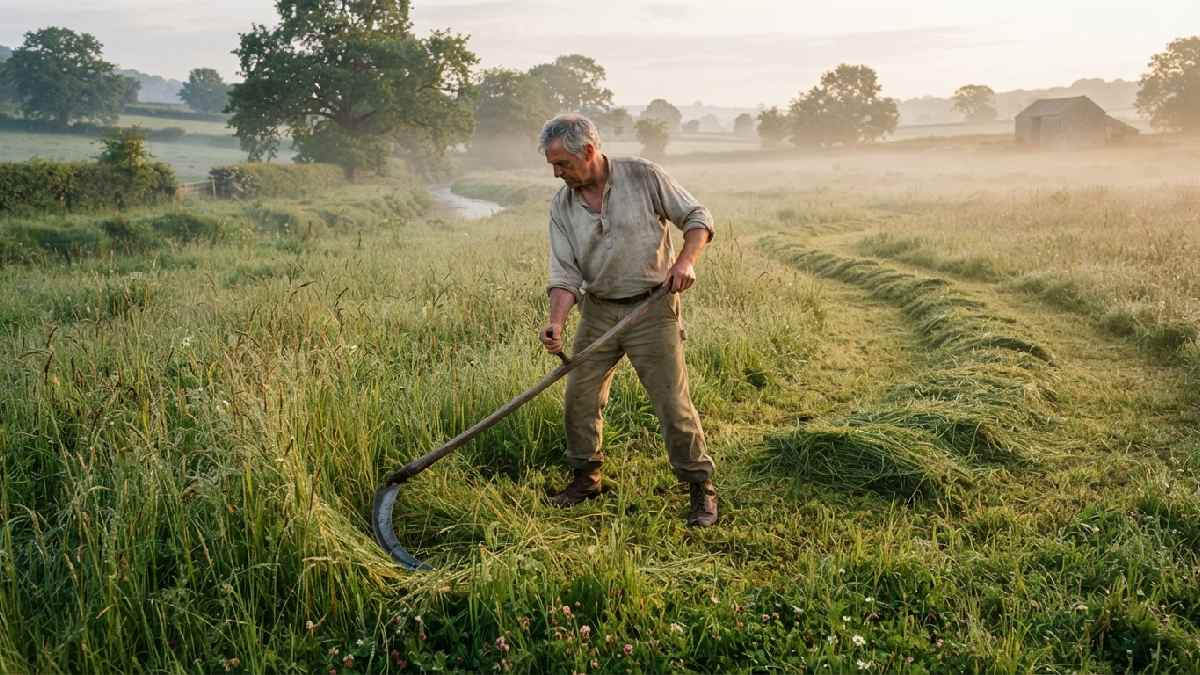
Today, machines have replaced the scythe for most big farms. But some gardeners still use small scythes to cut grass in areas where machines cannot reach.
Learning to use a scythe properly could take weeks or even months. The blade had to stay very sharp, so farmers carried a small sharpening stone in a pouch on their belt. Every so often, they would stop, pull out the stone, and run it along the blade to keep it cutting smoothly. Because a scythe made no noise and needed no fuel, it was also a quiet, peaceful way to work in the early morning, before the rest of the world woke up.
4. The Hand Sickle
The hand sickle is like a small cousin of the scythe. It has a short curved blade and a short handle. Farmers held it in one hand and used it to cut grass, grain, or small plants close to the ground.
The sickle was easy to carry and simple to use. Farmers often used it in tight spaces where a big scythe could not fit. It was also used to harvest wheat and rice in many old farming cultures around the world.
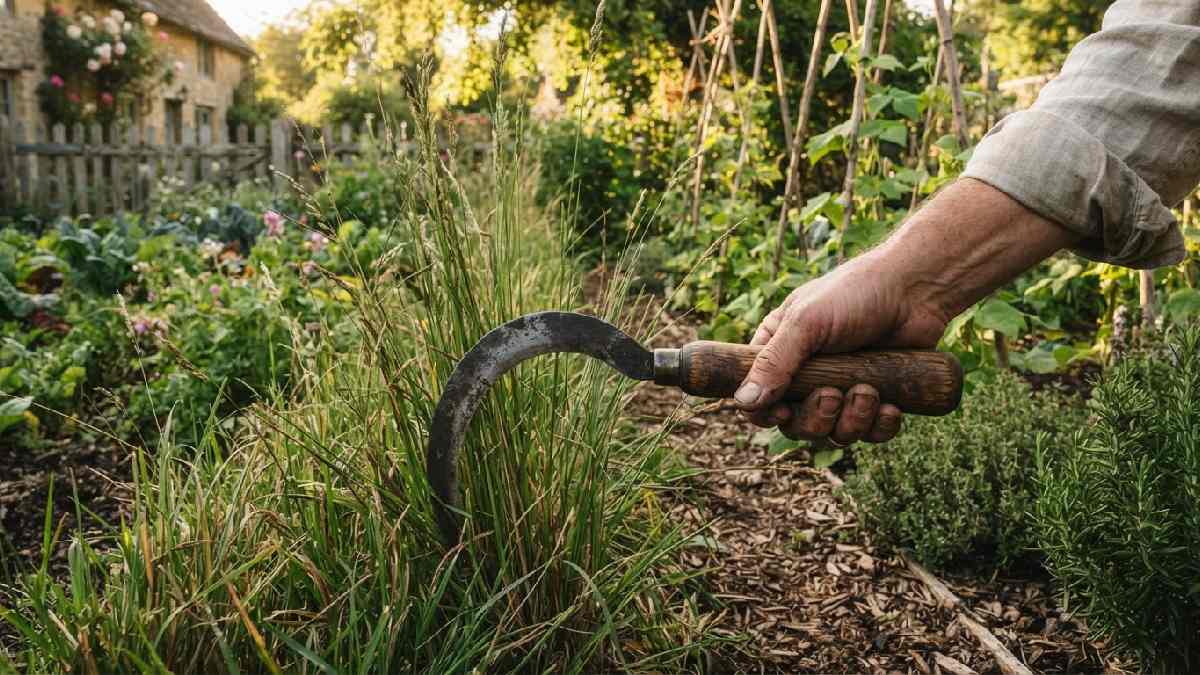
Even now, some gardeners keep a sickle in their tool shed for cutting weeds and tall grass in small garden corners.
In many old cultures, the sickle was more than just a farm tool. It became a symbol of harvest and hard work, appearing in old paintings, songs, and even flags. Farmers often gathered together at harvest time, each holding a sickle, working side by side to bring in the crop before bad weather could ruin it. This teamwork made the sickle not just a tool, but a small part of community life.
5. The Wooden Rake
Long before metal rakes became common, gardeners used wooden rakes. These rakes had wooden teeth attached to a wooden bar, connected to a long handle.
Wooden rakes were used to gather leaves, smooth soil, and clear small stones from garden beds. They were lighter than metal rakes, which made them easier to use for long periods of time.
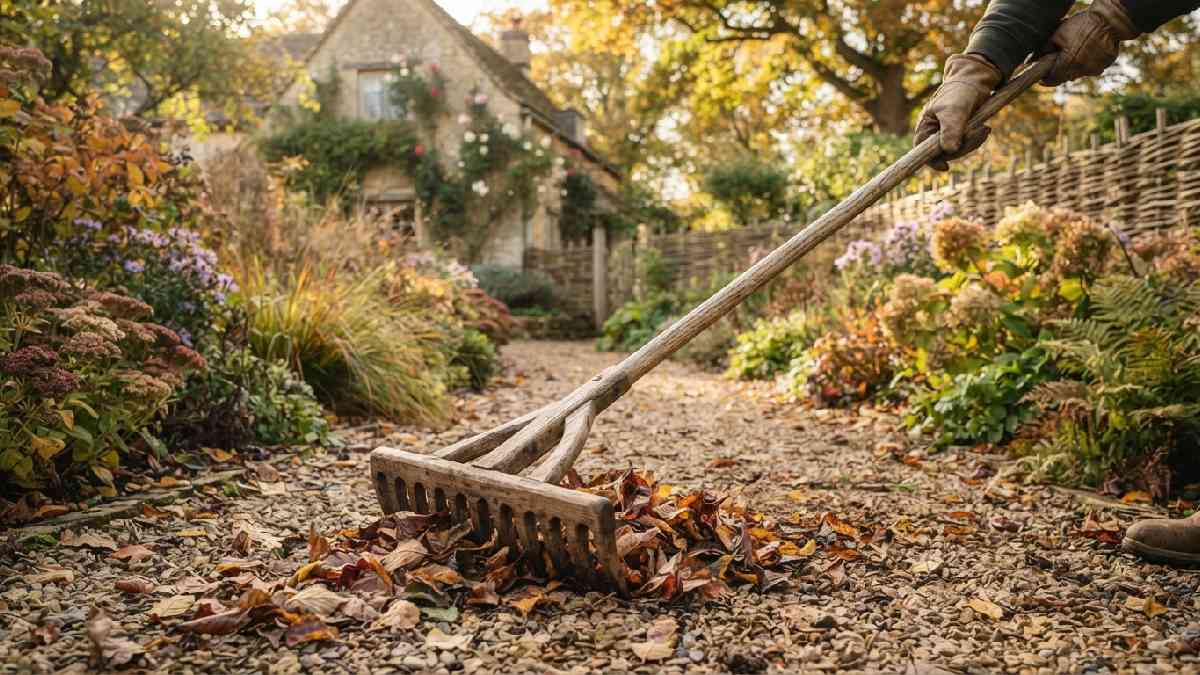
Some old wooden rakes are still found in antique shops today. Collectors like them because of their simple, handmade design.
Making a wooden rake was a real craft. Each tooth had to be carved and fitted into the crossbar by hand, without breaking. If one tooth cracked, the whole rake could become weak. Because wood is lighter than metal, these rakes were especially popular with older gardeners and children, who could use them for hours without getting tired arms.
6. The Garden Trowel (Old Style)
A trowel is a small hand tool with a pointed metal blade and a short handle. Gardeners use it to dig small holes, move soil, and plant flowers.
Old trowels were often made from a single piece of metal, hammered by hand. The handle was sometimes wrapped in leather or wood for a better grip. Unlike today’s plastic trowels, old trowels were heavier and stronger.
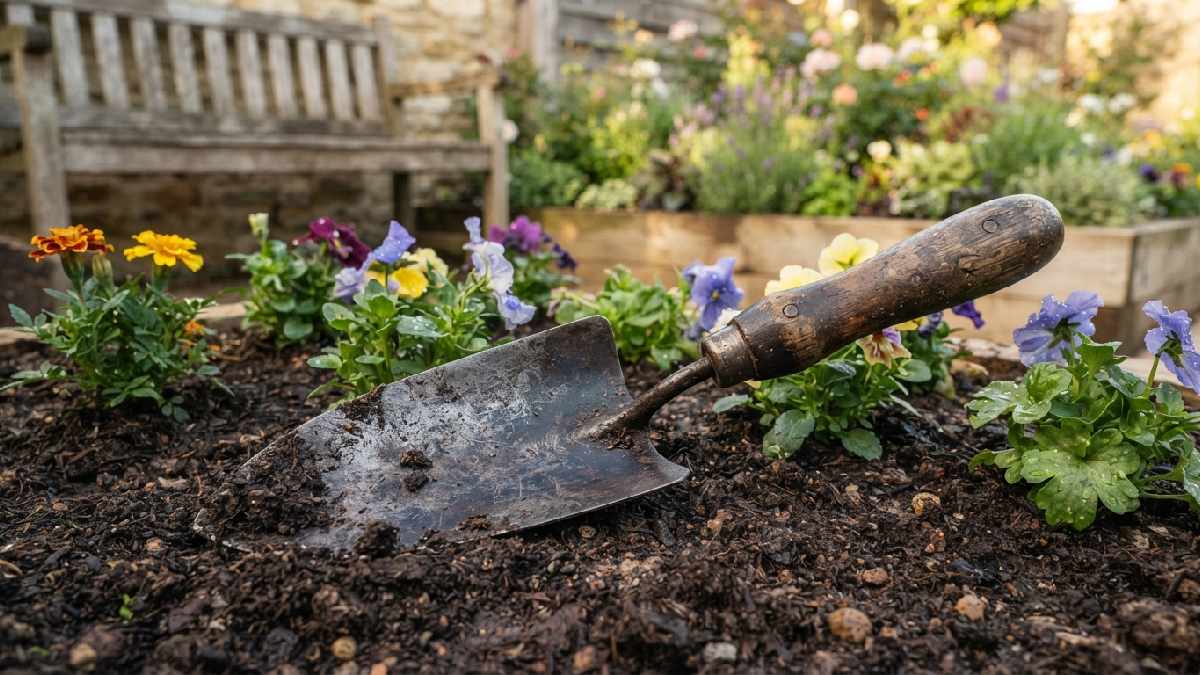
This tool has not changed much over time. Even now, the trowel remains one of the most useful tools in any garden.
What makes the old trowel special is how personal it felt to use. Because many were handmade, no two trowels looked exactly alike. Some gardeners even carved their initials into the wooden handle, so they would always know which trowel belonged to them. This small, humble tool proves that not every great invention needs to change much to stay useful for hundreds of years.
7. The Hoe (Traditional Style)
The hoe is a tool with a flat metal blade attached to a long handle. Gardeners use it to remove weeds, break up soil, and create small trenches for planting seeds.
Old-style hoes were heavier than modern ones. They were made by blacksmiths and had to be sharpened often. Farmers used the hoe almost every day, especially during planting season.
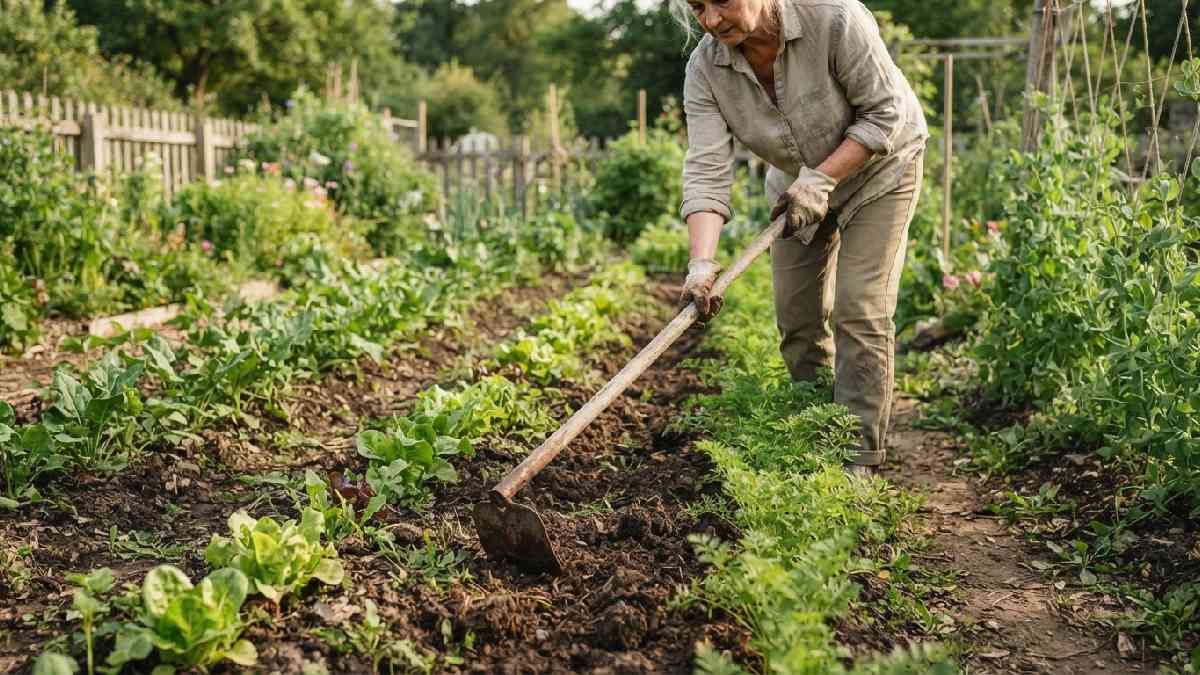
There were many different shapes of old hoes. Some had wide blades for clearing large weedy areas. Others had narrow blades for careful work between small plants.
Some special hoes even had two edges. One side worked well for chopping, while the other side worked well for pulling soil toward the gardener. This double design saved time because the farmer did not need to switch tools while working in the field. A good hoe was so important that many farms kept a spare one hanging in the barn, just in case the main one broke during a busy planting season.
8. The Seed Fiddle
The seed fiddle is a strange and interesting old tool. It looks a little like a violin, but instead of making music, it spreads seeds across a field.
A farmer would hold the seed fiddle and move a bow back and forth, just like playing a violin. This movement spun a small wheel that threw seeds evenly across the soil. It was a clever way to plant large areas quickly, without needing machines.
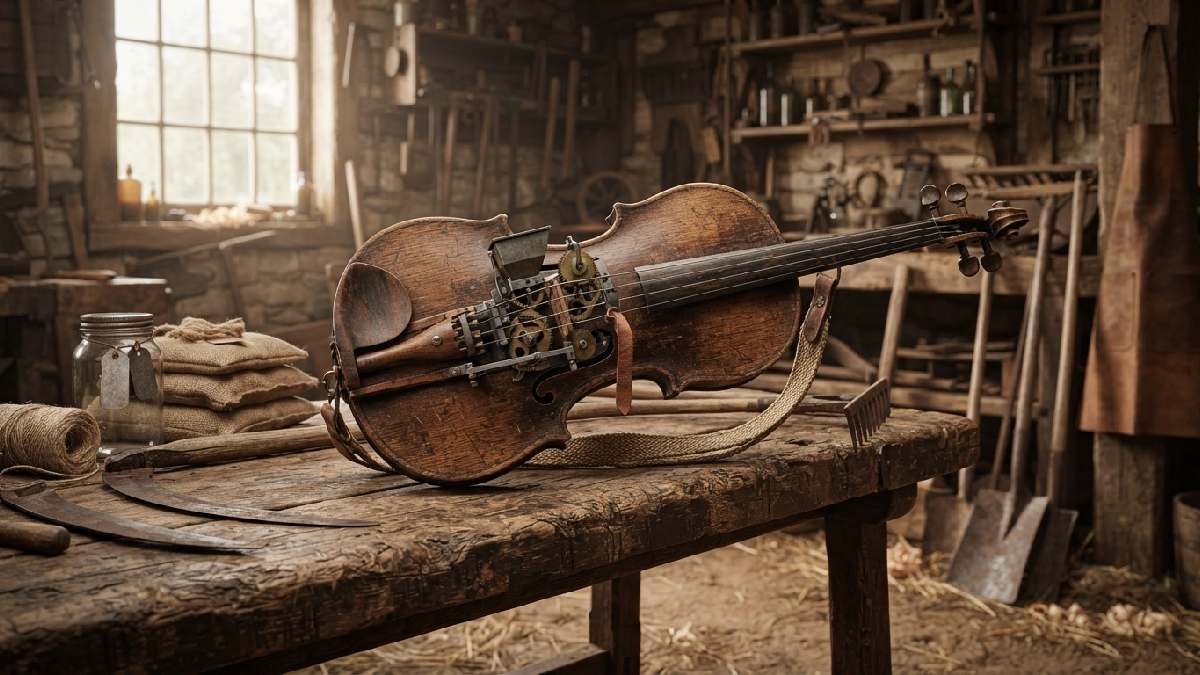
The seed fiddle is rarely used today, but it remains a favorite item for collectors who love unusual farm history.
Before the seed fiddle, farmers had to scatter seeds by hand, walking slowly across the field and tossing seeds with a swinging arm motion. This was tiring and often uneven, with some spots getting too many seeds and others getting too few. The seed fiddle fixed this problem by spreading seeds in a wide, even pattern with much less walking. Farmers who used it well could plant a field faster and with less wasted seed than those still using the old hand-tossing method.
9. The Broadfork
The broadfork is a large tool with two handles and several long metal tines (spikes). Gardeners stood on the tines to push them deep into the soil. Then they pulled back on the handles to loosen the ground.
This tool helped break up hard soil without turning it over completely, which kept the soil healthy. It was especially useful for gardeners who wanted to prepare deep soil for planting vegetables.
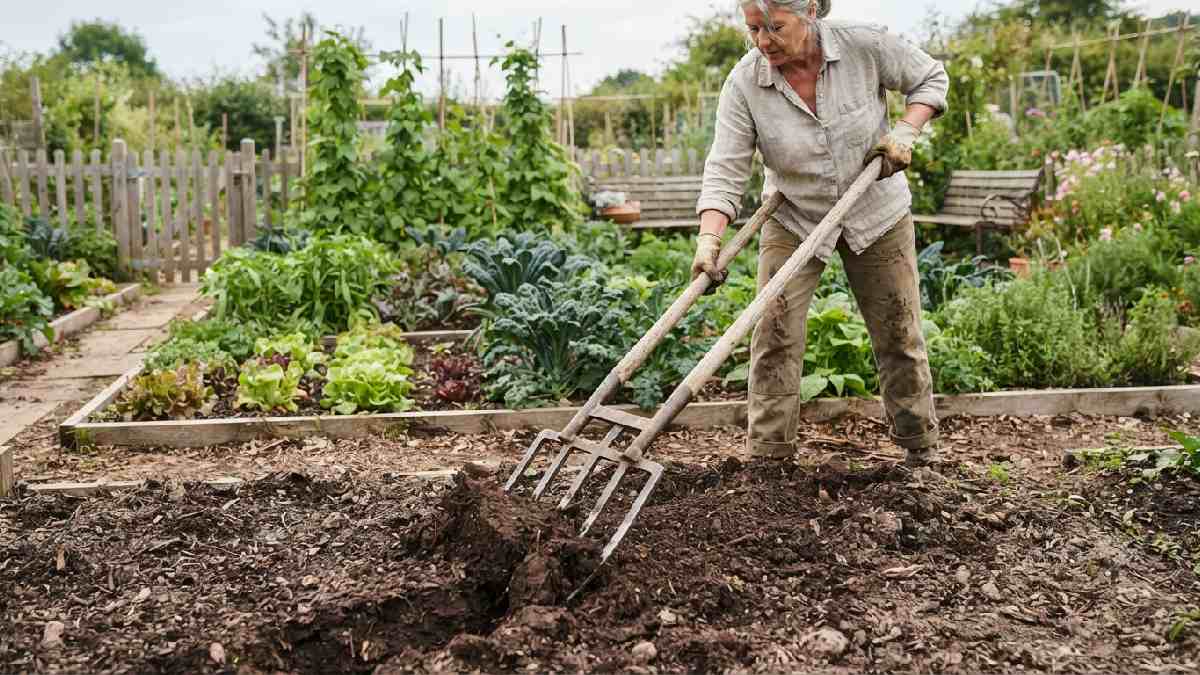
The broadfork is still used today by many organic gardeners because it is gentle on the soil compared to machines.
Unlike a rototiller or other loud machines, the broadfork does not chop up the soil or harm the small living things that live in it, like earthworms and helpful bacteria. This is why many people who care about healthy, natural soil still choose the broadfork over noisy powered tools. It takes more physical effort, but many gardeners say the quiet, steady rhythm of using a broadfork feels calm and rewarding.
10. The Onion Hoe
The onion hoe is a small hand tool with a short handle and a small flat blade. It was designed for careful, close-up weeding around delicate plants like onions, carrots, and lettuce.
Because the blade was small, gardeners could work close to young plants without damaging their roots. This tool required patience, as it was often used while kneeling or crouching in the garden.
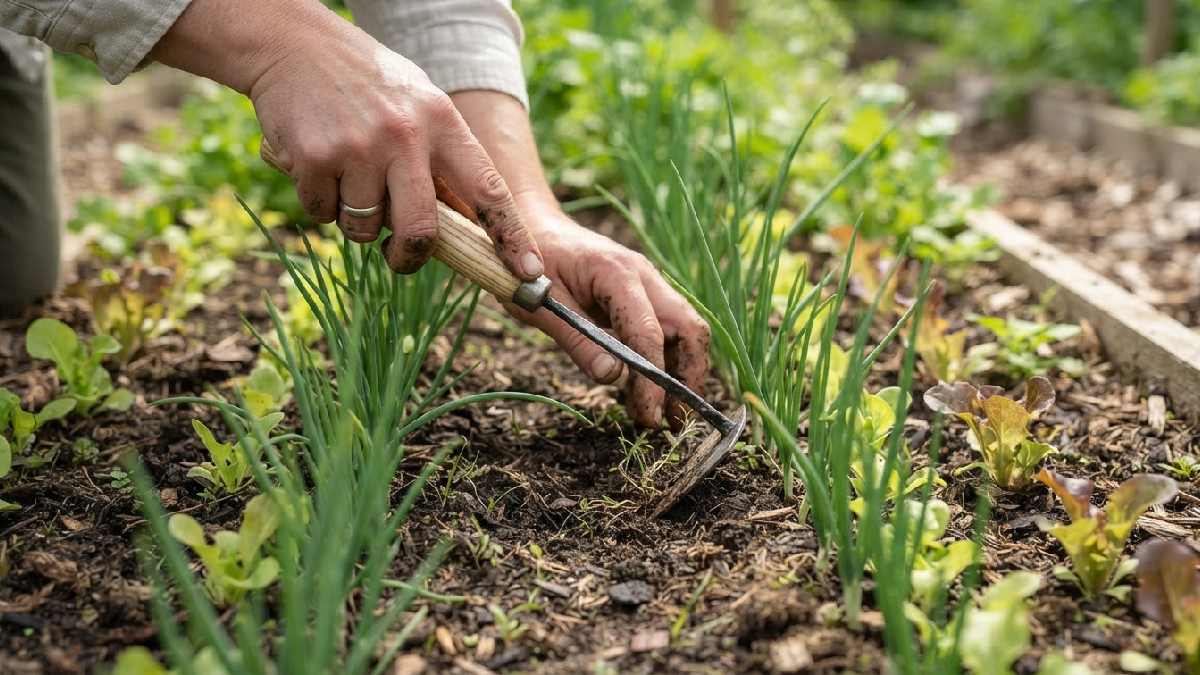
Even today, some gardeners search for old onion hoes because modern tools are often too big for delicate weeding work.
This tool was especially important on vegetable farms, where rows of small plants grew close together. A single careless swing with a big hoe could destroy an entire row of young onions or carrots. The onion hoe let workers move slowly and carefully, removing only the unwanted weeds while leaving the food crops safe and untouched.
11. The Watering Pot (Old Metal Can)
Before plastic watering cans became common, gardeners used heavy metal watering pots. These were often made from tin, copper, or galvanized steel.
Old watering pots had a long spout and a rose (the sprinkler head) at the end. This rose spread water gently over plants, so the soil would not be damaged by strong streams of water.
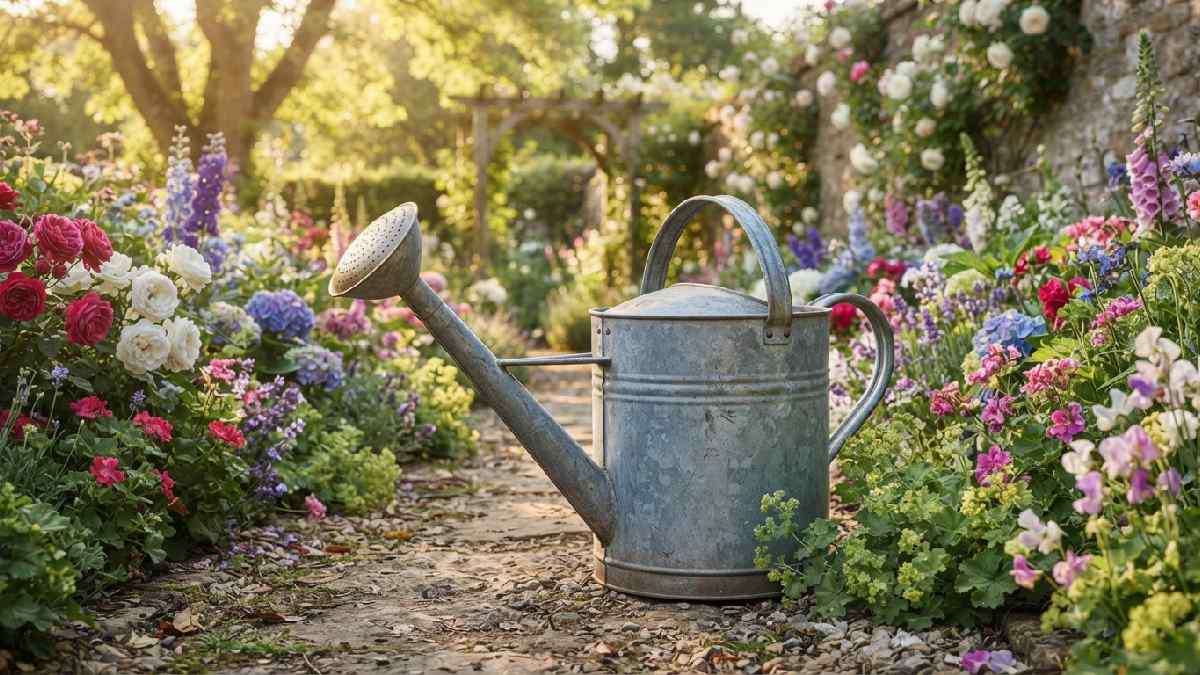
These old watering pots were often beautifully designed. Many are now collected as decorative items, even if they are no longer used for daily watering.
Because metal watering pots were heavy, especially when full of water, gardeners had to plan their watering carefully. Many gardens were built with a well or water source close to the growing beds, so workers did not have to carry a full pot too far. Over time, some potters and metal workers even competed to make the most beautiful watering pot, adding patterns and designs that turned a simple tool into a small work of art.
12. The Turf Cutter
A turf cutter, sometimes called a turfing iron, is a tool with a curved or flat blade used to cut and lift pieces of grass turf from the ground. Farmers used this tool to remove sections of grass for building paths, walls, or roofs made of turf.
This tool required strength and skill. The blade had to cut cleanly under the grass roots without damaging the turf piece too much. In some old farming communities, turf was even used as building material for houses.
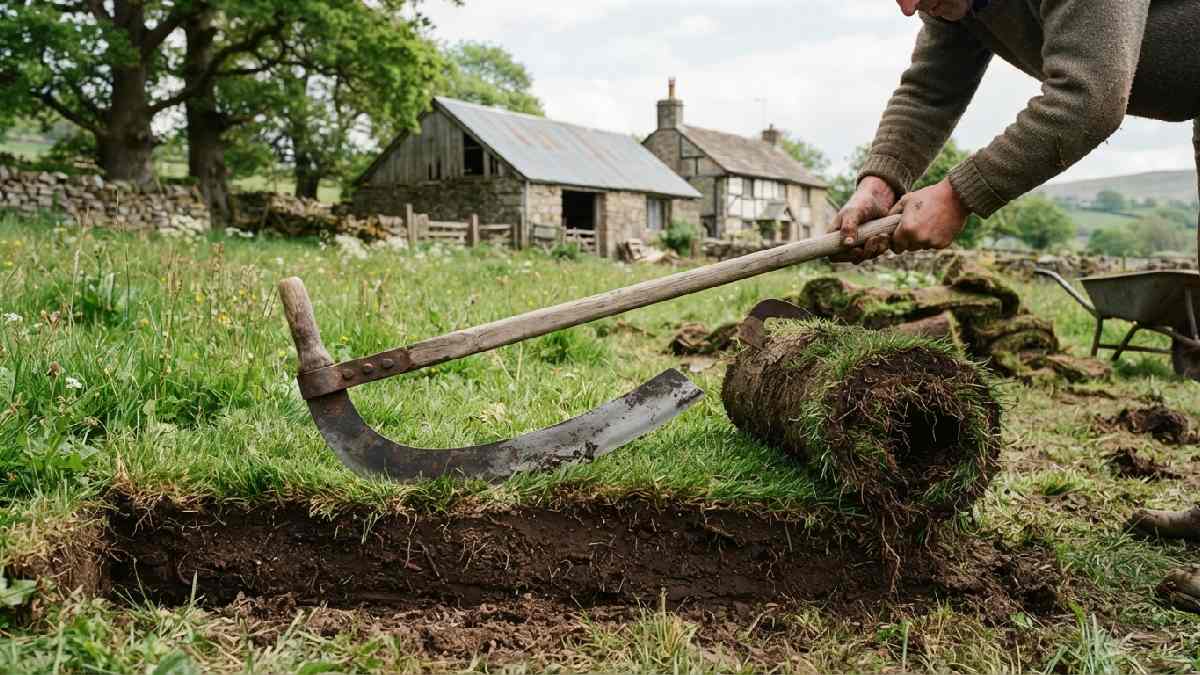
Today, turf cutters are mostly seen in agricultural museums, though a few traditional builders still use similar tools.
In places with cold weather and little wood for building, turf was sometimes the only material families could use to build a warm home. Because of this, the turf cutter was not just a garden tool. It was a survival tool. A family that could cut turf well could build strong walls and roofs that kept out wind, rain, and snow.
13. The Weeding Fork
The weeding fork looks like a small hand tool with two or three curved metal prongs. Gardeners used it to dig out weeds along with their roots, without disturbing the nearby soil too much.
Unlike hoes, which cut weeds from the top, the weeding fork removed the entire root system. This helped stop weeds from growing back quickly.
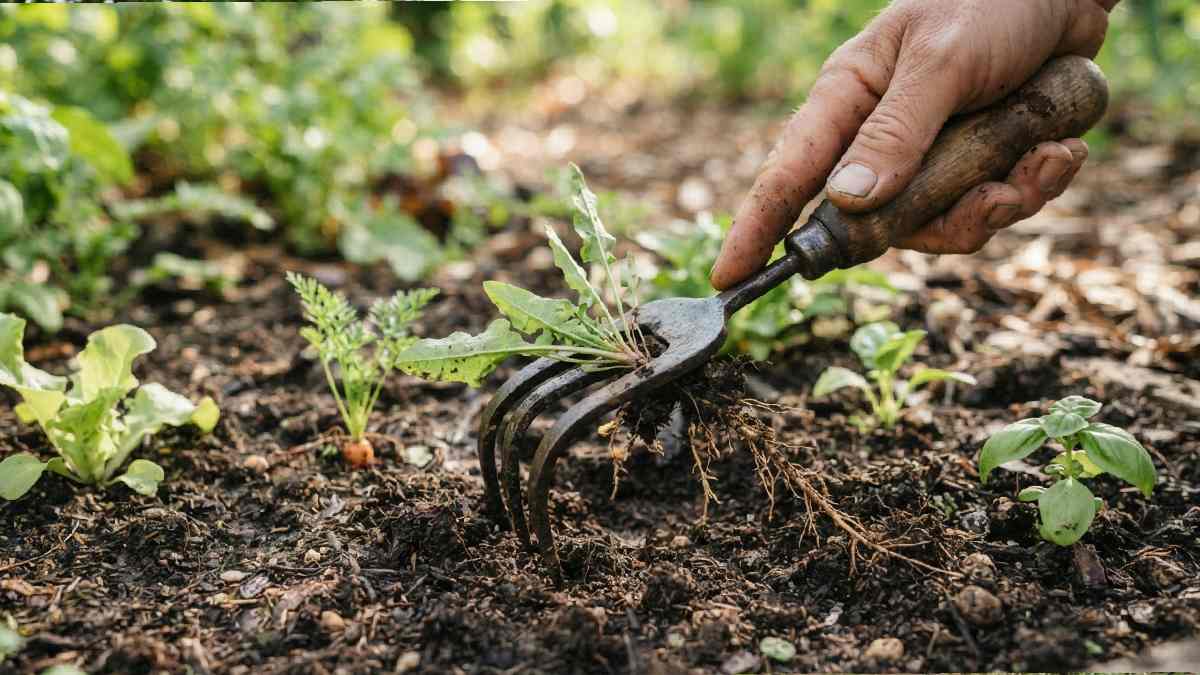
This tool remains popular even today, though modern versions are made from lighter materials like stainless steel.
Gardeners often used the weeding fork while sitting on a small stool or kneeling on a soft mat. Because weeding was slow, careful work, many people saw it as a peaceful task, done in the cool morning hours before the sun grew too hot. Some gardeners even say that pulling weeds with a small fork, rather than spraying chemicals, is one of the best ways to truly understand what is happening in the soil.
14. The Garden Roller
The garden roller is a heavy cylinder, often made of stone, iron, or filled with water, attached to a handle or frame. Gardeners pushed or pulled it across lawns and garden paths to flatten the soil and press down grass seeds.
Old garden rollers were very heavy and took real effort to use. They helped create smooth, even lawns, which were especially popular among wealthy garden owners in the past.
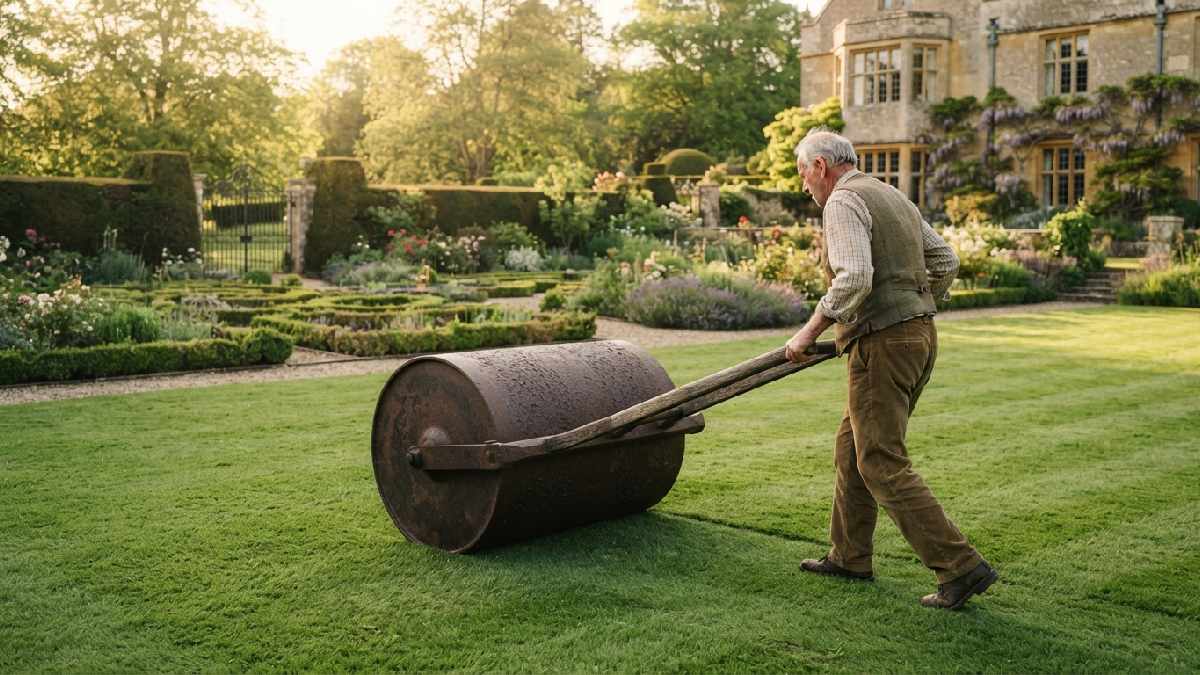
Some old stone rollers can still be found today, often used as decorative garden pieces rather than working tools.
Rolling a lawn was often a two-person job because the roller was so heavy. One person would push from behind while another might guide it from the front with a rope. Large estates with big, fancy lawns needed rollers even more than small gardens, since flat, even grass was seen as a sign of wealth and careful care in many old societies.
15. The Apple Picker (Old Wooden Type)
The old wooden apple picker was a simple but clever tool. It had a long wooden pole with a small basket or claw-like end. Gardeners used it to reach high branches and pick apples without climbing a ladder.
The basket often had small wooden fingers around the edge. When a gardener twisted the picker around an apple, it would gently pull the fruit free and catch it in the basket below.
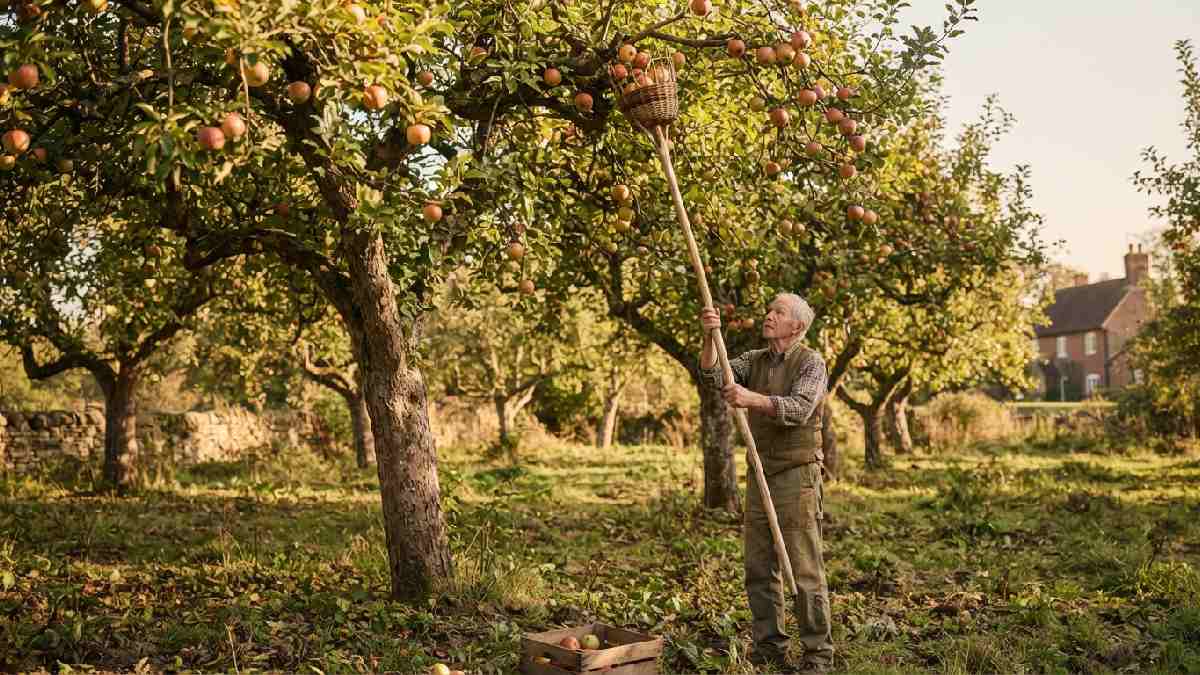
This old design inspired the fruit pickers we still use today, though modern versions are made from lighter materials like plastic and metal wire.
Before the apple picker was invented, gardeners often had to climb trees or use tall, shaky ladders to reach fruit high in the branches. This was slow and sometimes dangerous, especially for older workers. The wooden apple picker made harvest time much safer, letting people stay firmly on the ground while still reaching fruit far above their heads.
What We Can Learn From Old Gardening Tools
Looking back at these 15 forgotten tools teaches us a few important lessons.
First, old tools remind us that good design does not need to be complicated. A simple wooden dibber or a metal trowel can do a job just as well as a fancy modern tool, sometimes even better.
Second, these tools show us the hard work that came before modern farming machines. Every seed planted, every weed pulled, and every apple picked took real human effort.
Third, many old tools are still useful today. Broadforks, weeding forks, and trowels are proof that some designs never truly go out of style.
Should You Try Using Old Gardening Tools?
If you enjoy gardening, trying an old-style tool can be a fun experience. Many gardeners today are going back to simple hand tools because they connect people more closely with the earth. Using a scythe or a broadfork slows you down and makes you notice your garden more carefully.
You can often find old gardening tools at:
- Flea markets and antique shops
- Estate sales
- Online marketplaces
- Family barns or storage sheds
Before using an old tool, check it carefully. Make sure the handle is not cracked and the metal parts are not too rusty. A little cleaning and sharpening can bring many old tools back to life.
How to Take Care of Old Gardening Tools
If you find or own an old gardening tool, a little care can help it last even longer. Here are some simple tips.
Clean it after every use. Wipe off dirt and mud with a dry cloth. Dirt left on metal parts can cause rust over time.
Dry metal parts well. Water left on a metal blade can lead to rust. After cleaning, dry the tool fully before putting it away.
Oil the metal. A light coat of oil on metal blades helps stop rust from forming. Many gardeners use a simple household oil for this job.
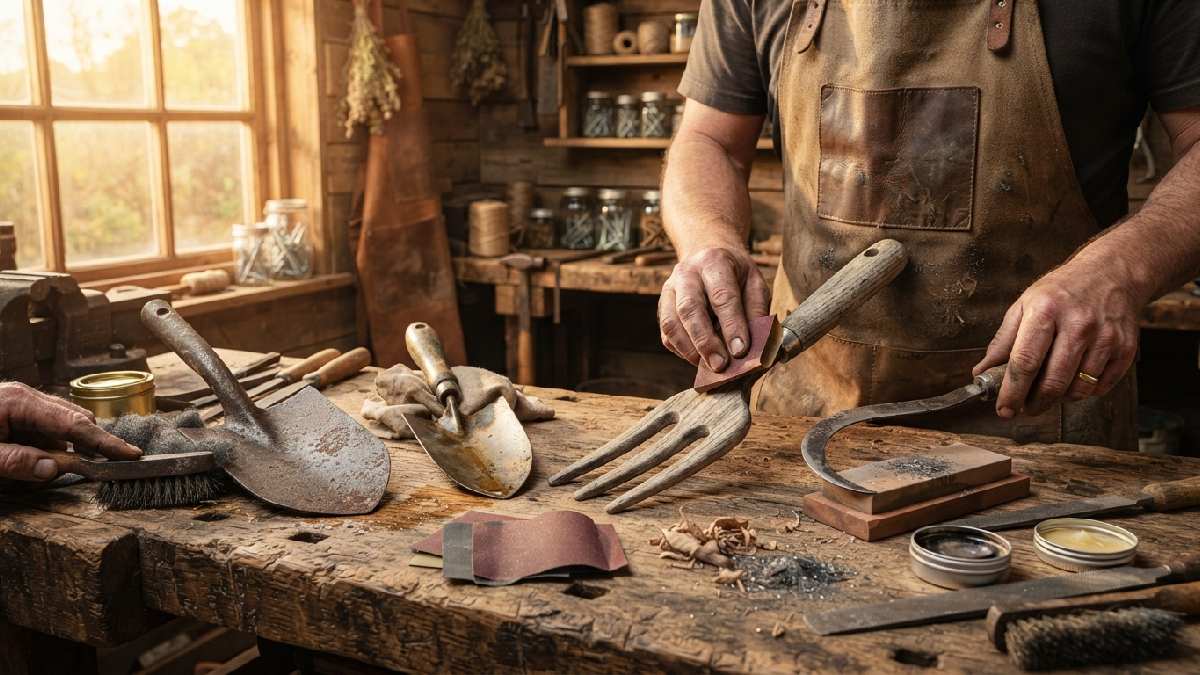
Check wooden handles. Look for cracks or splinters. A small crack can grow bigger over time, so fix it early with sandpaper or wood glue.
Store tools in a dry place. A damp shed can ruin both wood and metal. Keep tools somewhere dry, like a covered shelf or a dry shed.
Sharpen blades when needed. Tools like hoes, sickles, and scythes work much better when their edges are kept sharp. A simple sharpening stone can do this job well.
With just a little regular care, many old tools can stay strong and useful for many more years, sometimes even passing down to the next generation of gardeners.
FAQ
Are old gardening tools still safe to use?
Yes, in most cases. As long as the wood is not cracked and the metal is not badly rusted or weak, many old tools are perfectly safe to use today. Always check a tool closely before using it.
Where can I find real old gardening tools?
Flea markets, antique shops, estate sales, and online sites are good places to look. Sometimes old family barns or storage sheds also hold hidden treasures.
Why do some gardeners prefer old tools over new ones?
Many old tools were made from strong, thick metal and solid wood, which can make them tougher than some cheap modern tools. They also connect gardeners to history and slower, more careful ways of working.
Can I use old tools for a modern vegetable garden?
Can I use old tools for a modern vegetable garden?
Yes tools like the trowel, weeding fork, hoe, and broadfork all work perfectly well in a modern backyard vegetable garden.
Conclusion
Old gardening tools tell a story. They show us how people worked the land long before machines took over. From the simple dibber to the strange and wonderful seed fiddle, each tool had its own special job in the garden.
Most people have forgotten many of these tools. But gardeners who love history, tradition, and simple hard work still keep them alive. Whether you collect them, display them, or actually use them in your garden, old gardening tools remind us of a slower, simpler way of growing food and flowers.
Next time you visit an antique shop or clean out an old barn, take a closer look at any old rusty tool you find. It might be one of these 15 forgotten treasures, waiting to tell its story once again.