

Indoor Gardening Supplies: Complete Guide for Beginners
Starting indoor gardening feels exciting at first. You bring plants home thinking they will just adjust on their own. That rarely happens the way people expect. The space inside your home is different from outdoors, light behaves differently, air feels still, and plants react to all of it in quiet ways. Choosing the right indoor gardening supplies becomes the base of everything, even if beginners don’t realize it early on.
Most people begin with pots and soil, but not all pots are useful for indoor plants. Containers with proper drainage keep roots from sitting in excess water, which can slowly damage the plant without showing immediate signs. The soil also plays its role quietly; a light potting mix keeps things balanced while heavy soil makes it harder for roots to breathe. These small decisions don’t look important at first, but later they determine how healthy your plants actually grow.
Light watering tools and basic fertilizers complete the setup simply. Some homes don’t get enough sunlight, and plants struggle to adapt in those corners, so a basic grow light can help maintain consistency. Watering needs control more than frequency; using the right tools makes that easier without overdoing it.
Fertilizers are used lightly, not regularly, because too much feeding creates stress instead of growth. Indoor gardening slowly becomes easier when these things fall into place, even if it feels confusing at the start.
INTRODUCTION
Many beginners start indoor gardening with excitement, but they often pick the wrong indoor gardening supplies. Cheap pots without drainage, heavy soil, or random tools look fine at first. After a few days, plants start weakening, and people think they are not good at gardening, while the real issue is the setup.
Using the right tools changes everything. Simple indoor gardening supplies like proper pots, light potting mix, and controlled watering tools make plant care much easier. Plants respond better when their basic needs are actually met instead of being guessed.
This guide focuses only on essential indoor gardening supplies for beginners. No extra confusion, no unnecessary items. Just practical things that help plants stay healthy and make indoor gardening feel simple and manageable from the start.
Why the Right Indoor Gardening Supplies Matter
Most indoor plants don’t die because people don’t care; they die because the setup is wrong from the start. Using poor indoor gardening supplies, like non-draining pots or heavy soil, slowly creates root damage. You don’t see it immediately, but the plant starts weakening from the inside.
Overwatering is another common issue. Without proper tools, people guess water levels and usually end up giving too much.
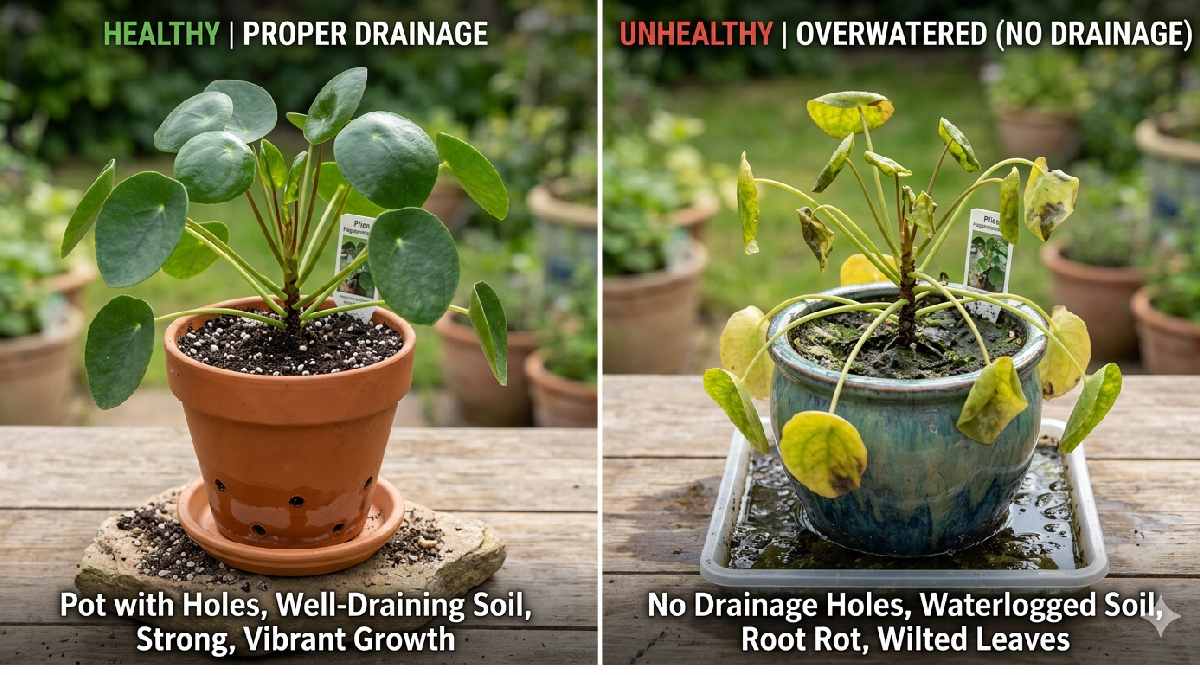
Combined with low natural light, growth becomes slow and unhealthy. The plant looks “okay” for a while, then suddenly declines.
When the setup is right, everything becomes easier. Good indoor gardening supplies reduce daily effort and make plant care almost low-maintenance. Proper pots, balanced soil, and simple watering tools allow plants to manage themselves better. Instead of constant fixing, you just observe and adjust occasionally, which is how indoor gardening is supposed to feel.
Essential Indoor Gardening Supplies (Complete List)
Essential indoor gardening supplies are the basic things that keep plants alive and stable inside a home. Without the right setup, plants struggle even if you water them properly or keep them in sunlight. These supplies include simple items like pots with drainage, light potting mix, watering tools, and proper lighting options.
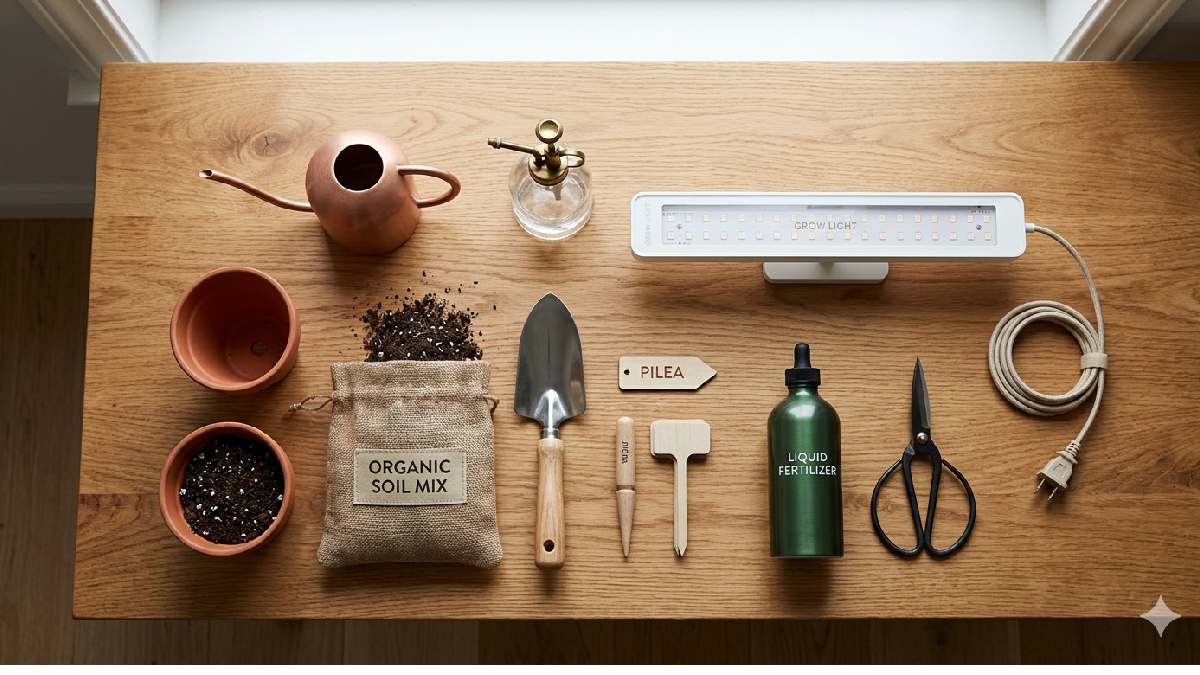
Each one plays a small role, but together they create a healthy environment where plants can actually grow. When these essentials are in place, indoor gardening becomes less confusing and more manageable, and plants respond in a much better way over time.
Plant Pots & Containers
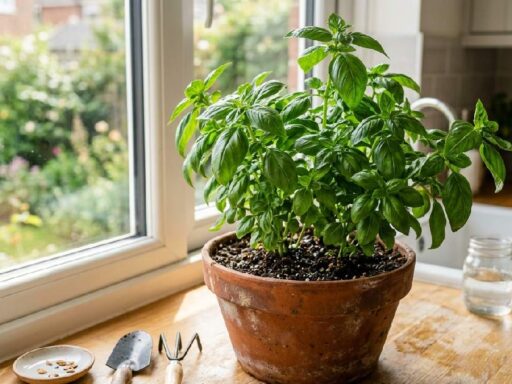
Plant pots are the first thing you deal with in indoor gardening. If the pot is wrong, everything else feels off. Drainage hole is not optional; it’s necessary because extra water must leave the pot. Without it, soil stays wet, and roots slowly get damaged.
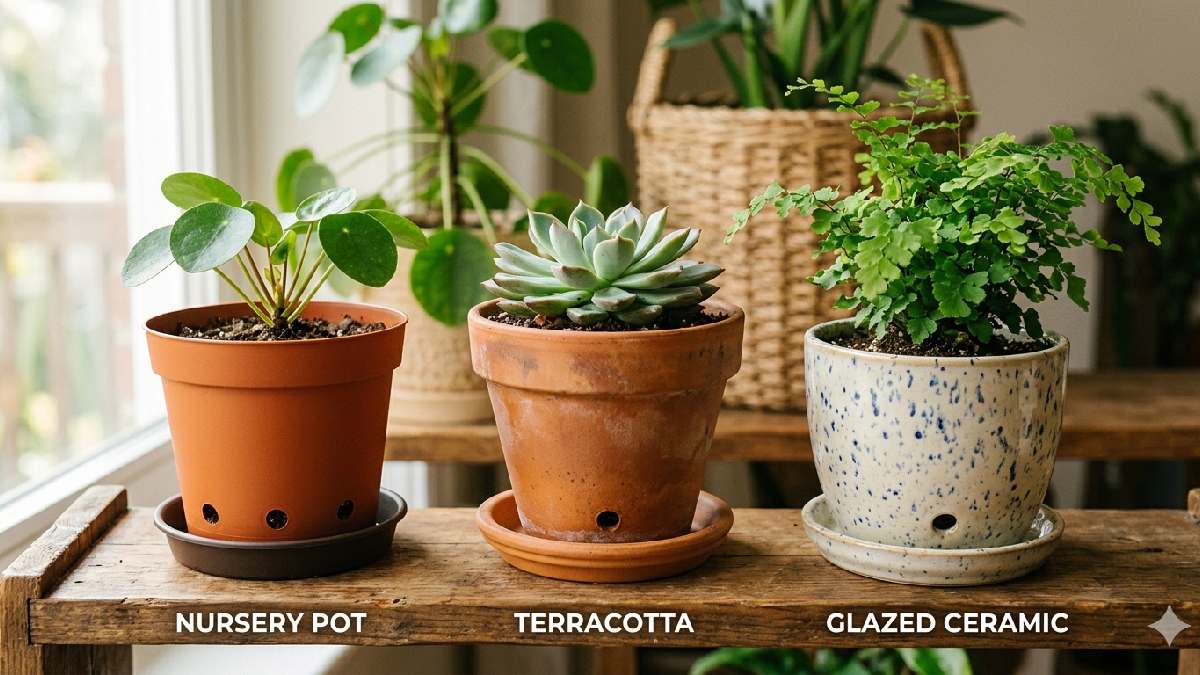
Size should match the plant; a small pot makes roots tight, a very large pot holds extra moisture and creates an imbalance. Plastic pots are light and easy, clay ones feel more natural and breathable, and ceramic is mostly for looks and stability.
Potting Soil
Indoor plants cannot grow properly in normal garden soil. It becomes heavy and blocks the air flow inside the pot. That’s why a proper indoor potting mix is used; it stays light and allows roots to breathe.
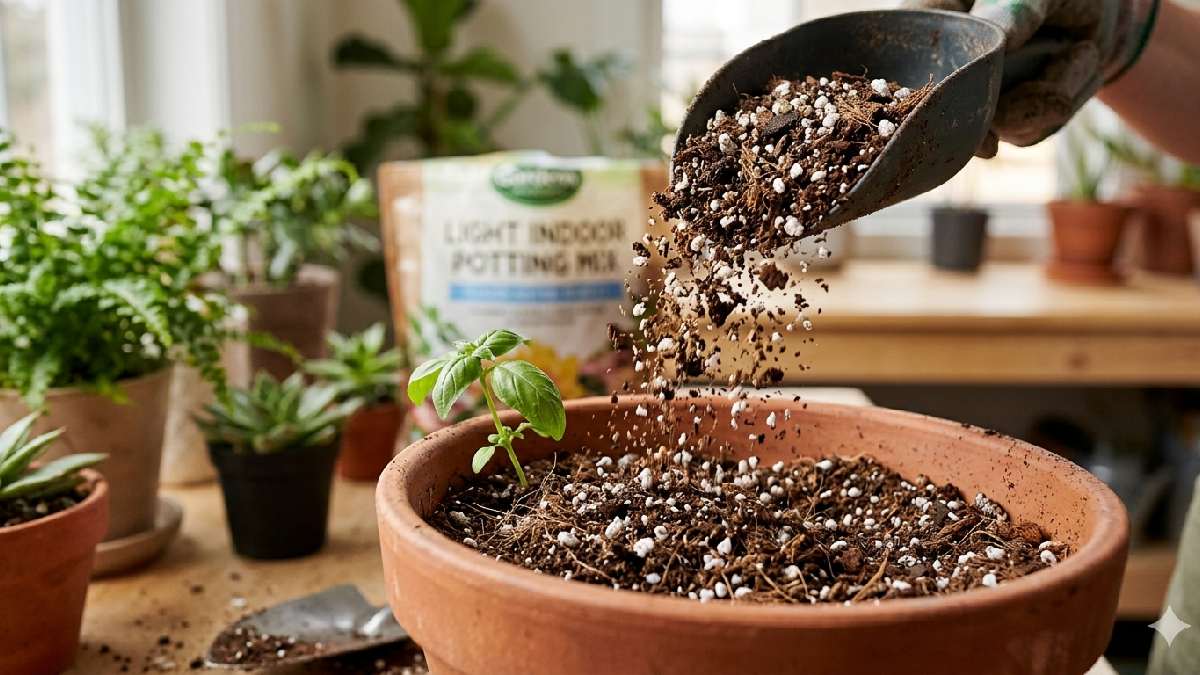
It also holds just the right amount of moisture. Some plants need slightly different mixes, but the idea stays the same: loose soil that doesn’t stay soggy.
Grow Lights
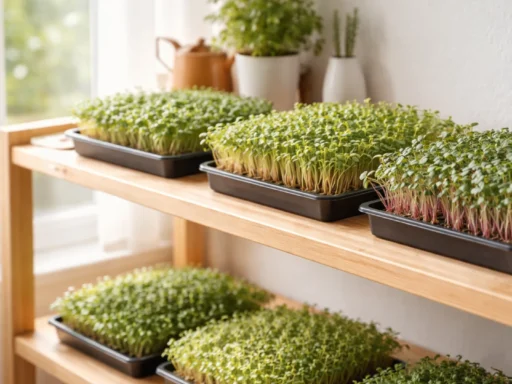
Grow lights are needed when sunlight is not enough inside the house. Many apartments or closed rooms don’t get direct light, and plants slowly stop growing there.
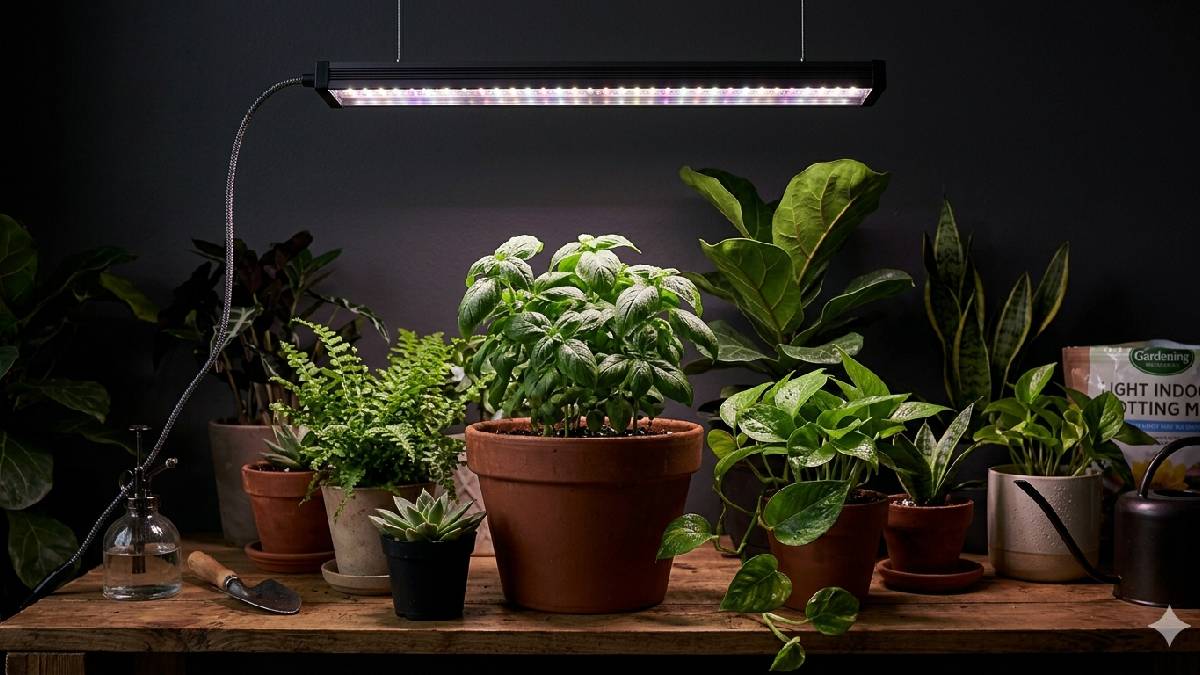
In those situations, grow lights help maintain balance. Simple LED grow lights are enough for beginners; they replace natural light in a basic way without being complicated.
Watering Tools
Watering is where most beginners make mistakes. A watering can gives better control and helps water reach the soil properly.
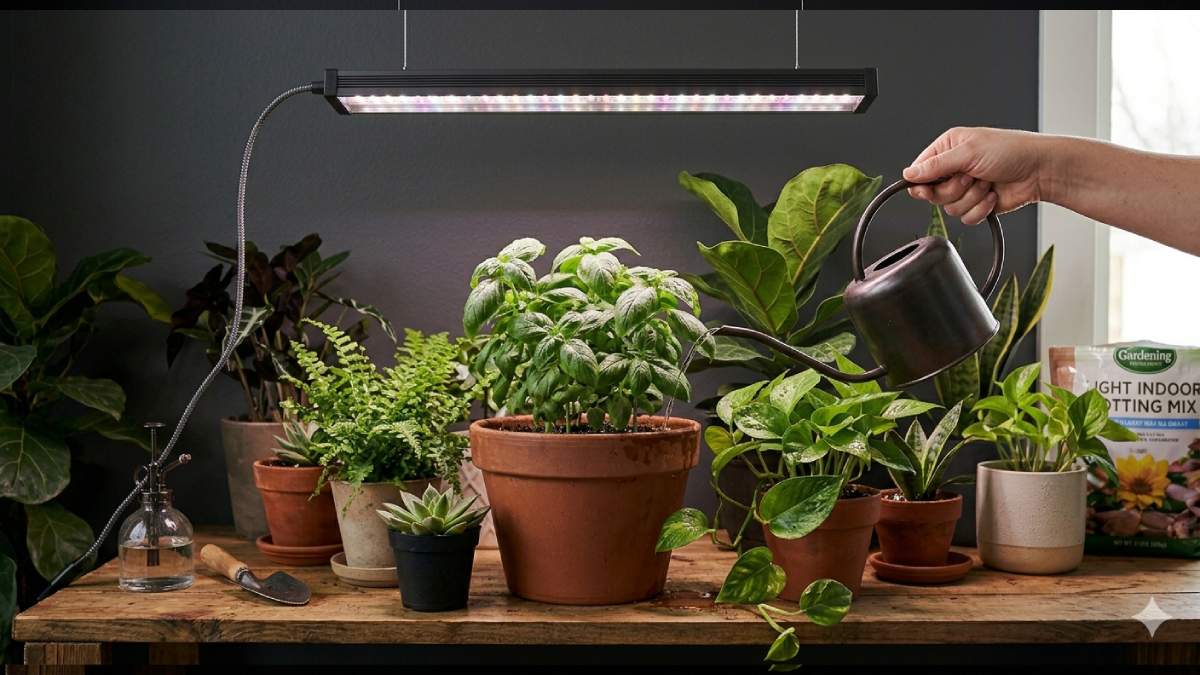
Spray bottles are used for light misting, not full watering. The main thing is avoiding overwatering, because too much water is more harmful than less water in indoor gardening.
Fertilizers
Indoor plants still need nutrients from time to time. Soil alone cannot provide everything for long-term growth. A simple fertilizer routine works best, just a small feeding after some weeks.
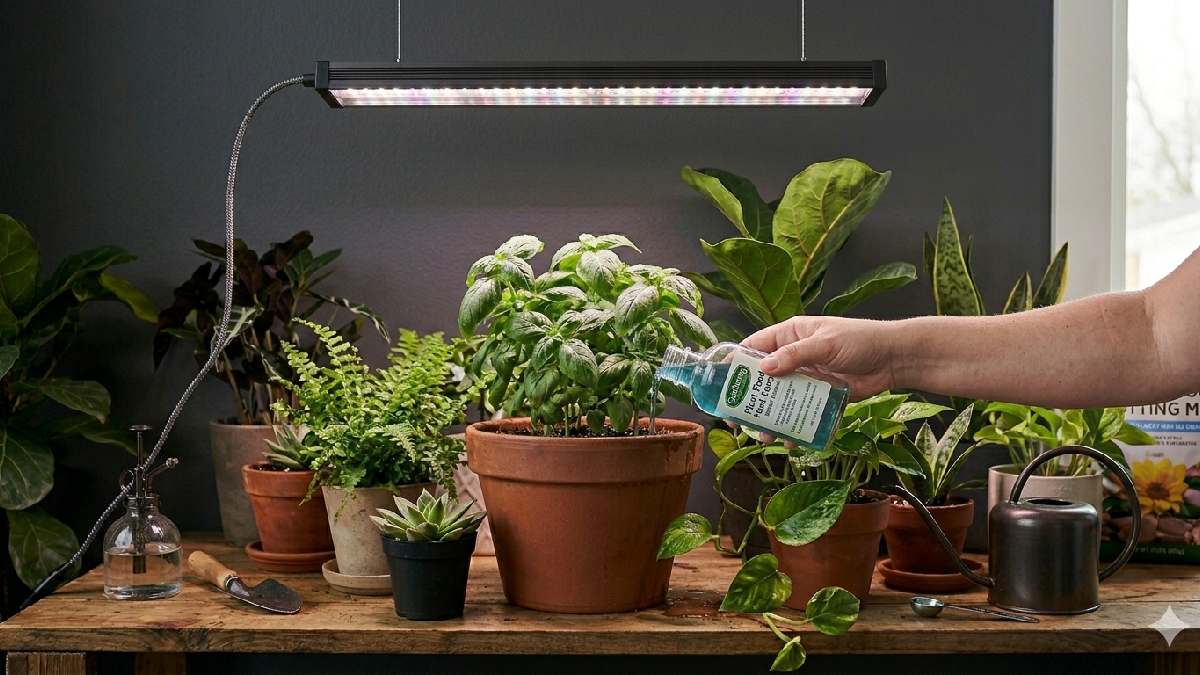
If you use too much, plants get stressed instead of growing better. So balance matters more than quantity.
Pruning Tools
Pruning keeps plants healthy and clean. Removing dry or dead leaves helps the plant focus on new growth. It also improves appearance.
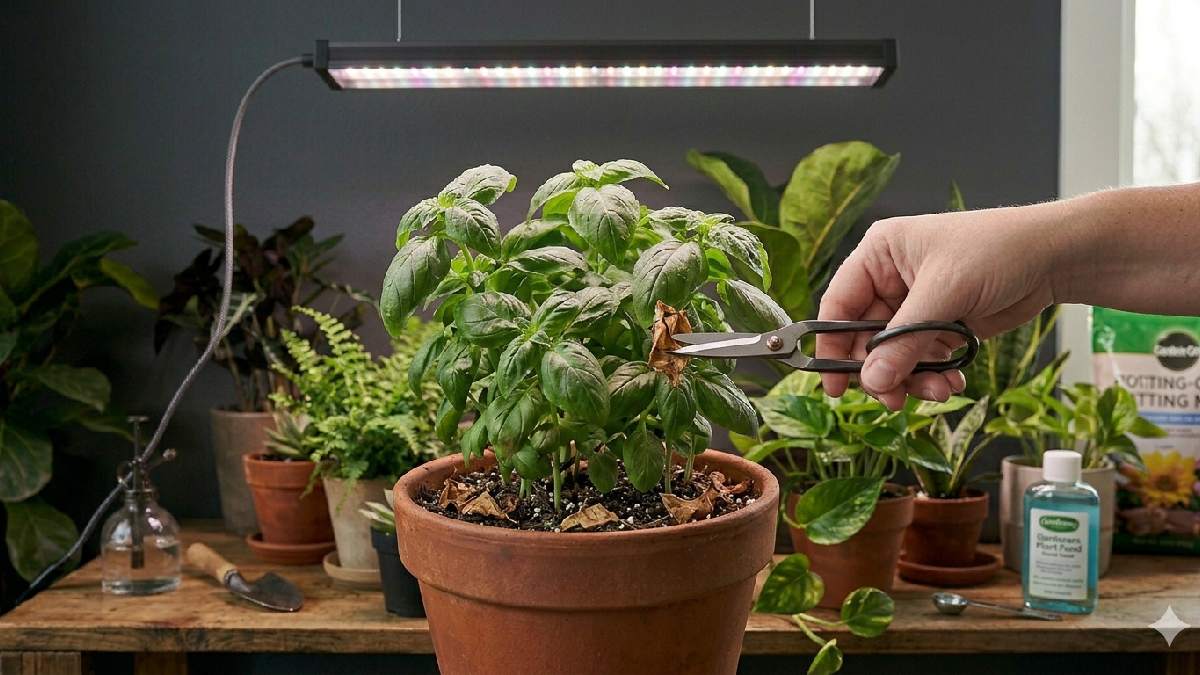
Simple scissors or small pruners are enough; nothing advanced is needed. It’s a small step, but it makes a visible difference.
Humidity Support
Indoor environments often feel dry because of fans, AC, or heaters. Some plants don’t like that dryness.
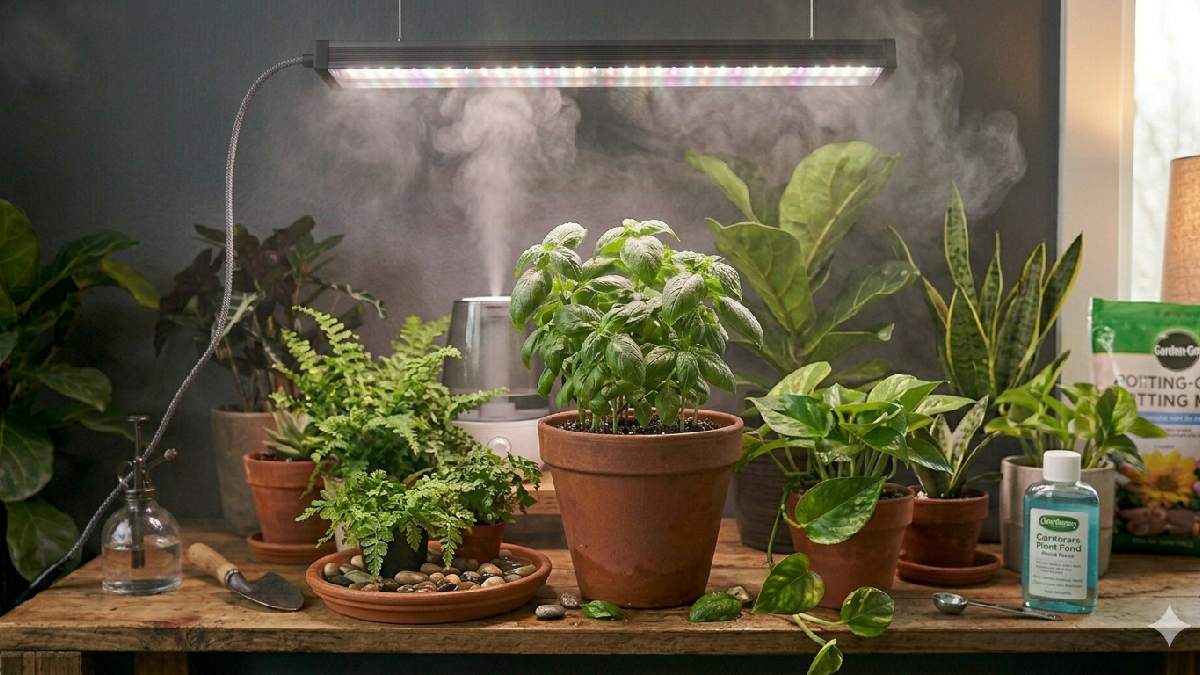
A simple tray with water near plants or a small humidifier can increase moisture in the air. This helps leaves stay fresh and prevents them from drying out.
Plant Stands / Shelves
Plant stands are useful for managing space inside rooms. They also help place plants closer to light sources like windows.
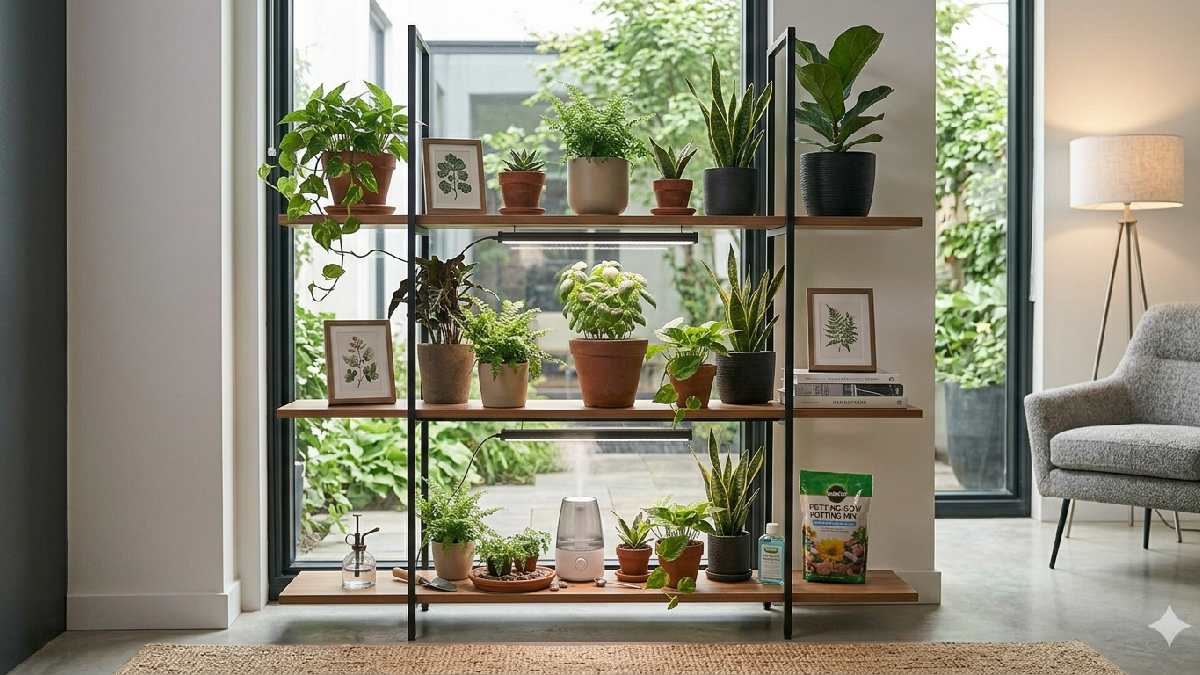
Shelves make it easier to keep multiple plants organized and improve light exposure for all of them. It’s more about arrangement and balance.
Indoor Gardening Kits
For beginners, indoor gardening kits are the easiest way to start. They usually come with basic pots, soil, seeds, and simple tools in one package.
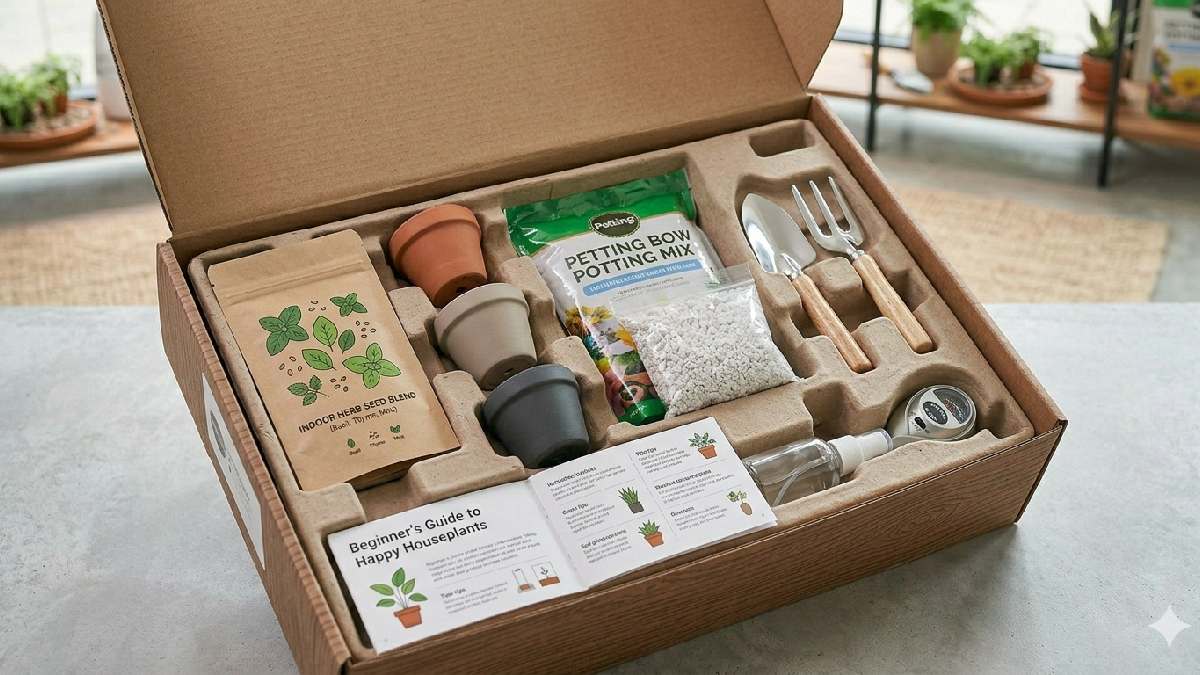
It removes confusion and lets you start quickly without searching for everything separately.
How to Set Up Your Indoor Garden (Step-by-Step)
Indoor gardening looks simple, but the setup is where everything is decided. If the foundation is weak, plants keep struggling no matter how much effort you put in later. A clean setup makes plant care easier from day one.
1. Choose the Location
Start with the spot inside your home. Pick an area where natural light is available, like near a window or a bright corner. Avoid places with direct AC flow or heaters because plants don’t handle sudden temperature changes well. Location is not just a detail; it shapes the whole growth.
2. Select Plants
After choosing the place, pick plants that match your environment. Some plants are easy to grow and grow well indoors with minimal care, while others need more attention and stable conditions. Beginners usually get better results with simple, low-maintenance plants instead of sensitive ones.
3. Set Up Pots and Soil
Now prepare containers. Pots must have drainage holes so extra water can escape. Without drainage, water stays inside and slowly damages roots. Fill pots with a light indoor potting mix instead of heavy garden soil. Loose soil allows roots to breathe and grow properly.
4. Arrange Light
Check how much sunlight your space actually receives during the day. If it’s enough, place plants there. If not, adjust their position or use a basic grow light. Light works like fuel for plants, and without it, growth becomes weak and slow over time.
5. Set Watering Routine
Avoid watering fixed habits. First, check the soil condition. If it feels slightly dry, then water. Use a watering can for better control so you don’t overwater. Spray bottles are only for light misting. A simple balanced routine works better than frequent watering.
Common Mistakes to Avoid
Indoor gardening usually looks simple, but small mistakes slowly create big problems for plants. Most beginners don’t realize that it’s not about doing many things; it’s about only doing the right things.
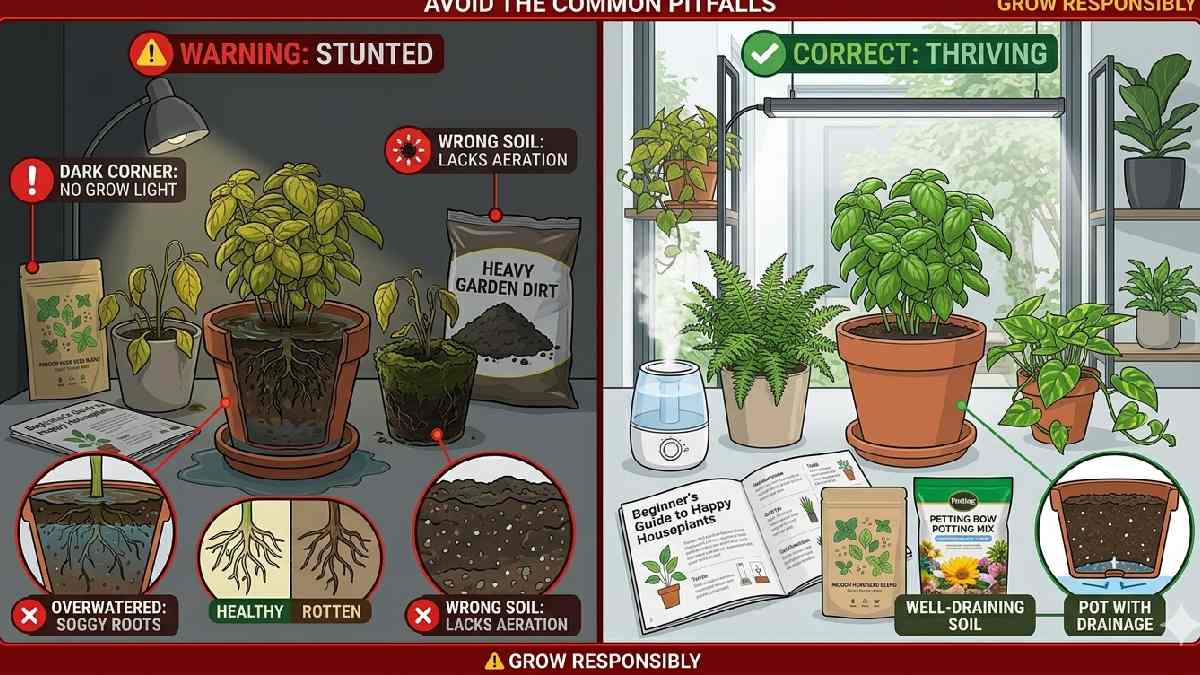
When the basics are ignored, plants start weakening even if they look fine at the start. Over time, these small errors affect growth, health, and overall plant life in a noticeable way.
Overwatering
Giving too much water is the most common issue. Soil stays wet for too long, and roots start getting weak. Plants don’t need water all the time; they need it in the right amount. Extra water often creates more damage instead of helping growth.
Wrong Soil Use
Using normal garden soil inside pots causes problems. It becomes heavy and doesn’t let air move properly around the roots. Indoor plants need a light potting mix so water drains easily, and roots stay healthy. Soil choice makes a big difference.
Ignoring Light
Light is often ignored, but it is very important. Placing plants in dark corners slows down their growth or makes them weak. Even simple placement near a window can improve plant health. Without proper light, plants cannot grow properly.
Buying Extra Unnecessary Tools
Beginners often buy too many tools they don’t actually need. Indoor gardening works fine with basic supplies. Extra tools only create confusion and waste money. A simple setup is always better and easier to manage.
How to Choose the Right Supplies (Buying Guide)
Indoor gardening supplies should never be bought randomly. Everything depends on your space, your budget, and what kind of plants you want to grow. When people ignore this, they end up with extra items they don’t use and plants that still don’t grow well.
Small spaces need a simple setup. Basic pots, a light soil mix, and a few tools are enough. Big spaces can handle more plants, so shelves or extra lighting can be useful. Budget also changes your choices.
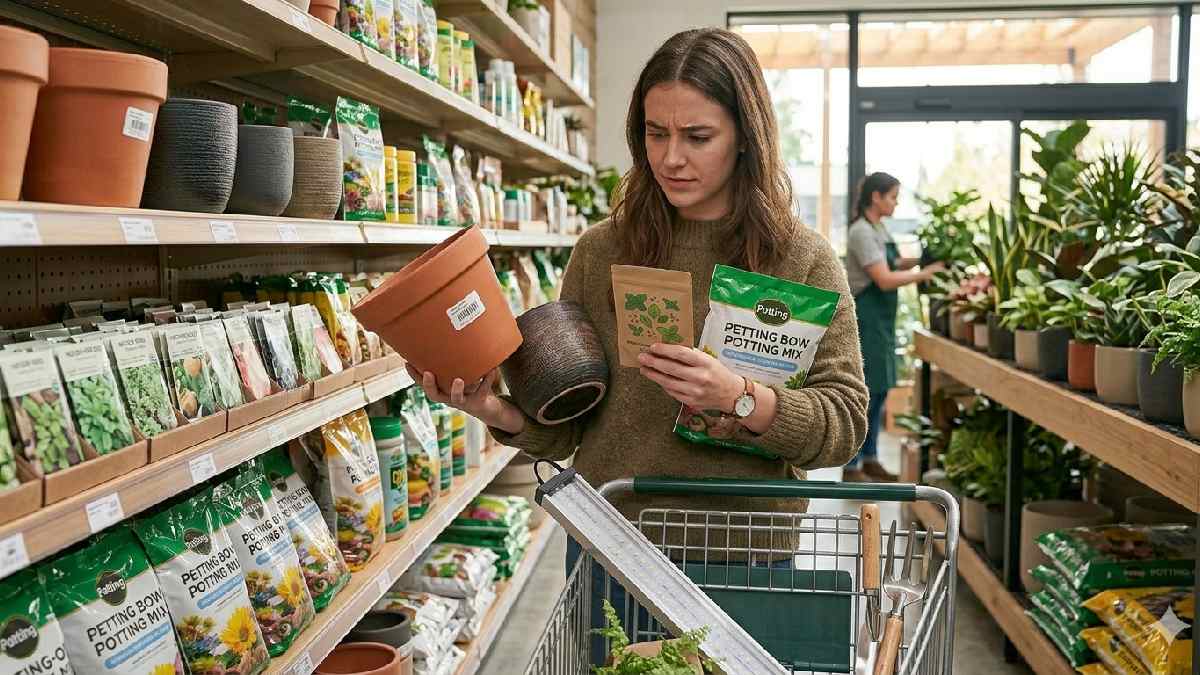
A low-budget setup still works fine if the basics are correct, while premium setups just make things easier but are not necessary.
Plant type is the real key. Some plants need more light, some need less water, and some grow in simple soil. If you match your supplies with plant needs, indoor gardening becomes easy and stable.
FAQs
What are basic indoor gardening supplies?
Basic indoor gardening supplies are simple items like pots with drainage holes, light potting mix, and a basic watering tool. These are enough to start indoor gardening without making it complicated or expensive.
Do I need grow lights?
Grow lights are not always necessary. If your home gets good natural sunlight near windows, plants can grow well. But in low-light rooms or apartments, grow lights help support proper plant growth.
What soil is best for indoor plants?
Indoor plants grow best in a light potting mix made for containers. It drains water properly and keeps air moving around the roots. Regular garden soil is too heavy and not suitable for indoor use.
How often should I water indoor plants?
There is no fixed watering schedule. It depends on the soil and plant type. Always check the soil first, and water only when it feels slightly dry. This keeps plants healthier than watering on a routine.
Conclusion
Indoor gardening is not as difficult as it looks in the beginning. Most of the issues happen when the setup is not right, not because plants are hard to grow. Once the basics are clear, everything becomes simpler and more manageable.
It’s always better to start small instead of going for too many plants at once. A few healthy plants are easier to handle and also help you learn faster without confusion or stress.
With only essential indoor gardening supplies like proper pots, good soil, light control, and a simple watering routine, you can maintain plants easily at home. Nothing extra is needed at the start, just correct basics and steady care.